
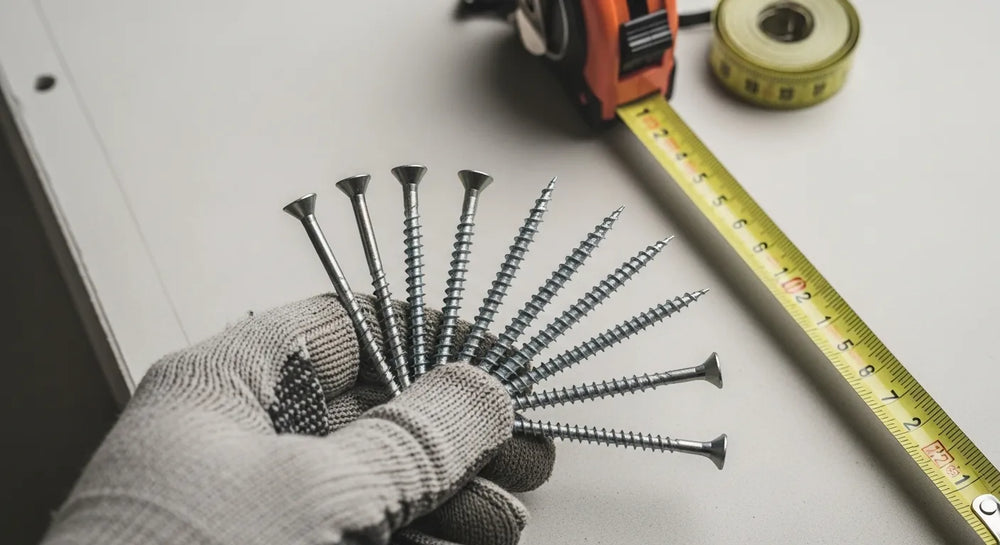
Hanging Shelves with Drywall Anchors: A Pro's Guide
Table of Contents
- Introduction
- The Critical Role of Drywall Anchors in Commercial Installations
- A Professional's Guide to Drywall Anchor Types and Their Applications
- How to Select the Right Anchor: A Strategic Framework
- The Professional Installation Process: A Step-by-Step Guide
- Common Pitfalls and How to Ensure Project Success
- Streamlining Procurement for Large-Scale Projects
- Conclusion
- Frequently Asked Questions (FAQ)
Introduction
Imagine the scene: a newly outfitted corporate office, complete with sleek, modern shelving displaying company awards and product prototypes. A week later, a loud crash echoes through the hall. A shelf has given way, sending valuable items to the floor. The cause wasn't a flaw in the shelf itself, but in the tiny, overlooked component holding it to the wall—a failed drywall anchor. For facilities managers, contractors, and MRO buyers, this scenario is more than an inconvenience; it represents a safety hazard, a blow to professional reputation, and a direct hit to the bottom line due to rework and damaged assets. Hanging a shelf correctly isn't just a matter of aesthetics; in a commercial or industrial environment, it's a matter of structural integrity and liability.
This guide is designed for professionals who understand that the quality of a project is determined by its weakest link. We will move beyond basic DIY advice to provide a comprehensive, technical breakdown of how to hang a shelf with drywall anchors securely and reliably, every time. We'll explore the science behind drywall's limitations, conduct a deep dive into the various types of anchors and their specific applications, and provide a meticulous step-by-step installation process. We will also examine the critical importance of sourcing high-quality, American-made hardware to ensure performance and safety.
The core message is this: selecting the right, high-quality drywall anchor and adhering to a precise installation methodology are fundamental requirements for creating safe, durable, and professional-grade installations that stand the test of time and protect your investment.
The Critical Role of Drywall Anchors in Commercial Installations
Before we can master the installation, we must first respect the material we're working with. Drywall, also known as gypsum board or sheetrock, is the standard for interior walls in most modern construction. It consists of a core of compressed gypsum powder sandwiched between two thick sheets of paper. While it offers excellent fire resistance, sound dampening, and a smooth finish for painting, its core composition has very little structural strength.
Driving a screw directly into drywall is like trying to anchor a boat in loose sand. The screw threads have nothing substantial to grip. Under even a light load, the gypsum will crumble and pull away, causing the screw and whatever it's holding to fall out of the wall. This creates a significant risk in any setting, but the stakes are far higher in a professional environment.
Consider the professional implications:
- Safety & Liability: A falling shelf in a public-facing retail space, a busy office, or a production facility can cause serious injury, leading to worker's compensation claims and legal liability.
- Asset Protection: Shelving in commercial settings often holds expensive equipment, sensitive electronics, or valuable inventory. A failure can lead to thousands of dollars in damages.
- Operational Disruption: The time spent repairing a damaged wall and re-installing a failed shelf is time taken away from core business operations. For MRO teams, this means unplanned work orders and project delays.
- Reputation: For contractors and installers, a failed installation damages professional credibility and can lead to lost future business.
A drywall anchor is an engineered fastener designed to solve this problem. It is inserted into the drywall and then expands or deploys behind the wall, distributing the load over a much wider surface area. This allows the anchor to grip the wall securely from the inside, providing a stable and reliable mounting point for a screw. This simple piece of hardware transforms a weak surface into a load-bearing one, making it an indispensable component for any professional installation.
A Professional's Guide to Drywall Anchor Types and Their Applications
The term "drywall anchor" encompasses a wide family of fasteners, each with a unique design, load capacity, and ideal use case. For a procurement manager stocking inventory or a contractor selecting hardware for a specific job, understanding these differences is crucial for ensuring a safe and lasting installation. The choice is never about finding a one-size-fits-all solution; it's about matching the right technology to the specific load requirements of the project.
Light-Duty: Expansion Anchors
Expansion anchors are the most common type of anchor, often used for lighter-duty applications. They work on a simple principle: as a screw is driven into the anchor, the anchor's body splits and expands, pressing firmly against the inside of the drywall.
- Mechanism: A plastic or nylon sleeve is inserted into a pre-drilled pilot hole. The sleeve is typically ribbed on the outside to prevent it from spinning during installation. When the screw is inserted, it forces the split end of the sleeve to flare out.
- Best For: Lightweight, static loads such as small decorative shelves, clocks, picture frames, and lightweight signage in an office lobby. Their holding power is generally limited, making them unsuitable for anything that will bear significant or dynamic weight.
- Sourcing Considerations: While common, the material quality of these anchors varies significantly. For professional use, it's vital to source from reliable suppliers. A high-quality, U.S.-made Ribbed Plastic Anchor will be made from durable nylon that resists becoming brittle over time, ensuring a longer service life compared to cheaper, generic alternatives.
Medium-Duty: Self-Drilling Anchors
For MRO teams and contractors focused on efficiency, self-drilling anchors are a game-changer. These anchors combine the drill bit and the anchor into a single component, dramatically reducing installation time.
- Mechanism: These anchors have a sharp, threaded point that allows them to be driven directly into the drywall with a screwdriver or drill, eliminating the need for a separate pilot hole. Once the anchor is flush with the wall, a screw is driven into it, which secures the item. The wide threads of the anchor itself provide significant holding power.
- Best For: Medium-duty applications like office supply shelving, bathroom fixtures, and display racks in retail environments. They offer a significant step up in load capacity from standard expansion anchors.
- Professional Application: Consider a project that requires outfitting 50 new office spaces with shelving. The time saved by not having to pre-drill hundreds of holes translates directly into lower labor costs and faster project completion. The Medium Duty Nylon Wall Anchor #6 Self-Drilling Drywall Zip-It®, manufactured in the U.S., is an excellent example of a component that boosts productivity without sacrificing reliability.
Medium-Duty All-Rounders: Sleeve-Type Anchors
Sleeve-type anchors, also known as hollow-wall anchors or "molly bolts," provide robust holding power for medium-to-heavy loads. They are a staple for applications that require more strength than plastic anchors can provide.
- Mechanism: A metal sleeve with a screw is inserted into a pre-drilled hole. As the screw is tightened, it pulls the back of the sleeve forward, causing the sides of the sleeve to collapse and expand like an umbrella behind the drywall. This creates a very strong, wide-flanged anchor point.
- Best For: Securing shelving that will hold heavier items like books, binders, or small equipment. They are also ideal for installing grab bars, heavy mirrors, and wall-mounted cabinetry.
- Installation Note: Once a sleeve-type anchor is expanded, it cannot be easily removed without causing significant damage to the wall. This makes them a more permanent solution, which is often desirable in commercial builds.
Heavy-Duty: Toggle Bolts
When maximum holding power is required, toggle bolts are the undisputed champions. Their design leverages the most surface area behind the wall, allowing them to support substantial weight.
- Mechanism: A toggle bolt consists of a screw and a spring-loaded, wing-like toggle nut. A large hole is drilled to accommodate the collapsed toggle. The toggle is pushed through the hole, and the spring action causes it to open flat against the back of the drywall. As the screw is tightened, it pulls the toggle firmly against the interior wall surface, creating an exceptionally strong anchor point.
- Best For: Heavy-duty shelving designed for storing tools, parts inventory, or heavy kitchen supplies. They are the go-to solution for any application where failure is not an option.
- Trade-offs: The main disadvantage is the large hole required for installation. However, for applications demanding high load capacity, this is a necessary and acceptable compromise.
How to Select the Right Anchor: A Strategic Framework
Choosing an anchor isn't guesswork; it's an engineering decision. For procurement managers and design engineers, following a systematic process ensures that every installation is safe, compliant, and fit for purpose.
Step 1: Accurately Calculate the Total Load
First, determine the maximum weight the shelf will ever need to support. This includes the weight of the shelf itself plus the heaviest possible load it will carry.
Professional Best Practice: Always engineer for the worst-case scenario and then add a safety factor of at least 2x, and up to 4x for critical applications. If a shelf needs to hold 50 pounds, select anchors rated to hold at least 100-200 pounds combined. Remember that the weight capacity listed on anchor packaging is typically the ultimate failure point under ideal lab conditions, not a safe working load.
Step 2: Identify the Wall Material and Thickness
While this guide focuses on drywall, it's crucial to confirm you're not drilling into plaster, concrete block, or a wall stud. Use a stud finder to locate and mark any studs in the installation area. If your desired location hits a stud, you can fasten directly into it with a wood screw, which is always the strongest option. If not, proceed with an anchor.
Standard residential drywall is 1/2" thick, but commercial buildings often use 5/8" fire-rated drywall. The thickness of the wall affects the "grip range" of the anchor. Ensure the anchor you select is specified for your wall's thickness.
Step 3: Match the Anchor to the Load and Application
Use the load calculation from Step 1 to narrow down your anchor category.
- Light Loads (Under 20 lbs): High-quality expansion anchors like the Ribbed Plastic Anchor are suitable.
- Medium Loads (20-50 lbs): Self-drilling anchors or sleeve-type anchors are the appropriate choice. A versatile option like the Medium Duty Nylon Wall Anchor #8 for Drywall provides a reliable solution for a wide range of common commercial shelving needs.
- Heavy Loads (50+ lbs): Toggle bolts are the required standard for safety and performance.
Step 4: Source with a Focus on Quality and Transparency
In a B2B context, the cost of a failed component far exceeds the price of the component itself. Sourcing the cheapest available hardware from an unverified source is a recipe for disaster. This is where partnering with a trusted platform is paramount. At Maden.co, our entire model is built on providing procurement professionals with direct access to a vast catalog of components from over 800 verified U.S. manufacturers. This commitment to Industrial Excellence and Supply Chain Transparency means you get:
- Verified Quality: Products from manufacturers who stand by their specifications.
- Detailed Specifications: Access to the technical data sheets needed to make informed engineering and procurement decisions.
- Resilient Supply Chains: Reduced risk of project delays caused by sourcing unreliable, overseas components.
Our mission is to prove that American-made components are as accessible and convenient as any global alternative, empowering businesses to build better and more reliably.
The Professional Installation Process: A Step-by-Step Guide
Proper installation is just as important as proper selection. A high-quality anchor installed incorrectly will fail. This detailed process ensures a secure, level, and professional-grade result.
Tools and Materials Checklist
- Tape measure
- Pencil
- 4-foot level
- Electronic stud finder
- Power drill with variable speed clutch
- Drill bits (ensure you have the exact size specified by the anchor manufacturer)
- Screwdriver (Phillips or flathead, as required by the screws)
- The correct number and type of U.S.-made drywall anchors and screws
Installation Procedure
-
Plan and Mark the Location: Determine the desired height for your shelf. Use the tape measure and level to draw a faint, perfectly horizontal line where the top or bottom of the shelf will sit. Use the stud finder to check for studs along this line. Your goal is to place your anchors in the hollow cavities between the studs.
-
Mark Bracket Hole Locations: Hold the first shelf bracket against the wall, aligned with your level line. Use a pencil to mark the center of each mounting hole. Repeat for the other brackets, using the level to ensure they are perfectly aligned with each other.
-
Drill the Pilot Holes (If Required): For expansion anchors and sleeve-type anchors, a pilot hole is required. This is the most critical step. Check the anchor's packaging or technical data sheet for the exact drill bit size required. A hole that is too small will damage the drywall when you insert the anchor. A hole that is too large will prevent the anchor from gripping securely. Drill straight into the wall at your marked points.
-
Install the Anchors:
- Expansion Anchors: Gently tap the plastic sleeve into the pilot hole with a hammer until its flange is flush with the wall surface.
- Self-Drilling Anchors: Place the tip of the anchor on your mark and use a drill on a low-speed setting (or a screwdriver) to drive it in until it is flush with the wall. Be careful not to strip the drywall by over-driving it.
- Toggle Bolts: Pinch the wings of the toggle nut together and push them through the hole. You will hear and feel them spring open behind the wall. Pull back on the screw to ensure the toggle is seated flat against the interior surface.
-
Mount the Brackets: Position the bracket over the installed anchor. Insert the provided screw through the bracket's mounting hole and into the anchor. Begin tightening the screw. You should feel resistance as the anchor expands or the toggle tightens.
-
Tighten Securely, But Do Not Overtighten: Tighten the screw until it is snug and the bracket is held firmly against the wall. Over-tightening is a common mistake that can strip the anchor, break the anchor, or crush the drywall behind it, compromising the entire installation. Using a drill with an adjustable clutch set to a low torque setting can help prevent this.
-
Place and Secure the Shelf: Once all brackets are securely mounted, place the shelf on top and use the level to perform a final check. Secure the shelf to the brackets using the small screws and mounting holes typically found on the underside of the bracket.
Common Pitfalls and How to Ensure Project Success
Even experienced installers can make mistakes. Being aware of these common errors is the first step in avoiding them.
-
Mistake: Underestimating the Load.
- Solution: Always be conservative in your estimates and generous with your safety factor. When in doubt, upgrade to the next level of anchor strength.
-
Mistake: Using Low-Quality, Unverified Anchors.
- Solution: Source from trusted suppliers who provide transparency into the manufacturing process. The allure of a slightly cheaper component is quickly erased by the cost of a single failure. Our commitment to American Manufacturing Pride is about more than patriotism; it's a commitment to a standard of quality you can build your reputation on. You can learn more about our mission to champion this standard.
-
Mistake: Drilling the Incorrect Pilot Hole Size.
- Solution: Always read the instructions. Never guess. Keep a full drill bit index on hand to ensure you always have the precise size needed.
-
Mistake: Ignoring the "Feel" of the Installation.
- Solution: Pay attention as you tighten the screw. If it keeps spinning without getting tighter, the anchor has failed. You must remove it and start over in a new location (at least a few inches away).
Streamlining Procurement for Large-Scale Projects
For a business owner or procurement manager overseeing the outfitting of a new facility, sourcing hundreds or thousands of fasteners efficiently is a major challenge. This is where moving beyond traditional retail or wholesale channels becomes a strategic advantage. Our platform at Maden.co is designed to eliminate procurement friction for industrial buyers. For a contractor needing a bulk order of a specific fastener like the Medium Duty Nylon Wall Anchor #6 Self-Drilling Drywall Zip-It®, we provide a direct path to the American manufacturer.
Furthermore, we understand that large projects require significant capital outlay. To support this, we've integrated a powerful tool directly into our procurement process: Instant Financing. This allows businesses to manage cash flow effectively by financing large-volume purchases of essential components. You can manage your capital-intensive projects without delay by applying for Instant Financing directly at checkout.
This combination of access, transparency, and financial flexibility is a cornerstone of Customer Empowerment, one of our core values. We believe in providing professionals with the tools they need to succeed. And for the American manufacturers who create these critical components, we offer a direct channel to a nationwide market of industrial buyers. Are you a U.S. manufacturer? Register as a vendor and join the American manufacturing revival. If you have specific sourcing questions or need help finding a particular component, our team is ready to help.
Conclusion
Hanging a shelf with drywall anchors is a task that demands precision, forethought, and a commitment to quality. In a professional context, the process transcends simple handyman work and becomes a direct reflection of a company's standards for safety, reliability, and excellence. By thoroughly understanding load dynamics, making an informed selection from the various types of anchors available, and executing a meticulous installation process, you can ensure that every shelf is not just level and aesthetically pleasing, but fundamentally safe and durable.
The foundation of this entire process rests on the quality of the components themselves. Sourcing verified, U.S.-made hardware is the single most effective way to mitigate risk and guarantee performance. It replaces uncertainty with confidence and builds a more resilient and reliable supply chain for your business. America's manufacturing revival is here, and it's built on the strength of components, big and small, that you can trust.
Explore the extensive catalog of American-made fasteners and industrial components on Maden.co to find the reliable hardware you need for your next project. Equip your team with the quality they deserve and build with the confidence that only comes from using the best. And remember, you can apply for Instant Financing at checkout to keep your projects moving forward, on budget and on schedule.
Frequently Asked Questions (FAQ)
1. What is the main difference between a regular drywall anchor and a toggle bolt? A regular drywall anchor, like a plastic expansion anchor, works by expanding to press against the inside of the drywall. A toggle bolt provides significantly more strength by using a spring-loaded "wing" mechanism that opens up behind the wall, distributing the load over a much larger surface area. Toggle bolts are used for heavy-duty applications where standard anchors would not be sufficient.
2. Can I reuse a drywall anchor if I need to move a shelf? It is generally not recommended to reuse most drywall anchors. Expansion anchors and sleeve-type anchors are deformed during their initial installation and will not provide the same holding power if removed and re-inserted. Self-drilling anchors can sometimes be reused in a new hole, but their threads may be less effective. For safety and reliability, it is always best practice to use a new anchor for each installation.
3. How do I know the exact weight capacity of a specific drywall anchor? The weight capacity is determined by the manufacturer and should be clearly listed on the product packaging or in its technical data sheet. It is critical to note that these ratings are often for "shear strength" (hanging force straight down) in ideal conditions. Always use a significant safety factor, selecting an anchor with a rated capacity that is 2 to 4 times the actual weight you intend to hang.
4. What should I do if I hit a wooden stud when drilling my pilot hole for a drywall anchor? Hitting a stud is actually good news, as it provides a much stronger mounting point than any drywall anchor. If you hit a stud, simply stop, discard the anchor for that location, and use an appropriate length wood screw (typically #8 or #10, long enough to penetrate the stud by at least 1 to 1.5 inches) to fasten your bracket directly to the stud.


