
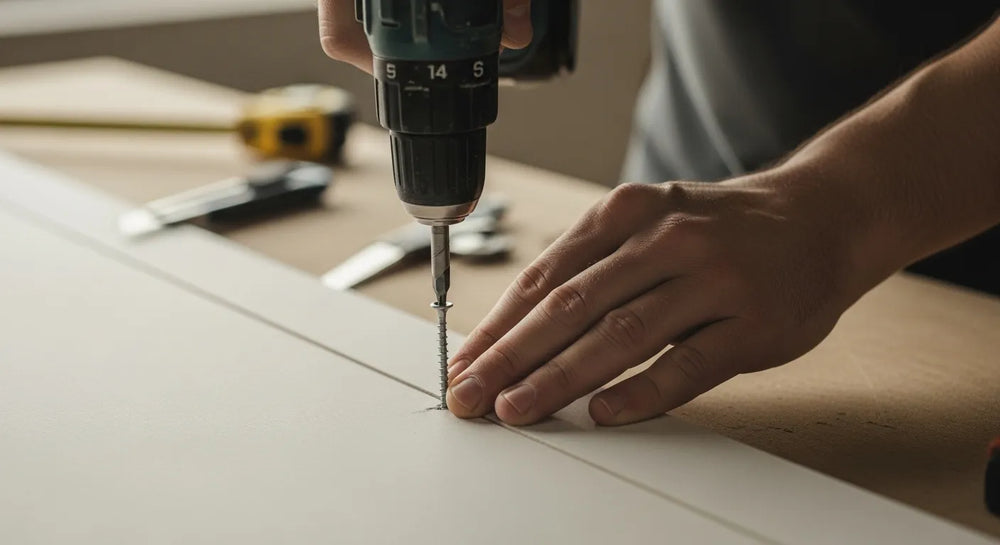
How to Install Plastic Drywall Screw Anchors
Table of Contents
- Introduction
- The Critical Role of Drywall Anchors
- Choosing the Right Plastic Anchor for the Job
- Pre-Installation Checklist: Gathering Your Tools and Materials
- The Definitive Step-by-Step Installation Guide
- Common Mistakes and Expert Solutions
- Streamlining Fastener Procurement for Professionals
- Conclusion
- Frequently Asked Questions (FAQ)
Introduction
A sudden crash in the middle of the night. You rush into the room to find a newly hung picture frame on the floor, its glass shattered, leaving a gaping, crumbled hole in the wall where a screw used to be. It's a frustratingly common scenario, one that highlights a critical lesson in both home improvement and industrial maintenance: drywall is not wood. Its composition of compressed gypsum powder simply cannot hold the threads of a screw under load. This simple failure is more than just an inconvenience; in a commercial or industrial setting, it can represent a safety hazard, project delays, and costly rework. The solution, a small but mighty component, is the plastic drywall anchor.
This article provides a definitive, technically grounded guide on how to properly select and install plastic drywall screw anchors. We will move beyond simple instructions to explore the material science behind why anchors are necessary, break down the different types of anchors available for various load requirements, and detail a step-by-step installation process that guarantees a secure and lasting hold. We'll also cover the common pitfalls that lead to failure and how to avoid them. For the MRO buyer, the design engineer, or the facilities manager, understanding this fundamental skill is a cornerstone of operational excellence, ensuring that everything from mounted equipment to facility signage is installed with precision and reliability. The goal is to empower you with the knowledge to execute these tasks flawlessly, backed by the confidence that comes from using high-quality, American-made components.
The Critical Role of Drywall Anchors
Before diving into the installation process, it's essential to understand why a drywall anchor is non-negotiable for most wall-mounting applications. Standard drywall, or gypsum board, is a panel made of calcium sulfate dihydrate (gypsum), typically pressed between a facer and a backer made of thick paper. While it offers excellent fire resistance and is easy to finish, its core is soft and brittle.
When you drive a standard screw directly into drywall, the threads have very little solid material to grip. The gypsum crumbles around the screw, creating a weak point. Any weight or even slight vibration will cause the screw to pull out, taking a chunk of drywall with it.
This is where a plastic drywall anchor becomes indispensable. It functions on a simple but effective principle: expansion and friction.
- Insertion: The anchor is inserted into a precisely drilled pilot hole.
- Expansion: As you drive a screw into the anchor, its split ends are forced to expand outwards.
- Grip: These expanded fins press firmly against the back of the drywall panel. This distributes the load over a much wider surface area than the screw alone could. The anchor is no longer relying on the weak, crumbly gypsum but is instead braced against the solid paper backing and a large section of the gypsum core.
By transforming the focused pulling force into distributed pressure, the anchor creates a secure mounting point capable of supporting significantly more weight. This principle is fundamental to safe and reliable installation, reflecting a core value of Industrial Excellence: using the right component, engineered for a specific material and application, to ensure a successful outcome. Sourcing these critical components from a trusted marketplace like Maden.co ensures that the foundation of your project is built on quality from the very start.
Choosing the Right Plastic Anchor for the Job
Not all plastic anchors are created equal. The market offers a variety of designs, each tailored for different load capacities and installation efficiencies. Selecting the appropriate type is the first and most critical step in a successful installation. In an industrial or commercial procurement context, this decision impacts not just the integrity of a single mounted object but also overall project efficiency and safety compliance.
Ribbed Plastic Anchors
This is the most traditional and widely recognized type of plastic anchor. Characterized by flexible fins or "ribs" running down its body, this design is intended for light-duty applications. The ribs are engineered to bite into the surrounding drywall, preventing the anchor from spinning in the pilot hole as the screw is driven in.
- Best For: Lightweight items such as small picture frames, smoke detectors, thermostats, and small decorative items.
- Load Capacity: Typically rated for loads up to 10-15 pounds, though this can vary. Always consult the manufacturer's specifications.
- Installation: Requires a pre-drilled pilot hole.
For general MRO stock, having a ready supply of high-quality, U.S.-made anchors is essential for routine facility maintenance. A dependable component like the Ribbed Plastic Anchor ensures that your team has a reliable solution for the multitude of light-duty mounting tasks that arise daily.
Expansion (Sleeve-Type) Anchors
These anchors represent a step up in holding power. While they also work on the principle of expansion, their design is often more robust. When the screw is driven in, it forces two or four "legs" to expand and press firmly against the back of the drywall. They are typically made from high-grade nylon, offering better durability and resistance to becoming brittle over time.
- Best For: Medium-duty applications like heavier mirrors, small shelves, curtain rods, and wall-mounted dispensers.
- Load Capacity: Can often support between 20 and 50 pounds, depending on the specific size and design.
- Installation: Requires a pre-drilled pilot hole of a specific size for a snug fit.
For a procurement manager tasked with outfitting a new office or a contractor installing fixtures in a commercial space, a component like the Medium-Duty Nylon Wall Anchor #8 for Drywall provides a secure, reliable solution. Sourcing such a verified American-made product through our platform eliminates guesswork and ensures consistent quality across a large-scale project.
Self-Drilling (Threaded) Anchors
For professionals focused on efficiency, self-drilling anchors are a revolutionary product. These anchors feature a sharp, auger-like tip and aggressive threads that allow them to be driven directly into the drywall using a screwdriver or a low-speed drill—no pilot hole required. This one-step process significantly reduces installation time without compromising strength.
- Best For: Medium-duty applications where installation speed is critical, such as hanging shelving, mounting brackets, and installing electrical fixtures.
- Load Capacity: Similar to or slightly higher than expansion anchors, often in the 25 to 75-pound range.
- Installation: No pre-drilling needed. They are driven directly into the wall.
Consider a scenario where an MRO team is tasked with installing hundreds of safety signs across a large facility. The time saved by eliminating the need to pre-drill each hole translates into significant labor cost savings and faster project completion. The Medium-Duty Nylon Wall Anchor #6 Self-Drilling Drywall Zip-It® is an exemplary product for this kind of application, embodying the digital innovation and efficiency we champion.
Procurement Insight: The choice of anchor has a direct impact on Total Cost of Ownership (TCO). While a self-drilling anchor may have a slightly higher per-unit cost, the savings in labor time can result in a lower overall project cost. Making these strategic sourcing decisions is a hallmark of an empowered procurement professional.
Pre-Installation Checklist: Gathering Your Tools and Materials
Proper preparation is the key to a professional-grade installation. Before you begin, gather the following tools to ensure the process is smooth, accurate, and safe.
- Selected Drywall Anchors and Matching Screws: Ensure the screws are the correct diameter and length for your chosen anchors. This information is always included in the product specifications.
- Power Drill or Screwdriver: A drill is necessary for pilot holes, and a cordless screwdriver or drill set to a low-speed, high-torque setting is ideal for driving screws.
- Drill Bits: For anchors requiring a pilot hole, the correct drill bit size is non-negotiable. This size is typically stamped on the anchor itself or listed on the packaging.
- Hammer or Rubber Mallet: To gently tap ribbed or expansion anchors into the pilot hole.
- Tape Measure and Pencil: For accurately marking your installation point.
- Level: To ensure shelves, frames, or fixtures are perfectly horizontal or vertical.
- Stud Finder: An electronic stud finder is the most reliable way to check for studs, plumbing, or electrical wiring behind the drywall before you drill.
- Safety Glasses: Always protect your eyes from drywall dust and debris.
The Definitive Step-by-Step Installation Guide
With your tools gathered and your anchors selected, you are ready to proceed with the installation. We will break down the process for the two main categories of anchors: those that require a pilot hole and those that are self-drilling.
Method 1: Installing Ribbed and Expansion Anchors
This method applies to traditional anchors that require a pre-drilled hole. Precision at each step is key to achieving maximum holding power.
Step 1: Locate and Mark Your Mounting Point Use a tape measure and level to determine the exact location for your anchor. Mark the spot lightly with a pencil. Before proceeding, use a stud finder to confirm you are not attempting to drill into a wall stud. If you detect a stud, your best option is to drive a wood screw directly into it, forgoing the need for an anchor entirely.
Step 2: Drill the Pilot Hole This is the most critical step. Select the drill bit size specified by the anchor's manufacturer. If the size is not listed, you can hold the drill bit up in front of the anchor; the bit's diameter should match the anchor's body diameter at its widest point, not including the ribs or flange.
- Ensure your drill is perfectly perpendicular (90 degrees) to the wall surface. Drilling at an angle will result in an elongated hole, preventing the anchor from fitting snugly.
- Drill the hole to a depth slightly greater than the length of the anchor. A piece of tape wrapped around the drill bit can serve as a helpful depth guide.
Step 3: Clean and Inspect the Hole Gently blow or vacuum out any residual drywall dust from the hole. This ensures a clean surface for the anchor to grip. A clean hole is a small detail that reflects a commitment to industrial excellence.
Step 4: Insert the Anchor Press the anchor into the pilot hole with your fingers. It should be a snug fit. If it's too loose, your drill bit was too large, and the anchor will not hold securely. If it's too tight to push in by hand, gently tap it with a hammer or rubber mallet until the flange is flush with the wall surface. Do not force it excessively, as this can damage the anchor or the drywall.
Step 5: Drive the Screw Position your fixture over the anchor, insert the corresponding screw through the fixture's mounting hole, and into the anchor. Begin turning the screw clockwise with a screwdriver. You will feel initial resistance as the screw's threads engage with the anchor. Continue tightening until the screw is snug.
Professional Tip: As you tighten, you will feel a distinct increase in resistance. This is the point at which the anchor has fully expanded behind the drywall. Stop turning at this point. Over-tightening can strip the plastic threads inside the anchor or crack the surrounding drywall, compromising the entire installation.
Method 2: Installing Self-Drilling Anchors
The process for self-drilling anchors is designed for maximum efficiency.
Step 1: Locate and Mark Your Mounting Point As with the previous method, accurately mark your location and use a stud finder to ensure the area is clear of obstructions.
Step 2: Drive the Anchor into the Drywall Place the sharp tip of the self-drilling anchor on your pencil mark. Using a Phillips head screwdriver (manual or a drill on a low-speed setting), apply firm, steady pressure and turn clockwise. The anchor's auger tip will bore a hole as the threads bite into the drywall, pulling it into the wall.
Continue driving the anchor until its head is completely flush with the surface of the drywall. The anchor itself creates a perfectly sized hole.
Step 3: Drive the Screw Align your fixture, insert the screw, and tighten it until it is snug. The same rule applies: do not over-tighten.
Common Mistakes and Expert Solutions
Even a seemingly simple task can go wrong. Understanding common failure points is key to avoiding them and achieving a professional result every time.
-
Mistake: Using the Wrong Size Drill Bit.
- Problem: This is the number one cause of failed anchors. A hole that is too large will allow the anchor to spin and pull out. A hole that is too small will prevent the anchor from being inserted or cause it to deform upon entry.
- Solution: Always double-check the manufacturer's recommended bit size. When in doubt, it is better to start with a slightly smaller bit and widen the hole if necessary.
-
Mistake: Over-tightening the Screw.
- Problem: Applying too much torque can strip the plastic inside the anchor, rendering it useless. It can also cause the anchor's flange to pull through the drywall or crack the wall surface.
- Solution: Tighten by hand when possible to get a better feel for the resistance. When using a power tool, use a low torque setting. Stop as soon as the screw feels snug and secure.
-
Mistake: Ignoring Weight Limits.
- Problem: Every anchor is rated for a specific maximum load. Exceeding this limit is a recipe for failure and a serious safety risk.
- Solution: Always verify the weight of the item you are hanging and choose an anchor rated well above that weight. Factor in dynamic loads (e.g., a coat rack that will have coats thrown on it).
-
Mistake: Choosing a Poor-Quality Anchor.
- Problem: Low-quality plastic can become brittle, crack during installation, or fail under load over time. This is a risk that professionals cannot afford.
- Solution: This is where supply chain transparency becomes paramount. Sourcing components from verified U.S. manufacturers provides assurance of material quality and manufacturing consistency. Our mission at Maden.co is to provide this direct connection, democratizing access to superior American-made industrial products. You can learn more about our mission to champion American manufacturing here.
Streamlining Fastener Procurement for Professionals
For businesses, the process of acquiring even small components like drywall anchors can be fraught with friction. Verifying suppliers, managing purchase orders, and ensuring on-time delivery for a project requires significant administrative overhead. This is the challenge we are built to solve.
Maden.co is more than a marketplace; we are a strategic partner in building a more resilient and efficient American supply chain. By connecting industrial buyers directly with a network of over 800+ verified U.S. manufacturers, we eliminate the hurdles of traditional procurement. For an MRO manager needing to restock a maintenance department or a project manager outfitting a new construction, our platform provides immediate access to over 2.5 million products.
Furthermore, we understand that managing cash flow is critical for business operations. For larger MRO supply orders or capital-intensive projects, you need flexibility. That is why we offer a seamless solution. You can apply for Instant Financing at checkout to streamline your capital-intensive projects, empowering you to acquire the quality American-made components you need without disrupting your budget.
This ecosystem of industrial excellence is a collaborative effort. It’s built on the strength and innovation of our nation's manufacturers. If you are a part of this vital community, we invite you to grow with us. Are you a U.S. manufacturer? Register as a vendor and join the American manufacturing revival.
Conclusion
Mastering how to install a plastic drywall screw anchor is a foundational skill that pays dividends in reliability, safety, and professionalism. It is an exercise in precision, from selecting the right type of anchor for the load to drilling a perfectly sized pilot hole and applying the correct amount of torque. By following the detailed steps outlined in this guide and avoiding common pitfalls, you can ensure every item you mount is secure and stable.
This commitment to doing the job right mirrors the larger principles of industrial excellence and American manufacturing pride. It’s about understanding the materials, respecting the engineering behind the components, and valuing quality over shortcuts. At Maden.co, we believe that America's manufacturing revival is here, and it’s built one reliable, American-made component at a time. Secure your projects with confidence by exploring our extensive catalog of anchors and fasteners today. And remember to leverage the power of Instant Financing at checkout to make your procurement process as efficient and effective as possible. If you have specific sourcing needs or questions, please do not hesitate to contact our team; we are ready to help.
Frequently Asked Questions (FAQ)
1. What is the main difference between a ribbed plastic anchor and a self-drilling one? The primary difference is the installation method. A ribbed plastic anchor requires you to pre-drill a pilot hole before inserting it. A self-drilling anchor has a sharp, auger-like tip that allows you to drive it directly into the drywall with a screwdriver, combining the drilling and anchoring steps into one for greater efficiency.
2. Can I reuse a drywall anchor? It is strongly recommended not to reuse a drywall anchor. Once an anchor has been expanded by a screw and then removed, its plastic structure is permanently deformed. Re-inserting it, even in a new hole, will result in significantly reduced holding power and a high risk of failure.
3. How much weight can a plastic drywall anchor hold? The weight capacity varies dramatically based on the anchor's type, size, and the condition of the drywall. Light-duty ribbed anchors might hold 10-15 pounds, while heavy-duty self-drilling or expansion anchors can hold 50 pounds or more. Always refer to the load ratings provided by the manufacturer on the packaging or technical data sheet.
4. What should I do if the anchor just spins in the hole when I try to put the screw in? A spinning anchor is a clear sign that the pilot hole is too large, preventing the anchor's anti-rotation ribs from gripping the drywall. Unfortunately, this anchor cannot be used in this hole. The best solution is to remove the failed anchor, patch the hole with spackling compound, and once it's dry, drill a new, correctly sized hole in a slightly different location.


