
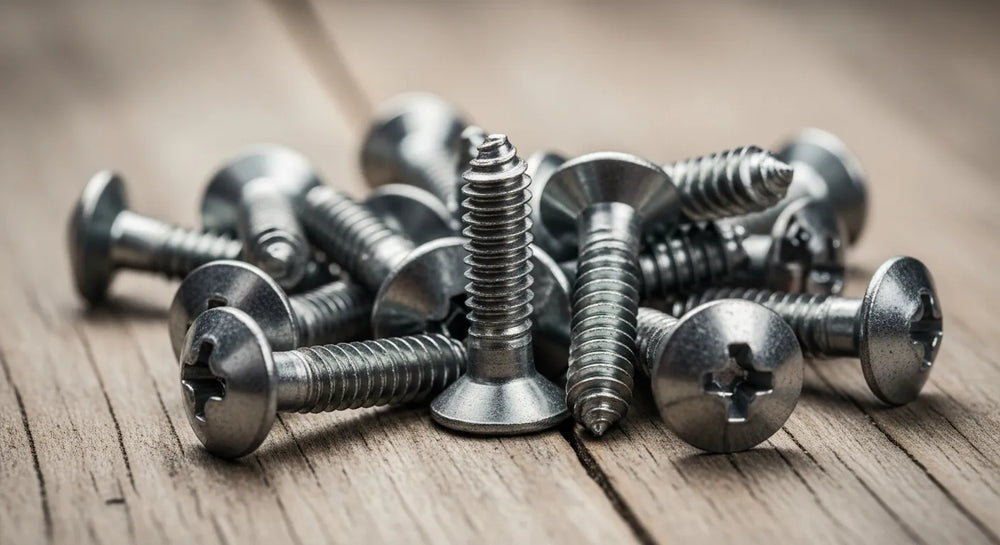
How Long for Drywall Screws: Choosing the Right Length for Lasting Stability
Table of Contents
- Introduction
- The Unseen Foundation: Why Drywall Screw Length Matters More Than You Think
- Understanding Drywall and Substrate: The Core Determinants of Screw Length
- The Golden Rule of Drywall Screw Length: Penetration Depth
- Navigating the Types of Drywall Screws and Their Lengths
- Practical Scenarios: Matching Screw Length to Your Project
- Beyond the Standard: Specialized Drywall Applications
- The Procurement Manager's Advantage: Sourcing American-Made Drywall Screws
- Beyond Length: Installation Best Practices
- Conclusion
- FAQ
Introduction
Imagine the frustration: weeks into a critical construction project, you notice a subtle sag in a newly installed drywall panel, or worse, hairline cracks begin to snake across a freshly painted wall. These seemingly minor flaws often trace back to one overlooked detail: the humble drywall screw. While often perceived as a simple fastener, the correct selection of drywall screw length is anything but trivial. It underpins the structural integrity, aesthetic finish, and long-term durability of any gypsum board installation. Using a screw that’s too short leads to inadequate grip and inevitable failure, while one that’s too long risks damaging underlying studs, utilities, or creating unsightly dimples that compromise the finish.
In the fast-paced world of industrial construction, MRO, and design, such errors are not just cosmetic; they translate directly into costly rework, project delays, and compromised safety, significantly impacting your Total Cost of Ownership (TCO). This comprehensive guide is designed to demystify the critical process of selecting the precise drywall screw length for a myriad of applications. We will delve into the fundamental factors influencing this choice, explore the various types of screws and their ideal uses, and provide practical scenarios to ensure your projects achieve lasting stability and compliance. Our aim is to empower procurement managers, MRO buyers, and design engineers with the knowledge to make informed decisions, emphasizing the non-negotiable value of high-quality, U.S.-made components in building robust and resilient infrastructure.
The Unseen Foundation: Why Drywall Screw Length Matters More Than You Think
The choice of a drywall screw's length extends far beyond simply holding a panel in place; it is a fundamental engineering decision that directly impacts the overall quality, safety, and longevity of a structure. Inadequate screw length is a silent culprit behind numerous project failures, leading to significant financial repercussions and reputational damage. Consider a procurement manager overseeing a large commercial build: a miscalculation in fastener length for tens of thousands of drywall sheets could mean extensive rework, delaying the project timeline by weeks and incurring exponential labor and material costs.
Consequences of Incorrect Length
-
Too Short: The Foundation of Failure
- Weak Hold and Pull-Through: When a screw is too short, it doesn't achieve sufficient thread engagement with the framing material (wood or metal studs). This results in a shallow, unstable connection that is highly susceptible to pull-through, especially under stress from settling, humidity changes, or vibrations. The drywall simply won't be held securely, leading to panels detaching or bowing.
- Sagging and Cracking: Without proper support across the entire sheet, sections of drywall can begin to sag, particularly in ceilings where gravity exerts constant downward pressure. This sagging invariably leads to unsightly cracks along seams and around fasteners, compromising the aesthetic finish and requiring costly repairs.
- Reduced Fire Resistance: For fire-rated assemblies, the specified screw length and spacing are critical for maintaining the fire resistance rating. A screw that fails to meet these specifications can compromise the assembly's ability to contain fire, posing severe safety risks and potential code violations.
- Impact on Structural Integrity: In many commercial and industrial settings, drywall isn't just a finish; it contributes to the overall structural diaphragm effect, especially in non-load-bearing partitions designed to resist lateral forces. Insufficiently fastened drywall can diminish this contribution, subtly weakening the structure.
-
Too Long: Risks Beyond the Surface
- Stud Damage: Driving an excessively long screw into a wood stud can split or damage the wood, weakening its structural integrity. In metal studs, it can deform the stud flange, reducing its ability to support the drywall effectively.
- Electrical and Plumbing Hazards: The most dangerous consequence of overly long screws is the potential for puncturing electrical wires or plumbing pipes running behind the studs. This can lead to electrical shorts, fires, water leaks, and catastrophic system failures, posing extreme safety hazards and incurring exorbitant repair costs.
- Dimpling and Finish Imperfections: When a screw is too long, the bugle head can over-penetrate the drywall's paper face, creating deep dimples that are difficult to conceal with joint compound. This compromises the smooth, uniform finish, requiring more material and labor to achieve an acceptable surface.
- Wasted Material and Effort: Longer screws are generally more expensive. Using them unnecessarily increases material costs. Furthermore, the extra effort required to drive them in, and the subsequent patching of over-driven spots, adds to labor time and project expense.
From a procurement perspective, specifying and sourcing the correct lengths upfront is not merely a technicality; it's a strategic decision that fortifies project outcomes, enhances safety, and significantly reduces the likelihood of costly future interventions. This proactive approach embodies Maden.co's commitment to Industrial Excellence, ensuring that every component sourced contributes positively to your project's TCO.
Understanding Drywall and Substrate: The Core Determinants of Screw Length
The fundamental principle governing drywall screw length is the need for adequate penetration into the framing material. This "bite" ensures a secure, lasting hold. However, the exact length required is a function of two primary variables: the thickness of the drywall being installed and the type of material forming the underlying framing (substrate).
Drywall Thickness Variations
Drywall, or gypsum board, comes in several standard thicknesses, each designed for specific applications:
- 1/2-inch Drywall: This is the most common thickness for interior walls and ceilings in residential construction. It offers a good balance of strength, workability, and cost-effectiveness.
- 5/8-inch Drywall: Often referred to as "Type X" or "fire-rated" drywall, this thicker panel provides enhanced fire resistance and improved sound attenuation. It is mandated in many commercial buildings and multi-family residences, as well as for specific firewall assemblies. Its increased rigidity also makes it more resistant to sagging, making it a preferred choice for ceilings or high-traffic areas.
- 1/4-inch Drywall: This thinner, more flexible board is typically used for curved surfaces (e.g., arched doorways), as an overlay for existing walls (to improve soundproofing or create a smoother surface), or for repair patches. Due to its flexibility, it often requires a higher density of fasteners.
- Multiple Layers: In advanced applications, multiple layers of drywall are installed for enhanced soundproofing, increased fire resistance, or added structural rigidity. For instance, two layers of 1/2-inch drywall create a 1-inch thick assembly. This significantly impacts the required screw length, as the fastener must pass through all layers before achieving adequate penetration into the stud.
The choice of drywall thickness directly dictates the initial portion of the screw that must traverse the panel itself before reaching the crucial penetration depth into the framing.
Substrate Material: Wood vs. Metal Studs
The material of the framing studs plays an equally critical role, primarily influencing the screw's thread type and the minimum required penetration depth.
- Wood Studs: Traditional wood framing (typically 2x4s or 2x6s) is porous and fibrous. Drywall screws designed for wood studs feature coarse threads. These aggressive threads are engineered to grip securely into the wood fibers, creating a strong, pull-out resistant connection. The coarser pitch allows the screw to drive quickly without stripping the wood.
- Metal Studs: Increasingly common in commercial and some residential construction, metal studs are typically made from light-gauge galvanized steel (e.g., 20-25 gauge). Drywall screws for metal studs feature fine threads. These threads are spaced more closely together, creating more individual points of contact with the thin metal, which helps to prevent stripping and ensure a firm grip. For thicker gauge metal studs (e.g., 12-20 gauge), self-drilling or self-tapping screws are often preferred, as they have a drill bit-like point that eliminates the need for pre-drilling and can efficiently cut through the steel.
The material of the substrate not only dictates the thread pattern but also influences the minimum penetration depth necessary for a secure hold. Understanding these distinctions is paramount for effective procurement and installation, ensuring that the selected fasteners are compatible with both the drywall and the framing system. For design engineers, this detail is critical in specifying components that meet structural and performance requirements.
The Golden Rule of Drywall Screw Length: Penetration Depth
At the heart of every secure drywall installation is the concept of adequate penetration depth. This isn't just an arbitrary measurement; it's a carefully calculated dimension that ensures the screw achieves optimal grip within the framing material, effectively transferring the load from the drywall panel to the underlying support structure.
General Principles for Penetration
The industry standard for minimum penetration depth varies slightly depending on the substrate:
- For Wood Studs: A drywall screw must penetrate at least 5/8 inch (approximately 16mm) into the wood stud. This depth allows the coarse threads to fully engage with the wood fibers, creating a robust connection that resists pull-out forces and prevents the screw from backing out over time.
- For Metal Studs (Light Gauge, 20-25 Gauge): When fastening to light-gauge metal studs, the screw needs to penetrate a minimum of 3/8 inch (approximately 10mm) past the metal flange. Due to the thinner nature of metal studs and the fine-thread design, this penetration ensures sufficient threads have passed through the metal to create a secure, stripping-resistant connection.
Calculating for Single-Layer Drywall
The calculation for single-layer drywall is straightforward:
Required Screw Length = Drywall Thickness + Minimum Penetration Depth
Let's illustrate with common examples:
-
1/2-inch Drywall on Wood Studs:
- Drywall Thickness: 1/2 inch
- Minimum Wood Penetration: 5/8 inch
- Total Required: 1/2 inch + 5/8 inch = 1-1/8 inches
- Conclusion: Since 1-1/8 inches isn't a standard screw length, you would round up to the next available size, which is typically 1-1/4 inches. This provides a comfortable margin for secure fastening.
-
5/8-inch Drywall on Metal Studs (20-25 Gauge):
- Drywall Thickness: 5/8 inch
- Minimum Metal Penetration: 3/8 inch
- Total Required: 5/8 inch + 3/8 inch = 1 inch
- Conclusion: For this scenario, a 1-inch fine-thread drywall screw would be the appropriate choice.
Calculating for Multiple-Layer Drywall
When installing multiple layers of drywall, the principle remains the same, but the "drywall thickness" component of the calculation changes to the sum of all layers being penetrated by the screw. This is particularly relevant for soundproofing, fire-rating, or enhancing wall rigidity.
Required Screw Length = (Thickness of Layer 1 + Thickness of Layer 2 + ...) + Minimum Penetration Depth
For example, installing two layers of 1/2-inch drywall onto wood studs:
- Total Drywall Thickness: 1/2 inch + 1/2 inch = 1 inch
- Minimum Wood Penetration: 5/8 inch
- Total Required: 1 inch + 5/8 inch = 1-5/8 inches
- Conclusion: For the screws that go through both layers into the stud, 1-5/8 inch or 2-inch coarse-thread screws would be necessary. Often, the first layer is secured with shorter screws (e.g., 1-1/4 inch) to the studs, and then the second layer is fastened with longer screws through the first layer and into the studs, ensuring full penetration.
Understanding and correctly applying this golden rule is paramount for any professional. It removes guesswork, ensures code compliance, and establishes the foundation for a durable and reliable installation. For procurement managers, knowing these calculations helps in efficiently determining the quantities and specifications for each screw type required for a project, optimizing inventory and minimizing waste.
Navigating the Types of Drywall Screws and Their Lengths
While the "how long" question is central, understanding the different types of drywall screws is equally vital for selecting the optimal fastener. Each type is engineered with specific features to perform best in particular applications and with different framing materials.
Standard Coarse-Thread Drywall Screws
These are the most common type, easily identifiable by their wide, deep threads.
- Application: Primarily designed for fastening drywall to wood studs. The coarse threads grip securely into the wood fibers, offering excellent pull-out resistance.
- Lengths Commonly Available: 1 inch, 1-1/4 inch, 1-5/8 inch, 2 inch, 2-1/2 inch, 3 inch. These lengths cover most standard and multi-layer drywall applications on wood framing.
- Example Use: For a robust and reliable connection to wood studs, especially when installing 1/2-inch or 5/8-inch drywall, consider U.S.-made options like these 6 x 1-1/4 coarse thread drywall screws. Sourcing quality fasteners like these through Maden.co ensures consistency and performance.
Fine-Thread Drywall Screws
These screws feature finer, more closely spaced threads compared to their coarse-thread counterparts.
- Application: Specifically engineered for fastening drywall to light-gauge metal studs (typically 20-25 gauge). The fine threads create more points of contact within the thin metal, preventing stripping and ensuring a secure, tight grip.
- Lengths Commonly Available: Similar to coarse-thread screws, ranging from 1 inch up to 3 inches, depending on drywall thickness requirements.
- Example Use: When working with metal framing systems, a precisely engineered fastener is crucial. A high-quality 6 x 1 fine thread drywall screw ensures optimal grip and compliance, a necessity for many commercial and industrial projects.
Self-Drilling/Self-Tapping Drywall Screws
These specialized screws feature a drill-bit shaped point that allows them to pierce and tap their own threads into metal studs without the need for pre-drilling.
- Application: Ideal for fastening drywall to thicker gauge metal studs (e.g., 12-20 gauge) where standard fine-thread screws might struggle to penetrate. They significantly speed up installation time.
- Lengths: Available in various lengths to accommodate different drywall thicknesses and penetration requirements.
High-Low Thread Drywall Screws
These screws feature an alternating pattern of high and low threads.
- Application: Designed for enhanced versatility, offering superior grip in a variety of substrates, including some combination materials or even light-gauge steel with wood. They provide increased holding power and reduced stripping in certain applications.
Bugle Head vs. Wafer Head
The head design of a drywall screw is also important:
- Bugle Head: The most common head type, characterized by its slightly conical, flared shape. This design allows the head to sit flush with the drywall surface without tearing the paper face, creating a clean recess for joint compound.
- Wafer Head: Features a flat, wide head that sits on the surface of the material. These are typically used for attaching furring channels, metal lath, or trim to framing, where a flush finish into the drywall isn't the primary concern.
Material and Coating Considerations
Beyond length and thread type, the material and coating of the screw are critical, especially for industrial and MRO applications where environmental conditions or specific performance requirements dictate selection.
- Black Phosphate: The most common coating for interior drywall screws. This finish offers a basic level of corrosion resistance, suitable for dry, interior environments. It's cost-effective and allows for smooth driving.
- Galvanized/Corrosion-Resistant: For areas prone to moisture, such as bathrooms, basements, or for exterior sheathing, galvanized or specially coated screws are essential. These coatings (e.g., zinc plating, ceramic coatings) provide enhanced protection against rust and corrosion, preventing staining of the drywall and premature fastener failure.
- Stainless Steel: The ultimate in corrosion resistance, stainless steel screws are specified for highly corrosive environments, exterior applications, or whenever maximum durability and longevity are paramount. They are more expensive but offer unparalleled performance in challenging conditions.
- Importance of Material Certification and Compliance: For design engineers and procurement managers working on projects requiring specific performance standards (e.g., in cleanrooms, food processing facilities, or marine environments), fasteners must come with material certifications. These certifications guarantee that the screws meet required tensile strength, corrosion resistance, and other critical specifications. Sourcing certified, U.S.-made fasteners through Maden.co ensures not only quality but also verifiable compliance with industry standards, which is a cornerstone of our commitment to Supply Chain Transparency and Industrial Excellence.
By understanding these distinctions, procurement teams can move beyond generic "drywall screws" to specify the exact fasteners needed for precise project requirements, minimizing risk and optimizing performance. On Maden.co, you can find a comprehensive catalog of such specialized, U.S.-made components.
Practical Scenarios: Matching Screw Length to Your Project
Applying the golden rule and understanding screw types in practical scenarios is key to seamless project execution. Here, we outline common drywall installations and the ideal screw lengths, providing insights for procurement and installation.
Scenario 1: Single Layer 1/2" Drywall on Wood Studs
This is arguably the most common residential and light commercial application.
- Calculation: 1/2" (drywall) + 5/8" (wood penetration) = 1-1/8".
- Recommended Length: 1-1/4" or 1-5/8" coarse-thread drywall screws. The 1-1/4" screw provides sufficient penetration, while the 1-5/8" offers a slightly more robust hold for added security, especially in ceilings or areas prone to movement.
- Procurement Insight: For such standard applications, selecting the right volume of common lengths is crucial for efficiency. Bulk purchasing of verified, U.S.-made 1-1/4" or 1-5/8" coarse-thread screws from Maden.co ensures consistent supply and reduces the risk of project slowdowns due to fastener shortages.
Scenario 2: Single Layer 5/8" Drywall on Wood Studs
Common in fire-rated assemblies or for enhanced sound control.
- Calculation: 5/8" (drywall) + 5/8" (wood penetration) = 1-1/4".
- Recommended Length: 1-5/8" or 2" coarse-thread drywall screws. The 1-5/8" screw is the minimum, providing an exact 1/4" over-penetration for security. For greater hold, especially in ceilings, a 2" screw is often preferred.
- Industrial Excellence Note: In fire-rated applications, the quality and consistent length of the screws are paramount for code compliance. Our focus on American Manufacturing Pride means we connect you with manufacturers who meet rigorous standards.
Scenario 3: Single Layer 1/2" Drywall on Metal Studs (20-25 Gauge)
Frequently encountered in commercial interiors.
- Calculation: 1/2" (drywall) + 3/8" (metal penetration) = 7/8".
- Recommended Length: 1" or 1-1/4" fine-thread drywall screws. The 1" screw meets the minimum, while 1-1/4" offers a good margin. The fine threads are crucial here to prevent stripping the thin metal.
- Supply Chain Transparency: For projects where metal stud framing is extensive, ensuring a reliable supply of the correct fine-thread screws is critical. Our platform offers 2.5 million American-made products from a network of 800+ verified U.S. manufacturers, enhancing your supply chain resilience.
Scenario 4: Two Layers of 1/2" Drywall on Wood Studs
Often used for improved soundproofing or added wall rigidity.
- Calculation: 1/2" (first layer) + 1/2" (second layer) + 5/8" (wood penetration) = 1-5/8".
- Recommended Length: For the screws that penetrate both layers into the stud, 1-5/8" or 2" coarse-thread drywall screws are necessary. Typically, the first layer is sometimes secured with shorter screws (e.g., 1-1/4" or 1-5/8") to prevent movement, and then the second layer is fastened with the longer screws (2" or 2-1/2") through the first layer and into the studs.
- Product Link: For heavy-duty applications requiring significant penetration, such as multi-layer installations or thicker panels, an 8 x 4 drywall screw could be essential for securing maximum integrity. This exemplifies the specialized components available through our marketplace.
Scenario 5: Attaching Drywall to Ceilings
Ceiling installations demand extra security due to the constant pull of gravity.
- Recommended Length: For 1/2" drywall on wood ceilings, 1-5/8" or 2" coarse-thread screws are advised. For 5/8" drywall, 2" or 2-1/2" screws offer superior hold.
- Enhanced Fastening: Consider using specialized ring shank drywall screws or ceiling screws for maximum holding power, as they are less prone to pull-out under sustained load.
- Customer Empowerment: Maden.co empowers buyers to find these specific, high-performance fasteners quickly, ensuring that even the most demanding applications are supported by appropriate, American-made materials.
By understanding these practical scenarios, procurement professionals and design engineers can confidently specify the right screw lengths, optimizing material usage, improving installation efficiency, and ensuring the long-term performance of their projects.
Beyond the Standard: Specialized Drywall Applications
The selection of drywall screw length becomes even more nuanced and critical in specialized construction applications where performance, safety, and regulatory compliance are paramount. For design engineers, MRO buyers, and business owners operating in these sectors, precise fastener specification is non-negotiable.
Fire-Rated Assemblies
Buildings requiring specific fire resistance ratings often mandate the use of 5/8-inch Type X gypsum board. The integrity of these assemblies relies heavily on the fasteners.
- Requirement: Fire codes often specify not only the drywall thickness but also the exact screw type, length, material, and spacing. The screw must penetrate far enough into the framing to maintain structural integrity under extreme heat, preventing panel detachment that could compromise the fire barrier.
- Length Consideration: Always consult the specific fire-rated assembly design and local building codes. Typically, for a single layer of 5/8" Type X on wood, a 1-5/8" or 2" coarse-thread screw is used. For metal studs, appropriate fine-thread or self-drilling screws of similar lengths are required, ensuring they meet the specified pull-out and shear values under fire conditions.
- Procurement Impact: Sourcing fasteners for fire-rated applications requires verifiable product data sheets and certifications. Maden.co's commitment to Supply Chain Transparency allows procurement teams to access detailed specifications for U.S.-made fasteners that comply with these rigorous standards.
Soundproofing and Acoustic Performance
Achieving optimal sound transmission class (STC) ratings often involves multi-layer drywall systems, sometimes with specialized acoustic panels or damping compounds.
- Requirement: Multiple layers of drywall (e.g., two or three layers of 1/2" or 5/8") mean the screws must be significantly longer to pass through all layers and still achieve adequate penetration into the studs.
- Length Consideration: For two layers of 1/2" drywall, 2" to 2-1/2" screws are common. For three layers, screws could range from 2-1/2" to 3" or even longer, depending on the combined thickness.
- Specialized Fasteners: Acoustic assemblies might also benefit from specialized "sound isolation clips" and resilient channels, which require their own specific fasteners. The total length of the screw must account for the thickness of all materials.
Exterior Sheathing
While not strictly interior drywall, gypsum sheathing is used on the exterior of buildings as a substrate for various finishes. This application requires fasteners with enhanced weather resistance.
- Requirement: Exterior gypsum sheathing demands corrosion-resistant screws (e.g., galvanized, polymer-coated, or stainless steel) that can withstand moisture and environmental exposure. The length must accommodate the sheathing thickness and penetrate structural framing (wood or metal).
- Length Consideration: For typical 1/2" or 5/8" exterior gypsum sheathing, screw lengths will follow similar penetration rules as interior drywall, but the material and coating are paramount. Longer screws might be needed if the sheathing is part of a thicker exterior wall assembly.
Cement Board/Backer Board for Tile Applications
Used as a moisture-resistant underlayment for tile in bathrooms, kitchens, and other wet areas.
- Requirement: Cement board is dense and abrasive, requiring specialized corrosion-resistant screws with different head types (e.g., wafer head or modified truss head) to seat properly without cracking the board.
- Length Consideration: For 1/2" cement board on wood studs, 1-1/4" to 1-5/8" screws are common. For thicker cement board or multiple layers, proportionally longer screws are needed. The screws must penetrate adequately into the framing (wood or subfloor) to prevent tile delamination and moisture intrusion.
For these specialized needs, the ability to search a vast catalog of 2.5 million American-made products from our network of 800+ verified U.S. manufacturers is invaluable for design engineers and procurement teams. Maden.co provides the digital innovation and comprehensive selection necessary to source the precise, high-performance fasteners that meet even the most demanding project specifications. This directly supports our vision to become the definitive platform that proves American-made components are as accessible and convenient as any global alternative, driving the manufacturing revival with our tagline: "America's manufacturing revival is here."
The Procurement Manager's Advantage: Sourcing American-Made Drywall Screws
In an increasingly complex global supply chain, the decision to source American-made drywall screws—and indeed, all industrial components—is a strategic imperative for procurement managers, MRO buyers, and business owners. Beyond the immediate considerations of screw length and type, the origin and quality of your fasteners play a profound role in project success, long-term costs, and overall operational resilience.
Supply Chain Resilience: A Local Advantage
Relying on U.S. manufacturers for essential components like drywall screws significantly reduces vulnerabilities inherent in global supply chains.
- Reduced Lead Times: Domestic production often translates to shorter transit times, enabling faster project turnaround and greater agility in responding to unexpected demands.
- Mitigated Geopolitical Risks: Geopolitical instability, trade disputes, and international shipping disruptions can severely impact the availability and cost of imported goods. Sourcing from U.S. manufacturers buffers against these unpredictable external factors.
- Consistent Quality and Availability: Domestic production typically adheres to stringent manufacturing processes and quality controls, ensuring a consistent supply of high-grade products. This reliability is crucial for large-scale projects where even minor variations in component quality can lead to significant issues.
Quality, Compliance, and Reduced Total Cost of Ownership (TCO)
American-made products are synonymous with high standards and verifiable quality.
- Adherence to Industry Standards: U.S. manufacturers typically adhere to rigorous ASTM (American Society for Testing and Materials) and other relevant industry standards. This means that fasteners meet specific requirements for material composition, tensile strength, corrosion resistance, and dimensional accuracy.
- Reduced Rework and Failures: High-quality, compliant fasteners are less prone to manufacturing defects, stripping, or premature failure. This directly translates to less rework, fewer repairs, and a significant reduction in labor and material costs over the lifespan of a project, thus lowering the overall TCO.
- Long-Term Durability: Investing in superior American-made fasteners ensures the long-term durability and structural integrity of installations, safeguarding against future maintenance headaches and costly liability issues. This aligns with Maden.co's commitment to Industrial Excellence.
Digital Innovation and Transparency: The Maden.co Difference
At Maden.co, our mission is to democratize access to American manufacturing, connecting industrial buyers with precisely the components they need, including a vast array of specialized drywall screws.
- Simplified Sourcing: Our platform is built on Digital Innovation, offering intuitive search functionalities that allow procurement managers to quickly find specific screw types, lengths, materials, and certifications from our network of 800+ verified U.S. manufacturers. This eliminates the friction often associated with traditional industrial procurement.
- Verifiable Product Information: We champion Supply Chain Transparency by providing detailed product specifications, material data sheets, and compliance information directly from manufacturers. This ensures that design engineers and MRO buyers have all the necessary information to make informed decisions and maintain project integrity.
- Customer Empowerment: We empower buyers with the tools and information to optimize their procurement process. For a procurement manager under pressure to source specific DIN 931 compliant hex cap screws, a design engineer needing specific material certifications for a new prototype, or an MRO buyer facing an unexpected equipment breakdown, the ability to quickly find and finance a verified, U.S.-made part is a game-changer. We pride ourselves on our core values of American Manufacturing Pride and Customer Empowerment.
- Strategic Partnership: Maden.co is not just a marketplace; we are a strategic partner in building more reliable and efficient procurement processes. Our vision is to become the definitive platform that proves American-made components are as accessible and convenient as any global alternative, driving the manufacturing revival with our tagline: "America's manufacturing revival is here."
The Power of Instant Financing
A key differentiator for businesses, especially those managing large-scale projects or unexpected MRO needs, is our "Instant Financing" option.
- Effective Cash Flow Management: This feature allows procurement managers and business owners to manage their cash flow effectively by deferring payment or spreading costs over time. It's a strategic tool that frees up working capital for other operational needs.
- Facilitating Larger-Volume Purchases: Instant Financing enables businesses to make larger-volume purchases of essential fasteners or other components without immediate capital strain. This can lead to better bulk pricing and ensures that adequate stock is on hand, preventing project delays.
- Seamless Integration: You can apply for Instant Financing at checkout to streamline your capital-intensive projects, making high-quality, American-made products more accessible than ever before.
By partnering with Maden.co, you're not just buying screws; you're investing in a streamlined, resilient, and transparent supply chain that champions American Manufacturing Pride and delivers tangible business outcomes. Explore our vast catalog of American-made industrial products to experience the Maden.co advantage.
Beyond Length: Installation Best Practices
Even with the perfectly chosen screw length, improper installation techniques can compromise the entire project. Adhering to best practices ensures that the fastener performs as intended, providing maximum holding power and a superior finish. These details are critical for project managers overseeing crews and for MRO personnel performing repairs.
Proper Driver Bit Selection
- Matching Bit to Screw Head: Most drywall screws feature a Phillips head (typically #2) or a Square Drive (#2). Using the correct driver bit that perfectly fits the screw head is paramount. A ill-fitting bit leads to "cam-out," where the bit slips out of the screw head, damaging both the screw and the bit, and increasing the risk of stripping.
- Magnetic Bit Holders: A magnetic bit holder helps keep the screw securely on the bit, making it easier to start the screw with one hand and preventing dropped fasteners.
Drywall Screw Setter/Dimpler
- Controlled Depth: A specialized drywall screw setter (also known as a dimpler) is an invaluable tool. It attaches to a drill and is designed to drive the screw to the perfect depth: just below the paper surface of the drywall, creating a slight "dimple" without breaking the paper or over-driving the screw into the gypsum core.
- Preventing Damage: Over-driving screws compromises the integrity of the drywall by tearing the paper face, which is essential for holding the gypsum core. It also creates a weakened connection point that is prone to cracking and pull-out. Under-driving leaves the screw head proud of the surface, making finishing difficult. The dimpler ensures consistent, ideal depth.
Adhering to Spacing Guidelines
- Code Compliance: Building codes and industry standards specify minimum screw spacing to ensure adequate support for the drywall panels. Typically, screws are spaced 7 inches on ceilings and 12 inches on walls, with closer spacing (e.g., 8 inches) often required at perimeter edges.
- Load Distribution: Correct spacing evenly distributes the load of the drywall across the framing, preventing localized stress points that could lead to cracking or sagging. Skipping screws or placing them too far apart significantly weakens the installation.
Maintaining Edge Distance
- Preventing Tearing: When driving screws near the edges of a drywall sheet, it's crucial to maintain adequate distance from the edge (typically 3/8 inch to 1/2 inch). Driving a screw too close to the edge can cause the gypsum core to crumble or the paper face to tear, compromising the fastener's hold and potentially requiring the removal and replacement of the sheet.
Angle of Drive and Power Tool Settings
- Perpendicular Drive: Screws should always be driven perpendicular (at a 90-degree angle) to the drywall surface and into the center of the framing member. Driving at an angle reduces the effectiveness of the threads and can lead to a weaker connection.
- Adjustable Clutch Settings: Using a drill/driver with an adjustable clutch setting is highly recommended. The clutch allows you to set the maximum torque applied, preventing over-driving of screws. Once the screw reaches the desired depth, the clutch will slip, stopping the drive action and ensuring consistent, damage-free installation.
By integrating these best practices with the correct selection of American-made drywall screws, construction teams can achieve superior results, reduce callbacks, and ensure the long-term performance and aesthetic integrity of their projects. This holistic approach to procurement and installation embodies the principles of Industrial Excellence that Maden.co champions.
Conclusion
The seemingly simple question of "how long for drywall screws" unravels into a complex yet critical facet of construction and MRO. We've seen that selecting the correct screw length is not a matter of guesswork but a precise calculation based on drywall thickness, substrate material, and application-specific demands. From preventing costly rework and structural failures to ensuring compliance with fire codes and enhancing soundproofing, the right fastener choice underpins the entire integrity and longevity of your projects.
For procurement managers, MRO buyers, design engineers, and business owners, this foundational knowledge is indispensable. It empowers you to make informed decisions that optimize Total Cost of Ownership, enhance supply chain resilience through domestic sourcing, and contribute to the enduring quality of your structures. By choosing high-quality, U.S.-made drywall screws, you're not just buying a component; you're investing in superior performance, reliability, and the vibrant future of American manufacturing.
Don't compromise on the integrity or efficiency of your operations. Maden.co is committed to democratizing access to American manufacturing, providing you with unparalleled access to a vast catalog of over 2.5 million American-made products from our network of 800+ verified U.S. manufacturers. Our platform offers the digital innovation, supply chain transparency, and customer empowerment you need to source the exact, high-quality components your projects demand with confidence.
Explore our extensive catalog today to find the precise drywall screws—whether standard coarse-thread, fine-thread, or specialized fasteners—and any other industrial component your operation requires. To support larger projects and optimize your budget, remember you can apply for Instant Financing at checkout to streamline your capital-intensive projects. Partner with us and join the movement where America's manufacturing revival is here. For any specific sourcing questions, our team is ready to help; feel free to contact us.
FAQ
Q1: What happens if I use drywall screws that are too short?
A1: Using screws that are too short means they won't achieve adequate penetration into the framing material (wood or metal studs). This results in a weak, unstable connection, leading to problems like the drywall pulling through the screw head, sagging panels, unsightly cracks along seams, and significantly reduced structural integrity. In critical applications like fire-rated assemblies, insufficient screw length can compromise safety and lead to code violations.
Q2: What is the general rule for determining the right drywall screw length?
A2: The general rule for determining the right drywall screw length is to ensure the screw penetrates the framing material by a minimum depth after passing through the drywall. For wood studs, aim for at least 5/8 inch (16mm) penetration. For light-gauge metal studs, aim for at least 3/8 inch (10mm) penetration. So, the formula is: Screw Length = Drywall Thickness + Minimum Penetration Depth. Always round up to the next available standard screw length.
Q3: Do I use different screws for wood studs versus metal studs?
A3: Yes, absolutely. For wood studs, you should use coarse-thread drywall screws. Their wide, aggressive threads are designed to grip securely into the wood fibers. For light-gauge metal studs (typically 20-25 gauge), you should use fine-thread drywall screws. Their closer-spaced threads create more points of contact with the thin metal, preventing stripping. For heavier-gauge metal studs, self-drilling/self-tapping screws are often used.
Q4: Can Maden.co help me find specialized drywall screws for specific projects like fire-rated walls or soundproofing?
A4: Yes, Maden.co is America's premier B2B marketplace for U.S.-manufactured products, designed to connect industrial buyers with highly specific components. Our platform offers access to a vast catalog of over 2.5 million American-made products from 800+ verified U.S. manufacturers. Whether you need specialized lengths, corrosion-resistant coatings, or fasteners designed for multi-layer fire-rated or soundproofing assemblies, you can leverage our search functionality and detailed product specifications to find the exact, high-quality, U.S.-made drywall screws required for your specialized project needs. We also offer Instant Financing at checkout to support your larger or capital-intensive projects.


