
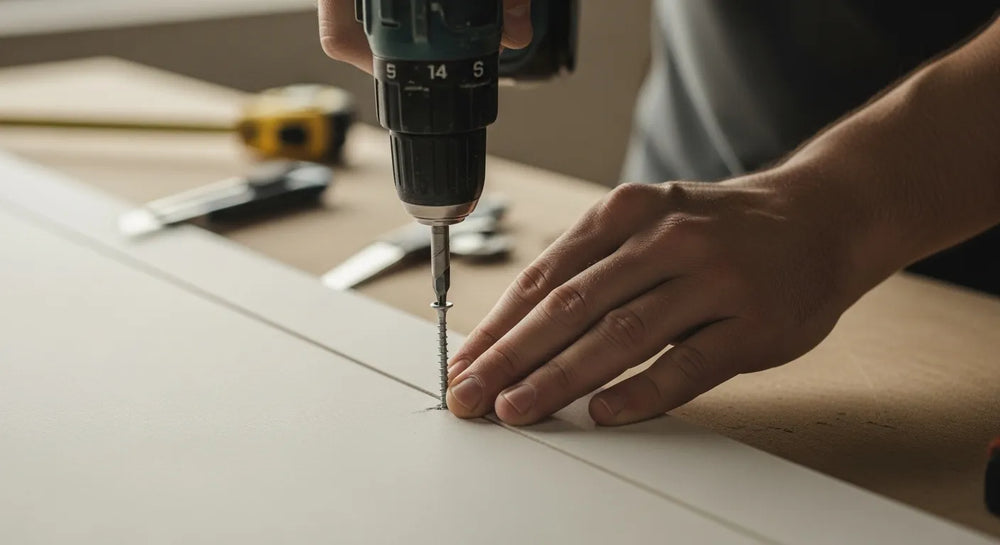
How to Anchor a Bolt into Concrete: A Professional Guide
Table of Contents
- Introduction
- Understanding Concrete Anchoring: The Foundation of Stability
- Types of Concrete Anchors: Choosing the Right Solution
- Selecting the Right Anchor: Key Considerations for Industrial Applications
- The Step-by-Step Process: How to Anchor a Bolt into Concrete
- Common Mistakes to Avoid in Concrete Anchoring
- The Maden.co Advantage: Sourcing American-Made Anchoring Solutions
- Practical Scenarios and Maden.co Solutions
- Conclusion
- FAQ
Introduction
In the demanding world of industrial operations, the integrity of a structure or the stability of machinery often hinges on one critical, yet frequently overlooked, detail: how securely a bolt is anchored into concrete. A loose anchor can lead to catastrophic equipment failure, costly downtime, and even significant safety hazards, turning a simple installation into a complex and expensive problem. For procurement managers, MRO buyers, and design engineers, understanding the science and precision behind proper concrete anchoring isn't just a technical skill—it's a cornerstone of operational excellence and risk mitigation.
This comprehensive guide delves into the essential principles of anchoring bolts into concrete, exploring various anchor types, selection criteria, and the meticulous step-by-step installation process. We will uncover best practices, common pitfalls to avoid, and the critical role that quality, American-made components play in ensuring long-term structural integrity and operational reliability. Our aim is to provide you with the authoritative knowledge necessary to make informed decisions, streamline your procurement processes, and ultimately enhance the safety and efficiency of your projects. By the end, you'll not only understand how to anchor a bolt into concrete, but also why choosing the right materials and methods is paramount for industrial success.
Understanding Concrete Anchoring: The Foundation of Stability
Concrete, a material renowned for its compressive strength, presents unique challenges when it comes to attaching other elements. Unlike wood or steel, concrete is inherently brittle under tension and requires specialized fastening methods to ensure lasting connections. The primary goal of any concrete anchoring system is to transfer loads—whether tension, shear, or a combination—from the attached fixture into the concrete base material safely and efficiently.
Why Proper Anchoring Matters for Industrial Operations
For businesses relying on heavy machinery, critical infrastructure, or complex structural elements, the stakes of improper anchoring are incredibly high:
- Safety: Unstable anchors can lead to equipment dislodgement, structural collapse, and severe injuries. Compliance with safety regulations, such as OSHA standards, often mandates specific anchoring requirements.
- Structural Integrity: Anchors are integral to the load-bearing capacity of foundations, columns, and walls. Their failure compromises the entire structure.
- Operational Reliability: Machines secured by properly anchored bolts operate as intended, reducing vibrations, wear, and unexpected breakdowns. This directly impacts production efficiency and uptime.
- Compliance and Certification: Many industrial applications require adherence to strict engineering standards (e.g., ACI, ICC-ES, DIN, NPT). Sourcing compliant, quality components is non-negotiable.
- Total Cost of Ownership (TCO): While seemingly a small component, the upfront cost of a superior anchor is often dwarfed by the long-term expenses of repairs, liability, and downtime associated with anchor failure.
The Challenges of Anchoring in Concrete
Concrete’s variability and material properties introduce several challenges:
- Heterogeneity: Concrete is a mix of aggregates, cement, and water, leading to potential inconsistencies in strength and density.
- Cracking: Concrete is prone to cracking due to drying shrinkage, thermal expansion, or external loads. Anchors designed for uncracked concrete may fail in cracked conditions.
- Load Dynamics: Industrial environments often involve dynamic loads, vibrations, and seismic forces, which can stress anchors differently than static loads.
- Environmental Exposure: Moisture, chemicals, temperature fluctuations, and corrosive atmospheres can degrade anchor materials over time if not properly specified.
Recognizing these challenges underscores the importance of a systematic approach to concrete anchoring, beginning with the selection of the right anchor type and material. At Maden.co, we understand these complexities and prioritize connecting industrial buyers with verified U.S. manufacturers who produce components designed to meet these rigorous demands.
Types of Concrete Anchors: Choosing the Right Solution
The market offers a diverse array of concrete anchors, each designed for specific applications, load conditions, and concrete types. Understanding their mechanisms is crucial for proper selection.
Mechanical Anchors
Mechanical anchors work by creating friction, expansion, or a keying action within the drilled hole in the concrete. They are generally installed by drilling a hole and then inserting and activating the anchor.
Wedge Anchors
- Mechanism: Consist of a threaded stud, expansion clip, nut, and washer. As the nut is tightened, the expansion clip expands against the side of the drilled hole, creating friction and mechanical interlock.
- Applications: Medium to heavy-duty loads, often used for structural connections, racks, and machinery.
- Considerations: Require proper torqueing; sensitive to hole diameter; generally perform better in uncracked concrete.
Sleeve Anchors
- Mechanism: Similar to wedge anchors but feature a sleeve that expands when the nut is tightened, pushing against the drilled hole.
- Applications: Light to medium-duty applications, often for securing handrails, signs, and light fixtures.
- Considerations: Can be used in hollow block or brick, but their holding power in solid concrete is less than wedge anchors.
Drop-in Anchors
- Mechanism: Internally threaded anchors that are hammered into a pre-drilled hole. A setting tool then expands a cone inside the anchor, creating an interlock with the concrete.
- Applications: Ideal for flush mounting and overhead applications where a threaded rod or bolt needs to be inserted later.
- Considerations: Require a precisely drilled hole and the correct setting tool. For a reliable, U.S.-made solution, consider the BN Products 3/8-inch Inside Thread Sanko Drop-In Concrete Anchor available through Maden.co, perfect for demanding industrial environments.
Undercut Anchors
- Mechanism: These anchors involve drilling a hole and then creating an undercut (a wider cavity) at the bottom of the hole. The anchor then expands into this undercut, providing a positive mechanical interlock that is highly resistant to pull-out loads, especially in cracked concrete.
- Applications: Heavy-duty, critical applications, often in seismic areas or where high reliability in cracked concrete is essential.
- Considerations: Require specialized drilling and setting tools.
Adhesive Anchors (Chemical Anchors)
Adhesive anchors involve injecting a chemical resin into a drilled hole, into which a threaded rod or rebar is then inserted. The resin hardens, creating a strong bond with both the concrete and the anchor element.
- Mechanism: Chemical bonding rather than mechanical expansion. The resin fills irregularities in the hole, providing excellent load transfer over a larger surface area.
-
Types of Resins:
- Epoxy: Offers high strength, long cure times, and excellent creep resistance. Ideal for large diameter holes and heavy loads.
- Vinylester: Faster cure times than epoxy, good for moderately heavy loads, and better chemical resistance.
- Polyester: Fastest cure times, suitable for light to medium loads, and commonly used in non-critical applications.
- Applications: Often preferred for seismic applications, close edge distance or spacing, and resistance to dynamic loads. They do not induce expansion stress on the concrete, which can be beneficial in weak or cracked concrete.
- Considerations: Sensitive to temperature during installation and curing; proper hole cleaning is absolutely critical; shelf life of cartridges.
Each type of anchor has its strengths and limitations. The decision often boils down to a thorough assessment of the specific project requirements, environmental conditions, and the loads the anchor will be expected to bear. Our platform at Maden.co provides access to a vast catalog of over 2.5 million American-made products from 800+ verified U.S. manufacturers, ensuring you can find the precise anchor type to meet your most stringent specifications.
Selecting the Right Anchor: Key Considerations for Industrial Applications
Choosing the appropriate concrete anchor is a critical engineering decision that impacts safety, performance, and cost. It requires a detailed understanding of the application's specific demands and the characteristics of the base material.
Load Type and Magnitude
- Tension Loads (Pull-out): Forces pulling the anchor directly out of the concrete. Mechanical anchors rely on expansion, while adhesive anchors rely on bond strength.
- Shear Loads (Lateral): Forces acting parallel to the concrete surface, trying to cut or bend the anchor. The anchor's diameter and material strength are crucial here.
- Combined Loads: Most real-world applications involve both tension and shear.
- Static vs. Dynamic Loads: Static loads are constant. Dynamic loads involve vibration, impact, or cyclic stresses, which require anchors with higher fatigue resistance, often favoring adhesive anchors or specialized mechanical anchors (like undercut).
Base Material Characteristics
- Concrete Strength: The compressive strength of the concrete (e.g., 2000 psi vs. 4000 psi) directly affects anchor capacity. Higher strength concrete generally allows for greater anchor performance.
- Cracked vs. Uncracked Concrete: This is a paramount distinction. Anchors tested and approved for "cracked concrete" are designed to perform reliably even if cracks propagate through the anchor zone. Most general-purpose anchors are rated for "uncracked concrete," and their performance can be significantly reduced if used in cracked zones. Always assume concrete is cracked if it's subjected to tension or flexure.
- Aggregate Type: The type and hardness of the aggregate can influence drilling difficulty and anchor performance.
- Substrate Condition: Is the concrete new or aged? Is it damp or dry? These factors can affect adhesive anchor cure times and mechanical anchor expansion.
Environmental Factors
- Moisture and Water Exposure: Anchors in wet environments or submerged conditions require materials resistant to corrosion (e.g., stainless steel) and epoxies designed for wet applications.
- Temperature Extremes: High temperatures can reduce the strength of some adhesive anchors, while extreme cold can impact cure times. Mechanical anchors are less sensitive to temperature variations.
- Chemical Exposure: Industrial settings may expose anchors to acids, alkalis, or other corrosive chemicals. Anchor material and adhesive type must be chosen accordingly.
- Seismic Activity: In areas prone to earthquakes, anchors must be specifically approved for seismic loading, often involving robust mechanical designs or high-performance adhesive systems.
Edge Distance and Spacing
- Edge Distance: The distance from the center of an anchor to the nearest edge of the concrete element. Too close, and the concrete can spall or break out, drastically reducing anchor capacity.
- Spacing: The distance between adjacent anchors. If anchors are too close, their stress cones can overlap, leading to a reduction in collective holding power. Manufacturers provide minimum edge distances and spacing requirements that must be strictly followed.
Anchor Material
- Carbon Steel (Zinc Plated): Common for indoor, dry applications. Zinc plating offers some corrosion resistance but is unsuitable for outdoor or corrosive environments.
- Hot-Dip Galvanized Steel: Offers better corrosion resistance than zinc plating, suitable for some outdoor applications, but not for highly corrosive environments or marine exposure.
- Stainless Steel (e.g., 304, 316): Provides superior corrosion resistance, essential for outdoor, wet, or chemically exposed environments. Type 316 offers even greater resistance to chlorides.
- Specialty Alloys: For extreme conditions, other alloys may be required.
Compliance and Standards
Adhering to recognized industry standards is not just a best practice; it's often a legal and ethical requirement. Key standards bodies and approvals include:
- ASTM (American Society for Testing and Materials): Specifies material properties and testing methods.
- ACI (American Concrete Institute): Provides codes and specifications for concrete design and construction, including anchoring.
- ICC-ES (International Code Council Evaluation Service): Issues evaluation reports (ESRs) that provide evidence that a building product complies with codes. For anchors, an ESR is highly valuable, detailing performance data for various concrete conditions.
- DIN (Deutsches Institut für Normung) and NPT (National Pipe Taper): While these refer to specific thread forms or standards often found in components, the overall anchoring system typically follows American standards like ACI for concrete performance.
For a procurement manager under pressure to source a specific DIN 931 compliant hex cap screw, a design engineer needing specific material certifications for a new prototype, or an MRO buyer facing an unexpected equipment breakdown, the ability to quickly find and finance a verified, U.S.-made part is a game-changer. At Maden.co, our mission is to democratize access to American manufacturing, ensuring you can find products that meet these critical industry standards, thereby enhancing your supply chain resilience and reducing procurement friction. Our platform is built on values of American Manufacturing Pride and Industrial Excellence, connecting you with manufacturers dedicated to these standards.
The Step-by-Step Process: How to Anchor a Bolt into Concrete
Successfully anchoring a bolt into concrete is a process that demands precision, the right tools, and strict adherence to manufacturer guidelines. Cutting corners at any stage can compromise the anchor's integrity.
Step 1: Planning and Layout
Before drilling, meticulous planning is essential.
- Identify Anchor Locations: Mark the exact points where anchors will be installed. Use a template if attaching equipment with multiple mounting points.
- Check for Obstructions: Use a rebar locator or ground-penetrating radar (GPR) to identify rebar, conduits, or other embedded elements in the concrete. Drilling into rebar can weaken the concrete and damage your drill bits. Adjust anchor positions if necessary to avoid rebar.
- Verify Edge Distance and Spacing: Confirm that your marked locations adhere to the manufacturer's minimum edge distance and spacing requirements. Failure to do so can lead to concrete breakout and anchor failure.
Step 2: Drilling the Hole
This is arguably the most critical step for mechanical anchors and equally important for chemical anchors.
-
Select the Correct Drill Bit:
- Type: Use a carbide-tipped masonry drill bit. For tough concrete and larger holes, a rotary hammer drill with an SDS (Slotted Drive System) bit is indispensable. Standard hammer drills may suffice for smaller holes in softer concrete, but a rotary hammer is preferred for efficiency and cleaner holes.
- Diameter: The drill bit diameter must precisely match the anchor manufacturer’s specification. A hole that is too small prevents proper anchor expansion; a hole that is too large reduces holding power.
- Depth: Set the drill stop to achieve the exact specified hole depth. For through-bolt applications, ensure the hole is deep enough to pass through the concrete and allow for adequate thread engagement.
-
Drill Technique:
- Hold the drill perpendicular to the concrete surface.
- Maintain steady pressure. Avoid excessive force, which can cause the drill bit to wander or overheat.
- Allow the drill to do the work. Periodically withdraw the bit to clear debris.
Step 3: Preparing the Anchor and Hole
Cleanliness is paramount for both mechanical and adhesive anchors.
-
Clean the Hole Thoroughly: This step cannot be overemphasized. Concrete dust and debris in the hole significantly reduce the holding power of both mechanical and adhesive anchors.
- Brush: Use a stiff nylon or wire brush (per manufacturer recommendations) that matches the hole diameter to scrub the sides of the hole.
- Blow/Vacuum: Use compressed air (oil-free) to blow out dust, or a vacuum to extract it. Repeat brushing and blowing/vacuuming several times until no dust emerges.
-
Prepare Adhesive Anchors (if applicable):
- For two-part adhesive cartridges, ensure proper mixing by dispensing a small amount until a uniform color is achieved.
- Ensure the nozzle is correctly attached and matched to the product.
Step 4: Installing the Anchor
The installation method varies significantly between mechanical and adhesive anchors.
Mechanical Anchor Installation
- Insert the Anchor: Carefully insert the mechanical anchor into the cleaned, drilled hole. For some anchors, like wedge anchors, this involves tapping it lightly with a hammer until the nut and washer are flush with the surface of the fixture or concrete.
-
Set the Anchor:
- Expansion Anchors: For wedge anchors or sleeve anchors, tighten the nut with a torque wrench. The manufacturer will specify the exact torque value. Overtorquing can damage the concrete or the anchor; undertorquing will reduce its holding capacity.
- Drop-in Anchors: After inserting the drop-in anchor flush with the concrete surface, use a specialized setting tool (often provided by the anchor manufacturer) and a hammer to drive the internal cone, expanding the anchor within the hole.
- Fixture Installation: If installing a fixture after the anchor is set, ensure it aligns properly. For robust, American-made components that ensure proper setting and long-term durability, you can find solutions like the 1 Headed Concrete Anchor Shear Connector Chuck or a complete Concrete Anchor Shear Connector Chuck Set in our extensive catalog. These tools are designed for industrial excellence and precision, reflecting our core values at Maden.co.
Adhesive Anchor Installation
- Inject Adhesive: Start injecting the adhesive from the bottom of the hole, slowly withdrawing the nozzle as the hole fills. Ensure the hole is completely filled without air voids, typically about 2/3 full, as the threaded rod will displace the rest.
- Insert Threaded Rod/Rebar: Slowly twist the threaded rod or rebar into the adhesive-filled hole until it reaches the bottom. This ensures good adhesion and helps remove air bubbles.
- Cure Time: Do not disturb or apply any load to the anchor until the adhesive has fully cured. Cure times vary greatly depending on the adhesive type, concrete temperature, and environmental conditions. Consult the manufacturer’s data sheet meticulously.
Step 5: Load Application and Inspection
- Wait for Full Cure (Adhesive): This is non-negotiable. Applying load before full cure will compromise the bond.
- Apply Load: Once cured (or mechanically set), the fixture can be fully secured and loads applied.
- Visual Inspection: Periodically inspect anchors, especially in high-vibration or critical applications, for any signs of loosening, corrosion, or concrete distress.
Following these detailed steps ensures that your concrete anchors perform as intended, providing the stability and security required for your industrial applications. Sourcing these critical components and tools through Maden.co not only gives you access to a wide range of American-made products but also supports our vision for America's manufacturing revival.
Common Mistakes to Avoid in Concrete Anchoring
Even experienced professionals can sometimes overlook details that compromise anchor performance. Avoiding these common mistakes is crucial for the success of your anchoring projects.
- Improper Hole Cleaning: This is the most frequent cause of anchor failure, particularly with adhesive anchors. Dust acts as a bond breaker or prevents mechanical expansion, drastically reducing holding power.
-
Incorrect Drill Bit Size or Depth:
- Too Small: Prevents full expansion of mechanical anchors or proper insertion.
- Too Large: Reduces friction and expansion, making mechanical anchors ineffective. Also, reduces the contact area for chemical anchors.
- Too Shallow: Not enough embedment depth, leading to reduced pull-out strength.
- Too Deep: Can weaken the concrete element or hit rebar/utilities unnecessarily.
-
Overtorquing or Undertorquing Mechanical Anchors:
- Overtorquing: Can stress the concrete, causing micro-cracks or spalling, and potentially strip the anchor threads or deform the anchor itself.
- Undertorquing: Fails to achieve full expansion, resulting in significantly reduced holding capacity. Always use a calibrated torque wrench.
- Ignoring Edge Distance and Spacing: Violating manufacturer's minimums can lead to concrete cone failure or breakout, where a section of concrete detaches around the anchor. This significantly reduces the load-bearing capacity of adjacent anchors.
-
Using the Wrong Anchor for the Application:
- Using an uncracked concrete anchor in a cracked concrete zone.
- Using anchors not rated for seismic loads in seismic areas.
- Using indoor-rated anchors in corrosive outdoor environments.
- Using an anchor that cannot handle the specific tension, shear, or dynamic loads.
- Neglecting Environmental Factors: Failure to account for temperature, moisture, and chemical exposure can lead to premature anchor degradation, adhesive cure issues, or outright failure.
- Drilling into Rebar or Utilities: This damages the concrete's structural integrity, compromises the rebar's function, and can be dangerous if electrical conduits or gas lines are hit. Always scan the concrete before drilling.
- Insufficient Cure Time for Adhesive Anchors: Applying load before the adhesive has fully cured (as per manufacturer's specifications for temperature and humidity) means the chemical bond has not reached its full strength, leading to failure.
- Not Using Manufacturer's Recommended Tools: For specialized anchors (e.g., undercut, specific drop-ins), proprietary drill bits, setting tools, or dispensing guns are often critical for proper installation and achieving rated performance.
By carefully planning, meticulously executing, and adhering to manufacturer guidelines, these common pitfalls can be effectively avoided, ensuring the long-term reliability and safety of your concrete anchoring solutions.
The Maden.co Advantage: Sourcing American-Made Anchoring Solutions
In the complex landscape of industrial procurement, finding reliable, high-quality components efficiently is paramount. At Maden.co, we understand these challenges intimately. Our platform is purpose-built to address the needs of procurement managers, MRO buyers, design engineers, and business owners seeking superior industrial products.
Our mission is to democratize access to American manufacturing. We achieve this by connecting industrial buyers with over 2.5 million American-made products from our expansive network of 800+ verified U.S. manufacturers. This means when you’re looking for the precise concrete anchor, the specialized chuck set, or any other industrial component, you're not just finding a part—you're finding a solution crafted with American Manufacturing Pride and Industrial Excellence.
We envision becoming the definitive platform that proves American-made components are as accessible and convenient as any global alternative, driving the manufacturing revival with our tagline: "America's manufacturing revival is here." Our core values of Digital Innovation and Supply Chain Transparency are reflected in every aspect of our marketplace. We strive to offer an intuitive digital experience that reduces procurement friction, allowing you to quickly locate and source the exact specifications you need.
By partnering with Maden.co, you gain tangible benefits that positively impact your business outcomes:
- Improved Total Cost of Ownership (TCO): Investing in high-quality, American-made components reduces the likelihood of premature failure, costly repairs, and unexpected downtime. Our verified products contribute to greater longevity and performance.
- Ensured Compliance: Our network of U.S. manufacturers often specialize in producing components that adhere to critical industry standards (e.g., DIN, NPT, ASTM, ACI, ICC-ES), giving you peace of mind regarding regulatory and engineering requirements.
- Enhanced Supply Chain Resilience: Sourcing domestically reduces reliance on extended, often volatile, global supply chains. This provides greater control, shorter lead times, and increased reliability, especially in times of disruption.
- Reduced Procurement Friction: Our streamlined platform and vast catalog simplify the search and acquisition process, saving you valuable time and resources.
- Partnership with Verified U.S. Manufacturers: Every manufacturer on our platform is carefully vetted, ensuring you receive products from reputable, quality-driven American businesses. You can learn more about our commitment to championing American manufacturing on our About Us page.
Beyond product access, we offer practical tools designed to support your strategic purchasing. A key differentiator is our Instant Financing option, available during the checkout process. This feature is not just a payment method; it's a strategic tool that allows procurement managers and business owners to manage cash flow effectively and make larger-volume purchases without immediate capital strain. You can apply for Instant Financing at checkout to streamline your capital-intensive projects, ensuring your operations never miss a beat due to funding limitations.
Are you a qualified U.S. manufacturer looking to expand your reach and contribute to the American manufacturing revival? We invite you to register as a vendor and connect with a robust network of industrial buyers who value quality and domestic production.
Practical Scenarios and Maden.co Solutions
Let's consider how Maden.co can be a strategic partner in real-world scenarios:
-
Scenario 1: A Procurement Manager for a New Facility Construction
- Challenge: The project requires thousands of heavy-duty structural anchors for steel beam connections to concrete foundations. Strict compliance with ACI 318 and seismic codes is mandatory. The manager needs to source a high volume of specific, certified anchors quickly and manage the cash flow for such a large purchase.
- Maden.co Solution: The manager leverages Maden.co's extensive catalog to filter for U.S.-made structural anchors with relevant ICC-ESR certifications. They find multiple verified manufacturers offering the exact specifications needed, ensuring both quality and compliance. During checkout, they utilize Instant Financing to secure the large order without tying up significant upfront capital, keeping the project on schedule and budget.
-
Scenario 2: An MRO Buyer Facing an Emergency Equipment Breakdown
- Challenge: A critical piece of machinery has vibrated loose from its concrete mounting, damaging the existing anchors. An MRO buyer needs specialized, high-vibration resistant replacement anchors (e.g., undercut or high-performance adhesive) immediately to minimize downtime. The original anchors were imported, and lead times are now prohibitive.
- Maden.co Solution: The MRO buyer searches Maden.co for "vibration resistant concrete anchors" or "undercut anchors U.S. made." They quickly identify a verified American manufacturer producing the exact type needed, ensuring both rapid availability and superior quality. The streamlined procurement process on Maden.co means the part is ordered and shipped faster than navigating international supply chains, getting the critical machinery back online swiftly. If specific sourcing questions arise, our team is ready to help via our Contact Us page.
-
Scenario 3: A Design Engineer Prototyping a New Heavy Equipment Mount
- Challenge: A design engineer is developing a new mounting system for heavy industrial equipment and needs to select the optimal concrete anchors for extreme shear and tension loads. They require detailed technical specifications, material certifications, and the ability to test various American-made options to ensure the highest safety factors and long-term reliability.
- Maden.co Solution: The engineer browses Maden.co's diverse selection of anchoring solutions, examining product data sheets and certifications from various U.S. manufacturers. They can easily compare the performance characteristics of different mechanical and adhesive anchors, confident that the products listed meet rigorous American standards. This access to detailed, verified information allows them to make an informed design choice, ensuring their new equipment mount is robust and compliant from the outset.
These scenarios illustrate how Maden.co simplifies complex industrial procurement, offering a reliable pathway to quality, American-made components that empower businesses to operate with greater efficiency, resilience, and confidence. For all your industrial supply needs, from foundational anchors to specialized tools, we invite you to explore the vast catalog on our homepage.
Conclusion
Anchoring a bolt into concrete is far more than a simple fastening task; it is a critical engineering discipline that underpins the safety, stability, and operational integrity of industrial infrastructure and machinery. From selecting the appropriate anchor type to meticulously executing each installation step, precision and adherence to best practices are paramount. The choice between mechanical and adhesive anchors, the consideration of load types, environmental factors, and strict compliance with industry standards all contribute to an anchor’s long-term performance and your overall business success.
In today's dynamic industrial landscape, sourcing high-quality, reliable components from trusted suppliers is non-negotiable. Maden.co stands as America's premier B2B marketplace, committed to connecting industrial buyers with an unparalleled selection of American-made products from verified U.S. manufacturers. We champion the values of American Manufacturing Pride, Digital Innovation, and Industrial Excellence, ensuring that the components you procure enhance your supply chain resilience, improve Total Cost of Ownership, and reduce procurement friction.
Don't let inadequate anchoring compromise your projects or your peace of mind. Empower your procurement process with the certainty of U.S.-made quality. We encourage you to explore our extensive catalog on Maden.co today, where you can find everything from robust concrete anchors like the BN Products 3/8-inch Inside Thread Sanko Drop-In Concrete Anchor to specialized installation tools such as the Concrete Anchor Shear Connector Chuck Set. For larger or capital-intensive projects, remember you can apply for Instant Financing directly at checkout, simplifying your purchasing and preserving your cash flow. America's manufacturing revival is here, and Maden.co is your strategic partner in building a more reliable and efficient future.
FAQ
Q1: What is the most common reason for concrete anchor failure?
A1: The most common reason for concrete anchor failure is improper hole cleaning, especially for adhesive anchors. Concrete dust and debris left in the drilled hole prevent the adhesive from bonding effectively or the mechanical anchor from expanding fully, severely reducing its holding capacity. Incorrect drill bit size, insufficient embedment depth, and not adhering to manufacturer's torque specifications are also frequent culprits.
Q2: How do I know if an anchor is suitable for cracked concrete?
A2: To determine if an anchor is suitable for cracked concrete, you must consult the anchor manufacturer's technical data sheet or evaluation report (e.g., an ICC-ESR). These documents will explicitly state if the anchor is approved for use in cracked concrete, often denoted by specific ASTM or ACI testing standards. Anchors without this specific approval should only be used in uncracked concrete conditions.
Q3: What is the importance of "edge distance" when anchoring into concrete?
A3: Edge distance is the distance from the center of an anchor to the nearest edge of the concrete element. It is critically important because if anchors are placed too close to an edge, the concrete can experience premature failure due to a phenomenon called "concrete breakout," where a cone-shaped piece of concrete detaches from the edge. Adhering to manufacturer-specified minimum edge distances ensures the concrete has sufficient material to resist the anchor's loads.
Q4: Can I use Instant Financing on Maden.co for any product?
A4: Yes, Maden.co's Instant Financing option is available during the checkout process for most eligible purchases. This strategic tool is designed to help businesses manage cash flow effectively and facilitate larger-volume or capital-intensive purchases across our extensive catalog of American-made industrial products. The application for Instant Financing is seamlessly integrated into the checkout flow for your convenience.


