
How to Anchor a Carport to Concrete Securely
Table of Contents
- The Indispensable Need for Robust Carport Anchoring
- Understanding Your Foundation: The Concrete Slab
- Selecting the Optimal Anchoring System
- Tools and Equipment for a Professional Installation
- Step-by-Step Carport Anchoring: Best Practices
- Specialized Considerations for Different Carport Designs
- The Maden.co Advantage: Sourcing for Industrial Resilience
- Post-Installation Inspection and Maintenance
- Common Mistakes to Avoid When Anchoring a Carport
- Conclusion
- Frequently Asked Questions (FAQ)
In an industrial landscape where every structural decision carries weight—literally and metaphorically—the stability of outdoor assets like carports is paramount. Far from being simple shade structures, carports often protect valuable fleet vehicles, essential machinery, or critical inventory. Yet, the question of "how to anchor a carport to concrete" is frequently underestimated, leading to vulnerabilities that can manifest as property damage, costly downtime, or even safety hazards during unforeseen weather events. Imagine a critical piece of equipment damaged or a delivery truck delayed because a carport, meant to provide shelter, succumbed to high winds. Such scenarios underscore the importance of precision and expertise in every aspect of industrial infrastructure, right down to the anchors.
This guide is engineered to provide procurement managers, MRO buyers, design engineers, and business owners with an authoritative, practical framework for securely anchoring carports to concrete foundations. We will delve into the critical factors influencing anchor selection, the types of anchoring systems available, best practices for installation, and how sourcing high-quality, U.S.-made components can significantly enhance the long-term resilience and integrity of your structures. Our mission at Maden.co is to democratize access to American manufacturing, ensuring that crucial projects, from large-scale facility expansions to the secure installation of vital outdoor shelters, are supported by the highest quality, most reliable components available. You can learn more about our commitment to industrial excellence and American manufacturing pride by exploring our About Us page.
The Indispensable Need for Robust Carport Anchoring
The decision to install a carport often stems from a need for protection against the elements—sun, rain, snow, and especially wind. However, a carport that isn't properly anchored can become a liability rather than an asset. The forces of nature, particularly high winds, can turn an unanchored or inadequately anchored structure into a dangerous projectile, causing significant damage to surrounding property, vehicles, and potentially posing a severe risk to personnel.
Mitigating Risks and Ensuring Safety
For operations managers, the safety of employees and the protection of company assets are non-negotiable. An improperly anchored carport presents multiple direct risks:
- Wind Uplift: High winds generate aerodynamic uplift forces that can literally rip a carport from its foundation. Without adequate anchorage, the entire structure can be displaced, causing catastrophic damage.
- Lateral Movement: Beyond uplift, strong winds also exert lateral forces, pushing the structure sideways. Proper anchoring resists this sheer force, keeping the carport firmly in place.
- Collapse Potential: Even if not completely dislodged, an inadequately secured carport can experience structural fatigue, leading to eventual collapse, especially if subjected to repeated stress from wind or heavy snow loads.
- Insurance and Liability: In the event of damage or injury caused by an unanchored carport, businesses may face significant insurance hurdles and increased liability, leading to financial repercussions far exceeding the cost of proper anchoring.
Extending Asset Lifespan and Maintaining Operational Continuity
Securing a carport properly is an investment in its longevity and the uninterrupted flow of your operations. When a carport is anchored correctly, it endures environmental stressors without compromising its structural integrity. This means:
- Reduced Wear and Tear: The constant shifting and vibrating of an unanchored structure accelerates wear on its frame, connections, and roofing material. Secure anchoring minimizes this stress.
- Protection of Contents: A stable carport reliably protects the assets underneath it, whether they are sensitive machinery, raw materials, or company vehicles. This directly translates to cost savings by preventing damage and maintaining the service life of these protected assets.
- Avoidance of Downtime: Replacing or repairing a damaged carport, or rectifying damage to its contents, can lead to substantial operational downtime. For a procurement manager, the cost of an unexpected interruption to the supply chain or production schedule can be staggering. Robust anchoring is a preventative measure against such costly disruptions.
Regulatory Compliance and Building Codes
Many jurisdictions have specific building codes and regulations that govern the installation of semi-permanent and permanent structures, including carports. These codes often mandate minimum wind load capacities and require specific anchoring methods. Adhering to these regulations is not only a legal requirement but also a fundamental aspect of responsible business practice. Failing to comply can result in fines, forced demolition, or legal action. Leveraging components that meet or exceed relevant ASTM or DIN standards is not merely about quality; it’s about ensuring regulatory compliance and peace of mind.
Understanding Your Foundation: The Concrete Slab
Before selecting any anchoring system, a thorough assessment of the existing concrete slab is crucial. The integrity of the anchor is only as good as the concrete it's embedded in.
Evaluating Concrete Condition and Strength
Not all concrete is created equal. The age, mix, and overall condition of your concrete slab will dictate its ability to hold an anchor effectively:
- Age and Curing: New concrete needs sufficient time to cure and reach its full compressive strength—typically 28 days. Anchoring into uncured concrete will result in a significantly weaker hold.
- Compressive Strength: Most anchors are designed for concrete with a minimum compressive strength, often expressed in pounds per square inch (psi), typically 2,000 to 4,000 psi. Older or poorly mixed concrete may not meet these requirements.
- Cracks and Damage: Visible cracks, spalling (flaking), or crumbling indicate compromised concrete. Anchoring into damaged concrete is unreliable and dangerous. In such cases, repairing the slab or creating new footings might be necessary.
- Thickness: The depth of your concrete slab is critical. Most mechanical anchors require a minimum embedment depth and a certain distance from edges to prevent blowouts or edge spalling. A typical carport anchor requires at least 4-6 inches of concrete thickness. If the slab is thinner, alternative anchoring methods or additional concrete footings must be considered.
- Reinforcement: The presence of rebar or wire mesh within the concrete enhances its tensile strength and helps distribute loads. While beneficial for the slab itself, striking rebar during drilling can damage drill bits and necessitate repositioning anchor points. Advanced tools can help detect rebar before drilling.
For a design engineer, understanding these concrete properties is fundamental to specifying the correct anchor. For an MRO buyer, sourcing the right tools and anchors that are compatible with the existing concrete conditions is essential to avoid rework and ensure project success.
Identifying Potential Issues: Water Damage and Subsurface Integrity
Beyond visible surface damage, consider factors that might compromise the concrete from underneath:
- Drainage: Poor drainage around the slab can lead to water saturation, freeze-thaw cycles, and erosion underneath, undermining the slab's support.
- Subgrade Compaction: If the soil beneath the slab was not properly compacted during construction, settling can occur, leading to slab movement, cracking, and a compromised base for anchoring.
Selecting the Optimal Anchoring System
The market offers a variety of anchoring solutions, each with its strengths, limitations, and ideal applications. Choosing the right one involves considering the carport's size, expected loads (wind, snow), concrete condition, and installation environment. Sourcing these critical components from a trusted marketplace like Maden.co ensures you're getting robust, reliable, and compliant U.S.-made options.
Mechanical Anchors: The Workhorses of Concrete Fastening
Mechanical anchors expand or wedge within a drilled hole, creating a friction-based or interlock connection with the concrete. They are highly popular due to their strength and relatively straightforward installation.
1. Wedge Anchors
- Description: Consist of a threaded stud, an expansion clip (wedge), a nut, and a washer. As the nut is tightened, the wedge pulls up, expanding the clip against the sides of the drilled hole.
- Pros: High strength, suitable for heavy loads, available in various sizes and materials (e.g., galvanized for corrosion resistance). Visible torque setting.
- Cons: Require precise hole depth, susceptible to concrete cracking if installed too close to an edge or if concrete quality is poor. Not ideal for overhead applications where expansion could be an issue.
- Best Use: Permanent, heavy-duty applications where high pull-out strength is required.
2. Sleeve Anchors
- Description: Similar in principle to wedge anchors but feature a sleeve that expands against the sides of the hole when the nut is tightened.
- Pros: Versatile, can be used in various base materials (concrete, block, brick), easier to remove than wedge anchors if needed (though still a destructive removal).
- Cons: Generally lower load capacity than wedge anchors, especially in tension.
- Best Use: Medium to light-duty applications, or when anchoring into less dense masonry.
3. Drop-In Anchors
- Description: A female-threaded anchor inserted into a pre-drilled hole, then set by driving a setting tool to expand the anchor against the concrete walls. A bolt or threaded rod is then threaded into the anchor.
- Pros: Flush mounting, ideal for overhead applications, can be installed before the item being fastened, allowing for easy component removal and reinstallation. Excellent for repetitive tasks or where adjustability is needed.
- Cons: Require a specific setting tool, not as strong as wedge anchors in some concrete types.
- Best Use: When a flush finish is desired, for overhead applications, or for removable fixtures. For procurement managers and MRO buyers looking for versatile, reliable options for various fixtures, the BN Products 3/8-Inch Inside Thread Sanko Drop-In Concrete Anchor offers a prime example of American-made excellence. This anchor's design allows for secure, flush mounting, making it an invaluable component for critical, long-term installations.
4. Hammer-Drive Anchors
- Description: A simple, non-removable anchor where a nail-like pin is driven through a sleeve, expanding it to create a tight friction fit.
- Pros: Quick and easy installation.
- Cons: Low load capacity, non-removable without significant concrete damage, mostly for light-duty applications.
- Best Use: Very light-duty, non-critical applications where speed is the primary concern and removability is not.
Chemical Anchors: For Maximum Strength and Vibrational Resistance
Chemical anchors use a resin or epoxy compound to create a strong, bond between a threaded rod or rebar and the concrete.
- Description: A drilled hole is filled with a two-part adhesive resin, into which a threaded rod or rebar is inserted. The resin cures, forming a robust, waterproof bond.
- Pros: Extremely high load capacity, excellent resistance to dynamic loads and vibration, ideal for cracked concrete (if designed for it), waterproof seal, no expansion stress on the concrete, allowing for closer edge distance.
- Cons: Longer curing time, requires careful mixing and application, temperature sensitive during installation and curing. More complex installation process.
- Best Use: Heavy-duty, critical applications, seismic zones, cracked concrete, situations requiring superior load transfer and long-term durability.
Material Considerations: Durability and Environment
Beyond the anchor type, the material it's made from is equally important:
- Galvanized Steel: Offers good corrosion resistance for outdoor use, balancing cost and performance.
- Stainless Steel: Provides superior corrosion resistance, essential in harsh environments (e.g., coastal areas, chemical exposure) but at a higher cost.
- Carbon Steel (Zinc Plated): Suitable for dry, indoor environments, but less ideal for carports exposed to weather.
For a design engineer, specifying the correct material is crucial for ensuring the carport's structural integrity over its intended lifespan, especially when considering environmental factors that could lead to premature failure due to corrosion.
Tools and Equipment for a Professional Installation
The right tools are as important as the right anchors. Using professional-grade equipment ensures precise drilling, proper anchor setting, and ultimately, a secure installation.
Essential Tool List:
- Rotary Hammer Drill: Indispensable for drilling clean, precise holes in concrete. A standard hammer drill might suffice for light-duty tasks, but for consistent performance in challenging concrete, a rotary hammer is superior.
- Carbide-Tipped Drill Bits: Matched precisely to the anchor diameter, these bits are designed to withstand the abrasive nature of concrete. Always have spares.
- Measuring Tape and Marking Tools: For accurate layout of anchor points.
- Level and Straight Edge: To ensure the carport frame is perfectly plumb and level before anchoring.
- Cleaning Tools: A wire brush and a compressed air blower or vacuum are crucial for removing concrete dust from drilled holes. This dust can significantly reduce anchor holding power.
- Torque Wrench: For mechanical anchors, tightening to the manufacturer's specified torque is critical for achieving optimal holding power without over-stressing the concrete or the anchor.
- Safety Gear: Eye protection, hearing protection, gloves, and a dust mask are non-negotiable.
- Anchor Setting Tools: Specific to certain anchor types, like drop-in anchors or chemical anchors. For applications requiring precise installation and reliable performance of shear connector chucks, exploring options like the 1-Headed Concrete Anchor Shear Connector Chuck can streamline your process. For comprehensive needs, a full Concrete Anchor Shear Connector Chuck Set provides the versatility and efficiency required for demanding projects, ensuring that every anchor is set with optimal precision.
Procurement managers looking to equip their MRO teams with high-performance tools and components can rely on Maden.co. We connect buyers with robust, U.S.-made tools and anchors designed for industrial excellence and built to last.
Step-by-Step Carport Anchoring: Best Practices
A methodical approach to installation is key to achieving a secure and lasting anchor.
Phase 1: Planning and Layout
- Read Manufacturer Instructions: Always consult both the carport and anchor manufacturer's guidelines. These often contain critical information regarding spacing, embedment depth, and load capacities.
- Position the Carport: Carefully position the carport frame in its final desired location. Ensure it is level and plumb.
- Mark Anchor Points: Using a permanent marker, accurately mark the center of each pre-drilled base plate hole onto the concrete slab. Double-check measurements and alignment. Pay attention to any edge distance requirements for your chosen anchor type.
Phase 2: Drilling
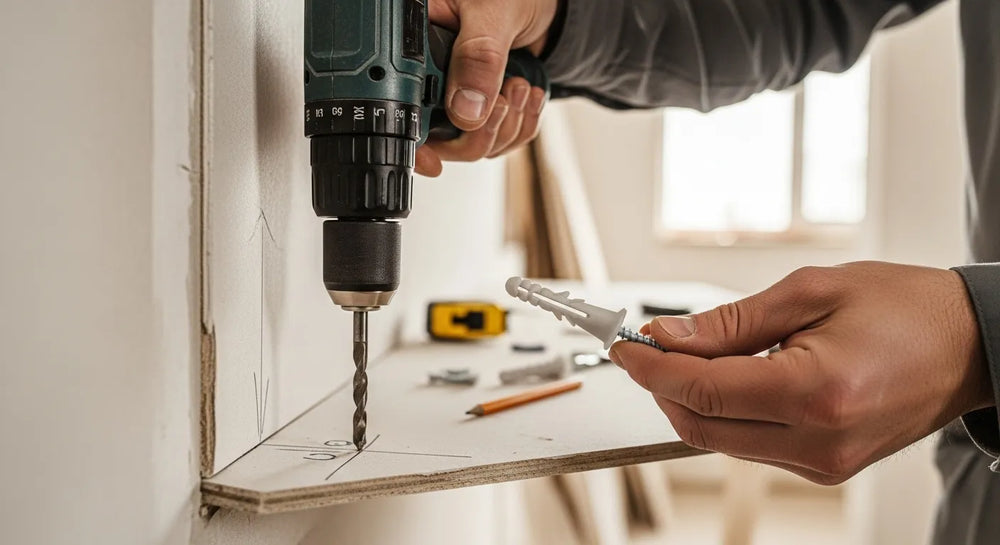
- Select the Correct Drill Bit: Use a carbide-tipped drill bit that matches the exact diameter specified by the anchor manufacturer. Using the wrong size will compromise the anchor's hold.
- Set Drill Depth: For mechanical anchors, set the drill stop on your rotary hammer to ensure the hole is drilled to the precise embedment depth required, plus a small amount (about 1/2 inch) for dust accumulation. For chemical anchors, the depth might be greater.
- Drill Perpendicularly: Drill straight down, perpendicular to the concrete surface. Angled holes will reduce the anchor's effectiveness. Maintain a steady, firm pressure, allowing the hammer drill to do the work.
- Avoid Rebar: If you encounter rebar, do not force the drill. Reposition the anchor point slightly if possible, or use specialized rebar-cutting bits if absolutely necessary and approved by a structural engineer.
Phase 3: Hole Cleaning
This is perhaps the most overlooked, yet most critical, step for mechanical anchors.
- Brush: Use a stiff wire brush to thoroughly scrub the inside of each drilled hole, dislodging concrete dust from the walls.
- Blow/Vacuum: Use compressed air (with appropriate eye protection) or a vacuum to blow/suck out all remaining dust and debris. Repeat brushing and blowing/vacuuming several times until the hole is completely clean. Dust acts as a lubricant, significantly reducing the friction needed for mechanical anchors to hold. For chemical anchors, thorough cleaning is even more paramount for the epoxy to bond effectively.
Phase 4: Anchor Installation
-
Insert Anchors:
- Mechanical Anchors: Insert the anchor through the carport base plate hole and into the cleaned concrete hole. For wedge anchors, ensure the threaded stud extends sufficiently above the base plate to allow for the nut and washer. For drop-in anchors, install the anchor first, then bolt the base plate down.
- Chemical Anchors: Follow the manufacturer's instructions precisely for mixing and dispensing the resin. Fill the hole from the bottom up to prevent air pockets. Insert the threaded rod with a twisting motion to ensure full contact with the resin. Allow the specified curing time.
-
Tighten (Mechanical Anchors Only):
- Place the washer and nut onto the threaded stud.
- Hand-tighten first, then use a torque wrench to tighten to the manufacturer's specified torque setting. Do not over-tighten, as this can damage the concrete or strip the anchor, compromising its holding power. Do not under-tighten, as this will result in an inadequate hold.
- Final Check: Once all anchors are installed and tightened, perform a final visual inspection to ensure everything is secure.
This systematic approach, utilizing quality American-made components and tools, ensures that your carport is anchored with the highest degree of reliability.
Specialized Considerations for Different Carport Designs
While the general principles of anchoring remain consistent, specific carport designs and environmental factors necessitate tailored approaches.
Freestanding Carports vs. Attached Carports
- Freestanding: These structures bear all wind and snow loads independently. Consequently, their anchoring systems must be robust enough to resist all uplift, lateral, and overturning forces. The entire stability relies on the foundation connection.
- Attached/Lean-to Carports: These carports often share a wall with an existing building, potentially reducing some lateral load on the attached side. However, the connection to the main building must be professionally engineered and executed to avoid compromising the main structure. The non-attached sides still require robust anchoring.
Open-Sided vs. Partially Enclosed Carports
The degree of enclosure significantly impacts wind load:
- Open-Sided: While open designs might seem less susceptible to wind, they are still subject to significant uplift and drag forces. The wind can flow under and over the roof, creating complex aerodynamic pressures.
- Partially Enclosed: Adding walls or solid panels increases the surface area exposed to direct wind pressure. This amplifies both uplift and lateral forces, demanding even stronger anchors and a more rigorous engineering assessment. Local building codes for enclosed structures are often more stringent.
Wind Load Calculations and Seismic Zones
For larger carports, or those in regions prone to high winds or seismic activity, professional engineering analysis is indispensable.
- Wind Load: Engineers calculate wind pressure based on local wind speed data, exposure category (e.g., open country vs. urban), building height, and roof shape. These calculations determine the precise uplift, lateral, and downward forces that the anchors must resist. Simply using generic anchors based on appearance is a dangerous oversight.
- Seismic Zones: In earthquake-prone areas, anchors must be specifically designed to withstand dynamic, cyclical loading. This often means using specialized post-installed anchors qualified for seismic applications (e.g., per ACI 355.2 and ICC-ES AC193). Chemical anchors are often preferred here due to their robust bond and ability to perform in cracked concrete.
For a business owner, understanding these complexities can seem daunting. This is precisely where partnering with a reliable supplier like Maden.co, which champions industrial excellence and provides access to expertly manufactured products, becomes invaluable. We streamline the procurement process, helping you find components that meet stringent industry standards and project-specific demands.
The Maden.co Advantage: Sourcing for Industrial Resilience
In the demanding world of industrial procurement, the choice of supplier is as critical as the choice of component. At Maden.co, we are not just a marketplace; we are a strategic partner committed to building a more reliable and efficient procurement process by connecting you with the backbone of American manufacturing. Our platform is meticulously designed to support procurement managers, MRO buyers, and design engineers in overcoming the challenges of sourcing critical components.
Unparalleled Access to American Manufacturing Excellence
Our core mission is to democratize access to American manufacturing. We achieve this by connecting industrial buyers with over 2.5 million American-made products from our network of 800+ verified U.S. manufacturers. When you search for "how to anchor a carport to concrete" on our platform, you're not just finding anchors; you're finding products that embody:
- American Manufacturing Pride: Each product is a testament to the quality, innovation, and craftsmanship inherent in U.S. production. This pride translates into components that perform reliably and consistently.
- Supply Chain Transparency: We eliminate the guesswork. Our platform provides clear information about product origins, certifications, and manufacturer credentials, ensuring you know exactly what you're buying and where it comes from. This transparency is crucial for managing risk and ensuring compliance.
- Industrial Excellence: Our verified manufacturers adhere to stringent quality control standards, ensuring that every anchor, chuck, or fastener meets the rigorous demands of industrial applications. For a procurement manager under pressure to source a specific ASTM-compliant anchor, or a design engineer needing specific material certifications, the ability to quickly find a verified, U.S.-made part is a game-changer.
- Customer Empowerment: We empower buyers with the tools and information they need to make informed decisions, reducing procurement friction and improving Total Cost of Ownership (TCO) by minimizing defects, delays, and rework.
Streamlined Procurement and Digital Innovation
Our vision is to become the definitive platform that proves American-made components are as accessible and convenient as any global alternative. This means leveraging digital innovation to simplify the entire procurement process:
- Vast Catalog: Easily navigate our extensive catalog of industrial components, including specialized anchors, fasteners, and tools required for robust carport installations.
- Verified Suppliers: Rest assured that you are sourcing from reliable, U.S.-based manufacturers who are committed to quality and delivery.
- Efficiency: Our platform is built for speed and ease of use, allowing you to quickly identify, compare, and purchase the exact components you need, cutting down on lead times and administrative overhead.
- Instant Financing: A key differentiator for Maden.co is our Instant Financing option. We understand that large-volume purchases or capital-intensive projects require flexible financial solutions. This feature, available at checkout, allows procurement managers and business owners to manage cash flow effectively, make larger volume purchases without upfront capital strain, and keep projects moving forward without delay. It's a strategic tool designed to support your financial agility and project timelines.
We firmly believe that America's manufacturing revival is here, and Maden.co is at the forefront, bridging the gap between exceptional American manufacturers and the businesses that need their unparalleled quality. If you are a qualified U.S. manufacturer looking to expand your reach and contribute to this revival, we invite you to Register as a Vendor and join our growing network.
Post-Installation Inspection and Maintenance
Installing anchors is not a "set it and forget it" task. Regular inspection and maintenance are essential to ensure the long-term integrity and safety of your carport.
Routine Checks:
- Anchor Tightness: Over time, vibrations or slight material shifts can cause anchors to loosen. Periodically check all nuts and bolts for tightness, re-torquing them to the manufacturer's specifications if necessary.
- Corrosion: Inspect anchors and base plates for any signs of rust or corrosion, especially in outdoor environments. If surface rust is present on non-stainless components, address it promptly with appropriate rust treatments or protective coatings. If an anchor shows significant corrosion or structural degradation, it may need to be replaced.
- Concrete Integrity: Look for new cracks, spalling, or movement in the concrete around the anchor points. These could indicate concrete fatigue or issues with the underlying slab.
- Carport Structure: While inspecting anchors, also check the overall carport frame for any signs of stress, bending, or damage that might put undue strain on the anchors.
For critical infrastructure, proactive maintenance can prevent minor issues from escalating into major, costly repairs. If you have specific questions about product selection for maintenance or new installations, our team is ready to help; feel you can Contact Us anytime.
Common Mistakes to Avoid When Anchoring a Carport
Even with the best intentions, certain pitfalls can compromise the effectiveness of your carport anchoring. Awareness of these common mistakes can save significant time, money, and ensure safety.
- Ignoring Concrete Quality: Assuming all concrete is sufficient for anchoring is a critical error. Always assess the slab's age, thickness, strength, and condition.
- Incorrect Anchor Type: Using a light-duty anchor for a heavy-duty structure, or a standard anchor in a high-wind zone, invites failure. Match the anchor to the load and environmental conditions.
- Improper Drill Bit Size or Depth: An undersized hole won't allow the anchor to expand properly; an oversized hole won't provide enough friction. Too shallow an embedment depth reduces holding power.
- Dirty Holes: Concrete dust left in drilled holes is a primary reason for mechanical anchor failure. Cleanliness is paramount.
- Over- or Under-Tightening: Over-tightening can stress and crack the concrete or yield the anchor bolt, while under-tightening results in an insecure connection. Always use a torque wrench to manufacturer specifications.
- Ignoring Edge Distance and Spacing: Anchors too close to an edge or too close to each other can cause the concrete to crack and fail, reducing the overall integrity of the anchorage.
- Lack of Corrosion Protection: For outdoor structures, using anchors without adequate corrosion resistance (e.g., untreated carbon steel) will lead to premature failure.
- Failing to Check Local Codes: Always verify local building codes and obtain necessary permits. Compliance protects your investment and ensures safety.
By meticulously avoiding these common missteps, you ensure that your carport's anchoring is not merely adequate, but optimally secure and resilient.
Conclusion
Securing a carport to concrete is more than just a task; it's a critical investment in the safety, longevity, and operational continuity of your industrial assets. The stability of these structures directly impacts everything from vehicle protection to preventing costly operational disruptions. From assessing your concrete slab and selecting the appropriate anchoring system—be it robust mechanical options like wedge or drop-in anchors, or high-strength chemical solutions—to executing a precise, step-by-step installation, every detail matters.
For procurement managers, MRO buyers, and design engineers, making informed decisions on component sourcing is paramount. When the integrity of your infrastructure is on the line, compromising on quality is never an option. At Maden.co, we are dedicated to providing the definitive platform for sourcing American-made industrial supplies, ensuring you have access to the highest quality anchors, tools, and fasteners necessary for resilient installations. Our commitment to American Manufacturing Pride, Digital Innovation, Supply Chain Transparency, Industrial Excellence, and Customer Empowerment means you can find components that meet stringent industry standards, enhance supply chain resilience, and reduce procurement friction.
Don't let inadequate anchoring compromise your operations. Leverage the strength of American manufacturing for your next project. We invite you to explore our comprehensive catalog of U.S.-made products at Maden.co to find the precise anchoring solutions your business needs. You can apply for Instant Financing at checkout to streamline your capital-intensive projects, ensuring that vital installations are never delayed by cash flow constraints. Secure your future, one quality American-made component at a time.
Frequently Asked Questions (FAQ)
Q1: How do I know which type of anchor is best for my carport?
A1: The best anchor type depends on several factors: the size and weight of your carport, local wind and snow load requirements, the thickness and condition of your concrete slab, and whether the installation needs to be temporary or permanent. Mechanical anchors like wedge or sleeve anchors are common for permanent installations, while drop-in anchors offer a flush finish and allow for easy component removal. Chemical anchors provide superior strength for heavy loads or challenging concrete. Always consult the carport manufacturer's recommendations and consider getting advice from a structural engineer for large or complex projects.
Q2: Can I anchor a carport to cracked or damaged concrete?
A2: Anchoring directly into cracked or severely damaged concrete is generally not recommended for mechanical anchors, as it can compromise the anchor's holding power and lead to structural failure. For minor, non-structural cracks, specific chemical anchors designed for cracked concrete may be an option. However, for significant damage, the concrete slab should be repaired, reinforced, or new footings poured before attempting to anchor the carport. The integrity of your foundation is paramount to the stability of your structure.
Q3: How do I ensure I'm drilling the correct hole size and depth for my anchors?
A3: Precision in drilling is critical. Always refer to the specific anchor manufacturer's instructions for the exact drill bit diameter and embedment depth required. Using a carbide-tipped drill bit that matches the anchor's diameter is essential. For depth, use a drill stop on your rotary hammer or mark the bit with tape to ensure consistency. After drilling, thoroughly clean the holes of all concrete dust using a wire brush and compressed air or a vacuum, as residual dust can significantly reduce the anchor's effectiveness.
Q4: What are the benefits of using Maden.co for sourcing carport anchoring components?
A4: Maden.co offers industrial buyers unparalleled access to a vast catalog of over 2.5 million high-quality, U.S.-made products from 800+ verified American manufacturers. This ensures you receive reliable components that meet stringent industrial standards, enhancing your supply chain resilience and reducing procurement friction. Our platform prioritizes transparency, helping you find parts with clear certifications and origins. Additionally, we provide Instant Financing at checkout, a strategic tool that helps businesses manage cash flow effectively for large-volume purchases or capital-intensive projects, ensuring your installations proceed without financial delays.


