
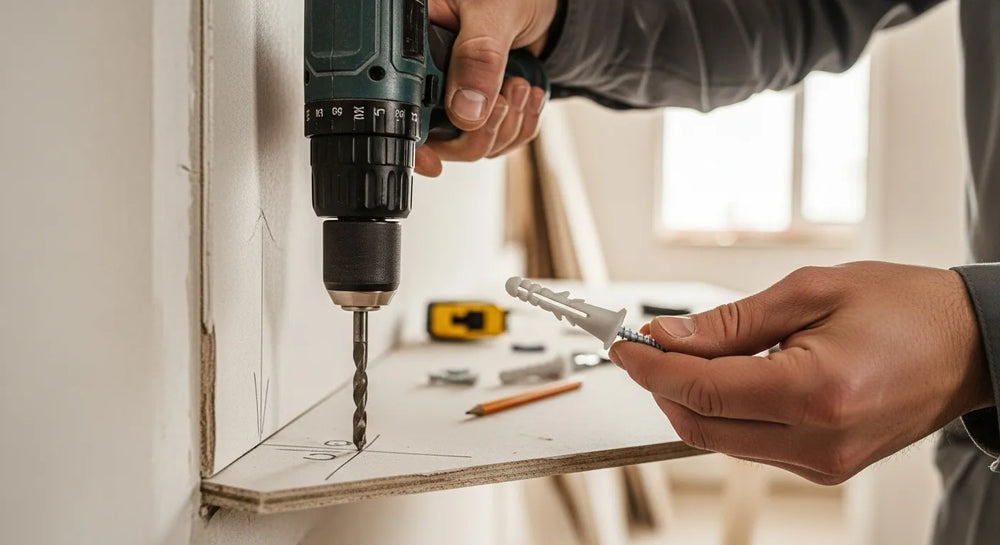
How to Anchor a Wall Frame to Concrete: A Professional Guide
Table of Contents
- Understanding the Criticality of a Secure Anchor
- Preliminary Steps: Assessment and Preparation
- Choosing the Right Concrete Anchor for Wall Frames
- The Step-by-Step Process: Anchoring a Wall Frame to Concrete
- Best Practices for Long-Term Durability and Safety
- Maden.co's Role in Streamlining Your Procurement of Anchoring Solutions
- Why American-Made Anchors Matter: Beyond the Buy Local Trend
- Conclusion
- FAQ
The integrity of a structure often hinges on its most fundamental connections. Imagine the frustration and significant financial implications when a seemingly minor detail, like the anchoring of a wall frame to a concrete slab, fails. It's not merely an inconvenience; it can lead to critical structural instability, costly repairs, project delays, and, most importantly, safety hazards. For procurement managers, MRO buyers, and design engineers, selecting the right fastening solutions isn't just about finding a part; it's about ensuring compliance, enhancing longevity, and safeguarding operations. This guide delves deep into the essential considerations and practical steps required to securely anchor a wall frame to concrete, providing a definitive roadmap to reliable and lasting results. We will explore the various anchor types, installation techniques, and critical best practices, all while underscoring the strategic advantage of sourcing high-quality, American-made components to bolster your projects.
Understanding the Criticality of a Secure Anchor
Anchoring a wall frame to a concrete substrate is far more than a simple attachment; it's a foundational element of structural stability. Whether you are erecting a non-load-bearing partition, a robust perimeter wall, or a crucial machine enclosure, the connection to the concrete slab dictates the frame's ability to resist lateral forces, seismic activity, and even everyday wear and tear. A poorly anchored wall can lead to a cascade of problems, from cosmetic cracks and operational inefficiencies to catastrophic structural failures.
In industrial settings, the stakes are even higher. Equipment mounts, safety barriers, and critical infrastructure all rely on secure anchors. Failure in these applications can translate directly to production downtime, regulatory fines, and potential harm to personnel. Therefore, precision, material quality, and adherence to engineering specifications are paramount. Our commitment at Maden.co is to ensure that professionals have access to the highest caliber components, manufactured right here in the U.S., to meet these exacting demands. You can learn more about our mission to champion American manufacturing here, connecting buyers with the quality and transparency they deserve: About Us.
The Risks of Improper Anchoring
- Structural Instability: The most obvious risk. A wall that is not properly anchored can shift, lean, or even collapse, especially under external loads or environmental stress.
- Safety Hazards: Falling structures or equipment can cause severe injuries or fatalities. This is a primary concern in any industrial or commercial environment.
- Operational Disruptions: Repairing a failed anchor or damaged wall requires taking equipment offline, halting production, and diverting resources, leading to significant financial losses.
- Increased Maintenance Costs: Poor initial anchoring often necessitates frequent repairs and adjustments, incurring ongoing expenses that could have been avoided with a proper initial installation.
- Regulatory Non-Compliance: Many building codes and industry standards mandate specific anchoring methods and materials. Deviating from these can lead to project rejection, fines, or legal liabilities.
- Diminished Asset Value: A building or facility with compromised structural integrity loses value and trustworthiness, impacting future investments and operations.
Preliminary Steps: Assessment and Preparation
Before any anchor is drilled or fastened, a thorough assessment and meticulous preparation are essential. This foundational phase dictates the success and longevity of your anchoring solution. Rushing this stage can lead to incorrect anchor selection, installation failures, and ultimately, a compromised structure.
Evaluating the Concrete Slab
The concrete slab is your foundation, and its characteristics directly impact anchor performance.
- Age and Curing: New concrete requires different considerations than aged concrete. Fully cured concrete (typically 28 days for maximum strength) is ideal for most anchoring, as premature anchoring in uncured concrete can compromise both the concrete and the anchor's hold.
- Compressive Strength: This is a critical factor. Anchors are rated for specific concrete strengths (e.g., PSI or MPa). Knowing the concrete's strength ensures you select an anchor that won't pull out or damage the substrate.
- Condition: Inspect for cracks, spalling, moisture, or contamination (oil, paint, sealers). Damaged or deteriorated concrete may require repair before anchoring or necessitate alternative anchoring methods.
- Reinforcement: Be aware of the presence and location of rebar or post-tensioning cables within the slab. Drilling into these can weaken the slab, damage tools, or create dangerous conditions. Utilize ground-penetrating radar (GPR) or rebar locators if necessary.
Understanding the Wall Frame Material
The material of your wall frame—whether wood, light-gauge steel, or heavy structural steel—will influence the type and size of the fasteners used to connect the frame to the anchors.
- Wood Framing: Typically requires lag screws, bolts, or nails to attach to anchors.
- Metal Stud Framing: Often uses self-tapping screws or bolts into pre-drilled holes in the track.
- Structural Steel: May require high-strength bolts, welding, or specific clip systems designed to integrate with heavy anchors.
Site Preparation
A clean, organized, and accurately marked work area is crucial for safety and efficiency.
- Cleaning: Remove all dirt, debris, dust, and standing water from the concrete surface where the wall frame will rest. This ensures a tight fit and proper anchor adhesion or expansion.
- Layout and Marking: Precisely lay out the wall frame's position on the concrete. Use chalk lines, laser levels, and measuring tapes to mark the exact locations for each anchor point. Accuracy here prevents misaligned walls and unnecessary rework.
- Obstruction Checks: Confirm no electrical conduits, plumbing lines, or other utilities run beneath your proposed drilling sites.
Tool and Material Selection Considerations
Having the right tools and ancillary materials is non-negotiable for professional results.
- Drilling Equipment: A hammer drill is almost always necessary for concrete. Ensure it's powerful enough for the diameter and depth of your holes. Rotary drills are insufficient for concrete.
- Drill Bits: Use high-quality, carbide-tipped masonry bits, specifically designed for hammer drills. The bit diameter must precisely match the anchor manufacturer's specifications.
- Dust Removal: A shop vacuum, air compressor, or specialized dust extraction system is critical for cleaning drill holes. Residual dust severely compromises anchor performance, especially for adhesive anchors.
- Safety Gear: Always wear appropriate personal protective equipment (PPE), including safety glasses, hearing protection, gloves, and a dust mask.
- Sealants/Gaskets: For applications requiring moisture barriers or thermal breaks, consider sill plate gaskets or mastics between the frame and concrete.
Choosing the Right Concrete Anchor for Wall Frames
The selection of a concrete anchor is a critical decision that influences the structural integrity, safety, and longevity of your wall frame. There's no one-size-fits-all solution; the ideal anchor depends on a confluence of factors, each demanding careful consideration.
Factors Influencing Anchor Selection
-
Load Requirements: This is paramount. What type of forces will the wall frame experience?
- Tensile Load (Pull-out): Forces pulling the anchor straight out of the concrete.
- Shear Load (Lateral): Forces pushing the anchor sideways, parallel to the concrete surface.
- Combined Loads: Most applications involve a combination of both.
- Consider static vs. dynamic loads, and any potential for vibration.
-
Environmental Conditions:
- Moisture/Corrosion: For outdoor applications or wet environments, stainless steel or galvanized anchors are essential to prevent rust and degradation.
- Temperature Extremes: High or low temperatures can affect the performance of some chemical anchors.
- Seismic Activity: In earthquake-prone regions, specific seismic-rated anchors are required, designed to withstand cyclical loads.
- Frame Material: As discussed, the wall frame's material dictates how it will connect to the anchor.
- Concrete Type and Condition: The strength, density, and presence of cracks in the concrete heavily influence anchor choice. Some anchors perform poorly in cracked concrete.
-
Installation Constraints:
- Edge Distance and Spacing: Anchors require minimum distances from concrete edges and other anchors to prevent concrete breakout.
- Embedment Depth: The depth the anchor is set into the concrete directly impacts its strength.
- Through-Fastening vs. Pre-setting: Can you drill through the frame and concrete simultaneously (through-fastening), or must anchors be set first (pre-setting)?
- Flush Finish: Do you need an anchor that sits flush with the concrete surface?
Types of Anchors for Wall Frames
Mechanical Anchors
These anchors rely on friction, keying, or expansion against the concrete to create a strong hold. They are generally robust and widely used.
-
Wedge Anchors:
- Description: Consist of a threaded rod with an expansion clip at one end and a nut/washer at the other. As the nut is tightened, the clip expands against the drilled hole, wedging the anchor into place.
- Pros: High strength, excellent for heavy loads, through-fastening applications, reliable in solid concrete.
- Cons: Not ideal for cracked concrete, requires precise hole diameter and depth.
- Best Use: Heavy-duty applications, structural elements, securing bottom plates where high pull-out strength is needed.
-
Sleeve Anchors:
- Description: Similar to wedge anchors but with a sleeve that expands when the nut is tightened.
- Pros: Versatile for light to medium loads, works in a variety of base materials (solid concrete, block, brick), easier to remove than wedge anchors if needed.
- Cons: Not as strong as wedge anchors, can be prone to over-tightening.
- Best Use: Light to medium wall frames, securing fixtures, electrical boxes.
-
Drop-In Anchors:
- Description: A female-threaded insert that is "dropped in" a pre-drilled hole and then expanded internally with a setting tool. The internal threads accept machine screws or threaded rods.
- Pros: Flush finish, allows for future attachment and removal of components, ideal for applications requiring frequent changes or where a smooth surface is desired. They are particularly useful for scenarios where you might need to attach and detach the frame or equipment secured to it, offering excellent reusability. For a dependable solution in this category, consider the BN Products 3/8-inch Inside Thread Sanko Drop-In Concrete Anchor, a high-quality, U.S.-made component that ensures a secure and accessible connection.
- Cons: Requires a specific setting tool, not as robust for extreme heavy loads as wedge anchors.
- Best Use: When a flush-mount, removable connection is needed for the wall frame, or for attaching equipment that may need future servicing.
-
Tapcon Screws (Concrete Screws):
- Description: Self-tapping screws with hardened threads designed to cut into concrete.
- Pros: Fast and easy installation, no need for a separate anchor, good for lighter loads, removable.
- Cons: Limited to lighter loads, requires a specific tapcon drill bit, susceptible to stripping if over-tightened.
- Best Use: Non-load-bearing wall frames, furring strips, light fixtures.
-
Hammer Drive Anchors:
- Description: A two-part anchor consisting of a nail/pin and an expansion sleeve. The nail is hammered into the sleeve, causing it to expand.
- Pros: Quick installation, tamper-resistant once set.
- Cons: Non-removable, generally for light to medium loads.
- Best Use: Permanent, lighter duty attachments where speed is critical.
Adhesive/Chemical Anchors
These anchors use a resin-based adhesive to bond a threaded rod or rebar into the concrete.
- Description: A hole is drilled, cleaned thoroughly, and then filled with a chemical resin (epoxy, polyester, vinyl ester). A threaded rod or rebar is inserted, and the resin cures to create a strong, waterproof bond.
- Pros: Extremely high strength, excellent in cracked concrete, distributes load over a larger area, resistant to vibration, creates a waterproof seal.
- Cons: Longer cure times, temperature sensitive during installation, requires precise mixing and application, more expensive.
- Best Use: Critical structural applications, heavy machinery, seismic zones, situations where mechanical anchors might cause concrete spalling.
Specialty Anchors
-
Powder-Actuated Fasteners (PAF):
- Description: Utilize a small explosive charge to drive a fastener into concrete.
- Pros: Extremely fast installation, high productivity.
- Cons: Requires specialized training and licensing, significant safety precautions, limited to certain concrete types, not easily removable.
- Best Use: High-volume non-structural fastening, securing bottom plates quickly in appropriate conditions.
-
Undercut Anchors:
- Description: The drill bit creates an inverted cone shape at the bottom of the hole, and the anchor expands into this undercut, creating a mechanical interlock.
- Pros: Superior performance in cracked concrete and seismic applications, very high strength.
- Cons: Requires specialized drill bits and installation tools, more complex installation.
- Best Use: Extremely heavy loads, critical structural connections, highly dynamic environments.
For procurement managers or design engineers needing specific material certifications or robust fastening solutions, the ability to quickly find and finance verified, U.S.-made parts is a game-changer. At Maden.co, we offer access to over 2.5 million American-made products from our network of 800+ verified U.S. manufacturers, ensuring that you can source the exact anchors and related tools needed for your projects, such as specialized setting tools or drill bits. Our vision is to become the definitive platform that proves American-made components are as accessible and convenient as any global alternative, driving the manufacturing revival with our tagline: "America's manufacturing revival is here."
Material Considerations for Anchors
Beyond the type of anchor, the material it's made from is crucial, especially in varying environments.
- Carbon Steel (Zinc Plated): Most common, cost-effective for indoor, dry applications. Zinc plating offers basic corrosion resistance.
- Hot-Dip Galvanized Steel: Offers enhanced corrosion resistance for outdoor or mildly damp environments.
- Stainless Steel (304 or 316): Superior corrosion resistance for highly corrosive or wet environments (e.g., coastal areas, chemical plants, food processing). 316 stainless steel provides even greater resistance to chlorides.
- Specialty Alloys: For extreme temperatures or highly specific chemical exposures, custom alloys may be required.
The Step-by-Step Process: Anchoring a Wall Frame to Concrete
Once the right anchor type is chosen and the site is prepared, the actual installation process demands precision and adherence to manufacturer guidelines. Each step is critical to ensure a strong, reliable connection.
Step 1: Layout and Marking for Precision
Accuracy in layout is paramount. A properly laid out frame ensures that anchor points align, and the wall stands true.
- Measure and Mark: Use a chalk line or laser level to establish the exact perimeter of the wall frame on the concrete slab.
- Identify Anchor Points: Refer to your engineering plans or local building codes for required anchor spacing. Typically, anchors are placed within 12 inches of each end of a bottom plate, and then every 4 to 6 feet in between. Mark these specific points clearly.
- Check for Obstructions: Before drilling, do a final check for rebar or utility lines using a rebar locator or GPR if there's any doubt. Adjust anchor points slightly if necessary to avoid strikes.
Step 2: Drilling the Pilot Holes – The Foundation of a Strong Hold
The quality of the drilled hole directly impacts the anchor's performance.
- Select the Correct Drill Bit: This is critical. Use a carbide-tipped masonry bit that precisely matches the diameter specified by the anchor manufacturer. An undersized hole will prevent proper anchor expansion or insertion; an oversized hole will reduce its holding power.
- Utilize a Hammer Drill: For concrete, a hammer drill is indispensable. Its percussive action rapidly pulverizes the concrete, making drilling efficient.
- Set the Depth Stop: Attach a depth stop to your drill, or mark the drill bit with tape, to ensure you drill to the exact embedment depth specified by the anchor manufacturer. Drilling too shallow reduces strength; drilling too deep can hit obstructions or unnecessarily weaken the concrete.
- Drill Straight: Hold the drill perpendicular to the concrete surface to ensure a straight hole. Angled holes compromise anchor strength.
- Clean the Hole Thoroughly: This is arguably the most overlooked and critical step. After drilling, use a wire brush and a shop vacuum or compressed air to remove all concrete dust and debris from the hole. For adhesive anchors, this step is vital for proper bonding. Even for mechanical anchors, dust can prevent full expansion or seating.
Step 3: Anchor Installation – Specifics by Type
This is where the chosen anchor type dictates the precise method.
For Drop-In Anchors:
- Insert the Anchor: Place the drop-in anchor (like the BN Products 3/8-inch Inside Thread Sanko Drop-In Concrete Anchor) into the cleaned hole, ensuring the top lip is flush with the concrete surface.
- Use a Setting Tool: Insert the proper setting tool (often a specialized punch with a shoulder) into the anchor. This tool is designed to drive the internal cone of the drop-in anchor downwards, causing its sides to expand and wedge firmly into the concrete. For industrial-grade reliability, Maden.co offers high-quality solutions, including components like the 1-Headed Concrete Anchor Shear Connector Chuck and the comprehensive Concrete Anchor Shear Connector Chuck Set, ensuring you have the right equipment for secure installations.
- Hammer Firmly: Strike the setting tool with a hammer until it fully seats, indicating the anchor has properly expanded. Do not over-hammer, as this can damage the anchor or concrete.
For Wedge Anchors:
- Drill Through the Frame (if through-fastening): If using a through-fastening method, drill the pilot hole through the bottom plate of the wall frame and into the concrete simultaneously.
- Insert the Anchor: Tap the wedge anchor through the hole in the wall frame (or directly into the concrete if pre-setting) until the washer and nut are against the frame.
- Tighten the Nut: Use a torque wrench to tighten the nut to the manufacturer's specified torque. As the nut is tightened, the wedge at the bottom of the anchor pulls upwards, expanding the clip against the concrete hole walls.
For Adhesive Anchors:
- Clean Hole Intensively: This cannot be stressed enough. Use a wire brush multiple times, followed by a vacuum or compressed air, until no dust remains. Repeat the process.
- Dispense Adhesive: Following manufacturer instructions, dispense the chemical adhesive into the hole. Typically, you start from the bottom, filling the hole about two-thirds full to ensure no air voids are trapped.
- Insert Threaded Rod: Slowly twist the threaded rod into the adhesive, ensuring it fully contacts the adhesive and reaches the bottom of the hole. Some adhesive types require full rotation to properly mix components.
- Cure Time: Allow the adhesive to cure fully according to the manufacturer's specified cure time, which varies significantly based on temperature and adhesive type. Do not apply any load during this period.
Step 4: Securing the Wall Frame
With the anchors securely in place, the final step is to fasten the wall frame to them.
- Position the Frame: Carefully lower the wall frame onto the anchors, ensuring the pre-drilled holes in the bottom plate align with the installed anchors.
-
Fasten:
- For Drop-In Anchors: Insert the appropriate machine screw or threaded rod through the wall frame's bottom plate and thread it into the drop-in anchor. Tighten securely.
- For Wedge Anchors: Ensure the nut is tightened to the specified torque. If through-fastening, the nut and washer will already be in place.
- For Adhesive Anchors: Once cured, attach the wall frame to the exposed threaded rod using a washer and nut, tightened to the appropriate torque.
- Level and Plumb: Before final tightening, ensure the wall frame is level and plumb. Shims may be required for uneven concrete surfaces. Use galvanized or treated lumber sill plates if moisture is a concern, along with a sill plate gasket.
Step 5: Inspection and Testing
After installation, a final inspection is crucial.
- Visual Check: Confirm all anchors are fully seated and nuts are tightened.
- Torque Check: If applicable, re-check torque settings with a torque wrench.
- Wiggle Test: A light attempt to wiggle the frame can sometimes reveal loose connections (though this is not a substitute for proper engineering tests).
- Engineer's Approval: For critical applications, an engineer should inspect and approve the installation.
Best Practices for Long-Term Durability and Safety
Achieving a secure initial anchor is only half the battle. Ensuring its long-term durability and the ongoing safety of the structure requires adherence to several best practices that extend beyond the installation process.
Avoiding Common Mistakes
- Incorrect Anchor Type: Using an anchor not suited for the load, concrete strength, or environmental conditions is a recipe for failure. Always consult manufacturer data and engineering specifications.
- Improper Hole Cleaning: As emphasized, dust in the drill hole significantly reduces anchor performance, especially for adhesive anchors and critical for mechanical ones to expand properly.
- Incorrect Hole Diameter or Depth: Too small, and the anchor won't fit or expand; too large, and it won't grip. Too shallow, and it pulls out easily; too deep, and it can hit obstructions or weaken the concrete unnecessarily.
- Over or Under-Torquing: Over-tightening can damage the anchor or crack the concrete. Under-tightening results in insufficient holding power. Use a calibrated torque wrench.
- Ignoring Edge Distance and Spacing: Placing anchors too close to an edge or each other can cause the concrete to break out, severely compromising the anchor's strength. Always follow manufacturer-specified minimums.
- Drilling into Rebar or Post-Tensioning Cables: This is a serious structural risk. Always scan for embedded steel before drilling.
- Not Accounting for Concrete Condition: Anchors designed for solid, uncracked concrete will perform poorly in cracked or spalled areas. Select crack-approved anchors when necessary.
Considering Environmental Factors
The environment in which the wall frame operates profoundly impacts anchor longevity.
- Moisture and Water Exposure: Choose corrosion-resistant anchors (galvanized, stainless steel) for outdoor, damp, or potentially submerged areas. Use sill plate gaskets or waterproof membranes to prevent moisture migration into the wood frame.
- Temperature Fluctuations: Extreme heat or cold can affect material expansion/contraction and the performance of some chemical anchors. Consider these effects in your design.
- Vibration: In industrial settings with heavy machinery, constant vibration can loosen mechanical anchors over time. Chemical anchors often perform better in high-vibration environments due to their full encapsulation.
- Chemical Exposure: If the area involves exposure to acids, alkalis, or other corrosive chemicals, ensure both the anchor and the concrete are resistant, or take appropriate protective measures.
Regular Maintenance and Inspection
Anchors are not a set-it-and-forget-it component, especially in critical applications.
- Periodic Visual Inspections: Look for signs of corrosion, loose nuts, cracked concrete around the anchor, or any deformation of the wall frame itself.
- Re-Torquing (if applicable): Some mechanical anchors may benefit from periodic re-torquing, especially after initial loading and settlement. Consult manufacturer recommendations.
- Addressing Issues Promptly: Any signs of anchor failure or distress should be investigated and remedied immediately to prevent escalation.
Load Distribution and Engineering Considerations
For critical or heavily loaded wall frames, structural engineering input is invaluable.
- Load Calculations: An engineer can accurately calculate the tensile, shear, and combined loads on anchors, ensuring the selected type and quantity are adequate.
- Redundancy: In high-risk applications, engineers may design for anchor redundancy to provide a safety margin in case of individual anchor failure.
- System Approach: Consider the entire anchoring system, including the frame material, connection details, and the concrete slab itself, as a unified structure rather than isolated components.
By prioritizing these best practices, you not only ensure the immediate security of your wall frame but also contribute to the overall resilience, safety, and long-term value of your entire facility. We believe in providing solutions that meet and exceed industry expectations. For a procurement manager under pressure to source a specific anchor, a design engineer needing specific material certifications for a new prototype, or an MRO buyer facing an unexpected equipment breakdown, the ability to quickly find and finance a verified, U.S.-made part is a game-changer. This is precisely the value proposition of Maden.co.
Maden.co's Role in Streamlining Your Procurement of Anchoring Solutions
In the complex world of industrial procurement, efficiency, reliability, and quality are not just buzzwords—they are fundamental pillars of success. At Maden.co, we are revolutionizing how businesses source American-made industrial components, including the critical anchoring solutions discussed in this guide.
Our mission is to democratize access to American manufacturing. We achieve this by connecting industrial buyers with an unparalleled network of over 800+ verified U.S. manufacturers, offering access to more than 2.5 million American-made products. This vast catalog ensures that whether you need a specialized drop-in anchor, high-strength wedge anchors, or the specific chucks and setting tools required for precise installation, you can find it here.
For procurement managers seeking to reduce lead times and enhance supply chain resilience, Maden.co offers a distinct advantage. By sourcing U.S.-made anchors and fasteners, you mitigate the risks associated with global supply chain disruptions, fluctuating international tariffs, and inconsistent quality control. Our platform emphasizes supply chain transparency, allowing you to partner with manufacturers committed to industrial excellence.
Design engineers can leverage our platform to easily find components that comply with critical industry standards such as DIN or NPT, ensuring that their designs are not compromised by incompatible or substandard parts. For MRO buyers, the ability to quickly source hard-to-find U.S.-made components for unexpected equipment breakdowns means minimized downtime and significant cost savings. Every component contributes to improving your Total Cost of Ownership (TCO) by reducing the risks associated with failures and replacements.
Beyond the vast selection, Maden.co also understands the financial realities of large-scale projects. A key differentiator is our Instant Financing option, available directly at checkout. This isn't just a payment method; it's a strategic tool designed to empower procurement managers and business owners to manage cash flow effectively and make larger-volume purchases without tying up immediate capital. You can apply for Instant Financing at checkout to streamline your capital-intensive projects, ensuring that vital components are procured without financial bottlenecks.
Our vision is clear: to become the definitive platform that proves American-made components are as accessible and convenient as any global alternative, driving the manufacturing revival. When you partner with Maden.co, you're not just buying a product; you're investing in a more reliable, efficient, and transparent procurement process, fueled by American innovation and pride.
Why American-Made Anchors Matter: Beyond the Buy Local Trend
The call to "Buy American" is often rooted in patriotism, and rightly so. However, for industrial buyers, the decision to source U.S.-made anchors and fastening solutions transcends sentimentality; it's a strategic business imperative that directly impacts quality, supply chain stability, and long-term value.
Uncompromised Quality Control and Standards Adherence
American manufacturers operate under some of the most stringent quality control standards in the world. From raw material sourcing to the final finishing process, every step is meticulously monitored and regulated. This commitment to quality means that U.S.-made anchors are less likely to have defects, meet precise specifications, and perform reliably under stress. For critical applications, this consistent quality is non-negotiable, reducing the risk of project failure and liability. Our manufacturers are committed to industrial excellence, ensuring that every product you source through Maden.co meets the highest benchmarks.
Enhanced Supply Chain Resilience and Reduced Lead Times
The recent disruptions to global supply chains have underscored the vulnerability of relying heavily on international sourcing. By choosing American-made anchors, businesses can significantly reduce lead times, minimize shipping costs, and gain greater predictability in their procurement process. This proximity not only means faster delivery but also improved communication channels with manufacturers, allowing for quicker problem resolution and custom order flexibility. A robust domestic supply chain is a resilient supply chain, directly contributing to your operational uptime and project timelines.
Transparent Sourcing and Ethical Production
American manufacturing often comes with greater transparency regarding labor practices, environmental regulations, and material sourcing. This allows businesses to align their procurement strategies with their corporate social responsibility (CSR) goals, ensuring that the components they use are produced ethically and sustainably. This transparency builds trust, not just with consumers, but also across your entire supply chain.
Support for Domestic Industry and Job Creation
Investing in American-made products directly supports local economies, fosters job creation, and stimulates innovation within the U.S. manufacturing sector. This circular benefit strengthens the industrial base, leading to continued advancements in material science, manufacturing techniques, and product development—benefits that ultimately trickle back to buyers in the form of superior products and technologies.
At Maden.co, we embody these values. Our entire business model is built on connecting buyers like you with the very best of American manufacturing. We believe that choosing U.S.-made anchors and fasteners is a strategic decision that fortifies your projects, enhances your operational resilience, and contributes to the vital manufacturing revival that is gaining momentum across the nation. Are you a U.S. manufacturer looking to expand your reach and connect with thousands of industrial buyers? Register as a vendor and join the American manufacturing revival.
Conclusion
Anchoring a wall frame to concrete is a fundamental process requiring careful planning, precise execution, and the selection of high-quality components. From understanding the various types of anchors—be it the versatile drop-in anchor, the robust wedge anchor, or specialized chemical solutions—to mastering the step-by-step installation process, every detail matters for the long-term integrity and safety of your structure. Adhering to best practices and avoiding common pitfalls ensures that your investments in materials and labor yield durable, reliable results.
For procurement managers, MRO buyers, and design engineers, the strategic advantage lies in reliable sourcing. Maden.co is dedicated to simplifying this critical task by providing unparalleled access to American-made industrial supplies. Our extensive catalog of over 2.5 million products from 800+ verified U.S. manufacturers means you can confidently source everything from specialized concrete anchors to essential setting tools, knowing you're investing in quality, compliance, and supply chain resilience. Don't compromise on the foundational elements of your projects. Explore our comprehensive selection of American-made anchoring solutions today and experience procurement redefined. If you have specific sourcing questions, our team is ready to help; you can Contact Us anytime.
Take control of your procurement challenges and bolster your projects with components you can trust. Visit Maden.co to discover the difference that American manufacturing pride, digital innovation, and supply chain transparency can make. For large-volume purchases or capital-intensive projects, remember that you can apply for Instant Financing at checkout to streamline your capital-intensive projects and keep your operations moving forward. America's manufacturing revival is here, and we're building it together.
FAQ
Q1: What is the most common mistake made when anchoring to concrete? A1: One of the most common and detrimental mistakes is failing to thoroughly clean the drilled hole. Residual concrete dust significantly reduces the holding power of both mechanical and chemical anchors. Proper cleaning with a wire brush and vacuum or compressed air is crucial for optimal performance.
Q2: How do I choose between a mechanical anchor and a chemical (adhesive) anchor? A2: Mechanical anchors are generally faster to install and suitable for immediate loading, ideal for solid concrete and standard loads. Chemical anchors provide superior strength, are excellent in cracked concrete, offer vibration resistance, and create a waterproof seal, making them ideal for critical structural applications, heavy loads, and seismic zones where cure time is permissible. Your choice depends on load requirements, concrete condition, and installation constraints.
Q3: Is it important to use a torque wrench when installing concrete anchors? A3: Yes, for many mechanical anchors, especially wedge anchors, using a calibrated torque wrench is critical. Over-tightening can damage the anchor or crack the concrete, while under-tightening results in insufficient holding power and potential failure. Always follow the manufacturer's specified torque settings.
Q4: Can I anchor a wall frame to old or damaged concrete? A4: It depends on the extent of the damage. Minor surface imperfections might be acceptable with certain anchor types, but severely cracked, spalled, or deteriorated concrete will compromise anchor performance and structural integrity. In such cases, the concrete may need repair or reinforcement, or you might need to select anchors specifically rated for cracked concrete or consider alternative fastening methods. Always assess the concrete's condition thoroughly before proceeding.


