
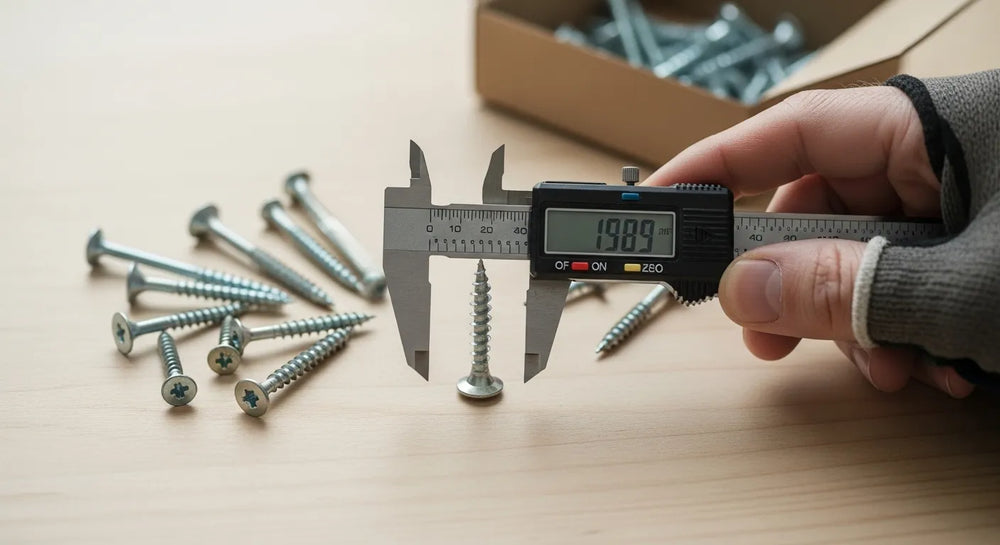
How to Fill Screw Holes in Metal Door Frames Effectively
Table of Contents
- Introduction
- Understanding Metal Door Frame Materials and Their Challenges
- Essential Tools and Materials for Metal Door Frame Hole Repair
- Step-by-Step Guide: Filling Screw Holes in Metal Door Frames
- Ensuring Long-Term Durability and Compliance
- Advanced Considerations for Commercial and Industrial Applications
- Maximizing Efficiency with Digital Procurement Platforms
- Conclusion
- Frequently Asked Questions
Introduction
Imagine a critical facility where a small, seemingly insignificant detail – a loose screw or an improperly filled hole in a metal door frame – leads to a cascade of operational headaches. Perhaps it compromises the security of a restricted area, causes an MRO team to scramble for a last-minute fix on a busy production floor, or forces a design engineer to re-evaluate structural integrity due to unexpected wear. These aren't just cosmetic issues; they are points of vulnerability, potential breeding grounds for corrosion, and direct threats to the longevity and safety of your infrastructure. In industrial and commercial settings, every detail impacts performance, compliance, and ultimately, the bottom line.
The integrity of metal door frames is paramount, especially in environments where durability, security, and aesthetics are non-negotiable. Whether you're dealing with the aftermath of equipment removal, addressing wear and tear, or preparing a frame for new installations, knowing how to properly fill screw holes in metal door frames is a vital skill for procurement managers, MRO buyers, and facility managers alike. This comprehensive guide will delve into the materials, methods, and strategic considerations required to achieve durable, compliant, and aesthetically pleasing repairs. We’ll explore various techniques, from simple patching to more robust structural solutions, emphasizing the importance of high-quality, American-made components in ensuring long-term success and supply chain resilience.
Understanding Metal Door Frame Materials and Their Challenges
The foundation of any effective repair begins with a deep understanding of the materials involved. Metal door frames are ubiquitous across commercial, industrial, and institutional buildings, chosen for their strength, fire resistance, and durability. However, these very strengths can also present unique challenges when it comes to repairs.
Common Metal Types Used in Door Frames
Most commercial and industrial metal door frames are constructed from a few primary materials, each with distinct properties that influence repair strategies:
-
Steel (Galvanized, Cold-Rolled): This is by far the most common material due to its strength, rigidity, and cost-effectiveness.
- Cold-rolled steel: Known for its smooth finish and precise dimensions, it's often used for interior frames. It's susceptible to rust if not properly protected.
- Galvanized steel: Features a zinc coating to resist corrosion, making it suitable for exterior applications or environments with high humidity. The zinc coating, however, needs careful handling during repair to maintain its protective properties.
- Aluminum: Lighter than steel and inherently corrosion-resistant, aluminum frames are popular where weight is a concern or in highly corrosive environments. While strong, aluminum is softer than steel and can be more prone to stripping threads or deforming under stress.
- Stainless Steel: Less common for entire frames due to its higher cost, stainless steel is sometimes used in specialized environments like cleanrooms, hospitals, or food processing facilities where hygiene and extreme corrosion resistance are critical. Its hardness and non-reactive properties can make repairs more challenging.
Understanding the specific metal type is crucial for selecting compatible filling materials and ensuring the longevity of the repair. For instance, an MRO buyer sourcing materials for a hospital cleanroom would prioritize stainless steel compatibility and non-contaminating fillers, whereas a facility manager repairing a warehouse door frame might focus on galvanized steel properties and robust, rust-inhibiting solutions.
Why Screw Holes Become an Issue
Screw holes, while necessary for installation and component attachment, can quickly transform into problematic areas:
- Corrosion Points: Any breach in a metal frame’s protective coating (paint, galvanization) exposes the raw metal to oxygen and moisture, initiating corrosion. Even small holes can become rust pathways, undermining the frame's integrity from within.
- Structural Weakness: Repeated removal and re-installation of screws can enlarge holes, strip threads, or deform the metal around the opening. This compromises the frame's ability to hold components securely, leading to loose hardware, rattling doors, or even detachment of critical safety features.
- Aesthetic Blight: Unfilled or poorly filled holes detract from the professional appearance of a facility, signaling neglect and potentially impacting client perception.
- Security Implications: In commercial or industrial settings, holes from removed security hardware, old alarm systems, or defunct access control units can create vulnerabilities, impacting a facility's overall security posture. A procurement manager overseeing security upgrades knows that a robust physical barrier is only as strong as its weakest point.
- Compliance Risks: In specialized environments, compromised door frames might fail to meet fire ratings, soundproofing requirements, or hygiene standards, leading to compliance violations and potential safety hazards.
The Importance of Material Compatibility
When filling screw holes, material compatibility is not just a recommendation; it’s a necessity. Using incompatible materials can lead to several problems:
- Galvanic Corrosion: When two dissimilar metals come into contact in the presence of an electrolyte (like moisture), an electrochemical reaction occurs, causing one of the metals to corrode rapidly. This is particularly relevant when using metal-based fillers or patching plates on galvanized or aluminum frames.
- Poor Adhesion: Fillers or patches may not bond effectively with the frame material, leading to premature failure of the repair.
- Differential Expansion: Materials expand and contract at different rates with temperature changes. Incompatible materials can stress the bond, causing cracks or detachment over time.
By meticulously considering the base metal, you can select American-made fillers and components that are specifically engineered for compatibility, ensuring that your repair endures. For instance, when sourcing an appropriate filler, a design engineer would meticulously review material data sheets to ensure chemical compatibility with the door frame’s metal composition, a level of detail critical to structural integrity.
Essential Tools and Materials for Metal Door Frame Hole Repair
A successful repair hinges on having the right tools and, crucially, the right materials. Sourcing high-quality, American-made products not only simplifies the process but also guarantees durability and compliance, aligning with our commitment at Maden.co to industrial excellence and supply chain transparency.
Preparation Tools
Before any filling material is applied, proper preparation is non-negotiable. These tools ensure the repair surface is clean, smooth, and ready for optimal adhesion:
- Drill with Deburring Bits: Essential for cleaning out rough edges around enlarged holes and ensuring a smooth, clean surface for filler application.
- Wire Brushes and Sanding Tools (Fine-Grit Sandpaper, Sanding Blocks): Used to remove rust, old paint, and surface contaminants. For sensitive finishes, finer grits are necessary.
- Cleaning Solutions (Denatured Alcohol, Acetone, Metal Prep Solvents): Degreasers and solvents ensure that oils, grease, and other residues are completely removed, which is critical for filler adhesion.
- Gloves and Safety Glasses: Personal protective equipment (PPE) is paramount to protect against chemicals, dust, and sharp metal edges.
Filling Materials: A Comparative Analysis
The choice of filling material is perhaps the most critical decision, dictated by the hole's size, the frame's function, and the desired aesthetic and structural outcome.
-
Epoxy Putties and Fillers: These two-part compounds are incredibly versatile, offering high strength, excellent adhesion, and chemical resistance. They are ideal for filling small to medium-sized holes, stripped threads, or minor dents.
- Strategic Value: For an MRO buyer needing a quick but permanent fix for a high-traffic area, an industrial-grade epoxy putty can restore structural integrity and prevent further damage without the need for specialized welding equipment. The ability to form, sand, and paint over epoxy makes it an excellent choice for maintaining both functionality and appearance. Our marketplace offers a diverse range of American-made chemical solutions engineered for maximum durability, supporting critical MRO needs.
-
Metal-Reinforced Compounds: These fillers often contain metal particles (like steel or aluminum) mixed into an epoxy or polymer base, providing superior strength and hardness. They are suitable for areas requiring greater structural integrity, such as where new hardware might be re-installed.
- Benefits: They mimic the properties of the base metal more closely, offering better thermal expansion rates and enhanced durability. For a design engineer developing a prototype that requires robust fastening points, selecting a metal-reinforced compound ensures the longevity of the installation.
-
Welding and Brazing: These are the most permanent solutions, involving fusing the base metal or adding filler metal to bridge the gap.
- Welding (MIG, TIG): Best for larger holes, structural repairs, or when the frame's original strength must be fully restored. Requires specialized equipment and skilled personnel. Often preferred for high-stress areas or fire-rated assemblies.
- Brazing: Uses a non-ferrous filler metal with a lower melting point than the base metal. Offers strong, gas-tight joints and is suitable for thinner gauge metals where welding might cause warping.
- When to use: While more involved, welding or brazing can be indispensable for critical infrastructure where compromising structural integrity is not an option. For instance, a facility manager overseeing a major renovation might opt for welding to repair load-bearing door frames, ensuring compliance and long-term safety.
- Patching Plates/Sections: For very large holes, significant damage, or areas requiring substantial reinforcement, fabricating and attaching a patching plate (often from the same metal as the frame) is the most robust solution. These are typically welded, riveted, or secured with specialized fasteners.
Fasteners for Subsequent Re-installation
If the purpose of filling the holes is to prepare the frame for new hardware or to reinstall existing components, selecting the correct fasteners is as critical as the filling material itself. For a procurement manager under pressure to source a specific DIN or NPT compliant fastener, or an MRO buyer facing an unexpected equipment breakdown, the ability to quickly find and finance a verified, U.S.-made part is a game-changer.
At Maden.co, we simplify this process by connecting industrial buyers with over 2.5 million American-made products from our network of 800+ verified U.S. manufacturers, ensuring that you find components that meet stringent quality and performance standards.
Consider these types of fasteners, all available through our marketplace:
- Self-Tapping Screws: Designed to tap their own threads into metal, these are excellent for secure re-installation into a properly filled and hardened epoxy or metal-reinforced compound. They create a strong, clean thread that can withstand significant torque. For specific applications requiring robust fastening, consider options like the Hi-Lo Double Lead Thread Self-Tapping Sheet Metal Screw, which offers superior grip in thin metals.
- Machine Screws with New Inserts: For frequently removed or heavy-duty components, installing threaded inserts into a filled hole provides a durable, machine-thread anchor. This allows the use of standard machine screws for strong, repeatable connections.
- Rivets: When a permanent, tamper-resistant fastening is required, rivets offer a robust solution, particularly useful for attaching patching plates or strengthening existing joints.
- Specialized Sheet Metal Screws: For general-purpose fastening into sheet metal door frames, we offer high-quality, American-made options. For example, the Steel Zinc Plated Type A Pan Slot Drive Self-Tapping Sheet Metal Screw provides reliable performance with a classic pan head design, while the Steel Zinc Plated Type A Truss Square Drive Self-Tapping Sheet Metal Screw offers enhanced driving stability and a broad bearing surface. Our dedication to American Manufacturing Pride means these components meet the highest standards, enhancing your project's overall resilience.
By choosing U.S.-made fasteners, you benefit from guaranteed quality, adherence to domestic standards, and a reduced risk of supply chain disruptions, reinforcing our vision to become the definitive platform that proves American-made components are as accessible and convenient as any global alternative. This approach enhances supply chain resilience and ensures superior project outcomes.
Step-by-Step Guide: Filling Screw Holes in Metal Door Frames
Executing a repair correctly requires a methodical approach. This step-by-step guide covers the process from initial assessment to final finishing, ensuring a durable and aesthetically pleasing result.
Step 1: Assessment and Preparation
Thorough preparation is the bedrock of any successful metal repair. Skimping on this stage often leads to premature failure of the filler material.
-
Assess the Damage:
- Size and Depth of the Hole: Small, superficial holes require different treatment than large, deep, or elongated openings.
- Structural Integrity: Is the metal around the hole warped, cracked, or severely corroded? This dictates whether a simple filler or a more extensive structural repair (like welding or a patching plate) is needed.
- Corrosion Presence: Identify any rust or oxidation, as this must be completely removed.
- Location and Function: Consider if the area will bear weight, be exposed to the elements, or require a specific aesthetic finish.
-
Clean the Area:
- Remove Loose Debris: Use a wire brush, scraper, or even compressed air to clear away any loose paint, rust flakes, or metal shards.
- Deburr Edges: If the hole edges are rough or sharp, use a deburring tool or a larger drill bit (turned by hand or on a low setting) to create a clean, slightly chamfered edge. This provides a better surface for filler adhesion.
- Grind/Sand Away Rust and Old Paint: For galvanized steel, be mindful not to remove too much of the zinc coating unless absolutely necessary. For cold-rolled steel, ensure all rust is gone. Use appropriate grit sandpaper or a grinding wheel.
- Degrease: Wipe the entire repair area with a solvent like denatured alcohol or acetone. This removes oils, grease, and fine dust, which are invisible adhesion inhibitors. Allow to flash dry completely.
Step 2: Choosing the Right Filling Method
Based on your assessment, select the most appropriate repair strategy:
- For Small Holes (up to 1/4 inch) or Stripped Threads: High-strength epoxy putty or metal-reinforced filler is usually sufficient. These are ideal for cosmetic fixes or restoring threads for light-duty hardware.
- For Medium Holes (1/4 inch to 1/2 inch): A strong epoxy filler, potentially combined with a small metal mesh or backing material (like fiberglass cloth or steel wool) to give the filler something to key into, works well.
- For Large Holes (over 1/2 inch), Elongated Holes, or Structural Damage: Welding, brazing, or a custom-fabricated patching plate is often necessary to restore structural integrity. If welding isn't feasible, a robust metal-reinforced epoxy backed with a secure internal plate can provide a strong non-weld solution.
- For Re-installation of Hardware: If new screws are going into the same location, use a metal-reinforced epoxy and consider drilling and tapping new threads, or installing a threaded insert into the cured filler for added durability. For robust, high-performance fastening, explore our range of American-made fasteners such as the Hi-Lo Double Lead Thread Self-Tapping Sheet Metal Screw, designed for superior performance in sheet metal applications.
Step 3: Application of Filler/Welding
This is where the physical repair takes place. Precision and adherence to product instructions are key.
-
Epoxy/Metal-Reinforced Filler Application:
- Mix Thoroughly: For two-part fillers, mix components strictly according to manufacturer's instructions. Inadequate mixing leads to poor curing and weak repairs.
- Apply with Pressure: Force the filler into the hole using a putty knife or applicator. Ensure it fully penetrates and fills any voids. For through-holes, a backing plate or tape on the opposite side might be necessary to prevent the filler from pushing through.
- Overfill Slightly: Apply a small excess of filler to allow for sanding and shaping later. This ensures a flush finish.
- Cure Time: Allow the filler to cure completely. This can range from minutes to hours, depending on the product and ambient temperature. Do not rush this step, as incomplete curing will compromise strength.
-
Welding/Brazing Application (Briefly):
- Safety First: Welding requires proper PPE, ventilation, and fire safety precautions.
- Filler Rod Selection: Choose a filler rod compatible with the base metal of the door frame.
- Technique: Skillfully apply small, controlled beads or patches to fill the hole, avoiding excessive heat input that could warp the frame.
- Grind Flush: Once cooled, grind the weld bead flush with the frame surface.
Step 4: Finishing and Protection
The final steps ensure the repair is both durable and visually integrated.
- Sanding and Shaping: Once the filler is fully cured, sand the repaired area flush with the surrounding frame using increasingly finer grits of sandpaper (e.g., 120-grit, then 220-grit). The goal is a perfectly smooth, seamless surface. For intricate contours, use sanding blocks or specialized hand tools.
- Clean Dust: Wipe away all sanding dust with a clean, damp cloth or tack rag. Degrease again if necessary.
- Priming: Apply a high-quality metal primer to the repaired area and slightly beyond. Primer ensures excellent paint adhesion and provides an additional layer of corrosion protection, especially important if the original protective coating was breached. For galvanized surfaces, use a self-etching primer.
- Painting: Apply a topcoat of paint that matches the existing door frame color and finish. Multiple thin coats are generally better than one thick coat, allowing proper drying between applications. Consider industrial-grade paints for maximum durability in high-traffic areas.
- Corrosion Prevention: For exterior applications or corrosive environments, consider applying a clear protective coat or a specialized rust-inhibiting sealant over the paint. This is particularly crucial for maintaining the long-term integrity of the repair. Our commitment to Industrial Excellence drives us to provide American-made components that support these long-term protection strategies.
Ensuring Long-Term Durability and Compliance
A repair isn't truly successful until it demonstrates long-term durability and maintains compliance with relevant standards. This goes beyond the immediate fix and delves into strategic sourcing and partnership.
The Role of High-Quality Components
When it comes to the longevity of any repair or new installation, the quality of the components used is paramount. This is where American-made products distinguish themselves. At Maden.co, our mission is to democratize access to American manufacturing precisely because we understand the inherent value of U.S.-made components:
- Adherence to Standards: American manufacturers operate under some of the most rigorous quality control and environmental standards in the world. This means products often meet or exceed critical industry benchmarks such as DIN, NPT, and various ASTM specifications. When you source a Steel Zinc Plated Type A Pan Slot Drive Self-Tapping Sheet Metal Screw from our marketplace, you can be confident in its material composition and manufacturing precision.
- Material Traceability: With U.S. manufacturing, there's often greater transparency and traceability of materials, which is crucial for compliance in regulated industries and for understanding a product's lifecycle.
- Consistent Quality: U.S. manufacturers are known for their consistency, minimizing variations that can lead to unexpected failures or compatibility issues. For an MRO buyer needing specific material certifications for a new prototype, or a procurement manager needing to ensure consistency across large volume orders, this consistency is invaluable.
- Supply Chain Resilience: Relying on domestic suppliers significantly reduces the risk of global supply chain disruptions, tariff issues, and extended lead times. This directly translates to enhanced operational resilience for your business. Our entire business model is built on this principle; you can learn more about our mission to champion American manufacturing here: About Us.
Strategic Sourcing for MRO and Project Needs
Modern procurement is about more than just finding the cheapest part; it’s about strategic sourcing that minimizes Total Cost of Ownership (TCO) and optimizes operational efficiency.
- Reducing Procurement Friction: Navigating a fragmented market for specialized industrial components can be incredibly time-consuming. A centralized platform like Maden.co streamlines this process, reducing the friction often associated with sourcing. We offer a vast catalog of over 2.5 million American-made products, making it easier for a procurement manager to quickly locate a specific Steel Zinc Plated Type A Truss Square Drive Self-Tapping Sheet Metal Screw or other crucial hardware, even hard-to-find components.
- The Value of a Vast Catalog: Imagine a procurement manager tasked with sourcing various specialized hardware for a critical infrastructure project – from anchors to unique fasteners – all needing specific certifications. Our platform provides this expansive access, empowering buyers to consolidate their sourcing efforts and ensure every component meets the project's stringent requirements. This digital innovation is at the core of our offering.
- Enhanced Support and Expertise: When sourcing through verified U.S. manufacturers, buyers often gain access to superior technical support and expertise directly from the producers, aiding in product selection and application.
Partnering with Verified U.S. Manufacturers
Our commitment to American Manufacturing Pride extends to both buyers and sellers. For manufacturers, partnering with Maden.co means gaining access to a broad and eager market of industrial buyers. For buyers, it means a reliable network of suppliers who uphold the highest standards.
- Benefits for Buyers: Access to a vetted network means less risk in supplier qualification, consistent product availability, and direct lines of communication for technical questions or custom needs. This fosters trust and long-term relationships, crucial for complex industrial projects.
- Benefits for Manufacturers: By joining our platform, U.S. manufacturers expand their reach and contribute directly to the national economic resurgence. We champion their ability to produce high-quality, competitively priced components for critical sectors. Are you a U.S. manufacturer looking to expand your market reach and connect with industrial buyers who value American-made quality? Register as a vendor and join the American manufacturing revival.
Advanced Considerations for Commercial and Industrial Applications
Beyond the basic repair, commercial and industrial settings demand a higher level of scrutiny for door frame integrity, factoring in structural demands, safety regulations, and environmental exposures.
Structural Integrity and Load Bearing
In environments where door frames might support heavy doors, integrated equipment, or experience significant operational stresses, a simple patch may not suffice.
- When Simple Filling Isn't Enough: If a hole is in a critical load-bearing section, or if repeated impact is expected, reinforcing the area is essential. This often involves welding a steel plate over or into the damaged section, or using structural rivets to attach a new, stronger surface.
- Reinforcement Plates: For severe damage or areas where future components will exert significant force, fabricating and installing a custom metal plate provides robust reinforcement. These plates can be welded flush, or mechanically fastened for situations where welding is not an option. The choice of plate material should match the frame for compatibility and strength.
Fire Ratings and Safety Compliance
Door frames in many commercial and industrial buildings are integral to the facility's fire safety strategy. Compromised frames or improper repairs can nullify their fire rating.
- Material Selection for Fire-Rated Doors: When repairing a fire-rated door frame, every material used – from filler to fasteners to paint – must be approved for use in fire-rated assemblies. Using non-compliant materials can create weak points that fail during a fire, allowing fire and smoke to spread. Always consult fire safety regulations (e.g., NFPA 80) and the original door/frame manufacturer's specifications.
- Maintaining Seals and Gaps: Fire-rated frames rely on precise gaps and seals to function effectively. Repairs must not alter these critical dimensions or interfere with intumescent strips and smoke seals.
Aesthetic Integration and Finish Matching
While functionality is primary, the appearance of door frames in commercial spaces, lobbies, or even high-visibility industrial areas contributes to the overall professionalism of a facility.
- Powder Coating vs. Liquid Paint: Many industrial door frames are powder-coated for superior durability and a uniform finish. Matching a powder-coated finish with liquid paint can be challenging. For best results, consider a high-quality industrial enamel that closely matches the sheen and texture. For significant repairs, sometimes a full frame re-powder coating is the only way to achieve a truly seamless finish.
- Paint Matching: Professional paint matching services can help identify the exact color and sheen. Always test a small, inconspicuous area first. For critical areas, consider repainting the entire frame section or even the whole frame to ensure a perfect match.
Environmental Factors
The operating environment heavily influences the choice of repair materials and methods.
- Outdoor vs. Indoor Applications: Exterior frames are exposed to UV radiation, rain, temperature fluctuations, and often higher humidity. This necessitates fillers, primers, and paints with enhanced weather resistance and UV stability. Galvanized steel frames require specific primers to ensure paint adhesion and maintain corrosion protection.
- Extreme Temperatures: In environments with significant temperature swings (e.g., cold storage, near furnaces), materials must have compatible thermal expansion coefficients to prevent cracking and delamination of the repair.
- Chemical Exposure: In chemical processing plants or laboratories, fillers and paints must resist specific chemicals to avoid degradation. Stainless steel frames, for example, might require fillers with high chemical resistance to maintain their integrity.
Understanding these advanced considerations ensures that repairs are not just fixes, but robust, long-lasting solutions that contribute to the safety, efficiency, and compliance of your operations. If you have specific sourcing questions regarding material compatibility or regulatory compliance, our team is ready to help; simply contact us for expert guidance.
Maximizing Efficiency with Digital Procurement Platforms
In an era defined by speed and precision, the traditional, fragmented approach to industrial procurement is rapidly becoming obsolete. Digital procurement platforms represent a significant leap forward, offering unparalleled efficiency, transparency, and strategic advantages. At Maden.co, we are at the forefront of this transformation, championing American manufacturing with digital innovation.
The Maden.co Advantage: Simplified Sourcing
Our platform is engineered to address the core challenges faced by procurement managers, MRO buyers, and design engineers. We believe that America's manufacturing revival is here, and we're building the infrastructure to support it.
- Over 2.5 Million American-Made Products: We provide unprecedented access to a vast and diverse catalog of industrial components. This means less time searching, more time producing. Whether you need specialized fasteners like a Hi-Lo Double Lead Thread Self-Tapping Sheet Metal Screw or critical MRO supplies, our marketplace makes it easy to find precisely what you need, from over 800+ verified U.S. manufacturers.
- Streamlined Search, Comparison, and Purchase: Our intuitive interface is designed for industrial professionals. It allows for advanced filtering by specifications, materials, and certifications, enabling quick comparisons and confident purchasing decisions. This drastically reduces procurement friction and improves efficiency.
- Improving Total Cost of Ownership (TCO): Beyond the unit price, true value is measured by TCO. By facilitating access to high-quality, durable American-made products, Maden.co helps businesses reduce hidden costs associated with premature part failure, extended downtime, and complicated logistics. Our platform empowers you to make purchasing decisions that contribute positively to your long-term operational efficiency and profitability.
- Supply Chain Transparency and Reliability: Our core values include Supply Chain Transparency and Customer Empowerment. We ensure that you know where your products come from and that they meet stringent U.S. quality standards, fostering a reliable and predictable supply chain.
Strategic Financial Management with Instant Financing
A significant differentiator for businesses sourcing through Maden.co is our Instant Financing option. This isn't merely a payment method; it's a strategic financial tool designed to empower procurement managers and business owners.
- Effective Cash Flow Management: Instant Financing allows businesses to make necessary large-volume purchases without immediately tying up working capital. This flexibility is crucial for managing cash flow effectively, especially when unexpected MRO needs arise or when capitalizing on bulk purchasing discounts.
- Facilitating Larger-Volume Purchases: For capital-intensive projects or significant inventory stocking, Instant Financing removes the immediate financial barrier, enabling businesses to acquire the necessary components when they need them, without delay.
- Seamless Integration at Checkout: You don't need to navigate complex external applications. Our Instant Financing feature is available directly during the checkout process, making it incredibly convenient and quick to apply for. This seamless integration further reduces procurement friction and accelerates the purchasing cycle.
For a business owner needing to acquire bulk materials for a facility upgrade without impacting immediate liquidity, or a procurement manager needing to secure a large order of specialized components ahead of a project deadline, Instant Financing provides the flexibility to act decisively. It aligns with our commitment to Customer Empowerment, ensuring you have the tools to make your operations more agile and financially resilient.
Conclusion
The integrity of your metal door frames is a critical, often overlooked, aspect of facility management. Properly filling screw holes in metal door frames is more than a cosmetic repair; it’s an investment in safety, security, structural longevity, and operational efficiency. By understanding the materials, employing the correct techniques, and leveraging high-quality, American-made components, you can ensure that these essential elements of your infrastructure perform reliably for years to come.
At Maden.co, we stand as your strategic partner in this endeavor, committed to driving America's manufacturing revival by connecting industrial buyers with an unparalleled selection of verified, U.S.-made products. Our platform is built on values of American Manufacturing Pride, Digital Innovation, Supply Chain Transparency, Industrial Excellence, and Customer Empowerment. We aim to prove that sourcing high-quality, domestic components is not only convenient but strategically advantageous for improving your Total Cost of Ownership and enhancing supply chain resilience.
Don't let minor issues compromise your operations. Take control of your procurement process and build a more reliable, efficient, and compliant future for your business. Explore our extensive catalog of over 2.5 million American-made industrial components today at Maden.co. You can apply for Instant Financing at checkout to streamline your capital-intensive projects, ensuring you always have access to the quality U.S.-made parts you need, exactly when you need them.
Frequently Asked Questions
Q1: What is the best way to fill a screw hole in a metal door frame if I need to re-drill and insert a new screw?
A1: For re-drilling, the most effective method is to use a metal-reinforced epoxy filler. This type of filler hardens significantly and can be drilled and tapped to create new threads, or used with a threaded insert for superior strength. Ensure the epoxy is fully cured before attempting to drill or tap. Using American-made fasteners such as a Hi-Lo Double Lead Thread Self-Tapping Sheet Metal Screw can further enhance the reliability of the new connection.
Q2: How can I prevent corrosion after filling screw holes, especially on exterior metal door frames?
A2: To prevent corrosion, proper preparation and finishing are key. After cleaning and filling the hole, thoroughly sand the area smooth. Apply a high-quality metal primer, specifically a self-etching primer for galvanized steel, followed by an industrial-grade topcoat paint that matches the frame. For added protection on exterior frames, consider a clear protective sealant that offers UV and weather resistance, ensuring the repair area is completely sealed from moisture and elements.
Q3: Is welding always the best option for larger holes in metal door frames?
A3: While welding offers the most permanent and structurally sound repair for larger holes or significant damage, it's not always the best or most feasible option. Welding requires specialized equipment, skilled personnel, and may not be suitable for fire-rated doors unless performed by certified professionals using approved materials. For situations where welding isn't practical, a robust metal-reinforced epoxy combined with an internal backing plate or a custom-fabricated patch plate secured with strong mechanical fasteners can provide a highly durable non-weld solution.
Q4: Why should I prioritize American-made components for door frame repairs?
A4: Prioritizing American-made components, like those found on Maden.co, offers numerous advantages: adherence to stringent U.S. quality standards, greater material traceability, consistent product quality, and enhanced supply chain resilience. This means less risk of part failure, reduced downtime, and greater compliance with industrial specifications. Sourcing domestically also supports the national manufacturing sector, contributing to a more robust and self-reliant industrial base, aligning with our mission at Maden.co to champion American Manufacturing Pride.


