
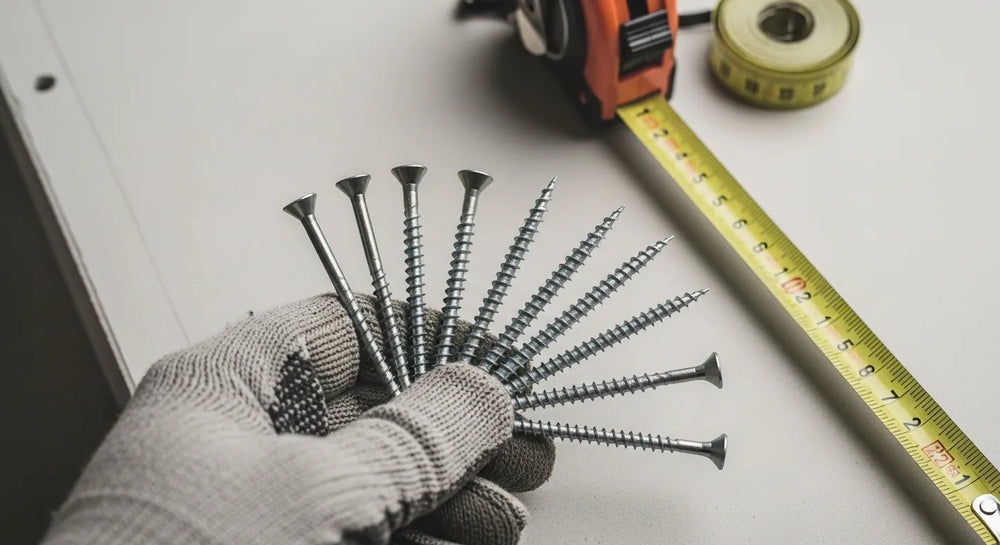
Choosing Screws for Metal Studs: A Procurement Guide
Table of Contents
- Introduction to Metal Stud Construction and Fastening Challenges
- The Engineering Behind Fasteners for Metal
- Key Screw Types Used for Metal Studs
- Critical Selection Criteria for Procurement Managers
- The Strategic Advantage of Sourcing American-Made Fasteners
- Maden.co's Role in Modern Procurement: Connecting You to American Industrial Excellence
- Conclusion
- Frequently Asked Questions (FAQ)
Navigating the complexities of industrial procurement can often feel like searching for a needle in a haystack, especially when precise specifications are paramount. Imagine a scenario where a critical construction project faces delays because the correct fasteners for metal studs—specifically, those meeting stringent American manufacturing standards and available for immediate acquisition—are proving elusive. This isn't an uncommon challenge; the wrong screw choice can compromise structural integrity, inflate project costs through reworks, and introduce unnecessary supply chain vulnerabilities. For procurement managers, MRO buyers, and design engineers, understanding the nuanced world of fasteners for metal stud construction is not just about technical knowledge, but about strategic sourcing that impacts Total Cost of Ownership (TCO), project timelines, and overall operational resilience. This comprehensive guide will illuminate the specific types of screws engineered for metal studs, explore the critical selection criteria, and highlight how leveraging a robust, U.S.-centric supply chain can transform your procurement process.
Introduction to Metal Stud Construction and Fastening Challenges
Metal studs have become the backbone of modern construction, from commercial buildings and industrial facilities to residential properties. Valued for their strength-to-weight ratio, fire resistance, resistance to rot and pests, and dimensional stability, they offer significant advantages over traditional timber framing. However, working with metal studs introduces unique fastening challenges. Unlike wood, which provides consistent grip for a wide range of screws, metal requires fasteners specifically designed to penetrate, tap threads into, and securely hold within steel. The gauge of the steel, the type of material being attached to the stud, and the load requirements all dictate the optimal screw choice. Incorrectly specified screws can lead to stripped threads, poor holding power, material damage, or even structural failure, underscoring the critical need for precision in procurement. Our mission at Maden.co is to simplify this precision, democratizing access to the finest American manufacturing and ensuring you have the right components for every job. You can learn more about our commitment to this mission by visiting our About Us page.
The Engineering Behind Fasteners for Metal
Fasteners designed for metal studs are not just screws; they are engineered solutions. Their effectiveness stems from specific design features that enable them to perform reliably in steel. Understanding these features is key to making informed procurement decisions:
Self-Tapping vs. Self-Drilling Screws
The primary distinction in screws for metal studs lies in their ability to create their own holes and threads.
Self-Tapping Screws (Sheet Metal Screws)
These screws require a pilot hole or have a sharp point designed to pierce thinner gauge metal. As the screw is driven, its threads cut into the metal, creating a strong, secure connection. Self-tapping screws are ideal for attaching materials to lighter gauge metal studs, typically under 20 gauge. They are characterized by their sharp points and often feature a uniform diameter along the threaded portion.
For example, when attaching thin sheet metal or trim to metal studs, a reliable self-tapping sheet metal screw is essential. Consider the precision and holding power of a Steel Zinc Plated Type A Pan Slot Drive Self-Tapping Sheet Metal Screw, available through our platform, which offers a robust solution for a wide range of general-purpose fastening tasks.
Self-Drilling Screws (Tek® Screws)
Often referred to as Tek® screws, these fasteners feature a drill bit-like tip that eliminates the need for a pre-drilled pilot hole. The tip drills through the metal, and then the screw's threads engage, tapping into the newly formed hole. Self-drilling screws are incredibly efficient and are typically used for fastening to heavier gauge metal studs, generally 20 gauge and thicker, up to 1/2 inch or more, depending on the drill point.
- Drill Point Types: Self-drilling screws come with various drill point numbers (e.g., #2, #3, #4, #5) indicating their drilling capacity. A higher number typically signifies a longer drill point, capable of penetrating thicker steel before the threads engage.
- Winged Self-Drilling Screws: Some specialized self-drilling screws feature "wings" just above the drill point. These wings ream out a larger hole in the material being attached (e.g., wood or composite decking) to prevent thread engagement in that material, allowing the threads to fully engage and bite into the metal stud for a secure connection.
Thread Design and Engagement
The threads are arguably the most critical component of a screw's ability to hold in metal.
- Fine Threads: Screws designed for metal studs often feature finer threads than those for wood. Fine threads provide greater thread engagement within the thin walls of metal studs, leading to superior pull-out resistance and a stronger connection. This is particularly true for drywall screws used with metal studs.
- Hi-Lo Threads: Some self-tapping screws feature a "Hi-Lo" thread design, where two threads of different heights (one high, one low) spiral around the shank. This design offers enhanced holding power in thin, soft materials and plastics, but can also be effective in certain lighter gauge metal applications by providing a quick start and increased shear values. For specialized applications requiring exceptional grip in thin metal or composite materials, a Hi-Lo Double Lead Thread Self-Tapping Sheet Metal Screw provides a unique solution, optimizing thread engagement and pull-out resistance.
Head and Drive Types
The head and drive type influence both installation efficiency and the final aesthetic.
- Pan Head: A rounded, slightly domed head with a flat underside. Provides a good bearing surface.
- Truss Head: A wide, low-profile domed head that offers an even larger bearing surface than a pan head. Ideal for attaching thin materials without pull-through, or when a broad clamping force is needed. For securing wider panels or where a larger bearing surface is critical to prevent pull-through, the distinctive profile of a Steel Zinc Plated Type A Truss Square Drive Self-Tapping Sheet Metal Screw is often the preferred choice among design engineers and MRO buyers.
- Hex Head: A hexagonal head that can be driven with a wrench or socket. Offers high torque capabilities and is often used in heavier duty applications.
- Modified Truss Head (Wafer Head): A very wide, flat head that sits flush or nearly flush with the surface. Common for attaching drywall or subflooring to metal studs.
- Bugle Head: A conical head that recesses into drywall, creating a dimple for mudding. Specifically designed for drywall applications.
Common drive types include Phillips, Square (Robertson), Torx (Star), and Slot. Square and Torx drives are generally preferred in professional settings due to their superior cam-out resistance, leading to faster, more efficient installation and less fastener damage.
Key Screw Types Used for Metal Studs
Based on the construction application, several specific types of screws are predominantly used with metal studs:
1. Drywall Screws for Metal Studs
These are perhaps the most common screws associated with metal stud construction. They feature a bugle head, which countersinks neatly into drywall without tearing the paper surface.
- Fine Thread Drywall Screws: Specifically designed for fastening drywall to light-gauge metal studs (typically 20-25 gauge). The fine threads create more points of contact in the thin metal, enhancing grip.
- Self-Drilling Drywall Screws: For heavier gauge metal studs (e.g., 16-20 gauge), self-drilling drywall screws are used, eliminating the need for pilot holes.
2. Framing Screws
Used to connect metal studs to each other, often for creating framing assemblies or blocking. These are typically self-drilling screws.
- Pan Head Framing Screws: Common for stud-to-stud connections.
- Modified Truss Head (Wafer Head) Framing Screws: Used when a flush finish is desired between two framing members.
3. Subfloor Screws for Metal Studs
When fastening plywood or OSB subflooring to metal joists or studs, specialized subfloor screws are employed. They often have a self-drilling tip, coarse threads to securely grip the wood, and a countersinking head (like a flat or wafer head) to sit flush.
4. Cement Board Screws
Used for attaching cement board to metal studs, particularly in wet areas like bathrooms or kitchens. These screws are typically corrosion-resistant (often coated) and feature a self-drilling tip and a specific head design that prevents pull-through.
5. Insulation Fasteners
While less common as "screws for studs," specialized fasteners with large plastic or metal washers are used to secure insulation panels to metal framing. These often self-drill or self-tap into the stud, with the large washer distributing the load.
Critical Selection Criteria for Procurement Managers
Choosing the right screw goes beyond merely identifying its type. Procurement managers must consider a holistic set of criteria to ensure optimal performance, compliance, and cost-effectiveness.
Material and Gauge Compatibility
The thickness (gauge) of the metal stud is paramount. Using a self-tapping screw on heavy gauge steel will likely lead to stripping or breakage. Conversely, using an oversized self-drilling screw on light gauge metal might not provide adequate thread engagement. Always match the screw's design (especially its drill point and thread count) to the metal's thickness.
Corrosion Resistance
Many construction environments expose fasteners to moisture, chemicals, or other corrosive elements. Zinc plating is a common, cost-effective coating that provides basic corrosion resistance, suitable for interior, dry applications. For outdoor use or high-humidity environments, look for more robust coatings like hot-dip galvanization, ceramic coatings, or stainless steel fasteners (e.g., 304 or 316 grade) for ultimate protection. This foresight prevents premature fastener failure, reducing long-term maintenance costs and improving the TCO.
Load Bearing and Shear Strength Requirements
Understand the structural demands on the fastener. Is it holding a lightweight panel, or is it part of a load-bearing assembly? Refer to manufacturer specifications for shear and pull-out values. Design engineers will typically specify these requirements, and procurement must ensure the sourced fasteners meet or exceed them.
Head and Drive Type for Installation Efficiency
The head and drive type not only affect the aesthetic but also installation efficiency. Square or Torx drives offer better bit engagement, reducing cam-out and worker fatigue, especially in high-volume applications. This translates to faster project completion and reduced labor costs.
Compliance and Industry Standards
For many industrial and commercial projects, fasteners must comply with specific industry standards (e.g., ASTM standards for steel products, DIN for specific dimensions, NPT for pipe threads, though less relevant for studs). Sourcing from verified U.S. manufacturers often provides greater assurance of adherence to these critical standards, which is a core value at Maden.co—Industrial Excellence and Supply Chain Transparency.
Supplier Reliability and Supply Chain Resilience
In today's dynamic global market, relying on a robust and predictable supply chain is non-negotiable. Sourcing American-made fasteners through a transparent marketplace like Maden.co significantly enhances supply chain resilience, reducing lead times, mitigating geopolitical risks, and ensuring consistent quality. This direct access to U.S. manufacturers means less uncertainty and more control over your inventory.
The Strategic Advantage of Sourcing American-Made Fasteners
In an era defined by global supply chain volatility and increasing demands for quality and accountability, the strategic advantage of sourcing American-made fasteners cannot be overstated. At Maden.co, we believe America's manufacturing revival is here, and it's built on these foundational principles:
- Unwavering Quality and Consistency: American manufacturers adhere to some of the most rigorous quality control standards in the world. This commitment translates into fasteners with precise dimensions, consistent material properties, and reliable performance—components that meet or exceed industry specifications every time.
- Enhanced Supply Chain Predictability: Importing components often involves long lead times, complex logistics, and exposure to international shipping disruptions. Sourcing domestically drastically shortens supply chains, reduces transit times, and minimizes the risk of unexpected delays. For a procurement manager under pressure to source a specific DIN 931 compliant hex cap screw, a design engineer needing specific material certifications for a new prototype, or an MRO buyer facing an unexpected equipment breakdown, the ability to quickly find and finance a verified, U.S.-made part is a game-changer. This agility is a cornerstone of our value proposition.
- Reduced Total Cost of Ownership (TCO): While the upfront cost of an imported fastener might appear lower, the true TCO must account for potential quality issues, shipping delays, customs duties, inventory holding costs, and the risk of project reworks. American-made products often deliver superior long-term value through their durability and consistent performance.
- Support for the Domestic Economy: Choosing American-made fasteners directly supports U.S. jobs, fosters innovation within our borders, and strengthens the national industrial base. This commitment aligns with our core value of American Manufacturing Pride.
- Transparency and Traceability: With Maden.co, you gain unparalleled transparency into the origins and specifications of your fasteners. Our network of 800+ verified U.S. manufacturers ensures that you are partnering with reputable suppliers committed to industrial excellence.
Maden.co's Role in Modern Procurement: Connecting You to American Industrial Excellence
As America's premier B2B marketplace for U.S.-manufactured products, Maden.co is purpose-built to address the complex procurement challenges faced by industrial buyers. We are redefining how businesses source industrial components, making it as accessible and convenient as any global alternative. Our vision is to become the definitive platform that proves the undeniable value of American manufacturing.
We offer:
- Vast, Curated Catalog: Our platform provides access to over 2.5 million American-made products, encompassing everything from standard self-tapping screws for metal studs to highly specialized industrial components. This extensive catalog ensures that whether you need a common pan head sheet metal screw or a very specific truss square drive, you can find it.
- Verified U.S. Manufacturers: Every manufacturer on Maden.co undergoes a stringent verification process, ensuring that you are sourcing directly from reputable, high-quality American producers. This eliminates much of the due diligence burden on your procurement teams.
- Digital Innovation and Efficiency: We leverage cutting-edge digital tools to streamline your procurement process. Our intuitive search functions, detailed product specifications, and direct communication channels with manufacturers reduce procurement friction, saving valuable time and resources. This commitment to Digital Innovation is central to our platform.
- Supply Chain Transparency: We provide clear, concise information about product origins, certifications, and lead times, fostering a transparent procurement environment that builds trust and reliability.
For procurement managers dealing with urgent projects, for example, needing to quickly secure a specific quantity of self-drilling screws for a commercial build, or for MRO buyers needing to replace specialized fasteners for equipment maintenance, the ability to efficiently find and acquire these parts is critical. Our platform simplifies this search, allowing you to filter by specifications, material, head type, and drive, ensuring you get exactly what you need, when you need it. If you have specific sourcing questions, our team is ready to help; feel free to contact our expert team directly.
Streamlining Your Capital-Intensive Projects with Instant Financing
A significant differentiator for Maden.co is our Instant Financing option, a powerful strategic tool designed to empower businesses to manage cash flow effectively and facilitate larger-volume purchases without immediate capital strain. We understand that large orders, particularly for specialized fasteners or bulk purchases for extensive projects, can impact a company's working capital.
Instead of waiting for traditional credit approvals or tying up valuable cash reserves, you can apply for Instant Financing directly at checkout. This feature is seamlessly integrated into your purchase flow, offering a fast and efficient way to secure the components you need today while managing your payments over time. This isn't just a payment method; it's a strategic enabler that allows procurement managers and business owners to:
- Accelerate Project Timelines: Procure necessary materials without delay, keeping projects on schedule.
- Optimize Cash Flow: Preserve working capital for other operational needs.
- Capitalize on Bulk Discounts: Make larger purchases to potentially secure better pricing, improving overall project economics.
This commitment to Customer Empowerment ensures that financial constraints don't hinder your access to the best American-made industrial supplies.
Conclusion
The selection of the correct screws for metal studs is a seemingly small decision with significant implications for the safety, durability, and cost-effectiveness of any construction or industrial project. From understanding the nuances of self-tapping versus self-drilling mechanisms to evaluating material compatibility, corrosion resistance, and compliance standards, precise procurement is non-negotiable. By prioritizing American-made fasteners, businesses not only secure superior quality and predictable supply chains but also contribute to the vital revitalization of domestic manufacturing.
Maden.co stands as your strategic partner in this endeavor. We are dedicated to providing industrial buyers with unparalleled access to over 2.5 million U.S.-manufactured products from 800+ verified suppliers, ensuring that components like the precise self-tapping sheet metal screws for your next project are not just available, but easily discoverable and procurable. Our platform simplifies the sourcing process, enhances transparency, and offers innovative solutions like Instant Financing to empower your operations.
Don't let procurement challenges impede your progress. Explore the vast catalog of American-made industrial products on Maden.co today. Find the exact screws for your metal stud applications, compare specifications from leading U.S. manufacturers, and streamline your purchasing with our digital tools. And when it comes to capital-intensive projects, remember you can apply for Instant Financing at checkout to streamline your capital-intensive projects and keep your business moving forward. Partner with us, and together, we can champion American manufacturing excellence. Are you a U.S. manufacturer? Register as a vendor and join the American manufacturing revival to connect with buyers seeking quality U.S.-made products.
Frequently Asked Questions (FAQ)
Q1: What is the most common screw type for attaching drywall to metal studs?
A1: The most common screw type for attaching drywall to light-gauge metal studs is the fine-thread bugle-head drywall screw. For heavier gauge metal studs (16-20 gauge), self-drilling fine-thread drywall screws are typically used, which eliminate the need for pre-drilling.
Q2: What's the difference between a self-tapping and a self-drilling screw for metal studs?
A2: A self-tapping screw (often a sheet metal screw) has a sharp point that can pierce thin metal and create its own threads as it's driven, but often benefits from a pilot hole in thicker material. A self-drilling screw, also known as a Tek® screw, has a drill bit-like tip that drills its own hole through heavier gauge metal before the threads engage, eliminating the need for a separate pilot hole. The choice depends on the thickness of the metal stud.
Q3: How do I determine the correct length of screw for my application?
A3: The general rule of thumb for screw length is that the screw should penetrate at least three full threads into the metal stud or substrate. For most applications, this means the screw should be long enough to pass through the material being attached (e.g., drywall, plywood) and then extend a sufficient distance into the metal stud to ensure adequate thread engagement and holding power. Always refer to manufacturer guidelines and project specifications.
Q4: Why is a zinc-plated coating common for screws used with metal studs?
A4: Zinc plating is a common and economical coating that provides a layer of corrosion resistance, protecting the screw from rust in dry, interior environments. It's suitable for many indoor construction applications where the fasteners are not exposed to significant moisture or harsh chemicals. For outdoor use or high-humidity areas, more robust corrosion-resistant coatings or stainless steel fasteners are recommended.


