
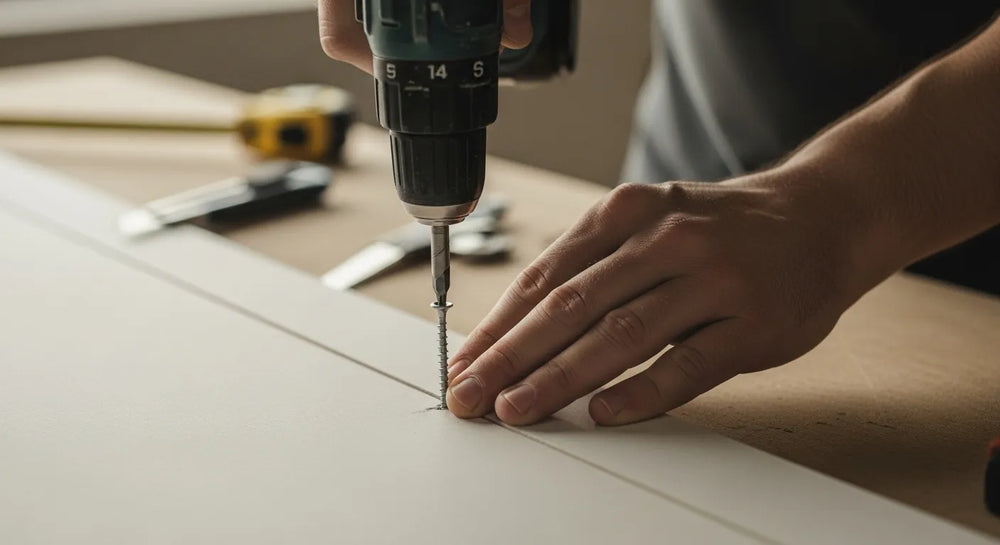
How to Fix a Stripped Screw Hole in Drywall Effectively
Table of Contents
- Introduction
- Understanding the Anatomy of a Stripped Screw Hole in Drywall
- Method 1: Simple Patching for Minor Strips (Light-Duty Fixes)
- Method 2: Expanding the Hole for a Larger Fastener (Strategic Procurement)
- Method 3: Drywall Anchor Solutions (Heavy-Duty Needs)
- Method 4: The Drywall Patch & Repair Kit Method (Comprehensive Restoration)
- Preventative Measures: Avoiding Stripped Holes in the Future
- The Maden.co Advantage in Sourcing & Supply Chain Resilience
- Conclusion
- FAQ
A loose fixture, a sagging shelf, or a wobbling bracket – these are familiar frustrations that often trace back to a common culprit: a stripped screw hole in drywall. What seems like a minor annoyance in a residential setting can escalate into a significant operational headache for businesses. For a procurement manager overseeing facility maintenance, an MRO buyer ensuring operational continuity, or a design engineer finalizing an installation, the ability to quickly and reliably address these issues with U.S.-made, quality components is paramount. Ignoring a stripped screw hole isn't just a cosmetic issue; it can compromise safety, lead to costly structural damage over time, or even halt critical projects.
Introduction
In the intricate world of industrial maintenance and construction, seemingly small challenges, like a stripped screw hole in drywall, can have disproportionately large impacts. Picture a crucial control panel becoming unsecured, a heavy-duty wall-mounted monitor beginning to tilt, or an essential safety sign failing to remain firmly in place—each scenario originating from inadequate fastening. These aren't just minor inconveniences; they represent potential safety hazards, operational inefficiencies, and maintenance budget drains. The integrity of your installations, whether they involve heavy machinery or simple wall fixtures, relies on secure anchors.
This comprehensive guide delves into the various effective methods for repairing stripped screw holes in drywall. We will explore simple, quick fixes suitable for lighter applications, robust solutions for heavy-duty requirements, and advanced techniques for restoring significant damage. More importantly, we will emphasize the critical role of procuring high-quality, U.S.-manufactured components for these repairs. The long-term reliability of any fix hinges on the quality of the materials used. Throughout this article, we will illustrate how prioritizing American-made hardware, readily available through platforms like Maden.co, not only ensures superior performance but also fortifies your supply chain and supports the broader American manufacturing revival. Our mission at Maden.co is to democratize access to American manufacturing, ensuring that industrial buyers like you can easily find and procure the components you need for reliable and lasting repairs.
Understanding the Anatomy of a Stripped Screw Hole in Drywall
Before delving into repair methods, it's crucial to understand why screw holes strip in drywall in the first place. Drywall, or gypsum board, is a relatively soft material composed of gypsum plaster pressed between two sheets of thick paper. Unlike wood, which offers continuous grain for screws to bite into, drywall provides a less dense, more brittle substrate.
Why Drywall Screw Holes Strip
- Over-tightening: This is the most common culprit. Applying too much torque to a screw drives it through the gypsum core, pulverizing the material around the threads and creating an oversized, smooth-walled cavity where the screw can no longer grip.
- Incorrect Screw Type: Using screws with inadequate thread design for drywall can lead to stripping. Drywall screws are specifically designed with coarse threads and sharp points to grip the gypsum and paper effectively.
- Repeated Use: Frequent removal and re-insertion of a screw into the same hole will gradually wear down the gypsum, enlarging the hole and weakening its holding power.
- Excessive Weight: Hanging items that exceed the screw's or anchor's load capacity can cause the fastener to pull away from the wall, stripping the hole.
- Water Damage: Moisture can significantly weaken drywall, turning its solid core into a soft, crumbly material that cannot hold a screw securely.
- Installation Errors: Improper pilot hole drilling (if used), misaligned fasteners, or driving screws at an angle can compromise the structural integrity around the screw.
The Immediate and Long-Term Impacts
A stripped screw hole might seem minor, but its consequences can range from inconvenient to critical:
- Compromised Safety: Loose fixtures, shelves, or handrails pose immediate safety risks, especially in high-traffic commercial or industrial environments. A failing fixture can lead to property damage, injury, or operational disruptions.
- Structural Instability: If multiple fasteners are compromised, the overall structural integrity of a wall-mounted installation can be jeopardized. This is particularly concerning for heavy equipment, wiring conduits, or emergency signage.
- Operational Delays and Costs: A failing mount often requires immediate attention, diverting MRO teams from other critical tasks and incurring unexpected costs for repairs, replacements, and potential downtime.
- Aesthetic Degradation: Beyond functionality, visible damage from stripped holes can detract from the professional appearance of a facility, impacting client perceptions and employee morale.
- Supply Chain Strain: Needing a quick, reliable fix often means sourcing specific components under pressure. Without a robust procurement strategy, this can lead to delays or the use of sub-par materials, perpetuating the problem.
For procurement managers and MRO teams, understanding these root causes and impacts underscores the necessity of not just a temporary patch, but a durable, quality repair. Sourcing the right materials from a reliable platform like Maden.co is the first step towards ensuring longevity and preventing repeat issues.
Method 1: Simple Patching for Minor Strips (Light-Duty Fixes)
For stripped holes that are relatively small and don't need to support significant weight, simple patching methods can suffice. These techniques are often quick, cost-effective, and ideal for re-securing lighter items like picture frames, small decorative elements, or switch plates.
Toothpicks or Wooden Dowels with Wood Glue
This classic DIY technique is surprisingly effective for restoring grip in small, lightly stripped holes. It works by filling the void around the original screw's path with new, solid material that the screw can then bite into.
Materials Needed:
- Wooden toothpicks or thin wooden dowels (e.g., small shims)
- Wood glue
- Utility knife or small saw
- The original screw
Procedure:
- Clean the Hole: Ensure the stripped hole is free of any loose drywall dust or debris.
- Apply Glue: Squeeze a small amount of wood glue directly into the stripped hole.
- Insert Wood Pieces: Take several wooden toothpicks or cut small sections of dowel. Dip them in wood glue and push them into the hole until the cavity is tightly packed. The goal is to create a dense, woody plug.
- Trim Excess: Once the hole is packed, use a utility knife to carefully trim any protruding wood pieces flush with the wall surface.
- Cure Time: Allow the wood glue to dry completely. This is crucial for the repair's strength. Refer to the glue manufacturer's instructions, but typically 1-2 hours or more is sufficient.
- Reinsert Screw: Once dry, the wood and glue mixture forms a solid mass. You can now reinsert the original screw. The screw threads will bite into the new wood, creating a much firmer hold.
When to Use This Method: This method is best for very small holes (e.g., from small-gauge screws), lightweight applications, and situations where you need a quick fix without much specialized material. It's particularly useful for re-securing items in the exact same spot.
Repair Plugs or Plastic Anchors
For slightly larger holes or when you need a bit more holding power than toothpicks can offer, specialized repair plugs or small plastic anchors can be used.
Materials Needed:
- Appropriately sized drywall repair plug or plastic anchor (match to screw gauge)
- Drill and drill bit (if a pilot hole is required for the anchor)
- The original screw or a new, compatible screw
Procedure:
- Assess Hole Size: Determine if the stripped hole is sufficiently large to accommodate a small plastic anchor. Sometimes, the hole might need to be slightly enlarged with a drill bit to fit the anchor snugly.
- Insert Anchor: Push or gently tap the plastic anchor into the stripped hole until it is flush with the wall surface. For self-drilling anchors, simply screw them in.
- Insert Screw: Drive the original (or a compatible) screw into the anchor. The anchor will expand or grip the drywall from behind, creating a secure point for the screw.
When to Use This Method: This is suitable for holes that are too large for toothpicks but not large enough to warrant a more extensive patch. It offers a moderate increase in holding power and is ideal for light to medium-weight items. For procurement managers, having a stock of various plastic anchors and appropriate screws, such as our 6 x 1 Fine Thread Drywall Screw, on hand for these common fixes can be a significant time-saver. Sourcing these from Maden.co ensures you're getting U.S.-made quality that stands up to the task.
Method 2: Expanding the Hole for a Larger Fastener (Strategic Procurement)
Sometimes, a simple patch isn't enough, especially if the original hole was poorly placed, the item to be mounted is slightly heavier, or the drywall itself is compromised. In such cases, strategically enlarging the hole to accommodate a larger, more robust fastener can be the most effective and durable solution. This approach requires careful selection of the right American-made screws, a key area where Maden.co empowers procurement professionals.
Recognizing the Need for a Larger Fastener
- Repeated Failure: If a small repair consistently fails, it's a clear sign that the original hole or the chosen fastener isn't adequate for the load or the condition of the drywall.
- Increased Load: If the weight of the mounted item has increased, or if the original item was already pushing the limits of a standard drywall screw, upgrading to a larger fastener is essential.
- Extensive Stripping: When the stripped hole is significantly oversized, a larger screw or anchor is often the only way to establish a new, secure grip without a full patch.
Considerations for Choosing a Larger Fastener
- Weight and Load-Bearing Requirements: This is paramount. Heavier items necessitate screws with larger diameters and, potentially, specialized threads or anchors that distribute weight more effectively.
- Drywall Thickness: Standard drywall is typically 1/2-inch or 5/8-inch thick. Ensure the screw or anchor length is appropriate for the thickness, providing maximum grip without over-penetrating.
- Stud Location: Ideally, all fasteners for heavy loads should be driven into wall studs. If a stud isn't accessible at the desired location, a robust drywall anchor system becomes critical.
- Material Quality: The durability of your repair directly correlates with the quality of the fastener. U.S.-made screws and anchors, manufactured to precise standards, offer superior tensile strength, shear resistance, and thread integrity.
Sourcing the Right U.S.-Made Drywall Screws for Enlarged Holes
This is where Maden.co excels as a strategic partner. Our platform connects industrial buyers with over 2.5 million American-made products from our network of 800+ verified U.S. manufacturers. For a procurement manager under pressure to source a specific, high-quality fastener for a critical repair, our extensive catalog offers precisely what's needed.
When upsizing, consider:
- Coarse Thread Drywall Screws: These are designed for attaching drywall to wood studs, but their aggressive threads are excellent for gripping into slightly compromised drywall when a larger diameter is needed. For instance, our 6 x 1-1/4 Coarse Thread Drywall Screws offer a robust option for creating a new, secure hold in an enlarged stripped hole. Their length provides ample penetration, and the coarse threads maximize grip within the gypsum.
- Larger Gauge Screws: Moving from a #6 screw to a #8 gauge, or even larger, can provide the necessary increase in surface area for a solid hold. For exceptionally heavy-duty applications or to address a significantly damaged hole, an 8 x 4 Drywall Screw can offer a substantial upgrade in holding power. These screws are built for demanding tasks, ensuring that once installed, your fixture remains securely fastened.
Procedure for Using Larger Fasteners:
- Clear the Old Hole: Remove any remnants of the old fastener or anchor.
- Pilot Hole (Optional but Recommended for Precision): While drywall screws are self-tapping, for a cleaner installation of a larger screw into an existing, slightly damaged hole, a small pilot hole (smaller than the screw's diameter) can guide the screw accurately.
- Insert Larger Screw: Drive the chosen U.S.-made, larger-gauge drywall screw into the prepared hole. Exercise caution to avoid over-tightening. Use a drill with a clutch setting to prevent stripping the new hole. The clutch will disengage once a preset torque is reached.
- Test Stability: Gently test the mounted item for stability. It should feel significantly more secure.
By leveraging Maden.co, you streamline the procurement process, ensuring that you’re not just fixing a problem, but upgrading the integrity of your installations with superior American-made industrial components. This approach reduces procurement friction and enhances supply chain resilience, proving that American-made components are as accessible and convenient as any global alternative.
Method 3: Drywall Anchor Solutions (Heavy-Duty Needs)
For applications where significant weight must be supported, or where a stud cannot be located, specialized drywall anchors are indispensable. These solutions are engineered to distribute weight across a larger area of the drywall, providing a much stronger hold than screws alone. For MRO buyers and design engineers, selecting the correct anchor from a trusted source is critical for both safety and longevity.
Types of Anchors and Their Applications
-
Toggle Bolts (Spring Toggle or Gravity Toggle):
- How they work: These anchors feature a spring-loaded wing or a gravity-activated bar that pivots open behind the drywall, creating a broad load-bearing surface.
- Best for: Very heavy items like large televisions, shelving units, cabinets, or heavy artwork where a stud is not available. They offer some of the strongest holding power in drywall.
- Installation: Requires drilling a larger hole to insert the collapsed toggle, which then expands once it passes through the drywall.
-
Molly Bolts (Expansion Anchors):
- How they work: Molly bolts are metal anchors that expand like an umbrella behind the drywall as a screw is tightened into them. They typically have sharp points or barbs to prevent rotation.
- Best for: Medium to heavy items such as towel bars, grab bars (non-structural), larger mirrors, and light fixtures. They are removable and reusable with the same screw.
- Installation: Requires a pre-drilled pilot hole. The anchor is then tapped flush, and the screw is driven in to expand it.
-
Self-Drilling (Threaded) Anchors:
- How they work: These anchors have a sharp, coarse thread that allows them to be screwed directly into the drywall without a pilot hole (though a small pilot can help for precision). A screw is then driven into the anchor.
- Best for: Light to medium-weight items such as smaller shelves, curtain rods, and smoke detectors. They are quick and easy to install.
- Installation: Can be screwed in directly using a Phillips head screwdriver or a power drill at a low torque setting.
-
Plastic Expansion Anchors:
- How they work: Similar to molly bolts but made of plastic. They expand as a screw is driven into them, gripping the drywall.
- Best for: Light-duty applications. Less robust than metal anchors.
- Installation: Requires a pre-drilled pilot hole, then the anchor is tapped in, and the screw inserted.
Choosing the Right Anchor for Your Load
The choice of anchor should always be dictated by the weight of the item and the required security. Always refer to the manufacturer's specified weight limits, which often vary significantly based on the drywall thickness and the type of anchor. For critical industrial applications, it's always prudent to select anchors with a higher load capacity than strictly necessary.
Installation Techniques for Drywall Anchors
- Measure and Mark: Precisely mark the desired location for the anchor.
- Drill Pilot Hole: Select the correct drill bit size according to the anchor manufacturer’s instructions. This is crucial for a secure fit.
-
Insert Anchor:
- Toggle Bolts: Collapse the wings, insert the toggle through the hole, and allow the wings to spring open behind the drywall. Pull back gently on the screw (if pre-assembled) to seat the wings.
- Molly Bolts: Tap the anchor gently into the pilot hole until its flange is flush with the wall.
- Self-Drilling Anchors: Screw the anchor directly into the drywall using a screwdriver or a drill on a low-speed setting, until it's flush.
- Mount the Item: Align your fixture with the anchor and insert the appropriate screw, tightening it carefully. For molly bolts and self-drilling anchors, ensure the screw expands the anchor without over-tightening and stripping the new anchor. For toggle bolts, the screw is usually part of the anchor assembly; simply tighten the screw through your fixture into the toggle until secure.
Sourcing high-quality, reliable anchors is just as important as the installation technique. At Maden.co, we offer a vast selection of U.S.-made industrial hardware, ensuring that procurement managers can easily find the exact anchors they need to meet stringent safety and performance standards. This focus on industrial excellence and supply chain transparency is central to our commitment to American manufacturing.
Method 4: The Drywall Patch & Repair Kit Method (Comprehensive Restoration)
When a stripped screw hole is significantly damaged, multiple holes are compromised in close proximity, or the area around the hole is weak and crumbly, a full drywall patch is the most robust and lasting solution. This method essentially creates a new, solid section of drywall, providing a fresh, secure surface for new fasteners. It's often necessary for heavier installations or when aesthetic integrity is paramount.
When to Opt for a Comprehensive Restoration
- Large, Irregular Holes: If the original stripped hole has become severely oversized or has an irregular shape due to multiple attempts at repair or heavy impact.
- Crumbling Drywall: When the gypsum around the hole is visibly crumbling or has lost its structural integrity, indicating moisture damage or severe stress.
- Multiple Stripped Holes in Close Proximity: Patching individual small holes can be tedious and less effective than a single, larger patch that covers the entire compromised area.
- Preparation for Heavy Fixtures: For items requiring robust anchoring that cannot rely on the existing, weakened drywall.
Materials and Tools Needed
- Drywall Patch Kit: Often includes a self-adhesive mesh or metal patch.
- Small Piece of Drywall: If the damage is extensive, you might need to cut out a section and replace it.
- Drywall Compound (Joint Compound): Lightweight, all-purpose, or setting-type compounds.
- Drywall Tape: Paper or fiberglass mesh tape for seams.
- Putty Knife or Taping Knife: Various sizes (e.g., 4-inch, 6-inch, 10-inch) for applying and smoothing compound.
- Sanding Sponge or Fine-Grit Sandpaper (120-220 grit): For smoothing the dried compound.
- Utility Knife or Drywall Saw: For cutting out damaged sections.
- Stud Finder (Optional but Recommended): To locate studs if replacing a larger section.
- Drill and Screws: If securing backing or new drywall.
- Backing Material (Optional but Recommended for Large Patches): Small pieces of wood (e.g., 1x3 or 1x4 lumber) to provide structural support behind the new drywall patch.
Steps for a Comprehensive Drywall Patch
-
Prepare the Area:
- Clean: Remove any loose debris, old anchors, or screws from the damaged area.
- Square the Hole: Use a utility knife or drywall saw to carefully cut out the damaged section into a neat square or rectangle. This makes the patching process much easier and cleaner than trying to fill an irregular void. For larger sections, ensure the cut aligns with studs if possible, or prepare for backing.
-
Add Backing (for larger patches):
- If you've cut out a section larger than a few inches, you'll need to install backing to support the new patch. Cut two pieces of wood (e.g., 1x3s) slightly longer than the width of your cut-out.
- Insert one piece of backing into the hole, centering it behind the drywall. Secure it by driving drywall screws through the existing drywall into the backing, ensuring it's flush. Repeat for the other side. This creates a solid frame for your patch.
-
Insert the Patch Material:
- Small Holes (using a repair kit): For holes under 4-6 inches, a self-adhesive mesh or metal patch can be applied directly over the cleaned, squared hole. Press it firmly onto the wall.
- Large Holes (using new drywall): Cut a piece of new drywall to precisely fit the squared opening. Make sure it's snug but not forced. Secure this new piece to the backing wood with drywall screws.
-
Apply Drywall Compound:
- First Coat (Bed Coat): Apply a thin, even layer of drywall compound over the patch and slightly beyond its edges. For patches using new drywall, apply compound along the seams. If using mesh tape (for seams), embed it into this first layer of compound, ensuring no air bubbles.
- Feather the Edges: Use a wider putty knife to feather the edges of the compound, blending it smoothly with the existing wall surface. The goal is to create a gradual transition, not a raised bump.
- Dry Time: Allow the first coat to dry completely. This can take several hours or overnight, depending on humidity and compound thickness.
-
Sand and Re-Coat:
- Sand: Once dry, lightly sand the patched area with a fine-grit sanding sponge or sandpaper (150-220 grit) to smooth out any ridges or imperfections. Avoid over-sanding the drywall paper.
- Second Coat: Apply another thin, even coat of drywall compound, extending slightly further than the first coat. Feather the edges again.
- Repeat (if necessary): For a perfectly smooth finish, you might need a third, very thin "skim coat" after the second coat has dried and been sanded.
-
Final Sanding and Preparation:
- Perform a final, very light sanding to achieve a perfectly smooth, seamless surface.
- Wipe away all dust with a damp cloth.
- The area is now ready for primer and paint, or for new fasteners.
Procuring high-quality drywall compound, tape, and screws through Maden.co ensures that your repair will not only be structurally sound but also seamlessly blend with the existing wall. Our commitment to industrial excellence means providing access to the best American-made materials, empowering MRO teams to execute professional, long-lasting repairs. For industrial suppliers and manufacturers, we invite you to Register as a vendor and join the American manufacturing revival to help provide these vital components.
Preventative Measures: Avoiding Stripped Holes in the Future
While knowing how to fix a stripped screw hole is essential, preventing them in the first place is always the preferred strategy. For procurement managers, MRO buyers, and design engineers, incorporating best practices and high-quality materials upfront can significantly reduce future maintenance headaches and costs.
Proper Screw Selection
- Drywall-Specific Screws: Always use screws designed specifically for drywall. These typically have coarse threads, a bugle head (to self-countersink without tearing the paper), and a black phosphate coating (for corrosion resistance and easier visual identification). For metal studs, finer thread drywall screws are used.
-
Correct Length: Choose a screw length that provides adequate penetration into the drywall and, ideally, into a stud if possible. For drywall-only applications, ensure the screw extends at least 1/2 to 3/4 inch beyond the back of the drywall for optimal grip with an anchor.
- For example, our 6 x 1 Fine Thread Drywall Screw is ideal for fastening drywall to metal studs, offering precision and strength when matched to the right substrate.
- Gauge (Diameter): Match the screw gauge to the intended load. Smaller items require smaller gauge screws, while heavier items might necessitate larger gauges or anchors. Don't use a screw that's too thick for a small item, as it can cause unnecessary damage to the drywall.
Correct Drill Settings and Techniques
- Clutch Setting: If using a power drill, always engage the clutch. This feature allows you to set a maximum torque. Once the screw meets resistance (i.e., it's snug), the clutch will slip, preventing over-tightening and stripping the screw hole or snapping the screw head. Start with a low clutch setting and increase it incrementally if the screw isn't driving fully.
- Variable Speed Control: Use a drill with variable speed control. Start slowly to ensure the screw properly bites, then increase speed, and slow down again as the screw approaches its final position.
- Driver Bits: Use the correct driver bit (e.g., Phillips #2 for most drywall screws) that fits snugly into the screw head to prevent cam-out (the bit slipping out of the screw head), which can damage both the screw and the drywall.
- Pilot Holes (Strategic Use): While drywall screws are self-tapping, for critical applications, precision, or when working near edges, a small pilot hole (smaller than the screw's diameter) can help guide the screw, prevent splitting, and reduce the chance of stripping.
Awareness of Drywall Thickness and Condition
- Standard Thickness: Most residential and commercial interior walls use 1/2-inch or 5/8-inch thick drywall. Always factor this into screw and anchor selection.
- Water Damage: Inspect drywall for any signs of water damage (discoloration, softness, swelling) before drilling. Damaged drywall will not hold fasteners reliably and should be repaired or replaced entirely.
- Stud Location: Whenever possible, mount heavy items directly into wall studs. A stud finder is an invaluable tool for this. When mounting into studs, use wood screws instead of drywall screws for superior holding power.
By implementing these preventative measures and prioritizing the procurement of high-quality, U.S.-made fasteners, businesses can significantly enhance the durability and reliability of their installations. Maden.co is dedicated to supporting this proactive approach by providing unparalleled access to American-manufactured components, ensuring that your projects are built to last. Our entire business model is built on this principle; you can learn more about our mission to champion American manufacturing here.
The Maden.co Advantage in Sourcing & Supply Chain Resilience
Addressing a stripped screw hole in drywall, whether through a simple patch or a comprehensive restoration, highlights a fundamental truth in industrial operations: the reliability of any repair or installation is directly tied to the quality of its components and the efficiency of its procurement. At Maden.co, we understand these critical links, and our platform is designed to be the definitive solution for sourcing U.S.-manufactured products.
Our mission is clear: to democratize access to American manufacturing. We achieve this by connecting industrial buyers—procurement managers, MRO buyers, design engineers, and business owners—with an unparalleled network of over 800+ verified U.S. manufacturers, offering access to over 2.5 million American-made products. When you choose Maden.co, you're not just buying a screw or an anchor; you're investing in a more resilient, transparent, and efficient supply chain.
Tangible Benefits for Industrial Buyers:
- Improving Total Cost of Ownership (TCO): While the initial cost of a U.S.-made component might sometimes be higher than a globally sourced alternative, the long-term TCO is often significantly lower. Reduced failure rates, fewer call-backs for repairs, enhanced safety, and decreased operational downtime contribute to substantial savings. Our focus on Industrial Excellence means every product meets stringent quality standards.
- Ensuring Compliance with Critical Industry Standards: Many industrial applications require components that adhere to specific standards (e.g., DIN, NPT). Sourcing through Maden.co provides assurance that products from our verified manufacturers meet these rigorous specifications, thanks to our commitment to Supply Chain Transparency.
- Enhancing Supply Chain Resilience: Reliance on single-source or distant suppliers can introduce vulnerabilities. By connecting with a diverse network of U.S. manufacturers, you mitigate risks associated with geopolitical instability, shipping delays, and quality control issues inherent in extended global supply chains. This is a core tenet of our vision for America's manufacturing revival.
- Reducing Procurement Friction: Our intuitive B2B marketplace is designed for efficiency. Buyers can quickly search, compare, and procure hard-to-find, U.S.-made components with ease. This digital innovation saves valuable time for procurement teams, allowing them to focus on strategic initiatives rather than chasing down obscure parts.
- Partnering with Verified U.S. Manufacturers: Every manufacturer on Maden.co is meticulously vetted, ensuring that you are sourcing from reliable, quality-focused American businesses. This embodies our American Manufacturing Pride and offers peace of mind regarding product authenticity and ethical sourcing.
- Customer Empowerment: We put the power back in the hands of the buyer, providing comprehensive product data, transparent sourcing information, and a seamless purchasing experience.
Streamline Capital-Intensive Projects with Instant Financing
A key differentiator that sets Maden.co apart is our "Instant Financing" option. We understand that large-volume purchases or unexpected equipment replacements can strain cash flow. Instant Financing isn't just a payment method; it's a strategic tool designed to empower procurement managers and business owners to manage capital effectively. It allows you to make necessary investments in high-quality U.S.-made components without immediate upfront capital expenditure. This can be particularly beneficial for extensive facility upgrades, emergency MRO needs, or large-scale construction projects requiring significant quantities of materials. You can apply for Instant Financing at checkout to streamline your capital-intensive projects, ensuring that vital work can proceed without financial delays. If you have specific sourcing questions or need assistance navigating our platform, our team is ready to help; please don't hesitate to contact us.
The problem of a stripped screw hole, while seemingly small, serves as a powerful reminder of the broader importance of robust procurement practices and a resilient supply chain. By choosing Maden.co, you're not just finding a solution for a specific repair; you're embracing a strategic partnership that champions American manufacturing, drives digital innovation, and ultimately, contributes to your business's long-term success. America's manufacturing revival is here, and we invite you to be a part of it.
Conclusion
The integrity of your mounted fixtures and the overall safety of your operational environment often hinge on the reliability of the smallest components. A stripped screw hole in drywall, if left unaddressed or improperly repaired, can lead to a cascade of issues, from minor inconveniences to significant safety hazards and costly project delays. By understanding the root causes of stripping and employing the appropriate repair techniques—from simple patching with wooden shims to comprehensive drywall restoration or heavy-duty anchor solutions—businesses can ensure the lasting stability of their installations.
Crucially, the success and durability of any repair are inextricably linked to the quality of the materials used. This is where the strategic value of sourcing American-made components through Maden.co becomes indispensable. Our platform champions American Manufacturing Pride, connecting you with verified U.S. manufacturers offering industrial-grade products that meet stringent quality and compliance standards. This commitment to Industrial Excellence ensures that your repairs are not just temporary fixes, but robust, long-term solutions that enhance your facility's safety and operational efficiency.
Don't let a stripped screw hole compromise your projects or your peace of mind. Leverage the power of America's premier B2B marketplace for U.S.-manufactured products. Explore our extensive catalog today to find the precise drywall screws, anchors, and repair materials you need for superior results. For example, whether you need heavy-duty options like our 8 x 4 Drywall Screw for challenging applications, or perhaps our 6 x 1-1/4 Coarse Thread Drywall Screws for general purposes, or even our 6 x 1 Fine Thread Drywall Screw for specific drywall to metal stud applications, Maden.co has the American-made quality you can trust. Moreover, to manage your capital effectively and facilitate larger-volume purchases, remember that you can apply for Instant Financing at checkout to streamline your capital-intensive projects. Strengthen your supply chain, support American industry, and ensure the lasting quality of your operations.
FAQ
Q1: What is the most common reason a screw hole strips in drywall?
A1: The most common reason is over-tightening. Drywall is a relatively soft material, and applying too much torque to a screw can pulverize the gypsum around the threads, creating an oversized hole where the screw can no longer grip effectively. Incorrect screw type or repeated removal and re-insertion can also contribute to stripping.
Q2: Can I fix a stripped screw hole without patching the entire wall?
A2: Yes, for smaller, lightly stripped holes, you can often use simple patching methods. Techniques like inserting wooden toothpicks or thin wooden dowels packed with wood glue can effectively restore the screw's grip. For slightly larger holes, specialized plastic or self-drilling anchors can also provide a secure new fastening point without needing a full patch.
Q3: When should I use a drywall anchor instead of just a screw for a repair?
A3: You should use a drywall anchor when the item to be mounted is medium to heavy, or if the stripped hole is too large to hold a screw reliably, and a wall stud is not available. Anchors distribute the weight across a larger area of the drywall, providing significantly stronger holding power than a screw driven directly into gypsum. Examples include toggle bolts for very heavy items and molly bolts for medium-to-heavy fixtures.
Q4: How can Maden.co help procurement managers prevent future stripped screw holes?
A4: Maden.co helps by providing easy access to a vast catalog of high-quality, U.S.-manufactured drywall screws, anchors, and repair materials. By sourcing American-made components from our verified network, procurement managers can ensure they are using fasteners designed for superior performance and durability, reducing the likelihood of future stripping. Our platform also simplifies the procurement process, allowing teams to quickly obtain the right parts for the job, backed by our commitment to industrial excellence and supply chain transparency.


