
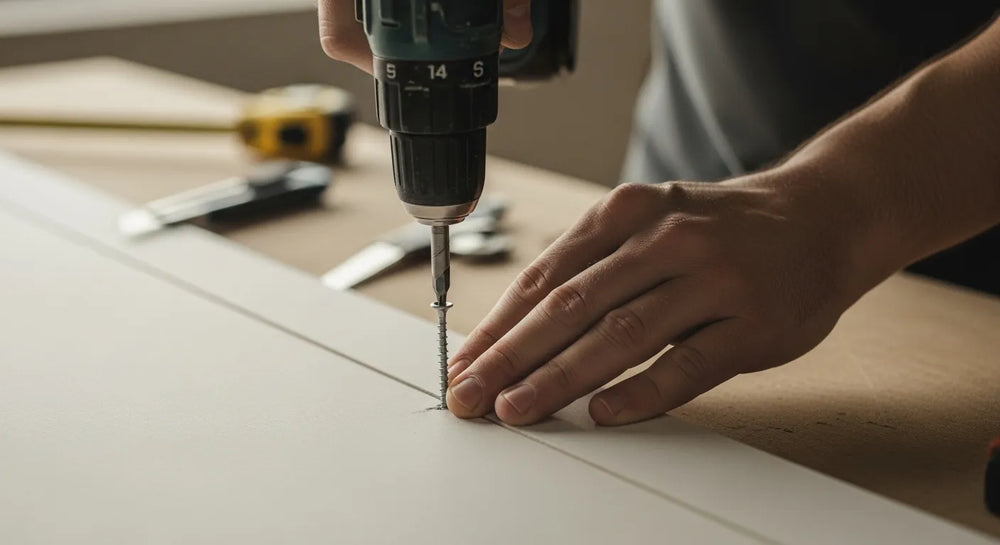
How to Put Screw Hooks in Wood: A Secure Installation Guide
Table of Contents
- Introduction
- Understanding Screw Hooks and Their Applications
- The Right Tools for the Job
- Step-by-Step Guide: Installing Screw Hooks Like a Pro
- Advanced Considerations for Superior Installation
- The Maden.co Advantage: Sourcing Quality, American-Made Fasteners
- Common Pitfalls and Troubleshooting
- Maintenance and Inspection
- Conclusion
- FAQ
Introduction
Few tasks seem as simple as installing a screw hook, yet the difference between a secure, long-lasting fixture and one prone to failure often lies in understanding the nuanced steps involved. A poorly installed hook can lead to frustrating project delays, damaged materials, or even safety hazards, especially when used in critical industrial or commercial applications. This comprehensive guide will dissect the process of securely installing screw hooks into various wood types, offering practical, expert-backed advice. We will explore material considerations, essential tools, and precise techniques to ensure every installation is robust and reliable. Mastering this fundamental skill is vital for ensuring longevity and safety in any application, underscored by the importance of sourcing quality, U.S.-made fasteners for unwavering reliability in your projects and operations.
Understanding Screw Hooks and Their Applications
Screw hooks, in their various forms, are ubiquitous components across industries. From organizing tools in a bustling manufacturing facility to securely suspending fixtures in a commercial space, their utility is undeniable. However, their simplicity belies the critical need for proper selection and installation.
Varieties of Screw Hooks
The world of screw hooks is more diverse than often perceived, each type designed for specific applications and load capacities:
- Open Hooks: The most common type, ideal for easily hanging and removing items. Their open design offers convenience but may not be suitable for items needing maximum security.
- Closed Hooks (Eye Hooks): Featuring a fully enclosed loop, these are perfect for securing ropes, cables, or chains, ensuring items cannot accidentally slip off. They are often used in rigging or tensioning applications.
- Cup Hooks: Smaller and often aesthetically finished, cup hooks are typically used for lighter items like mugs, keys, or lightweight decorations. Their curved shape cradles items securely.
- Utility Hooks: Generally larger and more robust, these are designed for heavier items such as ladders, garden tools, or industrial equipment, requiring substantial load-bearing capacity.
- Shoulder Hooks: These hooks feature a small "shoulder" or collar that sits flush against the surface, providing a clean finish and sometimes distributing weight more effectively.
- Ceiling Hooks: Often with an angled or offset design, these are specifically made for hanging items from overhead, requiring careful consideration of the ceiling material and structural support.
Each variety comes with inherent load-bearing distinctions. It's crucial to match the hook type to the expected load and application, not just for functionality but for safety and long-term performance.
Common Applications in Industrial and Commercial Settings
While many associate screw hooks with home improvement, their industrial applications are extensive and critical for operational efficiency and safety:
- Tool Organization: In workshops, assembly lines, and MRO (Maintenance, Repair, and Operations) facilities, screw hooks are invaluable for keeping tools organized, accessible, and off work surfaces, preventing clutter and improving workflow.
- Cable and Hose Management: From electrical wiring to pneumatic hoses, screw hooks can secure and route various lines, preventing trip hazards and ensuring a tidy, compliant workspace.
- Fixture Suspension: In retail environments, warehouses, or public spaces, hooks are used to suspend lighting fixtures, signage, or temporary displays, requiring secure, reliable anchoring.
- Inventory and Parts Storage: Within inventory systems, hooks can be utilized to hang smaller parts bins, specific components, or even individual pieces of stock for quick access.
- MRO Scenarios: During equipment maintenance or repairs, hooks might be used for temporary component suspension, safely holding parts out of the way, or for permanent solutions to hang safety equipment, warning signs, or maintenance tools.
For all these applications, the integrity of the fastener is paramount. A failing hook can lead to operational downtime, damaged equipment, or, most critically, worker injury.
The Importance of Material Selection for Durability and Compliance
The material of a screw hook is just as important as its design, dictating its strength, corrosion resistance, and suitability for specific environments. When a procurement manager, MRO buyer, or design engineer specifies a fastener, material selection is a non-negotiable aspect of ensuring performance and compliance.
- Steel: Often zinc-plated for basic corrosion resistance, steel hooks offer good strength for general-purpose applications. However, they may rust in high-humidity or outdoor environments if the plating is compromised.
- Brass: Valued for its excellent corrosion resistance, particularly in damp environments, and its aesthetic appeal. Brass hooks are often chosen for decorative or architectural applications where appearance and longevity are key, but they are softer than steel.
- Stainless Steel: The preferred choice for outdoor, marine, or highly corrosive environments due to its superior resistance to rust and staining. Stainless steel offers excellent strength and durability, making it ideal for food processing, chemical, or medical applications where hygiene and longevity are critical.
- Silicon Bronze: This alloy offers exceptional corrosion resistance, often surpassing stainless steel in certain marine and outdoor conditions, while also providing good strength. It's a premium choice for highly demanding applications where long-term integrity in harsh environments is paramount.
Matching the hook material to the environmental conditions and the weight it will bear is essential for compliance and reducing the total cost of ownership (TCO). A well-chosen, quality component will outlast and outperform a cheaper, mismatched alternative, leading to fewer replacements and less downtime. At Maden.co, our mission is to democratize access to American manufacturing, ensuring industrial buyers can easily source a vast array of high-quality, U.S.-made components across various materials, all built for industrial excellence.
The Right Tools for the Job
Even the simplest task benefits from the right tools. For installing screw hooks, having the correct equipment not only makes the job easier but also significantly reduces the risk of errors, damage, and injury.
Essential Hand Tools
- Measuring Tape and Pencil: Precision starts here. Accurately measure and mark the exact location for your hook.
- Awl or Center Punch: Essential for creating a small indentation at your marked spot. This prevents the drill bit from "walking" or drifting across the wood surface, ensuring your pilot hole is precisely where you intend it to be.
- Pliers or Wrench: While many screw hooks can be started by hand, once the threads begin to bite, using pliers (especially needle-nose for smaller hooks) or a small wrench on the hook's bend provides extra leverage for turning. For heavier-duty hooks, a crescent wrench might be necessary.
- Screwdriver (Flathead or Phillips): Surprisingly, a flathead screwdriver can be useful. Insert the blade through the eye of larger hooks to act as a T-handle, offering greater torque and control than bare hands. Specialized screw hook drivers also exist for high-volume work.
- Safety Glasses: Wood dust, splinters, or errant tools can cause eye injuries. Always wear appropriate eye protection.
- Gloves: Protect your hands from splinters, nicks, and blisters, especially during repetitive tasks.
The Power of the Drill
A drill is often the most critical tool for installing screw hooks, particularly into hardwoods or when installing multiple hooks.
-
Types of Drills:
- Corded Drills: Offer consistent power without battery limitations, ideal for prolonged or heavy-duty tasks in a fixed location.
- Cordless Drills: Provide flexibility and portability, essential for jobs where power outlets are scarce or when working in various locations within a facility. Look for models with good torque control.
-
Drill Bits: Importance of Proper Size (Pilot Hole): This is perhaps the single most critical aspect of screw hook installation. A pilot hole is a pre-drilled hole that guides the screw hook, prevents wood from splitting, and ensures the threads engage correctly without excessive force.
- The drill bit size must be slightly smaller than the root diameter (the solid core) of the screw hook's threaded shaft, but larger than the shaft diameter of the unthreaded portion (if any). This allows the threads to cut into the wood securely without stripping it or making it too difficult to turn. We will detail pilot hole selection further in the installation steps.
- Setting the Depth: Using a drill bit that is too long can lead to drilling through the wood surface, while one that is too short won't provide enough guidance. Many drills have a depth stop feature, or you can use a piece of tape wrapped around the drill bit to mark the desired depth.
Safety First: Personal Protective Equipment (PPE)
Beyond eye protection and gloves, always consider the work environment. If working overhead, ensure stable footing. If dealing with treated wood, consider a dust mask. Prioritizing safety not only protects the individual but also reflects an organization's commitment to industrial excellence and employee well-being.
Step-by-Step Guide: Installing Screw Hooks Like a Pro
Achieving a truly secure and lasting screw hook installation requires a methodical approach. Skipping steps or improvising crucial details can undermine the entire effort.
1. Planning and Preparation
Successful installation begins long before the drill bit touches the wood.
-
Assessing the Wood Type: The type of wood significantly influences your approach, particularly the size of the pilot hole.
- Softwoods (e.g., pine, cedar, fir): These woods are less dense and more prone to splitting if a pilot hole is too small or absent. They also offer less holding power than hardwoods.
- Hardwoods (e.g., oak, maple, cherry): Denser and stronger, hardwoods require a larger pilot hole to prevent splitting and to ease the turning of the hook. They offer superior holding power.
- Engineered Wood (e.g., MDF, particle board, plywood): These materials can vary greatly in density and composition. Plywood generally holds screws well, but MDF and particle board are notorious for stripping out easily. For these, a carefully sized pilot hole is crucial, and sometimes a dab of wood glue in the pilot hole can enhance holding power, or even anchors for heavier loads.
-
Determining Placement and Load:
- Structural Integrity: Ensure the chosen location can support the intended load. Avoid installing hooks into thin panels or areas where the wood is visibly damaged or weakened. For walls, locate studs. For ceilings, ensure you are drilling into joists or adequate blocking.
- Spacing: If installing multiple hooks, consider aesthetics and functionality. Even spacing is often desired.
- Weight Limits: Always err on the side of caution. If in doubt about a hook's capacity, consult manufacturer specifications or opt for a heavier-duty alternative.
- Marking the Spot: Using your measuring tape and pencil, accurately mark the exact center of where the hook will be installed. Once marked, use an awl or center punch to create a small, distinct indentation. This dimple will cradle the drill bit and prevent it from wandering, ensuring your pilot hole is precisely placed.
2. Drilling the Pilot Hole
This is the most critical stage of the installation process. Its importance cannot be overstated.
-
Why a Pilot Hole is Crucial:
- Prevents Wood Splitting: Especially vital in hardwoods or near the edge of a board, a pilot hole relieves the stress that the screw's threads would otherwise exert, preventing unsightly and weakening splits.
- Eases Installation: A pilot hole significantly reduces the effort required to turn the screw hook, making the process smoother and less fatiguing.
- Ensures Thread Engagement: By creating a path for the screw's core, the pilot hole allows the threads to properly cut and grip the wood fibers, maximizing holding power without stripping.
-
Selecting the Correct Drill Bit Size: This often causes confusion, but the principle is straightforward.
- The drill bit should be slightly smaller than the root diameter (the solid shaft, excluding the threads) of the screw hook. If the pilot hole is too large, the threads won't have enough material to grip, leading to a loose hook. If it's too small, the wood will split, or the screw will be extremely difficult to turn, risking breakage.
- General Guideline: For softwoods, a pilot hole approximately 60-70% of the screw's root diameter is often suitable. For hardwoods, this increases to 80-90% of the root diameter. It's always a good practice to test on a scrap piece of the same wood if possible.
- Measuring Your Hook: Use a caliper or a drill bit gauge to accurately measure the threaded shaft of your screw hook. Match this to a drill bit that seems slightly smaller than the solid core of the threads.
- When sourcing precision-engineered fasteners like Round Slot Drive Brass Wood Screws from a verified U.S. manufacturer, you can rely on consistent thread geometry. This consistency makes calculating the precise pilot hole diameter much more reliable, ensuring optimal thread engagement and structural integrity for your assemblies.
-
Setting the Correct Depth: The pilot hole should be as deep as, or slightly deeper than, the threaded portion of the screw hook will penetrate.
- Wrap a piece of painter's tape around your drill bit at the desired depth, or if your drill has a depth stop, set it accordingly. This prevents drilling too deep and compromising the wood's structural integrity or drilling through to the other side.
-
Drilling Technique:
- Place the tip of the drill bit precisely into the indentation you made with the awl.
- Ensure the drill is held perfectly perpendicular (straight) to the wood surface.
- Apply steady, even pressure and allow the drill to do the work. Avoid forcing it.
- Clear wood dust from the hole periodically, especially for deeper holes, to prevent clogging.
3. Inserting the Screw Hook
With the pilot hole drilled, the hook installation is the final step.
- Starting by Hand: Gently push the tip of the screw hook into the pilot hole and begin turning it clockwise by hand. You should feel the threads start to engage. This ensures the hook begins straight and avoids cross-threading.
-
Using Mechanical Advantage: Once the hook is firmly started, it will become harder to turn.
- Pliers: Grip the bend of the hook with pliers (wrap the hook in a cloth to prevent marring if aesthetics are important) and turn.
- Screwdriver/T-handle: For hooks with an open loop or eye, insert a screwdriver through the loop to create a T-handle for leverage. For a more robust solution, a specialized screw hook driver attachment for your drill can make quick work of multiple installations, though care must be taken to prevent overtightening.
- Avoiding Overtightening: Stop turning as soon as the base of the hook is snug against the wood surface. Overtightening can strip the wood fibers, rendering the hole useless, or in some cases, twist and break the hook itself. The goal is firm, secure contact, not excessive force. A properly sized pilot hole should make the hook feel secure without requiring extreme force to turn.
Advanced Considerations for Superior Installation
While the basic steps ensure a functional installation, mastering screw hooks involves a deeper understanding of factors that contribute to their long-term performance, especially in industrial contexts where reliability is paramount.
Weight Capacity and Structural Integrity
Understanding how much weight a screw hook can safely bear is crucial for preventing failure. This isn't just about the hook itself, but the entire system:
- Wood Type and Condition: Hardwoods offer greater holding power than softwoods. The condition of the wood (e.g., free from rot, cracks, or severe damage) also plays a significant role.
- Screw Length and Thread Engagement: Longer screws with more threads embedded in the wood generally provide better holding power. The deeper the engagement into solid wood, the stronger the connection.
- Hook Material Strength: A high-quality steel or stainless steel hook will have a higher tensile strength than a brass hook, all else being equal.
- When to Use Anchors: For very heavy loads, or when installing into materials like drywall, plaster, or crumbling engineered wood that cannot adequately hold a screw hook on its own, specialized anchors (e.g., toggle bolts, molly bolts, expansion anchors) are necessary. These spread the load over a larger area or create a mechanical lock behind the surface, offering superior holding power. While beyond the scope of direct screw hook installation into wood, recognizing their necessity demonstrates a comprehensive approach to secure fastening.
Material Compatibility and Environmental Factors
The interaction between the hook material and its environment can profoundly impact its lifespan.
- Preventing Galvanic Corrosion: When two dissimilar metals come into contact in the presence of an electrolyte (like moisture), an electrochemical reaction can occur, leading to accelerated corrosion of the less noble metal. For example, using a zinc-plated steel hook in contact with a brass fitting in a damp environment could lead to premature corrosion.
-
Choosing Corrosion-Resistant Materials: For outdoor use, marine environments, or areas with high humidity, chemical exposure, or frequent washing, selecting highly corrosion-resistant materials is imperative.
- Stainless steel is excellent for most outdoor and damp conditions.
- Silicon bronze, with its exceptional resistance to saltwater and atmospheric corrosion, is a premium choice for highly demanding marine or outdoor industrial applications, ensuring long-term integrity and minimizing maintenance. For critical projects in these demanding environments, sourcing fasteners like Oval Slot Drive Silicon Bronze Wood Screws from a verified U.S. manufacturer like those found on Maden.co ensures optimal performance and adherence to the highest industrial excellence standards.
- Brass also offers good corrosion resistance in many interior damp environments and is often preferred for its aesthetic.
Aesthetic Considerations and Finish
While functionality often takes precedence in industrial settings, aesthetics can still be a factor, especially in commercial spaces or finished products.
- Decorative Elements: Brass hooks or those with specific plated finishes (e.g., nickel, chrome) are often chosen for visible applications where appearance is important.
- Matching Finishes: For certain projects, matching the finish of the screw hook to other hardware or the overall design scheme is crucial. The wide range of finishes and materials available for quality fasteners, such as Flat Slot Drive Brass Wood Screws, allows design engineers and procurement managers to perfectly align form with function for their projects, ensuring a cohesive and professional appearance.
The Maden.co Advantage: Sourcing Quality, American-Made Fasteners
In the realm of industrial procurement, the adage "you get what you pay for" holds profound truth, especially concerning fasteners. The reliability, durability, and compliance of a screw hook or any other component are directly tied to its manufacturing quality. At Maden.co, we understand these critical needs and offer a platform designed to meet them with unparalleled efficiency and assurance.
Democratizing Access to Industrial Excellence
Our mission at Maden.co is to democratize access to American manufacturing. We achieve this by connecting industrial buyers—procurement managers, MRO buyers, and design engineers—with an expansive network featuring over 2.5 million American-made products from our 800+ verified U.S. manufacturers. Our vision is clear: to become the definitive platform that proves American-made components are as accessible and convenient as any global alternative, actively driving the manufacturing revival with our tagline: "America's manufacturing revival is here." This commitment to American Manufacturing Pride ensures that every component, from the smallest fastener to complex machinery parts, meets stringent quality standards.
Supply Chain Resilience and Transparency
The challenges presented by volatile global supply chains have underscored the invaluable advantage of domestic sourcing. Maden.co champions Supply Chain Transparency, offering a direct, clear path to verified U.S. manufacturers. This eliminates the uncertainties associated with international logistics, quality control, and geopolitical disruptions. For a procurement manager tasked with sourcing specific, high-quality fasteners for a critical product assembly, or an MRO buyer needing durable hanging solutions for tools to prevent operational downtime, the ability to quickly find and procure a verified, U.S.-made part from our platform is a transformative advantage. You know exactly where your products come from, ensuring peace of mind and supporting national industrial growth.
Enhancing Total Cost of Ownership (TCO)
Focusing solely on the initial purchase price of fasteners can be a costly mistake. While seemingly cheaper imported alternatives might offer an immediate saving, they often lead to higher Total Cost of Ownership (TCO) due to premature failures, increased downtime for replacements, labor costs for rework, and potential safety risks. The long-term value of a reliable, durable U.S.-made fastener, sourced through Maden.co, significantly outweighs these potential short-term savings. Our emphasis on Industrial Excellence ensures components that perform consistently, reducing maintenance, extending product lifespan, and ultimately saving your business money over time.
Streamlined Procurement with Digital Innovation
Our platform is built on principles of Digital Innovation, designed to simplify and streamline the entire procurement process. We understand that time is a critical resource for industrial buyers. Our intuitive interface allows you to efficiently search and filter through our vast catalog of U.S.-made products, from standard screws and bolts to specialized hooks and custom components. Finding precisely what you need, with detailed specifications and material certifications, is quick and straightforward, significantly reducing procurement friction and allowing your team to focus on higher-value tasks.
Instant Financing: A Strategic Procurement Tool
For businesses managing large projects or requiring significant volume purchases, effective cash flow management is paramount. Maden.co offers a key differentiator: Instant Financing, available directly at checkout. This isn't just a payment method; it's a strategic tool designed to empower procurement managers and business owners. It allows you to acquire the necessary high-quality components without immediate upfront capital strain, facilitating larger, more strategic purchases and ensuring your projects stay on schedule. You can apply for Instant Financing at checkout to streamline your capital-intensive projects, ensuring that vital operations and investments are never held back by cash flow constraints. This Customer Empowerment is central to our value proposition.
Common Pitfalls and Troubleshooting
Even with the best preparation, challenges can arise. Knowing how to identify and address common issues can save time, material, and frustration.
Stripped Wood or Overtightening
- Symptoms: The hook spins freely in the hole, or it feels excessively loose even after tightening. Visible damage to wood fibers around the hole.
- Causes: Pilot hole was too large for the screw hook; too much force was applied during tightening, stripping the wood threads; or the wood itself was soft or compromised.
-
Remedies:
- Wood Filler: For minor stripping, remove the hook, fill the hole with wood filler, let it dry completely, and then drill a new (slightly smaller) pilot hole.
- Larger Screw Hook: If applicable, replace the hook with one that has a larger diameter shank or coarser threads to grip fresh wood.
- Wood Dowel: For significant damage, drill out the stripped hole to a larger diameter, insert a wood dowel with wood glue, let it cure, and then redrill your pilot hole into the dowel.
Broken Hooks or Screws
- Symptoms: The hook snaps during installation or under load; the threaded shaft shears off.
- Causes: Poor quality material of the hook; pilot hole was too small, requiring excessive force to turn; the hook was overtightened; or the load placed on the hook exceeded its capacity.
-
Remedies:
- Extract and Replace: If the shank is accessible, use pliers or a screw extractor to remove the broken portion.
- Redrill: Drill a new pilot hole nearby (if space allows) and install a new, higher-quality hook. Ensure the pilot hole is correctly sized for the replacement.
- Upgrade Material: Consider a stronger material like stainless steel or a thicker gauge hook.
Loose Hooks
- Symptoms: The hook wiggles even without a load, or it pulls out easily.
- Causes: Insufficient thread engagement; pilot hole was too large; the wood has degraded or softened over time; or the hook wasn't fully tightened.
-
Solutions:
- Retighten: First, ensure it's simply not fully tightened.
- Pilot Hole Review: If retightening doesn't work, the pilot hole is likely too large. Use the remedies for stripped wood (filler, dowel, larger hook).
- Inspect Wood: If the wood itself is compromised, consider moving the hook to a new, solid location or reinforcing the area.
Maintenance and Inspection
The lifecycle of an installed screw hook doesn't end with its placement. Regular maintenance and inspection are vital for ensuring ongoing safety and operational integrity, particularly in dynamic industrial environments.
Regular Checks for Wear and Tear
Implement a routine inspection schedule for all installed hooks, especially those bearing critical loads or exposed to harsh conditions. Look for:
- Corrosion: Rust or discoloration, which can indicate material degradation and weakened structural integrity.
- Deformation: Bending, stretching, or opening of the hook, signaling it may be overloaded or failing.
- Looseness: Any movement or wobbling when the hook is gently pulled or pushed, indicating the threads may be stripping or the wood is degrading.
- Wood Integrity: Check the wood around the hook for cracks, splits, or softening, which could compromise holding power.
Replacing Worn Components
Proactive replacement of worn or compromised hooks is a cornerstone of effective MRO. Don't wait for a failure. The ease of re-sourcing quality U.S.-made components ensures that replacements are readily available and integrate seamlessly into your existing systems. Maden.co's extensive catalog makes finding exact matches or superior alternatives straightforward, minimizing downtime and ensuring consistent quality in your operations.
Are you a qualified U.S. manufacturer producing high-quality fasteners and industrial components? We invite you to expand your reach. Register as a vendor and join the American manufacturing revival to connect with industrial buyers across the nation who prioritize quality, reliability, and domestic sourcing.
Conclusion
Securely installing screw hooks in wood, while seemingly a straightforward task, is a fundamental skill that underpins the reliability and safety of countless industrial and commercial applications. From meticulously selecting the right hook material and tools to precisely drilling pilot holes and understanding load capacities, each step contributes to an installation that endures. Mastering these techniques not only prevents costly failures and downtime but also reflects a commitment to quality and operational excellence.
By choosing Maden.co, businesses are not just sourcing fasteners; they are investing in the unwavering reliability, transparent supply chains, and robust resilience that define American manufacturing. We empower procurement managers, MRO buyers, and design engineers to build with confidence, knowing their components are sourced from verified U.S. manufacturers committed to the highest standards. Elevate your projects and operations by exploring our extensive catalog of verified, U.S.-made industrial products on Maden.co. Discover the tangible difference that quality makes and leverage our Instant Financing option at checkout to manage your capital effectively, ensuring your critical projects move forward without financial impediment. If you have specific sourcing questions, our expert team is ready to help; feel free to contact us for personalized support.
FAQ
1. What is the most common mistake when installing screw hooks? The most common mistake is failing to drill a proper pilot hole, or drilling one of the wrong size. An absent pilot hole or one that's too small can lead to wood splitting, excessive effort during installation, or a broken hook. Conversely, a pilot hole that's too large will result in a loose hook that strips easily.
2. How do I choose the right size pilot hole for a screw hook? The pilot hole diameter should be slightly smaller than the root diameter (the solid core, excluding the threads) of the screw hook. As a general rule, use a drill bit that is approximately 60-70% of the root diameter for softwoods and 80-90% for hardwoods. Always test on a scrap piece of wood first if possible.
3. Can I install screw hooks into engineered wood like particle board or MDF? Yes, but with caution. Engineered wood products like particle board and MDF are prone to stripping and may not offer strong holding power. A precise pilot hole is critical. For heavier loads or improved durability, it's often advisable to use specific anchors designed for these materials, or to reinforce the area if possible. Plywood generally offers better screw retention.
4. What type of screw hook material is best for outdoor use? For outdoor use, materials with excellent corrosion resistance are essential. Stainless steel (e.g., 304 or 316 grade) is a robust choice for most outdoor and damp conditions. For highly corrosive environments, such as marine applications or areas with chemical exposure, silicon bronze offers superior resistance and longevity. Avoid plain steel hooks, which will quickly rust and degrade unless specially coated.


