
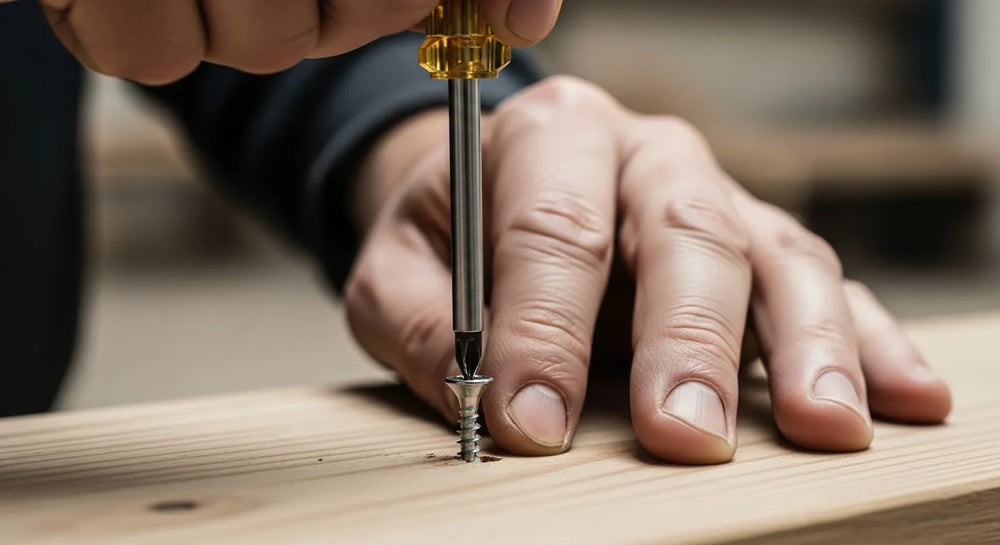
How to Screw in Wood at an Angle: Techniques for Strength and Precision
Table of Contents
- Introduction
- Why Angled Screws? Understanding Their Strategic Value
- The Fundamentals of Angled Screw Placement
- Essential Tools and Materials for Angled Screwing
- Step-by-Step Techniques for Driving Angled Screws
- Advanced Considerations for Professional Results
- Sourcing U.S.-Made Fasteners: The Maden.co Advantage
- Conclusion
- FAQ
When constructing or repairing wooden structures, the integrity of the joints is paramount. While traditional joinery techniques offer strength and elegance, sometimes the most effective, efficient, or aesthetically pleasing solution involves driving screws at an angle. Whether you're reinforcing a weak joint, creating a hidden fastening, or securing a tricky component, mastering the art of angled screwing is an indispensable skill for anyone working with wood. This technique, often overlooked in basic woodworking guides, can dramatically enhance the strength and longevity of your projects while offering discrete fastening solutions.
Introduction
Imagine a critical joint in a custom furniture piece, a structural reinforcement in a heavy-duty workbench, or a deck railing connection that needs both strength and a clean finish. In many such scenarios, driving a screw straight into the face of the wood isn't ideal—it might split the wood, be unsightly, or simply not provide adequate holding power for the specific load. This is where the strategic application of angled screws becomes not just a technique, but a cornerstone of durable and professional wood construction. Without this capability, engineers, procurement managers, MRO buyers, and business owners would face significant limitations in design, repair, and assembly, leading to compromised structural integrity or complex, time-consuming alternative solutions. This post will delve deep into the principles, tools, and precise methods required to expertly screw into wood at an angle. We'll explore why this technique is so vital, the different approaches to achieve flawless results, and how sourcing the right, U.S.-made fasteners through platforms like Maden.co can empower your projects with unmatched quality and reliability. Our goal is to equip you with the knowledge to execute angled screw installations with confidence, ensuring maximum holding power and a superior finish for every application.
Why Angled Screws? Understanding Their Strategic Value
The decision to drive a screw at an angle is almost always driven by a need for enhanced performance, improved aesthetics, or practical necessity where conventional methods fall short. Understanding these core motivations is the first step toward appreciating the technique's strategic value in industrial, commercial, and even intricate residential applications.
Joint Reinforcement and Stability
One of the primary benefits of angled screws is their ability to significantly strengthen various wood joints. For common butt joints, where two pieces of wood meet end-to-end or edge-to-edge, a straight screw driven perpendicular to the surface might offer limited resistance against racking forces. However, an angled screw, particularly when driven from both sides of the joint, creates a much stronger mechanical lock. The screw threads engage with wood fibers across a greater length and at an advantageous angle, effectively "clamping" the joint together and resisting forces that might otherwise pull it apart. This is crucial for applications demanding high structural integrity, from heavy-duty shelving units to robust framing components.
Hidden Fastening and Aesthetic Appeal
In many woodworking projects, visible fasteners detract from the overall design and finish. Angled screws provide an elegant solution for hidden fastening, most notably through the use of pocket holes. When screws are driven through pre-drilled angled holes, they enter the adjoining piece of wood from an inconspicuous location, typically on the underside or back of the assembly. This leaves the visible faces of the wood free of fastener heads, allowing for a clean, uninterrupted surface that can be painted, stained, or left natural. For design engineers focusing on product aesthetics or business owners aiming for high-end finishes, this technique is invaluable.
Structural Support and Load Distribution
Beyond simple joint reinforcement, angled screws are instrumental in providing structural support and distributing loads more effectively. Consider the installation of ledger boards for decks or shelving systems where significant weight will be borne. While lag screws or bolts might be used for primary attachment, angled screws can supplement these, preventing rotation or sag. The angled path of the screw allows it to engage with more wood fibers, distributing the stress over a larger area and providing enhanced resistance against withdrawal. This is a critical consideration for MRO buyers responsible for maintaining infrastructure where safety and reliability are paramount.
Repair, Remediation, and Adaptability
The ability to screw at an angle also offers immense flexibility in repair and renovation scenarios. When a joint has failed, or a piece of wood needs to be secured where direct access is limited, an angled screw can often be the most practical solution. It allows fasteners to bypass obstacles, reinforce existing connections without disassembly, or provide localized strengthening in damaged areas. This adaptability is a significant advantage for procurement managers seeking versatile fastening solutions that can address a wide range of operational challenges without requiring specialized, single-purpose hardware.
The Importance of Quality Fasteners
Regardless of the application, the success of any angled screwing technique hinges on the quality of the fastener. Subpar screws can strip, snap, or fail to achieve proper bite, negating the benefits of careful technique. This is why sourcing from reliable suppliers of U.S.-made fasteners is non-negotiable. Quality materials, precise threading, and consistent manufacturing standards ensure that the screws perform as intended, providing the strength and durability your projects demand. At Maden.co, we emphasize this industrial excellence, recognizing that the integrity of a structure often comes down to the smallest, yet most critical, components.
The Fundamentals of Angled Screw Placement
Achieving professional results with angled screws requires more than just pointing a drill. It demands an understanding of wood mechanics, precise measurement, and careful preparation. These fundamentals form the bedrock upon which successful angled fastening techniques are built.
Understanding Wood Grain and Direction
Wood is an anisotropic material, meaning its properties vary depending on the direction relative to its grain. When driving screws, particularly at an angle, understanding the wood grain is crucial to prevent splitting and ensure maximum holding power. Screws hold best when their threads run perpendicular to the wood fibers. Driving a screw parallel to the grain, especially near the end of a board, significantly increases the risk of splitting, as the screw acts as a wedge separating the fibers.
When screwing at an angle, aim to have the screw path cross as many wood fibers as possible. Avoid driving screws directly into the end grain unless absolutely necessary, and always use an adequate pilot hole in such cases. The direction of the angle relative to the grain can dictate the likelihood of splitting and the ultimate strength of the connection. Hardwoods are more prone to splitting than softwoods, making proper pilot hole sizing even more critical.
The Angle Itself: Optimal Degrees for Performance
The specific angle at which a screw is driven is not arbitrary; it's determined by the desired outcome:
- Pocket Holes (Typically 15-30 Degrees): For hidden fastening, the angle needs to be shallow enough to provide sufficient engagement with the workpiece while keeping the entry hole discreet. Jigs typically guide screws at angles between 15 and 30 degrees from the face of the board. This range balances minimal breakout risk with good holding power and a clean finish.
- Joint Reinforcement (Varies): For general joint reinforcement, angles are often steeper, sometimes closer to 45-60 degrees from the surface, to maximize the length of the screw engaged in the receiving piece and to prevent pull-out. The goal here is usually maximum strength, even if the screw head remains visible.
- Too Steep vs. Too Shallow: If the angle is too steep (closer to 90 degrees from the surface), you risk the screw breaking through the side of the thinner piece or not having enough material for the screw to bite into effectively. If the angle is too shallow (closer to parallel with the surface), the screw might not gain sufficient purchase in the receiving member, or the screw head might easily strip out due to the acute angle of entry.
Experimentation on scrap wood, especially when using a new type of fastener or wood, is always recommended to find the optimal angle for your specific application.
Pilot Holes: Non-Negotiable for Precision and Prevention
The importance of pilot holes cannot be overstated, especially when driving screws at an angle. A pilot hole serves several critical functions:
- Prevents Splitting: By pre-drilling a path for the screw, you alleviate the wedging action that causes wood to split, particularly in hardwoods, near edges, or in end grain.
- Guides the Screw: A pilot hole ensures the screw follows the intended path, preventing it from wandering off-course and compromising the angle or exiting prematurely. This is crucial for precise placement.
- Reduces Driving Resistance: A properly sized pilot hole reduces the friction and torque required to drive the screw, minimizing the risk of stripping the screw head or snapping the screw shank.
- Ensures Optimal Thread Engagement: While the pilot hole creates a path for the screw's shank, the threads still cut into the wood, forming a strong grip. A pilot hole that is too large will reduce holding power, while one that is too small won't adequately prevent splitting and can make driving difficult.
Correct Drill Bit Sizing: The pilot hole should match the shank diameter (the unthreaded part) of the screw, allowing the threads to fully engage with the wood. For screws with a tapered shank, the pilot hole might be slightly smaller at the tip to accommodate the taper. A general rule of thumb is to hold the drill bit up to the screw: if you can just barely see the threads on either side of the drill bit, it's likely the correct size. For hardwoods, consider using a pilot hole that is slightly larger than for softwoods to further reduce splitting risk. Using a countersink bit after drilling the pilot hole can create a clean recess for the screw head, ensuring a flush finish.
Essential Tools and Materials for Angled Screwing
Successful angled screwing relies not just on technique, but on having the right arsenal of tools and the highest quality materials. Investing in appropriate equipment and fasteners saves time, prevents frustration, and ensures the longevity of your work.
Drills and Drivers: Power and Control
The choice of drill or driver significantly impacts the ease and precision of driving angled screws.
- Corded vs. Cordless Drills: Cordless drills offer unparalleled mobility, essential when working on large assemblies or in varied locations. Corded drills provide consistent power without worrying about battery life, often preferred for continuous, heavy-duty tasks where an outlet is accessible. For angled screwing, a cordless drill/driver with adjustable clutch settings is generally sufficient.
- Impact Drivers vs. Drill/Drivers: Impact drivers deliver rotational force combined with short, rapid impacts, making them exceptionally effective at driving long screws into dense materials without stripping the head. Their high torque is beneficial for angled screws, especially when starting without a jig. However, their raw power can make them prone to overtightening or stripping delicate wood. A drill/driver with a precise clutch allows for more controlled driving, crucial for preventing damage to both the screw and the workpiece. Many professionals use an impact driver for driving and a drill/driver for pilot holes.
- Specialized Accessories: Magnetic bit holders, screw setters, and depth stop collars are invaluable. Depth stops prevent screws from being driven too deep, ensuring consistent results, especially when working with pocket holes.
Screw Types for Wood Applications: Material and Design Matters
The right screw type is critical for the strength and durability of an angled joint. While various fasteners exist, wood screws are generally designed for optimal performance in timber.
- Standard Wood Screws: These typically have a tapered shank, allowing them to draw mating pieces together tightly. Modern wood screws often feature self-tapping tips that reduce the need for pilot holes in softer woods, though pilot holes are always recommended for angled applications and hardwoods.
- Pocket Hole Screws: Specifically designed for use with pocket hole jigs, these screws have a large washer head that prevents overtightening and splitting, and a self-drilling tip to engage quickly. They often have coarse threads for good holding power in softwoods and fine threads for hardwoods.
- Self-Tapping Screws: These fasteners are designed to tap their own threads as they are driven, often featuring a specific point style or thread design. While many modern wood screws are self-tapping to some degree, dedicated self-tapping screws are generally used in applications where high efficiency and reduced pre-drilling are key, especially in softer materials or thin sheet goods.
-
Material Considerations: The material of the screw is paramount, especially when considering environmental factors and strength requirements.
- Brass Screws: Known for their aesthetic appeal and corrosion resistance, brass screws are excellent for visible applications in fine woodworking where a decorative finish is desired, or in environments where rust is a concern. They are softer than steel, so care must be taken not to over-torque. For instance, the elegant Round Slot Drive Brass Wood Screw or the Flat Slot Drive Brass Wood Screw are ideal when you need both function and a classic appearance that complements wood.
- Silicon Bronze Screws: Offering superior corrosion resistance to brass and significantly greater strength, silicon bronze screws are often specified for marine applications, outdoor structures, or any environment demanding extreme durability and longevity without risk of rust. Their robust nature makes them a premium choice for high-strength angled joints. The Oval Slot Drive Silicon Bronze Wood Screw exemplifies a fastener chosen for its resilience and reliable performance in demanding conditions.
- Steel Screws: The most common type, steel screws are strong and cost-effective. They come in various coatings (zinc, galvanized, ceramic) to provide different levels of corrosion resistance. Hardened steel screws are particularly useful for driving into dense hardwoods or for situations requiring maximum shear strength.
At Maden.co, we understand that selecting the right fastener means evaluating material, thread type, head design, and coating. Our network of verified U.S. manufacturers provides a comprehensive selection, ensuring you can find the exact specifications required for optimal performance and compliance. For a procurement manager under pressure to source a specific, high-strength fastener, or a design engineer needing a specific material certification for a new prototype, our platform simplifies the process of finding the right U.S.-made component.
Jigs and Guides: Your Best Friends for Accuracy
While freehand screwing is possible, jigs and guides significantly enhance accuracy, consistency, and ease of use, making them indispensable for anyone regularly working with angled screws.
- Pocket Hole Jigs: These are by far the most popular and efficient tools for creating angled screw joints. Brands like Kreg are well-known, but many variations exist. A pocket hole jig clamps onto the workpiece, providing a hardened steel guide that directs a specialized drill bit at a precise angle (typically 15 degrees). This creates a "pocket" for the screw head and a perfectly angled pilot hole into the wood. They are essential for fast, strong, and hidden joints in furniture, cabinetry, and other assemblies.
- Simple Angled Drilling Guides: For situations where a pocket hole jig isn't suitable, or for steeper angles, simpler drilling guides can be used. These are often blocks of wood or metal with pre-drilled holes at various angles. You clamp the guide to your workpiece, and the drill bit passes through the guide, maintaining the desired angle. This method is particularly useful for reinforcing existing joints or for non-standard angles.
- Clamps and Work-Holding: Regardless of the jig or method, securely clamping your workpieces is absolutely essential. Movement during drilling or driving can lead to inaccurate angles, damaged wood, or even injury. Bar clamps, C-clamps, and specialized face clamps (for pocket holes) are all valuable additions to your toolkit.
By utilizing these tools and carefully selecting your fasteners, you equip yourself to tackle any angled screwing challenge with precision and confidence, ensuring the highest quality results for your projects.
Step-by-Step Techniques for Driving Angled Screws
Mastering angled screws involves a few distinct techniques, each suited to different project needs and levels of experience. From freehand precision to jig-assisted efficiency, understanding these methods will enable you to choose the best approach for your specific application.
Method 1: Freehand Angled Screws (For Experienced Users)
Driving screws at an angle freehand requires a steady hand, good visual judgment, and a fair amount of practice. While less precise than jig-assisted methods, it offers flexibility for unique angles or situations where a jig won't fit.
- Marking the Entry Point and Angle: Use a pencil and a protractor or an angle gauge to accurately mark both the entry point of the screw and the desired angle on the surface of the wood. A visual reference line helps maintain consistency.
- Starting the Pilot Hole: This is the most critical step. Using a properly sized pilot bit, start drilling straight down into the marked entry point, creating a small divot. This initial straight entry helps prevent the bit from walking.
- Gradually Adjusting the Drill Angle: Once the pilot bit has penetrated a few millimeters, slowly tilt your drill to the desired angle, aligning it with your marked angle. Continue drilling, applying steady pressure. The initial straight divot will help guide the bit as you adjust the angle.
- Driving the Screw: Insert the appropriate screw into the angled pilot hole. Start driving slowly, ensuring the screw engages properly. Maintain the angle of your drill/driver throughout the driving process until the screw is fully seated. Be careful not to over-torque, especially with softer wood or decorative fasteners like a Round Slot Drive Brass Wood Screw.
Pros: Highly versatile, no special jigs required. Cons: Requires significant skill and practice, prone to inaccuracy and splitting if not executed carefully.
Method 2: Using a Pocket Hole Jig (The Most Common & Easiest)
Pocket hole jigs are the industry standard for fast, strong, and hidden angled joints. They simplify the process immensely, making it accessible even for beginners.
- Setting the Jig for Wood Thickness: Most pocket hole jigs have adjustable settings or guides based on the thickness of your wood. Follow the manufacturer's instructions to set the jig and the depth collar on the specialized pocket hole drill bit. This ensures the screw enters the adjoining piece at the correct depth and angle.
- Drilling Pocket Holes: Clamp the jig securely to your workpiece at the desired locations. Insert the specialized stepped drill bit into the jig's guide and drill until the depth collar stops against the jig. This creates the angled pilot hole and the flat-bottomed recess for the screw head. Repeat for all required pocket holes.
- Clamping and Assembly: Position your workpieces, ensuring they are perfectly aligned. Use appropriate clamps (face clamps are excellent for pocket hole joinery) to hold the pieces tightly together, preventing movement during driving.
- Driving the Specialized Pocket Hole Screws: Insert the correct type of pocket hole screw (coarse thread for softwoods, fine thread for hardwoods) into the pocket hole. Drive the screw until snug, but avoid overtightening, which can strip the wood or cause the screw to pull through. The washer head design of pocket hole screws helps prevent this.
Pros: Highly accurate, strong joints, hidden fasteners, relatively easy to learn. Cons: Requires a specific jig and specialized screws, might not be suitable for all angles or tight spaces.
Method 3: Creating Custom Angled Guides
For specific, non-standard angles or when a pocket hole jig isn't ideal, you can create a simple custom guide from a scrap piece of wood.
- Cut a Scrap Block to the Desired Angle: Using a miter saw or table saw, cut a piece of scrap wood (at least 1-2 inches thick) to the exact angle you need. For example, if you want to drive a screw at 45 degrees, cut one face of the block at a 45-degree angle.
- Drill a Straight Pilot Hole Through the Guide: On the angled face of the scrap block, drill a straight pilot hole (perpendicular to that face) of the correct size for your screw. Ensure the hole is clean and straight.
- Clamp the Guide to Your Workpiece: Position the angled guide block precisely on your workpiece where you want the screw to enter. Clamp it firmly in place.
- Drill Through the Guide: Use the pilot hole in your custom guide as a template. Insert your drill bit through this hole and into your workpiece. The guide will force your drill bit to maintain the precise angle you cut into it.
- Drive the Screw: Once the pilot hole is drilled, remove the guide block and drive your screw into the workpiece at the perfectly guided angle. This method is particularly effective for large-volume projects requiring consistent non-standard angles, or for specific structural reinforcements where a Flat Slot Drive Brass Wood Screw might be desired for a specific finish.
Pros: Highly customizable for any angle, very accurate, inexpensive to create. Cons: Requires an extra step of creating the guide, might be less efficient for high-volume standard angles.
By applying these methods with attention to detail and utilizing high-quality, U.S.-made fasteners, you can ensure that your angled screw joints are both robust and aesthetically pleasing, fulfilling the demanding requirements of industrial excellence.
Advanced Considerations for Professional Results
Beyond the basic techniques, achieving truly professional results with angled screws involves paying attention to subtle details that impact strength, durability, and finish. These advanced considerations are what separate good craftsmanship from exceptional work.
Screw Length and Penetration
Selecting the correct screw length is paramount for an effective angled joint. A general rule of thumb for straight screws is that the screw should penetrate the receiving material by at least two-thirds of its total length, or ideally, by the thickness of the first board. For angled screws, this calculation becomes slightly more complex due to the screw's diagonal path.
- Avoiding Breakthrough: You must ensure the screw does not exit the side of the receiving workpiece. Measure the depth of penetration along the screw's angled path to prevent this, especially with thinner materials.
- Maximizing Engagement: The goal is to maximize the amount of screw thread engaged in the receiving piece without going too long. Too short, and the joint will be weak; too long, and you risk splitting the wood or having the screw protrude unintentionally. When using pocket holes, the jig settings and specialized screws are designed to manage this, but for freehand or custom-guided angles, careful measurement is key.
Torque Control and Stripping
Over-tightening screws is a common mistake that can lead to stripped screw heads (making removal difficult), stripped wood (reducing holding power), or even cracking the workpiece.
- Clutch Settings: Modern drill/drivers come with adjustable clutch settings, numbered from 1 to usually 20 or more, plus a drill setting. These settings allow the clutch to slip once a certain amount of torque is reached, preventing overtightening. Start with a lower setting and gradually increase it until the screw is snug without stripping.
- Impact Drivers: While powerful, impact drivers offer less fine-tuned torque control than clutch-equipped drill/drivers. Exercise caution and use lighter trigger pressure when nearing the end of driving, especially with softer materials or when using fasteners like an Oval Slot Drive Silicon Bronze Wood Screw where precise seating is important.
- Hand Driving for Delicate Work: For very fine work, delicate woods, or decorative screws, finishing the driving process by hand with a screwdriver provides the ultimate control, ensuring the screw is perfectly seated without damage.
Finishing and Aesthetics
The final appearance of an angled screw joint often requires attention to detail, especially if the fasteners are visible.
- Filling Holes: For visible angled screw heads, you might want to fill the holes for a smooth, paintable, or stainable surface. Wood fillers are available in various colors to match common wood species. For pocket holes, specialized plugs (often made from the same wood species) can be glued into the pockets for a seamless finish, which can then be sanded flush.
- Matching Wood Type and Fastener Material: For exposed fasteners, consider the aesthetic match. Brass screws complement many darker woods and provide a classic look. Silicon bronze offers a subtle, darker metallic tone that can be very appealing in certain contexts. The choice of a Flat Slot Drive Brass Wood Screw for example, implies a specific aesthetic and functional consideration.
Environmental Factors
The environment in which your wooden structure will exist significantly influences fastener selection.
- Outdoor vs. Indoor Applications: Interior projects typically have less concern for corrosion. However, exterior projects, especially those exposed to moisture, require fasteners with excellent corrosion resistance.
- Corrosion Resistance: This is where materials like brass and silicon bronze shine. While steel screws can be coated (zinc, galvanized, stainless steel), brass and silicon bronze offer inherent corrosion resistance throughout the fastener. Silicon bronze, in particular, is highly valued for its durability in harsh marine or chemical environments, making it an excellent choice for outdoor furniture, boat construction, or structures in humid climates. Specifying U.S.-made fasteners ensures that these material properties meet stringent standards for long-term performance.
By considering these advanced factors, you can elevate your angled screwing techniques from merely functional to truly professional, ensuring that every joint is not only strong but also meticulously finished and built to last in its intended environment.
Sourcing U.S.-Made Fasteners: The Maden.co Advantage
In an era of complex global supply chains, the decision to source U.S.-made fasteners for your projects is more than a choice—it's a strategic investment in quality, reliability, and the future of American manufacturing. At Maden.co, we stand as America's premier B2B marketplace, designed specifically to connect industrial buyers with the exceptional products crafted by U.S. manufacturers.
Why U.S.-Made? Quality, Consistency, and Supply Chain Resilience
Choosing American-made fasteners provides tangible benefits that directly impact your project's success and your business's bottom line. U.S. manufacturers adhere to stringent quality control standards, resulting in fasteners with consistent dimensions, reliable material properties, and superior performance. This consistency is vital for maintaining tight tolerances in engineering applications and ensuring structural integrity in all assemblies. Furthermore, sourcing domestically significantly enhances supply chain resilience, reducing lead times, mitigating geopolitical risks, and ensuring a dependable flow of critical components. For a procurement manager overseeing vast inventory or a business owner reliant on just-in-time manufacturing, this stability is invaluable.
Maden.co's Mission: Democratizing Access to American Manufacturing
Our mission at Maden.co is straightforward yet powerful: to democratize access to American manufacturing. We achieve this by connecting industrial buyers—procurement managers, MRO buyers, design engineers, and business owners—with an unparalleled selection of over 2.5 million American-made products. Our robust network comprises 800+ verified U.S. manufacturers, ensuring that every product listed meets rigorous standards of quality and origin. We envision Maden.co becoming the definitive platform that proves American-made components are as accessible and convenient as any global alternative, driving the manufacturing revival with our tagline: "America's manufacturing revival is here." You can learn more about our mission to champion American manufacturing here, and how we uphold our core values of American Manufacturing Pride, Digital Innovation, Supply Chain Transparency, Industrial Excellence, and Customer Empowerment.
How Maden.co Elevates Your Procurement Process
Maden.co is more than just a marketplace; it's a strategic partner in building a more reliable and efficient procurement process.
- Vast Catalog and Ease of Access: For an MRO buyer needing to quickly source a specific Round Slot Drive Brass Wood Screw for a critical repair, or a design engineer searching for the exact specifications of an Oval Slot Drive Silicon Bronze Wood Screw for a new product, our platform offers an intuitive interface to navigate a massive catalog of hard-to-find components. This directly translates to reduced procurement friction and significant time savings.
- Verified Manufacturers and Transparency: We meticulously vet all our manufacturing partners, providing you with the assurance that you are procuring from legitimate, high-quality U.S. producers. This transparency builds trust and simplifies compliance, especially for components that require specific material certifications or adhere to industry standards like DIN or NPT.
- Improving Total Cost of Ownership (TCO): While the initial price of a U.S.-made product might sometimes seem higher than an imported alternative, the true value emerges when considering the Total Cost of Ownership. Reduced lead times, fewer quality control issues, lower shipping costs, and enhanced supply chain resilience all contribute to significant long-term savings and operational efficiencies. For example, ensuring the correct, high-quality Flat Slot Drive Brass Wood Screw is acquired the first time avoids costly project delays and rework.
- Strategic Support for Businesses: For businesses facing unexpected equipment breakdowns, navigating complex supply chain disruptions, or simply seeking to optimize their sourcing strategy, Maden.co provides a reliable conduit to American manufacturing excellence. If you have specific sourcing questions, our team is ready to help guide you through our extensive offerings.
- Empowering Manufacturers: Our platform isn't just for buyers. We actively encourage qualified U.S. manufacturers to join our network. Are you a U.S. manufacturer? Register as a vendor and join the American manufacturing revival. This ecosystem fosters growth and strengthens the domestic industrial base.
Instant Financing: Streamlining Capital-Intensive Projects
A key differentiator at Maden.co is our Instant Financing option, available directly at checkout. This feature is more than just a payment method; it's a strategic tool designed to empower procurement managers and business owners to manage cash flow effectively and make larger-volume purchases without immediate capital strain. Whether you're undertaking a significant project or stocking up on essential inventory, Instant Financing provides the flexibility you need. You can apply for Instant Financing at checkout to streamline your capital-intensive projects, ensuring that vital operations are never stalled due to financing hurdles.
By choosing Maden.co, you're not just buying fasteners; you're investing in quality, reliability, and the revitalization of American industry.
Conclusion
Mastering the art of screwing into wood at an angle is an invaluable skill for anyone involved in design, manufacturing, or maintenance. From reinforcing critical joints and creating hidden fasteners to ensuring structural integrity in challenging applications, the techniques discussed in this guide provide the foundation for durable, professional-grade results. We've explored the importance of understanding wood grain, selecting optimal angles, diligently using pilot holes, and choosing the right tools and fastener materials for success. Ultimately, the strength and longevity of these angled connections—whether for a high-traffic industrial floor or a precision-engineered prototype—depend not only on technique but critically on the quality of the components used.
This is precisely where Maden.co delivers unparalleled value. By providing direct access to over 2.5 million American-made products from 800+ verified U.S. manufacturers, we empower procurement managers, MRO buyers, design engineers, and business owners to source with confidence. Our commitment to American Manufacturing Pride, Digital Innovation, and Supply Chain Transparency means you're investing in fasteners that meet the highest standards, enhancing your Total Cost of Ownership and bolstering your supply chain resilience.
Don't let procurement challenges impede your progress or compromise the quality of your projects. America's manufacturing revival is here, and with Maden.co, you are at its forefront. Explore our extensive catalog of U.S.-made fasteners and industrial components today. When you're ready to make strategic, larger-volume purchases, remember you can apply for Instant Financing at checkout to streamline your capital-intensive projects, ensuring you always have the right parts, precisely when you need them. Take the next step towards enhanced efficiency, reliability, and American-made excellence.
FAQ
Q1: Why are pilot holes so important for angled screws?
A1: Pilot holes are crucial for angled screws because they prevent wood splitting, especially in hardwoods or near edges. They also guide the screw along the intended angle, ensuring accuracy and preventing the screw from wandering, which maximizes the holding power of the fastener and reduces the risk of stripping or breaking the screw.
Q2: What is the ideal angle for driving screws in wood?
A2: The ideal angle depends on the application. For hidden pocket hole joinery, angles between 15-30 degrees from the face of the board are common. For general joint reinforcement where visibility isn't an issue, steeper angles, often around 45-60 degrees, can maximize the screw's engagement with the receiving material for greater strength. Always consider the thickness of the wood and the type of joint.
Q3: Can I use any screw for angled screwing, or are specific types better?
A3: While many screws can be driven at an angle, specific types are better suited. Pocket hole screws, for instance, are designed with a washer head and specific threads to work optimally with pocket hole jigs, preventing overtightening and ensuring a strong, hidden joint. For other angled applications, high-quality wood screws with appropriate thread patterns and material composition (like brass or silicon bronze for corrosion resistance) will provide superior results compared to general-purpose screws.
Q4: How does Maden.co help with sourcing fasteners for angled screwing?
A4: Maden.co provides a centralized marketplace to source high-quality, U.S.-made fasteners and industrial components, including various wood screws, brass screws, and silicon bronze screws. By connecting buyers with over 800 verified American manufacturers, we ensure access to products with consistent quality and reliable material specifications. Our platform helps procurement managers reduce lead times, enhance supply chain resilience, and find the exact fasteners needed for precise applications, supporting the overall success of their projects.


