
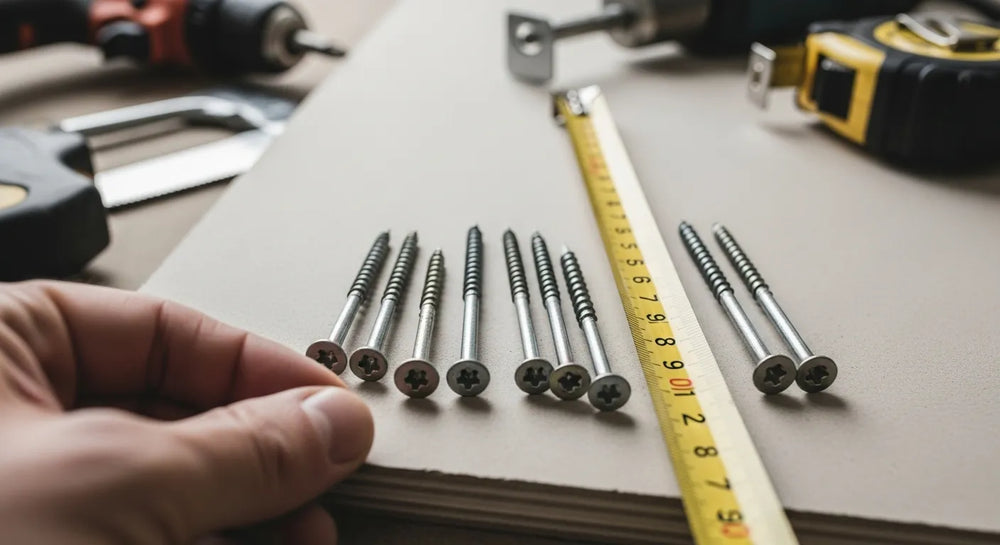
Screwing Through Wood Filler: A Guide for Industrial Applications
Table of Contents
- Understanding Wood Filler: Types and Properties
- The Core Question: Can You Screw Through Wood Filler?
- Situations Where Screwing Through Filler is Necessary
- Best Practices for Screwing into Wood Filler
- Advanced Techniques and Considerations
- Common Pitfalls and How to Avoid Them
- Maden.co's Role in Sourcing Quality Fasteners for Wood Applications
- Conclusion
- FAQ
The integrity of a joint, especially in critical industrial applications, hinges on the reliability of every component. Whether you're a design engineer specifying materials for a new product, a procurement manager sourcing fasteners for a complex assembly, or an MRO buyer maintaining essential machinery, the question of material compatibility and repair durability is paramount. One common scenario that often raises concerns is the need to fasten into wood that has been previously repaired with filler. The immediate question that arises is: Can you screw through wood filler and expect a durable, reliable connection? This isn't just a matter of cosmetic repair; it's about structural integrity, longevity, and ultimately, operational safety and efficiency.
In this comprehensive guide, we delve into the nuances of using wood filler as a substrate for fasteners. We will explore the different types of wood fillers, their properties, and the critical factors that determine whether a screw will hold securely. Our aim is to provide authoritative, practical insights for professionals who demand precision and reliability in every fastening application. We’ll discuss best practices, common pitfalls, and demonstrate how sourcing high-quality, U.S.-made fasteners through a platform like Maden.co is a strategic decision that supports robust and resilient operations. From ensuring compliance with stringent standards to enhancing your supply chain resilience, understanding the capabilities and limitations of wood filler when combined with the right fastener is key to industrial excellence.
Understanding Wood Filler: Types and Properties
Before we address the feasibility of screwing through wood filler, it's essential to understand what wood filler is, its various formulations, and how these properties directly impact its ability to hold a fastener. Wood filler is a material designed to fill voids, cracks, and imperfections in wood, restoring its surface and sometimes its structural integrity. It’s not wood itself, but a composite material engineered to mimic wood in certain aspects.
What is Wood Filler?
At its core, wood filler is a paste-like substance applied to wood surfaces to repair damage. It hardens upon curing, creating a smooth, stable surface that can often be sanded, stained, or painted. Its primary purpose is cosmetic, but in many industrial and heavy-duty applications, it can also play a role in minor structural repairs, particularly in preparation for fastening. The key lies in selecting the right filler for the right job, especially when anticipating future mechanical stress from fasteners.
Common Types of Wood Fillers
The market offers a wide array of wood fillers, each with distinct characteristics suitable for different applications. Understanding these differences is crucial when evaluating if you can screw through wood filler effectively.
- Latex-Based (Water-Based) Fillers: These are typically the easiest to work with, offering quick drying times and easy cleanup. They are generally formulated for interior use and minor cosmetic repairs. While they harden, their structural strength and screw-holding capacity are usually limited compared to other types. They tend to be less resistant to moisture and movement.
- Epoxy-Based Fillers: Epoxy fillers are two-part compounds that create a very strong, durable, and water-resistant bond. Once cured, they are incredibly hard and stable, making them an excellent choice for structural repairs and exterior applications. Their superior hardness and adhesion mean they can often hold screws much better than latex-based alternatives. They resist shrinking and cracking, providing a solid foundation.
- Polyester-Based Fillers (Bondo-type): Similar to automotive body fillers, these are also two-part systems known for rapid curing and extreme hardness. They are highly durable, water-resistant, and excellent for significant structural repairs, especially where strength and rigidity are paramount. Polyester fillers offer excellent screw retention due to their robust cured state.
- Cellulose or Wood Fiber Fillers (Solvent-Based): These fillers contain actual wood fibers or cellulose mixed with a solvent-based binder. They mimic wood's appearance and can be sanded and stained effectively. While offering better strength than water-based fillers, their screw-holding capacity varies depending on the specific formulation and the density of the wood fibers within the filler.
- Sawdust and Glue Mixes (DIY): Often used in woodworking shops, this homemade filler combines fine sawdust from the project wood with wood glue. While it offers a perfect color match and can achieve reasonable hardness, its consistency and structural integrity are less predictable than commercial fillers. Screw retention can be fair, but it's not typically recommended for critical industrial applications.
Key Properties Affecting Screw Retention
Several material properties dictate how well a screw will perform when driven into wood filler:
- Hardness and Density: A harder, denser cured filler provides more resistance to the screw's threads, allowing them to bite and hold. Epoxy and polyester fillers generally excel here.
- Flexibility and Brittleness: Overly brittle fillers can crack or crumble when a screw is driven in, especially if not pre-drilled. Overly flexible fillers may not offer sufficient grip. A balance is ideal, leaning towards greater hardness for screw retention.
- Shrinkage: Fillers that shrink significantly during curing can loosen the grip around a pre-drilled pilot hole or even pull away from the surrounding wood, compromising the joint. Stable, low-shrinkage fillers are preferred.
- Adhesion: How well the filler adheres to the original wood substrate is critical. A strong bond ensures that the filler acts as an extension of the wood, rather than an independent, weaker layer.
- Curing Time: Full curing is non-negotiable. Driving a screw into partially cured filler will undoubtedly lead to failure, as the filler will deform or crumble under pressure.
Understanding these factors is the first step in determining if and how effectively you can screw through wood filler for your specific industrial application.
The Core Question: Can You Screw Through Wood Filler?
The short answer is unequivocally: Yes, you can screw through wood filler. However, the long answer comes with significant caveats and critical considerations that dictate success or failure in industrial and heavy-duty contexts. It's not merely about piercing the material; it's about achieving a strong, durable, and reliable fastening point that can withstand the intended loads and environmental conditions.
The Short Answer: Yes, But...
While it is physically possible to drive a screw through most types of cured wood filler, the real challenge lies in ensuring that the resulting connection is robust enough for your application. This "but" emphasizes that success is contingent upon meticulous planning, material selection, and execution. For a procurement manager sourcing fasteners, a design engineer specifying repair methods, or an MRO buyer needing a reliable fix, understanding these contingencies is vital. Compromising on these factors can lead to premature failure, costly rework, and even safety hazards.
Factors Determining Success
Several interdependent factors will dictate the efficacy of screwing into wood filler:
- Filler Type and Quality: As discussed, epoxy and polyester-based fillers offer superior strength and hardness, making them the preferred choice for structural repairs where screws will be used. High-quality commercial formulations are engineered for consistency and performance, unlike many DIY alternatives.
- Application and Curing: Proper application, ensuring the filler fully occupies the void and bonds strongly with the surrounding wood, is paramount. More importantly, complete curing according to the manufacturer's specifications is non-negotiable. Rushing this step will result in a weak, unstable material that will fail to hold a screw.
-
Screw Type: The design of the screw itself plays a significant role.
- Thread Aggressiveness: Coarse-threaded screws generally bite better into composite materials like filler.
- Material: Screws made from high-strength materials like steel or specialized alloys are less likely to strip or break. For certain applications demanding specific properties such as corrosion resistance or aesthetic appeal, fasteners like a Round Slot Drive Brass Wood Screw or an Oval Slot Drive Silicon Bronze Wood Screw might be chosen, provided their strength aligns with the application.
- Length and Diameter: Sufficient length ensures maximum engagement with both the filler and, ideally, the underlying intact wood. The diameter must be appropriately matched with the pilot hole.
-
Pre-Drilling (Pilot Holes): This is perhaps the single most critical step when screwing into wood filler.
- Prevents Cracking: Fillers, especially hard ones, can be brittle. A pilot hole prevents the filler from cracking, crumbling, or delaminating during screw insertion.
- Guides the Screw: It ensures the screw drives straight and centered, maximizing thread engagement.
- Reduces Stress: It minimizes the stress on the filler, allowing the threads to form a stable grip rather than forcing their way through the material. The pilot hole diameter is crucial: too small, and the filler might crack; too large, and the screw won't grip.
By carefully considering and optimizing these factors, you can significantly increase the chances of successfully and reliably fastening into wood filler, transforming a potential weak point into a secure anchor for your components. This strategic approach to material and fastener selection is precisely what we champion at Maden.co, connecting you with the right U.S.-made products for these critical applications.
Situations Where Screwing Through Filler is Necessary
In industrial settings, the need to screw through wood filler isn't just a casual convenience; it often arises from practical necessities during maintenance, repair, and even original design modifications. For MRO buyers, design engineers, and procurement managers, understanding these scenarios can guide better decision-making regarding materials and fastening techniques.
Repairing Damaged Screw Holes
This is arguably the most common and critical scenario. Over time, due to repeated removal and insertion, overtightening, or simply material fatigue, existing screw holes in wooden components can become stripped, enlarged, or otherwise damaged. Rather than replacing an entire, often costly, wooden component or assembly, filling and re-drilling is a far more economical and efficient solution.
For instance, consider a heavy-duty workbench or a wooden pallet system in a warehouse where fasteners secure critical structural elements. A stripped screw hole compromises stability. Here, a high-strength epoxy or polyester filler can be used to completely fill the damaged hole. Once fully cured, a new pilot hole can be drilled, and a fresh fastener, perhaps a robust Flat Slot Drive Brass Wood Screw for its strength and corrosion resistance in specific environments, can be driven in. This method effectively "rebuilds" the fastening point, restoring structural integrity without extensive replacement.
Filling Gaps Before Fastening
Sometimes, a wooden component might have natural voids, knots, or minor damage not directly related to a screw hole, but located precisely where a new fastener needs to be placed. In these instances, using wood filler to create a solid, stable substrate is essential. This is particularly relevant in custom fabrication or when adapting existing structures for new machinery or fixtures. A design engineer might specify filler to ensure a consistent, predictable material for fastening, especially if the original wood has inconsistencies that could lead to fastener failure.
Restoring Structural Integrity
Beyond individual screw holes, larger sections of wooden components might experience rot, splintering, or impact damage. While extensive damage might necessitate replacement, localized structural compromises can often be salvaged with appropriate fillers. For example, a procurement manager might be sourcing materials for the repair of a historical wooden structure or a specialized piece of equipment where original wood replacement is cost-prohibitive or impractical. Filling a rotted section with a durable epoxy filler can not only reinforce the area but also provide a new, stable substrate for screws that might be needed to attach bracing, cladding, or other structural elements. The goal here is not just cosmetic, but to reliably anchor additional components, demonstrating that you can screw through wood filler for genuine structural benefit when the right materials and techniques are applied.
In all these scenarios, the emphasis is on maintaining operational continuity and extending the lifespan of valuable assets. The strategic choice of filler and the procurement of high-quality, reliable fasteners become paramount.
Best Practices for Screwing into Wood Filler
Achieving a secure and lasting connection when screwing into wood filler requires a methodical approach, combining careful material selection with precise execution. These best practices are vital for any industrial application where fastener reliability is non-negotiable.
Choosing the Right Filler for the Job
The foundation of successful fastening into wood filler begins with selecting the appropriate product. For any application where screws will be involved, prioritize strength, hardness, and minimal shrinkage.
- Epoxy or Polyester Fillers: These are the gold standard for structural repairs and screw retention. Their two-part chemical curing process results in a material that is significantly harder, denser, and more stable than single-part latex or wood fiber fillers. They also offer excellent water resistance, making them suitable for both interior and exterior industrial environments.
- Avoid Soft or Flexible Fillers: While tempting for their ease of use, water-based or acrylic fillers generally lack the rigidity and holding power required for fasteners. They are best reserved for purely cosmetic applications where no mechanical stress will be applied.
- Consider Environmental Factors: If the component will be exposed to moisture, chemicals, or extreme temperatures, ensure the chosen filler is specifically rated for those conditions. This also applies to the fasteners you choose; for example, in damp environments, a Round Slot Drive Brass Wood Screw might offer superior corrosion resistance.
Proper Application and Curing
Even the best filler will fail if not applied and cured correctly.
- Preparation is Key: Ensure the area to be filled is clean, dry, and free of loose debris. Roughening the surrounding wood surface slightly can improve adhesion.
- Mix Thoroughly (Two-Part Fillers): For epoxy and polyester fillers, precise mixing of the resin and hardener is crucial for achieving full strength and proper curing. Follow manufacturer instructions meticulously regarding ratios and mixing time.
- Overfill Slightly: Apply enough filler to slightly overfill the void. This allows for sanding down to a flush surface without creating depressions.
- Complete Curing: This is perhaps the most critical step. Never attempt to drill or drive a screw into partially cured filler. Allow the filler to cure fully, often extending beyond the minimum recommended time, especially in cooler or humid conditions. Full cure ensures maximum hardness and stability, maximizing the chances that you can screw through wood filler successfully.
Pre-Drilling: A Non-Negotiable Step
Skipping the pilot hole is a recipe for disaster when dealing with wood filler.
- Prevent Cracking and Crumbling: Cured fillers, especially the hard, dense types suitable for screws, can be brittle. A pilot hole prevents the material from cracking, chipping, or delaminating around the screw.
- Guide the Screw: It ensures the screw drives straight and accurately, vital for precise component alignment and maximizing thread engagement.
- Optimal Pilot Hole Size: The pilot hole should be slightly smaller than the minor (inner) diameter of the screw's threads, but larger than the screw's shank (unthreaded body). This allows the threads to bite firmly into the filler without excessive force. A quick test on a scrap piece of cured filler is highly recommended to verify the ideal drill bit size.
- Drill Straight and Clean: Use a sharp drill bit designed for wood or composite materials. Drill straight and perpendicular to the surface. Clear any dust from the pilot hole before driving the screw.
Selecting the Right Screw
The fastener itself must be chosen with care to complement the repaired substrate.
- Thread Type: Coarse-threaded screws generally perform better in wood filler than fine-threaded ones, as they create a more aggressive and deeper bite. Standard wood screws or construction screws are usually appropriate.
- Material and Coating: Choose screws made from materials strong enough for the application. Steel screws are common, but consider brass, silicon bronze, or stainless steel for corrosion resistance, aesthetics, or specific material compatibility requirements. For instance, our Oval Slot Drive Silicon Bronze Wood Screw offers excellent corrosion resistance, making it ideal for marine or outdoor applications where reliability is paramount.
- Screw Length: Ensure the screw is long enough to fully engage the cured filler and, ideally, extend into the surrounding intact wood for additional purchase. This dual engagement significantly enhances the joint's strength.
- Head Type: Consider the head type based on the application. Flat heads for flush finishes, pan heads for surface mounting, or specialized washer heads for increased bearing surface.
Driving Techniques
The manner in which the screw is driven is the final determinant of success.
- Slow and Steady: Drive screws slowly and deliberately. High-speed impact can overheat and degrade the filler, or even strip the newly formed threads.
- Avoid Overtightening: Stop driving the screw as soon as it feels snug. Overtightening can strip the threads in the filler, causing it to lose its grip, or even crack the filler. There is no "giving" with cured filler as there is with wood, so it's prone to stripping if pushed too far.
- Consistent Torque: For critical applications, using a torque-controlled driver can ensure consistent fastening pressure without overtightening.
By adhering to these best practices, professionals can confidently address the question of "can you screw through wood filler?" with a resounding "yes," backed by robust, reliable, and enduring connections that uphold the highest standards of industrial excellence.
Advanced Techniques and Considerations
Beyond the fundamental best practices, certain advanced techniques and considerations can further enhance the reliability and longevity of fastening into wood filler, particularly in demanding industrial environments.
Reinforcing Large Repairs
When dealing with very large voids or areas subject to significant shear or tensile forces, simply filling with wood filler and driving a screw might not be sufficient. In such cases, reinforcement can be added.
- Internal Anchors: For extremely large or deep holes, consider embedding a small piece of dowel or a specialized plastic anchor into the wet filler before it cures. This provides a more substantial substrate for the screw threads to grip. The filler then serves to bond this anchor firmly within the original wood structure.
- Fiberglass Mesh or Cloth: For extensive surface repairs that also require screw retention, incorporating a layer of fiberglass mesh or cloth within the epoxy or polyester filler can significantly increase its tensile strength and resistance to cracking, similar to how rebar reinforces concrete. This creates a much more resilient matrix around the fastener.
- Layered Application: For very deep repairs, applying the filler in layers, allowing each layer to partially cure before adding the next, can help prevent excessive shrinkage and ensure a more uniform, dense fill.
Dealing with Different Wood Types
The type of surrounding wood also influences the effectiveness of filler-based repairs.
- Hardwoods vs. Softwoods: Hardwoods (e.g., oak, maple) provide a much stronger, more stable foundation for the filler and screw. Softwoods (e.g., pine, cedar) are more prone to movement and can be more challenging. Ensure the filler has excellent adhesion properties to the specific wood species.
- Engineered Wood Products: Plywood, MDF, and particleboard have different characteristics than solid wood. Fillers often adhere well to these, but their internal structure can be weaker. When fastening into filler in these materials, aim to engage a larger area of the surrounding material if possible.
Environmental Factors
The long-term performance of any repair involving wood filler and screws is heavily influenced by the environment.
- Moisture and Humidity: Constant exposure to high humidity or direct water can degrade many fillers over time and lead to corrosion of non-resistant fasteners. Always use marine-grade epoxy fillers and corrosion-resistant fasteners (like brass or silicon bronze wood screws) in such conditions.
- Temperature Fluctuations: Extreme temperature swings can cause materials to expand and contract at different rates, leading to stress on the joint. High-quality fillers designed for structural applications generally exhibit better thermal stability.
- Chemical Exposure: In industrial settings, exposure to chemicals is common. Verify that both the chosen filler and the fastener material are resistant to any specific chemicals they might encounter to prevent degradation.
By considering these advanced factors, procurement managers can specify more resilient repair materials, design engineers can integrate more durable fastening solutions, and MRO buyers can implement repairs that stand the test of time and demanding operational conditions. The ability to effectively implement these considerations reinforces the principle that you can screw through wood filler with confidence, provided a thorough, professional approach is adopted at every stage.
Common Pitfalls and How to Avoid Them
Even with the best intentions, several common mistakes can undermine the integrity of fastening into wood filler. Being aware of these pitfalls allows for proactive avoidance, ensuring that your repairs are robust and reliable.
Insufficient Curing Time
This is arguably the most frequent and critical error. Rushing the curing process means the filler has not reached its maximum hardness and strength.
- Consequence: A screw driven into uncured or partially cured filler will strip the soft material, crumble, or deform, leading to immediate failure and a weak, unreliable joint.
- Avoidance: Always adhere strictly to the manufacturer's recommended curing times. In cooler temperatures or high humidity, extend the curing time. When in doubt, err on the side of caution and wait longer. Full cure means maximum performance, ensuring that you can screw through wood filler with optimal results.
Improper Filler Choice
Using the wrong type of filler for a structural application is another common pitfall.
- Consequence: Soft, flexible, or water-based fillers lack the density and hardness to hold screw threads securely. They may hold initially but will quickly loosen under load, especially if subjected to vibration or movement.
- Avoidance: For any application involving screws, always select a high-strength, hard-setting epoxy or polyester-based filler. These are engineered for structural integrity and superior screw retention.
Skipping Pilot Holes
The belief that a screw can simply be forced into hard filler without a pilot hole is a dangerous misconception.
- Consequence: Driving a screw into solid, cured filler without a pilot hole will almost certainly cause the filler to crack, split, or crumble. This destroys the integrity of the repair and creates a weak, unstable fastening point.
- Avoidance: Always pre-drill a pilot hole. As discussed, the pilot hole diameter must be carefully selected to match the screw, allowing the threads to bite firmly without putting excessive stress on the filler. This simple step vastly improves the reliability of the joint.
Overtightening
Applying excessive torque when driving screws into wood filler can be just as detrimental as not using a pilot hole.
- Consequence: Unlike wood, which has some natural give, cured filler is less forgiving. Overtightening can strip the threads created in the filler, causing the screw to spin freely and lose all holding power. It can also crack the filler, especially around the screw head.
- Avoidance: Drive screws slowly and gently. Use a screwdriver or a drill with a clutch setting to control torque. Stop as soon as the screw feels snug and secure. For critical applications, using a torque wrench can ensure precise and consistent fastening. Remember, the goal is a secure grip, not maximum compression.
By diligently avoiding these common pitfalls, procurement managers, design engineers, and MRO buyers can ensure that repairs involving wood filler and screws are executed with the highest level of reliability and durability, contributing to the overall operational efficiency and safety of industrial components.
Maden.co's Role in Sourcing Quality Fasteners for Wood Applications
Understanding how to effectively work with wood filler is only half the equation; the other critical half is sourcing the right fasteners. At Maden.co, our mission is to democratize access to American manufacturing, providing industrial buyers with a robust platform where quality, reliability, and supply chain resilience are paramount. When considering how you can screw through wood filler with confidence, our platform becomes an indispensable resource.
Connecting Buyers with Verified U.S. Manufacturers
For procurement managers, MRO buyers, and design engineers, the assurance of quality is non-negotiable. Our marketplace connects you directly with over 800+ verified U.S. manufacturers, offering access to more than 2.5 million American-made products. This extensive network means that whether you need standard wood screws, specialized self-tapping fasteners, or corrosion-resistant options like a Round Slot Drive Brass Wood Screw for a specific application, you can find them here. We meticulously vet our manufacturers to ensure they meet stringent quality standards, providing you with peace of mind that your fasteners are produced with industrial excellence.
Consider a scenario where a design engineer requires specific material certifications for fasteners to be used in a critical structural repair involving wood filler. Sourcing from unverified suppliers can lead to delays, non-compliance, and potential project failure. With Maden.co, you gain transparent access to manufacturers who understand and meet these demands.
The Value of American-Made Fasteners
Choosing American-made fasteners through Maden.co brings a multitude of benefits that directly impact your operations:
- Superior Quality Control: U.S. manufacturers adhere to rigorous quality control standards, ensuring consistency in material composition, thread accuracy, and overall fastener integrity. This translates to fewer failures, reduced rework, and ultimately, a lower Total Cost of Ownership (TCO) for your projects.
- Enhanced Supply Chain Resilience: Reliance on unpredictable global supply chains can lead to costly delays and disruptions. By sourcing U.S.-made fasteners, you shorten lead times, reduce transportation costs, and minimize exposure to geopolitical risks. This significantly enhances your supply chain resilience, allowing you to maintain operational continuity.
- Compliance with Standards: American manufacturers are typically well-versed in industry standards (e.g., DIN, NPT, ASME). This ensures that the fasteners you procure are compliant with the specifications required for your specific applications, particularly vital in sectors with strict regulatory oversight.
- Support for the American Economy: Every purchase of an American-made product contributes to the growth of domestic manufacturing, creating jobs and fostering innovation. This aligns with our core value of American Manufacturing Pride, as we work to make our vision of "America's manufacturing revival is here" a reality.
When you require a specific fastener, such as a Flat Slot Drive Brass Wood Screw for its unique properties in a marine environment, or an Oval Slot Drive Silicon Bronze Wood Screw for its aesthetic and corrosion-resistant qualities in architectural restoration, Maden.co provides the definitive platform to find these hard-to-source components from trusted domestic suppliers. Our commitment to Digital Innovation streamlines your procurement friction, making it as convenient as any global alternative. You can learn more about our mission to champion American manufacturing and our values of Supply Chain Transparency and Customer Empowerment here: About Maden.co.
Instant Financing as a Strategic Tool
A significant differentiator and a key component of our Customer Empowerment value is our "Instant Financing" option. For businesses, managing cash flow is critical, especially when undertaking large-volume purchases or capital-intensive projects.
Instead of navigating complex credit applications or delaying crucial procurements, our Instant Financing allows you to make strategic purchases immediately. This isn't just a payment method; it's a powerful financial tool that enables procurement managers and business owners to:
- Optimize Cash Flow: Preserve working capital by financing larger orders, allowing funds to be allocated to other critical operational needs.
- Seize Opportunities: React quickly to unexpected equipment breakdowns or urgent project requirements without financial bottlenecks.
- Streamline Procurement: Integrate financing seamlessly into your procurement process, reducing administrative overhead and accelerating project timelines.
You can apply for Instant Financing at checkout to streamline your capital-intensive projects. This strategic feature ensures that securing high-quality, U.S.-made fasteners, even for substantial repairs or new builds involving considerations like "can you screw through wood filler," is never hindered by immediate capital constraints.
Our platform is designed to make your procurement process efficient, reliable, and strategically advantageous. Are you a U.S. manufacturer looking to expand your reach? Register as a vendor and join the American manufacturing revival. If you have specific sourcing questions or need assistance finding the perfect fastener for your next project, our team is ready to help; please don't hesitate to Contact Us. Maden.co is not just a marketplace; it’s a strategic partner in building a more reliable and efficient procurement process, proving that American-made components are truly accessible and superior. You can always start your search for industrial excellence on the Maden.co homepage.
Conclusion
The question, "can you screw through wood filler?" elicits a nuanced answer: absolutely, but only when executed with precision, using the right materials, and understanding the inherent properties of both the filler and the fastener. For industrial professionals—procurement managers, MRO buyers, and design engineers—the reliability of such connections is not a matter of convenience, but of operational integrity, safety, and efficiency. We've explored the critical roles of filler type, proper application, complete curing, pilot holes, and screw selection in ensuring a durable and secure fastening point. Avoiding common pitfalls like insufficient curing or improper screw driving techniques is paramount to success.
The ongoing strength of American manufacturing is vital to our nation's industrial future. At Maden.co, we are committed to being the definitive platform that connects industrial buyers with the highest quality, American-made products. By choosing to source your fasteners and industrial components through our marketplace, you're not just making a purchase; you're making a strategic investment in supply chain resilience, product quality, and the American economy. Our network of verified U.S. manufacturers provides unparalleled access to millions of components, ensuring that even specific needs—like finding the perfect Oval Slot Drive Silicon Bronze Wood Screw for a unique application—are met with excellence.
When your projects demand robust repairs or dependable fastening into complex substrates like wood filler, trust in the quality and reliability of American manufacturing. Explore the vast catalog on Maden.co today, confident that you are securing verified, high-performance parts. Remember, for larger capital-intensive projects, you can leverage our convenient Instant Financing option available at checkout, further streamlining your procurement process. Join us in championing America's manufacturing revival – where industrial excellence and supply chain transparency are always within reach.
FAQ
Q1: Is it always advisable to screw into wood filler, or are there alternatives?
A1: While you can screw through high-quality, properly cured wood filler for many applications, it's generally best used for repairs where replacement of the entire wooden component is impractical or impossible. For original construction or highly critical structural applications, fastening into solid, un-repaired wood is always preferable. Alternatives to screwing into filler might include using through-bolts with washers and nuts if access allows, or re-engineering the joint to avoid the repaired area entirely.
Q2: What type of wood filler is best for holding screws in exterior applications?
A2: For exterior applications where screws will be driven, a two-part epoxy or polyester-based wood filler is highly recommended. These fillers offer superior hardness, water resistance, and structural integrity, making them ideal for outdoor exposure. Ensure the filler is fully cured and consider using corrosion-resistant fasteners, such as brass or silicon bronze wood screws, to match the durability of the repair.
Q3: How do I ensure the pilot hole in wood filler is the correct size?
A3: The pilot hole should be slightly smaller than the minor (root) diameter of the screw's threads but larger than the screw's shank (unthreaded body). The best way to ensure correct sizing is to perform a test on a scrap piece of the same cured filler. Start with a drill bit that is clearly too small, then gradually increase the size until the screw can be driven in with firm but not excessive resistance, and the threads bite securely without stripping.
Q4: Can I use wood glue instead of wood filler for a stripped screw hole?
A4: While wood glue can be used with wooden dowels or toothpicks to repair stripped screw holes, it does not typically offer the same level of structural hardness and screw-holding capacity as a dedicated high-strength wood filler (like epoxy or polyester). Wood glue repairs are often less durable and more susceptible to stripping under load or repeated use. For reliable, long-term fastening, a proper wood filler designed for structural repair is the superior choice.


