
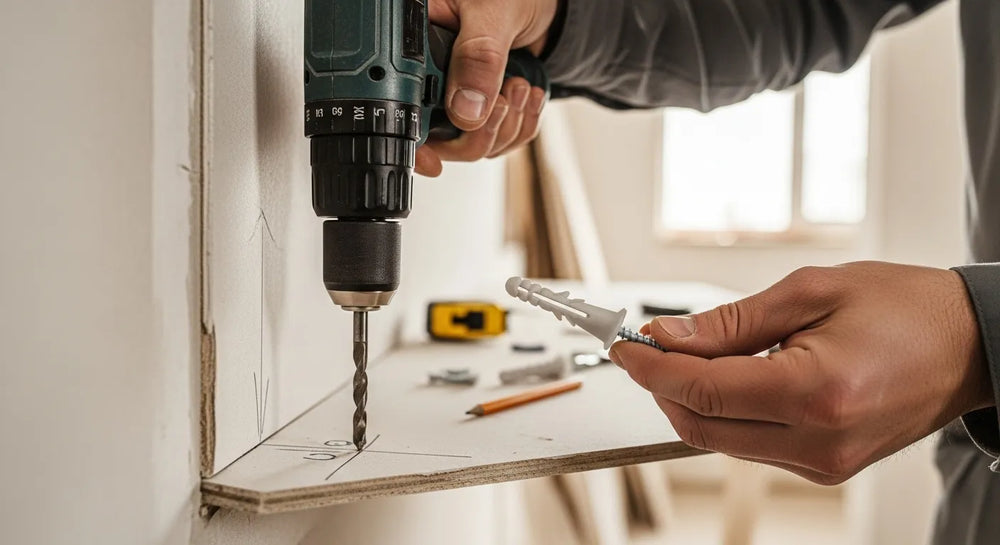
How to Screw into a Concrete Floor Securely
Table of Contents
- Introduction
- The Critical Role of a Secure Concrete Anchor
- Choosing the Right American-Made Concrete Fastener
- The Pre-Installation Checklist: Planning for a Flawless Result
- The Definitive Step-by-Step Installation Process
- Building Supply Chain Resilience with American-Made Fasteners
- Conclusion: Anchoring Your Success in Quality and Precision
- Frequently Asked Questions (FAQ)
Introduction
Imagine the scene: a critical piece of machinery on your production floor, meticulously aligned, begins to vibrate out of position. The culprit isn't a mechanical failure but something far more fundamental—a failed anchor in the concrete floor. This small oversight can lead to costly downtime, potential equipment damage, and serious safety hazards. For procurement managers, MRO buyers, and engineers, the integrity of an industrial facility rests on these seemingly minor details. Knowing how to properly install a screw into a concrete floor is not merely a handy skill; it is a foundational requirement for operational excellence and long-term asset reliability.
This article moves beyond a simple set of instructions. We will explore the engineering principles behind a secure concrete anchor, detail the critical differences between various types of concrete fasteners, and provide a comprehensive, step-by-step guide to a flawless installation. We will also examine the strategic importance of sourcing high-quality, domestically manufactured components to ensure consistency and build a resilient supply chain. At Maden.co, our mission is to provide direct access to the very best of American manufacturing, empowering businesses to build, maintain, and operate with confidence. Mastering this process means ensuring that every fixture, rack, and machine in your facility is anchored with the precision and strength required for peak performance and safety.
The Critical Role of a Secure Concrete Anchor
Fastening an object to a concrete floor is fundamentally about managing forces. Every anchor point must withstand a combination of loads, primarily shear loads (forces parallel to the floor) and tensile loads (pull-out forces perpendicular to the floor). A poorly installed screw creates a significant point of failure that can have cascading consequences across an organization.
Understanding Load Dynamics and Safety Implications
In an industrial setting, anchors are rarely static. They are subjected to vibrations from machinery, impacts from material handling equipment, and the constant stress of the weight they support.
- Vibrational Loosening: Machinery that produces constant vibration, like CNC machines, large motors, or stamping presses, will relentlessly test the holding power of its anchors. An improperly installed screw can gradually work its way loose, leading to misalignment, reduced operational accuracy, and eventual failure.
- Shear Failure: Heavy shelving or pallet racking exerts immense shear force, especially if bumped by a forklift. A failed anchor can lead to a catastrophic collapse, endangering personnel and destroying inventory.
- Tensile Failure: Anchors for safety railings, bollards, or vertical supports are primarily under tensile load. Failure here directly compromises workplace safety protocols and can lead to serious accidents.
The choice of fastener and the quality of its installation are direct inputs into a company's safety program. A secure anchor is a non-negotiable element of a safe and compliant working environment.
The Financial Impact of Improper Installation
Beyond the immediate safety risks, the economic implications of failed anchors are substantial. Consider the Total Cost of Ownership (TCO) associated with a single failed fastener:
- Downtime and Lost Production: Taking machinery offline to re-anchor it halts production and directly impacts revenue.
- Rework and Labor Costs: The process of removing a failed anchor, re-drilling, and installing a new one consumes valuable maintenance hours.
- Equipment Damage: A machine that vibrates loose can damage itself, its tooling, and surrounding equipment.
- Project Delays: In construction or facility outfitting, a delay in anchoring structural elements can push back the entire project timeline, incurring penalties and opportunity costs.
Investing time in understanding the correct installation procedure and sourcing reliable, high-quality fasteners is not an expense; it is a crucial investment in operational continuity and financial stability.
Choosing the Right American-Made Concrete Fastener
The term "concrete screw" covers a range of designs, each optimized for specific applications, materials, and load requirements. Selecting the correct type is the first and most important step in the process. At Maden.co, we champion Industrial Excellence by connecting you with U.S. manufacturers who produce fasteners to exacting standards, ensuring you get the right component for the job.
Self-Tapping Concrete Screws: The Versatile Solution
For the majority of light- to heavy-duty applications, self-tapping concrete screws are the fastener of choice for professionals. Unlike expansion anchors, which create outward pressure, a self-tapping screw has specialized high-low threads that cut into the concrete, creating a secure mechanical interlock without generating high stress.
Key Advantages:
- Speed of Installation: The drill-and-drive process is significantly faster than multi-component anchor systems.
- Removability: The fixture can be removed after installation, a key benefit for temporary setups or equipment relocation.
- Close-to-Edge Installation: Because they generate less expansion stress, they can often be installed closer to a concrete edge than wedge anchors.
- Reliable Holding Power: When installed correctly, they offer excellent tensile and shear strength for a wide array of applications.
Fastener Types by Head Style and Application
The head style of the screw is determined by the specific requirements of the fixture being mounted.
Hex Head Concrete Screws
With an external hex head designed to be driven with a socket, these screws are ideal for applications requiring high installation torque and maximum clamping force. They are the go-to choice for securing machinery bases, pallet racking uprights, industrial shelving, and structural posts. For an MRO buyer needing to quickly secure new machine guards to a factory floor, sourcing a reliable component like these U.S.-made Hex Head Concrete Screws 3/16" x 1-3/4" provides the strength and ease of installation needed to get the equipment back online safely.
Flat Head (Countersunk) Concrete Screws
Flat head screws are designed to sit flush with the surface of the material being fastened, making them ideal for applications where a smooth, non-protruding finish is necessary. This includes installing door and window frames, metal thresholds, electrical junction boxes, and architectural base plates. A design engineer specifying fasteners for architectural metalwork that must be both structurally sound and aesthetically clean would select a product like these 1/4" x 2-3/4" Flat Head Concrete Screws to achieve a professional, flush-mount finish.
The Critical Role of Coatings and Material Science
Concrete is porous and often contains moisture, creating a corrosive environment for any embedded steel fastener. The longevity and reliability of the anchor are directly tied to the quality of its protective coating.
Key Takeaway: A fastener's coating is not an aesthetic feature; it is a functional barrier that prevents corrosion, which can compromise the screw's structural integrity and holding power over time.
Standard zinc plating may be sufficient for dry, indoor environments. However, for floors that may be exposed to moisture, cleaning chemicals, or outdoor conditions, a more advanced coating is essential. Ruspert or ceramic coatings offer significantly enhanced corrosion resistance. This multi-layer protection consists of a metallic zinc layer, a high-grade anti-corrosion chemical conversion film, and a baked ceramic topcoat.
For procurement managers responsible for facilities in humid climates or industries like food processing where frequent washdowns occur, specifying a fastener with superior protection is a critical risk mitigation strategy. The Steel Blue Ruspert Ceramic Coating Flat Phillips® Drive Concrete Screw is an excellent example of a U.S.-made product engineered for these demanding environments, ensuring long-term reliability and reducing the total cost of ownership by preventing premature failure and replacement.
The Pre-Installation Checklist: Planning for a Flawless Result
Proper preparation is 90% of the job. Rushing this stage is the most common cause of installation problems. Before you drill the first hole, a systematic check of your tools, materials, and the concrete itself is essential.
Essential Tools and Personal Protective Equipment (PPE)
- Safety First: Always wear ANSI-rated safety glasses to protect from flying debris and concrete dust. A dust mask (N95-rated or higher) is critical to prevent inhalation of crystalline silica dust, a known health hazard. For extended drilling, hearing protection is also recommended.
- Hammer Drill: A standard rotary drill is not sufficient for concrete. A hammer drill is required, as it combines rotation with a rapid hammering action to pulverize the concrete as it drills. For larger diameter or frequent installations, a more powerful SDS or SDS-Max rotary hammer is the professional's choice.
- Carbide-Tipped Masonry Drill Bit: Use a high-quality, carbide-tipped bit designed specifically for concrete. Crucially, the bit must be the exact diameter specified by the screw manufacturer. Using an ANSI-standard drill bit ensures the bit's diameter is within tolerance, which is vital for the screw's threads to engage correctly.
- Impact Driver or Wrench: While a screw can be driven with a standard wrench, an impact driver or impact wrench makes the process significantly faster and easier. It delivers the high torque needed to drive the screw without straining the operator.
- Hole Cleaning Tools: This is non-negotiable. You will need a wire brush that matches the hole diameter and a method for removing dust, such as a shop vacuum, compressed air (with a long nozzle), or a hand-held puffer.
- Torque Wrench: For any engineered application where a specific clamping force is required, a torque wrench is the only tool that can ensure the screw is tightened to the manufacturer's specification without being over- or under-torqued.
Assessing the Concrete Substrate
Not all concrete is the same. Understanding the condition of the floor is key to a successful installation.
- Age and Curing: Freshly poured concrete must be allowed to cure fully before any anchors are installed. As a general rule, you should wait at least 28 days for the concrete to reach its designed compressive strength. Drilling and anchoring into "green" concrete will result in significantly reduced holding power.
- Strength and Condition: Assess the quality of the concrete. Is it hard, dense concrete, or is it older, softer, or more brittle? The condition will affect drilling speed and the ultimate strength of the connection.
- Detecting Obstructions: Before drilling, check for hidden obstructions within the slab, such as rebar, electrical conduit, or post-tension cables. A rebar scanner or concrete imaging tool can prevent a dangerous and costly mistake. Hitting rebar will stop your bit, and damaging a post-tension cable can have catastrophic structural consequences.
The Definitive Step-by-Step Installation Process
With your planning complete and tools at the ready, you can proceed with the installation. Follow these steps with precision to ensure a secure, professional-grade result every time.
Step 1: Mark the Exact Location
Use a pencil, marker, or center punch to precisely mark the location for each hole. Measure twice, drill once. Ensure your layout adheres to the minimum edge and spacing distances recommended by the fastener manufacturer.
Step 2: Select the Correct Drill Bit and Set Drilling Depth
This step is critical. Refer to the specifications for the concrete screw you are using. The manufacturer will state the exact drill bit diameter required. A 1/4" screw, for instance, typically requires a 3/16" pilot hole. Using a bit that is too large will result in no holding power; a bit that is too small will prevent the screw from being installed.
Next, determine the required embedment depth. Set the depth stop on your hammer drill to ensure you drill the hole deep enough.
Professional Tip: The pilot hole must always be deeper than the screw's embedment length. A good rule of thumb is to drill the hole at least 1/2 inch deeper than the screw will penetrate the concrete. This extra space provides a cavity for any residual dust to collect, ensuring the fixture can be seated properly against the surface.
Step 3: Drill the Pilot Hole
Hold the hammer drill firmly with both hands and ensure it is perfectly perpendicular (90 degrees) to the concrete surface. Drilling at an angle will compromise the anchor's strength. Apply steady, firm pressure and let the tool do the work. Do not force it. Periodically pull the bit out of the hole as you drill to help clear dust and prevent the bit from binding. Drill to the pre-set depth.
Step 4: Clean the Hole—The Most Critical Step
This is the single most common point of failure in concrete anchoring. Any dust or debris left in the pilot hole acts as a lubricant and barrier, preventing the screw's threads from achieving a proper mechanical interlock with the base material. This can reduce the anchor's holding capacity by over 50%.
The correct cleaning procedure is a multi-step process:
- Vacuum: Use a shop vacuum with a narrow nozzle to remove the bulk of the dust.
- Brush: Insert a properly sized wire brush and scrub the sides of the hole vigorously to dislodge any packed-in dust particles.
- Blow/Vacuum Again: Use oil-free compressed air, a hand puffer, or the vacuum one final time to remove all loosened particles.
When you are finished, the hole should be completely free of any visible dust or debris.
Step 5: Drive the Concrete Screw
Position your fixture over the clean pilot hole. Insert the tip of the concrete screw and start it by hand for a few turns to ensure it is not cross-threaded. Using your impact driver or wrench with the appropriate socket or bit, drive the screw in steadily until the head is seated firmly against the fixture.
Warning: Do Not Over-Torque. The most common mistake at this stage is to apply too much torque. This can either strip the threads you just cut into the concrete or, in a worst-case scenario, shear the head off the screw. The screw should be snug and tight. If you are using a torque wrench, tighten to the manufacturer's specified ft-lbs.
Step 6: Verify the Installation
Once the screw is installed, check the fixture to ensure it is secure and does not move or wobble. The connection should feel completely solid.
Building Supply Chain Resilience with American-Made Fasteners
Knowing how to install a fastener is only half the battle. The other half is sourcing a component you can trust. In today's volatile global market, relying on ambiguous overseas supply chains for critical components introduces significant risk. Inconsistent material quality, counterfeit certifications, and logistical disruptions can bring a project to a halt. This is why we built Maden.co. Our entire business model is built on the principles of Supply Chain Transparency and American Manufacturing Pride. You can learn more about our mission to champion American manufacturing here.
By connecting you directly with our network of over 800 verified U.S. manufacturers, we empower your business with:
- Quality Assurance: U.S. manufacturers adhere to stringent quality control standards like ANSI and ASTM, ensuring every fastener meets its stated specifications.
- Material Traceability: You gain confidence in the material composition and performance characteristics of the components you procure.
- Reduced Lead Times: Sourcing domestically shortens your supply chain, making you more agile and less susceptible to international shipping delays.
- Customer Empowerment: Our platform provides the digital tools to find, compare, and procure over 2.5 million American-made products with unprecedented ease.
For a procurement manager, this means less risk and a stronger, more reliable supply chain. For an engineer, it means absolute confidence that the specified component will perform as designed. This is the core of the American manufacturing revival, and it's happening right now. Are you a U.S. manufacturer producing high-quality industrial components? Register as a vendor and join us in rebuilding America's industrial backbone.
Conclusion: Anchoring Your Success in Quality and Precision
Successfully screwing into a concrete floor is a process of precision, not power. It requires a clear understanding of the forces at play, careful selection of the correct American-made fastener, and meticulous execution of each installation step. From choosing a hex head screw for heavy machinery to a flat head for a flush finish, the details matter. By prioritizing proper planning, precise drilling, and—above all—thorough cleaning of the pilot hole, you can create an anchor point that provides uncompromising safety and long-term reliability.
This dedication to quality and precision is the hallmark of American manufacturing. By choosing to source your components domestically, you are not just buying a product; you are investing in a more resilient, transparent, and dependable supply chain for your business.
Start building a more robust and efficient operation today by exploring our vast catalog of U.S.-made products. For capital-intensive projects or large-volume orders, you can apply for Instant Financing at checkout to manage your cash flow effectively and secure the components you need without delay. If you have specific sourcing questions, our team is ready to help.
Frequently Asked Questions (FAQ)
1. Can I use a regular drill instead of a hammer drill for concrete? No. A regular drill only uses rotational force, which is ineffective against hard materials like concrete. It will quickly overheat the bit and make little to no progress. A hammer drill is essential as it combines rotation with a percussive (hammering) action that chips and pulverizes the concrete, allowing the bit's flutes to clear the debris.
2. How deep should I drill the pilot hole for a concrete screw? The pilot hole must be deeper than the screw's intended embedment depth in the concrete. A minimum of 1/2 inch deeper is a reliable rule of thumb. This extra depth creates a space for any residual dust to settle, ensuring the screw can be fully installed and the head of the screw can sit flush against the fixture without bottoming out on debris.
3. What is the single most common mistake when installing concrete screws? By far, the most common and critical mistake is failing to properly and thoroughly clean the drilled hole. Concrete dust left in the hole will prevent the screw's threads from cutting into and interlocking with the base material, drastically reducing the anchor's pull-out and shear strength. Always follow the vacuum-brush-blow/vacuum cleaning sequence.
4. Why should I choose U.S.-made concrete screws over cheaper alternatives? Choosing U.S.-made concrete screws provides several strategic advantages. It guarantees adherence to strict quality control standards, ensuring dimensional accuracy and material integrity. You benefit from clear material traceability, so you know exactly what you're installing. Sourcing domestically also strengthens your supply chain, reducing lead times and insulating your projects from global disruptions, all while supporting the American economy.


