
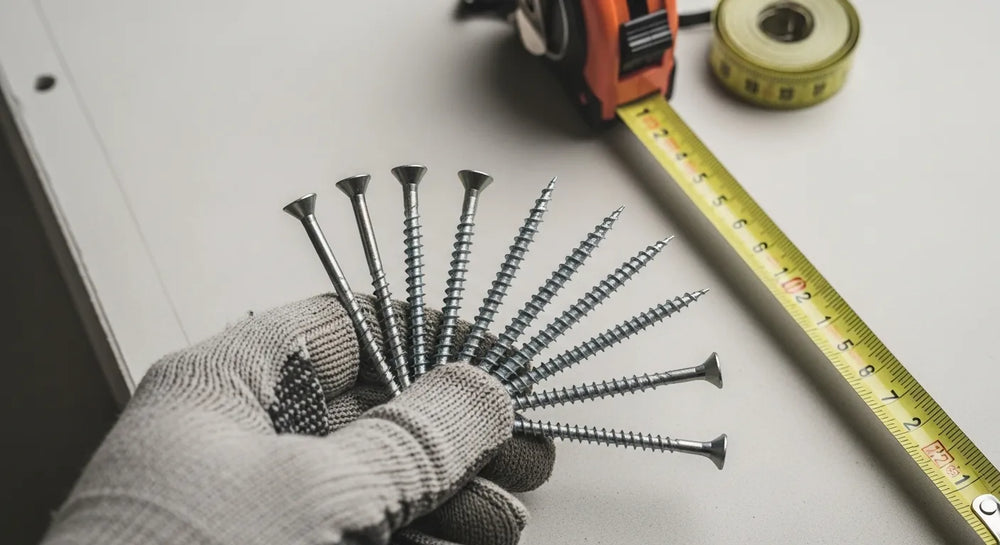
How to Screw into a Concrete Wall Without a Drill
Table of Contents
- Introduction
- Why Drill-less Concrete Fastening is a Critical Skill
- Understanding the Masonry: Concrete vs. Cinder Block vs. Brick
- Method 1: Hardened Steel Masonry Nails
- Method 2: Manually Installing Concrete Screws
- Method 3: Chemical Anchoring with Adhesives and Epoxies
- Sourcing Strategy: Why American-Made Fasteners Matter
- Conclusion
- Frequently Asked Questions
Introduction
Imagine this scenario: a critical piece of safety equipment needs to be mounted on a concrete wall in your facility, and the project is on a tight deadline. But the maintenance team’s only hammer drill just failed, a replacement is days away, and the work area is a designated "hot work" prohibited zone, meaning no sparks from power tools are allowed. Operations are at a standstill, all for the want of a single anchor point. This isn't a hypothetical situation; it's a common reality for MRO buyers, facility managers, and engineers who face unexpected constraints daily. The ability to adapt and find a reliable solution without the "ideal" tool is a hallmark of industrial ingenuity.
Many professionals assume that fastening anything to concrete requires the power and percussion of a hammer drill. While that is often the most efficient method, it is far from the only one. Understanding how to create a secure anchor point in a concrete wall without a power drill is a crucial skill that enhances operational flexibility, solves unique environmental challenges, and can even save a project from costly delays.
This article moves beyond simple DIY tips to provide a professional-grade overview of drill-less concrete fastening techniques. We will explore the material science behind different masonry substrates, detail the step-by-step processes for manual installation methods, and examine the critical role that high-quality, American-made fasteners play in ensuring the safety and integrity of the connection. The goal is to empower you with the knowledge to tackle this common challenge effectively, ensuring your installations are secure, compliant, and built to last, reinforcing the principle of industrial excellence in every task.
Why Drill-less Concrete Fastening is a Critical Skill
The need to fasten materials to concrete without a power drill extends far beyond a simple lack of tools. For procurement and maintenance professionals, understanding these alternative methods is a strategic advantage, enabling them to navigate a variety of operational hurdles with confidence.
Situational and Environmental Constraints
In many industrial, commercial, and institutional settings, the use of power tools is heavily restricted or outright prohibited. Consider these environments:
- Hospitals and Laboratories: In sterile environments or areas with sensitive equipment, the dust, noise, and vibration from a hammer drill are unacceptable.
- Explosive or Flammable Atmospheres: In chemical processing plants, refineries, or grain elevators (ATEX/HAZLOC zones), any tool that can create a spark poses a catastrophic risk. Manual fastening methods are often the only safe option.
- Occupied Spaces: When work must be done in an active office, retail space, or residential building, the intense noise of a hammer drill is highly disruptive. Drill-less methods allow for necessary installations with minimal impact on occupants.
- Confined Spaces: Working in tight quarters, such as inside machinery or complex pipe racks, may not provide the physical space needed to safely operate a power drill.
Tool Unavailability and Operational Resilience
Even in the best-managed facilities, tools break down. A failed battery, a burned-out motor, or a misplaced chuck key can bring a project to a sudden halt. An MRO team that is cross-trained in manual fastening techniques can pivot immediately, using readily available hand tools to complete the job. This adaptability builds operational resilience, ensuring that small equipment failures don't cascade into significant downtime. It’s a core component of a lean and effective maintenance strategy, reducing reliance on a single tool for a common task.
Preserving Structural Integrity
Not all masonry is created equal. Older concrete can be brittle, and certain types of brick or block can be prone to cracking and spalling under the aggressive impact of a hammer drill. In historic building renovations or when working with delicate architectural elements, a more controlled, manual approach can be essential to prevent irreversible damage. Manually creating a pilot hole or using hardened nails allows for a more nuanced application of force, preserving the integrity of the surrounding material.
Understanding the Masonry: Concrete vs. Cinder Block vs. Brick
Before attempting any fastening method, a professional must first identify the substrate. Attaching a screw to a solid, poured concrete wall is vastly different from anchoring into a hollow cinder block. Choosing the wrong fastener or method for the material is a direct path to a failed connection. At Maden.co, we believe that customer empowerment starts with foundational knowledge, and understanding your work surface is the first step.
Poured Concrete
This is the hardest and densest of the common masonry materials. It’s a composite of cement, sand, and a stone aggregate (like gravel). Its high compressive strength makes it incredibly durable but also difficult to penetrate.
- Key Challenge: The primary challenge is its density and the potential to hit a hard piece of aggregate just below the surface.
- Best Approach: Fastening into poured concrete requires high-quality, hardened fasteners that can either displace the material (like a masonry nail) or bite securely into the walls of a pilot hole (like a concrete screw). The holding power is exceptional once a proper anchor is set.
Concrete Masonry Units (CMU) or Cinder Blocks
Often used for utility and structural walls, CMUs are pre-cast blocks that are typically hollow. They have solid sections, known as webs, and hollow cores.
- Key Challenge: The fastener must be placed in a solid part of the block. Anchoring into the hollow section will provide virtually no holding power and is a common point of failure.
- Best Approach: You must identify the location of the webs by tapping on the block—a solid sound indicates a web, while a hollow sound indicates a core. The fastener's length must be carefully chosen to ensure it embeds fully within the web without punching through into the hollow core.
Brick
Brick walls can be either solid brick or brick veneer over another structure. The bricks themselves are kiln-fired clay and can be quite brittle, while the mortar joints between them are softer.
- Key Challenge: Drilling or hammering directly into the face of a brick risks cracking it, especially with older, more fragile bricks.
- Best Approach: For light to medium-duty loads, it is often preferable to fasten into the mortar joint. The mortar is softer and easier to penetrate, and it avoids damaging the brick itself. However, for heavier loads, a specialized brick anchor set in the center of the brick face may be necessary, which requires careful, precise work.
Understanding these differences is fundamental. It informs not just the technique but also the critical process of sourcing the correct component for the job, a process our platform is designed to simplify.
Method 1: Hardened Steel Masonry Nails
One of the oldest and most direct methods for fastening to concrete without a drill involves using a specialized, high-strength nail. This is not the common wire nail used for wood; a masonry nail is a highly engineered piece of hardware designed for a singular, demanding purpose.
What Makes a Masonry Nail Different?
A true masonry nail is forged from high-carbon steel and then heat-treated to achieve extreme hardness. This allows it to penetrate dense materials like concrete and mortar by displacing the material rather than being bent or blunted. They are often fluted or have a grooved shank to increase their holding power once driven. Attempting to use a standard nail will result in, at best, a bent nail and, at worst, a dangerous ricochet of metal.
Tools and Personal Protective Equipment (PPE)
The process is simple, but safety is paramount.
- Hammer: A heavy-duty hammer, such as a 2-4 lb. hand drilling hammer or a small sledgehammer, is required to provide sufficient force. A standard claw hammer is often too light.
- Safety Goggles: This is non-negotiable. Striking hardened steel against concrete can send small, sharp fragments of metal or masonry flying at high velocity.
- Pliers or Nail Holder: To protect your fingers, never hold the masonry nail directly. Use a pair of pliers or a dedicated nail holder to position it.
Step-by-Step Installation Process
- Mark Your Location: Precisely mark the spot on the wall where the fastener needs to be.
- Select the Nail: Choose a nail length that allows for sufficient embedment (typically at least ¾ to 1 inch) into the concrete, plus the thickness of the material you are attaching.
- Position the Nail: Using pliers, hold the nail perpendicular to the concrete surface at your mark.
- Set the Nail: Give the nail head a firm tap with the hammer to set it in place, creating a small divot.
- Drive the Nail: Use firm, powerful, and square strikes to the head of the nail. The goal is to drive it in with as few strikes as possible. Inconsistent or glancing blows can cause the nail to bend.
- Test the Hold: Once driven, give the attached item a firm tug to ensure the nail is securely set.
Applications and Limitations
Hardened masonry nails are an excellent solution for light-duty applications. This includes securing electrical conduit clips, attaching wood furring strips for paneling, mounting light-duty junction boxes, or hanging signage. However, they are not suitable for heavy or dynamic loads. Their holding power relies purely on friction, and they should not be used for applications like shelving that will bear significant weight or for mounting vibrating machinery.
Method 2: Manually Installing Concrete Screws
This method offers significantly more holding power than nails and is the professional standard for most medium-duty applications. While concrete screws are most often installed into a hole made by a power drill, the core principle is creating a clean pilot hole. This can absolutely be achieved with manual tools, giving you a robust mechanical anchor without the noise, dust, or spark risk of a drill.
The Critical First Step: Creating a Manual Pilot Hole
"Drill-less" does not mean "hole-less." A concrete screw works by cutting its own threads into the wall of a precisely sized pilot hole. The integrity of this hole is everything.
- Using a Star Drill: A star drill is a classic hand tool designed for this exact purpose. It’s a hardened steel chisel with a four-pointed, star-shaped tip. The process involves holding the drill against the concrete and striking the end with a hammer, rotating it about a quarter turn between each strike. This systematically pulverizes the concrete, slowly boring a hole. It's a physically demanding but highly effective and controlled method.
- Using a Carbide-Tipped Masonry Bit in a Hand Brace: For softer block or brick, a carbide-tipped bit can be used in a manual hand brace. This provides continuous rotational force, much like a drill but powered by hand. It requires significant downward pressure but can create a very clean hole.
- Using a Hardened Nail as a Starter: In a pinch, a hardened masonry nail can be used to create an initial pilot dimple or a shallow hole in softer mortar joints. This can then be widened or deepened with another tool, like a steel punch or a star drill.
Once the hole is created to the required depth and diameter for your chosen screw, it is absolutely essential to clean it out. Any remaining dust or debris will prevent the screw's threads from engaging fully, severely compromising its holding power. A small brush, a can of compressed air, or a manual blower bulb should be used to thoroughly clear the hole.
The Unmatched Quality of U.S.-Made Concrete Screws
In the world of industrial fasteners, not all screws are created equal. For a procurement manager under pressure to source a specific component for a critical repair, or a design engineer needing certified material specifications for a new prototype, the origin and quality of the fastener are paramount. This is where the value of American manufacturing becomes undeniable.
A high-quality concrete screw is a product of advanced engineering and material science. The thread design is often a specialized "hi-lo" pattern that cuts cleanly into masonry while displacing debris. The steel itself is subjected to precise heat-treatment processes for the perfect balance of hardness (to cut threads) and toughness (to resist snapping under torque).
Furthermore, corrosion resistance is a critical factor in many industrial settings. A standard zinc-plated screw might suffice in a dry, indoor environment, but in food processing plants, wastewater facilities, or coastal areas, a superior coating is necessary to prevent premature failure.
- For applications requiring exceptional corrosion resistance and a flush finish, products like these U.S.-made Steel Blue Ruspert Ceramic Coating Flat Phillips® Drive Concrete Screws offer a multi-layer coating that provides protection far beyond what standard plating can offer.
- When fastening heavier items where maximum torque is needed during installation, the external drive of a hex head is superior. These American-manufactured Hex Head Concrete Screws are an ideal choice for MRO professionals securing machinery, racking, or structural brackets.
- For high-volume projects, such as installing window frames or door bucks, consistency and reliability are key. Sourcing dependable fasteners like these 1/4" x 2-3/4" Flat Head Concrete Screws from a verified domestic supplier ensures that every single anchor meets the project's specifications, reducing rework and ensuring a secure final assembly.
The Manual Installation Process
With a clean pilot hole and a high-quality screw, the final step is straightforward:
- Align the Fixture: Position the item you are mounting over the hole.
- Start the Screw: Insert the tip of the concrete screw through the fixture and into the pilot hole.
- Drive the Screw: Using the appropriate screwdriver or wrench, drive the screw steadily. You should feel a consistent resistance as the threads cut into the concrete.
- Set the Screw: Continue driving until the head of the screw is seated firmly against the fixture. Do not overtighten, as this can strip the threads you've just created in the concrete or even snap the screw. The screw is properly set when it is snug and the fixture is immobile.
Method 3: Chemical Anchoring with Adhesives and Epoxies
For applications demanding the highest possible load-bearing capacity, or when the base material is cracked or of questionable quality, chemical anchoring provides a solution that mechanical fasteners cannot. Instead of relying on friction or threads, this method bonds a threaded rod or rebar into the concrete, effectively making it a monolithic part of the structure.
When to Choose Chemical Anchors
Adhesive anchoring is the preferred method in several key situations:
- Heavy Static Loads: Securing the base plates for heavy machinery, structural steel columns, or significant racking systems.
- Vibrating or Dynamic Loads: The adhesive bond helps to absorb and distribute vibrations, making it ideal for mounting motors, pumps, or equipment near high-traffic areas.
- Close-to-Edge Fastening: Mechanical anchors like wedge anchors create expansion forces that can crack concrete if installed too close to an edge. Adhesives are stress-free and can be used much closer to edges or other anchors.
- Anchoring in Brittle or Cracked Concrete: Adhesives fill in small cracks and voids, creating a solid, reliable bond even in compromised substrates.
Types of Construction Adhesives
There are two primary categories of anchoring adhesives, each with its own use case:
- Anchoring Epoxies: These are typically two-component systems that offer the highest bond strength available. They have a longer curing time, making them suitable for deep embedments or complex jobs where more working time is needed. They are the go-to for critical, heavy-duty structural connections.
- Hybrid Adhesives (Urethane, Vinylester): These systems offer a balance of high strength and faster cure times. They are more versatile and easier to use in a wider range of temperatures, making them a popular choice for general-purpose, high-performance anchoring.
The Installation Process
While this method doesn't require a drill for the final fastener, it still requires a clean hole for the adhesive. This hole can be created using the manual methods described earlier (star drill, etc.).
- Prepare the Hole: This is the most critical step. The hole must be cleaned meticulously of all dust and debris using a stiff brush and compressed air. A clean surface is essential for the adhesive to bond to the concrete.
- Prepare the Adhesive: For two-part cartridges, attach the mixing nozzle and dispense a small amount of material onto a piece of cardboard until the color is uniform, ensuring the components are fully mixed.
- Inject the Adhesive: Insert the nozzle to the back of the hole and slowly inject the adhesive, withdrawing the nozzle as the hole fills to avoid air pockets. Fill the hole approximately two-thirds full.
- Insert the Anchor Element: Insert the threaded rod or rebar into the hole with a slow, twisting motion to ensure it is fully coated in adhesive.
- Cure: Do not disturb or load the anchor until the adhesive has fully cured according to the manufacturer's instructions. This time can vary significantly based on the product and the ambient temperature.
Adhesives offer incredible strength, but their primary limitation is the curing time. They are not a solution for immediate, rapid MRO repairs, but rather for planned, high-strength installations.
Sourcing Strategy: Why American-Made Fasteners Matter
In any industrial application, the smallest component can become the single point of failure. A fastener that corrodes, shears, or pulls out can lead to equipment damage, operational downtime, and serious safety incidents. This is why a strategic approach to sourcing is not just about price; it’s about mitigating risk and ensuring performance. The shift towards reshoring and strengthening domestic supply chains isn't just a trend; it's a business imperative.
The pitfalls of relying on anonymous, low-cost commodity fasteners are well-documented: inconsistent metallurgy, inaccurate load ratings, poor-quality coatings, and a complete lack of traceability. The downstream costs of rework and failure far outweigh any initial savings. Our entire business model is built on providing a better alternative; you can learn more about our mission to champion American manufacturing here.
Maden.co was founded to democratize access to the vast industrial base of the United States. We connect industrial buyers directly with our network of over 800+ verified U.S. manufacturers, offering a catalog of over 2.5 million products. This creates a transparent, resilient, and reliable procurement ecosystem. We believe that American-made components should be as accessible as any global alternative. This is what we mean when we say, "America's manufacturing revival is here." By choosing to source through a dedicated platform for domestic goods, you are not only getting a superior product but also investing in a more robust and dependable national supply chain.
For larger projects or efforts to stock an MRO storeroom with high-quality components, we understand that managing cash flow is a primary concern. That’s why we offer a powerful tool to empower our customers. You can apply for Instant Financing at checkout to streamline your capital-intensive projects, allowing you to acquire the quality parts you need without disrupting your budget. If you have specific sourcing questions or need help navigating our extensive catalog, our team is ready to help.
Conclusion
The ability to securely fasten an object to a concrete wall without a power drill is more than a workaround; it's a vital professional skill. Whether you're employing the direct force of a hardened masonry nail for a light-duty task, the superior holding power of a manually installed concrete screw, or the immense bond strength of a chemical anchor, the underlying principles remain the same: understand your substrate, choose the right method for the load, and never compromise on the quality of your fastener.
Relying on high-quality, traceable, U.S.-made components is the foundation of any reliable installation. It transforms procurement from a cost center into a strategic function that enhances safety, reduces long-term costs, and supports a resilient domestic supply chain.
We invite you to explore the Maden.co marketplace and discover the difference that verified American-made quality can make for your operations. Equip your team with the best components our country has to offer and complete your next project with the confidence that comes from using superior materials. And if you are one of the proud U.S. manufacturers producing these high-quality industrial components, we invite you to register as a vendor and join us in this revival.
Frequently Asked Questions
1. Can I use a regular wood screw in concrete without a drill? Absolutely not. Regular wood or sheet metal screws are made of softer steel and have a thread design that is completely unsuited for masonry. They lack the hardness to penetrate the material and will bend, break, or fail to grip. You must use specialized fasteners like hardened masonry nails or purpose-built concrete screws.
2. What is the strongest way to attach something to concrete without drilling? For the highest possible load-bearing capacity without using a power drill, a chemical anchor system is the strongest method. This involves manually creating a pilot hole and then using a two-part epoxy or hybrid adhesive to bond a threaded rod into the wall. For a purely mechanical fastener, a properly sized and installed concrete screw in a clean, manually created pilot hole offers excellent and reliable strength for most medium-to-heavy-duty applications.
3. How deep should a screw go into concrete? The required embedment depth is critical for holding power and varies by the screw's diameter and the load requirements. A general rule of thumb for concrete screws is a minimum embedment of 1 inch into the concrete. For most applications, an embedment depth between 1.5 and 2 inches is ideal. Always consult the specific manufacturer's technical data sheet for the exact fastener you are using to ensure you meet their engineering specifications.
4. Why should I choose U.S.-made concrete screws from a marketplace like Maden.co? Sourcing U.S.-made screws through our platform provides multiple layers of value. You are acquiring components manufactured to stringent quality control standards, ensuring consistent performance and reliability. You gain access to transparent material specifications and traceable lot numbers, which is critical for compliance and quality assurance. Finally, you are directly supporting the American manufacturing ecosystem, contributing to a more resilient and secure domestic supply chain—a core value that drives our entire mission.


