
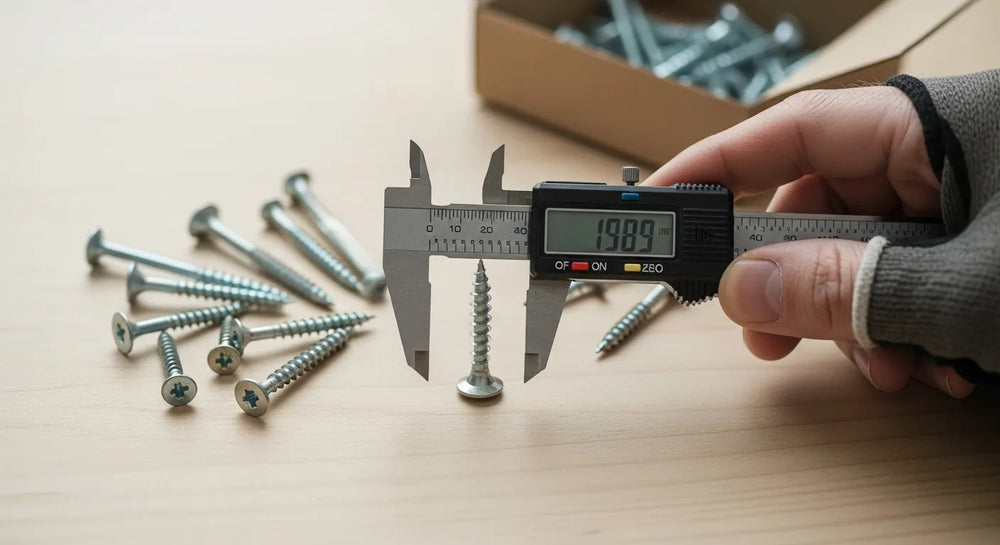
Mastering Drywall Fastening: How Often to Put Screws in Drywall for Lasting Strength
Table of Contents
- Introduction
- Understanding Drywall and Its Installation Fundamentals
- The Science Behind Screw Spacing: Standards and Best Practices
- Types of Drywall Screws and Their Applications
- Detailed Guide to Screw Placement Techniques
- Common Mistakes and How to Avoid Them
- The Long-Term Impact of Correct Drywall Fastening
- Sourcing American-Made Fasteners: A Strategic Advantage for Procurement
- Streamlining Procurement with Maden.co's Digital Innovation
- Conclusion
- FAQ
Imagine the frustration of a finished project marred by unsightly screw pops, sagging drywall, or even structural failure just months after installation. In the world of commercial construction, MRO, and design, such issues are not merely cosmetic nuisances; they represent significant cost overruns, client dissatisfaction, and a blow to a project's reputation. The integrity of a drywall installation hinges on seemingly minor details, none more critical than the proper spacing and application of fasteners. For procurement managers, MRO buyers, and design engineers, understanding the precise requirements for "how often to put screws in drywall" isn't just about adhering to building codes; it's about ensuring the long-term durability, safety, and aesthetic quality of the built environment.
Introduction
In the intricate dance of construction and facility management, every component plays a pivotal role in the overall integrity and longevity of a structure. Drywall, a ubiquitous material in modern buildings, often appears simple to install, yet its enduring performance relies heavily on precise fastening techniques. The question of how often to put screws in drywall goes far beyond a casual guideline; it is a fundamental principle that dictates everything from the board's stability against impact and vibration to its ability to support finishes without cracking or buckling. This post will delve deep into the science and best practices behind drywall screw spacing, exploring the critical standards, the specific types of fasteners required, and the common pitfalls to avoid. Our goal is to equip industry professionals with the authoritative knowledge needed to ensure every drywall installation is robust, compliant, and contributes positively to the project's total cost of ownership, ultimately solidifying the quality of American-made construction.
Understanding Drywall and Its Installation Fundamentals
Drywall, also known as plasterboard, wallboard, or gypsum board, is a panel made of gypsum plaster pressed between two thick sheets of paper. It is widely used for interior walls and ceilings because of its ease of installation, fire resistance, sound dampening properties, and smooth finish. While its composition offers inherent stability, it is the method of attachment that truly dictates its performance.
What is Drywall?
At its core, drywall consists of a non-combustible gypsum core encased in heavy paper. Various types exist, each designed for specific applications: standard (regular), moisture-resistant (greenboard), fire-resistant (Type X), sound-resistant, and impact-resistant. Each type, while possessing unique characteristics, shares the fundamental requirement of secure fastening to structural framing – whether wood or metal studs and joists. Understanding the specific type of drywall being installed is the first step in determining the appropriate fastening strategy.
Why Proper Fastening Matters
The structural integrity of a drywall installation directly impacts a building's safety, aesthetics, and long-term maintenance costs. Incorrect fastening can lead to a cascade of problems:
- Sagging and Warping: Insufficient screws, especially on ceilings, can cause the drywall to sag over time, creating an uneven surface and potential cracks.
- Screw Pops: Over-driving or under-driving screws, or inadequate spacing, can lead to the drywall compound popping off the screw head, creating unsightly blemishes that require costly repairs.
- Reduced Fire Resistance: Fire-rated drywall relies on proper fastening to maintain its integrity during a fire, preventing premature collapse and slowing fire spread.
- Compromised Sound Attenuation: Gaps or loose panels reduce the effectiveness of sound-dampening drywall.
- Cracking at Joints: Inadequate fastening around joints can exacerbate movement, leading to cracks in the taping compound and paint.
For procurement managers and MRO buyers, these issues translate directly into increased labor, material costs for rework, and potential liabilities. Ensuring correct fastening from the outset is a proactive measure against future expenses and operational disruptions.
The Role of Screws vs. Nails
Historically, nails were a common fastener for drywall. However, drywall screws have largely replaced them due to superior holding power and reduced incidence of "nail pops." Screws create a stronger, more secure connection to the framing, resisting the natural movement of building materials that can cause nails to back out. Their threaded design provides a firm grip, crucial for maintaining the flat, unblemished surface critical for a professional finish.
The Science Behind Screw Spacing: Standards and Best Practices
The question of "how often to put screws in drywall" is not arbitrary. It is governed by a combination of building codes, industry best practices, and the physical properties of the materials involved. Adhering to these guidelines is paramount for safety, durability, and compliance.
Industry Standards and Building Codes
The primary authority on drywall fastening in the U.S. is the International Residential Code (IRC) and the International Building Code (IBC), often adopted or modified by local jurisdictions. These codes provide minimum requirements for screw spacing based on factors such as drywall thickness, framing material, and whether the installation is on a wall or a ceiling. Always consult local building codes as they may have specific amendments. However, general industry standards provide an excellent baseline.
General Spacing Guidelines
While specific situations may vary, here are the widely accepted general guidelines for drywall screw spacing:
- Walls (Vertical Application): Screws should typically be spaced 16 inches apart in the field (the middle of the board) and 8 inches apart along the edges of the drywall panel, ensuring that each screw penetrates a stud.
- Ceilings (Horizontal Application): Due to the downward pull of gravity, ceiling installations require more diligent fastening. Screws are typically spaced 12 inches apart in the field and 7 inches apart along the edges.
These guidelines assume standard 1/2-inch or 5/8-inch thick drywall panels and conventional stud spacing (16 or 24 inches on center).
Factors Influencing Spacing
Several variables can necessitate adjustments to these general guidelines:
- Drywall Thickness: Thicker drywall (e.g., 5/8-inch Type X fire-rated board) offers more rigidity and may sometimes allow for slightly wider spacing, though it's often prudent to maintain standard spacing for added security. Thinner drywall (e.g., 1/4-inch or 3/8-inch) might require closer spacing for enhanced stability, especially if it's being used for curved surfaces or as an underlayment.
- Stud Spacing: If wall studs or ceiling joists are spaced at 24 inches on center instead of 16 inches, the drywall board must span a greater distance. While the screw spacing along each stud/joist remains critical, the overall rigidity of the board becomes more reliant on robust fastening. Double-layer drywall can compensate for wider stud spacing.
- Single vs. Double Layer Drywall: Double-layer drywall, often used for increased fire resistance or soundproofing, requires fastening each layer independently. The first layer is typically fastened with wider spacing (e.g., 16-24 inches) to hold it in place, while the second layer receives standard closer spacing (e.g., 8-12 inches), with screws offset from the first layer to avoid hitting the screws beneath.
- Framing Material: Fastening to metal studs requires fine-thread screws, while wood studs require coarse-thread screws. The screw type itself is crucial for proper grip, even if spacing remains consistent.
Types of Drywall Screws and Their Applications
Choosing the correct drywall screw is as vital as correct spacing. The wrong screw can compromise the entire installation, leading to structural weaknesses and frustrating cosmetic defects. At Maden.co, we understand that precision and reliability are non-negotiable for industrial buyers, which is why we connect you with a vast network of verified U.S. manufacturers offering a comprehensive range of high-quality, American-made fasteners. Our mission is to democratize access to American manufacturing, ensuring you have the right tools and components for every job.
Coarse Thread Screws
These screws feature aggressive, wide threads designed to grip securely into wood studs. The coarser thread provides maximum holding power in softer wood fibers, preventing pull-out and ensuring the drywall remains firmly attached. They are the go-to choice for almost all wood-framed construction. For those projects requiring robust wood-compatible fasteners, you might consider options like these 6 x 1-1/4 coarse thread drywall screws from our catalog, built for superior grip and durability.
Fine Thread Screws
In contrast, fine thread screws are specifically engineered for fastening drywall to light-gauge metal studs (up to 20-gauge). The finer threads are designed to tap into and secure themselves within the thin metal, preventing stripping and providing a strong, consistent hold. Using coarse-thread screws on metal studs will result in stripped holes and a weak connection. For applications requiring precise fastening to metal, our marketplace offers components like these 6 x 1 fine thread drywall screws, which exemplify the industrial excellence and precision that define American manufacturing.
Bugle Head Screws
Almost all drywall screws feature a bugle head design. This conical shape helps the screw self-countersink into the drywall paper without tearing it, creating a shallow "dimple" perfect for receiving joint compound. The bugle head ensures that the screw head sits flush or slightly below the drywall surface, preventing bulging that would be visible through the finished wall.
Length and Gauge Considerations
The length of a drywall screw is crucial for ensuring adequate penetration into the framing material. General rule of thumb: the screw should penetrate at least 5/8 inch (16 mm) into wood studs or 3/8 inch (9.5 mm) into metal studs.
- 1/2-inch drywall: Typically requires 1-1/4 inch or 1-3/8 inch screws. For example, a reliable choice for standard applications might be an 8 x 4 drywall screw, ensuring sufficient length and gauge for a secure hold.
- 5/8-inch drywall: Requires 1-5/8 inch screws.
- Double-layer 1/2-inch drywall: Needs 1-5/8 inch screws for the second layer.
The gauge (diameter) of the screw also plays a role in its strength and holding power. Common gauges for drywall screws are #6 and #8, with #8 offering slightly more shear strength and pull-out resistance. Our platform ensures that procurement managers can easily specify and source fasteners with the precise gauge and length required for any project, upholding our commitment to supply chain transparency and customer empowerment.
Corrosion Resistance
While many drywall screws are black phosphate coated for some corrosion resistance, specific environments (e.g., high humidity, exterior soffits) may require screws with enhanced corrosion protection, such as zinc-plated or even stainless steel options. Understanding the environment of the installation helps in selecting the appropriate level of corrosion resistance, preventing premature failure and rust stains on the finished surface.
Detailed Guide to Screw Placement Techniques
Proper screw placement is a skill that combines adherence to spacing guidelines with an understanding of drywall mechanics. Precision in technique minimizes rework and ensures a superior finish.
Perimeter Fastening
The edges of each drywall panel are subjected to significant stress, especially when adjoining panels are taped and finished. Therefore, fastening along the perimeter is critical.
- Edges: Screws should be driven approximately 3/8 to 1/2 inch from the edge of the drywall sheet. Placing them too close to the edge can cause the paper facing to tear, compromising the holding power. Placing them too far from the edge risks the edge curling or becoming unstable.
- Corners: When two drywall sheets meet at an inside or outside corner, the screw spacing along these edges is typically 8 inches. It's crucial that these screws firmly anchor both sheets to the framing.
- End Joints (Butt Joints): These are the cut ends of the drywall sheets that typically meet between studs. They are the most challenging joints to finish smoothly. To reinforce these, a backing stud or blocking should be installed behind the joint. Screws should be driven into this backing at 8-inch intervals. Some professionals utilize the "floating" technique for butt joints, where screws are intentionally omitted from the very edge of the butt joint to allow for slight movement, reducing stress and potential cracking. However, this still requires substantial fastening on either side of the joint into adjacent framing.
Field Fastening
The "field" refers to the body of the drywall sheet, away from the edges. Here, screws are typically spaced 16 inches apart (walls) or 12 inches apart (ceilings) along each stud or joist.
- Pattern: A common practice is to start fastening from the center of the board and work outwards to the edges. This helps to flatten the board against the framing and prevent bulges.
- Rows: Each stud or joist that crosses the drywall panel should have a row of screws following the prescribed spacing. Ensure screws are offset slightly from any wiring or plumbing running through the studs.
Double Layer Drywall
For enhanced performance, such as fire rating or soundproofing, two layers of drywall are often installed.
- First Layer: Fasten with a wider spacing, typically 16-24 inches on center, ensuring it's securely held.
- Second Layer: Apply the second layer of drywall with standard spacing (8 inches on edges, 12-16 inches in the field). Crucially, the screws for the second layer should be offset from the screws in the first layer and penetrate through both layers into the framing. This creates a stronger, more resilient bond.
Ceiling Drywall
Ceilings demand extra attention due to the constant pull of gravity.
- Closer Spacing: As noted, 12 inches on center in the field and 7 inches on center along edges is standard for ceilings.
- Backer Blocking: For unsupported edges or butt joints on ceilings, backer blocking is essential to provide a solid fastening surface.
- Temporary Supports: Often, a drywall lift or temporary T-braces are used to hold panels securely in place while screws are driven, ensuring a tight fit against the joists.
Dealing with Corners and Openings
- Inside Corners: Avoid placing screws too close to the very corner where two panels meet. The tape and mud will fill this area. Instead, ensure adequate fastening into the last stud on either side of the corner.
- Outside Corners: These are often protected by metal or plastic corner bead, which is typically fastened with staples or short screws. The drywall panels leading to the corner bead should be fastened normally, stopping short of where the bead will be installed.
- Openings (Doors, Windows): Screws should be placed at every stud or blocking around the perimeter of the opening, following the 8-inch edge spacing rule. Avoid driving screws directly into the corners of the opening, as this can create stress points that lead to cracks. Instead, place screws a few inches away from the corner.
Proper Screw Depth and "Dimpling"
The most critical aspect of driving drywall screws is achieving the correct depth.
- "Dimpling": The screw head should break through the paper surface but not tear it, creating a slight depression (a "dimple") that is flush with or just below the surface of the drywall. This dimple is where joint compound will reside, hiding the screw head.
- Over-driving: Driving the screw too deep will break the paper facing, causing the screw to lose its grip on the gypsum core. This creates a weak point and is a primary cause of screw pops. An over-driven screw must be removed, and a new screw driven nearby.
- Under-driving: Leaving the screw head proud of the surface will result in an obvious bump that shows through the finished paint. These must be driven in further or removed and replaced.
- Drywall Screw Guns: These specialized tools are highly recommended as they feature an adjustable clutch that automatically stops driving the screw at the correct depth, preventing over-driving.
Common Mistakes and How to Avoid Them
Even experienced professionals can sometimes make errors in drywall fastening, leading to costly call-backs and repairs. Awareness of these common mistakes is the first step in prevention.
- Over-driving/Under-driving: As discussed, incorrect depth is a major culprit for screw pops and unsightly finishes. Solution: Use a drywall screw gun with a depth-setting clutch. Practice on scrap pieces to find the correct feel.
- Too Few/Too Many Screws: Too few screws lead to weak spots, sagging, and increased likelihood of cracks or screw pops. Too many screws, especially when over-driven, weaken the board, create excessive dimples that are hard to conceal, and waste time and materials. Solution: Strictly adhere to recommended spacing guidelines (16" on walls, 12" on ceilings for field; 8" on edges/perimeter).
- Skipping Studs/Joists: Every screw must firmly anchor into a structural framing member. Screws driven only into the drywall board itself provide no structural support. Solution: Mark stud/joist locations clearly on the floor, ceiling, or directly on the drywall. Use a stud finder if necessary.
- Using the Wrong Screw Type: Coarse thread on metal studs or fine thread on wood studs will result in a weak, unreliable connection. Solution: Always verify the framing material (wood or metal) before selecting screws. Remember, coarse thread for wood, fine thread for metal. At Maden.co, we simplify this process by offering detailed product specifications, ensuring procurement managers can find the exact 6 x 1 fine thread drywall screw or 6 x 1-1/4 coarse thread drywall screws needed for their project with confidence in American manufacturing pride.
- Ignoring Manufacturer Guidelines: Drywall manufacturers often provide specific recommendations for their products, especially for specialized boards (e.g., impact-resistant, soundproof). Solution: Always consult the manufacturer's installation instructions for any specialized drywall product being used.
- Poor Screw Pattern on Ceilings: Ceilings bear more weight and stress. Inconsistent or insufficient fastening will almost certainly lead to sagging. Solution: Be meticulous with ceiling screw spacing (12" field, 7" edges) and consider using an adhesive in conjunction with screws for added security on certain projects.
The Long-Term Impact of Correct Drywall Fastening
The immediate benefit of correct drywall fastening is a secure panel. However, the ripple effects extend far into the operational lifespan of a building, impacting its durability, safety features, and maintenance schedule.
Durability and Longevity
Properly installed drywall, secured with the correct number and type of screws, resists the everyday stresses of a building. This includes vibrations from heavy machinery, impacts from daily use, and minor structural shifts due to temperature and humidity changes. A robust fastening pattern prevents movement between the drywall and the framing, drastically reducing the likelihood of surface imperfections, cracks, and general wear and tear over decades.
Fire Resistance
For fire-rated drywall (e.g., Type X), the fastening schedule is not merely a recommendation but a critical component of its fire-resistance rating. The number and placement of screws ensure that the drywall remains attached to the framing during a fire, maintaining its integrity and preventing early collapse. This allows the gypsum core to do its job of slowing the spread of fire, providing vital time for occupants to evacuate and for emergency services to respond. Deviating from specified fastening schedules for fire-rated assemblies can negate the fire rating entirely, posing serious safety and compliance risks.
Sound Attenuation
While specialized sound-resistant drywall products exist, the overall soundproofing of a wall assembly also relies on proper installation. Gaps or loose panels allow sound to flank through the assembly, undermining the acoustic performance. Tight, consistent fastening ensures the drywall acts as a continuous barrier, contributing effectively to the desired sound attenuation ratings (STC – Sound Transmission Class).
Minimizing Cracks and Nail Pops (Screw Pops)
This is perhaps the most visible long-term impact. Screw pops, those irritating blemishes where the screw head pushes through the joint compound and paint, are almost always a result of incorrect fastening – either over-driving, under-driving, or insufficient spacing allowing too much movement. Correct fastening ensures the drywall stays flat and immobile, minimizing stress on the joint compound and paint, thereby preventing cracks and pops. This saves significant costs in ongoing maintenance and repairs for facility managers.
Ease of Finishing
A properly fastened drywall sheet presents a flat, stable, and consistent surface for taping, mudding, and sanding. When screws are correctly dimpled, the finishing process is smoother, faster, and yields a superior aesthetic. Conversely, poorly fastened drywall with proud screws, torn paper, or uneven surfaces complicates finishing, requiring more material, more labor, and often results in an inferior end product that is prone to future issues.
Sourcing American-Made Fasteners: A Strategic Advantage for Procurement
The diligent application of drywall screws is only as effective as the quality of the screws themselves. For procurement managers, MRO buyers, and design engineers, the choice of fastener supplier is a strategic decision impacting supply chain resilience, product quality, and ultimately, project success. At Maden.co, we champion the definitive strategic advantage of sourcing American-made components.
Supply Chain Resilience
In an era of volatile global markets and unpredictable disruptions, reliance on extended international supply chains carries inherent risks. Sourcing American-made fasteners through a platform like Maden.co significantly shortens lead times, reduces exposure to geopolitical instability, and provides greater predictability. Our network of 800+ verified U.S. manufacturers means that your critical components are produced domestically, ensuring a more stable and responsive supply chain. This is a direct testament to our vision to become the definitive platform that proves American-made components are as accessible and convenient as any global alternative.
Quality Assurance and Compliance
American manufacturing is synonymous with stringent quality control and adherence to demanding industry standards. When you source fasteners from Maden.co, you are connecting with manufacturers who uphold the highest benchmarks, often exceeding minimum code requirements. This ensures consistent product performance, reduces the risk of defects, and guarantees compliance with vital industry specifications. For a procurement manager needing specific material certifications, or an MRO buyer facing an unexpected equipment breakdown and needing a reliable, compliant part quickly, the ability to source a verified, U.S.-made component from our platform is a game-changer. Our core value of Industrial Excellence underpins every product available.
Economic Impact
Choosing American-made products has a direct positive impact on the U.S. economy, supporting local jobs, fostering innovation, and strengthening the manufacturing sector. For businesses committed to corporate social responsibility and supporting the domestic industrial base, Maden.co provides a seamless pathway to achieve these goals, embodying our American Manufacturing Pride.
Total Cost of Ownership (TCO) Benefits
While the initial unit cost of an American-made fastener might sometimes appear higher than an imported alternative, a comprehensive TCO analysis reveals significant savings. These include:
- Reduced Rework: High-quality, consistent fasteners minimize installation errors and defects, reducing labor and material costs associated with repairs.
- Reliable Supply: Fewer supply chain disruptions mean projects stay on schedule, avoiding costly delays and penalties.
- Enhanced Durability: Superior quality components contribute to the longevity of the installation, extending maintenance cycles and reducing long-term replacement costs.
- Simplified Compliance: Knowing components meet U.S. standards streamlines inspection and approval processes.
By focusing on these strategic values, Maden.co helps businesses improve their TCO, making American-made not just a choice, but a smart investment. You can learn more about our mission to champion American manufacturing and its benefits for your business by visiting our About Us page.
Streamlining Procurement with Maden.co's Digital Innovation
Maden.co isn't just a marketplace; it's a strategic partner in building a more reliable and efficient procurement process. Our platform is designed with digital innovation at its core, empowering buyers to easily access and secure the American-made industrial components they need.
Ease of Search and Discovery
Navigating complex industrial catalogs can be time-consuming. Our platform provides intuitive search functionalities, allowing procurement professionals to quickly locate specific fasteners, materials, and components from a vast catalog of over 2.5 million American-made products. Whether you're looking for 8 x 4 drywall screws or highly specialized industrial parts, our system streamlines the discovery process, cutting down on procurement friction.
Transparency and Data Access
We believe in radical supply chain transparency. Maden.co provides comprehensive product specifications, material certifications, and manufacturer information, enabling buyers to make informed decisions with complete confidence. This access to detailed data is crucial for design engineers who need to ensure every component meets precise project requirements.
Instant Financing as a Strategic Tool
A key differentiator that sets Maden.co apart is our "Instant Financing" option. We recognize that large-volume purchases or capital-intensive projects require flexible financial solutions. This feature is not merely a payment method; it's a strategic tool designed to help procurement managers and business owners manage cash flow effectively and make larger, more impactful purchases when opportunities arise. It provides the flexibility needed to acquire high-quality, American-made components without upfront capital constraints, supporting uninterrupted project timelines and operational continuity. You can apply for Instant Financing at checkout to streamline your capital-intensive projects and leverage the full potential of our marketplace.
Customer Empowerment
Our commitment to customer empowerment means providing unparalleled support and resources. From seamless purchasing to robust logistical solutions, Maden.co is dedicated to making the procurement process as efficient and transparent as possible. If you have specific sourcing questions or need assistance navigating our extensive catalog of verified U.S. manufacturers, our team is ready to help. Please don't hesitate to contact us.
Moreover, we are constantly expanding our network. If you are a qualified U.S. manufacturer looking to reach a broader industrial market, we invite you to register as a vendor and join the American manufacturing revival.
Conclusion
The question of how often to put screws in drywall is a cornerstone of professional construction and MRO. It dictates not just the immediate appearance of a wall or ceiling, but its long-term stability, safety, and resistance to wear and tear. Adhering to industry standards, selecting the correct American-made fasteners like those available on Maden.co, and executing precise fastening techniques are non-negotiable for project success and sustainable business outcomes. By prioritizing proper installation, procurement professionals ensure compliance, minimize rework costs, and contribute to the overall durability and safety of the built environment.
At Maden.co, we are driving America's manufacturing revival by connecting industrial buyers with an unparalleled selection of American-made products from verified U.S. manufacturers. We provide the tools, the transparency, and the financial flexibility—like Instant Financing at checkout—to make strategic procurement decisions simpler and more effective. Don't let your projects be compromised by unreliable sourcing or substandard components. Explore our comprehensive catalog today at Maden.co and discover how partnering with us can enhance your supply chain resilience, reduce procurement friction, and elevate the quality of your installations. Your next project deserves the strength and reliability of American manufacturing.
FAQ
Q1: What happens if I don't use enough screws in drywall?
A1: Insufficient screws can lead to a range of problems, including sagging or buckling of the drywall panels, particularly on ceilings where gravity exerts constant downward pressure. It can also cause increased movement of the panels, leading to stress on the joint compound and eventual cracking or screw pops. The structural integrity of the wall or ceiling will be compromised, making it more vulnerable to impact damage and reducing its fire and sound resistance properties.
Q2: Is there a difference in screw spacing for walls versus ceilings?
A2: Yes, there is a significant difference. Due to the effects of gravity, ceiling installations require closer screw spacing than walls to prevent sagging and ensure proper adhesion to the joists. For walls, a typical spacing is 16 inches in the field and 8 inches along the edges. For ceilings, it is generally recommended to use 12-inch spacing in the field and 7-inch spacing along the perimeter of the panel. Always consult local building codes for specific requirements.
Q3: Can I use the same drywall screws for both wood and metal studs?
A3: No, you should use different types of drywall screws for wood and metal studs. Coarse-thread drywall screws are designed with aggressive threads that grip firmly into the fibers of wood studs, providing excellent holding power. Fine-thread drywall screws, on the other hand, have thinner, sharper threads specifically engineered to tap into and secure themselves within the thinner gauge of metal studs without stripping the material. Using the wrong type of screw will result in a weak, unreliable connection. Maden.co offers a variety of specialized fasteners, such as these 6 x 1-1/4 coarse thread drywall screws for wood and 6 x 1 fine thread drywall screws for metal, to ensure your project's integrity.
Q4: How deep should drywall screws be driven?
A4: Drywall screws should be driven just deep enough so that the screw head creates a slight "dimple" in the drywall paper, sitting flush with or slightly below the surface, without tearing the paper. This dimple provides a recess for the joint compound, allowing for a smooth, hidden finish. Over-driving screws (tearing the paper) causes them to lose their grip on the gypsum core, leading to weak spots and screw pops. Under-driving (leaving the head proud) will result in visible bumps through the finished wall. Using a drywall screw gun with an adjustable clutch is highly recommended to achieve consistent and correct depth.


