
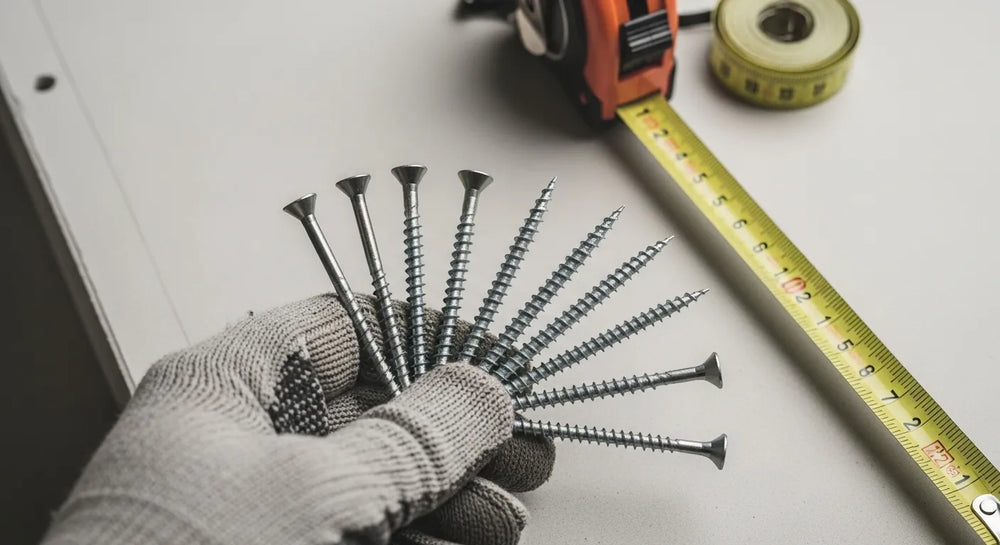
Mastering Metal: Crafting Precision Screw Threads
Table of Contents
- Introduction
- Understanding Screw Threads: The Foundation of Fastening
- Essential Tools and Equipment for Threading Metal
- Making Internal Screw Threads (Tapping)
- Making External Screw Threads (Die Cutting)
- Advanced Threading Techniques for Precision and Volume
- The Critical Role of Material Science in Threading
- Ensuring Quality and Compliance in Threaded Components
- Strategic Sourcing for Threaded Components: Why American Manufacturing Matters
- Maden.co: Your Partner in Precision Procurement
- Conclusion
- FAQ
Introduction
In the intricate world of industrial manufacturing and maintenance, the integrity of a fastened connection is paramount. A single faulty screw thread can compromise an entire assembly, halt production lines, or worse, lead to catastrophic equipment failure. For procurement managers, MRO buyers, and design engineers, the ability to specify, create, or accurately assess threaded components is not merely a technical skill; it's a fundamental aspect of ensuring operational reliability, product safety, and cost efficiency. Consider the scenario of a design engineer finalizing a critical prototype, requiring a specific high-strength screw thread in a custom metal housing. Or perhaps an MRO buyer facing an unexpected breakdown, needing to quickly replace a component with a precisely matched thread to minimize downtime. These challenges underscore a critical reality: understanding how to make a screw thread in metal is more than just a workshop skill; it's a cornerstone of industrial excellence.
This comprehensive guide will demystify the art and science of creating screw threads in metal. We will explore the fundamental principles, delve into the essential tools and techniques for both internal and external threading, address common challenges, and highlight advanced manufacturing methods. Our aim is to equip you with the knowledge to make informed decisions, whether you're performing the operation yourself or specifying components for your next project. Ultimately, we will illustrate how expert knowledge of threading, combined with strategic sourcing through platforms like Maden.co, can significantly enhance your supply chain resilience and project success.
Understanding Screw Threads: The Foundation of Fastening
Screw threads are ingeniously simple yet profoundly critical mechanical elements that convert rotational motion into linear motion or provide a robust means of fastening components. Their ubiquitous presence in everything from aerospace components to heavy machinery speaks volumes about their versatility and importance. Without precise threading, the structural integrity of countless products and systems would be jeopardized.
Why Threads are Critical in Industrial Applications
The reliability of a threaded fastener stems from its ability to distribute load evenly across multiple helical surfaces, creating a secure, often adjustable, connection. This mechanical advantage is crucial for:
- Assembly and Disassembly: Threads allow parts to be joined and separated without permanent deformation, facilitating maintenance, upgrades, and repairs.
- Load Bearing: They can withstand significant axial and radial forces, crucial for structural connections.
- Adjustability: Threads enable precise adjustments, such as in micrometer heads or leveling feet.
- Power Transmission: In lead screws, threads convert rotational input into linear output, essential for machine tools and actuators.
- Sealing: Tapered pipe threads, like NPT, create fluid-tight seals under pressure.
Types of Threads and Common Profiles
Threads are broadly categorized into internal threads (e.g., in a nut or a tapped hole) and external threads (e.g., on a bolt or a screw). Beyond this, their geometry, known as the thread profile, dictates their specific application.
-
V-Thread (Triangular Thread): The most common type, offering strong friction and resistance to loosening. Examples include:
- Unified National Coarse (UNC): General-purpose fasteners, good for quick assembly, less prone to stripping in softer materials.
- Unified National Fine (UNF): Offers greater strength in hard materials, finer adjustments, and better resistance to vibration.
- ISO Metric (M Series): The international standard, widely used globally.
- Acme Thread: Characterized by its trapezoidal profile, ideal for power transmission (lead screws) due to its strength and ability to carry heavy loads.
- Buttress Thread: Features an asymmetrical profile, designed to withstand heavy axial thrust in one direction, often seen in vices or screw jacks.
- Square Thread: Offers very high efficiency in power transmission but is more difficult to manufacture.
- Pipe Threads (e.g., NPT, BSP): Designed for sealing fluid or gas connections, often tapered to create a tighter seal.
The Importance of Thread Standards
Standardization is not merely about convenience; it is about interoperability, safety, and supply chain efficiency. Thread standards, such as UNC, UNF, ISO Metric, and NPT, define precise dimensions for pitch, major diameter, minor diameter, and thread angle. Adherence to these standards ensures that components from different manufacturers can fit together seamlessly, preventing costly errors, delays, and potential safety hazards. For a procurement manager, specifying a standard-compliant thread (e.g., DIN 931 for a hex cap screw) simplifies sourcing and guarantees compatibility, reducing the risk of project stoppages due to mismatched parts. At Maden.co, we understand the critical role these standards play, which is why our platform emphasizes access to components manufactured to exact specifications, bolstering supply chain transparency and industrial excellence.
Essential Tools and Equipment for Threading Metal
Creating a thread in metal requires specialized tools, each designed for precision and durability. The choice of tool depends on whether you're making an internal or external thread, the material, and the required precision.
Taps: For Internal Threads
Taps are cutting tools used to create internal screw threads. They come in various forms to suit different applications and materials:
-
Hand Taps: Typically sold in sets of three:
- Taper Tap: Has an 8-10 thread chamfer at the tip, making it easiest to start in a hole. Used for initial thread cutting.
- Plug Tap: Has a 3-5 thread chamfer. Used after a taper tap to cut threads deeper into a through-hole or a shallow blind hole.
- Bottoming Tap: Has a 1-2 thread chamfer. Used for finishing threads to the very bottom of a blind hole.
-
Machine Taps: Designed for use in drilling machines, lathes, or CNC machines, offering faster and more consistent results.
- Spiral Flute Taps: Have helical flutes that draw chips out of the hole, ideal for blind holes and tougher materials.
- Spiral Point Taps (Gun Taps): Have straight flutes with an angled cutting point that pushes chips forward, excellent for through-holes.
- Thread Forming Taps (Roll Taps): These taps don't cut material but rather cold-form the threads by displacing the metal. They produce stronger threads with no chips, ideal for ductile materials.
Dies: For External Threads
Dies are used to cut external screw threads onto rods or shafts.
- Round Adjustable Dies: The most common type for hand threading. They have a slit that allows for slight adjustment of the cutting diameter, useful for achieving specific fit tolerances.
- Hexagonal Dies: Designed to be used with a standard wrench, useful for repairing damaged threads on bolts.
- Two-Piece Dies: Used in die stocks, these allow for more precise alignment and adjustment, especially for larger diameters.
- Die Stocks/Handles: Hold the die and provide leverage for turning.
Tapping/Die Handles and Wrenches
These are essential for safely and effectively operating taps and dies:
- Tap Wrenches: Available in various sizes, they securely hold the tap and provide a comfortable grip for turning. T-handle wrenches are common for smaller taps, while straight-handle wrenches are used for larger ones.
- Die Stocks: Provide leverage and stability for rotating dies, ensuring a straight cut.
Drill Bits and Tap Drill Sizes
For internal threads, the correct pilot hole size is critical. If the hole is too small, the tap can bind and break; if too large, the threads will be weak or incomplete. Tap drill charts provide the exact diameter required for a specific tap size and thread pitch, typically resulting in 75% thread engagement, which offers an optimal balance of strength and machinability.
Cutting Fluids/Lubricants
Proper lubrication is non-negotiable. Cutting fluids reduce friction and heat buildup, prolong tool life, and ensure a cleaner, smoother thread finish. Different metals require specific lubricants (e.g., sulfurized oil for steel, kerosene for aluminum, lard oil for brass).
Measuring Tools
Precision is key in threading. Tools like calipers, micrometers, and especially thread gauges (go/no-go gauges) are essential for verifying thread dimensions, pitch, and overall quality.
Workholding Devices
A sturdy vise or clamps are necessary to securely hold the workpiece, preventing movement during the threading process and ensuring operator safety and accuracy.
Making Internal Screw Threads (Tapping)
Tapping is the process of cutting an internal thread into a pre-drilled hole. It requires careful execution to ensure a strong, precise thread.
Step-by-Step Tapping Process
- Select the Right Drill Bit and Drill the Pilot Hole: Consult a tap drill chart to determine the correct diameter for your desired tap size and thread pitch. For example, if you're tapping a 1/4"-20 UNC thread, you'd typically use a #7 (0.201 inch) drill bit for approximately 75% thread engagement. Drill the hole straight and to the correct depth.
- Chamfer the Hole: Use a countersink tool or a larger drill bit to create a slight chamfer at the entry of the hole. This helps the tap start straight, prevents chipping of the first thread, and removes burrs.
- Choose the Correct Tap and Cutting Fluid: Select the appropriate tap (taper, plug, or bottoming) and apply a suitable cutting fluid generously to the tap and the hole.
- Start the Tap Straight: Insert the tap into the tap wrench. Place the tap squarely into the chamfered hole. Apply light downward pressure and rotate the tap clockwise (for right-hand threads) by hand. Ensure the tap enters perfectly perpendicular to the workpiece. A tapping guide or square can help maintain alignment.
- The "Two Steps Forward, One Step Back" Technique: This crucial technique helps break off the chips that are formed during cutting and prevents the tap from binding. After rotating the tap forward (clockwise) about half to a full turn, rotate it backward (counter-clockwise) about a quarter to half a turn. This breaks the chips into manageable pieces, allowing the cutting fluid to flow in and clear them.
- Clearing Chips: For deeper holes or materials that produce long, stringy chips, periodically remove the tap completely, clean the flutes, and reapply cutting fluid.
- Finishing and Inspecting: Continue the forward and backward rotation until the desired thread depth is reached. For blind holes, use the sequence of taper, then plug, then bottoming tap to ensure full thread depth. Once complete, carefully unscrew the tap. Clean the threaded hole and inspect it with a thread gauge to verify accuracy.
Common Tapping Challenges and Solutions
-
Broken Taps: This is a common and frustrating issue. Causes include:
- Incorrect Pilot Hole Size: Too small a hole leads to excessive cutting forces.
- Lack of Lubrication: Increased friction and heat.
- Misalignment: Sideways pressure on the tap.
- Over-forcing: Applying too much pressure.
- Dull Tap: A tap that isn't sharp requires more force.
- Solution: Always use the correct tap drill size, ample cutting fluid, ensure perfect alignment, and let the tap do the cutting. If a tap breaks, specialized tap extractors can sometimes remove the broken piece, but often the hole is ruined.
-
Thread Stripping: Occurs when the tap cuts incomplete or weak threads.
- Incorrect Pilot Hole Size: Too large a hole means not enough material for the tap to form full threads.
- Worn Tap: Dull cutting edges can tear rather than cut.
- Solution: Verify tap drill size, use sharp taps, and ensure proper cutting technique.
-
Misalignment: Taps starting crooked will produce angled, non-functional threads.
- Solution: Always start the tap by hand, using a tap guide or a square to ensure it's perpendicular to the workpiece. For machine tapping, ensure the spindle is aligned.
- Material Considerations: Harder materials require slower speeds, more robust taps (e.g., cobalt or carbide), and specialized cutting fluids. Softer, gummy materials (like some aluminum alloys) can cause chips to weld to the tap, requiring specific tap geometries (e.g., spiral flute) and lubricants.
Making External Screw Threads (Die Cutting)
Die cutting creates external threads on a rod or shaft. While similar in principle to tapping, it requires its own set of techniques and considerations.
Step-by-Step Die Cutting Process
-
Prepare the Workpiece:
- Material Selection: Ensure the rod material is appropriate for threading.
- Diameter Reduction: The rod diameter must be slightly smaller than the major diameter of the desired thread (the nominal size of the screw). For example, for a 1/4"-20 UNC thread, the rod should be closer to 0.245 inches. This slight reduction helps the die start easily and prevents excessive material removal, which could lead to binding.
- Chamfering the End: Grind or file a slight chamfer on the end of the rod. This helps the die start squarely and reduces burrs.
- Select the Correct Die: Choose the die that matches the desired thread size and pitch. Insert the die into the die stock, ensuring it's properly seated.
- Start the Die Straight: Secure the workpiece firmly in a vise. Place the chamfered end of the rod into the cutting side of the die. Apply firm, steady downward pressure and rotate the die stock clockwise (for right-hand threads). Ensure the die starts perfectly perpendicular to the rod. A guide can assist with initial alignment.
- Cutting the Thread (Forward and Backward Motion): Once the die has engaged the material, continue rotating it clockwise. Like tapping, use the "two steps forward, one step back" technique to break chips and clear swarf. This prevents chips from jamming the die and ensures a cleaner cut.
- Lubrication: Continuously apply cutting fluid to the die and the workpiece throughout the process. This reduces friction, dissipates heat, and improves the quality of the cut.
- Finishing and Inspection: Continue cutting until the desired thread length is achieved. Carefully unscrew the die. Clean the newly cut threads and inspect them using a thread gauge to confirm the pitch and fit.
Common Die Cutting Challenges and Solutions
-
Uneven Threads: Can result from the die starting crooked or wobbling during the cut.
- Solution: Ensure the workpiece is securely held, the die starts perfectly straight, and consistent pressure is maintained during the initial turns. Use a die guide if available.
-
Difficulty Starting: If the rod diameter is too large or the end isn't properly chamfered, the die will struggle to engage.
- Solution: Ensure the rod is sized correctly (slightly undersized) and has a good chamfer. Apply plenty of cutting fluid.
-
Material Deformation/Galling: Some softer or gummy metals can deform or gall (material welding to the die) if not properly lubricated or if the cutting speed is too high.
- Solution: Use the correct cutting fluid for the material, reduce cutting speed, and ensure frequent chip breaking. For tough materials, a slightly larger chamfer on the die or a coarser thread pitch might be necessary.
Advanced Threading Techniques for Precision and Volume
While hand tapping and die cutting are fundamental skills, industrial applications often demand higher precision, faster production rates, or the ability to create complex thread forms. Modern manufacturing utilizes several advanced techniques.
Thread Rolling
Unlike cutting, thread rolling is a cold-forming process where a blank (unthreaded rod) is squeezed between two or three dies that have the inverse profile of the desired thread. The metal is displaced and flows into the thread form rather than being cut away.
-
Benefits:
- Increased Strength: Cold working hardens the material, leading to stronger threads with improved fatigue resistance.
- Superior Surface Finish: The rolling action produces a smooth, burnished surface.
- No Material Waste: No chips are produced, making it an efficient process.
- High Production Rates: Ideal for mass production of fasteners.
Thread Milling
Thread milling uses a rotating cutting tool (thread mill) in a CNC machine to generate threads. The tool moves helically around or inside the workpiece, removing material to create the thread profile.
-
Benefits:
- Flexibility: Can produce a wide range of thread forms, sizes, and pitches, including internal and external threads, in the same setup.
- Reduced Tool Breakage: If a thread mill breaks, it usually doesn't ruin the workpiece, unlike a broken tap.
- Suitable for Hard Materials: Can mill threads in hardened materials that are difficult to tap.
- Improved Chip Control: Chips are easily managed and evacuated.
Lathe Threading (Single Point Threading)
This method uses a single-point cutting tool on a lathe to progressively cut a thread. The tool is advanced at a precise feed rate per revolution, matching the thread's pitch.
-
Benefits:
- High Precision: Excellent for extremely accurate threads, especially for custom or large diameter threads.
- Versatility: Can cut almost any thread form (V, Acme, Buttress) in both internal and external configurations.
- Ideal for Prototypes and Low Volume: Efficient for one-off or small batch production where special tooling isn't justified.
- CNC Lathes: Modern CNC lathes automate this process, offering exceptional speed and repeatability.
Specialized Fasteners and Their Manufacturing
Beyond traditional nuts and bolts, many specialized fasteners rely on unique threading principles designed for specific performance characteristics. Maden.co connects buyers with a vast catalog of these precision-engineered American-made components.
- Self-Tapping Screws: These fasteners create their own mating threads as they are driven into material, eliminating the need for a pre-tapped hole. They are commonly used in sheet metal, plastics, and wood. For example, the Hi-Lo Double Lead Thread Self-Tapping Sheet Metal Screw offers superior thread engagement and reduced splitting in certain materials due to its unique thread profile. Similarly, for reliable fastening in various sheet metal applications, consider options like the Steel Zinc Plated Type A Pan Slot Drive Self-Tapping Sheet Metal Screw or the robust Steel Zinc Plated Type A Truss Square Drive Self-Tapping Sheet Metal Screw, both readily available from our verified U.S. manufacturers.
- Thread-Forming Screws: Similar to self-tapping but designed to form rather than cut threads in ductile materials, producing stronger, chip-free internal threads.
- Thread Inserts: Used to provide strong, wear-resistant threads in softer materials (like aluminum or plastics) or to repair stripped threads. These are typically threaded externally into a pre-drilled hole, then provide a new, durable internal thread.
The Critical Role of Material Science in Threading
The type of metal being threaded profoundly impacts tool selection, cutting parameters, and the overall success of the operation. A deep understanding of material properties is essential for industrial excellence.
- Hardness vs. Machinability: Harder materials (e.g., hardened steels, titanium alloys) are more difficult to cut, requiring slower speeds, more rigid setups, and taps/dies made from high-speed steel (HSS), cobalt, or carbide. Softer, more ductile materials (e.g., aluminum, brass, mild steel) are generally easier to cut but can present challenges with chip formation (gummy chips) and galling.
- Ductility: Highly ductile materials can deform rather than shear cleanly, leading to poor thread quality. Proper lubrication and specific tap/die geometries are crucial.
- Alloys and Their Impact: The specific alloying elements in metals affect their machinability. For instance, free-machining steels have additives (like sulfur or lead) that promote chip breakage and reduce friction. Stainless steels are notoriously tough, prone to work-hardening, and require specialized tools and techniques.
- Coatings and Surface Treatments: Tools can be coated (e.g., TiN, TiCN, AlTiN) to increase hardness, wear resistance, and lubricity, significantly extending tool life and improving thread quality, especially in challenging materials. Similarly, coatings on fasteners (e.g., zinc plating, phosphating) improve corrosion resistance but must be considered during threading operations for their potential impact on thread fit and torque.
Ensuring Quality and Compliance in Threaded Components
In industrial procurement, "good enough" is rarely sufficient. Precision in threaded components is a non-negotiable requirement for safety, performance, and longevity. Adherence to strict quality control measures and industry standards is paramount.
Thread Gauges (Go/No-Go)
These specialized gauges are the primary tool for verifying thread dimensions. A "Go" gauge must screw freely into an internal thread or onto an external thread, while a "No-Go" gauge must not enter more than a specified number of turns (typically 1.5-3 turns). This pass/fail system ensures that threads fall within specified tolerances for major diameter, pitch diameter, and pitch.
Dimensional Inspection
Beyond simple go/no-go checks, more rigorous dimensional inspection using calipers, micrometers, and optical comparators can verify specific thread elements, such as lead accuracy, thread angle, and root/crest radii, especially for critical components.
Certifications and Standards
Compliance with national and international standards (e.g., ISO, ANSI, DIN, NPT for pipe threads) is a fundamental aspect of quality. These standards not only define thread geometries but often specify material properties, testing procedures, and surface finishes. For procurement managers, verifying that sourced components meet these standards is critical for product reliability and regulatory compliance. At Maden.co, we partner with verified U.S. manufacturers who adhere to these stringent quality benchmarks, ensuring the components you receive are built to last and perform.
The Importance of Sourcing from Verified Manufacturers
The quality of a threaded component begins with its manufacturer. Sourcing from verified manufacturers who employ robust quality management systems (e.g., ISO 9001 certified) provides assurance that:
- Materials are Traceable: Raw materials meet specified standards.
- Processes are Controlled: Manufacturing processes are consistent and precise.
- Inspection is Thorough: Components are tested and inspected at various stages.
- Compliance is Guaranteed: Products meet industry standards and customer specifications.
This level of scrutiny is precisely what we champion at Maden.co. Our platform is built on the principle of connecting industrial buyers with manufacturers committed to industrial excellence, thereby empowering our customers to build resilient and reliable supply chains.
Strategic Sourcing for Threaded Components: Why American Manufacturing Matters
In an increasingly unpredictable global economy, the strategic advantages of sourcing American-made components, particularly for precision items like threaded fasteners, have become undeniable. The decision to buy American extends far beyond patriotism; it's a strategic imperative for businesses focused on long-term stability and success.
Supply Chain Resilience
The past few years have highlighted the fragility of extended global supply chains. Relying on overseas suppliers can introduce vulnerabilities through geopolitical instability, natural disasters, shipping delays, and fluctuating trade policies. Sourcing from U.S. manufacturers inherently reduces lead times, minimizes transportation risks, and provides greater predictability, building a more robust and resilient supply chain. Our mission at Maden.co is to democratize access to American manufacturing, ensuring that critical components are always within reach.
Quality Control and Consistency
American manufacturers are renowned for their adherence to stringent quality standards, robust testing, and consistent production processes. This commitment translates directly into higher-quality threaded components that perform reliably, reduce failure rates, and ultimately lower the Total Cost of Ownership (TCO) for businesses. Our network of 800+ verified U.S. manufacturers stands as a testament to this unwavering dedication to industrial excellence.
Reduced Lead Times
Proximity matters. Shorter geographical distances mean faster delivery times, enabling businesses to manage inventory more efficiently, respond quickly to market demands, and minimize production downtime. For MRO buyers facing an unexpected equipment breakdown, the ability to rapidly source a verified, U.S.-made part can be the difference between hours and days of lost productivity.
Support for the U.S. Economy
Every purchase of an American-made product supports domestic jobs, fosters innovation, and strengthens the U.S. industrial base. This commitment to American Manufacturing Pride is a core value at Maden.co, fueling the "America's manufacturing revival is here" movement.
Maden.co's Role: Democratizing Access to U.S.-Made Products
At Maden.co, we are revolutionizing industrial procurement by connecting industrial buyers with an unparalleled network of American manufacturers. Our platform serves as the definitive marketplace for over 2.5 million American-made products, making it as accessible and convenient as any global alternative. We believe in providing solutions that address the real-world challenges faced by procurement managers, MRO buyers, design engineers, and business owners.
Consider a procurement manager under pressure to source a specific DIN 931 compliant hex cap screw, a design engineer needing specific material certifications for a new prototype, or an MRO buyer facing an unexpected equipment breakdown. The ability to quickly find and finance a verified, U.S.-made part is a game-changer. Our digital innovation ensures supply chain transparency, allowing you to trace the origin and specifications of every component.
Maden.co: Your Partner in Precision Procurement
We understand the complexities of sourcing industrial components. Our platform is designed to simplify your procurement process, enhance your operational efficiency, and empower you with reliable, U.S.-made solutions. When you partner with Maden.co, you're not just buying a part; you're investing in:
- Improved Total Cost of Ownership (TCO): By reducing lead times, minimizing quality issues, and streamlining the purchasing process, we help lower your overall operational costs.
- Ensured Compliance: Access components that meet critical industry standards (e.g., DIN, NPT), removing the guesswork from compliance.
- Enhanced Supply Chain Resilience: Secure your operations with a reliable source of American-made products, mitigating risks associated with global supply chain disruptions.
- Reduced Procurement Friction: Our user-friendly interface and extensive catalog make finding and ordering parts intuitive and efficient.
- Partnership with Verified U.S. Manufacturers: Gain confidence in the quality and authenticity of every product, directly supporting the American industrial base.
Furthermore, we recognize that large-volume purchases or capital-intensive projects require flexible financing solutions. That's why we offer Instant Financing options to qualified businesses. This isn't just a payment method; it's a strategic tool designed to help you manage cash flow effectively and make necessary investments without delay. You can apply for Instant Financing at checkout to streamline your capital-intensive projects, ensuring your operations remain uninterrupted and your growth unhindered.
Our entire business model is built on this principle; you can learn more about our mission to champion American manufacturing here. If you have specific sourcing questions, our team is ready to help; simply contact us for personalized support.
Conclusion
The ability to create precise screw threads in metal, whether through traditional tapping and die cutting or advanced manufacturing techniques, remains a fundamental skill and a critical component of industrial operations. From ensuring structural integrity to facilitating precise mechanical adjustments, the quality of a thread can dictate the success or failure of a project. Understanding the tools, techniques, and material science involved is paramount for anyone in procurement, MRO, or design engineering.
As industries navigate an increasingly complex global landscape, the strategic decision to prioritize quality, reliability, and supply chain resilience becomes ever more vital. Sourcing American-made threaded components not only supports domestic manufacturing but also provides tangible benefits in terms of consistent quality, reduced lead times, and enhanced operational stability.
At Maden.co, we are committed to being your strategic partner in achieving these goals. We invite you to explore our extensive catalog of over 2.5 million American-made products, connect with our network of verified U.S. manufacturers, and experience the unparalleled convenience and confidence that comes with sourcing through America's premier B2B marketplace. Empower your projects with the precision and reliability that only American manufacturing can deliver. Begin solving your procurement challenges today—discover the difference that quality, transparency, and innovation can make. Don't forget, you can apply for Instant Financing at checkout to manage your capital effectively and keep your critical projects moving forward.
FAQ
Q1: What is the most common reason for a tap breaking during internal threading?
A1: The most common reasons for a tap breaking are incorrect pilot hole size (too small), lack of sufficient lubrication, starting the tap misaligned with the hole, or applying excessive force. Always ensure the correct tap drill size, use appropriate cutting fluid, start the tap perfectly straight, and let the tap's cutting edges do the work with a smooth, controlled motion.
Q2: How does thread rolling differ from traditional thread cutting (tapping or die cutting)?
A2: Thread rolling is a cold-forming process where material is plastically deformed into the thread shape, rather than being cut away. This process creates stronger threads with a better surface finish and no material waste (chips), making it highly efficient for mass production. In contrast, tapping and die cutting involve removing material with sharp cutting edges.
Q3: Why is proper lubrication so important when making screw threads in metal?
A3: Proper lubrication (cutting fluid) is critical for several reasons: it reduces friction and heat generated during cutting, which prolongs the life of the tap or die; it helps flush away chips, preventing them from binding or damaging the threads; and it improves the surface finish and overall quality of the cut threads. Different metals require specific types of cutting fluids for optimal results.
Q4: How does Maden.co help businesses like mine in sourcing threaded components?
A4: Maden.co democratizes access to American manufacturing by connecting industrial buyers with over 2.5 million American-made products from 800+ verified U.S. manufacturers. We help improve your Total Cost of Ownership, ensure compliance with critical industry standards, enhance supply chain resilience, and reduce procurement friction. Our platform simplifies finding high-quality, U.S.-made threaded components and offers convenient features like Instant Financing at checkout to streamline your purchasing process.


