
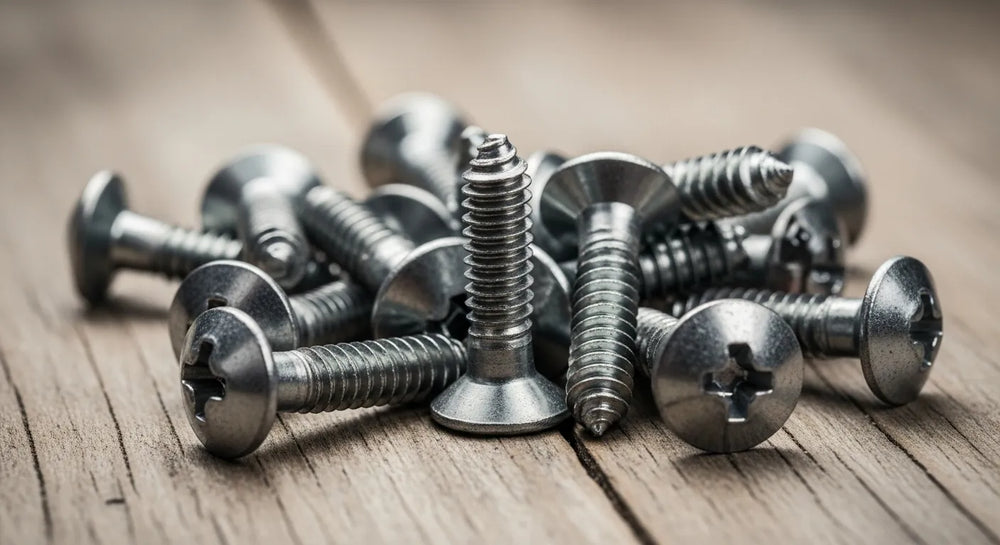
Mastering Metal Fastening: What Screws Are Used for Metal
Table of Contents
- The Foundation of Fastening: Understanding Screw Mechanics for Metal
- Types of Screws Used for Metal Applications
- Critical Considerations for Specifying Metal Screws
- The Maden.co Advantage: Sourcing American-Made Metal Fasteners
- Conclusion
- Frequently Asked Questions (FAQ)
Across the industrial landscape, from advanced robotics manufacturing to critical MRO operations, the integrity of a structure often hinges on the smallest components: screws. A single incorrect fastener choice can lead to catastrophic structural failure, costly downtime, or even safety hazards. For procurement managers, MRO buyers, and design engineers, understanding the nuances of "what screws are used for metal" is not just about specification; it’s about ensuring durability, performance, and the longevity of vital assets. The sheer variety of metal alloys, thicknesses, and application environments demands a precise, informed approach to fastener selection.
This article delves into the essential types of screws designed for metal applications, exploring their unique features, ideal uses, and critical considerations for optimal performance. We will unravel the complexities of materials, coatings, head types, and drive styles, equipping you with the knowledge to make confident procurement decisions. Furthermore, we will highlight how our commitment at Maden.co to democratizing access to American manufacturing empowers industrial buyers to source the exact U.S.-made components they need with unparalleled efficiency and reliability, driving America's manufacturing revival forward.
The Foundation of Fastening: Understanding Screw Mechanics for Metal
Before delving into specific screw types, it's crucial to grasp the fundamental mechanics that dictate how screws interact with metal substrates. Unlike wood, which allows for aggressive thread cutting, metal's density and hardness require fasteners designed to either pre-tap, self-tap, or form threads, or to secure into already tapped holes.
Key Factors in Metal Screw Performance
- Material Hardness: The hardness of the screw material must exceed that of the metal being fastened. This is fundamental for thread formation or cutting.
- Thread Design: The geometry of the screw's thread—its pitch, angle, and profile—is optimized for gripping and holding within various metal thicknesses and types.
- Point Style: The screw's point dictates its ability to penetrate and initiate thread formation, ranging from sharp gimlet points to specialized drilling points.
- Surface Treatment and Coatings: These not only provide corrosion resistance but can also reduce friction during installation and enhance thread engagement.
- Shear and Tensile Strength: Understanding the forces a fastener will experience is paramount. Shear strength measures resistance to forces parallel to the screw axis, while tensile strength measures resistance to forces pulling along the axis.
Types of Screws Used for Metal Applications
Selecting the right screw for metal requires a deep dive into the specific characteristics of various fastener types. Each is engineered for distinct applications, material thicknesses, and performance requirements.
Self-Tapping Screws
These are arguably the most ubiquitous screws for metal, designed to create their own mating threads as they are driven into a pre-drilled or punched pilot hole. This eliminates the need for a separate tapping operation, significantly reducing assembly time and costs. Self-tapping screws are ideal for sheet metal, aluminum, and even some light steel applications.
Common Self-Tapping Screw Types:
- Type A: Characterized by a sharp, gimlet point and spaced threads, these are excellent for fastening into thin sheet metal (typically 0.015 to 0.050 inches thick) and soft materials. They require a pre-drilled pilot hole.
- Type B: Featuring a blunt point with finer, spaced threads, Type B screws are designed for slightly thicker sheet metal, non-ferrous castings, and some plastics. They also require a pilot hole and offer improved resistance to stripping compared to Type A in appropriate materials.
- Type AB: This hybrid combines the sharp point of Type A with the finer threads of Type B. It offers improved thread engagement in thin materials and works well in multiple applications, including sheet metal and some plastics.
- Type C: With machine screw threads and a blunt point, Type C screws require a pilot hole and are used in heavy gauge sheet metal, die castings, and plastic. They provide greater resistance to vibration loosening.
- Hi-Lo Double Lead Thread Screws: These screws feature a unique double lead thread design with a high thread and a low thread. The high thread provides strong engagement, while the low thread increases the thread-forming area, making them highly effective in various metal and plastic applications. For procurement managers seeking specialized fasteners that offer superior pull-out resistance and reduced radial stress in demanding applications, exploring options like the Hi-Lo Double Lead Thread Self-Tapping Sheet Metal Screw from our extensive catalog can provide a distinct advantage.
Self-Drilling Screws (Tek Screws)
Often referred to by the brand name "Tek screws," self-drilling screws combine the functions of drilling, tapping, and fastening into a single operation. They feature a drill bit-like point that creates its own pilot hole, eliminating the need for pre-drilling. This makes them exceptionally efficient for high-volume assembly in light gauge metals, such as attaching metal siding, roofing, or framing.
Advantages of Self-Drilling Screws:
- Speed: Significantly reduces installation time and labor.
- Cost-Effectiveness: Eliminates the need for separate drilling tools and bits.
- Accuracy: Reduces potential for misalignment since drilling and fastening occur simultaneously.
Considerations:
- Material Thickness: Each self-drilling screw type is rated for a specific range of metal thickness. Exceeding this can damage the screw or the material.
- Point Length: The length of the drill point must be sufficient to penetrate the metal before the threads engage.
Sheet Metal Screws
While "self-tapping" is a broad category, "sheet metal screws" specifically refer to fasteners designed for thin gauge metal sheets, often with a sharp point and coarse threads to bite into the material effectively. They are common in HVAC, automotive, and appliance manufacturing.
When an MRO buyer needs to quickly replace fasteners in an existing sheet metal enclosure or a design engineer specifies them for a new prototype, sourcing reliable, U.S.-made options is paramount. For robust applications, consider the Steel Zinc Plated Type A Pan Slot Drive Self-Tapping Sheet Metal Screw, offering durability and secure fastening. Alternatively, for applications requiring a different drive type, the Steel Zinc Plated Type A Truss Square Drive Self-Tapping Sheet Metal Screw provides a strong, reliable connection with enhanced cam-out resistance. Our platform ensures that procurement managers can easily locate and procure these vital components, ensuring project continuity and quality.
Machine Screws
Machine screws are designed for applications where precise thread engagement and a strong, consistent connection are critical. Unlike self-tapping screws, machine screws require a pre-tapped hole or must be used with a nut to create a secure joint. They are standardized with uniform threads (e.g., Unified National Coarse/Fine or ISO Metric) and are widely used in machinery, electronics, and automotive assemblies where disassembly and reassembly may be frequent.
When to Use Machine Screws:
- High-Strength Applications: When greater clamping force and resistance to vibration are needed.
- Precision Assemblies: Where exact alignment and repeatable fastening are essential.
- Through-Hole Applications: With nuts, for superior strength and clamping.
- Pre-Tapped Castings/Parts: For secure connections without material deformation.
Thread-Cutting and Thread-Forming Screws
These are specialized types of self-tapping screws designed for heavier gauge metals or specific material properties.
- Thread-Cutting Screws: These screws actually cut a chip from the material as they are driven in, creating a clean thread. They typically have one or more cutting flutes on the point and are used in thicker metals, castings, or brittle materials where thread-forming might cause cracking.
- Thread-Forming Screws: These screws displace material rather than removing it, cold-forming the threads into the workpiece. They create a very strong, vibration-resistant joint and are often used in ductile metals, providing excellent pull-out strength.
Critical Considerations for Specifying Metal Screws
Beyond the basic types, several factors play a pivotal role in selecting the optimal screw for any metal application. Overlooking these details can lead to premature failure, compromised integrity, and unnecessary project costs.
1. Material Compatibility
The screw material must be compatible with the base metal and the operating environment.
- Steel: Carbon steel screws are common, offering high strength. They often require plating (zinc, black oxide) for corrosion resistance.
- Stainless Steel: Provides superior corrosion resistance, crucial for outdoor, marine, or chemical environments. Types 304 and 316 are common, with 316 offering enhanced resistance to chlorides.
- Aluminum: Lighter, corrosion-resistant, but generally lower strength.
- Brass/Bronze: Good conductivity and corrosion resistance, but softer.
2. Environmental Factors
- Corrosion: Will the fastener be exposed to moisture, chemicals, saltwater, or extreme temperatures? This dictates the need for specific materials or coatings.
- Temperature: Extreme hot or cold can affect material properties, thread engagement, and coating integrity.
- Vibration: Applications with high vibration require fasteners with specific thread designs, locking features (e.g., patch, serrations), or the use of thread-forming screws.
3. Head Styles
The screw head serves multiple purposes: transmitting torque, providing bearing surface, and aesthetic considerations.
- Pan Head: Slightly rounded top with vertical sides, good bearing surface.
- Flat Head (Countersunk): Tapers to a flat surface, designed to sit flush or below the material surface for a smooth finish.
- Truss Head: Wider, lower profile than pan head, good for thin materials or where a larger bearing surface is desired.
- Hex Head: Provides excellent torque transmission, often used for heavy-duty applications.
- Button Head: Low, rounded aesthetic, often used for appearance and safety.
- Wafer Head: Very large, flat head offering maximum bearing surface for thin materials.
4. Drive Types
The drive type determines the tool used for installation and impacts cam-out resistance and ease of assembly.
- Phillips: Common, but prone to cam-out at high torque.
- Slotted: Simple, but offers poor cam-out resistance and limited torque.
- Square (Robertson): Excellent cam-out resistance, popular in North America for ease of use.
- Torx (Star): Superior cam-out resistance, good for high-torque applications.
- Hex (Allen): Offers high torque transmission and a clean aesthetic.
- Combination Drives: Combine two drive types, offering versatility.
5. Thread Pitch and Length
- Pitch: The distance between threads. Coarser threads offer faster installation and better bite in softer materials. Finer threads provide stronger engagement in harder materials and higher pull-out resistance.
- Length: Must be appropriate for the total material thickness being joined, ensuring sufficient thread engagement without bottoming out or unnecessary protrusion.
6. Coatings and Finishes
Coatings protect the screw from corrosion, improve appearance, and can even enhance thread engagement.
- Zinc Plating: A common, economical coating for mild corrosion resistance. Available in various colors (clear, yellow, black).
- Black Oxide: Provides minimal corrosion resistance, primarily for appearance and reduced reflectivity.
- Phosphate: Offers good adhesion for paints and oils, moderate corrosion resistance.
- Nickel Plating: Good corrosion and wear resistance, aesthetic finish.
- Organic Coatings (e.g., ceramic, fluoropolymer): Offer enhanced corrosion resistance, chemical resistance, and lubricity, often in demanding environments.
The Maden.co Advantage: Sourcing American-Made Metal Fasteners
For procurement managers navigating the complexities of industrial sourcing, the ability to quickly locate and procure the right U.S.-made screws for metal applications is paramount. This isn't just about finding a part; it's about optimizing the Total Cost of Ownership (TCO), enhancing supply chain resilience, and ensuring compliance with stringent industry standards like DIN or NPT. This is precisely where Maden.co excels. Our mission is to democratize access to American manufacturing, making it as convenient and reliable as any alternative.
At Maden.co, we connect industrial buyers with over 2.5 million American-made products from our network of 800+ verified U.S. manufacturers. This vast, meticulously curated catalog means that whether you're a design engineer needing specific material certifications for a new prototype, an MRO buyer facing an unexpected equipment breakdown, or a business owner scaling production, the exact U.S.-made fastener you require is readily accessible.
Bolstering Supply Chain Resilience
Relying on a fragmented global supply chain for critical components can introduce significant risks, from extended lead times to quality inconsistencies. By partnering with Maden.co, businesses can pivot towards a more robust, domestically focused supply chain. Sourcing U.S.-made metal screws through our platform means:
- Reduced Lead Times: Shorter shipping distances and streamlined logistics.
- Consistent Quality: Adherence to rigorous American manufacturing standards and oversight.
- Enhanced Transparency: Clear visibility into the origin and specifications of products.
- Lower Risk: Minimizing exposure to geopolitical disruptions and tariffs.
Our core values of American Manufacturing Pride, Digital Innovation, Supply Chain Transparency, Industrial Excellence, and Customer Empowerment are not just words; they are the bedrock of our platform. We envision Maden.co becoming the definitive platform that proves American-made components are not only competitive but superior in accessibility and convenience.
Streamlined Procurement with Digital Innovation
We understand that procurement friction can be a significant drain on resources. Our platform is built with digital innovation at its heart, providing an intuitive experience for industrial buyers. Our advanced search capabilities allow you to filter by material, size, head type, drive type, finish, and relevant industry standards, ensuring you find the precise U.S.-made components you need.
Imagine the scenario: a procurement manager needs a batch of specific sheet metal screws for an urgent production run. Instead of sifting through countless unverified suppliers, they can swiftly navigate our catalog, confidently selecting from verified U.S. manufacturers. For example, if a specific pan slot drive self-tapping screw is needed, you can find the detailed specifications and availability for the Steel Zinc Plated Type A Pan Slot Drive Self-Tapping Sheet Metal Screw directly on our platform. Similarly, for applications where a truss head with a square drive is preferred for better torque and cam-out resistance, our platform facilitates easy access to options like the Steel Zinc Plated Type A Truss Square Drive Self-Tapping Sheet Metal Screw.
This level of detail and accessibility, coupled with our commitment to U.S.-made products, empowers procurement teams to make informed decisions that directly impact their project timelines and bottom line.
Strategic Capital Management with Instant Financing
A critical differentiator for businesses sourcing through Maden.co is our Instant Financing option. We recognize that large-volume purchases or unexpected MRO needs can strain cash flow. Our financing solution is not merely a payment method; it's a strategic tool designed to empower businesses to manage their capital effectively and execute larger projects without delay.
This feature allows procurement managers and business owners to secure the necessary components—like those critical Hi-Lo double lead thread self-tapping screws for a demanding assembly, which you can explore further at Hi-Lo Double Lead Thread Self-Tapping Sheet Metal Screw—without immediate upfront capital. You can apply for Instant Financing directly at checkout, making it simple to acquire the parts you need precisely when you need them. This flexibility ensures that projects remain on schedule and production lines run uninterrupted, reinforcing the strategic value of partnering with us.
Partnering with American Manufacturing
Our vision for America's manufacturing revival is here, and it's built on strong partnerships. We are continuously expanding our network of U.S. manufacturers, ensuring a diverse and robust supply of high-quality industrial components. If you are a U.S. manufacturer producing screws for metal or other industrial parts, we invite you to join our growing ecosystem. Register as a vendor and become a part of the movement to strengthen American industry and connect with industrial buyers who prioritize domestic sourcing.
To learn more about our foundational principles and how we champion American manufacturing, you can visit our About Us page. Our entire business model is built on this principle.
Conclusion
The seemingly simple act of choosing a screw for metal applications is, in reality, a complex decision with far-reaching implications for product quality, operational efficiency, and overall project success. From understanding the nuanced differences between self-tapping and machine screws to meticulously evaluating material compatibility, head styles, and drive types, every detail matters. Making informed selections ensures structural integrity, longevity, and optimal performance of your assemblies and equipment.
At Maden.co, we stand as your strategic partner in this critical procurement journey. By providing unparalleled access to over 2.5 million U.S.-made products from verified manufacturers, we empower procurement managers, MRO buyers, and design engineers to overcome sourcing challenges, enhance supply chain resilience, and uphold the highest standards of industrial excellence. Our platform is designed to reduce procurement friction, improve your Total Cost of Ownership, and ensure that you are always sourcing compliant, high-quality components for your most demanding metal fastening needs.
Don't let fastener uncertainty compromise your next project. Explore our comprehensive catalog of American-made metal screws and other industrial components today. Leverage the power of digital innovation and strengthen your supply chain by choosing verified U.S. manufacturers. For capital-intensive projects, remember you can apply for Instant Financing at checkout to streamline your purchasing process. If you have specific sourcing questions or require assistance, our team is ready to help; you can easily contact us for expert support. Join us in driving America's manufacturing revival forward, one secure connection at a time.
Frequently Asked Questions (FAQ)
Q1: What is the main difference between self-tapping and machine screws for metal?
A1: The primary difference lies in how they create threads. Self-tapping screws are designed to cut or form their own mating threads into a pre-drilled or punched pilot hole in the metal substrate, eliminating the need for a separate tapping operation. Machine screws, on the other hand, require a pre-tapped hole in the material or are used with a nut to create a secure, precise, and often reusable threaded joint.
Q2: How do I choose the correct screw material and finish for a metal application?
A2: Choosing the correct screw material and finish depends heavily on the operating environment and the metal being fastened. For environments prone to corrosion (e.g., outdoor, marine, chemical exposure), stainless steel (304 or 316) is highly recommended. For general applications, carbon steel with a protective coating like zinc plating offers a good balance of strength and mild corrosion resistance. Consider the hardness of the base metal, as the screw material must be harder to effectively form threads.
Q3: What are the benefits of using U.S.-made screws for metal applications?
A3: Sourcing U.S.-made screws offers several significant benefits for industrial buyers. These include enhanced supply chain resilience due to shorter lead times and reduced exposure to global disruptions, consistent quality assurance through adherence to stringent American manufacturing standards, greater transparency in product origin and specifications, and support for domestic industries. Platforms like Maden.co provide easy access to a vast array of verified U.S. manufacturers, ensuring reliable and high-quality components.
Q4: Can I use Instant Financing on Maden.co for large orders of metal screws?
A4: Yes, Instant Financing is a key feature offered by Maden.co designed to support businesses with their procurement needs. This option allows procurement managers and business owners to manage cash flow effectively and make larger-volume purchases, including substantial orders of metal screws and other industrial components, without immediate upfront capital. You can conveniently apply for Instant Financing directly at checkout to facilitate your capital-intensive projects.


