
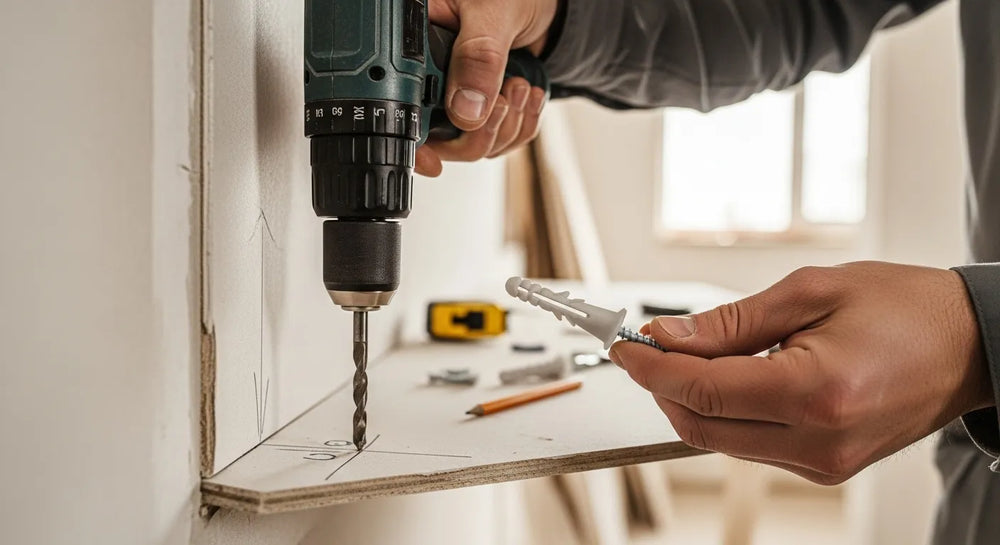
Mastering Pre Drilling Screw Holes in Wood
Table of Contents
- The Indispensable Role of Pre-Drilling in Woodworking and Industrial Applications
- Understanding Wood Types and Their Impact on Pre-Drilling
- Selecting the Right Tools and Fasteners
- The Art and Science of Pilot Hole Sizing
- The Pre-Drilling Process: Step-by-Step
- Advanced Considerations and Best Practices for Industrial Applications
- Conclusion
- Frequently Asked Questions (FAQ)
The integrity of any wooden assembly, from delicate cabinetry to heavy-duty industrial framing, hinges on the quality of its connections. Yet, a common oversight, even among seasoned professionals, is the critical step of pre-drilling screw holes. Skipping this seemingly simple task can lead to frustrating and costly consequences: split wood, stripped screws, compromised structural integrity, and ultimately, project delays and increased material waste. For procurement managers, MRO buyers, and design engineers, such failures are not merely inconveniences; they directly impact efficiency, safety, and the overall Total Cost of Ownership (TCO) of components and assemblies.
This guide will delve into the essential techniques, tools, and considerations for pre-drilling screw holes in wood effectively. We'll explore how precise pre-drilling not only prevents damage and ensures secure fastenings but also contributes to the longevity and reliability of your projects. By understanding the nuances of wood types, screw specifications, and drilling methods, you can elevate your craftsmanship and streamline your procurement processes, ensuring every connection is as robust as the American-made components we champion at Maden.co. Our mission is to democratize access to American manufacturing, connecting industrial buyers with over 2.5 million U.S.-made products from our network of 800+ verified manufacturers. We believe that precision and quality, starting with fundamental techniques like pre-drilling, are paramount to driving the manufacturing revival.
The Indispensable Role of Pre-Drilling in Woodworking and Industrial Applications
Pre-drilling is the practice of creating a pilot hole in wood before driving a screw. This fundamental step is often overlooked in the interest of saving time, but its importance cannot be overstated, especially when working with sensitive materials, critical assemblies, or high-volume production. In industrial settings, where fasteners might be subjected to significant stress, vibration, or environmental factors, the integrity of each screw connection is vital for operational safety and equipment longevity.
Why Pre-Drilling is Non-Negotiable
- Prevents Wood Splitting: This is arguably the most significant benefit. When a screw is driven into wood without a pilot hole, the wedge action of its threads can exert immense outward pressure, causing the wood fibers to separate and split, particularly near edges or in hardwoods. This risk is amplified in joinery where material thickness is minimal.
- Ensures Secure Fastening: A properly sized pilot hole allows the screw threads to grip the wood fibers firmly without over-tightening, which can strip the threads in the wood. It guides the screw along a precise path, leading to a straighter, more secure connection.
- Reduces Screw Breakage and Stripping: Driving a screw into un-drilled hard wood requires significant torque, which can snap the screw head or strip the drive recess. Pre-drilling significantly reduces this resistance, extending the life of your fasteners and tools. For a robust, reliable brass wood screw, consider our round slot drive brass wood screw, designed for durability and ease of installation when properly pre-drilled.
- Aids in Alignment and Aesthetics: Pilot holes act as guides, ensuring screws are driven straight and true. This is critical for achieving flush surfaces, precise alignment in joinery, and a clean, professional finish, which is important for both functionality and visual quality in finished products.
- Facilitates Disassembly and Reassembly: For components that may need to be disassembled for maintenance or repair, pre-drilled holes prevent repeated damage to the wood, preserving the integrity of the screw holes over time.
For a procurement manager under pressure to ensure the long-term reliability of a facility's wooden fixtures, a design engineer needing precise assembly for a new product, or an MRO buyer facing an unexpected equipment breakdown, the ability to quickly find and correctly install a verified, U.S.-made part is a game-changer. Our commitment to Industrial Excellence and Supply Chain Transparency means you can trust the quality and specifications of components sourced through our platform, reinforcing our tagline: "America's manufacturing revival is here." You can learn more about our mission to champion American manufacturing and our values here: About Us.
Understanding Wood Types and Their Impact on Pre-Drilling
The type of wood you're working with is the primary determinant of your pre-drilling strategy. Woods vary significantly in density, grain structure, and hardness, all of which influence the size of the pilot hole required.
Softwoods
Softwoods, such as pine, cedar, spruce, and fir, are generally easier to work with due to their lower density. However, they are also more prone to splitting if pilot holes are too small or absent.
- Characteristics: Softer, less dense, often faster-growing, generally lighter in color.
-
Pre-drilling Considerations:
- Tendency to Split: High, especially close to edges or ends.
- Pilot Hole Size: Generally, a pilot hole slightly smaller than the screw's root diameter (the solid shaft, not including threads) is sufficient. For instance, if you're using a common flat slot drive brass wood screw in pine, a precise pilot hole will ensure a clean installation. For reliable performance, explore our flat slot drive brass wood screw.
- Thread Engagement: Softwoods allow for good thread engagement even with slightly larger pilot holes due to their pliability, but too large a hole will compromise holding power.
Hardwoods
Hardwoods, including oak, maple, cherry, walnut, and ash, are denser and more durable than softwoods. While less prone to dramatic splitting, they are notoriously difficult to drive screws into without proper pre-drilling, often leading to stripped screw heads or broken fasteners.
- Characteristics: Denser, harder, often slower-growing, diverse range of colors and grain patterns.
-
Pre-drilling Considerations:
- Tendency for Difficulty: Very high resistance to screw penetration. High risk of stripping screw heads or breaking screws.
- Pilot Hole Size: Absolutely essential. The pilot hole in hardwoods should be closer to the screw's root diameter to reduce resistance significantly, allowing the threads to cut into the wood rather than force their way through.
- Countersinking/Counterboring: Often required to allow the screw head to sit flush or below the surface without marring the wood.
Engineered Wood Products
Plywood, MDF (Medium Density Fiberboard), particle board, and OSB (Oriented Strand Board) present their own challenges.
- Plywood: Layers of veneer glued together. Can split along grain lines of individual layers. Pre-drilling is recommended, especially for smaller screws or close to edges.
- MDF/Particle Board: Composed of fine wood fibers or chips bonded with resin. These materials have no grain, but they are very dense and prone to crumbling or stripping if pilot holes are too large or screws are overtightened. Pre-drilling is essential to create a clean path and prevent material degradation around the screw.
For specialized applications requiring corrosion resistance in various wood types, consider our oval slot drive silicon bronze wood screw, which offers excellent durability for demanding environments.
Selecting the Right Tools and Fasteners
The success of your pre-drilling efforts relies heavily on choosing the correct tools and understanding your fasteners.
Drill Bits
The right drill bit is paramount. Twist bits (standard drill bits) are common, but specialized brad-point bits are often superior for wood as they create cleaner holes and prevent "walking" on the wood surface.
- Twist Bits: Standard high-speed steel (HSS) twist bits are widely available and suitable for most general woodworking.
- Brad-Point Bits: Feature a sharp, centered point that precisely locates the hole and spurs on the shoulders that cleanly cut the wood fibers, resulting in a cleaner, more accurate hole with less tear-out. These are ideal for exposed surfaces where aesthetics matter.
- Countersink Bits: Essential for creating a tapered recess for flat-head screws so they sit flush with or below the wood surface. Some countersink bits are combined with a pilot bit, allowing you to drill the pilot hole and countersink in one step, saving time and ensuring perfect alignment.
- Counterbore Bits: Similar to countersink bits, but they create a flat-bottomed recess that allows the entire screw head (and sometimes a washer) to sit below the surface, often to be plugged later for a seamless finish.
Screws and Fasteners
Understanding the anatomy of your screw is vital for selecting the correct pilot hole size.
- Shank (Root) Diameter: This is the solid core of the screw, excluding the threads. The pilot hole for the screw body should be slightly smaller than this diameter in softwoods and roughly equal to it in hardwoods.
- Thread Diameter: This is the measurement across the outside of the threads. The pilot hole should never be larger than this, as it would prevent the threads from gripping the wood.
- Screw Length: The pilot hole should be drilled to a depth slightly less than the screw's penetration into the receiving piece of wood, typically 3/4 to 7/8 of the screw's length. This allows the screw's tip to bite into fresh wood and maximize holding power.
Maden.co connects you with a vast array of high-quality U.S.-manufactured fasteners, ensuring compliance with critical industry standards and providing the robust components your projects demand. We uphold values of American Manufacturing Pride and Customer Empowerment, making it easier for you to source the exact parts you need. Our network of verified U.S. manufacturers provides components that are designed for industrial excellence and supply chain transparency.
The Art and Science of Pilot Hole Sizing
Determining the precise pilot hole size is the "science" behind pre-drilling, and it's where many go wrong. A hole that is too small risks splitting the wood and breaking the screw; a hole that is too large reduces holding power.
General Guidelines for Pilot Hole Sizing
A widely accepted method is to use two drill bits:
- Shank Hole (Clearance Hole): For the piece of wood the screw passes through (the top piece in a joint), drill a hole the same diameter as the screw's unthreaded shank. This allows the screw to pull the two pieces tightly together without the threads binding prematurely. This is also called a "clearance hole."
- Pilot Hole (Thread Hole): For the piece of wood the screw threads into (the bottom piece), drill a hole that matches the root diameter of the screw.
Simplified Approach (One-Bit Method for Driving Screws into a Single Piece or When Clearance isn't Critical):
- Softwoods: Use a drill bit that is approximately 1/2 to 2/3 the diameter of the screw's threads (or slightly smaller than the root diameter).
- Hardwoods: Use a drill bit that is approximately 7/8 to the full diameter of the screw's root. For extremely dense hardwoods, a pilot hole precisely matching the root diameter is often necessary.
Practical Tips for Sizing
- Hold the Screw Against the Bit: A quick visual check is to hold the screw alongside several drill bits. The correct pilot bit for the thread-gripping section should appear slightly narrower than the screw's threads but roughly the same diameter as the screw's solid core.
-
Scrap Wood Test: Always test your chosen drill bit on a scrap piece of the same type of wood you're using. Drive a screw into the pre-drilled hole.
- If the wood splits: The pilot hole is too small. Try the next larger bit.
- If the screw is hard to drive or breaks: The pilot hole is too small. Try the next larger bit.
- If the screw strips out easily or feels loose: The pilot hole is too large. Try the next smaller bit.
- Specialized Drill Bit Sets: Many manufacturers offer specialized screw pilot bit sets that include bits for specific screw gauges (e.g., #6, #8, #10 screws), often with integrated countersinks. These can simplify the process and ensure accuracy.
The Pre-Drilling Process: Step-by-Step
Once you understand the 'why' and the 'what,' executing the pre-drilling process effectively is straightforward but requires attention to detail.
Step 1: Mark Your Locations
Accuracy begins with precise marking. Use a pencil to clearly mark where each screw will go. For critical applications, a center punch can create a small indentation that helps prevent the drill bit from "walking" at the start of the hole.
Step 2: Select the Correct Drill Bit
Based on the screw type, wood type, and whether you need a clearance hole or pilot hole (or both), choose the appropriate drill bit(s). Remember to conduct a scrap wood test if unsure.
Step 3: Set Your Drill Depth
This is crucial to avoid drilling through the other side of your material or creating a hole that's too shallow.
- Tape Method: Wrap a piece of masking tape around your drill bit at the desired depth. Stop drilling when the tape touches the wood surface.
- Drill Stop Collar: For more precision and repetitive tasks, a drill stop collar (a small ring that clamps onto the drill bit) is highly effective.
- Integrated Drill Bits: Many countersink bits are designed with fixed pilot bit lengths that automatically set the depth.
Step 4: Secure Your Workpiece
Always secure your wood with clamps. This prevents movement during drilling, ensuring accuracy and, more importantly, safety. Never hold small pieces of wood by hand while drilling.
Step 5: Drill the Pilot Hole
- Start Slow: Begin drilling at a slow speed to prevent the bit from walking and to establish a clean entry point.
- Increase Speed: Once the bit has engaged, increase the drill speed (but avoid excessive speed which can burn the wood) and apply steady, even pressure.
- Clear Chips: Periodically withdraw the bit from the hole to clear wood chips (flutes). This prevents clogging, reduces heat buildup, and allows for cleaner cutting.
- Straight and Perpendicular: Maintain a steady hand to keep the drill bit perpendicular to the wood surface. A drill press offers the highest level of accuracy for this.
- Countersink/Counterbore (if needed): After drilling the pilot hole, use a countersink bit to create the recess for flush screw heads.
Step 6: Drive the Screw
With the pilot hole perfectly prepared, drive your screw.
- Hand Driver vs. Power Driver: For precision and control, especially with delicate woods or small screws, a hand screwdriver is often best. For efficiency, a power drill/driver with a clutch setting is invaluable.
- Clutch Settings: If using a power driver, set the clutch to an appropriate torque. Start with a lower setting and increase as needed to avoid over-driving and stripping the screw or damaging the wood.
- Smooth and Steady: Drive the screw smoothly until it is snug. Avoid over-tightening, which can strip the wood fibers, especially in softwoods or engineered materials.
Advanced Considerations and Best Practices for Industrial Applications
For businesses relying on robust, long-lasting assemblies, pre-drilling extends beyond basic technique to encompass materials science, compliance, and supply chain efficiency.
Material Compatibility
Consider the interaction between the screw material and the wood. For outdoor applications or environments with high humidity or corrosive elements, selecting appropriate materials is vital. Silicon bronze screws, for instance, offer excellent corrosion resistance and are often preferred for marine or outdoor architectural applications. Our oval slot drive silicon bronze wood screw is an excellent example of a high-performance fastener designed for such challenging conditions.
Torque Management
In industrial assembly, consistent torque application is critical. Over-tightening can lead to wood fatigue and fastener failure over time, while under-tightening compromises structural integrity. Using torque-controlled drivers is a standard practice to ensure optimal fastener tension.
Automation and Production Efficiency
For high-volume production, pre-drilling is often integrated into automated or semi-automated processes. Precision jigs, templates, and specialized multi-spindle drills ensure consistent hole placement and depth, significantly reducing assembly time and error rates. The ability to source consistent, high-quality, U.S.-made fasteners in bulk is crucial for maintaining these efficiencies.
Total Cost of Ownership (TCO)
While the immediate cost of a screw might seem low, a fastener failure due to improper installation (or the absence of pre-drilling) can lead to expensive repairs, warranty claims, equipment downtime, and even safety hazards. Investing time in proper pre-drilling techniques and sourcing high-quality fasteners from verified U.S. manufacturers like those on Maden.co contributes significantly to a lower TCO by improving durability, reducing maintenance, and ensuring long-term reliability.
At Maden.co, our Digital Innovation and Supply Chain Transparency are designed to reduce procurement friction and empower our customers. We provide detailed specifications and access to a vast catalog of American-made components, helping procurement managers make informed decisions that positively impact their TCO. Our platform, Maden.co, is your gateway to a streamlined sourcing experience.
Partnering with Maden.co for Your Fastener Needs
Finding the right fasteners, especially for specialized applications or in bulk, can be a time-consuming challenge. At Maden.co, we simplify this process by offering a comprehensive marketplace for U.S.-manufactured products. Whether you need common brass wood screws like our round slot drive brass wood screw and flat slot drive brass wood screw, or more specialized corrosion-resistant options, our platform provides unparalleled access.
We champion Industrial Excellence by connecting you with over 800 verified American manufacturers. Our platform ensures that you receive detailed product information and certifications, allowing you to source with confidence. For businesses looking to manage cash flow effectively and make larger-volume purchases, our Instant Financing option is a key differentiator. You can apply for Instant Financing at checkout to streamline your capital-intensive projects, ensuring that you never have to compromise on quality or project timelines due to budgetary constraints.
Are you a qualified U.S. manufacturer producing high-quality components? Join our growing network and become a part of the American manufacturing revival. Register as a vendor and join the American manufacturing revival.
Conclusion
Pre-drilling screw holes in wood is far more than a simple preliminary step; it is a critical process that underpins the quality, durability, and safety of any wooden assembly. From preventing unsightly splits and ensuring secure fastenings to extending the lifespan of your materials and fasteners, the benefits are clear and far-reaching, particularly in demanding industrial and commercial environments. By understanding the intricacies of wood types, fastener specifications, and the correct application of drilling techniques, professionals can significantly enhance their project outcomes and contribute to greater operational efficiency.
For procurement managers, MRO buyers, and design engineers, embracing these best practices also extends to strategically sourcing high-quality, reliable American-made fasteners. At Maden.co, we are committed to providing an unparalleled platform where you can easily find and acquire the precise components needed for your most critical applications. Our dedication to American Manufacturing Pride, Digital Innovation, and Supply Chain Transparency means we are more than just a marketplace; we are your strategic partner in building a more resilient and efficient procurement process. We invite you to explore our extensive catalog of over 2.5 million American-made products. If you have specific sourcing questions or require assistance, our team is ready to help; please don't hesitate to contact us.
Empower your projects with the precision and reliability that only U.S.-manufactured components can offer. Explore our comprehensive selection of wood screws and other industrial supplies today, and remember to leverage our convenient Instant Financing option at checkout for your capital-intensive projects. The future of American manufacturing is here, and it's built on quality connections.
Frequently Asked Questions (FAQ)
Q1: Is pre-drilling always necessary, even for softwoods?
A1: While softwoods are less prone to breaking screws, they are still highly susceptible to splitting, especially near edges or when using larger screws. Pre-drilling is always recommended for optimal results, wood integrity, and the longest lasting connections, regardless of wood type. Skipping it is a gamble that can lead to costly material waste and re-work.
Q2: How do I know the exact drill bit size to use if I don't have a specialized chart?
A2: A practical approach is to perform a test on a piece of scrap wood of the same type. For the pilot hole (where threads grip), select a drill bit that is roughly the same diameter as the screw's solid core (shank), just below the threads. For a clearance hole (where the screw passes through), choose a bit that matches the screw's full unthreaded shank diameter. Always test to ensure the screw drives smoothly without excessive force or stripping.
Q3: What happens if my pilot hole is too large or too small?
A3: If the pilot hole is too small, you risk splitting the wood, breaking the screw head, or stripping the screw drive. The screw will be extremely difficult to drive. If the pilot hole is too large, the screw threads won't have enough wood to grip, leading to a loose connection, reduced holding power, and potential stripping of the wood itself.
Q4: Can I use the same pilot hole size for both hardwoods and softwoods of the same screw?
A4: No, it's generally not advisable. Hardwoods require a pilot hole that is closer to the screw's root diameter to minimize resistance and prevent screw breakage or stripping. Softwoods, being less dense, can accommodate a slightly smaller pilot hole, allowing for maximum thread engagement without splitting the wood. Always adjust your drill bit size based on the wood's density.


