
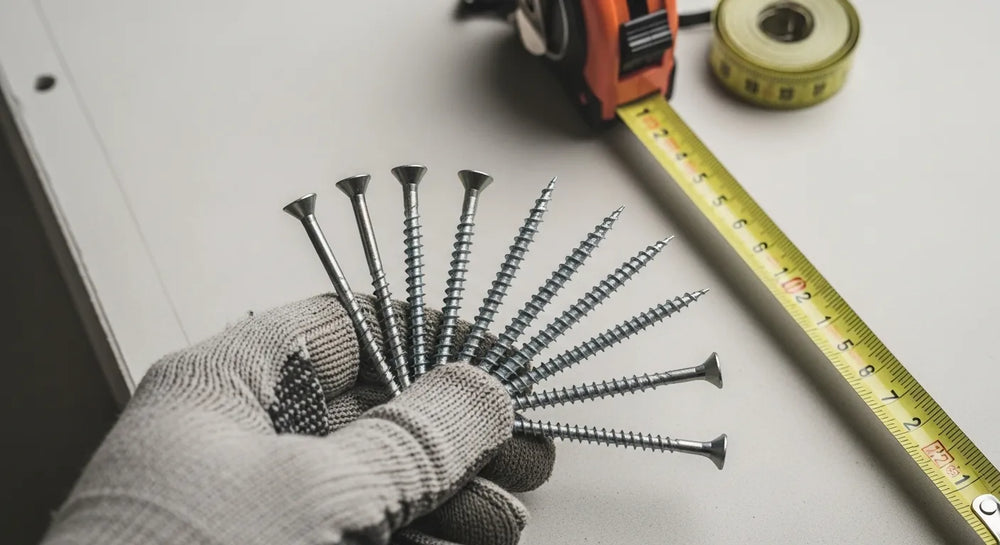
Optimal Drill Bit for 1/2 Concrete Anchors
Table of Contents
- Introduction
- Understanding Concrete Anchors: Types and Applications
- The Crucial Role of Drill Bit Sizing for 1/2-inch Anchors
- Drill Bit Types for Concrete: Beyond Size
- Drilling Best Practices for Concrete Anchoring
- Common Mistakes and Troubleshooting
- The Strategic Value of Sourcing U.S.-Made Components
- Maden.co: Your Partner in Precision Procurement
- Beyond the Drill Bit: Comprehensive Project Planning
- Conclusion
- Frequently Asked Questions (FAQ)
Introduction
In the demanding world of industrial construction, maintenance, repair, and operations (MRO), precision is not merely a preference—it is a critical requirement. A single misstep, such as using the incorrect drill bit for a crucial fastening, can cascade into costly project delays, compromised structural integrity, and significant safety risks. For procurement managers, MRO buyers, and design engineers, the selection of every component, down to the smallest drill bit, carries immense weight. The ability to precisely answer questions like "what size bit for 1/2 concrete anchor" is fundamental to ensuring the longevity and reliability of any installation.
This comprehensive guide delves into the specifics of selecting the correct drill bit for 1/2-inch concrete anchors, exploring the various types of anchors, the nuances of drilling techniques, and the profound impact of using high-quality, U.S.-made tooling and fasteners. We will dissect the technical requirements, offer practical best practices, and highlight how strategic sourcing through platforms like Maden.co not only simplifies procurement but also enhances overall project efficiency and resilience. Our aim is to equip you with the knowledge and resources to make informed decisions, ensuring every concrete anchor installation is robust, compliant, and built to last.
Understanding Concrete Anchors: Types and Applications
Before delving into the specifics of drill bit sizing, it's essential to understand the landscape of concrete anchors themselves. A 1/2-inch concrete anchor refers to its nominal diameter, but the functionality and installation requirements vary significantly based on the anchor's design and intended application. Each type demands a specific approach, directly impacting the "what size bit for 1/2 concrete anchor" question.
Common 1/2-inch Concrete Anchor Types
-
Wedge Anchors: These are among the most common and versatile mechanical expansion anchors. They work by expanding a clip against the concrete hole walls as the nut is tightened. They are suitable for heavy-duty applications in solid concrete and require a precisely sized hole for optimal performance. When considering what size bit for 1/2 concrete anchor for a wedge type, the answer is consistently a 1/2-inch nominal diameter drill bit.
-
Drop-In Anchors: Often used for overhead applications or when a flush-mounted internal thread is required, drop-in anchors are set into a pre-drilled hole using a setting tool that expands the anchor's base. For these, the hole depth and diameter are paramount. While a 1/2-inch drop-in anchor might sound like it needs a 1/2-inch bit, many internal thread drop-ins, like the common 3/8-inch internal thread varieties, might require a 1/2-inch outer diameter hole. For instance, the BN Products 3/8-inch Inside Thread Sanko Drop-in Concrete Anchor might specify a different drill bit for its external diameter, even though it accepts a 3/8-inch bolt. Always verify the manufacturer's exact specifications for the anchor body diameter.
-
Sleeve Anchors: Designed for use in concrete, brick, or block, sleeve anchors offer a broad range of applications. As the nut is tightened, the anchor's cone pulls up into a sleeve, expanding it against the hole walls. Like wedge anchors, a 1/2-inch sleeve anchor generally requires a 1/2-inch drill bit. They are versatile, often used for medium to heavy loads.
-
Strike Anchors: These anchors are installed by striking them with a hammer, which drives a pin into a sleeve, causing expansion. They are quick to install and suitable for lighter to medium-duty applications. A 1/2-inch strike anchor will, in most cases, also necessitate a 1/2-inch drill bit.
-
Adhesive Anchors (Epoxy Anchors): Unlike mechanical anchors, these rely on a chemical bond. A hole is drilled, thoroughly cleaned, and then filled with an epoxy or resin, into which a threaded rod or rebar is inserted. The drill bit size for adhesive anchors is crucial for achieving the specified bond strength, often requiring a slightly larger hole than the rod diameter to allow for sufficient adhesive volume. For a 1/2-inch threaded rod, a 5/8-inch or 9/16-inch drill bit might be specified, depending on the adhesive and engineering requirements.
The Importance of Matching Anchor Type to Application
Selecting the correct anchor type is as critical as choosing the right drill bit. Factors such as the load capacity, the type of substrate (solid concrete, cracked concrete, block, brick), environmental conditions (temperature, moisture, corrosive elements), and specific engineering requirements all play a role. Using the wrong anchor can lead to structural failure, project non-compliance, and significant liability.
At Maden.co, we understand that finding the right anchor for a specific application can be a complex task. Our platform is designed to simplify this process, connecting industrial buyers with a vast array of high-quality, U.S.-made anchors from our network of 800+ verified manufacturers. Whether you're seeking a standard 1/2-inch wedge anchor or a specialized adhesive system, our extensive catalog ensures you can quickly locate components that meet stringent compliance standards and project specifications. Our entire business model is built on this principle; you can learn more about our mission to champion American manufacturing here: About Us.
The Crucial Role of Drill Bit Sizing for 1/2-inch Anchors
Now, we arrive at the core question: what size bit for 1/2 concrete anchor? The answer, while seemingly straightforward for mechanical anchors, carries significant nuance that dictates the success or failure of an installation.
The General Rule for Mechanical Expansion Anchors
For the vast majority of mechanical expansion anchors with a 1/2-inch nominal diameter (e.g., wedge anchors, sleeve anchors, strike anchors), the required drill bit size is 1/2 inch.
Why is this precise sizing so critical?
- Optimal Expansion: Mechanical anchors rely on friction and expansion within the drilled hole to achieve their load-bearing capacity. If the hole is too small, the anchor may not fully expand or could bind prematurely, leading to improper seating and reduced strength. If the hole is too large, the anchor will not be able to expand sufficiently to grip the concrete, resulting in a loose connection and drastically reduced pull-out strength.
- Shear Strength: A snug fit ensures that shear forces (forces parallel to the concrete surface) are effectively transferred to the concrete, preventing movement and maintaining structural integrity. An oversized hole can lead to "slop" or movement, compromising shear resistance.
- Installation Ease: The correct drill bit size allows for proper installation with the manufacturer's specified torque or setting force. Too tight, and the anchor or concrete can be damaged; too loose, and the anchor will fail.
Specific Scenarios and Manufacturer Specifications
While the 1/2-inch bit for 1/2-inch mechanical anchors is a reliable rule of thumb, there are critical exceptions and considerations:
- Drop-In Anchors (Internal Thread): As mentioned earlier, a 1/2-inch internal thread drop-in anchor will accept a 1/2-inch bolt, but its external body diameter might be larger, requiring a larger drill bit (e.g., 5/8-inch or 3/4-inch). Always check the manufacturer's instructions for the specific anchor you are using. For example, if you're installing a component that utilizes a 1/2-inch bolt but requires a specialized anchor, you would consult the anchor's specific documentation.
- Adhesive Anchors: For adhesive anchors using a 1/2-inch threaded rod, the drill bit will almost always be larger than 1/2 inch. This is to create an annular space around the rod for the chemical adhesive to fill, ensuring a robust bond. Common sizes might be 5/8-inch or 9/16-inch, but this is entirely dependent on the adhesive system and the structural engineer's specifications. The goal is to maximize the surface area for the chemical bond while ensuring proper adhesive thickness.
- Proprietary Anchors: Some specialized or proprietary anchor systems may have unique drilling requirements. Always refer to the manufacturer's technical data sheet or installation instructions. This is where sourcing from verified manufacturers, as found on Maden.co, becomes invaluable, as access to accurate specifications is guaranteed.
The unwavering principle is to always consult the anchor manufacturer's recommended drill bit size. This information is typically provided on the anchor packaging, in the product's technical data sheet, or on the manufacturer's website. Deviating from these specifications voids warranties, compromises safety, and invites structural failure.
Drill Bit Types for Concrete: Beyond Size
Knowing "what size bit for 1/2 concrete anchor" is only half the battle. The type and quality of the drill bit are equally important for achieving a precise hole, ensuring efficient drilling, and extending tool life. Concrete is an abrasive material, and standard twist drills designed for wood or metal will quickly fail.
Essential Drill Bit Types for Concrete
- Carbide-Tipped Masonry Bits: These are the most common type for drilling into concrete, brick, and block. They feature a hardened carbide tip brazed onto a steel shank. The carbide provides the necessary hardness and abrasion resistance to chew through tough aggregates in concrete.
-
SDS-Plus and SDS-Max Bits: These are specifically designed for use with hammer drills and rotary hammers, respectively.
- SDS-Plus: Features a slotted shank that locks into the chuck of an SDS-Plus hammer drill. This allows the bit to move independently of the chuck, facilitating a hammering action that pulverizes concrete more effectively than a standard rotary drill. SDS-Plus bits are ideal for smaller to medium diameter holes (typically up to 1 inch). For drilling the precise 1/2-inch hole needed for many concrete anchors, an SDS-Plus bit is often the tool of choice.
- SDS-Max: A larger, more robust version of SDS-Plus, designed for heavier-duty rotary hammers and larger diameter holes (typically over 1 inch). While less common for a standard 1/2-inch anchor, SDS-Max bits are essential for larger structural anchoring or core drilling.
Hammer Drill vs. Rotary Hammer
Understanding the distinction between these tools is vital for effective concrete drilling:
- Hammer Drill: Combines rotary motion with a rapid hammering action. The hammering action is generated by two toothed clutches that engage and disengage, causing the chuck to "peck" at the material. Suitable for smaller holes (up to 1/2-inch or 5/8-inch) and lighter concrete work.
- Rotary Hammer: A more powerful tool that uses an electro-pneumatic piston mechanism to deliver significantly stronger and faster hammer blows. This makes rotary hammers far more efficient for drilling larger holes or many holes in dense concrete. They are typically used with SDS-Plus or SDS-Max bits. For repeated 1/2-inch anchor installations, a rotary hammer with an SDS-Plus bit will be far more productive and less fatiguing.
The Impact of Quality: U.S.-Made Drill Bits and Tooling
The quality of your drill bit directly impacts the accuracy of the hole, the speed of drilling, and the lifespan of the tool. Inferior bits can lead to:
- Inaccurate Hole Sizes: Worn or poorly manufactured bits can drift or drill holes that are slightly undersized or oversized, jeopardizing anchor performance.
- Premature Wear: Cheaper bits will dull quickly, requiring frequent replacement and increasing project costs.
- Inefficient Drilling: A dull bit requires more force, generates more heat, and takes longer to drill, leading to operator fatigue and lost productivity.
Sourcing high-quality, U.S.-made drill bits and related tooling is a strategic decision for any procurement manager or MRO buyer. American manufacturers adhere to rigorous quality control standards, ensuring consistent performance and durability. For critical applications, precision-engineered tools are non-negotiable. For instance, when installing specialized shear connectors for concrete anchors, dedicated tooling is required for optimal setting. Our platform offers solutions such as the 1-Headed Concrete Anchor Shear Connector Chuck and the comprehensive Concrete Anchor Shear Connector Chuck Set, ensuring you have the right, high-quality U.S.-made tools for every job. These products exemplify the industrial excellence we stand for.
Drilling Best Practices for Concrete Anchoring
Beyond selecting what size bit for 1/2 concrete anchor and choosing the right drill, proper drilling technique is paramount. Following established best practices ensures safety, efficiency, and the long-term reliability of your anchor installations.
1. Safety First (PPE)
Always begin with personal protective equipment (PPE):
- Safety Glasses: Essential to protect eyes from flying concrete dust and debris.
- Hearing Protection: Hammer drills and rotary hammers are loud. Hearing protection is critical for extended use.
- Gloves: Protect hands from abrasions and vibrations.
- Dust Mask/Respirator: Concrete dust contains crystalline silica, which can cause serious lung disease if inhaled. A proper respirator is vital, especially in enclosed spaces.
2. Drill Selection and Setup
- Match Tool to Task: For occasional 1/2-inch holes, a hammer drill might suffice. For multiple or production-level 1/2-inch holes, a rotary hammer with an SDS-Plus bit will be significantly more efficient.
- Cleanliness: Ensure your drill chuck and the bit shank are clean and free of debris to prevent slippage and wear.
- Depth Stop: Most drills come with an adjustable depth stop rod. Set this precisely to the required embedment depth of your 1/2-inch concrete anchor. This is crucial for achieving the anchor's specified load capacity.
3. Marking and Alignment
- Accurate Layout: Use precise measurements and marking tools to identify the exact drilling location.
- Pilot Hole (Optional, for accuracy): For extremely critical applications, a small pilot dimple can be made with a punch or a smaller bit to prevent the main bit from walking.
- Perpendicular Drilling: Ensure the drill is held perpendicular to the concrete surface. Angled holes will reduce the anchor's strength and can cause installation problems.
4. Drilling Technique
- Initial Pressure: Apply firm, steady pressure to start the hole, preventing the bit from wandering.
- Consistent Pressure: Once the hole is started, maintain consistent, moderate pressure. Let the tool do the work; excessive force can overheat the bit, damage the drill, or compromise the hole quality.
- Clear Debris: Periodically pull the drill bit out of the hole while the drill is still spinning to clear dust and debris. This improves drilling efficiency and reduces heat buildup. For deeper holes, this is even more critical.
- Avoid Over-Drilling: Drill only to the specified depth. Going too deep offers no benefit and can weaken the concrete, especially if reinforcing steel is present below the target depth.
5. Hole Cleaning: A Critical Step
This is arguably the most overlooked yet vital step for all concrete anchors, especially mechanical expansion and adhesive types.
- Mechanical Anchors: Dust and debris left in the hole act as a cushion, preventing the anchor from fully expanding or seating properly. This drastically reduces pull-out strength. Use a wire brush (sized appropriately for the 1/2-inch hole) and compressed air (or a hand pump) to thoroughly clean the hole. Repeat until no dust exits the hole.
- Adhesive Anchors: For epoxy or resin anchors, hole cleaning is paramount. Any dust, moisture, or contamination will severely compromise the chemical bond. Follow the adhesive manufacturer's specific instructions, which often involve multiple passes with a wire brush, several blasts of compressed air, and sometimes even a vacuum.
6. Avoiding Rebar
Rebar (reinforcing steel) within concrete can be a significant hazard. Drilling into rebar can:
- Damage Drill Bits: Rapidly dull or break carbide tips.
- Damage the Drill: Overload the tool, potentially burning out the motor.
- Compromise Structural Integrity: Severing rebar can weaken the concrete structure.
- Create Electrical Hazard: If the rebar is energized or connected to an electrical system.
When drilling in areas where rebar is suspected, consider using a rebar locator or ground-penetrating radar (GPR) to identify its location before drilling. If rebar is encountered, stop drilling and relocate the anchor if possible, or consult an engineer.
By adhering to these best practices, procurement managers can ensure that the installation of their 1/2-inch concrete anchors meets the highest standards of safety, performance, and durability, ultimately contributing to the success and longevity of their projects.
Common Mistakes and Troubleshooting
Even with the correct answer to "what size bit for 1/2 concrete anchor" and the best intentions, mistakes can occur. Recognizing common errors and knowing how to troubleshoot them can save significant time, material, and potential safety risks.
1. Using the Wrong Drill Bit Size
- Too Small: The anchor will not fit into the hole, or it will be excessively difficult to drive, potentially damaging the anchor, the concrete, or the installation tool. This can lead to premature anchor failure or improper setting.
-
Too Large: This is perhaps the most critical error. The anchor will not achieve full expansion or proper grip, resulting in significantly reduced load capacity and pull-out strength. The anchor might feel loose even after tightening, indicating a critical failure.
- Troubleshooting: If the hole is slightly oversized, some installers might attempt to use chemical adhesive or a larger diameter anchor if allowed by engineering specifications. However, the best and safest solution is almost always to drill a new, correctly sized hole in a slightly different location, or consult an engineer for a structural repair solution.
2. Insufficient Hole Cleaning
- Problem: As discussed, dust and debris prevent proper anchor expansion or chemical bonding.
- Consequence: Reduced load capacity, anchor pull-out, or bond failure for adhesive anchors.
- Troubleshooting: Prevention is key. Ensure thorough cleaning with a brush and compressed air. If an anchor fails due to dust, it must be removed, the hole re-cleaned, or a new hole drilled. For adhesive anchors, improper cleaning is almost always irreversible for that specific hole.
3. Improper Anchor Installation Technique
-
Mechanical Anchors:
- Under-Torquing: Not tightening the nut to the manufacturer's specified torque. The anchor won't expand fully, leading to low load capacity.
- Over-Torquing: Applying excessive torque can strip the threads, break the anchor, or spall the concrete, causing damage that compromises the entire installation.
- Not fully setting (e.g., strike anchors): The expansion mechanism isn't fully engaged.
- Troubleshooting: Use a calibrated torque wrench for mechanical anchors. For strike anchors, ensure the setting tool is used correctly. If an anchor is damaged during installation, it must be replaced.
-
Adhesive Anchors:
- Improper mixing: If two-part epoxies aren't mixed correctly, they won't cure to full strength.
- Insufficient fill: Not enough adhesive in the hole.
- Incorrect insertion: Twisting the rod during insertion can create air pockets; simply push it in.
- Troubleshooting: Adhere strictly to the adhesive manufacturer's instructions for mixing, dispensing, and cure times. If an adhesive anchor fails, the rod must be removed, the hole re-drilled and re-cleaned, or a new location chosen.
4. Drilling Too Shallow or Too Deep
- Too Shallow: The anchor does not achieve its full embedment depth, severely limiting its pull-out strength and shear capacity. This is a common issue when the drill's depth stop isn't set correctly.
- Too Deep: While less critical than too shallow, drilling excessively deep wastes time and bit life. More importantly, it can increase the risk of hitting unforeseen rebar or utilities beneath the surface.
- Troubleshooting: Always verify and set the drill's depth stop accurately based on the anchor's specifications.
5. Ignoring Concrete Condition
- Cracked Concrete: Many standard mechanical expansion anchors are not suitable for cracked concrete, as cracks can prevent proper expansion and load transfer. Specialized anchors designed for cracked concrete (e.g., undercut anchors, certain adhesive systems) must be used.
- Spalled or Deteriorated Concrete: Drilling into weakened or spalled concrete will result in a poor-quality hole and an unreliable anchor installation.
- Troubleshooting: Assess the concrete condition. If the concrete is compromised, remedial measures (e.g., concrete repair, using specialized anchors, or finding an alternative fastening point) are necessary.
By understanding these common pitfalls, procurement professionals can better evaluate project plans, specify the right materials, and ensure their teams are equipped with the knowledge to execute flawless installations. This proactive approach significantly reduces rework, costly delays, and the potential for structural failures.
The Strategic Value of Sourcing U.S.-Made Components
Beyond the technicalities of "what size bit for 1/2 concrete anchor," the origin and quality of your materials—from the anchors themselves to the drill bits and installation tooling—play a pivotal role in overall project success, supply chain resilience, and long-term cost efficiency. At Maden.co, we champion the strategic value of sourcing U.S.-made components.
1. Enhanced Supply Chain Resilience
In an increasingly unpredictable global market, reliance on distant supply chains introduces significant risks: extended lead times, geopolitical instability, tariffs, and logistical bottlenecks. Sourcing American-made products drastically mitigates these challenges.
- Reduced Lead Times: Shorter shipping distances and domestic manufacturing mean faster delivery, allowing for leaner inventory management and quicker response to project demands or MRO emergencies.
- Greater Visibility and Control: Direct communication with U.S. manufacturers fosters transparency and allows for quicker resolution of issues, from quality concerns to delivery schedules.
- Reduced Risk: Less exposure to international shipping disruptions, customs delays, and fluctuating foreign exchange rates.
2. Uncompromising Quality and Compliance
American manufacturing is synonymous with high standards. U.S. manufacturers operate under stringent regulations and quality control protocols, ensuring that products meet or exceed industry benchmarks.
- Adherence to Standards: Components sourced from Maden.co adhere to critical industry standards such as DIN (Deutsches Institut für Normung) and NPT (National Pipe Taper), ensuring interoperability and performance. This precision in manufacturing is vital for mission-critical applications where failure is not an option.
- Material Certifications: Access to comprehensive material certifications and traceability for U.S.-made products provides assurance of quality and compliance, essential for regulatory requirements and project specifications.
- Innovation: American manufacturers often lead in material science and engineering innovation, providing access to cutting-edge solutions that enhance performance and durability.
3. Economic Impact and National Pride
Choosing U.S.-made components is an investment in the American economy. It supports domestic jobs, fosters innovation, and strengthens the nation's industrial base.
- Job Creation: Every purchase of American-made goods supports U.S. manufacturing jobs across the entire supply chain.
- Economic Growth: Keeps capital circulating within the domestic economy, contributing to overall national prosperity and technological advancement.
- American Manufacturing Pride: At Maden.co, we embody the values of American Manufacturing Pride. We believe in the ingenuity and dedication of U.S. workers and the superior quality of their products. Our vision is to become the definitive platform that proves American-made components are as accessible and convenient as any global alternative, driving the manufacturing revival with our tagline: "America's manufacturing revival is here."
4. Improved Total Cost of Ownership (TCO)
While the upfront cost of U.S.-made products might sometimes be perceived as higher, a holistic view reveals significant long-term savings through a reduced Total Cost of Ownership (TCO).
- Reduced Failures and Downtime: High-quality components mean fewer defects, less premature wear, and fewer costly equipment breakdowns. This translates directly into less downtime and higher operational efficiency.
- Lower Rework Costs: Precision-manufactured parts fit correctly the first time, reducing the need for modifications, replacements, and associated labor costs.
- Increased Longevity: Durable, U.S.-made products have a longer service life, extending maintenance cycles and reducing the frequency of replacement purchases.
- Reduced Procurement Friction: A streamlined sourcing process, coupled with reliable products, lowers the administrative burden and associated costs of procurement.
For a procurement manager under pressure to source a specific DIN 931 compliant hex cap screw, a design engineer needing specific material certifications for a new prototype, or an MRO buyer facing an unexpected equipment breakdown, the ability to quickly find and finance a verified, U.S.-made part is a game-changer. It’s not just about buying a product; it’s about investing in reliability, compliance, and strategic advantage. Maden.co offers a direct pathway to these benefits, helping businesses build more resilient and efficient procurement processes.
Maden.co: Your Partner in Precision Procurement
In the complex world of industrial procurement, finding the right parts, tools, and partners is paramount. Maden.co is meticulously engineered to be America's premier B2B marketplace for U.S.-manufactured products, empowering procurement managers, MRO buyers, and design engineers with unparalleled access and efficiency. We are dedicated to our core values of Digital Innovation, Supply Chain Transparency, Industrial Excellence, and Customer Empowerment.
Democratizing Access to American Manufacturing
Our mission at Maden.co is to democratize access to American manufacturing. We connect industrial buyers with over 2.5 million American-made products from our extensive network of 800+ verified U.S. manufacturers. This means whether you're searching for "what size bit for 1/2 concrete anchor," a specific material alloy, or a custom-fabricated component, you can rely on our platform to provide a solution rooted in American quality.
We meticulously vet all our manufacturing partners to ensure they meet stringent quality standards and manufacturing capabilities. This commitment to verification provides you with confidence that every product you source through Maden.co is genuinely American-made and meets the performance expectations of industrial applications.
Seamless Sourcing and Reduced Procurement Friction
Traditional industrial sourcing can be a fragmented and time-consuming process, involving numerous phone calls, emails, and cross-referencing of catalogs. Maden.co transforms this experience through digital innovation:
- Vast, Searchable Catalog: Our intuitive platform allows you to quickly search, filter, and compare millions of products. Need a specific type of anchor or the ideal drill bit for a 1/2-inch concrete anchor? Our powerful search capabilities get you to the right product swiftly.
- Detailed Product Information: Each product listing provides comprehensive specifications, material data, and compliance information, empowering you to make informed decisions without extensive manual research.
- Verified Manufacturers: Every product comes from a verified U.S. manufacturer, eliminating uncertainty about origin and quality.
- Streamlined Quoting and Purchasing: Our platform simplifies the entire procurement workflow, from requesting quotes to placing orders, reducing administrative overhead and accelerating lead times.
Strategic Capital Management with Instant Financing
A key differentiator on our platform is the "Instant Financing" option, available during the checkout process. This isn't just a payment method; it's a strategic tool designed to help procurement managers and business owners manage cash flow effectively and make larger-volume purchases without immediate capital strain.
In today's competitive environment, preserving working capital is crucial. Instant Financing allows businesses to acquire necessary tools, components, and machinery without tying up significant upfront capital. This flexibility means you can:
- Undertake Larger Projects: Secure the necessary materials for capital-intensive projects even when immediate funds are allocated elsewhere.
- Maintain Optimal Inventory: Procure parts in bulk to capitalize on volume discounts or ensure adequate stock levels without impacting cash flow.
- Respond Quickly to Needs: Address urgent MRO requirements or unexpected project demands without financial delays.
This feature is seamlessly integrated into the checkout experience, providing a straightforward application process that delivers rapid decisions. You can apply for Instant Financing at checkout to streamline your capital-intensive projects. This commitment to customer empowerment ensures that financial flexibility is just as accessible as quality U.S.-made products.
Whether you are looking for the precise tooling to accompany your 1/2-inch concrete anchors, such as the 1-Headed Concrete Anchor Shear Connector Chuck, or an entire Concrete Anchor Shear Connector Chuck Set, Maden.co offers a seamless pathway to sourcing excellence. Our platform is a testament to our commitment to industrial excellence and our belief in the power of American manufacturing. If you have specific sourcing questions or need assistance navigating our extensive catalog, our team is ready to help.
Beyond the Drill Bit: Comprehensive Project Planning
While understanding "what size bit for 1/2 concrete anchor" is a fundamental starting point, successful concrete anchoring projects demand a holistic approach that extends far beyond the drill bit. Strategic planning, adherence to engineering principles, and a deep understanding of environmental factors are all critical for long-term project success.
1. Load Calculations and Engineering Specifications
Every anchoring project must begin with thorough load calculations. Engineers determine the tensile (pull-out) and shear (sideways) forces that anchors will experience, as well as bending moments. This dictates:
- Anchor Type: Whether a mechanical expansion, adhesive, or undercut anchor is required.
- Anchor Size and Embedment Depth: The diameter and depth needed for the 1/2-inch anchor to safely carry the applied loads.
- Number of Anchors: How many anchors are required to distribute the load effectively.
- Edge Distance and Spacing: Minimum distances from the concrete edge and between anchors to prevent concrete breakout failure.
It’s the responsibility of design engineers to specify these parameters, and procurement managers must ensure that the sourced 1/2-inch concrete anchors and their corresponding drill bits meet these precise engineering specifications. Deviating from these can lead to catastrophic failure.
2. Environmental Factors
The environment in which anchors are installed significantly influences their long-term performance and material selection.
- Corrosion: In corrosive environments (e.g., coastal areas, chemical plants, wastewater treatment facilities), standard carbon steel anchors will rapidly corrode. Stainless steel (e.g., 304 or 316) or galvanized anchors are essential. Even the choice of drill bit material can influence the introduction of contaminants that accelerate corrosion.
- Temperature: Extreme temperatures can affect the performance of some mechanical anchors and, critically, the curing and long-term strength of adhesive anchors. High temperatures can accelerate curing, while low temperatures can inhibit it.
- Moisture: Wet environments or conditions where moisture can penetrate anchor holes can lead to corrosion or compromise the effectiveness of adhesive systems. Proper sealing and appropriate anchor types are necessary.
3. Inspection and Testing Protocols
Post-installation inspection and, for critical applications, testing are crucial to verify anchor performance.
- Visual Inspection: Confirm proper anchor seating, specified torque values (for mechanical anchors), and complete adhesive fill (for chemical anchors).
- Proof Loading/Torque Testing: For critical applications, anchors may be subjected to proof loading (applying a fraction of the design load) or torque testing to confirm their embedment and load-bearing capacity. This is especially vital when using 1/2-inch concrete anchors in structural applications.
- Non-Destructive Testing: In some cases, non-destructive methods can assess anchor integrity without damaging the installation.
4. The Importance of a Holistic Approach
Ultimately, a reliable concrete anchoring system is not just about the anchor or the drill bit. It’s a synthesis of:
- Correct Anchor Selection: Matching the anchor type to the load and substrate.
- Precise Drill Bit Sizing: Answering "what size bit for 1/2 concrete anchor" correctly for the specific anchor.
- High-Quality Tools and Materials: Sourcing durable, U.S.-made drill bits, anchors, and installation equipment.
- Expert Installation: Adhering to best practices for drilling and setting.
- Rigorous Engineering: Accounting for loads, environment, and concrete conditions.
- Verification: Post-installation inspection and testing.
By adopting this comprehensive perspective, procurement managers and design engineers ensure that every project benefits from maximum safety, reliability, and long-term performance. Maden.co serves as a strategic partner in this endeavor, providing access to the high-quality, U.S.-made components and the transparency needed to build projects that stand the test of time. Our platform's commitment to Industrial Excellence is reflected in the quality of the products and the depth of information we provide.
Conclusion
The seemingly simple question, "what size bit for 1/2 concrete anchor," opens a gateway to a critical discussion about precision, quality, and the strategic importance of reliable industrial procurement. We've explored how the right drill bit, chosen specifically for the anchor type and application, is foundational to ensuring structural integrity, preventing costly failures, and maintaining safety on the job site. From the precise fit required for mechanical expansion anchors to the specific hole diameter needed for chemical bonding, accuracy is non-negotiable.
Beyond the immediate technical details, this guide has underscored the profound benefits of sourcing high-quality, U.S.-made components. By choosing American manufacturers, businesses enhance their supply chain resilience, guarantee adherence to stringent quality and compliance standards, and contribute to the vital revival of domestic manufacturing. This commitment to American ingenuity directly translates into a lower Total Cost of Ownership, reduced procurement friction, and projects built to last.
At Maden.co, we are proud to be at the forefront of this industrial resurgence. Our platform democratizes access to over 2.5 million American-made products from 800+ verified U.S. manufacturers, ensuring that whether you need the perfect drill bit, a specific 1/2-inch concrete anchor like the BN Products 3/8-inch Inside Thread Sanko Drop-in Concrete Anchor, or specialized tooling like the Concrete Anchor Shear Connector Chuck Set, you can find it with ease and confidence. We believe that America's manufacturing revival is here, and we're building the definitive platform to prove that U.S.-made components are not just alternatives, but superior choices.
Don't let procurement challenges impede your progress. Explore the vast catalog of American-made products on Maden.co today. Streamline your capital-intensive projects by leveraging our Instant Financing option, available at checkout, and empower your business with the quality, reliability, and efficiency it deserves. Are you a U.S. manufacturer looking to expand your reach and connect with thousands of industrial buyers? Register as a vendor and join the American manufacturing revival.
Frequently Asked Questions (FAQ)
Q1: What is the most common drill bit size for a 1/2-inch concrete anchor?
A1: For most mechanical expansion anchors (like wedge anchors or sleeve anchors) that have a 1/2-inch nominal diameter, the most common and generally correct drill bit size is 1/2 inch. However, it is crucial to always consult the specific anchor manufacturer's instructions, as variations exist, particularly for internal thread drop-in anchors or adhesive anchor systems.
Q2: Why is the exact drill bit size so critical for concrete anchors?
A2: The exact drill bit size is critical because it directly impacts the anchor's ability to achieve its full load-bearing capacity. If the hole is too small, the anchor may not seat or expand properly. If the hole is too large, the anchor will not be able to grip the concrete sufficiently, leading to drastically reduced pull-out and shear strength, compromising the entire installation's reliability and safety.
Q3: What type of drill bit should I use for concrete, and what kind of drill?
A3: For drilling into concrete, you should use carbide-tipped masonry bits, specifically SDS-Plus bits for most 1/2-inch anchor applications. These bits are designed to work with a hammer drill or, ideally, a rotary hammer. A rotary hammer provides a more powerful electro-pneumatic hammering action, making drilling faster and more efficient for multiple holes or denser concrete compared to a standard hammer drill.
Q4: How does Maden.co help with sourcing the right tools and anchors, and what about financing?
A4: Maden.co is America's premier B2B marketplace for U.S.-manufactured products. We connect industrial buyers with over 2.5 million American-made products, including concrete anchors, drill bits, and specialized tooling, all from verified U.S. manufacturers. Our platform simplifies procurement with detailed product information and a streamlined purchasing process. Additionally, we offer "Instant Financing" at checkout, allowing businesses to manage cash flow effectively and make larger-volume purchases without immediate capital strain, thereby accelerating project timelines and improving financial flexibility.


