
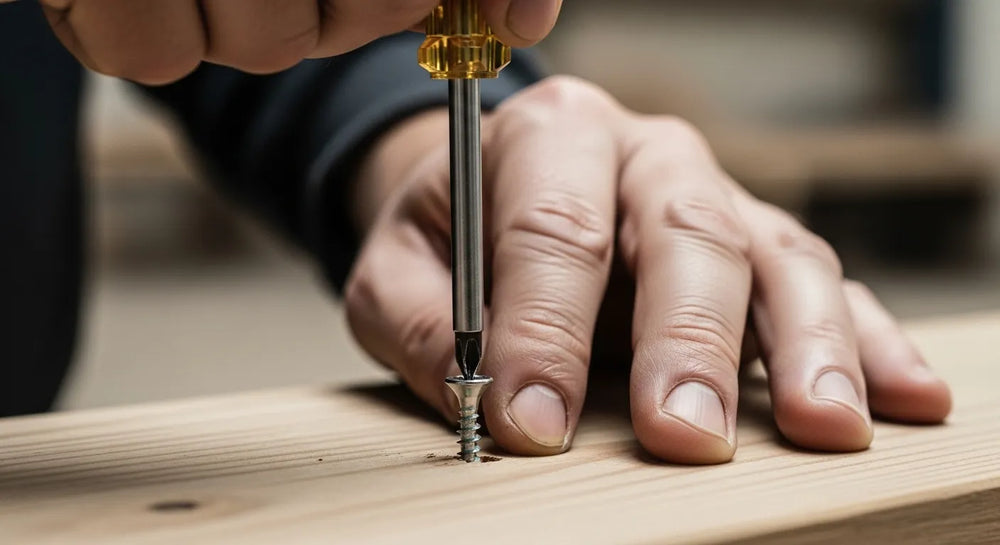
Optimal Pilot Hole: What Size Drill Bit for #8 Sheet Metal Screw?
Table of Contents
- Introduction
- Understanding Sheet Metal Screws
- The #8 Sheet Metal Screw: Decoding the Size
- Drill Bit Selection Fundamentals
- The Crucial Question: What Size Drill Bit for an #8 Sheet Metal Screw?
- Beyond the Drill Bit: Best Practices for Fastening
- Optimizing Procurement: The Maden.co Advantage
- Conclusion
- FAQ
Introduction
Imagine a critical production line grinding to a halt, or a vital structural component failing prematurely, not due to material fatigue or design flaws, but simply because a seemingly minor detail—the wrong pilot hole size for a sheet metal screw—was overlooked. This scenario, unfortunately common in industrial settings, highlights a hidden cost often dismissed as trivial: the impact of imprecise fastening. In the world of procurement, MRO, and design engineering, every specification, no matter how small, contributes to the overall integrity, efficiency, and longevity of a project. When it comes to fastening sheet metal, selecting the correct drill bit for an #8 sheet metal screw is not merely a matter of convenience; it is a fundamental aspect of engineering precision that directly influences product quality, assembly time, and material waste. This post will demystify the art and science of drill bit selection for #8 sheet metal screws, providing a comprehensive guide to ensure optimal thread engagement, prevent stripping, and ultimately, enhance the reliability of your assemblies. We will delve into the nuances of screw types, material considerations, and best practices, empowering you to make informed decisions that bolster your operational excellence with quality U.S.-made components.
Understanding Sheet Metal Screws
Sheet metal screws are a ubiquitous fastening solution across numerous industries, from automotive and HVAC to construction and electronics. Their primary characteristic is their ability to tap their own threads into sheet metal or other relatively soft materials, eliminating the need for a pre-tapped hole. This self-tapping feature significantly speeds up assembly processes and reduces manufacturing costs. However, their effectiveness hinges entirely on the creation of an appropriately sized pilot hole.
These fasteners come in a variety of designs, each optimized for specific applications and materials:
- Type A: Characterized by a sharp point and coarse thread, Type A screws are designed for use in thinner gauge sheet metal and other soft materials. They require a pilot hole that allows the screw to form strong, deep threads without excessively deforming or splitting the material. For applications requiring a robust, general-purpose fastener, a screw like our Steel Zinc Plated Type A Pan Slot Drive Self-Tapping Sheet Metal Screw is a common and effective choice.
- Hi-Lo: These screws feature a unique double lead thread design—one high, sharp thread and one low, blunt thread. This configuration provides superior pull-out resistance and reduced drive torque, making them ideal for softer materials like plastic, particle board, or wood where splitting is a concern. Our Hi-Lo Double Lead Thread Self-Tapping Sheet Metal Screw exemplifies this design, offering enhanced performance in specific material types.
- Type AB, B, C, F, G, D: While Type A and Hi-Lo are among the most common, other types exist with variations in thread pitch, point style (blunt, sharp, drill points), and body diameter, each tailored for different material thicknesses and characteristics. For instance, Type B screws have a finer thread than Type A and are often used in heavier gauge sheet metal, while self-drilling screws (often denoted with a drill bit tip) eliminate the need for a pilot hole entirely by drilling, tapping, and fastening in one operation.
- Truss Head: Beyond the thread type, head styles also vary. A truss head, for example, offers a large bearing surface, distributing load over a wider area, which can be beneficial in thinner materials or when attaching soft materials. A fastener such as the Steel Zinc Plated Type A Truss Square Drive Self-Tapping Sheet Metal Screw combines the versatility of a Type A thread with the benefits of a truss head and the positive engagement of a square drive.
At Maden.co, we understand that the quality and consistency of these fasteners are paramount. Sourcing American-made sheet metal screws ensures adherence to stringent manufacturing standards, offering superior material integrity, thread formation, and overall reliability. This commitment to industrial excellence is a cornerstone of our mission to democratize access to high-quality U.S.-made products.
The #8 Sheet Metal Screw: Decoding the Size
When a sheet metal screw is designated as "#8," this isn't a random serial number, but a standardized gauge size. In the Unified Screw Thread Standard, screw sizes are typically indicated by a number (for diameters smaller than ¼ inch) or by their nominal diameter in inches. For sheet metal screws, the "#8" specifically refers to the nominal major diameter of the screw, which is approximately 0.164 inches (or around 4.17 mm).
Understanding this dimension is crucial because the pilot hole must be slightly smaller than the major diameter of the screw to allow the threads to properly form and engage with the material, creating a secure joint. However, the pilot hole must also be larger than the screw's minor (root) diameter to prevent excessive material displacement or stripping. The sweet spot lies in balancing thread engagement with ease of installation and material integrity.
Variations in screw manufacturing, even within the #8 designation, can occur, particularly with different thread types and manufacturers. However, reputable U.S. manufacturers adhere to precise specifications, ensuring that an #8 screw from one verified source will consistently meet the expected dimensional requirements. This consistency is a core value at Maden.co, where we connect buyers with a network of over 800+ verified U.S. manufacturers, ensuring that the components you source meet exacting standards. Our entire business model is built on this principle; you can learn more about our mission to champion American manufacturing here on our About Us page.
The significance of accurate sizing extends beyond simple fit. An undersized pilot hole can lead to:
- Stripped Screw Heads: Excessive torque required to drive the screw can cam out the driver bit or strip the screw head.
- Sheared Screws: The body of the screw can twist off due to immense driving force.
- Material Distortion: The sheet metal itself can bulge, crack, or tear around the hole.
- Reduced Pull-Out Strength: Damaged threads or material can compromise the joint's integrity.
Conversely, an oversized pilot hole can result in:
- Stripped Threads: The screw might simply spin in the hole without engaging properly, leading to a loose or failed joint.
- Weak Joint: Insufficient thread engagement dramatically reduces the pull-out and shear strength of the connection.
- Vibration Loosening: Joints that are not tightly secured are more susceptible to loosening under vibration over time.
For a procurement manager under pressure to source precise components, a design engineer needing specific material certifications for a new prototype, or an MRO buyer facing an unexpected equipment breakdown, the ability to quickly find and finance a verified, U.S.-made part, knowing its dimensions and performance characteristics are reliable, is a game-changer. Our platform aims to be the definitive solution for these critical sourcing needs.
Drill Bit Selection Fundamentals
The role of a pilot hole is multifaceted. It guides the screw, reduces the force required to drive it, and prevents material damage. More importantly, it creates the precise cavity that allows the screw's threads to cut or form into the material, creating a secure and durable mechanical lock.
Several key factors influence the optimal drill bit size for any sheet metal screw, particularly an #8:
1. Screw Type and Thread Profile
As discussed, different screw types have distinct thread profiles and root (minor) diameters.
- Standard Type A/AB screws: These typically have a more uniform thread that requires a pilot hole close to the screw's minor diameter to ensure robust thread formation.
- Hi-Lo screws: With their dual-thread design, Hi-Lo screws often benefit from a slightly different pilot hole strategy, sometimes a bit larger, to accommodate the varied thread depths and reduce drive torque in softer materials while maximizing pull-out resistance.
2. Material Thickness and Type
This is perhaps the most critical variable. The thickness and hardness of the material dictate how much resistance the screw encounters and how much material needs to be displaced.
- Thin Gauge Sheet Metal (e.g., 20-26 gauge steel): In very thin materials, an undersized pilot hole can cause the material to dimple or tear around the hole. A slightly larger pilot hole, closer to the minor diameter, helps prevent this while still allowing for adequate thread engagement.
- Thicker Gauge Sheet Metal (e.g., 14-18 gauge steel): Thicker and harder materials require a smaller pilot hole to ensure the screw's threads aggressively cut into the material, preventing stripping and maximizing thread engagement depth.
- Aluminum: Softer than steel, aluminum typically requires a pilot hole that is at the upper end of the recommended range to prevent galling or excessive material buildup in the threads.
- Plastics (e.g., ABS, PVC, Polycarbonate): Plastics are prone to cracking or splitting. The pilot hole needs to be carefully chosen to allow for the expansion of the plastic as the screw drives in, often requiring a size on the larger side, especially for Hi-Lo screws which are excellent for these materials.
- Wood/Particle Board: Similar to plastics, these materials benefit from a pilot hole that prevents splitting, often slightly larger than for equivalent metal thickness.
3. Desired Fit (Clearance vs. Thread Engagement)
Sometimes, a design requires a slightly looser or tighter fit.
- Clearance Hole (Non-Load Bearing): If the screw is primarily used to hold two pieces together without significant load on the screw threads themselves, a clearance hole (larger than the screw's major diameter) might be used in the top piece, allowing the screw to pass through freely and fasten only into the bottom piece. This is not a pilot hole for thread formation.
- Optimal Thread Engagement: For a strong, load-bearing joint, the pilot hole must be precisely chosen to maximize thread engagement without overstressing the material or fastener.
4. Drill Bit Material
The choice of drill bit material also matters for efficiency and longevity:
- High-Speed Steel (HSS): General-purpose bits suitable for most common metals and plastics.
- Cobalt (HSS-Co): More heat-resistant and harder than HSS, ideal for drilling harder metals like stainless steel.
- Carbide: Extremely hard and durable, excellent for abrasive materials or very hard metals, but more brittle.
Choosing the right bit type ensures a clean, accurate hole, which is foundational to the success of the fastening process. This attention to detail reflects our core value of industrial excellence, promoting best practices for optimal outcomes.
The Crucial Question: What Size Drill Bit for an #8 Sheet Metal Screw?
Determining the exact pilot hole size for an #8 sheet metal screw is a balance, not a one-size-fits-all answer. However, robust industry guidelines and practical experience provide reliable starting points and refined recommendations based on material properties and screw design. The goal is to achieve about 70-75% thread engagement, which offers the best balance of strength and ease of installation.
General Recommendations and Starting Points
For a standard #8 sheet metal screw (approximately 0.164" major diameter), a common fractional drill bit size often falls around 9/64" or 5/32". In decimal inches, this translates to roughly 0.1406" to 0.1562". The key is to select a drill bit size that is smaller than the screw's major diameter but larger than its minor (root) diameter.
- For general purpose in thinner sheet metal (e.g., 22-26 gauge steel/aluminum): A 9/64" (0.1406") drill bit is a strong candidate, offering good thread engagement.
- For thicker sheet metal or harder materials (e.g., 14-18 gauge steel): A smaller pilot hole, such as #29 (0.136") or even #30 (0.1285") drill bit, might be necessary to ensure maximum thread formation in the harder, denser material. This provides more material for the screw to bite into.
- For softer materials (e.g., plastics, softer wood): A slightly larger pilot hole, such as a 5/32" (0.1562") drill bit, can help prevent cracking or stripping due to material expansion and reduce driving torque.
Detailed Recommendations by Material and Screw Type
Let's break down these recommendations further, integrating specific product types available through Maden.co, to provide practical guidance. It's important to remember that these are guidelines; always test on scrap material first when precision is critical.
For Standard #8 Type A Sheet Metal Screws (e.g., Steel Zinc Plated Type A Pan Slot Drive Self-Tapping Sheet Metal Screw or Steel Zinc Plated Type A Truss Square Drive Self-Tapping Sheet Metal Screw)
| Material Type | Material Thickness (Gauge/Inches) | Recommended Drill Bit Size (Fractional) | Recommended Drill Bit Size (Decimal/Number) | Notes |
|---|---|---|---|---|
| Thin Steel (Mild/Galvanized) | 26 - 20 Gauge (0.0179" - 0.0359") | 9/64" | 0.1406" / #28 | Ideal for general sheet metal fabrication. Provides good thread engagement without excessive material distortion. For a general purpose fastener like our Steel Zinc Plated Type A Pan Slot Drive Self-Tapping Sheet Metal Screw, this pilot hole creates a secure and efficient connection. |
| Medium Steel (Mild) | 18 - 14 Gauge (0.0478" - 0.0747") | 9/64" - #29 | 0.1406" - 0.136" | For thicker or harder steel, a slightly smaller pilot hole ensures maximum thread cutting. A #29 drill bit creates more aggressive thread engagement. This is crucial when using fasteners like our Steel Zinc Plated Type A Truss Square Drive Self-Tapping Sheet Metal Screw where a strong, wide bearing surface needs deep threads. |
| Aluminum | Up to 1/8" (0.125") | 5/32" | 0.1562" / #23 | Aluminum is softer and can gall. A slightly larger pilot hole helps prevent this while still allowing for good thread formation. |
| Hard Plastics (ABS, PVC) | Up to 1/8" (0.125") | 5/32" | 0.1562" / #23 | Prevents cracking and splitting. Test on scrap as plastic properties vary. |
For #8 Hi-Lo Double Lead Thread Screws (e.g., Hi-Lo Double Lead Thread Self-Tapping Sheet Metal Screw)
Hi-Lo screws are designed for superior pull-out resistance in softer, more fibrous materials. Their unique thread profile often benefits from a pilot hole that accommodates the dual threads and reduces stress on the material.
| Material Type | Material Thickness (Inches) | Recommended Drill Bit Size (Fractional) | Recommended Drill Bit Size (Decimal/Number) | Notes |
|---|---|---|---|---|
| Plastics (Softer, PVC, Polypropylene) | Up to 1/4" | 5/32" | 0.1562" / #23 | For optimal performance with our Hi-Lo Double Lead Thread Self-Tapping Sheet Metal Screw, this size reduces cracking and provides excellent pull-out strength. |
| Particle Board / MDF | Up to 3/4" | 5/32" | 0.1562" / #23 | Prevents splitting and ensures deep thread engagement in composite wood products. |
| Thin Sheet Metal | 22 - 18 Gauge (0.0299" - 0.0478") | 9/64" | 0.1406" / #28 | While primarily for softer materials, Hi-Lo can be used in thin metal for specific applications; the pilot hole should be conservative. |
Crucial Caveats:
- Always Test: Whenever possible, perform a test drive on a scrap piece of the actual material and thickness you plan to use. Observe the ease of driving, the feel of thread engagement, and inspect the back of the material for any bulging or tearing.
- Driver Type: The type of driver (manual, impact, drill) and its torque settings also influence the success of the fastening. Using an impact driver without proper torque control can easily over-drive or strip a screw, regardless of the pilot hole size.
- Screw Coating: Coatings like zinc plating on our American-made screws provide corrosion resistance but generally do not significantly alter pilot hole requirements.
By meticulously selecting the correct drill bit, you enhance the efficiency of your assembly operations, reduce material waste, and ensure the structural integrity of your finished products. This level of precision, combined with the reliability of U.S.-made components, exemplifies the industrial excellence we champion at Maden.co.
Beyond the Drill Bit: Best Practices for Fastening
While the correct drill bit size is fundamental, the success of fastening with #8 sheet metal screws involves a holistic approach that incorporates best practices throughout the process.
1. Proper Drilling Technique
- Stable Workpiece: Secure the sheet metal firmly to prevent movement during drilling. Clamps or a vise are indispensable.
- Sharp Drill Bit: A dull drill bit generates excessive heat, creating a rougher hole and requiring more pressure, which can damage the material or the bit itself. Always use sharp, high-quality bits, preferably from American manufacturers who prioritize precision.
-
Appropriate Speed and Pressure:
- Speed: Generally, for sheet metal, a higher RPM (revolutions per minute) is preferred, especially with smaller bits, to create a clean cut and avoid burring. However, for thicker or harder metals, slightly lower speeds with a steady, consistent pressure are better to prevent overheating and premature bit wear.
- Pressure: Apply firm, consistent pressure. Too little pressure causes the bit to rub and dull; too much can lead to breakage, especially with smaller bits, or distort the material.
- Lubrication: For steel and other metals, a cutting fluid or lubricant can significantly reduce friction and heat, prolonging bit life and producing a cleaner hole.
- Perpendicular Drilling: Ensure the drill is held perpendicular to the surface of the sheet metal to create a straight hole, which allows the screw to drive in correctly and prevents crooked fasteners.
2. Deburring the Hole
After drilling, especially in thicker metals, a burr (a raised edge of metal) can form around the hole. While not always critical for thin sheet metal, for precise applications or when sealing is important, deburring can improve the seating of the screw head and prevent interference. A larger drill bit, a deburring tool, or a file can be used carefully.
3. Power Tools and Torque Management
Most sheet metal screws are driven with power drills or impact drivers.
- Variable Speed Drills: Allow for precise control over RPM. Start slow to seat the screw, then increase speed, and slow down again as the screw head nears the surface to prevent over-tightening.
- Clutch Settings (Drills): Utilize the clutch on your drill to set a torque limit. This prevents over-driving, stripping the screw head, or stripping the threads in the material, which is a common failure point.
- Impact Drivers: While powerful, impact drivers can quickly over-tighten and strip screws or material if not used carefully. For critical applications, a drill with a clutch is often preferred for more control.
- Driver Bits: Use high-quality driver bits that fit the screw head precisely (e.g., Phillips, Square, Torx) to prevent cam-out and damage to the screw head.
4. Testing and Validation
For critical assemblies, especially during prototyping or before mass production, validate your fastening process:
- Pull-Out Strength Tests: Determine the force required to pull a screw out of the material.
- Stripping Torque Tests: Measure the torque at which the screw threads strip in the material.
- Visual Inspection: Examine the fastener and the surrounding material for any signs of distortion, cracking, or incomplete thread formation.
By integrating these best practices, you move beyond merely installing a screw to creating a robust, reliable, and durable connection that contributes to the overall quality of your product. This systematic approach aligns with our core value of Industrial Excellence, where every detail contributes to superior outcomes.
Optimizing Procurement: The Maden.co Advantage
In a world where supply chain disruptions are a persistent challenge, the ability to source high-quality, reliable, and readily available components is more critical than ever. This is where Maden.co steps in, fundamentally changing how procurement managers, MRO buyers, and design engineers access American-made industrial products.
The Value of American Manufacturing Pride
At Maden.co, our mission is to democratize access to American manufacturing. We firmly believe that the unparalleled quality, consistency, and reliability inherent in U.S.-made fasteners, like the #8 sheet metal screws we've discussed, provide a significant strategic advantage. When you specify U.S.-made, you're investing in:
- Superior Quality Control: American manufacturers adhere to some of the strictest quality standards globally, ensuring that every batch of screws meets precise dimensional and material specifications. This means fewer defects, reduced rework, and ultimately, a lower Total Cost of Ownership (TCO).
- Enhanced Supply Chain Resilience: Sourcing domestically significantly shortens lead times, reduces exposure to international shipping delays, geopolitical risks, and tariffs. It provides a more predictable and stable supply chain, a cornerstone of our vision for an American manufacturing revival.
- Compliance and Traceability: For industries with stringent regulatory requirements, U.S.-made products offer clear traceability and easier compliance with critical industry standards, without the complexities sometimes associated with global sourcing.
- Supporting the Domestic Economy: Every purchase of a U.S.-made product directly contributes to job creation and economic growth within the United States, embodying our value of American Manufacturing Pride.
Digital Innovation for Seamless Sourcing
We understand the friction often associated with industrial procurement. Our platform is built on Digital Innovation, offering a seamless, intuitive experience that simplifies the search and acquisition of industrial components. We connect industrial buyers with over 2.5 million American-made products from our network of 800+ verified U.S. manufacturers. Whether you're searching for a specific #8 sheet metal screw with a unique drive type, a particular finish, or material certification, our extensive catalog and powerful search capabilities make finding hard-to-find, U.S.-made components more convenient than ever before.
For instance, if you require a Hi-Lo Double Lead Thread Self-Tapping Sheet Metal Screw for a new plastic enclosure design, or a Steel Zinc Plated Type A Pan Slot Drive Self-Tapping Sheet Metal Screw for a standard HVAC assembly, our platform provides detailed specifications and easy navigation. Perhaps your project demands the robust engagement of a square drive on a Steel Zinc Plated Type A Truss Square Drive Self-Tapping Sheet Metal Screw; finding these specific configurations is effortless.
Empowering Your Cash Flow with Instant Financing
A significant differentiator for businesses sourcing through Maden.co is our "Instant Financing" option. We recognize that managing cash flow, especially for larger-volume purchases or capital-intensive projects, is a critical business challenge. Our Instant Financing is not just a payment method; it's a strategic tool designed to empower procurement managers and business owners to optimize their working capital. By leveraging this feature, available during the checkout process, you can make necessary purchases without straining immediate cash reserves, facilitating larger orders and keeping projects on schedule. It transforms a potential budgetary hurdle into a streamlined, accessible solution, aligning with our commitment to Customer Empowerment.
Partnering for a Stronger Future
Our vision is to become the definitive platform that proves American-made components are as accessible and convenient as any global alternative, driving the manufacturing revival with our tagline: "America's manufacturing revival is here." This commitment extends to fostering strong relationships not just with buyers, but with American manufacturers. Are you a qualified U.S. manufacturer? We invite you to Register as a vendor and join our growing network, connecting your superior products with industrial buyers nationwide.
We are dedicated to Supply Chain Transparency and facilitating robust partnerships. If you have specific sourcing questions, or need assistance navigating our extensive catalog, our team of experts is ready to help. Please don't hesitate to Contact Us for personalized support. We encourage you to explore the vast array of American-made products available on our platform, starting with our homepage, and experience the Maden.co difference.
Conclusion
The seemingly small detail of selecting the correct drill bit for an #8 sheet metal screw holds significant weight in the realm of industrial manufacturing and procurement. As we’ve explored, precision in pilot hole drilling directly translates into enhanced product quality, reduced material waste, and improved assembly efficiency, ultimately impacting the Total Cost of Ownership and overall project success. Understanding the nuances of screw types, material characteristics, and best fastening practices is not just technical knowledge; it's a strategic asset for any business striving for industrial excellence.
At Maden.co, we are committed to providing the resources and the platform to achieve these outcomes. By connecting you with over 2.5 million American-made products from verified U.S. manufacturers, we empower you to build resilient supply chains, ensure compliance, and source components with unwavering confidence. From the precise fit of a Hi-Lo Double Lead Thread Self-Tapping Sheet Metal Screw to the robust engagement of a Steel Zinc Plated Type A Truss Square Drive Self-Tapping Sheet Metal Screw, our marketplace is designed to streamline your procurement process and uplift American manufacturing.
We encourage you to explore our comprehensive catalog and discover how sourcing quality, U.S.-made fasteners and components can elevate your projects. Experience the efficiency and reliability that comes with every Maden.co partnership. For projects requiring significant capital investment, remember that you can apply for Instant Financing at checkout to streamline your capital-intensive projects, allowing you to manage cash flow effectively and seize opportunities without delay. America's manufacturing revival is here, and we invite you to be a part of it.
FAQ
Q1: Why is the pilot hole size so critical for sheet metal screws?
A1: The pilot hole size is critical because it dictates how effectively the sheet metal screw's threads can cut and engage with the material. An undersized hole can cause the screw to strip its head, shear, or distort the material, while an oversized hole will result in stripped threads and a weak, unreliable joint. The correct size ensures optimal thread engagement, preventing damage and maximizing the joint's strength.
Q2: Does the material thickness affect the drill bit size for an #8 screw?
A2: Yes, material thickness and type significantly affect the recommended drill bit size. Thinner, softer materials often require a slightly larger pilot hole to prevent dimpling or cracking, while thicker, harder materials typically need a smaller pilot hole to ensure the screw's threads aggressively cut into the material and achieve maximum engagement. Always consult a chart or test on scrap material for best results.
Q3: Can I use the same drill bit for an #8 Hi-Lo screw as for an #8 Type A screw?
A3: While there might be some overlap, it's generally recommended to consult specific guidelines for each screw type. Hi-Lo screws have a unique double lead thread design that often performs best with a slightly different pilot hole size, especially in softer materials like plastics or particle board, to maximize their superior pull-out resistance and minimize material stress.
Q4: How does Maden.co ensure the quality of its fasteners and industrial products?
A4: At Maden.co, our commitment to quality is foundational. We exclusively partner with verified U.S. manufacturers, ensuring that all products listed on our platform adhere to stringent American manufacturing standards. This commitment to American Manufacturing Pride means buyers gain access to components known for their superior material integrity, precise dimensions, and consistent performance, reducing procurement risks and improving overall project reliability.


