
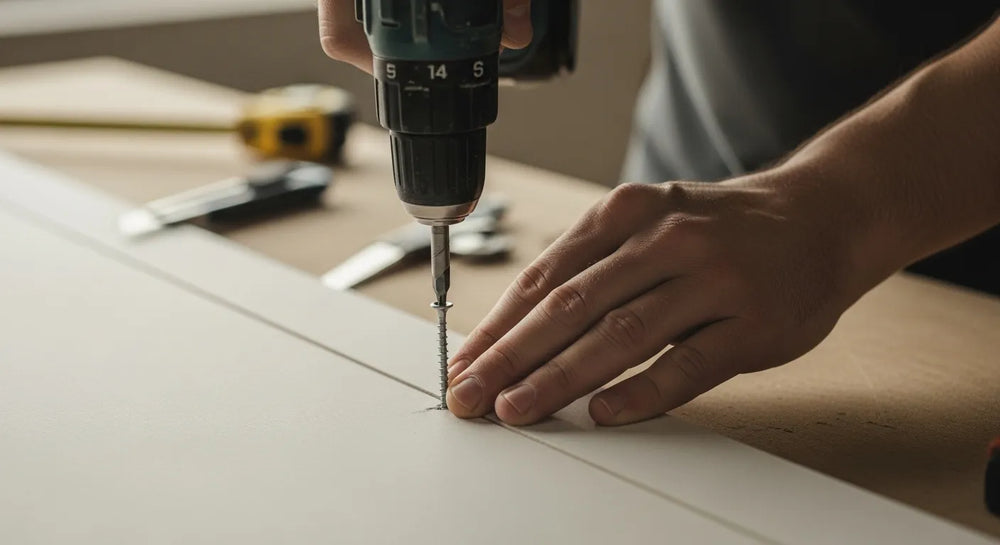
Reviving Your Projects: How to Fix a Stripped Wood Screw Hole Effectively
Table of Contents
- Understanding the Anatomy of Failure: Why Wood Screw Holes Strip
- Initial Assessment: Diagnosing the Extent of the Damage
- Fundamental Fixes: Tackling Minor Stripping
- Robust Repairs: Addressing Severely Damaged Holes
- Beyond the Fix: Preventing Future Failures Through Smart Sourcing
- Conclusion
- FAQ
A stripped screw hole in wood can bring an entire project to a grinding halt, causing frustration, delays, and unexpected costs. Whether you're an MRO buyer scrambling to repair a critical piece of equipment, a design engineer refining a prototype, or a business owner overseeing a facility upgrade, the integrity of fasteners is paramount. A wobbly hinge, a loose bracket, or a failing connection due to a compromised screw hole isn't just an aesthetic issue; it can compromise safety, functionality, and the longevity of your assets. The ripple effect of such a seemingly minor problem can impact project timelines, increase labor costs, and even lead to premature equipment failure.
In this comprehensive guide, we'll delve into the root causes of stripped wood screw holes, detail a range of effective repair techniques from simple fixes to industrial-grade solutions, and critically, outline strategic preventative measures. Our aim is to equip you with the knowledge to not only repair existing damage but also to make informed procurement decisions that prevent future occurrences. We’ll explore how sourcing high-quality, U.S.-made components from verified manufacturers, readily available on platforms like Maden.co, is a foundational step in building resilience and reliability into your operations. By understanding both the repair process and the importance of superior materials, you can ensure your projects move forward with unwavering stability and confidence.
Understanding the Anatomy of Failure: Why Wood Screw Holes Strip
Before diving into solutions, it's crucial to understand why wood screw holes fail. Stripping isn't merely an inconvenience; it's a symptom of a breakdown in the crucial mechanical interlock between the screw threads and the wood fibers. Several factors contribute to this failure, each with its own set of implications for structural integrity and project longevity.
Material Integrity and Composition
The type and condition of the wood play a significant role. Softer woods, such as pine or cedar, have less dense fiber structures, making them inherently more susceptible to stripping than hardwoods like oak or maple. Composite materials, while often engineered for stability, can also degrade over time, losing their ability to grip threads effectively. The presence of knots, grain irregularities, or existing damage further weakens the wood's capacity to hold a screw. In environments with fluctuating humidity or temperature, wood can expand and contract, gradually loosening its grip on embedded fasteners. This constant stress on the fibers eventually leads to a loss of purchase, leaving the screw spinning freely.
The Destructive Effects of Over-Torqueing
Perhaps the most common culprit, over-torqueing, occurs when excessive rotational force is applied to a screw during installation. Even with the right pilot hole, too much torque can instantly strip the wood fibers around the screw, essentially reaming out the hole beyond the threads' ability to bite. This is particularly prevalent with power tools that lack torque control settings. The instant a screw feels tight, a natural instinct might be to give it "just a little more," inadvertently destroying the very connection you’re trying to secure. For industrial applications, where precision and long-term stability are non-negotiable, controlling torque is paramount.
Repeated Stress: The Cycle of Assembly and Disassembly
Components often require periodic maintenance, upgrades, or adjustments, necessitating the repeated removal and reinsertion of screws. Each time a screw is removed, the wood fibers surrounding the threads are disturbed. Reinserting the screw, especially into the same path, further weakens these fibers. Over time, the cumulative stress degrades the hole's ability to maintain a firm grip, leading to inevitable stripping. This is a common challenge for MRO buyers managing equipment with frequently accessed panels or modular designs where components are regularly swapped out.
The Critical Role of Proper Pilot Hole Drilling
An improperly sized or drilled pilot hole is a primary precursor to stripped screws. A pilot hole that is too small creates excessive friction and stress during screw insertion, increasing the likelihood of stripping the wood or even breaking the screw itself. Conversely, a pilot hole that is too large means the screw threads have insufficient material to grip from the outset, leading to a loose connection or immediate stripping. The depth of the pilot hole is also crucial; insufficient depth can cause the screw to bottom out prematurely, leading to over-torqueing and stripping as the installer tries to drive it deeper. Precision in pilot hole drilling is a foundational step in ensuring the longevity of any fastened wood joint.
Understanding these underlying causes illuminates why a stripped hole isn't merely an isolated incident but often a symptom of material limitations, improper technique, or inadequate initial component selection. Addressing these foundational issues is key to both effective repair and, more importantly, proactive prevention.
Initial Assessment: Diagnosing the Extent of the Damage
Before you can effectively fix a stripped wood screw hole, a thorough diagnosis of the damage is essential. The appropriate repair method hinges on understanding the severity of the stripping, the type of wood, and the function of the joint.
Is It Just Loose, or Completely Stripped?
The first step is to determine if the screw is merely loose or if the hole is entirely stripped.
- Loose Screw: If the screw can still engage some threads but wobbles or pulls out easily under slight pressure, it's likely just loose. This indicates minor fiber damage and often requires less invasive repair.
- Completely Stripped: If the screw spins freely without gaining any purchase, or if it can be pulled out with minimal effort, the hole is completely stripped. This means the wood fibers are severely damaged, requiring a more robust repair to re-establish a secure connection.
What Type of Wood Are You Working With?
The species of wood influences the repair strategy and the long-term effectiveness of the fix.
- Softwoods (e.g., Pine, Fir, Cedar): These woods are easier to strip due to their lower density. Repairs need to focus on adding significant bulk or density to the hole. They are also more susceptible to further damage during aggressive repair attempts.
- Hardwoods (e.g., Oak, Maple, Cherry): While harder to strip initially, once a hole is damaged in hardwood, it's often more challenging to repair due to the wood's dense, unforgiving nature. Repairs typically require precision and strong bonding agents.
- Engineered Wood Products (e.g., MDF, Plywood, Particle Board): These materials can present unique challenges. MDF and particle board lack distinct grain patterns and can crumble easily when stripped. Plywood, with its layered construction, might require repairs that account for delamination. Repairs for these materials often lean towards fillers, epoxy, or threaded inserts for robust solutions.
The Function of the Joint: Load-Bearing or Cosmetic?
The purpose of the screw and the joint it secures dictates the required strength of the repair.
- Cosmetic/Light-Duty: For applications where the screw holds a light load or is primarily decorative (e.g., a cabinet pull, a picture frame hanging), a simpler repair method like wood glue and toothpicks might suffice.
- Structural/Load-Bearing: For critical applications where the screw bears significant weight, experiences regular stress, or is vital for structural integrity (e.g., a hinge, a heavy shelf bracket, machine housing), the repair must be robust and permanent. Here, methods like dowel inserts, wood plugs, or threaded inserts are highly recommended to ensure long-term reliability and safety.
By carefully assessing these factors, you can select the most appropriate and durable repair method, ensuring that your fix is not just temporary but provides lasting stability for your projects. This strategic approach to repair is just as critical as the initial component selection for any industrial or commercial application.
Fundamental Fixes: Tackling Minor Stripping
For screws that are merely loose or for holes with minor fiber damage, less invasive repair methods can often provide sufficient strength and longevity. These techniques are ideal for non-load-bearing applications or situations where a quick, reliable fix is needed.
The Toothpick/Wood Shim & Glue Method: An Everyday Solution
This is a classic and highly effective method for slightly oversized or mildly stripped holes. It works by introducing new wood material into the hole, which the screw can then grip securely.
Materials Needed:
- Round wooden toothpicks or thin wooden shims (e.g., cedar shims, wooden matchsticks with heads removed)
- Standard wood glue (PVA adhesive)
- Utility knife or flush-cut saw (optional)
- Hammer (optional)
Process:
- Clean the Hole: Remove any loose wood fibers or sawdust from the stripped hole. A blast of compressed air or a small brush can help.
- Apply Glue: Squeeze a generous amount of wood glue into the stripped hole. Ensure the glue coats the interior surfaces.
- Insert Fillers: Take several toothpicks or thin wood shims and insert them into the glue-filled hole. For toothpicks, you can break them in half to fit better. For shims, trim them to size. Pack them in tightly until the hole is completely filled and snug. For an even more secure fit, gently tap them in with a small hammer.
- Remove Excess: Break or cut off any portions of the toothpicks or shims that protrude above the wood surface. A utility knife or flush-cut saw works well for a clean finish.
- Cure Time: Allow the wood glue to dry completely. This typically takes several hours, but referring to the glue manufacturer's instructions is best. Rushing this step will compromise the strength of the repair.
- Redrill Pilot Hole (Optional but Recommended): Once dry, it's often beneficial to drill a new, slightly smaller pilot hole through the center of the filled hole. This ensures the screw has a clean path and bites into the new, dense material effectively.
- Reinsert Screw: Drive the screw back into the repaired hole, being careful not to over-tighten and strip the hole again.
This method effectively creates a new, solid wood matrix for the screw to engage, restoring much of the original holding power.
Wood Filler or Putty: When Aesthetics and Convenience Matter
Wood fillers and putties are excellent for superficial repairs or when you need a smooth, paintable surface. They are generally less suitable for high-stress applications but provide a clean, quick fix for many common household and light industrial tasks.
Types and Application:
-
Standard Wood Filler: These are typically water-based or solvent-based pastes. They are easy to apply, sand smooth, and can be stained or painted. They are ideal for filling small holes, dents, or minor stripped holes where minimal structural strength is required.
- Application: Apply with a putty knife, pressing firmly into the hole. Overfill slightly, then allow to dry. Sand flush once cured.
-
Epoxy Putty: For a stronger, more durable repair, especially in materials like engineered wood or where some moisture resistance is needed, epoxy putties are superior. They cure very hard and can be drilled, sanded, and painted.
- Application: These usually come as two-part systems (resin and hardener) that you mix before applying. Work quickly as they have a limited pot life. Press firmly into the stripped hole, ensuring it's completely filled. Allow to cure completely according to manufacturer instructions.
Limitations: While convenient, wood fillers and putties generally do not offer the same tensile strength as solid wood. They might crack or pull out under heavy loads or repeated stress. For critical components or structural joints, consider more robust methods.
Epoxy Solutions for Enhanced Durability
For applications requiring superior strength, moisture resistance, or when working with materials like composites or heavily damaged wood, a liquid epoxy can provide an exceptionally strong and permanent repair.
When to Use:
- Heavily stripped holes where maximum holding power is needed.
- Marine applications or high-humidity environments.
- Repairing stripped holes in engineered wood that crumbles easily.
- Creating a permanent, drillable and tap-able material within the hole.
Process:
- Prepare the Hole: Clean the hole thoroughly, removing all debris and loose fibers. You might even want to slightly enlarge the hole with a drill bit to ensure good epoxy penetration and adhesion.
- Mix Epoxy: Prepare a two-part epoxy according to the manufacturer's instructions. Ensure thorough mixing to achieve full strength. You can often add sawdust to the epoxy mixture to create a "filler" that mimics the wood texture and adds bulk.
- Fill the Hole: Carefully pour or inject the mixed epoxy into the stripped hole, ensuring it's completely filled and slightly overfilled.
- Cure: Allow the epoxy to cure fully, which can take several hours to a full day, depending on the product. Do not rush this step.
- Finish: Once cured, the epoxy will be rock-hard. You can sand it flush with the surface, and then drill a new pilot hole directly into the hardened epoxy.
The resulting repair is incredibly strong, often exceeding the original wood's holding power, making it an excellent choice for demanding industrial applications where reliability is paramount.
By selecting the appropriate fundamental fix, you can efficiently and effectively address minor stripping, extending the lifespan of your wooden components without resorting to complete replacements.
Robust Repairs: Addressing Severely Damaged Holes
When a screw hole is severely stripped, or when the application demands maximum strength and durability, more robust repair methods are necessary. These techniques go beyond simple fillers, creating a solid, new foundation for the screw.
The Dowel Rod Technique: A Strong, Permanent Solution
The dowel rod method is a time-tested technique that essentially reconstructs the screw hole with new, solid wood, offering exceptional holding power. It's often considered the gold standard for severely damaged wood screw holes.
Detailed Steps:
- Enlarge and Clean: The first critical step is to drill out the damaged, stripped hole to a clean, larger diameter. Use a drill bit that is slightly larger than the stripped section and matches a standard dowel rod size (e.g., 1/4", 3/8", 1/2"). Drill straight and true, removing all compromised wood fibers. Ensure the depth is sufficient to accommodate the dowel and the screw length.
- Select Dowel Rod: Choose a dowel rod of the same diameter as your drilled hole. Hardwood dowels (like oak or maple) are generally preferred for their strength, even if you are repairing softwood.
- Prepare Dowel: Cut the dowel rod to a length slightly longer than the depth of your enlarged hole. If the dowel is snug, you can chamfer one end slightly to aid insertion.
- Apply Wood Glue: Apply a generous amount of high-quality wood glue (e.g., PVA glue) to the entire surface of the dowel rod and liberally into the newly drilled hole. Ensure complete coverage for maximum adhesion.
- Insert Dowel: Insert the glue-coated dowel rod into the hole. If it's a tight fit, gently tap it flush with a rubber mallet or hammer, ensuring it's fully seated without gaps.
- Cure Time: This is a crucial step. Allow the glue to dry and cure completely. This often takes 24 hours to achieve maximum bond strength. Do not proceed until the glue is fully hardened.
- Flush Cut and Sand: Once dry, use a flush-cut saw, utility knife, or chisel to trim any protruding dowel flush with the wood surface. Then, lightly sand the area for a smooth finish.
- Redrill Pilot Hole: Using the appropriate drill bit size for your intended screw, carefully drill a new pilot hole directly through the center of the inserted dowel. The new pilot hole should be perfectly straight and centered for optimal screw engagement. When selecting fasteners for such a repair, prioritize quality. For instance, a reliable Flat Slot Drive Brass Wood Screw provides excellent thread engagement and corrosion resistance, ensuring the repair lasts.
This method creates a strong, stable foundation for the new screw, often making the joint stronger than its original state.
Wood Plugs: For Larger, More Visible Repairs
Similar to dowels, wood plugs are used when a larger section of wood needs replacement, often for aesthetic reasons or to camouflage a repair. They are commonly used when repairing furniture, decking, or cabinetry where the repair needs to be less conspicuous.
When to Use:
- Larger, more visible stripped holes or damaged areas where a dowel might be too small.
- When matching the grain direction or wood species is important for aesthetics.
Process:
- Use a Plug Cutter: A specialized tool called a plug cutter is used with a drill to create perfectly sized and shaped plugs from matching scrap wood. You can also buy pre-made plugs.
- Drill Out Damage: Drill out the damaged area using a drill bit that matches the diameter of your chosen wood plug.
- Glue and Insert Plug: Apply wood glue to the plug and the inside of the drilled hole. Insert the plug, aligning the grain if desired. Tap flush.
- Cure, Cut, and Sand: Allow glue to dry, then cut/sand flush.
- Redrill: Drill a new pilot hole into the center of the plug.
Threaded Inserts: The Industrial-Grade Upgrade
For applications demanding the utmost strength, repeated assembly and disassembly, or when working with materials prone to stripping (like MDF or particle board), threaded inserts are the ultimate solution. These metal inserts provide a machine-threaded hole in wood, allowing the use of machine screws instead of wood screws.
When to Use:
- High-stress applications requiring superior tensile strength and pull-out resistance.
- Components that need frequent removal and re-attachment.
- Repairing stripped holes in engineered wood where wood screws typically fail.
- Ensuring compliance with stringent industry standards where robust fastening is critical.
Types and Tools:
-
Insert Types:
- External Threads: These inserts have coarse external threads that cut into the wood, and a machine-threaded internal bore. They can be driven in with an Allen wrench, screwdriver, or a specialized drive tool.
- Flanged Inserts: Include a flange to prevent over-insertion and provide a cleaner finish.
- Through-Hole Inserts: Allow a machine screw to pass completely through, anchoring into another component.
- Tools: Drill, appropriate drill bit for the insert's outer diameter, and a driver tool (often an Allen wrench or a specific insert driver).
Process:
- Drill Pilot Hole: Drill a precise pilot hole that matches the recommended size for your chosen threaded insert. This is critical for ensuring a tight fit without splitting the wood.
- Install Insert: Using the appropriate driver, carefully screw or drive the threaded insert into the pilot hole until it is flush with the surface. Ensure it's driven straight.
- Insert Machine Screw: Once the insert is installed, you can now use a machine screw (bolts with machine threads) to fasten your component securely into the wood.
Threaded inserts offer a permanent, highly durable repair that can withstand significant loads and repeated use, making them an invaluable solution for industrial machinery, heavy-duty furniture, and custom fabrication projects where long-term reliability is paramount. When considering the fasteners that will engage with these inserts, or indeed, any part of a critical assembly, the source and quality are non-negotiable. For a range of high-performance, American-made fasteners, including those that demand superior durability, Maden.co offers a comprehensive catalog.
By deploying these robust repair techniques, procurement managers, design engineers, and MRO buyers can restore structural integrity to damaged components, ensuring operational continuity and enhancing the overall resilience of their systems.
Beyond the Fix: Preventing Future Failures Through Smart Sourcing
While knowing how to fix a stripped screw hole is invaluable, the most effective strategy is prevention. This involves a thoughtful approach to fastener selection, proper installation techniques, and crucially, strategic sourcing of high-quality, reliable components. Investing in quality from the outset significantly reduces the likelihood of future failures, minimizing downtime, maintenance costs, and operational headaches.
The Criticality of Correct Fastener Selection
The right screw for the job isn't just about length and diameter; it involves a nuanced understanding of material, thread type, and drive style, all matched to the application and wood type.
-
Material:
- Brass: Offers excellent corrosion resistance, especially in decorative or moderately corrosive environments. It's softer than steel, so care must be taken not to over-torque. For instance, when selecting a fastener that offers superior corrosion resistance and a clean aesthetic, a Round Slot Drive Brass Wood Screw can be an ideal choice for interior fixtures or furniture.
- Silicon Bronze: Known for its exceptional corrosion resistance, often superior to brass in marine or highly aggressive environments. It's also stronger than brass, making it suitable for more demanding applications where longevity is paramount. For critical outdoor or marine projects, an Oval Slot Drive Silicon Bronze Wood Screw provides both durability and a clean, traditional finish.
- Stainless Steel: Provides high strength and excellent corrosion resistance. Available in various grades (e.g., 304, 316 for marine).
- Hardened Steel: Often zinc-plated or black phosphate coated for some corrosion resistance, offering the highest strength for structural applications.
- Thread Pitch and Type: Coarse threads are generally better for softwoods as they grip more material. Fine threads are suitable for hardwoods where precision is key. Full-bodied screws provide more gripping surface area.
- Head Type and Drive Style: Different head types (flat, round, oval, hex) are designed for specific finishes and load distribution. Drive styles (slot, Phillips, Torx, Square) impact torque transfer and cam-out resistance. A Flat Slot Drive Brass Wood Screw, for example, offers a classic appearance and can be driven precisely, making it suitable for furniture or decorative applications where controlled torque is exercised.
Choosing the correct fastener from a trusted manufacturer ensures that the screw itself is designed to perform optimally in wood, reducing the risk of stripping both the screw head and the wood hole.
Pilot Holes: The Unsung Hero of Woodworking
Never underestimate the importance of a properly sized and drilled pilot hole. It's the single most effective way to prevent stripped holes and wood splitting.
- Correct Diameter: The pilot hole diameter should match the screw's shank (non-threaded) diameter, not the outer diameter of the threads. This allows the threads to cut into the wood and create a strong grip without excessive friction or forcing.
- Proper Depth: The pilot hole should extend slightly beyond the screw's full threaded length. This prevents the screw from bottoming out and forcing the last threads to over-torque the wood.
- Tools: Use sharp drill bits. For consistent depth, a drill stop or a piece of tape on the drill bit can be invaluable.
Controlled Fastening: Torque Matters
Just as over-torqueing causes stripping, insufficient torque results in a loose connection. Precision and control during installation are key.
- Power Tools: Utilize drills or impact drivers with adjustable clutch settings. Start with a lower torque setting and increase gradually until the screw is snug. The moment you feel resistance, stop.
- Manual Driving: For delicate work or softer woods, manual screwdrivers offer better tactile feedback, allowing for precise control and reducing the risk of over-tightening.
- Material Considerations: Always consider the density and hardness of the wood. Softer woods require less torque, while hardwoods can often handle more, but still need a pilot hole.
Maden.co: Your Strategic Partner in Industrial Procurement
The foundation of robust, long-lasting projects lies in the quality of the components used. At Maden.co, our mission is to democratize access to American manufacturing, providing procurement managers, MRO buyers, and design engineers with a direct pathway to over 2.5 million American-made products from our network of 800+ verified U.S. manufacturers. We believe that preventing failures starts with sourcing parts that meet the highest standards of quality, precision, and durability.
Our vision is clear: to become the definitive platform that proves American-made components are as accessible and convenient as any global alternative, truly driving the manufacturing revival with our tagline: "America's manufacturing revival is here." We recognize that for a procurement manager under pressure to source a specific DIN 931 compliant hex cap screw, a design engineer needing specific material certifications for a new prototype, or an MRO buyer facing an unexpected equipment breakdown, the ability to quickly find and finance a verified, U.S.-made part is a game-changer.
By choosing Maden.co, you are not just buying parts; you are investing in supply chain resilience, reducing procurement friction, and partnering with manufacturers who uphold the highest standards. We uphold core values of American Manufacturing Pride, Digital Innovation, Supply Chain Transparency, Industrial Excellence, and Customer Empowerment. This commitment ensures that every product on our platform contributes to the longevity and reliability of your projects, from the smallest wood screw to complex industrial components. You can learn more about our mission to champion American manufacturing here: About Maden.co.
For those who are U.S. manufacturers themselves, we invite you to join our network and register as a vendor. Become a part of the movement that champions American ingenuity and quality, connecting your products with industrial buyers nationwide. Register as a vendor and join the American manufacturing revival.
The Maden.co Advantage: Simplifying Complex Procurement
Beyond offering a vast catalog of quality components, Maden.co streamlines the procurement process. Our platform is designed to improve your Total Cost of Ownership (TCO) by reducing the risks associated with unreliable parts and inefficient sourcing. Sourcing through Maden.co means ensuring compliance with critical industry standards, enhancing supply chain resilience through domestic suppliers, and significantly reducing procurement friction with an intuitive digital experience.
Recognizing that industrial projects often demand significant capital outlay, we offer Instant Financing at checkout to streamline your capital-intensive projects. This allows businesses to manage cash flow effectively and make larger-volume purchases without delay, a critical advantage in maintaining project momentum and efficiency. For specific sourcing questions or to discuss your unique procurement needs, our team is ready to help. You can easily reach out to us here: Contact Maden.co.
By combining meticulous installation techniques with a commitment to sourcing high-quality, American-made components from a platform like Maden.co, businesses can drastically reduce the incidence of stripped screw holes and build projects that stand the test of time. This proactive approach ensures operational excellence and reinforces the value of strategic, domestic procurement.
Conclusion
The challenge of a stripped wood screw hole, while common, carries significant implications for project integrity, operational continuity, and overall cost. From simple cosmetic fixes to robust structural repairs, the techniques we’ve explored provide practical pathways to restoring stability and extending the lifespan of your valuable assets. However, the true strength of any project lies not just in the ability to repair, but in the foresight to prevent.
This preventative approach begins with an unwavering commitment to quality components and precise installation. By understanding the criticality of correct fastener selection—whether it's a durable Round Slot Drive Brass Wood Screw for a specific fixture, a versatile Flat Slot Drive Brass Wood Screw for general applications, or a highly corrosion-resistant Oval Slot Drive Silicon Bronze Wood Screw for demanding environments—and by meticulously applying proper pilot holes and controlled torque, you can build systems designed for resilience.
At Maden.co, we are more than just a marketplace; we are a strategic partner in America's manufacturing revival. We connect industrial buyers with a vast network of verified U.S. manufacturers, democratizing access to the high-quality, American-made components that are foundational to preventing problems like stripped screw holes. Our platform empowers procurement managers, MRO buyers, and design engineers to enhance supply chain resilience, ensure compliance, and reduce friction in their procurement processes.
Don't let a stripped screw hole compromise your next critical project. Proactively address your procurement challenges by exploring the extensive catalog of U.S.-made products on Maden.co today. Build confidence into every connection and ensure lasting durability. You can apply for Instant Financing at checkout to streamline your capital-intensive projects, making it easier than ever to secure the quality components your operations demand.
FAQ
Q1: Can I use wood glue alone to fix a stripped hole?
A1: For very minor stripping in non-load-bearing applications, a small amount of wood glue might provide some temporary purchase for the screw. However, for a reliable and durable fix, it's highly recommended to combine wood glue with a filler material like toothpicks, wood shims, or a dowel rod. These materials provide a solid substrate for the screw threads to grip into once the glue cures, offering significantly more strength than glue alone.
Q2: What's the best method for heavy-duty applications where maximum strength is needed?
A2: For heavy-duty or structural applications, the dowel rod method or threaded inserts are the most effective solutions. The dowel rod technique reconstructs the hole with solid wood, creating a new, strong anchor point. Threaded inserts, made of metal, provide machine-threaded holes in wood, allowing the use of machine screws which offer superior tensile strength, pull-out resistance, and the ability to withstand repeated assembly and disassembly without compromising the wood.
Q3: How do I prevent stripped holes in the first place?
A3: Prevention is key. Always use properly sized pilot holes that match the screw's shank diameter and extend slightly beyond the screw's threads. Select the correct screw type and material for the wood species and application (e.g., using a brass wood screw for appropriate decorative tasks, or a silicon bronze wood screw for corrosion-prone environments). Lastly, use controlled torque during installation; avoid over-tightening, especially with power tools.
Q4: Why should I choose U.S.-made screws for my projects?
A4: Choosing U.S.-made screws and components offers several advantages for industrial buyers. It ensures consistent quality control and adherence to stringent industry standards, often leading to more precise manufacturing and reliable performance. Sourcing domestically also enhances supply chain resilience by reducing lead times and dependency on global logistics. Furthermore, it supports American manufacturing and contributes to a robust domestic industrial base, which is a core value championed by Maden.co.


