
Optimal Screw Depth for Wood: Ensuring Strong, Lasting Fasteners
Table of Contents
- Introduction
- The Fundamental Mechanics of Screw Engagement in Wood
- The "How Far" Question: Core Principles of Optimal Depth
- Screw Types and Their Impact on Depth and Application
- Critical Factors Determining Optimal Screw Depth
- Best Practices for Secure Fastening
- The Maden.co Advantage: Sourcing American-Made Fasteners
- Strategic Sourcing and Financial Flexibility with Maden.co
- Conclusion
- FAQ
Introduction
In industrial and commercial applications, where structural integrity and material performance are paramount, the seemingly simple act of driving a screw into wood carries significant weight. A poorly fastened connection can lead to project failures, equipment malfunctions, and costly repairs, impacting everything from the stability of a critical assembly to the longevity of a robust infrastructure. Procurement managers, MRO buyers, and design engineers frequently grapple with the nuances of selecting the right fastener and ensuring its correct application. Beyond just choosing the appropriate screw type and material, a fundamental question often arises: how far do screws need to go into wood to achieve maximum holding power and prevent future issues? This question is not merely academic; it directly influences the safety, durability, and reliability of countless components and structures.
This comprehensive guide will delve into the critical factors that determine optimal screw depth in wood. We will explore the mechanics of how screws interact with wood fibers, the importance of pilot holes, and how variables like wood density, material thickness, and load requirements dictate proper fastening techniques. Furthermore, we will examine various screw types and their ideal applications, providing practical insights to enhance your procurement and assembly processes. Our aim is to equip you with the knowledge to make informed decisions, ensuring that every fastening achieves its intended strength and longevity. By understanding these principles, you can significantly improve the integrity of your projects and streamline your sourcing efforts for American-made fasteners.
The Fundamental Mechanics of Screw Engagement in Wood
To truly understand how far a screw needs to go into wood, we must first appreciate the underlying mechanics of how a screw creates a secure connection. Unlike nails, which rely primarily on friction and bending resistance, screws establish a mechanical bond by cutting a helical thread into the wood fibers. This thread engagement is the primary source of a screw's holding power, resisting both withdrawal (pull-out) and shear (sideways) forces.
How Screws Work: Threads, Friction, and Compression
When a screw is driven into wood, its threads displace and compress the wood fibers. This compression creates a radial pressure against the screw's shank and threads, generating friction that prevents the screw from backing out. The sharp edges of the threads cut into the wood, forming a continuous helix that acts like a miniature gear, locking the screw into place. The more wood fibers the threads engage, the greater the surface area for this friction and mechanical interlock, leading to superior holding power.
The Critical Role of Pilot Holes
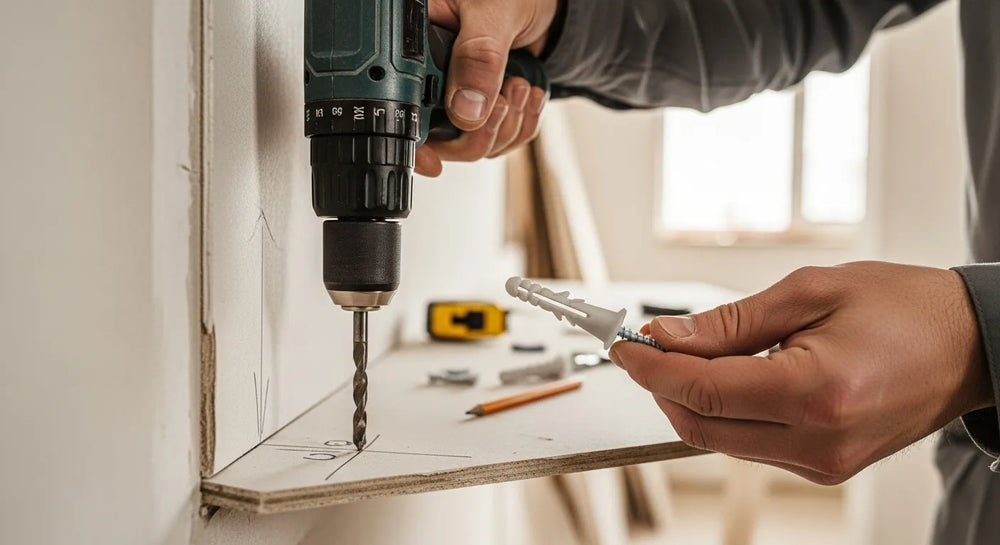
For many applications, especially in denser woods or when using larger diameter screws, pilot holes are indispensable. A pilot hole is a pre-drilled hole that guides the screw and prevents the wood from splitting as the screw's threads expand the material. Without an adequately sized pilot hole, the expansive forces generated by the screw can exceed the wood's tensile strength, leading to cracks, reduced holding power, or even catastrophic failure.
- Preventing Splitting: This is the most crucial function of a pilot hole, particularly near edges or ends of wood pieces.
- Guiding the Screw: Ensures the screw drives straight and true, preventing angled or misaligned fastening.
- Reducing Driving Torque: Makes it easier to drive the screw, especially for manual applications or in hardwoods, extending tool life.
- Optimizing Thread Engagement: A correctly sized pilot hole allows the screw threads to fully engage the wood without excessively reaming out the fibers, which would diminish holding power.
The size of the pilot hole is critical: too small, and the wood may still split; too large, and the threads won't have enough material to grip, significantly reducing holding power. Generally, the pilot hole diameter should match the diameter of the screw's shank (the unthreaded part), allowing the threads to do their work without overstressing the wood.
Wood Characteristics: Grain Direction, Density, and Moisture Content
The effectiveness of screw engagement is profoundly influenced by the characteristics of the wood itself:
- Grain Direction: Screws hold best when driven perpendicular to the wood grain. Driving parallel to the grain can lead to splitting along the grain lines, especially in softwoods.
- Density: Denser woods (hardwoods like oak, maple) offer greater resistance to splitting but also require more driving torque and often necessitate precise pilot holes. Less dense woods (softwoods like pine, cedar) are more prone to splitting but are easier to penetrate. The density directly correlates with withdrawal resistance; denser wood typically provides better holding power for a given screw depth.
- Moisture Content: Wood expands and contracts with changes in moisture. Screws driven into wet wood may loosen as the wood dries and shrinks. Conversely, driving screws into overly dry wood can increase the risk of splitting. Using screws with appropriate corrosion resistance, such as silicon bronze for outdoor or marine applications, is vital when dealing with varying moisture levels. For these types of applications, exploring options like the Oval Slot Drive Silicon Bronze Wood Screw can provide superior durability and resistance to environmental factors.
The "How Far" Question: Core Principles of Optimal Depth
Determining the ideal screw depth is a balance between achieving sufficient holding power and preventing damage to the wood or workpiece. There's no single universal answer, as the optimal depth is highly dependent on the application, wood type, and screw specifications. However, several core principles guide this decision.
Minimum Engagement Depth: Rules of Thumb
A common rule of thumb for effective screw engagement in wood suggests that the screw should penetrate the receiving piece of wood by at least two-thirds of its total length, or ideally, by a length equal to the thickness of the fastened piece. For instance, if you are attaching a 3/4-inch board to a thicker piece, the screw should penetrate the thicker piece by at least 3/4 inch.
Another widely cited guideline is that the screw should penetrate the receiving material by at least 1 inch or 7 times its diameter, whichever is greater, for robust structural connections. These are starting points, not absolute rules, and actual requirements can vary significantly. The goal is to maximize the number of engaged threads within the receiving material without causing splitting or protruding unnecessarily.
Factors Influencing Depth: Material Thickness, Load, and Screw Type
-
Material Thickness:
- Fastened Material: The screw must be long enough to pass through the first (fastened) piece of wood and then engage deeply enough into the second (receiving) piece.
- Receiving Material: The depth of penetration into the receiving material is paramount for holding power. If the screw is too long, it may protrude through the other side, creating a hazard or aesthetic issue. If it's too short, it won't achieve adequate grip.
-
Load Bearing Requirements:
- Withdrawal Load: This refers to forces trying to pull the screw straight out of the wood. Deeper penetration and greater thread engagement directly increase resistance to withdrawal.
- Shear Load: This refers to forces acting perpendicular to the screw, trying to bend or break it. While depth plays a role, the screw's diameter, material (e.g., steel, brass), and the strength of the wood itself are more critical for shear resistance. For applications requiring specific material properties and finishes, considering options like a Round Slot Drive Brass Wood Screw might be suitable where aesthetics and moderate strength are key.
- Static vs. Dynamic Load: Connections subjected to constant static loads require robust fastening, while those exposed to dynamic (vibrating, shock) loads may demand even deeper penetration or specialized fasteners to prevent loosening over time.
- Type of Screw: Different screw types are designed for specific applications and wood types, influencing their optimal depth. For instance, a fine-threaded screw designed for cabinetry might not require the same depth as a coarse-threaded construction screw.
The Concept of "Withdrawal Resistance"
Withdrawal resistance is the primary metric for a screw's holding power in wood. It quantifies the force required to pull a screw straight out of a piece of wood. This resistance is directly proportional to:
- Screw Diameter: Larger diameter screws have more thread surface area and displace more wood, leading to higher withdrawal resistance.
- Thread Engagement Length (Depth): The longer the section of threaded screw embedded in the wood, the greater the withdrawal resistance.
- Wood Density: Denser woods offer significantly higher withdrawal resistance than less dense woods, assuming proper pilot hole sizing.
- Screw Thread Profile: Coarser threads generally offer better grip in softwoods, while finer threads can be effective in hardwoods with appropriate pilot holes.
Maximizing withdrawal resistance without causing damage is the ultimate goal when determining how far a screw needs to go into wood.
Screw Types and Their Impact on Depth and Application
The vast array of screws available reflects the diverse needs of fastening applications. Understanding the characteristics of each type is crucial for selecting the right fastener and determining appropriate depth. On platforms like Maden.co, buyers can access a wide range of U.S.-made screws, each designed for specific performance requirements.
Wood Screws: Tapered vs. Fully Threaded
Traditional wood screws typically have a tapered shank and partially threaded body. The unthreaded portion allows the two pieces of wood to be pulled tightly together, creating a strong joint without the threads of the screw binding in the top piece of wood. These are excellent for general woodworking, cabinetry, and furniture making. The length of the screw determines how much thread engages the receiving material, and thus, its ideal depth.
Modern wood screws, often referred to as "construction screws" or "all-purpose screws," frequently feature full threading. These screws are designed for maximum holding power along their entire length and are commonly used in structural applications where sheer strength and superior withdrawal resistance are critical. They typically have coarser threads and sharper points to penetrate wood more easily. For a flush finish in woodworking where a brass aesthetic is desired, a Flat Slot Drive Brass Wood Screw can be an excellent choice, requiring careful consideration of its full length for optimal depth.
Deck Screws: Specific Applications and Corrosive Resistance
Deck screws are a specialized type of wood screw, engineered for outdoor use in pressure-treated lumber and other exterior applications. They feature coarse threads for strong holding power, sharp points for easy penetration, and often include features like bugle heads for flush finishes. Crucially, deck screws are manufactured with superior corrosion resistance, usually from specialized coatings or materials like stainless steel or silicon bronze, to withstand moisture, rot, and chemical reactions from treated lumber. When selecting screws for outdoor projects, particularly those involving treated wood, the material composition is as vital as the depth of engagement. Our range of American-made fasteners includes options engineered for longevity in challenging environments.
Drywall Screws: Why They Are Not Ideal for Structural Wood
While drywall screws are inexpensive and readily available, they are generally not suitable for structural wood applications. They are designed for attaching gypsum board to wood or metal studs and have a brittle, hardened steel core. This brittleness makes them prone to snapping under shear forces in structural wood applications, which can compromise the integrity of the connection. Their fine threads also do not grip wood fibers as effectively as the coarser threads of dedicated wood screws. Always use fasteners specifically designed for the load and material to avoid structural failures.
Specialty Screws: Cabinetry, Particle Board, and More
Beyond general-purpose screws, there are many specialty fasteners tailored for unique needs:
- Cabinetry Screws: Often self-tapping and with specific head types (e.g., washer head) to prevent pull-through in softer materials.
- Particle Board Screws: Designed with specific thread profiles to grip the dense, composite material of particle board without stripping or crumbling the substrate.
- Pocket Hole Screws: Used with pocket hole joinery systems, these are self-tapping and designed to create strong, concealed joints.
For procurement managers or design engineers seeking specific, high-quality, U.S.-made fasteners, the breadth of selection on Maden.co is invaluable. We are committed to democratizing access to American manufacturing, ensuring you can find the exact component required for your project, from standard wood screws to specialized industrial fasteners, all from our network of 800+ verified U.S. manufacturers. Our platform, which you can explore at Maden.co, is designed to connect industrial buyers with over 2.5 million American-made products, driving the manufacturing revival.
Critical Factors Determining Optimal Screw Depth
Achieving a secure and durable wood joint goes beyond simply "sending it all the way in." Optimal screw depth is a calculated decision influenced by several interacting variables. Ignoring these factors can lead to compromised structural integrity, material damage, or premature failure.
Material Thickness: The Foundation of Fastening
The thickness of both the piece being fastened and the receiving material is fundamental.
- Joining Two Pieces of Wood: The "2/3rds" Rule Revisited: When attaching one piece of wood to another, a good starting point is to ensure that the screw penetrates the receiving piece of wood by at least two-thirds of the total screw length. This general guideline ensures sufficient thread engagement for most non-structural applications. For example, if you're using a 1.5-inch screw, at least 1 inch of its threaded portion should ideally enter the second piece of wood.
- Attaching a Thin Material to a Thicker One: When a thin panel, such as plywood or veneer, is being attached to a thicker frame or substrate, the screw must pass entirely through the thin material and achieve adequate embedment in the thicker piece. The screw's length should be chosen so that its threaded portion fully engages the thicker material without protruding through the other side. The unthreaded shank should ideally pass through the thinner material, allowing it to pull tight.
- Avoiding "Blow-Through" or Splitting: Over-penetration or selecting a screw that is too long can result in the screw tip breaking through the opposite side of the receiving material. This is not only unsightly but can also weaken the connection and create a safety hazard. Conversely, a screw driven too close to an edge or end without sufficient depth can cause the wood to split along its grain, especially in softwoods or when the pilot hole is absent or improperly sized.
Load Bearing Requirements: Shear vs. Withdrawal
The type and magnitude of the load the joint will experience are critical determinants of screw depth and diameter.
- Withdrawal Load: As discussed, this is the force attempting to pull the screw axially out of the wood. Connections primarily resisting withdrawal (e.g., hanging a heavy cabinet from a wall stud) require maximum thread engagement. Deeper penetration directly enhances withdrawal resistance, as does using a larger diameter screw or one with a more aggressive thread profile.
- Shear Load: This refers to forces acting perpendicular to the screw, attempting to cut or bend it (e.g., a deck joist resting on a ledger board). While depth plays a role, shear strength is more dependent on the screw's diameter, its material (e.g., high-tensile steel is stronger than brass for shear), and the strength of the wood itself. For critical shear applications, multiple screws or specialized structural fasteners may be necessary.
- Static vs. Dynamic Load: A static load is constant, like the weight of a shelf. A dynamic load involves movement or vibration, such as machinery components. Dynamic loads can gradually loosen screws over time, even with seemingly adequate depth. Such applications may necessitate longer screws, multiple fasteners, or even through-bolts to ensure long-term stability. Design engineers often calculate safety factors to account for these variables, ensuring the fastener system can safely handle anticipated loads with a margin of error.
Wood Type and Density: A Key Interaction
The physical properties of the wood are paramount to effective fastening.
-
Softwoods vs. Hardwoods:
- Softwoods (e.g., pine, cedar, spruce): Are generally easier to penetrate but have lower withdrawal resistance and are more prone to splitting. Longer screws or those with coarser threads are often preferred to maximize engagement in softer fibers. Pilot holes are still advisable, especially near edges.
- Hardwoods (e.g., oak, maple, cherry): Are denser, offering superior withdrawal resistance but are much harder to drive screws into and are more prone to splitting without proper pilot holes. Finer-threaded screws can perform well in hardwoods, but the pilot hole must be precisely sized to match the screw's shank diameter and extend deep enough to accommodate the full threaded portion.
- Engineered Wood Products (Plywood, MDF, Particle Board): These materials present unique challenges. Plywood generally holds screws well, particularly when driven into the laminated layers. MDF (Medium-Density Fiberboard) and particle board are more susceptible to stripping and crumbling if screws are over-tightened or driven too close to edges. Specialized screws with coarse, sharp threads are often recommended for these materials, and careful pilot hole sizing is essential to prevent blowout or material degradation.
Screw Diameter and Length: Matching to the Application
The dimensions of the screw directly correlate with its performance.
- Diameter: A larger diameter screw generally provides greater holding power (both withdrawal and shear) due to increased surface area for thread engagement and a stronger shank. However, larger diameters also require larger pilot holes and exert more expansive pressure on the wood, increasing the risk of splitting. Matching the screw diameter to the wood's density and the material's thickness is crucial.
- Length: The screw's length determines the potential depth of engagement. It must be long enough to pass through the fastened material and achieve adequate embedment in the receiving material. A general guideline is that the screw length should be at least three times the thickness of the fastened piece, with at least two-thirds of the screw's length embedded in the receiving material. For highly critical connections, always consult engineering specifications.
Environmental Factors: Moisture and Corrosion
For exterior applications, or in environments with fluctuating temperature and humidity, environmental factors significantly influence fastener longevity and performance.
- Moisture and Temperature Fluctuations: Wood naturally expands when it absorbs moisture and contracts when it dries. This movement can put stress on screw connections, potentially loosening them over time. Fasteners designed for exterior use often have properties that accommodate this movement, such as slightly elastic coatings or materials.
- Corrosion Resistance: For outdoor projects, marine applications, or use with chemically treated lumber, screws must resist corrosion. Silicon bronze, stainless steel, and specialized coated steel screws are commonly used. Corrosion can weaken the screw itself and also degrade the surrounding wood, leading to premature joint failure. When sourcing for these demanding conditions, considering U.S.-made options like the Oval Slot Drive Silicon Bronze Wood Screw from our marketplace ensures both material quality and reliability for long-term performance.
Best Practices for Secure Fastening
Beyond simply knowing how far to drive a screw, employing best practices ensures the strongest, most reliable, and aesthetically pleasing connections. These techniques are vital for procurement managers overseeing material specifications, MRO buyers making repairs, and design engineers specifying assembly methods.
Pilot Hole Precision: Size, Depth, Alignment
The importance of pilot holes cannot be overstated.
- Correct Size: The pilot hole should be slightly smaller than the outer diameter of the screw's threads but equal to or slightly larger than the screw's shank diameter. This allows the threads to cut into the wood without forcing the shank to expand the wood, which causes splitting. A simple test involves holding the screw up to different drill bits; the correct bit should allow the screw's threads to be visible around the bit, but the shank should be obscured.
- Correct Depth: The pilot hole should be drilled to a depth slightly less than the desired screw penetration, allowing the screw tip to find purchase and guide itself. Using a drill stop or marking the drill bit with tape ensures consistent depth.
- Correct Alignment: Always drill pilot holes straight and perpendicular to the wood surface, unless a specific angled fastening is required. Misaligned pilot holes can cause screws to drive crooked, weakening the joint and potentially splitting the wood.
Countersinking and Counterboring: Flush Finish and Preventing Splitting
- Countersinking: This technique creates a conical recess for the screw head to sit flush with or slightly below the wood surface. It's essential for flat-head and oval-head screws for aesthetic appeal and to prevent snagging. It also helps prevent the wood around the screw head from splitting when the screw is tightened.
- Counterboring: This creates a wider, flat-bottomed recess that allows the entire screw head (and sometimes a washer) to sit below the surface. A plug can then be inserted to conceal the fastener entirely, often used in fine woodworking. Both methods improve aesthetics and can enhance joint integrity.
Driving Techniques: Speed, Torque, Avoiding Stripping
Proper driving technique is crucial for optimal screw performance.
- Appropriate Speed: Start slowly to allow the screw to seat properly and the threads to begin cutting. Increase speed as the screw penetrates, but reduce speed again as the screw head approaches the surface to prevent over-driving or stripping the head.
- Controlled Torque: Modern drills and drivers often have clutch settings to limit torque. Setting the clutch appropriately prevents over-tightening, which can strip the screw head, strip the wood threads, or crack the wood. The goal is a snug fit, not excessive force.
- Avoiding Stripping: If you feel the screw head stripping (the driver bit slips), stop immediately. Attempting to force a stripped screw can damage the screw, the wood, and your driver bit.
- Pre-drilling for Hardwoods: For dense hardwoods, pre-drilling is almost always mandatory. The wood's resistance is too high to allow the screw threads to cut without undue stress, increasing the risk of splitting, breaking the screw, or stripping the drive.
Using Proper Tools
Using the correct driver bit (Phillips, Torx, Pozi-Drive, Slot Drive, etc.) that perfectly matches the screw head is paramount to prevent cam-out (slipping out of the screw head) and stripping. For specific applications requiring a classic aesthetic and robust connection, utilizing a Flat Slot Drive Brass Wood Screw requires a precisely matched flat-head screwdriver bit to ensure clean, damage-free installation. Similarly, for other slot drive applications, a well-fitting bit is essential. Ensuring your team has access to the right tools, alongside high-quality fasteners, is a key aspect of industrial excellence.
The Maden.co Advantage: Sourcing American-Made Fasteners
Understanding the technical nuances of screw depth and application is only part of the procurement puzzle. The ability to reliably source high-quality, compliant fasteners is equally critical. This is where Maden.co provides an unparalleled advantage for industrial buyers across America.
At Maden.co, our mission is clear: to democratize access to American manufacturing. We connect industrial buyers like you – procurement managers, MRO buyers, and design engineers – with an expansive network of over 800+ verified U.S. manufacturers, offering access to more than 2.5 million American-made products. Our platform isn't just a marketplace; it's a strategic partner designed to enhance your procurement process.
Quality, Compliance, and Supply Chain Resilience
When you source fasteners through Maden.co, you're not just buying a product; you're investing in:
- Uncompromising Quality: American manufacturers adhere to stringent quality control standards, ensuring that every screw, bolt, and fastener meets exacting specifications for material composition, dimensions, and performance. This means greater consistency and reliability in your projects, reducing the risk of component failure.
- Critical Industry Compliance: Many industrial applications demand adherence to specific standards (e.g., DIN, NPT, ASTM). Our verified manufacturers produce fasteners that meet these critical benchmarks, simplifying your compliance efforts and ensuring your projects meet regulatory requirements.
- Enhanced Supply Chain Resilience: In an unpredictable global environment, relying on U.S.-made products significantly shortens lead times, reduces shipping complexities, and minimizes exposure to geopolitical risks. Sourcing domestically through Maden.co strengthens your supply chain, making it more robust and responsive to demand fluctuations. This commitment to supply chain transparency and industrial excellence are core values at Maden.co.
For a procurement manager under pressure to source a specific fastener for a new production run, a design engineer needing specific material certifications for a new prototype, or an MRO buyer facing an unexpected equipment breakdown, the ability to quickly find and finance a verified, U.S.-made part is a game-changer. We believe in customer empowerment, giving you the tools to succeed.
Accessing a Vast Catalog of Hard-to-Find Components
Our extensive catalog means that even for specialized applications requiring unique screw types, materials, or finishes—such as specific brass or silicon bronze wood screws for restoration projects or marine use—you're likely to find what you need. From general-purpose construction screws to highly specialized fasteners, we are the definitive platform for American-made industrial components. Our entire business model is built on this principle; you can learn more about our mission to champion American manufacturing here: About Us.
Are you a qualified U.S. manufacturer producing high-quality fasteners or other industrial components? We invite you to join our growing network. Register as a vendor and become a part of America's manufacturing revival: Vendor Registration.
Strategic Sourcing and Financial Flexibility with Maden.co
Beyond product access and quality assurance, Maden.co understands the financial realities and strategic needs of businesses. We offer solutions that go beyond transactional purchasing, focusing on the strategic business value of our platform.
Instant Financing: A Strategic Tool for Cash Flow Management
A key differentiator and a powerful strategic tool for businesses is our "Instant Financing" option. We recognize that capital-intensive projects, large volume purchases, or unexpected MRO needs can strain cash flow. Instant Financing isn't just a payment method; it's a mechanism that allows procurement managers and business owners to:
- Manage Cash Flow Effectively: Defer immediate large payments, freeing up working capital for other operational needs or unexpected expenses.
- Make Larger-Volume Purchases: Acquire necessary components in bulk, often securing better unit pricing or ensuring stock availability for critical projects without tying up immediate funds.
- Respond Quickly to Demand: Accelerate project timelines by immediately sourcing and acquiring materials without waiting for lengthy traditional financing approvals.
This feature is designed to empower your business, offering the flexibility required in today's dynamic industrial landscape. You can apply for Instant Financing at checkout to streamline your capital-intensive projects. This transparent process is integrated directly into your purchasing experience, reflecting our commitment to digital innovation and customer empowerment.
We are confident in our value proposition, helping you save time, reduce risk, and gain access to a comprehensive catalog of U.S.-made components. If you have specific sourcing questions or need assistance navigating our platform, our team is ready to help; please do not hesitate to Contact Us.
Conclusion
The question of how far do screws need to go into wood is far more nuanced than it initially appears, involving a complex interplay of screw mechanics, wood properties, load requirements, and best installation practices. Optimal screw depth is not a one-size-fits-all answer but a critical engineering and practical consideration that directly impacts the strength, durability, and safety of any wood-based assembly. By understanding the principles of pilot hole sizing, material thickness, load dynamics, and the specific characteristics of various screw types, procurement managers, MRO buyers, and design engineers can make informed decisions that ensure robust and reliable connections.
The era of merely adequate fastening is over; industrial excellence demands precision and quality at every step. Maden.co is at the forefront of this demand, providing unparalleled access to the highest quality American-made fasteners and industrial components. Our platform simplifies the procurement process, offering supply chain transparency, digital innovation, and the strategic advantage of Instant Financing. We believe that America's manufacturing revival is here, powered by accessible, high-quality, domestically sourced products.
Don't let fastener uncertainty compromise your projects. Leverage the power of American manufacturing to build stronger, more reliable, and more resilient systems. Explore our extensive catalog of U.S.-made products today, and experience the strategic advantages of sourcing through Maden.co. You can apply for Instant Financing at checkout to streamline your capital-intensive projects, ensuring your business has the resources it needs to thrive.
FAQ
Q1: What is the most critical factor in determining how deep a screw should go into wood?
A1: The most critical factor is ensuring sufficient thread engagement within the receiving piece of wood. A common rule of thumb is that the screw should penetrate the receiving material by at least two-thirds of its total length, or ideally, by a length equal to the thickness of the piece being fastened. This maximizes withdrawal resistance and ensures a strong mechanical bond.
Q2: Why is using a pilot hole so important, especially in hardwoods?
A2: Pilot holes are crucial for preventing wood splitting, particularly in dense hardwoods or when driving screws near edges. They guide the screw, reduce driving torque, and ensure that the screw's threads create a proper mechanical bond without over-stressing the wood fibers. An improperly sized or absent pilot hole can severely compromise joint strength and material integrity.
Q3: Can I use drywall screws for structural wood applications?
A3: No, drywall screws are not recommended for structural wood applications. They are designed for attaching gypsum board to studs and are made from brittle, hardened steel that can snap under the shear forces encountered in structural wood. Always use screws specifically designed for wood, such as dedicated wood screws or construction screws, which offer better shear strength and withdrawal resistance.
Q4: How does Maden.co help with sourcing the right fasteners for specific depth requirements?
A4: Maden.co provides access to over 2.5 million American-made products from 800+ verified U.S. manufacturers. This extensive catalog allows procurement managers and design engineers to find fasteners with precise specifications for length, diameter, thread type, and material. Our platform emphasizes quality and compliance, ensuring that you can source the exact U.S.-made screw needed to meet your project's depth and load requirements, backed by robust supply chain transparency and the option for Instant Financing at checkout.


