
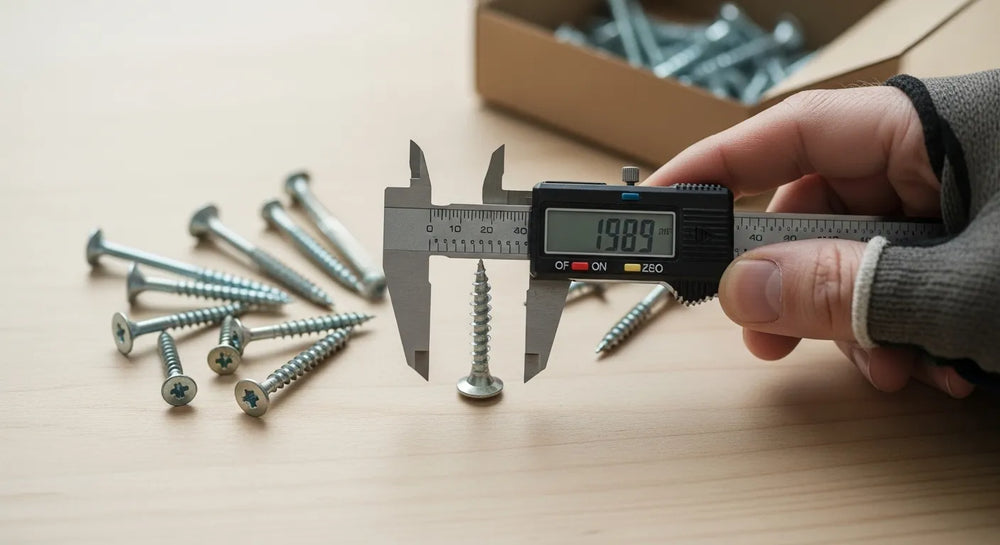
Optimal Wood Screw Length: A Procurement Guide
Table of Contents
- Introduction
- The Critical Role of Wood Screw Length in Industrial Applications
- Key Factors Influencing Wood Screw Length Selection
- General Guidelines for Determining Optimal Length
- The Impact of Incorrect Length: Costly Consequences
- Sourcing Precision: Why U.S.-Made Matters for Critical Fasteners
- Maden.co: Your Strategic Partner in Procurement
- Conclusion
- FAQ
The silent failure of a critical joint, often caused by an improperly selected fastener, can ripple through an entire operation, leading to costly delays, material damage, and even safety concerns. For procurement managers, MRO buyers, and design engineers, the seemingly simple question—how long should a wood screw be?—unveils a complex interplay of engineering principles, material science, and strategic sourcing. Overlooking this detail can transform a minor component into a major liability, undermining project integrity and increasing Total Cost of Ownership (TCO).
This article delves into the precise considerations for determining optimal wood screw length across various industrial and commercial applications. We will explore the mechanical principles at play, identify the critical factors influencing selection, detail the costly consequences of incorrect choices, and demonstrate how strategic sourcing through platforms like Maden.co ensures access to the right U.S.-made fasteners, enhancing supply chain resilience and project success. Our aim is to provide a definitive resource that empowers industrial buyers to make informed decisions, ensuring the longevity and reliability of their assemblies.
Introduction
In the intricate world of industrial manufacturing and maintenance, even the smallest components hold immense significance. A bolt, a nut, or a screw—each plays a critical role in the structural integrity and operational longevity of larger systems. When it comes to wood screws, the seemingly straightforward task of selection often belies a nuanced understanding of mechanics, material interaction, and load bearing. A common oversight in choosing the correct screw length can initiate a cascade of problems, from premature joint failure to compromised safety standards and increased maintenance overhead. Imagine a production line halted because a critical fixture, held together by screws, suddenly fails, or a carefully engineered product losing its structural integrity in the field due to inadequate fastening. These scenarios highlight why the question of "how long should a wood screw be" is not merely academic, but a fundamental procurement challenge with tangible business implications.
This guide is engineered to equip procurement professionals, MRO specialists, and design engineers with the authoritative insights needed to navigate the complexities of wood screw length selection. We will dissect the core principles that govern effective wood fastening, moving beyond generic rules of thumb to specific, actionable criteria. From understanding the crucial balance between thread engagement and material integrity to mitigating risks like splitting and pull-out, our discussion will illuminate the pathway to superior fastening solutions. Furthermore, we will illustrate how Maden.co, with its vast network of verified U.S. manufacturers and over 2.5 million American-made products, stands as a strategic partner in democratizing access to the precisely engineered components that drive the American manufacturing revival. Our vision is to become the definitive platform that proves American-made components are as accessible and convenient as any global alternative, reinforcing our commitment to Industrial Excellence and Supply Chain Transparency.
The Critical Role of Wood Screw Length in Industrial Applications
Selecting the correct wood screw length is paramount in industrial applications, impacting everything from the structural integrity of assemblies to long-term performance and safety. It's not just about holding two pieces of wood together; it's about creating a robust, durable, and reliable connection that withstands operational stresses over time.
Understanding the Mechanics of Fastening
At its core, a wood screw functions by creating threads within the wood fibers, generating a strong frictional force that resists pull-out. The length of the screw directly dictates the volume of wood engaged by these threads. An insufficient length means fewer threads are engaged, leading to a weaker connection prone to failure under load. Conversely, an excessively long screw can extend beyond the material, creating an unsightly and potentially hazardous protrusion, or even worse, it can split the wood, compromising the joint's integrity from the outset.
The primary mechanical forces a wood screw resists are:
- Withdrawal Strength: The resistance to being pulled straight out of the wood. This is directly proportional to the amount of thread engaged in the receiving material.
- Shear Strength: The resistance to forces acting parallel to the screw's shaft, attempting to cut or bend it. While screw diameter is a major factor here, proper length ensures the screw passes deeply enough through the joint to distribute shear forces effectively across a larger section of the material.
For example, in high-vibration machinery mounts or heavy-duty shelving, both withdrawal and shear strength are critical. A screw that is too short will fail prematurely, leading to equipment instability or collapse.
Beyond the Aesthetics: Structural Integrity and Load Bearing
In an industrial context, structural integrity isn't just about appearance; it's about performance, safety, and compliance. Incorrect screw length can severely compromise the load-bearing capacity of an assembly. Consider a crucial support beam or a frame for heavy machinery. If the screws are too short, they may only penetrate a fraction of the required depth, leading to concentrated stress points that can shear or pull out, causing catastrophic failure. The integrity of these connections is vital for operator safety and the prevention of expensive downtime.
Furthermore, proper screw length ensures that the load is distributed evenly across the joint. When the screw fully penetrates the receiving material to an optimal depth, it anchors securely, resisting both static and dynamic loads without premature loosening or fatigue. This is particularly important in applications subjected to cyclical loading, where even minor movement can progressively weaken the joint over time.
Preventing Failure: Stripping, Splitting, and Pull-Out
The consequences of choosing the wrong wood screw length are diverse and often costly:
- Stripping: If a screw is too long for the pilot hole diameter, or if the material is too soft, the threads can strip the wood, leading to a loose, ineffective connection with no holding power. While stripping usually relates to diameter, insufficient length can exacerbate the issue by concentrating all stress on a small number of threads.
- Splitting: A screw that is too long or too large in diameter, especially when driven close to the edge or end of a piece of wood, can exert excessive wedging pressure, causing the wood to split. This not only ruins the material but also renders the joint completely useless, requiring rework and material replacement.
- Pull-Out: The most common failure mode for undersized screws. If the screw is too short, the engaged threads lack sufficient surface area to resist the applied tensile forces, and the screw simply pulls out of the wood. This is a critical failure in applications where the joint is under tension.
For a procurement manager under pressure to source a specific DIN 931 compliant hex cap screw, a design engineer needing specific material certifications for a new prototype, or an MRO buyer facing an unexpected equipment breakdown, the ability to quickly find and finance a verified, U.S.-made part is a game-changer. Our network of 800+ verified U.S. manufacturers means that whether you need standard fasteners or specialty components for unique applications, we offer unparalleled access and reliability.
Key Factors Influencing Wood Screw Length Selection
Determining the ideal wood screw length involves a careful analysis of several interdependent factors. A holistic approach is essential to ensure a robust and enduring connection.
Material Thickness and Density
The most fundamental factor is the thickness of the materials being joined. The screw must be long enough to pass through the first (fastened) material and penetrate sufficiently into the second (receiving) material.
- First Material (Fastened Piece): The screw should comfortably pass through this piece without its threads engaging, allowing the head to draw it tightly against the receiving material. If the threads engage prematurely in the first piece, it can prevent the joint from tightening properly, leaving a gap.
- Second Material (Receiving Piece): This is where the bulk of the screw's holding power comes from. As a general rule, the screw should penetrate at least two-thirds, and ideally three-quarters, of the thickness of the receiving material. For very dense hardwoods, a slightly shallower penetration might suffice due to the wood's inherent strength, but for softer woods or composite materials, deeper penetration is crucial for adequate grip. The target penetration should aim to engage as many threads as possible without risking splitting.
Joint Type: Butt Joints, Lap Joints, Edge Joints
The configuration of the joint also dictates optimal screw length:
- Butt Joints: Two pieces joined end-to-end or side-to-side. Here, the screw typically passes through the full thickness of one piece and into the end or side grain of the other. Special care is needed with end grain, as it offers significantly less withdrawal resistance than side grain. Longer screws are often necessary to compensate for this reduced holding power.
- Lap Joints: Two pieces overlapping each other. The screw passes through the top piece and into the bottom piece. The critical dimension here is the thickness of the bottom piece, into which the screw must achieve adequate penetration.
- Edge Joints: Joining two pieces along their edges. This requires careful consideration of the screw's entry point to avoid splitting, and sufficient length to penetrate deeply into the receiving edge, which often has limited thickness.
Understanding these joint types helps tailor the screw length to the specific stress points and material limitations of each configuration.
Load Requirements: Shear vs. Withdrawal Strength
As discussed, screws primarily resist two types of forces:
- Withdrawal Strength: For joints under tension (e.g., hanging cabinets, shelf brackets), maximizing withdrawal strength is critical. This necessitates a screw long enough to achieve maximum thread engagement in the receiving material without exiting the other side.
- Shear Strength: For joints where forces are parallel to the screw (e.g., floor joists, frame connections), shear strength is paramount. While screw diameter is a primary factor here, ensuring the screw passes through the joint's critical shear plane and extends well into the receiving material provides a stronger, more stable connection, distributing the shear load over a greater area. An insufficiently long screw might snap at the junction point.
For instance, when designing heavy-duty industrial shelving, the screws supporting the shelves need excellent shear strength, while the screws anchoring the entire unit to a wall require superior withdrawal strength. For a high-strength solution, an oval slot drive silicon bronze wood screw might be considered for applications requiring both durability and corrosion resistance, showcasing the variety of specialized fasteners available through Maden.co.
Environmental Considerations: Moisture, Temperature, Vibration
The operating environment significantly influences the long-term performance of wood fasteners.
- Moisture: Wood expands and contracts with changes in moisture content. Screws that are too long can exacerbate splitting when wood expands, or lose grip when wood contracts. Fasteners for outdoor applications or high-humidity environments require particular attention to length, material, and sometimes even pre-drilling techniques to accommodate wood movement.
- Temperature: Extreme temperature fluctuations can also cause wood movement, impacting joint integrity over time.
- Vibration: In machinery or applications subjected to constant vibration, screws can gradually loosen. Proper length ensures maximum thread engagement, providing greater resistance to these forces. Additionally, the correct length helps prevent the screw from bending or fatiguing under oscillatory stresses.
For internal carpentry, cabinet making, or fixtures that require a clean, flush finish, a flat slot drive brass wood screw provides both aesthetic appeal and reliable fastening. Such specific considerations are routinely met by our vast selection of U.S.-made components.
Pilot Holes and Thread Engagement
The use of pilot holes is critical, especially in hardwoods, to prevent splitting and ensure proper thread engagement.
- Pilot Hole Diameter: Should match the screw's root diameter (the diameter of the shaft between the threads). This allows the threads to cut cleanly into the wood, creating maximum holding power without unnecessary stress.
- Pilot Hole Depth: Should match the intended penetration depth of the screw. Drilling too shallow a pilot hole means the unthreaded tip of the screw will act like a wedge, increasing the risk of splitting, particularly with longer screws.
The interaction of pilot hole, screw length, and material density is crucial for successful fastening. For general purpose fastening in hardwoods or softwoods where a decorative, traditional look is desired, exploring options like a round slot drive brass wood screw from our extensive catalog ensures quality and availability.
General Guidelines for Determining Optimal Length
While specific engineering calculations may be required for critical applications, several practical guidelines assist in determining the optimal wood screw length.
The "Rule of Thumb": Two-Thirds to One-Half Penetration
A widely accepted rule of thumb is that the screw should penetrate at least two-thirds of its total length into the receiving material. For instance, if you are joining a ¾-inch piece to a 1-inch piece of wood, and the screw is 2 inches long, at least 1.33 inches should be embedded in the 1-inch piece. A more conservative, and often safer, approach suggests the screw should penetrate half the thickness of the receiving material, plus the thickness of the first material.
Consider the following:
- Measure the thickness of the material being fastened (the first piece).
- Measure the thickness of the material receiving the screw (the second piece).
-
Ideal Length: The screw should pass through the first piece and penetrate into the second piece by at least 2/3rds its thickness, or ideally, 3/4ths its thickness.
- Example: Joining a 1-inch thick board to a 2-inch thick support.
- Screw passes through 1 inch of the first board.
- Required penetration into the second board: 2/3 * 2 inches = 1.33 inches.
- Total screw length = 1 inch (first board) + 1.33 inches (second board) = 2.33 inches. A 2.5-inch screw would likely be chosen.
- If the second board is thin (e.g., 0.5 inches), then 2/3 * 0.5 = 0.33 inches. Total length = 1 + 0.33 = 1.33 inches. A 1.5-inch screw would be suitable.
- Example: Joining a 1-inch thick board to a 2-inch thick support.
This guideline balances holding power with the risk of splitting the receiving material. It’s a starting point, to be refined by the other factors discussed.
When to Deviate: Special Materials and Applications
Not all woods are created equal, and not all applications present the same challenges.
- Hardwoods vs. Softwoods: Hardwoods (like oak, maple, hickory) are dense and offer superior holding power, meaning a slightly shorter screw might provide adequate strength. However, they are more prone to splitting, necessitating accurate pilot holes and sometimes slightly thinner screws for a given length. Softwoods (like pine, cedar, spruce) are less dense and require deeper penetration for comparable holding power. Longer screws are generally preferred here to maximize thread engagement.
- Engineered Wood Products: Plywood, MDF, particleboard, and other engineered materials have different fiber structures and densities. MDF and particleboard, for instance, are prone to stripping and don't hold screws as well as solid wood, often requiring coarser threads or specialized fasteners, and potentially longer lengths to compensate for reduced density. Plywood, with its cross-grain layers, offers more consistent holding but still benefits from precise length selection to avoid delamination.
- High-Stress Applications: For joints that will bear significant weight, experience vibration, or be subjected to frequent movement, opting for a longer screw (within the bounds of avoiding splitting) provides additional peace of mind and enhanced longevity.
- Decorative or Exposed Applications: Where aesthetics are paramount, the screw head must sit flush or be concealed. If a screw is too long, the tip might poke through, or the head might not seat properly if the first material is too thin to allow the unthreaded shank to pass.
Considering the Screw Diameter
While primarily focused on length, screw diameter is intrinsically linked to its performance and choice of length. A larger diameter screw generally offers greater shear strength and withdrawal resistance, but it also exerts more wedging force on the wood, increasing the risk of splitting.
- Balancing Diameter and Length: In situations where maximum strength is needed but space is limited (preventing an overly long screw), a larger diameter screw can sometimes compensate for a slightly shorter length by providing more surface area for thread engagement and higher shear resistance.
- Pilot Hole Harmony: The diameter of the screw heavily influences the required pilot hole size. Using a longer, thicker screw often necessitates a carefully sized and drilled pilot hole to prevent splitting, especially in dense materials.
Our commitment to Industrial Excellence means we provide not just parts, but solutions. Maden.co offers a comprehensive catalog where you can filter by material, size, head type, and drive to find the exact U.S.-made screw you need for your specific application, ensuring compliance and optimal performance.
The Impact of Incorrect Length: Costly Consequences
The seemingly minor decision of wood screw length can have profound and costly repercussions across an organization's operations, impacting everything from product quality to operational efficiency and brand reputation.
Compromised Structural Integrity and Safety Risks
The most immediate and severe consequence of an incorrect wood screw length is the compromise of structural integrity. A joint that is inadequately fastened is inherently weak and prone to failure.
- Product Failure: In manufacturing, this translates directly to product defects, warranty claims, and potential recalls. If a screw is too short, its holding power is diminished, leading to components loosening or detaching under normal operating conditions. This can render an entire product or assembly unusable.
- Operational Hazards: In MRO and facility management, improperly fastened fixtures, shelving, or structural elements pose significant safety risks to personnel. A collapsing shelf or a failing structural beam can lead to injuries, equipment damage, and serious liability issues. Ensuring the correct screw length is a fundamental aspect of workplace safety and regulatory compliance.
Material Damage and Rework
Choosing a screw that is too long or too large in diameter often results in splitting the wood, especially when fastening near edges or ends, or into dense hardwoods without proper pilot holes.
- Scrapped Materials: Split wood is often unusable, leading to discarded components and wasted raw materials. For specialized hardwoods or custom-fabricated pieces, this can represent a substantial financial loss and necessitate lengthy re-order times.
- Rework and Repair: Even if the damage is minor, it often requires extensive rework, including patching, sanding, and refinishing, consuming valuable labor hours and diverting resources from productive tasks. If the damage is irreparable, the entire component may need to be remanufactured, incurring significant costs in both material and labor. This directly impacts production schedules and budget forecasts.
Increased Total Cost of Ownership (TCO)
The hidden costs associated with improper screw length can quickly escalate, contributing to a higher TCO for products and projects.
- Direct Costs: Include the cost of replacement materials, additional fasteners, and labor for rework or repairs. If a failure occurs in the field, there are costs associated with field service, transportation, and potentially product replacement.
- Indirect Costs: Extend to lost productivity due to downtime, expedited shipping for replacement parts, diminished brand reputation, and potential litigation from safety incidents. The perception of quality can also suffer, impacting future sales and market share.
- Warranty Claims: A poorly designed or assembled product due to incorrect fasteners will inevitably lead to higher warranty claims, straining financial resources and customer service departments.
Project Delays and Operational Inefficiency
In industrial settings, time is money. Any factor that introduces delays or reduces efficiency directly impacts profitability.
- Production Bottlenecks: Discovering that fasteners are causing failures or requiring rework on the production line creates bottlenecks, slowing down assembly processes and impacting delivery schedules.
- Maintenance Downtime: For MRO teams, repeated failures due to inadequate fastening result in increased maintenance frequency and extended downtime for critical equipment. This directly reduces operational uptime and impacts production capacity.
- Procurement Friction: The need to repeatedly re-order components due to errors, or to quickly source specialty fasteners for emergency repairs, adds friction to the procurement process. This often involves urgent, higher-cost orders and disrupts established supply chains. Maden.co addresses this by providing an efficient, transparent platform for sourcing high-quality U.S.-made parts, reducing the likelihood of such costly errors. Our comprehensive catalog and supplier network are designed to mitigate these exact challenges, offering unparalleled access to the components you need, when you need them.
Sourcing Precision: Why U.S.-Made Matters for Critical Fasteners
In an era of globalized supply chains, the decision to source U.S.-made fasteners transcends simple patriotism; it is a strategic imperative for businesses prioritizing quality, reliability, and resilience. For critical components like wood screws that underpin structural integrity, the benefits of American manufacturing are particularly pronounced.
The Maden.co Difference: Quality, Compliance, and Trust
At Maden.co, our mission is to democratize access to American manufacturing, ensuring that industrial buyers can easily connect with the unparalleled quality and reliability of U.S.-made products. We believe that America's manufacturing revival is here, and our platform is at the forefront of this transformation. When you source wood screws and other industrial components through Maden.co, you're not just buying a product; you're investing in a commitment to excellence.
- Unwavering Quality Control: U.S. manufacturers adhere to stringent quality control standards and often higher material specifications compared to many overseas alternatives. This translates to fasteners with consistent dimensions, superior material composition, and precise threading—all critical for optimal performance and preventing the issues associated with incorrect length or poor-quality manufacturing.
- Reliable Performance: Knowing that a fastener is manufactured to exact specifications, from the alloy composition to the thread pitch and finish, instills confidence in its long-term performance. This reduces the risk of premature failure, minimizes the need for replacements, and ultimately lowers the Total Cost of Ownership.
- Ethical Sourcing and Transparency: Our platform emphasizes Supply Chain Transparency, connecting buyers directly with verified U.S. manufacturers. This means clear visibility into the origin, manufacturing processes, and compliance certifications of every product, fostering trust and accountability. You can learn more about our mission to champion American manufacturing here: About Us.
Accessing a Vast Catalog of Verified U.S. Manufacturers
One of the significant challenges in sourcing specialized industrial components is finding reliable suppliers for niche products. Maden.co overcomes this by aggregating a vast network of over 800+ verified U.S. manufacturers, offering access to over 2.5 million American-made products.
- Comprehensive Selection: Whether you need standard utility wood screws, specialized deck screws with corrosion resistance, or precision-machined fasteners for specific industrial applications, our platform offers an unparalleled selection. This eliminates the need to scour multiple vendors or settle for suboptimal international alternatives.
- Specialty Components Made Accessible: For design engineers working on innovative prototypes or MRO buyers needing hard-to-find replacement parts, Maden.co provides direct access to manufacturers capable of producing custom or highly specialized fasteners, ensuring that even the most unique requirements can be met with American quality.
Ensuring Compliance with Industry Standards
In many industrial sectors, compliance with specific standards (e.g., ASME, ASTM, DIN, NPT) is not optional; it’s a regulatory requirement. U.S. manufacturers are inherently integrated into this framework.
- Guaranteed Standards Adherence: Sourcing through Maden.co ensures that the fasteners you procure meet or exceed relevant industry standards. This is crucial for applications in aerospace, automotive, construction, and heavy machinery, where material specifications and performance benchmarks are strictly enforced. Our values of American Manufacturing Pride and Industrial Excellence underpin every product listed on our platform.
- Reduced Risk of Non-Compliance: By partnering with verified U.S. manufacturers, procurement managers significantly reduce the risk of receiving non-compliant parts, which could lead to project failures, regulatory fines, and legal liabilities. The ability to verify certifications and material specifications directly through our transparent platform is a core benefit.
- Tailored Solutions for Specific Needs: For applications requiring unique material properties, such as a high-strength, corrosion-resistant alloy for marine environments, or specific heat treatments for enhanced durability, U.S. manufacturers on Maden.co are equipped to provide the precise solutions. This directly contributes to improving Total Cost of Ownership by reducing the likelihood of premature part failure and the associated costs of replacement and downtime.
Maden.co: Your Strategic Partner in Procurement
The complexities of modern industrial procurement demand more than just a marketplace; they require a strategic partner. Maden.co is engineered to be that partner, transforming the way businesses source U.S.-made industrial components. Our platform is built on the principles of Digital Innovation, Customer Empowerment, and a steadfast belief in the strength of American manufacturing.
Streamlining Your Supply Chain with Digital Innovation
We understand that time is a critical commodity for procurement managers and business owners. Our platform is designed to eliminate procurement friction, offering an intuitive, efficient experience that streamlines your entire sourcing process.
- Effortless Discovery: With advanced search and filtering capabilities, you can quickly locate specific products, such as various types of wood screws, by material, size, head type, drive, and even manufacturer. This ease of discovery saves countless hours typically spent sifting through catalogs or contacting multiple suppliers.
- Transparent Information: Each product listing provides detailed specifications, material certifications, and manufacturer information, ensuring you have all the necessary data to make informed decisions. This level of transparency is integral to our value proposition.
- Consolidated Sourcing: Instead of managing relationships with dozens of individual suppliers, Maden.co allows you to source a diverse range of products from multiple U.S. manufacturers through a single, unified platform. This simplifies order management, logistics, and vendor relations, enhancing overall supply chain efficiency.
Leveraging Instant Financing for Strategic Purchases
We recognize that managing cash flow is paramount for businesses, especially when undertaking large-volume or capital-intensive projects. That's why Maden.co offers "Instant Financing" as a strategic tool to empower your procurement decisions.
- Optimize Cash Flow: Instant Financing provides the flexibility to acquire the necessary components without immediately impacting your working capital. This allows businesses to maintain liquidity for other operational needs or unexpected expenses.
- Facilitate Larger Volume Orders: For projects requiring significant quantities of fasteners or other industrial components, Instant Financing enables you to make larger, more economical purchases. Buying in bulk often leads to better pricing and ensures you have sufficient stock, preventing costly project delays due to material shortages.
- Seamless Integration: The Instant Financing option is conveniently available during the checkout process on Maden.co. This seamless integration ensures a smooth and efficient purchasing experience, allowing you to secure the products you need with financial flexibility. It’s a direct reflection of our commitment to Customer Empowerment, ensuring you have the tools to build a more reliable and efficient procurement process.
If you have specific sourcing questions about our products or how Instant Financing can support your next project, our expert team is ready to help. You can easily reach us through our Contact Us page.
Conclusion
The seemingly simple query of "how long should a wood screw be" unravels into a critical engineering and procurement consideration with profound implications for structural integrity, project timelines, and overall business profitability. As we have explored, the optimal length is not arbitrary but a precise calculation balancing material thickness, joint type, load requirements, environmental factors, and the careful preparation of pilot holes. Incorrect choices can lead to costly failures, extensive rework, safety hazards, and a significant increase in Total Cost of Ownership.
For procurement managers, MRO buyers, and design engineers dedicated to fostering industrial excellence and safeguarding project success, the strategic decision to source high-quality, U.S.-made fasteners is paramount. Maden.co stands as your indispensable partner in this endeavor, democratizing access to over 2.5 million American-made products from 800+ verified manufacturers. We empower you with a digitally innovative platform that streamlines sourcing, ensures supply chain transparency, and upholds the highest standards of American Manufacturing Pride.
By leveraging Maden.co, you gain access to the precise components engineered for longevity and reliability, reducing procurement friction and building resilience into your supply chain. We invite you to experience the tangible benefits of partnering with America's premier B2B marketplace. Dive into our extensive catalog of U.S.-made industrial fasteners and components today. Discover the exact solutions for your toughest challenges and take advantage of our Instant Financing option available at checkout to streamline your capital-intensive projects. The future of American manufacturing is not just here; it’s accessible at your fingertips. Visit Maden.co now and join the American manufacturing revival. Are you a U.S. manufacturer? Register as a vendor and join the American manufacturing revival.
FAQ
1. What is the basic rule of thumb for wood screw length?
A common rule of thumb is that the screw should penetrate at least two-thirds, and ideally three-quarters, of its total length into the receiving material. For example, if you're joining a 1-inch thick board to a 2-inch thick support, and the screw is 2.5 inches long, approximately 1.67 inches should be embedded in the 2-inch support piece. This guideline ensures sufficient thread engagement for strong holding power while minimizing the risk of splitting the wood.
2. How does wood density affect screw length selection?
Wood density significantly impacts screw length. For denser hardwoods (like oak or maple), you might achieve adequate holding power with slightly shorter screws due to the wood's inherent strength, though careful pilot hole drilling is crucial to prevent splitting. For softer woods (like pine or cedar), longer screws are generally recommended to maximize thread engagement and compensate for the lower density, thus providing stronger withdrawal resistance. Engineered wood products like MDF or particleboard often require specialized screws and longer lengths due to their reduced density and tendency to strip.
3. Can a wood screw be too long? What are the consequences?
Yes, a wood screw can definitely be too long. The primary consequence is the risk of splitting the receiving material, especially when fastening near edges or ends, or into dense hardwoods. This not only damages the material but also severely compromises the joint's integrity, leading to a weak or failed connection. An excessively long screw might also protrude from the back of the material, creating an unsightly and potentially hazardous sharp point. In some cases, a screw that is too long can also struggle to fully seat, preventing the first material from being drawn tightly against the receiving material.
4. Why is sourcing U.S.-made wood screws important for industrial applications?
Sourcing U.S.-made wood screws through platforms like Maden.co ensures superior quality, compliance with stringent industry standards, and enhanced supply chain transparency. American manufacturers adhere to rigorous quality control, providing fasteners with consistent dimensions, precise threading, and high-grade material compositions. This reduces the risk of premature failure, minimizes rework, and lowers Total Cost of Ownership. Furthermore, it supports supply chain resilience by providing reliable access to verified components, avoiding the uncertainties often associated with international sourcing, and directly contributing to the American manufacturing revival.


