
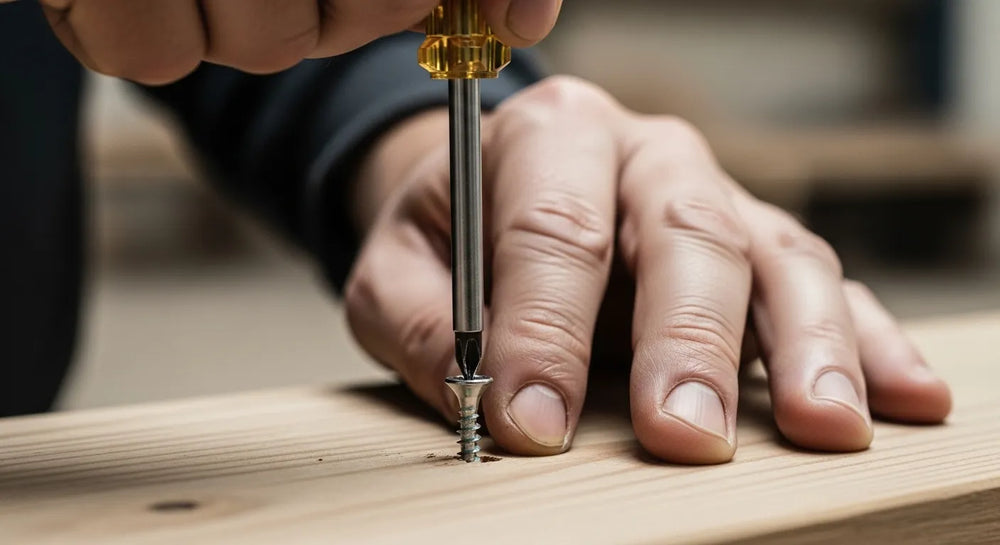
Optimizing Fastener Performance: Should You Pre-Drill for Wood Screws?
Table of Contents
- The Foundation of Fastening: Understanding Wood and Screws
- The Case for Pre-Drilling: Why and When It's Essential
- The Art of Pre-Drilling: Techniques and Tools
- Beyond the Basics: Advanced Considerations and Strategic Sourcing
- Conclusion: A Prudent Practice for Industrial Excellence
- Frequently Asked Questions (FAQ)
A project’s success, whether it’s a critical piece of industrial machinery or a complex fabrication, often hinges on the integrity of its smallest components. For procurement managers, MRO buyers, and design engineers, the choice of fasteners and their installation methods are not mere details; they are fundamental to structural soundness, operational longevity, and ultimately, the total cost of ownership. One question that frequently arises, yet often receives an oversimplified answer, is: should you pre-drill for wood screws? This isn't just about preventing a split board; it's about optimizing performance, preventing rework, and ensuring the reliability of every assembly.
In the intricate world of manufacturing and construction, where precision is paramount, understanding the nuances of fastener application can save significant time and resources. This comprehensive guide delves into the science and practicalities behind pre-drilling for wood screws, exploring when it's essential, when it's beneficial, and the critical factors that influence this decision. We’ll dissect the various types of wood, screw designs, and application scenarios, providing the authoritative insights you need to make informed choices that bolster your projects and enhance operational efficiency. At Maden.co, our mission is to democratize access to American manufacturing, ensuring you have the highest quality, U.S.-made components at your fingertips, and the knowledge to apply them effectively.
The Foundation of Fastening: Understanding Wood and Screws
Before diving into the mechanics of pre-drilling, it's essential to understand the fundamental elements at play: the wood itself and the screws designed to hold it. The interaction between these two components dictates the success of any fastening operation.
The Nature of Wood: Grain, Density, and Brittleness
Wood is a anisotropic material, meaning its properties vary depending on the direction of the grain. This inherent characteristic profoundly influences how it responds to penetration by a screw.
- Grain Direction: Screws driven perpendicular to the grain (across the width of a board) are generally less prone to splitting than those driven parallel to the grain (along the length, near an edge). Driving a screw parallel to the grain creates significant wedging pressure along the natural growth lines, making splitting much more likely.
-
Density and Hardness:
- Softwoods (e.g., pine, spruce, cedar): These woods are less dense and generally more forgiving. While they might resist splitting less than hardwoods, their softer nature means screws can penetrate more easily, though they might also lose holding power over time if not properly installed.
- Hardwoods (e.g., oak, maple, cherry): Dense and robust, hardwoods offer superior holding power but are significantly more prone to splitting, especially near edges or ends. Their density also makes screw penetration difficult, leading to stripped screw heads or broken fasteners if excessive force is applied without a pilot hole.
- Engineered Wood Products (e.g., plywood, MDF, particleboard): These materials behave differently. Plywood, with its layered construction, is quite resistant to splitting. MDF and particleboard, being reconstituted wood fibers, are very dense but also brittle. Screws driven into MDF or particleboard can easily strip out the material, requiring careful pre-drilling and often specific fasteners designed for these materials.
- Moisture Content: Wood expands and contracts with changes in moisture. Driving a screw into overly wet wood that then dries and shrinks can lead to splitting. Conversely, driving into dry wood that later absorbs moisture and expands can also stress the surrounding fibers.
- Species-Specific Characteristics: Some woods, like certain exotic hardwoods, are exceptionally brittle and require pre-drilling almost without exception. Others have unique grain patterns that might pose specific challenges.
Anatomy of a Wood Screw: Threads, Shanks, and Heads
A wood screw is not a one-size-fits-all fastener. Its design features are specifically engineered to create a strong, lasting connection with wood fibers.
- Threads: The helical ridges that cut into the wood, providing holding power. Modern wood screws often feature coarse, aggressive threads designed for efficient material removal and strong engagement.
- Shank: The unthreaded portion of the screw, located directly under the head. Its diameter is crucial for creating a clearance hole in the top piece of wood, allowing the screw to pull the two pieces tightly together without binding.
- Point: The tip of the screw, designed to initiate penetration. Self-tapping or self-drilling screws have specialized points to eliminate or reduce the need for pre-drilling, though their effectiveness varies with wood density.
-
Head: Available in various forms (flat, round, oval, pan, hex), each serving a specific purpose.
- Flat Head: Designed to sit flush or below the surface, ideal for a smooth finish.
- Round Head: Sits above the surface, offering a decorative or exposed look, sometimes used when countersinking isn't desired. For specific aesthetic or functional needs, we offer high-quality Round Slot Drive Brass Wood Screws, perfect for demanding applications where durability and appearance are key.
- Oval Head: A decorative head that is partially countersunk, providing a slightly raised, finished appearance. You can find robust options like our Oval Slot Drive Silicon Bronze Wood Screws for projects requiring both strength and visual appeal.
- Pan Head: A wide, flat bearing surface that sits on top of the material, offering maximum clamping force.
- Drive Type: The recess in the head for the screwdriver (e.g., Phillips, slotted, Torx, square). Slotted drives, though traditional, can be prone to cam-out, especially without proper pre-drilling. For classic applications, consider our reliable Flat Slot Drive Brass Wood Screws.
Understanding these characteristics forms the basis for answering the question: should you pre-drill for wood screws?
The Case for Pre-Drilling: Why and When It's Essential
The decision to pre-drill is not merely a preference; it’s a calculated move that significantly impacts the quality, longevity, and safety of a project. For many applications, particularly in industrial settings where structural integrity is non-negotiable, pre-drilling transitions from a recommendation to a critical requirement.
Preventing Wood Splitting and Cracking
This is the most immediate and visible benefit of pre-drilling. When a screw's threads forcibly displace wood fibers, it creates internal pressure. If this pressure exceeds the wood's tensile strength, especially along the grain or near an edge, the wood will split. This not only compromises the joint's strength but also ruins the material, leading to costly rework and material waste.
Consider an MRO buyer replacing a critical wooden component on a production line. If a new, American-made part needs to be securely fastened, ensuring the wood doesn't split during installation is crucial to avoid further downtime. For such high-stakes applications, relying on quality U.S.-made fasteners sourced from our platform, combined with proper pre-drilling, ensures the highest level of reliability. Our commitment to American Manufacturing Pride means every product contributes to robust and lasting solutions.
Ensuring Optimal Holding Power
While it might seem counterintuitive, pre-drilling often improves a screw's holding power. A pilot hole allows the screw to enter smoothly, letting its threads engage fully and cleanly with the wood fibers without damaging them during insertion. When a screw is forced into un-drilled wood, it can strip out or crush fibers, creating a weaker connection that is more prone to loosening over time.
For a design engineer specifying fasteners for a new prototype, the precise engagement of threads translates directly into predictable load-bearing capacity and fatigue resistance. This predictability is vital for product development and quality assurance. Maden.co connects these engineers with a vast catalog of over 2.5 million American-made products, ensuring access to the right fastener for every design challenge.
Preventing Stripped Screw Heads and Broken Screws
Driving screws into dense or un-drilled wood requires considerable torque. This can lead to:
- Stripped Screw Heads (Cam-Out): The screwdriver bit slips out of the screw head, damaging the recess and making it impossible to drive or remove the screw. This is particularly common with softer drive types like slotted or Phillips, especially without a proper pilot hole.
- Broken Screws: If the torque required to drive the screw exceeds the fastener's shear strength, the screw can snap, leaving part of it embedded in the wood—a frustrating and time-consuming problem to resolve. This risk is higher with smaller gauge screws or those made from less robust materials. Sourcing high-quality, verified U.S. manufactured fasteners through Maden.co helps mitigate the risk of premature failure. Our rigorous selection process for our network of 800+ verified U.S. manufacturers upholds Industrial Excellence in every component.
Facilitating Straight and Accurate Screw Placement
A pilot hole acts as a guide, ensuring the screw enters the wood precisely where intended and drives straight. Without a pilot hole, screws can wander, particularly in dense wood, leading to misaligned components or screws emerging from unintended locations. This is crucial for aesthetic precision in finished goods and structural accuracy in critical assemblies.
Considerations for Material and Application
When Pre-Drilling is Highly Recommended or Essential:
- Hardwoods: Almost always require pre-drilling to prevent splitting and to ease screw insertion.
- Thin Stock or Near Edges/Ends: Any application where the screw is close to the edge or end of a piece of wood is highly susceptible to splitting, necessitating a pilot hole.
- Small Diameter Screws: Smaller screws are more prone to breaking, and forcing them into dense wood increases this risk.
- Longer Screws: The longer the screw, the more wood fibers it displaces, increasing internal pressure and the chance of splitting.
- Delicate or Finished Wood: To protect the aesthetic and structural integrity of valuable wood.
- Critical Structural Applications: Where failure is not an option, such as load-bearing structures or machinery components. For a procurement manager under pressure to source specific DIN 931 compliant hex cap screws for such applications, or an MRO buyer facing an unexpected equipment breakdown, the ability to quickly find and finance a verified, U.S.-made part is a game-changer. Our platform helps improve Total Cost of Ownership (TCO) by reducing procurement friction and ensuring compliance with critical industry standards.
- Countersinking/Counterboring: When flush or recessed screw heads are desired, pre-drilling with a combination bit ensures a clean finish and prevents unsightly damage to the wood surface around the screw head.
The Art of Pre-Drilling: Techniques and Tools
Knowing when to pre-drill is only half the battle; knowing how to do it correctly is equally vital. The effectiveness of a pilot hole depends entirely on using the right drill bit and technique.
Selecting the Right Drill Bit Size
This is the most critical aspect of pre-drilling. You typically need two different drill bit diameters: one for the screw's shank and one for its threads.
- Shank Clearance Hole (for the top piece of wood): The drill bit diameter should match the unthreaded shank diameter of the screw. This hole is drilled through the top piece of wood only, allowing the screw's shank to pass freely without engaging threads. This enables the screw to pull the two pieces of wood tightly together, creating a strong joint. If this hole is too small, the top piece will "hang" on the screw's shank, preventing a tight joint.
- Pilot Hole (for the bottom piece of wood): The drill bit diameter should match the root diameter (the diameter of the screw shaft between the threads) of the screw. This hole is drilled into the bottom piece of wood, allowing the threads to bite into the wood fibers without displacing too much material and causing splitting. If this hole is too large, the threads won't have enough material to grip, leading to a weak joint. If it's too small, the screw will be hard to drive and may split the wood or break.
General Guidelines (always test on scrap wood):
- Hardwoods: Use a pilot hole bit closer to the screw's root diameter to ensure easy driving and prevent splitting.
- Softwoods: A slightly smaller pilot hole bit can be used to maximize thread engagement, but always be wary of splitting, especially near edges.
- Tapered Bits: Specialized tapered drill bits designed for wood screws drill a pilot hole, a shank clearance hole, and a countersink/counterbore in one operation, streamlining the process, especially for flat or oval head screws.
Proper Pre-Drilling Technique
- Marking: Clearly mark the exact center point for each screw. A center punch can help prevent the drill bit from wandering.
- Drill Depth: Use a depth stop collar on your drill bit or mark the bit with tape to ensure you drill only as deep as the screw will penetrate the bottom piece of wood. Drilling too deep wastes time; drilling too shallow defeats the purpose.
- Perpendicular Drilling: Ensure the drill is held perpendicular to the wood surface. Using a drill press or a drilling guide can significantly improve accuracy, especially for critical applications.
- Clear Chips: Periodically withdraw the drill bit to clear wood chips from the flutes, preventing overheating and ensuring a clean hole.
- Countersinking/Counterboring: If using flat or oval head screws that need to sit flush or below the surface, use a countersink bit after drilling the pilot hole. Combination bits can perform both pilot hole and countersink in one step. This is particularly important for precision assembly where aesthetic finish and smooth surfaces are required. For such needs, consider a product like our Flat Slot Drive Brass Wood Screws that can be expertly countersunk for a clean finish.
Self-Tapping and Self-Drilling Screws
While these screws are designed to eliminate or reduce the need for pre-drilling, it’s crucial to understand their limitations:
- Self-Tapping Wood Screws: These have a sharp point and sometimes a special thread design to cut their own threads. They may negate the need for a pilot hole in softer woods or in non-critical applications, but they still benefit from a pilot hole in hardwoods or near edges to prevent splitting.
- Self-Drilling Screws: Primarily used in metal, some specialized versions exist for wood, typically featuring a drill-like tip. Even with these, a pilot hole might still be advisable in extremely dense wood or where precise alignment is paramount.
For applications requiring utmost precision and strength, particularly when dealing with hard materials or structural components, relying solely on self-tapping features can be risky. The Industrial Excellence we uphold at Maden.co encourages a meticulous approach to fastening, ensuring every component performs to its highest potential.
Beyond the Basics: Advanced Considerations and Strategic Sourcing
The decision to pre-drill extends beyond basic carpentry; it’s a strategic element in industrial procurement, product design, and MRO. The choice directly impacts production efficiency, material waste, product quality, and long-term maintenance costs.
Impact on Production and Efficiency
In high-volume manufacturing, the added step of pre-drilling might seem like a bottleneck. However, the time saved by preventing splits, stripped screws, and rework often far outweighs the time spent drilling pilot holes. Automated drilling stations and specialized combination bits can integrate pre-drilling seamlessly into production lines, maintaining efficiency while enhancing quality.
For businesses streamlining their operations, investing in the right tools and techniques, alongside reliable U.S.-made fasteners, is a testament to Digital Innovation and Supply Chain Transparency. Maden.co helps businesses achieve this by providing direct access to quality components that underpin efficient production.
Cost Implications: TCO and Material Waste
Every stripped screw, every split board, every broken bit, and every hour of rework contributes to the Total Cost of Ownership (TCO). While the initial cost of a drill bit and the time for pre-drilling are tangible, the intangible costs of premature product failure, warranty claims, and customer dissatisfaction are far greater. By proactively addressing potential fastening issues through proper pre-drilling and high-quality fasteners, businesses can significantly reduce these hidden costs.
We understand that for procurement managers, the emphasis is on strategic value. Sourcing through Maden.co not only provides access to a vast catalog of hard-to-find, U.S.-made components but also saves time and reduces risk, improving your overall TCO. Our platform stands as a strategic partner in building a more reliable and efficient procurement process.
Environmental Factors and Sustainability
Preventing material waste through proper fastening techniques aligns with sustainability goals. Reducing the discard of split lumber or damaged components means less consumption of raw materials and fewer items sent to landfills. Choosing durable, long-lasting U.S.-made fasteners also contributes to product longevity, further supporting environmental stewardship.
The Maden.co Advantage: Sourcing with Confidence
At Maden.co, we understand the critical decisions procurement professionals face daily. Our platform is built on the core value of American Manufacturing Pride, connecting industrial buyers with over 2.5 million American-made products from our network of 800+ verified U.S. manufacturers. Our vision is to become the definitive platform that proves American-made components are as accessible and convenient as any global alternative, driving the manufacturing revival with our tagline: "America's manufacturing revival is here."
When you consider whether you should pre-drill for wood screws, you're making a choice for quality and longevity. This commitment to excellence is mirrored in our offerings. Whether you need specific dimensions for brass wood screws or specialized silicon bronze fasteners, our marketplace ensures you find precisely what you need, with the assurance of American quality.
For projects demanding robust fasteners for structural integrity, or for specific aesthetic requirements where a clean installation is paramount, exploring our comprehensive catalog is your first step. For example, if your project calls for specific materials and drive types, you can find our Round Slot Drive Brass Wood Screws, Flat Slot Drive Brass Wood Screws, and Oval Slot Drive Silicon Bronze Wood Screws on our platform. Each product page provides detailed specifications to ensure compatibility and performance.
Streamlining Your Capital-Intensive Projects with Instant Financing
Recognizing the financial realities of industrial procurement, Maden.co offers a key differentiator: Instant Financing. This feature isn't merely a payment option; it's a strategic tool designed to empower procurement managers and business owners to manage cash flow effectively and make larger-volume purchases without delay. Whether you're upgrading machinery, scaling production, or responding to an urgent MRO need, Instant Financing enables you to acquire the necessary U.S.-made components precisely when you need them.
You can apply for Instant Financing at checkout to streamline your capital-intensive projects. This commitment to Customer Empowerment ensures that financial constraints don't hinder your ability to secure the best American-made products.
Our entire business model is built on this principle; you can learn more about our mission to champion American manufacturing here: About Us.
Conclusion: A Prudent Practice for Industrial Excellence
The question of "should you pre-drill for wood screws" is rarely a simple yes or no, but rather a nuanced decision guided by material science, application demands, and a commitment to quality. For procurement managers, MRO buyers, and design engineers, embracing pre-drilling as a prudent, often essential, practice is a hallmark of Industrial Excellence. It's a small investment in time and effort that yields significant returns in joint strength, material integrity, and overall project longevity, directly impacting your Total Cost of Ownership and operational efficiency.
By preventing wood splitting, ensuring optimal holding power, and mitigating the risks of stripped screw heads or broken fasteners, pre-drilling safeguards your materials, streamlines your assembly process, and ultimately enhances the reputation of your finished products or repairs. In an era where supply chain resilience and product reliability are paramount, adopting best practices in fastening, backed by high-quality, U.S.-made components, is a strategic imperative.
We invite you to experience the Maden.co difference. Explore our comprehensive marketplace to discover over 2.5 million American-made products from our network of 800+ verified U.S. manufacturers. Elevate your procurement strategy with the finest U.S.-made fasteners, components, and industrial supplies, and leverage our Instant Financing option at checkout to empower your next project. America's manufacturing revival is here, and we are your definitive platform for accessing its unparalleled quality and innovation. If you have specific sourcing questions, our team is ready to help: Contact Us. Discover how Maden.co can transform your procurement process today by visiting our homepage. Are you a U.S. manufacturer? Register as a vendor and join the American manufacturing revival.
Frequently Asked Questions (FAQ)
Q1: What is the primary reason to pre-drill for wood screws?
The primary reason to pre-drill is to prevent the wood from splitting or cracking, especially in hardwoods, thin stock, or when fastening near edges or ends. It also ensures proper screw engagement, maximizing holding power and preventing stripped screw heads or broken fasteners.
Q2: How do I determine the correct drill bit size for pre-drilling?
You typically need two drill bit sizes. For the top piece of wood, use a drill bit matching the screw's unthreaded shank diameter (clearance hole). For the bottom piece of wood, use a drill bit matching the screw's root diameter (the diameter between the threads) for the pilot hole. Always test on scrap wood first to confirm proper fit and prevent splitting.
Q3: Do self-tapping or self-drilling screws eliminate the need for pre-drilling entirely?
While self-tapping and self-drilling screws are designed to penetrate wood more easily and can often negate the need for pre-drilling in softer woods, they still benefit significantly from a pilot hole in hardwoods, very dense materials, or critical applications where preventing splitting and ensuring optimal holding power is crucial.
Q4: Can pre-drilling improve the structural integrity and longevity of a fastened joint?
Absolutely. By preventing wood splitting, allowing threads to engage fully, and ensuring straight screw insertion, pre-drilling creates a stronger, more reliable joint. This leads to increased structural integrity, enhanced product longevity, and reduced maintenance or repair needs over the lifespan of the assembly.


