
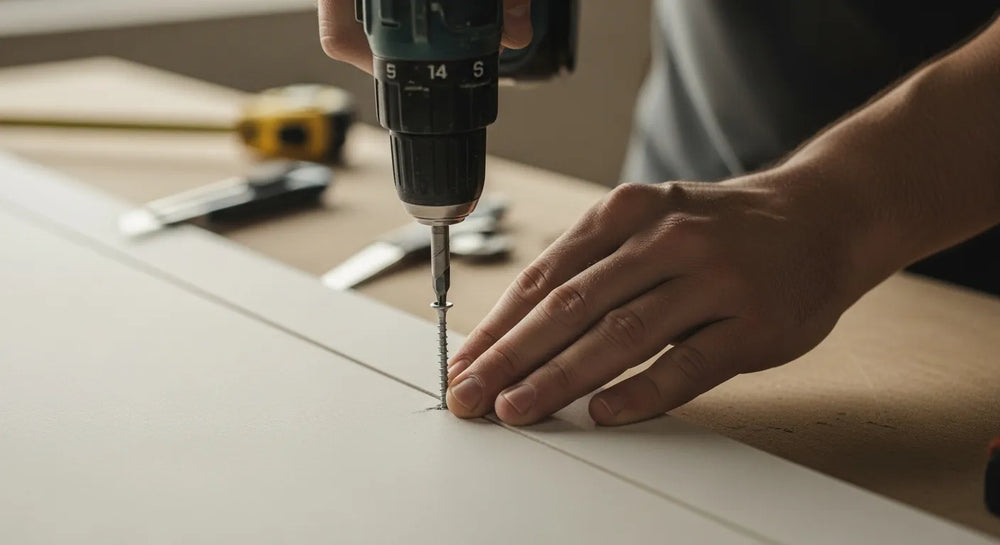
Seamless Screw Hole Repair with Wood Filler
Table of Contents
- Understanding Wood Filler: Types, Properties, and Applications
- Essential Tools and Materials for a Professional Repair
- Step-by-Step Guide to Repairing Screw Holes with Wood Filler
- Advanced Techniques and Considerations
- Common Mistakes to Avoid
- The Maden.co Advantage: Sourcing for Durable Repairs and New Builds
- Conclusion
- Frequently Asked Questions (FAQ)
The silent adversary of many a well-maintained facility or product line is often the smallest imperfection: a compromised screw hole. From industrial workbenches and machinery housings to crucial wooden structural elements, the integrity of a fastened connection is paramount. A stripped screw hole, an oversized bore, or simply a cosmetic blemish where a fastener once resided can compromise structural stability, invite moisture damage, or detract from the professional appearance of equipment and infrastructure. In the demanding environments faced by procurement managers, MRO buyers, and design engineers, these seemingly minor issues can escalate into significant concerns, impacting safety, functionality, and long-term costs.
This comprehensive guide delves into the essential techniques for effectively repairing screw holes using wood filler. We will explore the various types of fillers available, the critical importance of preparation, step-by-step application methods, and crucial finishing touches to ensure a durable and aesthetically pleasing repair. Our aim is to equip you with the knowledge to execute repairs that stand the test of time, reinforcing your assets and extending their operational life. Ultimately, mastering proper wood filler application is a foundational skill for maintaining the integrity of wooden components, a skill dramatically enhanced by sourcing quality materials and fasteners from platforms like Maden.co to ensure the longevity of every repair and build.
Understanding Wood Filler: Types, Properties, and Applications
Before delving into the repair process, it's crucial to understand the diverse landscape of wood fillers. Selecting the appropriate filler is the first, and perhaps most critical, step toward a successful and lasting repair. Each type boasts unique properties, making it suitable for specific applications, environments, and desired outcomes.
The Spectrum of Wood Fillers
Wood fillers are not one-size-fits-all solutions. Their composition dictates their strength, drying time, flexibility, and resistance to environmental factors.
-
Latex/Water-based Fillers: These are perhaps the most common and user-friendly fillers.
- Pros: Easy to apply and clean up with water, quick-drying, low odor, and typically lower in Volatile Organic Compounds (VOCs). They sand easily and accept paint well.
- Cons: Generally not suitable for structural repairs due to their limited strength and durability. They can shrink over time, especially in deeper holes, and are not typically moisture-resistant enough for exterior or high-humidity applications. They may also struggle to accept stain evenly, leading to blotchy results.
- Best for: Minor cosmetic repairs, small nail or screw holes that do not bear weight, interior applications where durability is not a primary concern, and areas that will be painted.
-
Solvent-based Fillers: Often referred to as "plastic wood," these fillers use solvents like acetone to bind wood fibers or synthetic resins.
- Pros: Offer greater durability and strength than water-based options, providing a more robust repair for deeper or slightly larger holes. They resist shrinkage better and are more resistant to moisture, making some formulations suitable for exterior use. Many can be stained, although results can vary.
- Cons: Emit stronger odors due requiring proper ventilation. They typically have longer drying times and require mineral spirits or acetone for cleanup. Some formulations can be harder to sand once fully cured.
- Best for: More substantial cosmetic repairs, minor non-structural repairs that require better adhesion and durability than water-based fillers, and situations where some moisture resistance is needed.
-
Epoxy-based Fillers: These are two-part systems consisting of a resin and a hardener that, when mixed, create a chemical reaction.
- Pros: By far the strongest and most durable type of wood filler. Epoxy fillers create a waterproof, incredibly hard, and permanent bond that can effectively restore structural integrity to damaged wood. They resist shrinking, cracking, and decay, making them ideal for exterior, marine, or highly stressed applications. Once cured, they can be drilled, tapped, and machined like real wood.
- Cons: Require precise mixing ratios, have a limited working time once mixed, and generally have the longest curing times. Cleanup can be challenging, requiring specialized solvents before curing. They are typically more expensive and require more skill to apply effectively. Most epoxy fillers are not designed to be stained, often requiring painting.
- Best for: Critical structural repairs, restoring rotten or severely damaged wood, exterior projects, marine applications, and any repair where maximum strength, durability, and moisture resistance are paramount.
-
Cellulose (Wood Putty): While often grouped with wood fillers, wood putty is distinct. It's a pliable, oil-based product usually applied after the final finish, offering less strength than other fillers.
- Pros: Very flexible, ideal for filling small holes or cracks in finished wood surfaces without disturbing the finish. Easy to use directly from the container.
- Cons: Does not harden like true wood fillers, offers minimal structural support, and can shrink over time. It's primarily for cosmetic touch-ups on finished surfaces.
- Best for: Filling small imperfections, nicks, or nail holes in already finished furniture or trim where strength is not a factor.
Selecting the Right Filler for Your Project
The decision-making process for choosing a wood filler should be guided by several key considerations:
- Cosmetic vs. Structural Repair: For purely aesthetic fixes on non-load-bearing components, a water-based filler might suffice. However, if the screw hole significantly weakens a load-bearing part, or if the fastener needs to hold substantial weight post-repair, an epoxy-based filler is the only appropriate choice. For an MRO buyer needing to repair a stripped screw hole in a heavy-duty wooden workbench, for instance, neglecting structural considerations by choosing a weak filler could lead to recurring issues or even safety hazards.
- Interior vs. Exterior Use: Environmental exposure is a major factor. Interior fillers lack the weather resistance needed for outdoor applications, where moisture, UV radiation, and temperature fluctuations demand robust, waterproof solutions like epoxy.
- Stainable vs. Paintable: If the repaired wood will be stained, finding a filler that accepts stain consistently is crucial. Many fillers, especially those that dry hard and dense, will absorb stain differently than the surrounding wood, resulting in a visible patch. Water-based and solvent-based fillers often claim to be stainable, but testing on an inconspicuous area or scrap piece is always recommended. Epoxy fillers are rarely stainable and are almost always intended to be painted.
- Shrinkage and Durability: For long-term reliability in industrial or commercial settings, minimizing shrinkage is important to prevent re-opening of the repair. Epoxy fillers offer superior dimensional stability, while water-based fillers are more prone to shrinking as they dry.
Essential Tools and Materials for a Professional Repair
Executing a professional-grade wood filler repair requires more than just the filler itself. Having the right tools and materials on hand ensures efficiency, precision, and a high-quality finish.
- Wood Filler: The selected type, appropriate for your project's demands.
- Putty Knives/Applicators: A set of flexible putty knives (1-inch, 2-inch, 4-inch) allows for precise application and smoothing, particularly useful for larger areas. Flexible plastic spreaders can also be beneficial for delicate work.
-
Sandpaper: A range of grits is essential:
- Coarse (80-100 grit): For initial leveling of excess cured filler.
- Medium (120-150 grit): For refining the surface and blending the repair.
- Fine (180-220 grit): For final smoothing before finishing.
- Wood Glue (Optional but Recommended for Reinforcement): For severely stripped holes, using wood glue with splinters or dowels before applying filler significantly enhances the repair's strength.
-
Cleaning Supplies:
- Denatured Alcohol or Acetone: For degreasing and removing residue, especially important before epoxy application.
- Tack Cloth: To remove fine dust after sanding.
- Compressed Air or Stiff Brush: For clearing debris from screw holes.
-
Safety Gear:
- Dust Mask/Respirator: Crucial during sanding and when working with solvent-based or epoxy fillers to protect against fine particles and fumes.
- Safety Glasses: To protect eyes from dust and splinters.
- Gloves: To protect hands from chemicals and for easier cleanup.
- Utility Knife or Chisel: For carefully cleaning out loose wood around the hole and creating an undercut if necessary.
- Mixing Containers and Sticks (for two-part fillers): Ensure accurate mixing of epoxy components.
- Sanding Block: Provides even pressure and helps achieve a flatter, more consistent sanded surface.
Having these high-quality tools and materials readily available, often sourced from reliable industrial suppliers, is the bedrock of a successful repair. Just as Maden.co provides access to a comprehensive catalog of over 2.5 million American-made industrial products, ensuring quality in your ancillary repair tools is equally important for achieving industrial excellence.
Step-by-Step Guide to Repairing Screw Holes with Wood Filler
A successful wood filler repair is less about brute force and more about meticulous execution, patience, and adherence to proven techniques. Each step builds upon the last, contributing to the overall durability and seamless appearance of the finished repair.
Step 1: Preparation is Paramount
This initial phase is arguably the most critical. Skimping on preparation almost guarantees a failed or subpar repair.
- Cleaning the Hole: Begin by thoroughly removing any loose debris, dust, sawdust, or remnants of old, crumbling filler from within and around the screw hole. Use compressed air, a vacuum cleaner with a nozzle attachment, or a stiff brush to dislodge and extract these contaminants. The goal is a clean, dry cavity. For a procurement manager overseeing facility maintenance, understanding that a superficial clean can lead to repeat repairs—and thus increased material and labor costs—highlights the importance of this step.
- Roughening the Surface: For optimal adhesion, the interior surfaces of the screw hole should be slightly roughened. This provides a "tooth" for the filler to grip. A small utility knife, a pointed awl, or even a coarse piece of sandpaper wrapped around a dowel can be used carefully to scuff the inside of the hole.
- Undercutting (for Larger Holes): For larger or deeper holes (e.g., those created by lag bolts or significantly stripped fasteners), creating an undercut around the perimeter of the hole can dramatically improve the mechanical bond. This involves carefully chamfering the edges inwards, creating a wider cavity underneath the surface. When the filler cures, it expands into this undercut, essentially locking itself into place and preventing it from popping out under stress. A sharp chisel or a utility knife can be used for this delicate operation.
- Degreasing (for Epoxies): If using an epoxy filler, or if the wood might have absorbed oils or grease (common in industrial environments near machinery), a final wipe with denatured alcohol or acetone is essential. Allow it to fully evaporate before proceeding.
Step 2: Reinforcing Damaged Holes (Optional but Recommended for Strength)
For stripped screw holes, especially those that will house a fastener again, simply filling with wood filler might not provide enough structural integrity for the new screw to bite effectively. Reinforcement is key.
- Wood Splinters/Toothpicks/Dowels: For stripped pilot holes, a time-tested technique involves inserting wood splinters, toothpicks, or thin dowels coated in wood glue into the hole. Pack them tightly until the hole is completely filled with wood. Allow the glue to cure completely (typically several hours or overnight, depending on the glue). Once cured, trim any protruding wood flush with a utility knife or chisel.
- Why this adds strength: This method essentially rebuilds the wooden matrix within the hole, providing a solid, dense substrate for the new screw to grip. It's particularly effective for preventing future stripping and ensuring the fastener holds securely. When selecting a new fastener, consider the superior holding power of U.S.-made options like our Round Slot Drive Brass Wood Screw, which offers robust performance after such a repair.
Step 3: Applying the Wood Filler
This step requires careful attention to detail to ensure full coverage and a smooth finish.
- Mixing (for two-part epoxies): If using a two-part epoxy filler, follow the manufacturer's instructions precisely regarding mixing ratios. Inaccurate ratios will compromise the cure and strength. Mix thoroughly until a uniform color and consistency are achieved, paying attention to the working time—the period before the filler begins to set.
- Overfilling: Always apply more wood filler than necessary to fill the hole. Overfilling creates a slight mound above the surface of the wood. This is crucial because all wood fillers, to varying degrees, will shrink as they dry and cure. The excess allows for sanding down to a perfectly flush surface without leaving a depression.
- Layering (for Deeper Holes): For very deep screw holes (e.g., those from long lag bolts), it's often best to apply the filler in thin layers, allowing each layer to partially cure or "tack up" before applying the next. This minimizes shrinkage, prevents air bubbles from getting trapped deep within the repair, and ensures a thorough cure.
- Smooth Application: Use a clean, flexible putty knife to apply the filler. Press it firmly into the hole, ensuring it penetrates all crevices and eliminates air pockets. Swipe the knife across the overfilled area at a slight angle to create a smooth, slightly mounded surface. Avoid excessive re-working, which can introduce air or compromise the filler's consistency.
Step 4: Curing and Drying
Patience is a virtue, especially during the curing phase. Rushing this step is a common mistake that leads to compromised repairs.
- Adhering to Manufacturer's Instructions: The drying and curing times for wood fillers vary significantly based on type, humidity, temperature, and the depth of the repair. Always consult the product's label for specific guidelines. Some water-based fillers might be sandable in an hour, while epoxy fillers can take 24-72 hours to achieve full hardness.
- The Dangers of Rushing: Attempting to sand or re-drill uncured filler will lead to gumming up sandpaper, crumbling filler, or creating a weak spot in the repair that will fail prematurely.
- Full Cure vs. Surface Dry: The surface might feel dry to the touch relatively quickly, but the filler underneath may still be soft. A full cure means the chemical process is complete, and the filler has reached its maximum hardness and strength throughout its depth. For applications requiring a flush finish and structural integrity, such as those where you might use our Flat Slot Drive Brass Wood Screw, a complete cure is non-negotiable for lasting performance.
Step 5: Sanding and Shaping
Once the filler is completely cured, the focus shifts to creating a seamless, invisible repair.
- Initial Sanding (Coarse Grit): Begin with a relatively coarse grit sandpaper (e.g., 80 or 100 grit) on a sanding block. This helps to quickly level the excess filler down to the surrounding wood surface. Use light, even pressure and sand in the direction of the wood grain to minimize visible scratches. Be careful not to sand into the surrounding good wood.
- Fine Sanding (Finer Grits): Progress to finer grits (120-150, then 180-220) to smooth the surface of the filler and blend it perfectly with the surrounding wood. The goal is to make the repaired area indistinguishable from the original wood, both visually and by touch.
- Dust Removal: After each sanding step, meticulously remove all sanding dust using a tack cloth or a damp cloth followed by a dry one. Fine dust can interfere with adhesion of subsequent finishes and create a rough texture.
Step 6: Finishing Touches (Staining, Painting, Sealing)
The final step is to protect the repair and integrate it aesthetically with the rest of the wood surface.
- Patch Testing: If the wood will be stained, always perform a patch test on an inconspicuous area or a piece of scrap wood that has also been filled and sanded. As mentioned, fillers absorb stain differently than natural wood, and testing helps manage expectations and achieve the best possible match.
- Proper Priming: For repairs that will be painted, applying a high-quality primer is essential. Primer helps to seal the filler, prevent "ghosting" (where the repair shows through the paint), and ensures an even, durable topcoat.
- Sealing for Protection: For any wood repair, particularly those in high-wear areas or exposed to moisture, applying a clear sealer, varnish, or topcoat provides an additional layer of protection, enhancing durability and appearance. For specialized outdoor or marine projects, the superior weather and corrosion resistance of our Oval Slot Drive Silicon Bronze Wood Screw aligns with the need for robust sealing to protect both the repair and the fastener.
Advanced Techniques and Considerations
Beyond the fundamental steps, several advanced techniques and considerations can elevate the quality and longevity of wood filler repairs, particularly in demanding industrial or specialized applications.
Repairing Large or Structural Holes
For extensive damage or holes requiring significant load-bearing capacity, a simple filler application may not suffice.
- Dowel Inserts for Maximum Strength: When a large screw hole is irreparably stripped, or if a new, larger fastener is required, installing a wood dowel provides superior structural reinforcement. Drill out the damaged area to a slightly larger, consistent diameter. Glue a matching hardwood dowel into the hole, ensuring a tight fit. Once the glue is fully cured, cut the dowel flush and sand. This creates a solid wood substrate that can then be drilled and tapped for a new screw with confidence, offering superior strength compared to filler alone.
- Epoxy with Wood Dust for Customization and Strength: For aesthetic repairs where color matching is critical, or for enhancing the strength of the filler, you can mix fine sawdust (from the same type of wood being repaired) into epoxy resin. This creates a custom-colored, incredibly strong filler that closely mimics the original wood's appearance and characteristics. This technique is particularly valuable for historic restorations or high-visibility components where the repair must be virtually invisible.
Dealing with Different Wood Types
The characteristics of the wood itself play a role in how filler performs.
- Hardwoods vs. Softwoods: Hardwoods (e.g., oak, maple) are dense and less porous, which means fillers might adhere differently, and sanding can be more challenging. Softwoods (e.g., pine, cedar) are more porous and can absorb fillers more readily, potentially leading to more visible staining issues if not primed. Understanding these differences informs filler choice and finishing strategies.
- Treated Wood: Pressure-treated lumber contains chemicals that protect against rot and insects. These chemicals can sometimes interfere with the adhesion or curing of certain fillers. Always ensure the chosen filler is compatible with treated wood, especially for outdoor or ground-contact repairs.
Post-Repair Fastener Selection: Ensuring Lasting Performance
Once your wood repair is complete, selecting the right fastener for reassembly is crucial for the longevity of the repair and the integrity of the overall structure. The initial effort of a quality repair can be undone by an unsuitable or low-quality fastener. This is where Maden.co's commitment to American Manufacturing Pride and Industrial Excellence truly shines.
- For instance, in applications demanding robust performance and resistance to environmental factors, solutions like our Round Slot Drive Brass Wood Screw offer excellent holding power and corrosion resistance. These U.S.-made fasteners are meticulously crafted to ensure they meet stringent quality standards, providing the reliability that industrial buyers and engineers depend on.
- Similarly, for applications requiring a flush finish and superior aesthetics without compromising on structural integrity, exploring options like our Flat Slot Drive Brass Wood Screw ensures both a refined appearance and durable performance. Our dedication to Digital Innovation makes finding such specialized components effortless, streamlining your procurement process.
- And for specialized outdoor, marine, or chemically exposed projects where extreme durability and long-term reliability are paramount, the superior weather and corrosion resistance of our Oval Slot Drive Silicon Bronze Wood Screw is an unmatched choice. We are proud to offer such high-quality, American-made components, vital for ensuring industrial excellence and enhancing the resilience of your supply chain. These products embody our core value of Supply Chain Transparency, as you know exactly where your critical components originate.
Common Mistakes to Avoid
Even with the best intentions, certain pitfalls can derail a wood filler repair. Awareness of these common mistakes is the first step in avoiding them.
- Insufficient Preparation: Failing to clean out debris, roughen the surface, or degrease the hole leads to poor adhesion, causing the filler to chip, crack, or fall out prematurely.
- Using the Wrong Type of Filler: Employing a water-based filler for a structural repair or an exterior application is a recipe for rapid failure. Matching the filler to the project's demands for strength, environment, and finish is paramount.
- Not Overfilling Enough: Under-filling or filling precisely to the surface means that as the filler shrinks (which most do to some extent), it will leave a depression, creating a noticeable flaw that requires re-application.
- Rushing the Drying Process: Impatience is a repair's worst enemy. Sanding or finishing before the filler has fully cured compromises its hardness, leads to gumming, and weakens the overall repair. Always allow ample drying time per manufacturer's instructions.
- Inadequate Sanding: Poor sanding leaves visible ridges, scratches, or an uneven texture, making the repair obvious, especially under stain or a high-gloss finish. Gradual progression through grits and sanding with the grain are crucial.
- Ignoring Manufacturer's Instructions: Filler products are formulated for specific performance characteristics. Deviating from mixing ratios (for two-part epoxies), application temperatures, or cure times will inevitably lead to a suboptimal or failed repair.
- Re-drilling Before Full Cure: Attempting to drill a new pilot hole into partially cured filler will cause it to crumble, spin out, or fail to provide a stable anchor for the screw, negating the entire repair effort.
By understanding and actively avoiding these common mistakes, procurement managers, MRO buyers, and design engineers can ensure that their wood filler repairs are not just quick fixes, but lasting solutions that contribute to the overall integrity and value of their assets.
The Maden.co Advantage: Sourcing for Durable Repairs and New Builds
In the realm of industrial procurement and maintenance, the reliability of every component directly impacts operational efficiency, safety, and ultimately, a business's bottom line. The meticulous process of repairing wood damage, as detailed above, relies intrinsically on the quality of the materials used, from the filler itself to the fasteners re-securing the components. This is precisely where Maden.co serves as an invaluable strategic partner for American businesses.
Quality Components, American Made
At Maden.co, our mission is to democratize access to American manufacturing. We achieve this by connecting industrial buyers with an expansive network of over 2.5 million American-made products from our 800+ verified U.S. manufacturers. Our vision is to become the definitive platform that proves American-made components are as accessible and convenient as any global alternative, driving the manufacturing revival with our tagline: "America's manufacturing revival is here."
Our core values underscore this commitment:
- American Manufacturing Pride: We champion the quality, innovation, and reliability inherent in products made in the USA.
- Digital Innovation: Our platform leverages cutting-edge technology to simplify complex procurement processes.
- Supply Chain Transparency: We provide clear visibility into product origins, ensuring trust and traceability.
- Industrial Excellence: We demand the highest standards from our manufacturers, ensuring components that meet rigorous industry specifications.
- Customer Empowerment: We equip buyers with the tools and access they need to make informed, strategic purchasing decisions.
For a procurement manager under pressure to source a specific DIN 931 compliant hex cap screw, a design engineer needing specific material certifications for a new prototype, or an MRO buyer facing an unexpected equipment breakdown, the ability to quickly find and finance a verified, U.S.-made part is a game-changer. Our entire business model is built on this principle; you can learn more about our mission to champion American manufacturing here: About Us.
Enhancing Supply Chain Resilience and Efficiency
In today's dynamic global market, supply chain resilience is not just a buzzword—it's an operational imperative. Sourcing through Maden.co directly contributes to:
- Reducing Procurement Friction: Our intuitive platform simplifies the search and acquisition of specialized components, cutting down on lead times and administrative burdens.
- Improving Total Cost of Ownership (TCO): While the initial price of a U.S.-made product might sometimes seem higher than global alternatives, the TCO is often significantly lower due to superior quality, reduced shipping costs and lead times, enhanced compliance, and greater reliability.
- Ensuring Compliance: For industries with stringent regulatory requirements, our verified U.S. manufacturers provide components that consistently meet critical industry standards (e.g., DIN, NPT), offering peace of mind and reducing compliance risks.
- Access to a Vast Catalog of Hard-to-Find Components: From standard fasteners to highly specialized parts, our extensive network ensures that even the most niche requirements can be met efficiently.
Strategic Procurement with Instant Financing
Recognizing that large-volume purchases or unexpected equipment repairs can strain cash flow, Maden.co offers a key differentiator: Instant Financing. This feature is not merely a payment method; it's a strategic tool designed to empower businesses. It allows procurement managers and business owners to manage cash flow effectively, make larger-volume purchases without delay, and respond swiftly to operational needs. You can apply for Instant Financing during the checkout process, providing a seamless and integrated solution for your capital-intensive projects.
Partnering for Success
We believe that the strength of America's manufacturing sector lies in collaboration and quality. We are not just a marketplace; we are a strategic partner in building a more reliable and efficient procurement process for your business. We value quality and reliability above all else. Are you a U.S. manufacturer looking to expand your reach, connect with a dedicated network of industrial buyers, and contribute to the nation's industrial strength? Register as a vendor and join the American manufacturing revival. Your expertise is crucial to our collective success.
Conclusion
The effective repair of screw holes using wood filler is more than just a cosmetic fix; it's a critical maintenance practice that safeguards the structural integrity and extends the operational life of countless wooden components in industrial and commercial settings. From selecting the right filler to meticulous preparation, application, and finishing, each step plays a vital role in achieving a durable and professional result. By understanding the nuances of different filler types, adhering to proper techniques, and avoiding common pitfalls, you can transform compromised wood into a reliable and aesthetically pleasing asset.
However, the longevity and ultimate success of any repair, or indeed any new build, hinge not only on skillful application but also on the unwavering quality of the materials and fasteners involved. This is where Maden.co stands as your indispensable partner. We are committed to providing unparalleled access to over 2.5 million verified American-made products, ensuring that every component you procure meets the highest standards of quality, reliability, and compliance. Our platform is engineered to streamline your procurement process, enhance supply chain resilience, and ultimately reduce your total cost of ownership.
Begin your next project with confidence, knowing you have access to a vast network of American-made components. Visit Maden.co today to explore our catalog and discover how seamless sourcing can be. For complex orders or to manage your capital effectively, remember you can apply for Instant Financing at checkout to streamline your capital-intensive projects. If you have specific sourcing questions, our team is ready to help; please don't hesitate to contact us directly. Empower your business with American-made excellence—because America's manufacturing revival is here, and we're building it together.
Frequently Asked Questions (FAQ)
1. Can I use wood filler for structural repairs? For true structural repairs where significant load-bearing capacity is required, most standard wood fillers (especially water-based or solvent-based) are inadequate. Epoxy-based fillers, when properly applied, can restore considerable structural integrity and are the only type recommended for such applications. For maximum strength, particularly in heavily stressed areas or where a new fastener will be re-drilled, reinforcing the hole with glued-in wood dowels or splinters before applying epoxy filler is the superior approach.
2. How long does wood filler take to dry completely? Drying times vary significantly based on the type of filler, the depth of the repair, and environmental conditions (temperature and humidity). Water-based fillers can be dry to the touch in 15-30 minutes and sandable in 1-2 hours. Solvent-based fillers may take several hours. Epoxy fillers typically require the longest cure times, often taking 24-72 hours to achieve full hardness. Always consult the manufacturer's instructions on the product packaging for precise drying and curing times to ensure optimal results.
3. Can I stain wood filler to match my wood? Many wood fillers claim to be stainable, but achieving a perfect match with the surrounding wood grain can be challenging. Fillers, by nature, absorb stain differently than natural wood, often resulting in a lighter or darker patch. If staining, always perform a patch test on an inconspicuous area or a piece of scrap wood that has also been filled and sanded to assess the color match. For best results, consider mixing fine sawdust from the same wood type into an epoxy filler, or plan to paint the repaired area if an exact color match is critical and the filler does not blend well with stain.
4. What's the best way to prevent wood filler from shrinking? Shrinkage is a common characteristic of most wood fillers as solvents or water evaporate. To minimize noticeable shrinkage:
- Choose the Right Filler: Epoxy-based fillers generally exhibit the least shrinkage.
- Apply in Layers: For deep holes, apply the filler in thinner layers, allowing each to partially set before adding the next. This helps reduce the total volume of material shrinking at once.
- Overfill: Always apply slightly more filler than needed, creating a small mound above the surface. This excess can then be sanded down, ensuring a flush finish even after minimal shrinkage.
- Ensure Full Cure: Rushing the drying process can exacerbate shrinkage. Allow the filler to cure completely according to manufacturer guidelines before sanding or finishing.


