
Over-Screwing Drywall: Can You Put Too Many Screws In?
Table of Contents
- Introduction
- The Science Behind Drywall Fastening: More Isn't Always Better
- The Hidden Dangers of Over-Screwing Drywall
- Best Practices for Optimal Drywall Screw Installation
- Beyond Basic Installation: Advanced Considerations for Durability
- Maden.co: Your Strategic Partner in Sourcing American-Made Fasteners
- Conclusion
- FAQ
Introduction
Imagine the frustration: you’ve meticulously hung drywall, mudded, sanded, and painted, only to see unsightly “screw pops” emerge months later, marring an otherwise perfect finish. Or perhaps you're a procurement manager facing project delays because the fasteners you ordered don't meet critical industry specifications, leading to costly rework. It's a common misconception that more fasteners equate to greater strength, particularly when it comes to drywall. The truth, however, is far more nuanced. While adequate fastening is crucial for stability and adherence, an excessive or improperly executed approach to installing drywall screws can paradoxically undermine the very integrity and aesthetic quality you aim to achieve. This post will delve into the precise science and best practices behind drywall fastening, exploring the risks of over-screwing, detailing optimal installation techniques, and highlighting how sourcing quality, American-made fasteners through a platform like Maden.co can fundamentally transform your project outcomes. We will demonstrate that understanding the "sweet spot" for screw placement is not just about aesthetics, but about ensuring long-term structural integrity, compliance, and cost-efficiency in any construction or MRO project.
The Science Behind Drywall Fastening: More Isn't Always Better
The act of fastening drywall seems straightforward: drive a screw until it's flush. Yet, beneath this simple action lies a delicate balance of material science, structural engineering, and proper technique. Understanding this foundation is critical to avoiding common pitfalls and ensuring a robust, long-lasting installation.
Understanding Drywall Composition and Its Limits
Drywall, or gypsum board, is a composite material primarily made of a gypsum plaster core sandwiched between two sheets of paper. This seemingly simple construction provides excellent fire resistance, sound attenuation, and a smooth surface ideal for finishing. However, its mechanical properties present specific challenges for fastening. The gypsum core, while rigid, is inherently brittle and can be easily crushed if a screw is driven too deep or with excessive force. The paper facing, particularly the outermost layer, is crucial. It’s the primary element that the screw threads grip, holding the panel securely to the framing. If this paper layer is torn or pulverized by an over-driven screw, the holding power is severely compromised, leading to a host of problems, including those infamous screw pops. The "sweet spot" for screw engagement involves piercing the paper just enough to create a slight dimple, allowing the screw head to sit flush or slightly below the surface, without breaking the paper or crushing the core.
The Role of Drywall Screws in Structural Integrity
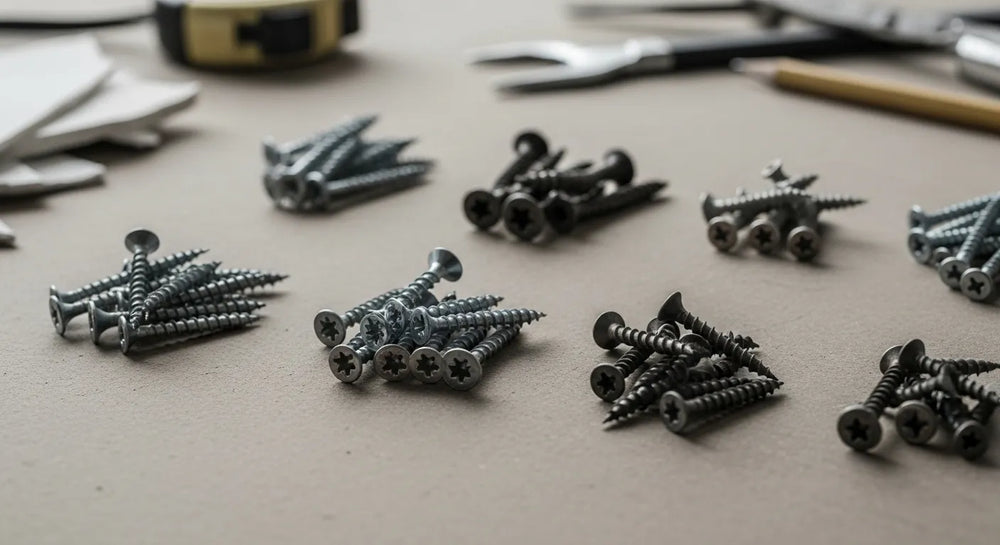
Drywall screws are specifically designed for this application, featuring a bugle head that flares out like a trumpet, allowing them to sit flush without tearing the paper surface excessively. Their sharp tips and coarse or fine threads are optimized for quick penetration and strong grip in wood or metal studs. The screws primarily provide shear strength, preventing the drywall from moving laterally along the wall, and pull-out resistance, holding the panel tightly against the framing. When installed correctly, they distribute the load evenly, preventing stress concentrations that can lead to cracks or sagging. However, when you put too many screws in drywall, or place them improperly, this intended distribution is disrupted. Overlapping stress zones can create localized weaknesses in the gypsum, rather than reinforcing the overall panel. The collective grip of correctly spaced screws creates a cohesive unit; an excessive number of poorly placed screws can turn this into a fragmented, weakened surface.
What "Too Many" Actually Means
Defining "too many" isn't merely about the absolute count of screws used per sheet. It’s a multi-faceted issue encompassing quantity, but more critically, placement, depth, and even the type of screw relative to the substrate.
- Quantity: While there are recommended spacing guidelines, exceeding these doesn't necessarily make the wall stronger. At a certain point, additional screws offer diminishing returns and begin to introduce more points of potential failure rather than increasing stability.
- Placement: Screws placed too close to the edges of the drywall sheet can cause the gypsum to crumble and the paper to tear, leading to "blowouts" and poor adhesion. Similarly, screws that miss the stud entirely, or are driven into an area already weakened by another screw, are essentially useless and detrimental.
- Depth: This is perhaps the most critical factor. An over-driven screw crushes the gypsum core and breaks the paper facing, annihilating its holding power and creating a weak point that is prone to screw pops. A slightly under-driven screw that protrudes slightly will be difficult to conceal with joint compound, resulting in an uneven finish. The ideal depth is where the screw head creates a slight dimple, just below the paper surface, without breaking it.
- Type: Using the wrong screw type (e.g., wood screws instead of drywall screws) or an inappropriate length can also contribute to issues that mimic the problems of "too many" screws, as they won't provide the optimal fastening intended for drywall.
In essence, "too many" screws often translates to "too many improperly installed screws," each contributing to localized stress and potential failure rather than reinforcing the entire system.
The Hidden Dangers of Over-Screwing Drywall
The repercussions of putting too many screws in drywall extend far beyond minor cosmetic blemishes. They can compromise the structural integrity of the wall system, lead to significant aesthetic imperfections, and ultimately incur substantial material waste and labor costs. For procurement managers and MRO buyers, understanding these downstream effects reinforces the value of upfront investment in quality fasteners and proper installation protocols.
Compromised Structural Integrity
The most critical danger of over-screwing is the irreversible damage it inflicts on the drywall panel itself.
- Crushing the Gypsum Core: When a screw is driven too deep, the bugle head acts like a punch, crushing the brittle gypsum core beneath the paper. This pulverizes the material that the screw threads are supposed to grip, effectively creating a void or a zone of highly compressed, weakened gypsum.
- Weakening the Paper Face: The paper facing is the bedrock of the screw's holding power. Over-driving a screw invariably tears or breaks this paper. Once the paper is compromised, the screw loses its purchase, rendering it ineffective at holding the drywall to the stud. This broken paper also creates a prime location for moisture intrusion and further degradation over time.
- Reduced Shear Strength of the Panel: A correctly fastened drywall panel acts as a shear diaphragm, contributing to the racking resistance of the wall system. When the gypsum core is crushed and the paper facing is torn at numerous screw points, the panel's ability to resist shear forces is significantly diminished. Instead of a uniform, strong connection, the wall becomes a collection of weak points, prone to cracking, especially in areas subject to building movement or seismic activity.
Aesthetic Imperfections and Finish Challenges
While structural compromise is a long-term concern, aesthetic issues are often immediately apparent and frustrating for both installers and end-users.
- "Screw Pops": This is the most notorious outcome of improper screw installation, especially over-screwing. Screw pops occur when the drywall moves relative to the stud, often due to changes in humidity, temperature, or structural settling. If a screw has crushed the gypsum or torn the paper, it has no firm grip. As the drywall subtly shifts, the screw head, no longer securely anchored, pushes outwards against the joint compound and paint, creating a visible bump or "pop" on the finished surface. These are not only unsightly but also indicate a fundamental failure in the fastening.
- Difficulty Achieving a Smooth, Flush Finish: Over-driven screws that tear the paper create ragged holes that are much harder to fill and smooth with joint compound than a cleanly dimpled screw head. The surrounding crushed gypsum can also create an uneven surface that requires extra layers of compound and more extensive sanding to feather out, adding significant labor.
- Paint Adhesion Issues Over Damaged Areas: Areas where the paper is torn or extensively repaired with joint compound can sometimes absorb paint differently, leading to flashing or visible imperfections in the final painted surface. The integrity of the substrate is paramount for a professional finish, and over-screwing directly compromises that.
Increased Material Waste and Labor Costs
The cascade of problems from over-screwing inevitably leads to financial implications, impacting a project's budget and timeline.
- Damaged Sheets Requiring Replacement: If multiple screws on a single sheet are over-driven, torn, or missed studs, the integrity of that section of drywall may be so compromised that it requires full replacement. This is a direct waste of material, adding unexpected costs to the project.
- Time Spent on Repairs and Re-finishing: Addressing screw pops and uneven finishes demands significant remedial work. This includes digging out loose compound, re-driving screws (if possible), re-applying joint compound, sanding, and potentially re-priming and repainting. This labor is unbudgeted, unplanned, and directly impacts project profitability and timelines. For a procurement manager under pressure to source a specific DIN 931 compliant hex cap screw, a design engineer needing specific material certifications for a new prototype, or an MRO buyer facing an unexpected equipment breakdown, the ability to quickly find and finance a verified, U.S.-made part through Maden.co is a game-changer that helps avoid such costly project delays and reworks. Our platform simplifies procurement, offering high-quality, verified products that reduce the chances of these common construction failures.
- Impact on Project Timelines and Budgets: Every hour spent on rework due to improper fastening is an hour taken away from other critical tasks, pushing back project completion dates and potentially incurring penalties. The cumulative effect of material waste and increased labor costs can significantly inflate the overall Total Cost of Ownership (TCO) for a project, far outweighing any perceived savings from using cheaper, lower-quality fasteners or rushed installation. This is precisely why Maden.co champions Industrial Excellence, providing access to components that deliver long-term value and minimize these hidden costs.
Best Practices for Optimal Drywall Screw Installation
Achieving a durable, professional drywall installation free from defects requires adherence to established best practices. It's not just about what tools you use, but how you use them and the quality of the materials you choose.
Selecting the Right Screw Type and Length
The foundation of proper fastening begins with selecting the correct screw for the job. Maden.co understands that the right fastener is critical for any project, which is why we offer a comprehensive selection of U.S.-made products designed for peak performance.
-
Coarse vs. Fine Thread: This distinction is crucial for optimal grip.
- Coarse Thread Drywall Screws: These are characterized by aggressive threads that provide superior grip in wood studs, rapidly driving and securely holding the drywall. They are the most common choice for residential construction. For a reliable, American-made option, consider our 6 x 1-1/4 Coarse Thread Drywall Screws designed for robust performance.
- Fine Thread Drywall Screws: Designed for metal studs, these screws have finer, closer threads that are better suited for biting into thin-gauge steel without stripping. They create a more secure hold in the harder material. When working with metal framing, our 6 x 1 Fine Thread Drywall Screw offers the precision and strength you need.
-
Length Considerations: The screw length must be adequate to penetrate the stud sufficiently.
- For standard 1/2-inch or 5/8-inch drywall, 1-1/4 inch screws are typically used for wood studs, ensuring at least 3/4 inch of penetration into the wood.
- For metal studs, a slightly shorter screw might suffice, depending on the gauge of the steel, but generally, 1-inch or 1-1/4 inch screws are common to ensure proper engagement without protruding too far through the back of the stud. Our selection includes versatile options like the 8 x 4 Drywall Screw, suitable for various applications and ensuring deep stud penetration.
- Bugle Head Design: All drywall screws feature a bugle head, which is self-countersinking. This conical shape allows the screw head to gradually depress the paper and sit flush or slightly below the surface without tearing through the paper aggressively. This design is paramount for achieving a smooth, finish-ready surface.
- Black Phosphate Coating: Most drywall screws are treated with a black phosphate coating. This provides a mild degree of corrosion resistance, which is important, but more crucially, it allows joint compound and paint to adhere effectively to the screw head, further minimizing the risk of screw pops and ensuring a uniform finish.
Proper Screw Spacing and Placement
Adhering to industry standards for screw spacing is fundamental to achieving a strong, stable, and visually appealing drywall installation. These guidelines are designed to distribute stress evenly across the panel and prevent localized failures.
-
Industry Standards:
- On Edges (Perimeter): Screws along the perimeter of the drywall sheet (where it meets a stud or joist) should generally be spaced every 6 to 8 inches. This ensures a strong bond where panels meet and provides critical support.
- In the Field (Interior): For screws in the main body of the drywall sheet, away from the edges, spacing can be wider, typically every 12 to 16 inches. These screws prevent bowing and provide general stability.
- Distance from Edges: To prevent the drywall from crumbling or "blowing out," screws should be placed at least 3/8 to 1/2 inch in from the edge of the panel. Placing them too close can lead to the gypsum fracturing, especially when driven.
- Using a Layout Plan: Before starting, it’s beneficial to mark the stud locations on the floor and ceiling, and potentially use a chalk line or laser level to transfer these lines to the drywall sheet. This ensures consistent stud engagement and helps avoid missing studs, which results in wasted screws and compromised stability. For commercial projects or large-scale installations, detailed procurement plans for fasteners, easily managed through a streamlined platform like Maden.co, are essential to ensure the right products are available when needed.
- Double-Layering Considerations: For applications requiring increased fire resistance or soundproofing, double-layering drywall is common. In such cases, the fastening schedule for the first layer might be wider, with the second layer then securely fastened through both layers into the studs, often with longer screws and tighter spacing.
Achieving the Correct Depth
The depth at which a screw is driven is arguably the single most critical factor in preventing screw pops and ensuring a smooth finish.
- Dimpling Without Breaking the Paper: The ideal outcome is for the screw head to create a slight "dimple" in the drywall surface, sitting just below the plane of the paper without actually tearing or breaking the paper. This allows the joint compound to cover the screw head completely and smoothly, hiding it from view. The paper layer must remain intact to provide the necessary grip for the screw threads.
- Using a Drywall Screw Gun with Depth Clutch: This is the professional's tool of choice. Drywall screw guns are equipped with an adjustable depth clutch that automatically stops the screw at the perfect depth, preventing over-driving. This feature is invaluable for consistency, speed, and preventing costly errors.
- Hand-Driving vs. Power Tools: While possible to hand-drive drywall screws, it is significantly more time-consuming and difficult to achieve consistent depth without damaging the drywall. For any substantial project, a power tool, especially one with a depth clutch, is highly recommended. Regular drills can be used, but require careful control to avoid over-driving. A specialized bit extender with a depth stop can be used with a standard drill to mimic the functionality of a drywall screw gun.
Fastening Techniques for Corners and Edges
Special attention is required for fastening drywall around corners and at the edges of panels to account for building movement and to ensure a clean finish.
- Offsetting Screws: When two drywall sheets meet on a single stud, the screws from each sheet should be slightly offset from each other. This prevents multiple screws from weakening the same localized area of the stud, which can lead to cracking or splitting of the wood.
- Floating Corners: In some installations, particularly in earthquake-prone areas or where significant building movement is anticipated, "floating corners" are employed. This technique involves fastening only one side of an inside corner to the stud, leaving the other side unfastened for a short distance (e.g., 6-8 inches from the corner). This allows for slight movement without cracking the joint. While less common in standard residential builds, it illustrates the nuanced approaches to fastening.
- Consideration for Backing: Always ensure adequate backing (studs, blocking, or furring strips) behind all drywall edges. If an edge is left unsupported, it will inevitably sag or crack, regardless of how well the screws are placed elsewhere. This is particularly important for ceiling drywall where gravity is a constant force. Ensuring availability of these critical structural components, alongside fasteners, is simplified by Maden.co's vast network of 800+ verified U.S. manufacturers.
By meticulously following these best practices for screw selection, spacing, depth, and specific techniques, installers can significantly reduce the risk of future problems and ensure a high-quality, durable drywall installation. Sourcing these crucial components from platforms committed to quality and American manufacturing, like Maden.co, further reinforces the reliability of your entire project.
Beyond Basic Installation: Advanced Considerations for Durability
While understanding the fundamentals of drywall screw installation is critical, achieving truly long-lasting durability requires a deeper dive into the surrounding environmental factors, material interactions, and adherence to specialized requirements. These advanced considerations are particularly vital for design engineers, MRO buyers, and business owners overseeing projects where structural integrity and longevity are paramount.
Addressing Stud Material and Condition
The type and condition of the framing material significantly influence fastening performance and the long-term stability of the drywall.
- Wood Shrinkage and Movement: Wood studs are organic and respond to changes in humidity by expanding and contracting. As wood dries and shrinks, it can pull away from the drywall, causing the screw to lose its grip and leading to screw pops. Using kiln-dried lumber and allowing it to acclimate to the job site environment can mitigate this. Proper framing techniques, ensuring studs are plumb and square, also play a role.
- Metal Stud Gauges: When working with metal studs, the gauge (thickness) of the steel is important. Lighter gauge studs (e.g., 25-gauge) are more prone to bending or stripping out if screws are over-driven, especially with coarse-thread screws. Using fine-thread screws designed for metal studs helps ensure a secure, non-stripping connection.
- Ensuring Adequate Stud Engagement: Regardless of material, the screw must penetrate deep enough into the stud to achieve optimal holding power. Skimping on screw length or consistently missing the center of the stud will undermine the entire fastening schedule. This requires careful measurement and often the use of stud finders or marked layout lines. Maden.co emphasizes Industrial Excellence by offering U.S.-made fasteners that consistently meet the specifications required for proper stud engagement, minimizing the risks associated with varying material conditions.
The Impact of Environmental Factors
The environment in which drywall is installed and will operate plays a significant role in its long-term performance, particularly concerning the stability of fasteners.
- Humidity and Temperature Fluctuations: Extreme and rapid changes in temperature and humidity can cause both the drywall and the framing to expand and contract at different rates. This differential movement puts stress on the fasteners, increasing the likelihood of screw pops, especially if the screws were not perfectly set or if you put too many screws in drywall in a way that weakened the panel. Maintaining a stable environment during and immediately after installation is ideal.
- Movement in Structural Framing: All buildings experience some degree of movement, whether from settling, wind loads, or seismic activity. Drywall, when properly installed and fastened, can accommodate a certain amount of this movement. However, if fasteners are compromised (e.g., over-driven, incorrectly spaced), they become stress points rather than stress distributors, leading to cracks, pops, and failures. Designing for expansion and contraction, especially in large structures, is a crucial consideration for design engineers.
- Preventing Screw Pops from Environmental Stress: While impossible to eliminate all building movement, using flexible joint compounds, incorporating control joints in large areas, and adhering strictly to optimal fastening practices can significantly reduce the incidence of environment-induced screw pops. This commitment to detail mirrors our dedication at Maden.co to Supply Chain Transparency, ensuring you have all the information and the right products to build with confidence.
Specialized Applications (e.g., Fire-Rated, Water-Resistant Drywall)
Different types of drywall are designed for specific performance criteria, and their fastening schedules often reflect these enhanced requirements.
- Specific Fastening Schedules: Fire-rated drywall (Type X, Type C) and water-resistant drywall (green board, cement board) often come with their own manufacturer-specific installation guidelines, which may include tighter screw spacing, specific screw types (e.g., corrosion-resistant for wet areas), or particular layering techniques. Deviating from these can invalidate the product's intended performance, compromising safety or longevity.
- Importance of Manufacturer Guidelines: Always consult the manufacturer's installation instructions for specialized drywall products. These guidelines are developed through rigorous testing to ensure the product performs as intended under its specific conditions. For MRO buyers, sourcing these specialized fasteners from trusted, verified U.S. manufacturers—easily found on Maden.co—ensures compliance and peace of mind. Our platform makes it straightforward to find products that meet critical industry standards, which is a cornerstone of our Customer Empowerment value.
Ensuring Compliance and Quality Control
In industrial and commercial settings, adherence to building codes and quality control during installation are not just best practices; they are legal and operational imperatives.
- Meeting Building Codes and Industry Standards: Building codes often specify minimum fastening requirements for drywall, including screw type, length, and spacing. Non-compliance can lead to inspection failures, costly rework, and potential safety hazards. Professionals must be well-versed in local codes and applicable industry standards (e.g., ASTM standards for drywall and fasteners).
- The Role of Professional Installation and Inspection: For large-scale projects, professional installation teams with expertise in drywall systems are essential. Equally important is a robust quality control process that includes regular inspections of screw depth, spacing, and overall panel integrity. Early detection of issues like over-screwing can prevent widespread problems down the line. Our mission at Maden.co is to democratize access to American manufacturing, ensuring that industrial buyers, procurement managers, and design engineers have direct access to the high-quality, compliant components necessary for projects demanding the utmost Industrial Excellence. By fostering connections with verified U.S. manufacturers, we aim to be the definitive platform that proves American-made components are as accessible and convenient as any global alternative, driving the manufacturing revival with our tagline: "America's manufacturing revival is here."
Maden.co: Your Strategic Partner in Sourcing American-Made Fasteners
In an era where supply chain resilience and product integrity are more critical than ever, the choice of where and how you source your industrial components can make or break a project. Maden.co stands as America's premier B2B marketplace, dedicated to connecting industrial buyers with the very best of U.S.-manufactured products.
Democratizing Access to Quality American Manufacturing
At Maden.co, our mission is clear: to democratize access to American manufacturing. We believe that securing top-tier, American-made components shouldn't be a challenge. We achieve this by connecting industrial buyers with an expansive network boasting over 2.5 million American-made products from our diverse and growing network of 800+ verified U.S. manufacturers. Our vision extends beyond just connecting buyers and sellers; it's about fundamentally shifting the procurement landscape. We aspire to become the definitive platform that proves American-made components are as accessible, reliable, and convenient as any global alternative. This isn't just a business model; it’s a commitment to driving the manufacturing revival, encapsulated in our powerful tagline: "America's manufacturing revival is here." When you choose Maden.co, you're not just making a purchase; you're investing in the future of American industry. Discover the full scope of our commitment and offerings by visiting our homepage.
The Maden.co Advantage: Beyond Just Products
Our platform offers tangible benefits that directly address the complex challenges faced by procurement managers, MRO buyers, and design engineers. We go beyond merely listing products; we provide a strategic partnership.
- Enhanced Supply Chain Resilience: Sourcing through our platform means a direct connection to U.S.-based manufacturers. This dramatically reduces lead times, mitigates the risks of international shipping delays, customs complications, and geopolitical instability. Our focus on U.S. manufacturing inherently builds more robust and predictable supply chains, offering peace of mind even in turbulent times.
- Improved Total Cost of Ownership (TCO): While upfront price is a factor, we emphasize the strategic business value of our platform. By providing access to high-quality, verified U.S.-made fasteners and components, we help you reduce the hidden costs associated with lower-quality alternatives—think fewer defects, less rework, and longer product lifespans. This focus on durability and reliability translates into significant long-term savings and improved operational efficiency, directly impacting your project's TCO. Our values of American Manufacturing Pride and Industrial Excellence are reflected in every product listed on our site.
- Assured Compliance with Critical Industry Standards: For sensitive applications, compliance with specific industry standards (e.g., DIN, NPT, ASTM) is non-negotiable. Maden.co’s platform is designed to facilitate access to products that meet these rigorous specifications, sourced from manufacturers with verifiable certifications. This ensures that your projects adhere to the highest regulatory and quality benchmarks, mitigating risks and ensuring project integrity. This commitment to Supply Chain Transparency is a core value we uphold.
- Reduced Procurement Friction: Navigating a fragmented market for industrial parts can be cumbersome and time-consuming. Our digitally innovative marketplace streamlines the entire procurement process. With advanced search functionalities, detailed product specifications, and direct access to U.S. manufacturers, we significantly reduce the friction traditionally associated with sourcing hard-to-find, specialized components. We empower buyers by offering a seamless experience, embodying our value of Customer Empowerment.
Empowering Your Procurement with Instant Financing
Recognizing the capital-intensive nature of industrial procurement, Maden.co offers a key differentiator: Instant Financing. This isn't just a convenient payment method; it's a strategic financial tool designed to empower your business operations.
- Strategic Cash Flow Management: Instant Financing allows procurement managers and business owners to manage cash flow more effectively, freeing up working capital for other critical operational needs. It provides the flexibility to acquire essential components without immediate full payment, balancing expenditures with project revenue cycles.
- Facilitating Larger-Volume Purchases: For projects requiring significant quantities of fasteners or other industrial components, Instant Financing enables larger-volume purchases. This can lead to better bulk pricing, ensures consistent supply for the duration of a project, and avoids delays associated with staged purchasing. You can apply for Instant Financing at checkout to streamline your capital-intensive projects, making it easier to secure the materials you need, precisely when you need them.
Partnering with Verified U.S. Manufacturers
The integrity of our marketplace rests on the quality of our partners. We collaborate exclusively with verified U.S. manufacturers, ensuring that every product listed meets stringent quality standards. This commitment not only supports local economies and American jobs but also provides our buyers with an unparalleled level of quality assurance and reliable product support.
Are you a qualified U.S. manufacturer looking to expand your reach and contribute to the revitalization of American industry? We invite you to Register as a vendor and join the American manufacturing revival. Become a part of a platform that champions quality, innovation, and domestic production. For procurement managers and buyers with specific sourcing questions or complex project requirements, our dedicated team is always ready to assist. If you need support in navigating our extensive catalog or require tailored solutions, please don't hesitate to contact us.
Conclusion
The question of "can you put too many screws in drywall" might seem simple, but as we've explored, the answer is a resounding "yes," with significant implications for both the immediate aesthetics and long-term durability of any structure. Over-screwing, improper placement, or selecting the wrong fastener type can lead to compromised structural integrity, unsightly screw pops, and ultimately, costly rework and delays. The key to a successful, resilient drywall installation lies in understanding the material's limitations, adhering to best practices for screw selection and installation, and meticulously managing every detail.
For procurement managers, MRO buyers, and design engineers, the choice of fasteners and the reliability of their supply chain are paramount. Investing in quality, American-made components from verified manufacturers isn't just a preference; it's a strategic decision that enhances project resilience, reduces the Total Cost of Ownership, and ensures compliance with critical industry standards. At Maden.co, we are committed to being your indispensable partner in this endeavor. We don’t just provide products; we offer a robust marketplace founded on American Manufacturing Pride, Digital Innovation, Supply Chain Transparency, Industrial Excellence, and Customer Empowerment. Our platform connects you directly to a vast catalog of 2.5 million U.S.-made products from over 800 verified manufacturers, streamlining your procurement and empowering your projects.
Don't let suboptimal fastening or unreliable supply chains derail your next project. Explore the Maden.co catalog today to discover high-quality, American-made drywall screws and a comprehensive range of industrial components designed for durability and performance. Leverage our unique Instant Financing option available at checkout to manage your cash flow effectively and make larger-volume purchases with ease. Join us in driving America's manufacturing revival – your next successful project starts here.
FAQ
Q1: What happens if I put too many screws in drywall?
A1: Putting too many screws in drywall can lead to several problems, not just cosmetic ones. Primarily, it can crush the gypsum core and tear the paper facing around the screw head, significantly weakening the screw's grip. This leads to common issues like "screw pops" where the screw head pushes through the joint compound and paint, creating unsightly bumps. Excess screws can also create stress concentrations, diminishing the overall shear strength of the panel and making the wall more prone to cracking or instability over time. It can also increase material waste and labor costs due to necessary repairs and re-finishing.
Q2: What is the ideal spacing for drywall screws?
A2: The ideal spacing for drywall screws varies slightly depending on their location on the sheet. For screws along the perimeter (edges) of the drywall panel where it meets a stud or joist, standard practice recommends spacing them every 6 to 8 inches. In the "field" or interior areas of the drywall sheet, away from the edges, spacing can be wider, typically every 12 to 16 inches. These guidelines ensure even stress distribution and adequate support for the panel, preventing sagging and minimizing movement. Always ensure screws are placed at least 3/8 to 1/2 inch in from the drywall edge to prevent blowouts.
Q3: How deep should drywall screws be driven?
A3: Drywall screws should be driven to create a slight "dimple" in the drywall surface, so the screw head sits just below the surface of the paper facing without actually tearing or breaking the paper. The goal is for the screw head to be flush or slightly recessed, allowing it to be easily covered with joint compound for a smooth finish. Over-driving a screw (breaking the paper or crushing the gypsum) will compromise its holding power and significantly increase the likelihood of screw pops, while under-driving will leave the screw head protruding, making it difficult to achieve a smooth finish. Using a drywall screw gun with an adjustable depth clutch is highly recommended for achieving consistent and correct depth.
Q4: Can I fix screw pops caused by over-screwing?
A4: Yes, screw pops can be fixed, but it often requires remedial work. The typical process involves first ensuring the screw is properly seated or, if severely damaged, removing and replacing the screw nearby if possible without creating further damage. If the screw is still secure but pushed out, it can be gently re-driven to the correct depth (without over-driving). Then, the damaged area around the screw head needs to be cleaned, and new joint compound applied in thin layers, feathered out smoothly, and sanded once dry. This usually requires multiple coats and careful attention to achieve a seamless finish. While fixable, it's a time-consuming and labor-intensive process that underscores the importance of proper installation the first time.


