
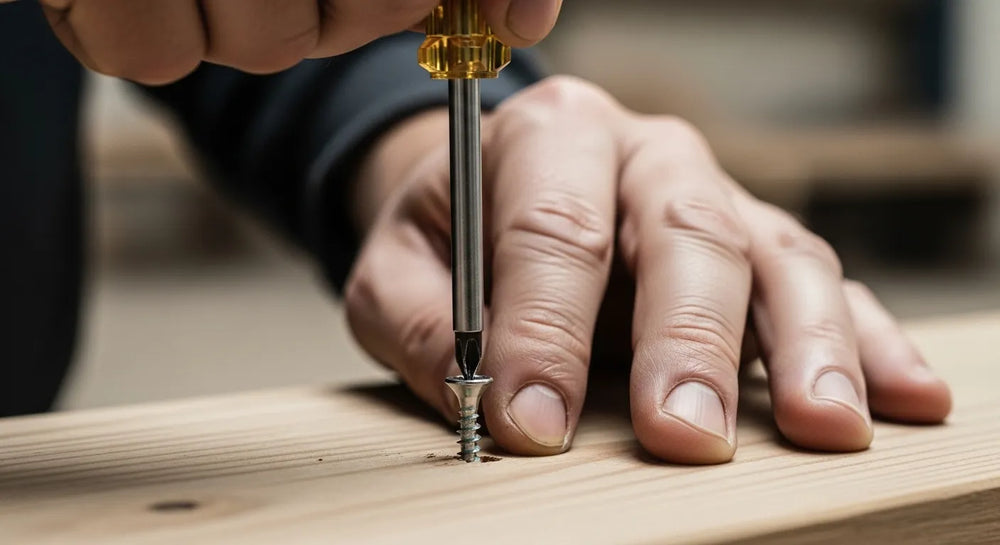
How Many Screws Per Sheet of Drywall 4x12? A Professional's Guide
Table of Contents
- Introduction
- The Critical Role of Drywall Fastening in Construction
- Understanding the Standard 4x12 Drywall Sheet
- Factors Influencing Screw Count: Beyond the Basics
- Calculating the Drywall Screws Per Sheet (4x12)
- Types of Drywall Screws and Their Applications
- Best Practices for Drywall Installation and Fastener Management
- Maden.co: Your Strategic Partner for American-Made Fasteners
- Conclusion
- Frequently Asked Questions
Introduction
Imagine a construction project, meticulously planned and executed, only to face delays and rework due to a seemingly minor detail: insufficient or improperly installed fasteners. In the fast-paced world of industrial construction and MRO, such oversights can quickly escalate into significant cost overruns, extended timelines, and compromised structural integrity. For procurement managers, MRO buyers, and design engineers, understanding the precise requirements for every component, down to the humble drywall screw, isn't just about accuracy—it’s about safeguarding project success and ensuring long-term reliability.
The 4x12 drywall sheet is a staple in many commercial and industrial builds, offering efficient coverage and fewer seams compared to smaller sheets. However, determining the exact number of screws required per sheet isn't a one-size-fits-all calculation. It involves a nuanced understanding of building codes, framing materials, application specifics (walls versus ceilings), and fastener types. This comprehensive guide will demystify the calculation for a 4x12 drywall sheet, explore the critical factors influencing screw count, and highlight the importance of sourcing high-quality, American-made fasteners. Our objective is to equip you with the knowledge to make informed procurement decisions, ensuring your projects are not only structurally sound but also economically efficient. We believe that precision in planning, coupled with reliable supply, is the bedrock of industrial excellence, and here at Maden.co, we're dedicated to empowering that ethos.
The Critical Role of Drywall Fastening in Construction
Beyond its aesthetic function, drywall plays a crucial role in the safety, fire resistance, and acoustic properties of a structure. Its effectiveness, however, hinges entirely on the integrity of its fastening system. A poorly secured drywall sheet isn't merely an eyesore; it's a structural liability. Over time, inadequate fastening can lead to cracks, bulging, loose panels, and even collapse, necessitating costly repairs and potentially jeopardizing occupant safety.
Proper drywall fastening is a fundamental aspect of achieving structural integrity. Screws anchor the gypsum panels firmly to the framing, preventing movement and providing a stable substrate for finishes. This stability is particularly vital in high-traffic commercial environments or industrial facilities where vibrations and wear are common. When drywall is fastened correctly, it contributes to the overall rigidity of the wall or ceiling assembly, enhancing its ability to withstand everyday stresses and impacts.
Moreover, the quality of fastening directly impacts fire resistance and acoustic performance. Fire-rated drywall assemblies, often required in commercial buildings, rely on precise screw patterns and types to maintain their integrity under extreme heat. If screws are too far apart or of an incorrect type, the drywall panels can fail prematurely, compromising the fire barrier. Similarly, for sound attenuation, tight, consistent fastening minimizes air gaps and vibrations, crucial for achieving desired STC (Sound Transmission Class) ratings in offices, hospitals, or manufacturing control rooms.
The consequences of poor fastening extend beyond immediate structural concerns. Callbacks for repairs due to popping screws, cracked seams, or loose panels can significantly erode a contractor's reputation and lead to substantial warranty costs. For procurement managers, the decision to invest in quality, compliant fasteners and understand their correct application is a strategic one, directly impacting project longevity, maintenance costs, and ultimately, the Total Cost of Ownership (TCO) for the entire facility. Ensuring that every component, including the smallest screw, meets stringent standards is a testament to Industrial Excellence and a core value we champion at Maden.co.
Understanding the Standard 4x12 Drywall Sheet
The 4x12 drywall sheet (also referred to as 12-foot by 4-foot) is a common choice for large-scale construction projects due to its efficiency. Measuring 4 feet wide by 12 feet long, it covers 48 square feet per sheet, making it ideal for covering expansive wall and ceiling areas quickly. This larger format reduces the number of seams that need to be taped and finished, leading to faster installation times and potentially smoother surfaces, which is a significant advantage in commercial and industrial settings where speed and finish quality are paramount.
Common applications for 4x12 drywall sheets span a wide range of commercial and industrial environments:
- Office Buildings: Used for interior walls, partitions, and ceilings, contributing to both structural integrity and aesthetic appeal.
- Retail Spaces: Provides a uniform surface for displays and interior design, with the potential for higher impact resistance depending on the drywall type and fastening.
- Warehouses and Manufacturing Facilities: Often used for office spaces within the larger facility, utility rooms, or to create clean room environments where dust and air quality are critical. In these settings, the durability and ease of maintenance provided by properly installed drywall are highly valued.
- Educational and Healthcare Institutions: Chosen for its fire-resistant properties (especially 5/8-inch Type X) and acoustic benefits, creating safe and quiet learning or healing environments.
- Hospitality: Contributes to soundproofing between rooms and provides a consistent finish throughout large hotel or convention center projects.
The choice of a 4x12 sheet, while efficient, places an even greater emphasis on accurate screw count and placement. Given its larger size and weight compared to a standard 4x8 sheet, it requires a robust and consistent fastening schedule to prevent sagging, bowing, or detachment, particularly on ceilings. This underscores the need for precise calculations and the use of fasteners that meet or exceed industry standards, ensuring the longevity and safety of the installation.
Factors Influencing Screw Count: Beyond the Basics
Determining the exact number of screws for a 4x12 drywall sheet is not a fixed calculation. It's influenced by several critical factors that procurement managers and design engineers must consider to ensure compliance, structural integrity, and long-term performance.
Framing Type: Wood vs. Metal Studs
The material of your framing system is perhaps the most significant determinant of screw type and, indirectly, screw count.
- Wood Studs: These typically require coarse-thread drywall screws. The aggressive threads are designed to grip the wood fibers firmly, providing excellent pull-out resistance. When working with wood, consistent torque is important to avoid stripping the wood. For a reliable hold, we offer American-made fasteners such as the 6 x 1-1/4 Coarse Thread Drywall Screws, engineered for superior performance in wooden framing.
- Metal Studs: These demand fine-thread drywall screws. The finer threads are designed to tap into and hold securely in the thin gauge steel of metal studs without stripping the metal. Using coarse-thread screws on metal studs can easily strip the hole, leading to loose panels. For robust metal framing applications, consider our high-quality 6 x 1 Fine Thread Drywall Screw, manufactured to precise specifications.
The choice of screw type directly impacts installation efficiency and the long-term stability of the drywall. Mismatching screw type to framing material is a common error that leads to callbacks and structural issues.
Drywall Thickness: 1/2-inch vs. 5/8-inch
The thickness of the drywall panel directly influences the required screw length and can impact spacing requirements, particularly for specialized applications.
- 1/2-inch Drywall: This is the most common thickness for interior walls and non-fire-rated ceilings. Screws typically need to penetrate the framing by at least 5/8-inch, so a 1-1/4 inch screw is often sufficient.
- 5/8-inch Drywall (Type X): Often required for fire-rated assemblies, shear walls, and ceilings, especially where additional rigidity or impact resistance is needed. Due to its increased thickness, longer screws (e.g., 1-5/8 inches) are usually necessary to achieve the minimum 5/8-inch penetration into the framing. The enhanced structural demands of 5/8-inch drywall often necessitate closer screw spacing, particularly in fire-rated or high-impact zones, leading to a higher screw count per sheet.
Layering: Single vs. Double-Layer Drywall
In many commercial and industrial applications, multiple layers of drywall are used to achieve enhanced fire ratings, soundproofing, or impact resistance.
- Single Layer: Standard installation, using conventional screw lengths.
- Double Layer: The first layer is typically fastened with standard screws, while the second layer requires longer screws (e.g., 2-1/4 inches or more) that can penetrate both layers of drywall and achieve sufficient embedment into the framing. This significantly increases the total screw count for the assembly. The screws for the second layer are often offset from the first layer to improve structural integrity. For demanding applications requiring multiple layers, our 8 x 4 Drywall Screw can provide the necessary length and robust hold.
Edge Treatment: Tapered vs. Square Edges
While all 4x12 sheets typically come with tapered long edges for easier joint finishing, square-edge sheets are sometimes used for specific applications like soffits or two-ply systems. The edge treatment primarily affects the finishing process, but proper screw placement at all edges is crucial, regardless of the edge type, to prevent cracking along the seams. Screws must be driven within a specific distance from the edge (typically 3/8" to 1/2") to prevent crumbling the gypsum core.
Building Codes and Industry Standards
This is paramount. Local building codes, often based on national standards like those from the International Building Code (IBC) and ASTM International, dictate minimum screw spacing, types, and lengths for various applications. Fire-rated assemblies (e.g., 1-hour or 2-hour rated walls) and shear walls will have much more stringent fastening requirements than a standard partition wall. Always consult the specific architectural drawings and local codes for your project. Compliance isn't optional; it's a legal and safety imperative. At Maden.co, we understand the critical nature of compliance, which is why we offer products that adhere to industry standards, ensuring your projects meet all regulatory requirements.
Specific Area Requirements: Ceilings vs. Walls
Fastening requirements differ significantly between walls and ceilings due to gravitational forces.
- Walls: Generally less stringent, with field screws (screws in the body of the sheet) typically spaced at 16 inches on center (O.C.) and perimeter screws at 8 inches O.C.
- Ceilings: Gravity exerts constant downward pressure on ceiling drywall, making closer screw spacing essential. Field screws are often spaced at 12 inches O.C., and perimeter screws can be as close as 7 inches O.C. This increased density directly translates to a higher screw count per sheet for ceiling applications.
Acoustic and Fire-Rated Assemblies
These specialized assemblies often require increased screw density and specific screw types to meet performance criteria. For fire-rated walls, screws may need to be 7 inches O.C. in the field and around the perimeter to ensure the assembly maintains its integrity during a fire event. Similarly, dense screw patterns can help reduce sound transmission by creating a more rigid and sealed assembly. Always refer to the specific engineering or architectural details for such systems.
Understanding these variables is crucial for accurate material estimation, ensuring project compliance, and maintaining the highest standards of quality. For procurement managers and business owners, partnering with suppliers who can provide detailed product specifications and a diverse range of American-made fasteners designed for these varied applications is a strategic advantage.
Calculating the Drywall Screws Per Sheet (4x12)
Calculating the number of drywall screws needed for a 4x12 sheet involves a combination of industry standards, building code requirements, and practical considerations for walls versus ceilings. While rules of thumb exist, a more precise calculation provides greater accuracy and helps prevent material shortages or excessive waste.
The general rule of thumb for drywall screws is often cited as:
- Approximately 1.5 screws per square foot for walls.
- Approximately 2 screws per square foot for ceilings.
For a 4x12 sheet, which covers 48 square feet:
- Walls: 48 sq ft * 1.5 screws/sq ft = 72 screws
- Ceilings: 48 sq ft * 2 screws/sq ft = 96 screws
These rules of thumb provide a quick estimate. However, for precise planning, let's break down the calculation based on common spacing standards for a 4x12 (144 inches x 48 inches) sheet.
Standard Wall Installation (16" O.C. Studs)
For walls, the typical screw spacing is:
- Field screws: 16 inches on center (O.C.)
- Perimeter screws: 8 inches O.C.
Here's how to calculate:
-
Perimeter Screws:
- The perimeter of a 4x12 sheet is (2 * 144 inches) + (2 * 48 inches) = 288 + 96 = 384 linear inches.
- At 8 inches O.C. spacing, you would initially calculate 384 / 8 = 48 screws.
- Note on corners: When calculating perimeter, you might slightly overcount corners if treating each edge separately. A practical approach is to simply calculate total linear feet / spacing, which gives a good working number for ordering.
- Let's use 48 screws for the perimeter.
-
Field Screws:
- The sheet is 12 feet (144 inches) long. If studs are 16 inches O.C., the sheet will span multiple studs.
- Imagine vertical lines of screws along the studs. A 12-foot length of drywall will typically cover 9 internal stud bays (12ft = 144in; 144/16 = 9). This means there are 8 internal studs needing screws. Plus the two end studs if the sheet starts on one.
- A common way to conceptualize this is to consider the number of vertical stud lines the sheet crosses between its perimeter.
- For a 12-foot sheet on 16-inch O.C. studs, you would have 8 or 9 interior stud lines requiring field screws. Let's use 9 interior lines for a slightly more robust count, often seen in practice to ensure full coverage.
- For each 4-foot height (48 inches) of the sheet, with field screws at 16 inches O.C., you would place 48 / 16 = 3 screws per vertical line.
- Total field screws = (Number of internal stud lines) * (Screws per line) = 9 lines * 3 screws/line = 27 screws.
-
Total Screws for Walls:
- Perimeter Screws + Field Screws = 48 + 27 = 75 screws per 4x12 sheet on walls.
This aligns closely with the "1.5 screws per square foot" rule of thumb (72 screws), providing a slightly more conservative and robust count, which is always advisable.
Standard Ceiling Installation (16" O.C. Joists/Trusses)
For ceilings, due to gravitational forces and often more stringent requirements, closer spacing is recommended:
- Field screws: 12 inches O.C.
- Perimeter screws: 7 inches O.C. (or sometimes 6 inches O.C. in some codes)
Here's how to calculate for ceilings:
-
Perimeter Screws:
- Total perimeter = 384 linear inches.
- At 7 inches O.C. spacing: 384 / 7 = ~54.85 screws. Round up to 55 screws.
-
Field Screws:
- Again, for a 12-foot (144-inch) sheet over 16-inch O.C. framing, we estimate 9 interior stud lines.
- For each 4-foot height (48 inches) of the sheet, with field screws at 12 inches O.C., you would place 48 / 12 = 4 screws per vertical line.
- Total field screws = 9 lines * 4 screws/line = 36 screws.
-
Total Screws for Ceilings:
- Perimeter Screws + Field Screws = 55 + 36 = 91 screws per 4x12 sheet on ceilings.
This also aligns well with the "2 screws per square foot" rule of thumb (96 screws), again providing a slightly more precise, conservative estimate.
Practical Considerations and Over-Ordering
It's always prudent to factor in a waste percentage for fasteners, typically an additional 10-15%. This accounts for dropped screws, bent screws, over-driven or stripped screws, or slight adjustments to spacing during installation. For example, if you calculate 75 screws per sheet, ordering 82-86 screws would be a safe buffer.
Remember that these calculations are guidelines. Always defer to local building codes, architectural specifications, and manufacturer recommendations, especially for fire-rated or specialized assemblies where screw counts can be significantly higher (e.g., 6 inches O.C. for both perimeter and field). For projects demanding stringent compliance and consistent material quality, sourcing your fasteners from verified American manufacturers through a platform like Maden.co ensures you meet all standards without compromise.
Types of Drywall Screws and Their Applications
Choosing the right type of drywall screw is as crucial as calculating the correct number. Using an inappropriate screw can compromise the integrity of the installation, regardless of how many are used. American manufacturing pride ensures that our fasteners are produced to exacting standards, offering reliability and consistent quality for every project.
1. Coarse-Thread Drywall Screws
- Description: These screws have widely spaced, aggressive threads designed to grip firmly into the fibrous material of wood studs. The coarse thread prevents stripping in wood and offers excellent pull-out resistance.
- Application: Primarily used for attaching drywall to wood framing.
- Sizes: Commonly available in lengths such as 1-1/4 inch for 1/2-inch drywall, and 1-5/8 inch for 5/8-inch drywall.
- Maden.co Offering: For robust fastening into wood studs, we provide top-quality, American-made options like our 6 x 1-1/4 Coarse Thread Drywall Screws, ensuring reliable performance for your wood-framed projects.
2. Fine-Thread Drywall Screws
- Description: Featuring more numerous and finer threads than their coarse-thread counterparts, these screws are engineered to tap into and securely hold in the denser, thinner material of metal studs. The finer threads create a more precise fit, minimizing the risk of stripping the metal.
- Application: Exclusively used for attaching drywall to metal framing (light-gauge steel studs).
- Sizes: Similar lengths to coarse-thread screws, such as 1-1/4 inch and 1-5/8 inch, appropriate for various drywall thicknesses.
- Maden.co Offering: When working with metal framing, precision and consistency are key. Our 6 x 1 Fine Thread Drywall Screw is a superior choice, manufactured in the U.S. to ensure exceptional grip and durability in metal studs.
3. Longer Drywall Screws (e.g., 2-1/4 inch, 4-inch)
- Description: These extended-length screws are designed for specialized applications where a single standard screw is insufficient. They often come in both coarse and fine thread options, depending on the framing material.
-
Application:
- Double-layer drywall installations: The first layer uses standard screws, while the second layer requires longer screws to penetrate both layers of drywall and achieve adequate embedment into the framing.
- Attaching rigid insulation: Used to fasten foam insulation panels directly to studs before the drywall layer.
- Furring strips or strapping: Securing these materials prior to drywall installation.
- Soundproofing systems: Sometimes used in conjunction with resilient channels or other acoustic dampening materials.
- Maden.co Offering: For demanding, multi-layer applications that require substantial penetration and holding power, consider the 8 x 4 Drywall Screw. This heavy-duty fastener ensures secure attachment across multiple materials, embodying our commitment to Industrial Excellence.
Universal Design Features: Bugle Head and Phosphated Finish
Regardless of thread type or length, most drywall screws share common design characteristics that optimize their performance:
- Bugle Head: This distinctive conical shape allows the screw head to countersink cleanly into the drywall paper without tearing it. The smooth transition from the head to the shank ensures that the screw creates a flush surface, making it easy to mud and tape over, resulting in a smooth finish. This design is critical for achieving professional results.
- Phosphated Finish (Black Oxide): The black phosphate coating on most drywall screws provides mild corrosion resistance and, more importantly, enhances adhesion for joint compound and paint. This helps prevent "nail pops" caused by rust stains bleeding through the finish over time. Some specialized screws may feature different corrosion-resistant coatings for high-moisture environments.
Gauge and Length Considerations
- Gauge (Diameter): Drywall screws are typically available in #6 or #8 gauge. #6 is common for standard drywall, while #8 offers increased strength and is often preferred for thicker, heavier drywall (e.g., 5/8-inch Type X) or for ceiling applications where greater holding power is needed.
- Length: As discussed, screw length is critical and must be chosen based on the drywall thickness and the number of layers. The screw must pass through all layers of drywall and penetrate the framing by at least 5/8 inch for wood and 3/8 inch for metal. In some cases, building codes may require 3/4 inch penetration.
Sourcing high-quality, American-made fasteners ensures consistent dimensions, thread quality, and head design—all vital for efficient installation and a durable finish. At Maden.co, we uphold the values of American Manufacturing Pride and Supply Chain Transparency, connecting you directly with verified U.S. manufacturers who produce fasteners meeting the highest standards, ensuring your projects benefit from superior materials.
Best Practices for Drywall Installation and Fastener Management
Beyond simply knowing how many screws to use, implementing best practices in installation and procurement can significantly enhance project quality, efficiency, and cost-effectiveness.
Screw Gun Usage: The Right Depth
Properly setting the clutch on a screw gun is paramount. The goal is to drive the screw head just below the surface of the drywall paper, creating a slight dimple without tearing the paper. This dimple provides a recess for joint compound.
- Avoiding Over-Driving: Driving screws too deep will tear the paper facing, reducing the screw's holding power and creating a weak point that can lead to "blow-outs" or pops. It also compromises the integrity of the gypsum core.
- Avoiding Under-Driving: Screws that are not driven deep enough will protrude, making it impossible to achieve a smooth finish with joint compound. These screws must be re-driven or removed and re-set, adding labor time.
The consistency of American-made fasteners, which adhere to strict dimensional tolerances, greatly aids in achieving consistent screw depth, especially when using automated screw guns.
Edge Clearance: Preserving Integrity
Screws should not be driven too close to the edge of the drywall sheet.
- Minimum Distance: Maintain a minimum distance of 3/8 inch to 1/2 inch from the edge of the sheet.
- Reasoning: Driving screws too close to the edge can cause the gypsum core to crumble or the paper facing to tear, significantly weakening the hold and creating a potential point of failure at the seam. This practice is particularly important along tapered edges where the gypsum is thinner.
Corner Fastening and Seam Management
Special attention is required at corners and seams to ensure a strong, stable installation.
- Corners: When two sheets meet at an inside or outside corner, ensure screws are placed along both edges of the abutting sheets, maintaining proper edge clearance. Some installers prefer to "double screw" corners, placing screws slightly offset from each other along the same stud line, for added rigidity.
- Seams: Always ensure that screws capture both edges of abutting drywall sheets where they meet on a common stud or joist. This is crucial for creating a strong joint that resists movement and cracking, and it minimizes the likelihood of "ridging" or "peaking" at the seams. Proper screw placement contributes directly to a seamless finish and reduces the need for excessive joint compound, saving time and materials.
Waste and Over-Ordering: The Procurement Balancing Act
While calculating the exact screw count is important, a savvy procurement strategy also involves accounting for minor losses.
- Waste Factor: As previously mentioned, always factor in a 10-15% waste percentage. This buffer prevents project stoppages due to running out of fasteners and avoids rush orders, which often come with higher costs and potential delivery delays.
- Strategic Over-Ordering: It's more cost-effective to have a small surplus of fasteners than to run short. Any surplus can often be used on subsequent projects or easily stored, especially if you're sourcing high-quality, commonly used American-made products from a marketplace like Maden.co.
Why Sourcing U.S.-Made Matters: Beyond the Project
The choice of where you source your fasteners has far-reaching implications, extending beyond the immediate project to impact your entire supply chain and broader economic health.
- Consistent Quality and Adherence to Standards: American manufacturers operate under some of the most stringent quality control standards in the world. This means consistent metallurgy, precise thread forming, and reliable coatings, ensuring that every screw performs as expected. This minimizes variations that can lead to installation problems, rework, and structural compromises. Our commitment to American Manufacturing Pride means we connect you with products built to last.
- Supply Chain Resilience: Relying on domestic suppliers significantly reduces vulnerability to geopolitical events, international shipping delays, and fluctuating tariffs that can disrupt global supply chains. A resilient supply chain means greater predictability and fewer headaches for procurement managers. At Maden.co, our mission to democratize access to American manufacturing directly addresses the need for robust and transparent supply chains.
- Supporting American Manufacturing: Every purchase of a U.S.-made product directly contributes to job creation, economic growth, and the revitalization of local communities across the United States. This aligns with a broader commitment to strengthening the domestic industrial base and fostering innovation. Our vision is to become the definitive platform that proves American-made components are as accessible and convenient as any global alternative, driving the manufacturing revival.
- Environmental and Ethical Standards: U.S. manufacturers typically adhere to higher environmental protection standards and fair labor practices, aligning with corporate social responsibility goals and ensuring ethical sourcing.
By prioritizing American-made fasteners, businesses enhance their project quality, build more resilient supply chains, and contribute to a stronger domestic economy. This holistic approach to procurement embodies the core values of Industrial Excellence and Customer Empowerment that define Maden.co.
Maden.co: Your Strategic Partner for American-Made Fasteners
In the complex landscape of industrial procurement, finding the right balance between quality, cost-efficiency, and supply chain reliability is a constant challenge. At Maden.co, we understand these pressures and have built a platform specifically designed to meet the exacting demands of procurement managers, MRO buyers, and design engineers. Our mission is to democratize access to American manufacturing, making it easier than ever to source the highest quality, U.S.-made industrial components.
We achieve this by connecting industrial buyers with an unparalleled network of over 2.5 million American-made products from more than 800+ verified U.S. manufacturers. Our vision extends beyond just a transaction; we aim to become the definitive platform that proves American-made components are as accessible and convenient as any global alternative, driving the manufacturing revival with our tagline: "America's manufacturing revival is here." You can learn more about our mission to champion American manufacturing here.
For a procurement manager under pressure to source a specific DIN 931 compliant hex cap screw, a design engineer needing specific material certifications for a new prototype, or an MRO buyer facing an unexpected equipment breakdown, the ability to quickly find and finance a verified, U.S.-made part is a game-changer. Our platform significantly reduces procurement friction, allowing you to focus on strategic initiatives rather than chasing down suppliers or verifying product origins. We uphold core values of American Manufacturing Pride, Digital Innovation, Supply Chain Transparency, Industrial Excellence, and Customer Empowerment in every interaction.
The tangible benefits of sourcing through Maden.co are clear:
- Improved Total Cost of Ownership (TCO): By reducing lead times, minimizing supply chain risks, and ensuring product longevity, our platform helps lower your overall project costs.
- Ensured Compliance: Our verified network guarantees products that meet critical industry standards (e.g., DIN, NPT, ASTM), ensuring your projects are always up to code.
- Enhanced Supply Chain Resilience: Direct access to a vast domestic manufacturing base fortifies your supply chain against global disruptions.
- Reduced Procurement Friction: Our intuitive platform and comprehensive catalog streamline the sourcing process, saving valuable time and resources.
- Partnership with Verified U.S. Manufacturers: Confidence in knowing you're acquiring authentic, high-quality, American-made products directly from trusted sources.
A key differentiator that further streamlines your capital-intensive projects is our Instant Financing option. This feature is not merely a payment method; it's a strategic tool designed to help businesses manage cash flow effectively and facilitate larger-volume purchases. Instead of waiting for traditional loan approvals, you can apply for Instant Financing at checkout to streamline your capital-intensive projects, ensuring your operations never miss a beat. This empowers procurement managers and business owners to make timely, impactful decisions without liquidity constraints.
We are also continuously expanding our network of premier American manufacturers. If you are a qualified U.S. manufacturer, we invite you to join our growing ecosystem. Register as a vendor and join the American manufacturing revival, connecting your quality products with thousands of industrial buyers across the nation.
Our commitment is to be more than just a marketplace; we are a strategic partner in building a more reliable and efficient procurement process for your business. Explore the vast selection of American-made industrial products on Maden.co today and experience the difference that Digital Innovation and Supply Chain Transparency can make.
Conclusion
Accurately determining the number of screws per sheet of 4x12 drywall is a foundational element of sound construction and MRO. This seemingly small detail has significant implications for structural integrity, project timelines, and overall cost. By understanding the critical factors—from framing materials and drywall thickness to specific application types like walls versus ceilings and adherence to building codes—procurement managers and design engineers can move beyond mere estimations to precise planning. Choosing the correct type and length of American-made coarse-thread screws for wood studs, such as our 6 x 1-1/4 Coarse Thread Drywall Screws, or fine-thread screws for metal studs, like our 6 x 1 Fine Thread Drywall Screw, is not merely about compliance; it's about investing in the longevity and safety of your projects. For multi-layer applications, the robust holding power of longer fasteners such as the 8 x 4 Drywall Screw becomes indispensable.
Maden.co stands as America's premier B2B marketplace, dedicated to connecting industrial buyers with the very best of U.S. manufacturing. Our extensive catalog of over 2.5 million American-made products from 800+ verified manufacturers ensures that you have unparalleled access to the fasteners and components you need, all while benefiting from enhanced supply chain resilience, reduced procurement friction, and guaranteed adherence to critical industry standards. We believe that America's manufacturing revival is here, driven by platforms that champion Digital Innovation, Supply Chain Transparency, and Industrial Excellence.
Don't let fastener uncertainty compromise your next project. Empower your procurement process by exploring Maden.co's comprehensive catalog of American-made fasteners and industrial components today. Leverage our intuitive platform to find precisely what you need, and streamline your capital-intensive purchases with our convenient Instant Financing option available at checkout. Your commitment to quality and efficiency starts with reliable sourcing—and that starts with Maden.co. If you have specific sourcing questions or need expert guidance, our team is ready to help.
Frequently Asked Questions
Q1: What is the ideal spacing for drywall screws on walls compared to ceilings?
A1: For standard wall installations, the ideal spacing for field screws (screws in the body of the sheet) is typically 16 inches on center (O.C.), with perimeter screws spaced at 8 inches O.C. For ceilings, due to gravitational forces, closer spacing is recommended: field screws are generally 12 inches O.C., and perimeter screws can be as close as 7 inches O.C. Always consult local building codes and architectural specifications for precise requirements.
Q2: Can I use coarse-thread screws for metal studs?
A2: No, coarse-thread screws are specifically designed for wood studs where their aggressive threads can grip the wood fibers. For metal studs, you must use fine-thread drywall screws. Fine threads are engineered to tap into the thinner gauge steel of metal studs securely without stripping the material, ensuring a strong and stable connection. Using coarse-thread screws on metal studs will likely strip the hole, leading to a weak or failed connection. Maden.co offers high-quality 6 x 1 Fine Thread Drywall Screws perfect for metal framing.
Q3: Why is screw length important for drywall installation?
A3: Screw length is critical to ensure adequate penetration into the framing material, which is essential for holding power. For single-layer drywall, screws must pass through the drywall thickness and then embed into the framing by at least 5/8 inch for wood and 3/8 inch for metal. For thicker drywall (e.g., 5/8-inch Type X) or multi-layer installations, longer screws are required to achieve this minimum embedment through all layers. Insufficient penetration can lead to loose panels, screw pops, and compromised structural integrity over time.
Q4: How does Maden.co ensure the quality of its fasteners?
A4: At Maden.co, our commitment to Industrial Excellence is paramount. We democratize access to American manufacturing by featuring products from a network of over 800+ verified U.S. manufacturers. This verification process ensures that all products, including fasteners, adhere to stringent American quality control standards, material specifications, and industry compliance requirements. Our Supply Chain Transparency guarantees that you are sourcing authentic, high-quality, American-made products directly from trusted domestic producers, minimizing risk and ensuring consistent performance for your projects.


