
Secure Fastening: Can You Use Wood Screws in MDF?
Table of Contents
- Introduction
- Understanding MDF: Properties That Impact Fastening
- The Challenge of Traditional Wood Screws in MDF
- Best Practices for Using Wood Screws in MDF
- Specialized Fasteners and Techniques for MDF
- Preventing Common Failures When Working with MDF
- The Strategic Advantage of Sourcing U.S.-Made Fasteners for MDF Applications
- Maden.co: Your Partner in Precision Procurement
- Conclusion
- FAQ
Introduction
In the intricate world of manufacturing and construction, few materials elicit as much discussion regarding fastening techniques as Medium-Density Fiberboard, or MDF. Known for its smooth finish, consistent density, and affordability, MDF is a staple in everything from furniture and cabinetry to display fixtures and architectural millwork. Yet, its unique composition, a dense mat of wood fibers bound with resin under heat and pressure, presents distinct challenges when it comes to mechanical fastening. Many procurement managers, MRO buyers, and design engineers frequently encounter the critical question: "Can you effectively use wood screws in MDF?" The answer, while nuanced, is a resounding yes – but with crucial caveats and best practices.
Successfully fastening into MDF isn't as straightforward as driving a screw into solid wood. Without the natural grain of timber, MDF can be prone to splitting, especially near edges, and the uniform density can lead to stripped holes if not approached correctly. The difference between a robust, long-lasting joint and a compromised one often lies in understanding MDF's material properties, selecting the right fasteners, and employing precise techniques. This comprehensive guide will delve into the intricacies of using wood screws in MDF, exploring the challenges, outlining best practices, and introducing specialized alternatives that ensure structural integrity and durability for your projects. We will also highlight how strategic sourcing of high-quality, U.S.-made components, like those available on Maden.co, is pivotal in achieving optimal results and enhancing overall supply chain resilience for your American manufacturing needs.
Understanding MDF: Properties That Impact Fastening
To effectively choose and apply fasteners for Medium-Density Fiberboard, it's essential to first understand its unique characteristics. MDF is an engineered wood product made by breaking down hardwood and softwood residuals into wood fibers, combining them with wax and a resin binder, and forming panels by applying high temperature and pressure. This process results in a material with several key properties that directly impact its interaction with fasteners:
- Uniform Density and Homogeneity: Unlike natural wood, which has varying grain patterns and densities, MDF boasts a remarkably consistent density throughout its entire cross-section. This homogeneity contributes to its smooth surface and excellent machining properties, but it also means there are no natural wood fibers to grip screw threads in the same way.
- Lack of Natural Grain: The absence of a distinct wood grain means MDF does not offer the same directional strength or fiber interlock that solid wood does. This lack of grain is a double-edged sword: it allows for clean cuts in any direction without splintering, but it also makes MDF more susceptible to splitting when a screw is driven too close to an edge or without a proper pilot hole. The screw essentially forces the dense fibers apart rather than following a grain.
- High Density and Brittleness: While its density is often seen as a strength, making it heavier and more stable than particleboard, it also contributes to a certain brittleness. This characteristic makes MDF prone to splitting or crumbling under excessive localized pressure, such as that exerted by an aggressively driven screw.
- Susceptibility to Moisture: MDF is highly absorbent. Exposure to moisture can cause it to swell, lose structural integrity, and degrade. This is a crucial consideration for fastener material selection, especially in environments where humidity or direct contact with water is a concern. Corrosion of fasteners can lead to compromised joints and unsightly stains.
- Edge Weakness: The edges of an MDF panel are generally the weakest points for fastening. When screws are driven into the face, they benefit from the bulk of the material around them. However, fastening into the thin edge cross-section significantly increases the risk of splitting and stripped holes due to the limited material available to grip the screw threads.
For procurement managers and design engineers, recognizing these properties is the first step toward successful project execution. It informs the selection of not just the screw type, but also the pre-drilling techniques, assembly methods, and even the environmental considerations for the finished product. Understanding these nuances is fundamental to ensuring the durability and structural integrity of components sourced for your builds.
The Challenge of Traditional Wood Screws in MDF
While it might seem intuitive to reach for a standard wood screw when working with a wood-based product like MDF, the truth is that traditional wood screws often present significant challenges that can compromise the integrity and longevity of your projects. These challenges stem directly from the unique characteristics of MDF compared to natural timber.
- Aggressive Thread Design Leading to Splitting: Standard wood screws are designed with sharp, often widely spaced threads that are excellent at cutting into and gripping the long, strong fibers of natural wood. However, when these aggressive threads are driven into the dense, homogenous composition of MDF, they act more like a wedge. Instead of neatly parting and gripping fibers, they force the compressed wood particles apart, creating immense outward pressure. This pressure is a primary cause of splitting, especially when screws are driven too close to the edge of a panel or without adequate pilot holes. The lack of a resilient grain structure means MDF cannot easily flex or conform to the screw's displacement, leading to cracks.
- Risk of Stripping and Tear-Out: Even if splitting is avoided, the uniform density of MDF poses another problem: stripped holes. Once the screw's threads cut into the MDF, there's less material resilience to maintain a tight grip compared to natural wood. Overtightening, a common mistake, can easily cause the threads in the MDF to strip, rendering the joint loose and ineffective. This is particularly problematic in applications requiring repeated assembly and disassembly. Moreover, the lack of fibrous interlock means that once stripped, the hole offers very little purchase for subsequent attempts to re-fasten, often requiring repair or relocation of the fastener. The smooth surface of MDF also means that during driving, there's a risk of the screw head causing "tear-out" around the entry point if not properly countersunk or if an incorrect screw head type is used.
- Poor Holding Power in Edges: Fastening into the edge of an MDF panel is arguably its greatest weakness. When a standard wood screw is driven into the narrow cross-section of an MDF edge, the material has very little structural depth to resist the outward pressure of the screw's threads. This almost guarantees splitting without careful pre-drilling and often results in inadequate holding power, as the screw's threads have minimal material to grip effectively. This is a critical consideration for designers and manufacturers aiming for robust joints in areas like shelving, drawer boxes, or cabinet construction.
- Vibration and Load Resistance: Joints made with traditional wood screws in MDF may not withstand significant vibration or heavy loads as effectively as those in solid wood or with specialized fasteners. The material's tendency to strip means that under stress, the joint can loosen over time, leading to structural failure. This is a serious concern for MRO buyers looking for components that ensure long-term equipment stability or for design engineers specifying materials for high-stress applications.
These challenges underscore the importance of precision in procurement and application. Relying solely on the availability of common wood screws without understanding their limitations in MDF can lead to costly rework, project delays, and compromised product quality. This is precisely why Maden.co emphasizes not just accessibility but also the strategic value of selecting the right U.S.-made industrial components for the job, ensuring that every fastener meets the specific demands of the material and application.
Best Practices for Using Wood Screws in MDF
Despite the challenges, wood screws can be successfully used in MDF if best practices are rigorously followed. The key lies in minimizing the material's inherent weaknesses and maximizing the fastener's strengths through careful preparation and technique.
Pilot Holes: The Non-Negotiable Step
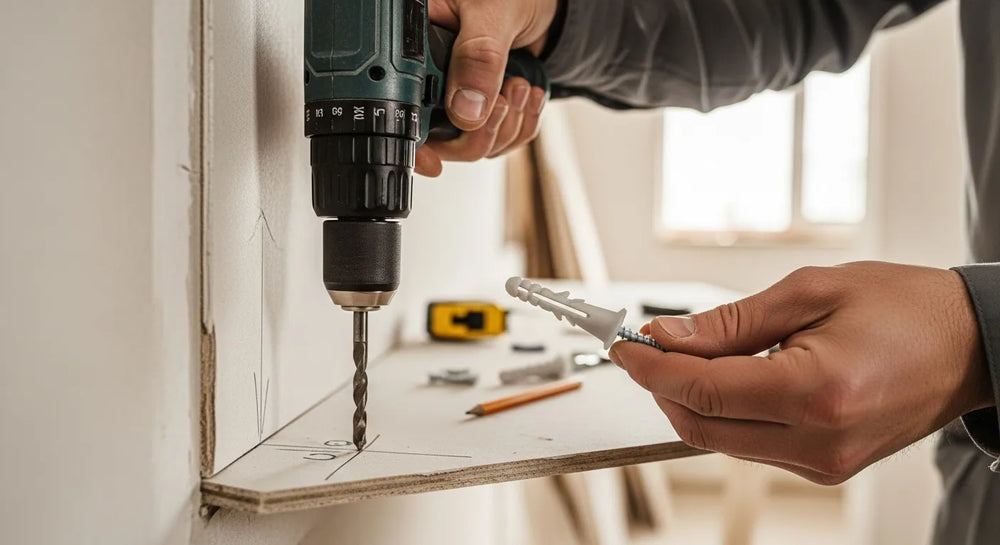
When working with MDF, pilot holes are not merely recommended; they are absolutely essential. Skipping this step is almost a guarantee of splitting, especially near edges, or creating stripped holes.
-
Importance and Correct Sizing: A pilot hole relieves the pressure exerted by the screw's threads as it enters the dense MDF, preventing the fibers from being forced apart aggressively. The size of the pilot hole is critical:
- For the Screw Shank: The pilot hole should match the diameter of the screw's shank (the unthreaded part of the screw) for the portion of the screw that passes through the top piece of material. This allows the screw to draw the two pieces together tightly without binding.
- For the Screw Threads: The pilot hole for the threaded portion should be slightly smaller than the root diameter of the screw threads. This ensures that the threads have enough material to grip firmly without creating excessive outward pressure that could cause splitting. A general rule of thumb is to start with a drill bit that is 70-80% of the screw's core diameter for hardwoods (and MDF acts similarly in density). Experimentation with scrap pieces is highly recommended to find the optimal size for your specific screw and MDF thickness.
- Countersinking: For screws with flat or oval heads, countersinking the pilot hole is crucial. This creates a conical recess for the screw head to sit flush with or slightly below the surface of the MDF, preventing unsightly damage, tear-out, and ensuring a clean finish. Without countersinking, the sharp edges of the screw head can crush and displace the MDF fibers, leading to a weak hold and surface imperfections.
Selecting the Right Wood Screw
Not all wood screws are created equal, especially when it comes to MDF. Careful selection can significantly improve holding power and prevent damage.
-
Thread Design (Coarse vs. Fine):
- Coarse Threads: Often found on standard wood screws, these are more prone to splitting MDF as they displace more material. While they offer good grip in solid wood, their aggressive nature can be detrimental in MDF.
- Fine Threads: Screws with finer, sharper threads are generally preferred for MDF. They cut into the material more cleanly, displacing less volume and thus reducing the risk of splitting and providing a more consistent grip. Some specialized MDF screws feature unique thread profiles specifically designed to cut without expanding the material excessively.
-
Screw Length and Diameter:
- Length: The screw should be long enough to penetrate the receiving MDF panel by at least half, ideally two-thirds, of its thickness, without exiting the other side. Too short, and the holding power is compromised; too long, and you risk breakthrough or interference.
- Diameter: A larger diameter screw generally provides greater holding power, but it also increases the risk of splitting if the pilot hole isn't perfectly sized. Balance is key: choose the largest diameter that can be safely accommodated with a properly sized pilot hole.
-
Head Types for MDF:
- Flat Head: Ideal for flush mounting, requires countersinking.
- Pan Head/Round Head: Sits proud of the surface, offering a broader bearing surface that can sometimes prevent tear-out if not over-tightened. These are common for general assembly where a flush finish isn't critical. For a classic aesthetic combined with robust fastening, a Round Slot Drive Brass Wood Screw can be an excellent choice for applications where corrosion resistance and appearance are priorities. Similarly, the versatility of a Flat Slot Drive Brass Wood Screw provides a flush finish with the same material advantages.
-
Material Considerations for Durability and Environment: The material of the screw itself is crucial, especially when considering the end-use environment for the MDF project.
- Brass: Offers good corrosion resistance and an attractive finish, often used in visible applications or where a degree of moisture protection is needed.
- Silicon Bronze: Known for superior corrosion resistance, particularly in marine or highly humid environments, making it a premium choice for long-term durability. For projects demanding the highest level of corrosion resistance and aesthetic appeal, an Oval Slot Drive Silicon Bronze Wood Screw provides exceptional performance.
- Steel (various coatings): Zinc-plated steel is common for interior applications, offering decent protection against rust. For outdoor or high-moisture environments, stainless steel is essential. For procurement managers sourcing fasteners, ensuring these material specifications are met is critical for the product's longevity and compliance. At Maden.co, we understand that selecting the right material is as important as selecting the right design, offering a comprehensive catalog of U.S.-made industrial fasteners for every application.
Driving Techniques
Even with the right pilot hole and screw, improper driving can ruin a joint.
- Controlled Torque, Avoiding Overtightening: MDF is forgiving when it comes to stripping if too much torque is applied. Use a clutch setting on your drill or driver that engages before the screw is fully seated to prevent overtightening. Hand driving is also an excellent method for delicate MDF joints, offering maximum control. Stop immediately once the screw is snug and the head is seated.
- Using Screw Guns vs. Drills: While a standard drill can work, a dedicated screw gun or an impact driver with a clutch setting offers better control over torque and prevents cam-out (where the driver bit slips out of the screw head), which can damage both the screw and the MDF surface.
By adhering to these best practices, procurement managers can ensure their teams achieve reliable, strong joints when using wood screws in MDF, ultimately leading to higher quality finished products and reduced material waste. Our commitment to Industrial Excellence at Maden.co means providing the reliable U.S.-made components that empower these best practices.
Specialized Fasteners and Techniques for MDF
While standard wood screws can be used in MDF with careful application of best practices, the inherent limitations of the material often necessitate the use of specialized fasteners or reinforced techniques for optimal strength and durability. For projects requiring superior joint integrity, repeated assembly/disassembly, or enhanced load-bearing capacity, these alternatives are often the preferred choice for design engineers and manufacturers.
Dedicated MDF Screws
Recognizing the unique challenges of fastening into MDF, manufacturers have developed screws specifically engineered for this material.
- Unique Thread Design for Better Grip: Dedicated MDF screws typically feature a coarser thread pitch than standard wood screws but with a sharper, more defined thread profile. Crucially, these screws often have a non-threaded shank near the head to allow the top piece of material to pull tightly against the bottom. The threads are designed to cut cleanly into the MDF without causing undue expansion, thus reducing splitting.
- Self-Tapping Features: Many MDF screws incorporate self-tapping tips, eliminating the need for a separate pilot hole in some applications (though a small pilot hole is still recommended, especially near edges, to ensure precision and prevent splitting). Some also feature a ribbed or cutting action beneath the head to clean out material for a flush fit, effectively creating their own countersink. This design minimizes tear-out and ensures a clean, professional finish, streamlining assembly processes for MRO buyers.
Confirmat Screws
For robust, structural joints in MDF, confirmat screws are an excellent solution, particularly common in flat-pack furniture and cabinet construction.
- Stronger Joints, Larger Diameter: Confirmat screws are distinguished by their large diameter, blunt tip, and coarse, deep threads. They are designed to create a powerful mechanical lock within the MDF. Their substantial size provides a much larger surface area for thread engagement, resulting in significantly higher pull-out resistance compared to standard wood screws.
- Specialized Pilot Holes: Confirmat screws require a specialized stepped drill bit that simultaneously drills a pilot hole for the threaded shank, a wider hole for the unthreaded shoulder, and a countersink for the screw head. This ensures a perfect fit, preventing splitting and providing a very strong, flush joint. When precise, U.S.-made fasteners like these are needed, Maden.co offers a reliable source, connecting buyers with manufacturers committed to industrial excellence.
Threaded Inserts
For applications requiring repeated assembly and disassembly, or where maximum pull-out strength is paramount, threaded inserts are the ultimate solution for MDF.
- For Repeated Assembly/Disassembly: Threaded inserts are small, cylindrical sleeves, typically made of brass, steel, or zinc alloy, that are installed into a pre-drilled hole in the MDF. They feature external threads that grip the MDF and internal machine screw threads that accept a machine screw. This creates a durable, metal-to-metal connection, allowing components to be assembled and disassembled many times without degrading the MDF.
-
Types and Installation:
- Screw-in Inserts: These inserts have a slotted or hex drive head and are screwed into a pilot hole in the MDF.
- Press-in Inserts: These are hammered or pressed into a pilot hole, often featuring barbed external ridges for grip.
- Proper installation requires a precisely sized pilot hole to ensure the insert grips the MDF securely without splitting it. For design engineers specifying components for modular systems, sourcing high-quality threaded inserts through Maden.co ensures consistent quality and fit.
Glue-and-Screw Method
Combining adhesive with mechanical fasteners is a time-tested technique to maximize the strength and longevity of joints in MDF.
- Enhancing Joint Strength: While screws provide immediate clamping pressure and mechanical strength, wood glue (PVA or similar) forms a chemical bond between the MDF panels. Once the glue cures, it significantly increases the joint's rigidity and resistance to shear forces and pull-out. The screws hold the joint securely while the glue sets, then act as a permanent reinforcement.
- Adhesive Types: Standard PVA wood glue is effective for most applications. For higher moisture resistance, choose a waterproof PVA glue. Ensure proper clamping time for the glue to cure fully. This method is particularly useful for structural components in cabinetry and furniture.
Edge Banding and Reinforcement
As MDF edges are the weakest points for fastening, reinforcement techniques can dramatically improve their integrity.
- Improving Edge Integrity: Applying edge banding (thin strips of PVC, wood veneer, or solid wood) significantly enhances the durability and finish of MDF edges. While primarily aesthetic, solid wood edge banding, when glued and doweled or biscuit-jointed to the MDF edge, can provide a much stronger substrate for fastening. This creates a "hybrid" edge that behaves more like solid wood for screw retention.
- Internal Reinforcement: For high-stress areas, internal wooden blocks or battens can be glued and screwed to the inside of the MDF panel, providing a solid anchor point for fasteners. This strategy is frequently employed in areas of cabinet construction where hardware (like drawer slides or hinges) needs a very secure attachment.
By intelligently combining these specialized fasteners and techniques, procurement managers and design engineers can overcome the inherent challenges of MDF, creating products that are not only aesthetically pleasing but also structurally sound and durable. Leveraging a marketplace like Maden.co, which champions supply chain transparency and offers a vast network of verified U.S. manufacturers, simplifies the process of finding these critical, high-quality components. Our mission is to democratize access to American manufacturing, ensuring you have the right tools for every job.
Preventing Common Failures When Working with MDF
Working with MDF requires diligence to prevent common failures that can compromise the integrity and appearance of your projects. Understanding these pitfalls and implementing preventative measures is key to achieving industrial excellence in manufacturing and MRO operations.
Splitting and Cracking
As discussed, MDF's dense, uniform composition makes it particularly prone to splitting.
- Primary Causes: Driving screws without pilot holes, using oversized screws, driving screws too close to the edge of a panel, or applying excessive torque are the main culprits.
-
Prevention:
- Always pre-drill: This is the most critical step. Ensure pilot holes are correctly sized for both the screw's shank and threads.
- Maintain adequate spacing: Avoid driving screws too close to the edge of the MDF panel. Generally, allow at least 1 inch (25mm) from the edge, or more for thicker panels.
- Use appropriate fasteners: Opt for specialized MDF screws or screws with finer threads. Consider brass or silicon bronze options for applications needing added durability and corrosion resistance, such as the Round Slot Drive Brass Wood Screw for general purpose, or the Oval Slot Drive Silicon Bronze Wood Screw for higher performance needs.
- Control torque: Use a clutch-equipped drill or impact driver, or hand-drive for precision, to prevent overtightening.
Stripped Holes
A stripped hole means the screw threads have lost their grip on the MDF material, rendering the fastener useless.
- Primary Causes: Overtightening, using a pilot hole that is too large, or repeated assembly/disassembly are common reasons.
-
Prevention:
- Correct pilot hole sizing: Ensure the pilot hole is slightly smaller than the core diameter of the screw threads.
- Do not overtighten: Stop driving the screw as soon as it feels snug. The absence of wood grain means MDF offers little resistance once threads are formed.
- Consider threaded inserts: For components that will be frequently assembled and disassembled, threaded inserts provide a robust, reusable metal-to-metal connection, far superior to relying on MDF threads alone. This is an essential consideration for improving the Total Cost of Ownership (TCO) by reducing future repair and replacement needs.
- Reinforce with glue: For permanent joints, adding wood glue can significantly enhance the long-term holding power, complementing the mechanical grip of the screw.
Moisture Damage
MDF's high absorbency makes it vulnerable to swelling and degradation when exposed to moisture.
- Primary Causes: Direct exposure to water, high humidity environments, or inadequate sealing.
-
Prevention:
- Seal all surfaces: Paint, primer, lacquer, or laminate all exposed surfaces and edges of MDF panels, especially in humid environments like bathrooms or kitchens.
- Use appropriate fasteners: Select corrosion-resistant screws, such as brass or silicon bronze. Zinc-plated steel screws are suitable for dry interior applications, but for any moisture risk, stainless steel or a material like the Flat Slot Drive Brass Wood Screw is a superior choice.
- Avoid standing water: Design projects to minimize areas where water can collect.
Ensuring Long-Term Joint Integrity
Ultimately, the goal is to create joints that stand the test of time and usage.
- Holistic approach: Combine appropriate fastener selection, precise pilot drilling, controlled driving techniques, and, where necessary, specialized fasteners or reinforcement methods.
- Quality components: The strength of any assembly is intrinsically linked to the quality of its components. Sourcing high-quality, consistently manufactured fasteners is paramount. This is where Maden.co's commitment to American Manufacturing Pride comes into play, ensuring that the industrial components you procure meet rigorous standards. We connect industrial buyers with a vast network of verified U.S. manufacturers, providing access to over 2.5 million American-made products.
By meticulously addressing these common failure points, procurement managers can ensure that their projects using MDF achieve the desired levels of structural integrity, aesthetic quality, and long-term durability. This proactive approach not only minimizes waste and rework but also contributes to the overall success and reputation of your manufacturing or MRO operations.
The Strategic Advantage of Sourcing U.S.-Made Fasteners for MDF Applications
In an increasingly complex global supply chain, the decision to source U.S.-made fasteners, particularly for demanding applications like MDF construction, transcends mere patriotism. It becomes a strategic imperative that directly impacts reliability, compliance, and overall business resilience. At Maden.co, our mission is to democratize access to American manufacturing, connecting industrial buyers with the very best of U.S. production, ensuring that quality components are always within reach.
- Reliability and Consistency: U.S. manufacturers are held to some of the most stringent quality control standards in the world. When you procure fasteners through Maden.co, you are investing in products known for their consistent dimensions, material integrity, and performance. This reliability is crucial for MDF applications, where precise pilot holes and consistent screw dimensions directly translate to reduced splitting, fewer stripped holes, and stronger joints. Inconsistent foreign-made fasteners can lead to costly manufacturing defects and rework, undermining project timelines and budgets.
- Compliance with Industry Standards: While specific to wood screws, the broader range of industrial fasteners available from U.S. manufacturers often adheres to critical industry standards such as DIN, ANSI, and NPT, among others. For a procurement manager under pressure to source a specific DIN 931 compliant hex cap screw, or a design engineer needing specific material certifications for a new prototype, the ability to quickly find and finance a verified, U.S.-made part is a game-changer. This commitment to standards ensures that your components not only fit but also perform as expected under specified conditions, a cornerstone of Industrial Excellence.
- Supply Chain Resilience: The past few years have underscored the fragility of extended global supply chains. Sourcing domestically from Maden.co significantly shortens lead times, reduces transportation costs, and mitigates risks associated with international shipping delays, geopolitical instability, and fluctuating import regulations. For MRO buyers facing an unexpected equipment breakdown, the ability to quickly find and receive a verified, U.S.-made part means minimal downtime and substantial cost savings. This enhanced supply chain resilience is a core value we champion.
- Total Cost of Ownership (TCO) Benefits: While the initial unit cost of a foreign-made fastener might appear lower, the Total Cost of Ownership often tells a different story. Accounting for hidden costs like increased defect rates, rework, shipping delays, customs duties, quality control overhead, and the financial impact of production downtime, U.S.-made fasteners often prove to be more economical in the long run. The durability and consistent performance of American-made components contribute to a longer product lifespan and reduced maintenance, directly improving your TCO.
- American Manufacturing Pride and Customer Empowerment: At Maden.co, we believe in the power of American ingenuity and craftsmanship. Our platform is a testament to American Manufacturing Pride, connecting you with over 800+ verified U.S. manufacturers producing over 2.5 million American-made products. This not only supports domestic jobs and strengthens the national economy but also empowers our customers with the knowledge that they are using top-tier components. Our vision is to become the definitive platform that proves American-made components are as accessible and convenient as any global alternative, driving the manufacturing revival with our tagline: "America's manufacturing revival is here." You can learn more about our mission to champion American manufacturing and our core values of Digital Innovation, Supply Chain Transparency, and Customer Empowerment on our About Us page. We simplify the procurement process, allowing you to focus on your core business while we handle the complexities of sourcing. From our main Maden.co homepage, you can explore how our platform is revolutionizing industrial procurement.
For procurement managers, design engineers, and business owners, partnering with Maden.co means more than just buying parts; it means strategically investing in a more reliable, efficient, and resilient future for your operations. We offer solutions that not only solve immediate procurement challenges but also build a stronger foundation for long-term success. Are you a U.S. manufacturer looking to expand your reach? Register as a vendor and join the American manufacturing revival.
Maden.co: Your Partner in Precision Procurement
In the exacting fields of industrial manufacturing and MRO, the ability to source precise, high-quality components efficiently is paramount. This is especially true when working with materials like MDF, where the smallest deviation in fastener quality or dimension can lead to significant production delays and costly rework. Maden.co stands as America's premier B2B marketplace, designed specifically to address these challenges by democratizing access to the vast and robust American manufacturing sector.
We offer a vast, curated catalog of over 2.5 million American-made products, all sourced from our network of 800+ verified U.S. manufacturers. This extensive selection ensures that whether you're searching for specific wood screws for MDF, industrial-grade bolts, precision-machined parts, or specialized tooling, you can find the exact component you need with confidence in its origin and quality. Our platform is built on the core values of Supply Chain Transparency and Digital Innovation, providing a seamless and intuitive experience for industrial buyers.
Our streamlined sourcing experience is a game-changer for busy procurement managers. Instead of sifting through countless suppliers or navigating complex international logistics, Maden.co centralizes your search for American-made industrial components. We reduce procurement friction by providing detailed product specifications, manufacturer information, and often hard-to-find components readily available for purchase. This efficiency saves valuable time and resources, allowing your team to focus on core operational demands rather than arduous sourcing tasks.
A key differentiator that sets Maden.co apart is our "Instant Financing" option. We understand that large-volume purchases, particularly for critical industrial components, can often strain cash flow. Instant Financing is not just a payment method; it's a strategic tool designed to empower procurement managers and business owners to manage capital effectively. It allows you to make larger, more strategic purchases without immediate upfront capital expenditure, ensuring your projects stay on track and your production lines remain fully supplied. This feature is seamlessly integrated into the checkout process, offering a straightforward application that streamlines your capital-intensive projects. You can apply for Instant Financing at checkout to streamline your capital-intensive projects, ensuring your business has the agility to respond to demand without financial bottlenecks. If you have specific sourcing questions or need assistance navigating our catalog, our team is ready to help; simply Contact Us and we'll connect you with the expertise you need.
At Maden.co, we are more than just a marketplace; we are a strategic partner dedicated to strengthening the American manufacturing ecosystem. By connecting buyers with verified U.S. manufacturers, we champion American Manufacturing Pride and Customer Empowerment, ensuring that every purchase contributes to the vitality of domestic industry while providing you with unparalleled quality and reliability.
Conclusion
The question of whether you can use wood screws in MDF is ultimately met with a qualified affirmation: yes, but with a profound emphasis on proper technique, careful selection, and often, the strategic incorporation of specialized fasteners. We've explored MDF's unique composition, its susceptibility to splitting and stripping, and the best practices – from meticulous pilot hole drilling and correct screw selection (considering thread type, length, and material like brass or silicon bronze) to controlled driving techniques – that are crucial for achieving strong, durable joints. Furthermore, we've highlighted the significant advantages of dedicated MDF screws, confirmat screws, threaded inserts, and the reinforcing power of the glue-and-screw method for applications demanding superior integrity and longevity.
In an era where supply chain resilience and product quality are non-negotiable, the choice to source high-quality, U.S.-made fasteners from a trusted platform is more critical than ever. Maden.co is dedicated to empowering procurement managers, MRO buyers, and design engineers by providing unprecedented access to a vast network of verified American manufacturers. Our commitment to American Manufacturing Pride, Digital Innovation, and Supply Chain Transparency ensures that you receive components that not only meet but exceed your project requirements, enhancing your Total Cost of Ownership and reinforcing the strategic value of domestic sourcing.
Don't let the nuances of fastening into MDF compromise your projects or delay your production. Leverage the precision, reliability, and accessibility that Maden.co offers. Explore our extensive catalog of American-made industrial products today and discover the exact fasteners, components, and solutions your business needs for unparalleled quality and efficiency. When you're ready to make your critical purchases, remember that you can apply for Instant Financing at checkout to streamline your capital-intensive projects and ensure seamless operations. America's manufacturing revival is here, and Maden.co is your definitive partner in building a more reliable and efficient procurement process.
FAQ
Q1: What is the most critical step when using wood screws in MDF to prevent splitting?
The most critical step is always to pre-drill properly sized pilot holes. This relieves the pressure exerted by the screw's threads as it enters the dense MDF, preventing the material from splitting. The pilot hole should match the screw shank diameter for the top piece and be slightly smaller than the core diameter of the screw threads for the bottom piece.
Q2: Can I use any type of wood screw in MDF, or are there specific types recommended?
While some standard wood screws can be used with extreme caution, it is highly recommended to use screws with finer, sharper threads or dedicated MDF screws. These are designed to cut cleanly into the material with less displacement, significantly reducing the risk of splitting and providing a better grip. Using materials like brass or silicon bronze, as seen in a Flat Slot Drive Brass Wood Screw, can also offer added benefits in terms of corrosion resistance and durability.
Q3: How do I prevent stripped screw holes in MDF?
To prevent stripped holes, ensure your pilot holes are correctly sized (not too large), use a controlled driving technique with a clutch-equipped drill to avoid overtightening, and stop driving as soon as the screw is snug. For applications requiring repeated assembly or maximum holding power, consider using threaded inserts in conjunction with machine screws, as this provides a durable metal-to-metal connection.
Q4: Are there alternatives to wood screws that offer better performance in MDF?
Yes, several alternatives offer superior performance. Dedicated MDF screws are specifically designed to address the material's properties. Confirmat screws provide exceptionally strong structural joints, especially for cabinet construction. Threaded inserts are ideal for components requiring frequent assembly/disassembly, as they create a robust, reusable fastening point. Additionally, combining screws with wood glue significantly enhances the overall strength and longevity of joints in MDF.


