
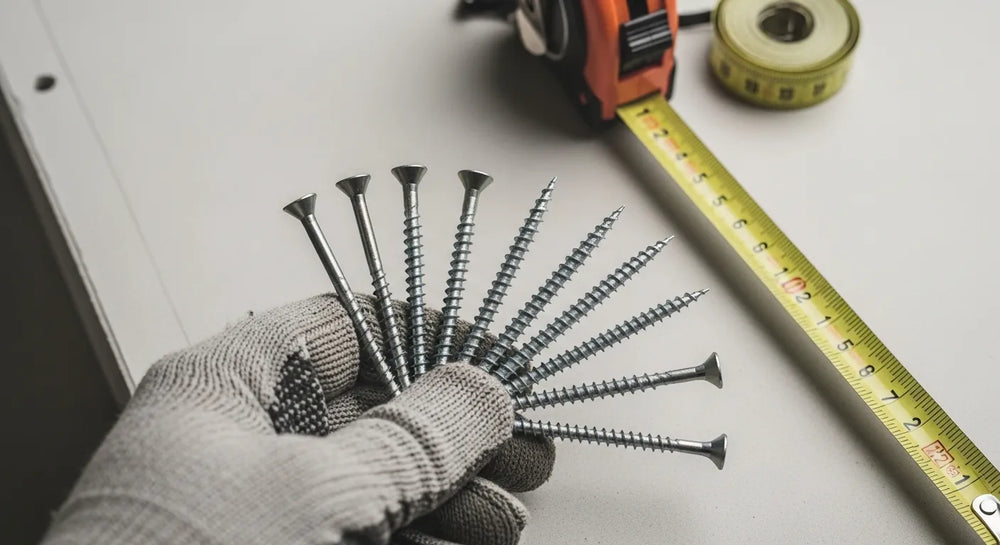
What is a Wood Screw? An In-Depth Guide for Industrial Buyers
Table of Contents
- Introduction
- The Anatomy of a Wood Screw: Precision in Design
- Why Choose Wood Screws? Unpacking Their Core Advantages
- Materials and Finishes: Tailoring Screws for Performance and Durability
- Essential Considerations for Selecting the Right Wood Screw
- Installation Best Practices: Ensuring a Strong and Lasting Connection
- The Broad Spectrum of Wood Screw Applications in Industry
- Sourcing Wood Screws: The Maden.co Advantage for Industrial Buyers
- Partnering with Maden.co: Strengthening American Manufacturing
- Conclusion
- FAQ
Introduction
In the intricate world of industrial manufacturing and maintenance, the integrity of a structure, product, or assembly often hinges on the performance of its smallest components. While fasteners might seem unassuming, their proper selection and application are critical for durability, safety, and longevity. Among these, the wood screw holds a unique and indispensable position, engineered specifically to create robust, lasting connections in wood and wood-based materials. For procurement managers, MRO buyers, and design engineers, a thorough understanding of this fundamental fastener is not merely academic; it’s a prerequisite for ensuring compliance, optimizing Total Cost of Ownership (TCO), and fortifying supply chain resilience.
This post will meticulously explore the wood screw, dissecting its unique anatomy, outlining its specific advantages, and guiding you through the critical considerations for material, finish, and size selection. We will delve into installation best practices and highlight its diverse applications across various industries. Ultimately, our aim is to equip you with the knowledge to make informed sourcing decisions, recognizing that securing high-quality, reliable, U.S.-made components is paramount. At Maden.co, we understand that selecting the right fastener—from a verified American manufacturer—is a strategic decision that underpins operational excellence and the enduring success of every project.
The Anatomy of a Wood Screw: Precision in Design
Understanding what defines a wood screw requires a close examination of its distinct anatomical features, each precisely engineered to achieve optimal performance in wood. Unlike machine screws or sheet metal screws, wood screws are designed for maximum grip, secure pull-out resistance, and minimal splitting of the wood fibers when properly installed.
The Head: Engagement and Aesthetics
The head of a wood screw serves two primary functions: to provide a surface for the driving tool to engage, and to bear against the material, securing it. The design of the head also significantly influences the final aesthetic of the finished product.
- Flat Head (Countersunk): This is perhaps the most common type. Designed to be driven flush with or slightly below the surface of the wood, flat heads require a countersunk hole to achieve a smooth, snag-free finish. This is ideal for applications where a clean, level surface is critical, such as cabinetry, furniture, and trim work. For a practical example, our Flat Slot Drive Brass Wood Screw offers excellent countersunk integration for a seamless appearance.
- Round Head: Featuring a domed top, round heads sit proud of the wood surface. They are often chosen for aesthetic reasons in decorative applications or when the material being fastened is too thin to allow for countersinking without weakening it. The underside of the head is typically flat to provide a good bearing surface. For projects requiring a traditional aesthetic and reliable performance, consider our Round Slot Drive Brass Wood Screw, an excellent choice for visible applications where appearance matters.
- Oval Head (Countersunk with Rounded Top): A hybrid of flat and round heads, the oval head is countersunk to be flush with the surface but features a decorative, rounded top that stands slightly above the surface. This offers a finished look that is both elegant and functional, often used with decorative washers or in situations where a slight projection is acceptable and desired for its visual appeal. For demanding outdoor or marine environments, the exceptional corrosion resistance of our Oval Slot Drive Silicon Bronze Wood Screw is an unmatched choice, ensuring longevity and structural integrity even in harsh conditions.
- Pan Head: Similar to a round head but with a slightly flattened top and a larger diameter, offering a broader bearing surface.
- Trim Head: A smaller, narrower head designed for minimal visibility, often used for attaching thin trim pieces or where a discreet fastener is preferred.
The Drive Type: Tool Compatibility and Torque Transfer
The drive type refers to the recess on the screw head that accepts the driving tool. Efficient torque transfer and prevention of cam-out (when the driver slips out of the recess) are paramount for a secure installation.
- Slotted Drive: The oldest and simplest drive type, featuring a single slot. While versatile, it can be prone to cam-out, especially with power tools.
- Phillips Drive: Designed to reduce cam-out compared to slotted drives, it features a cross-shaped recess. However, it can still cam out under high torque.
- Square (Robertson) Drive: A square-shaped recess that offers excellent grip and superior cam-out resistance, making it popular in construction and manufacturing for its ease of use.
- Torx (Star) Drive: A six-point, star-shaped recess that provides superior torque transfer and virtually eliminates cam-out. This drive type is increasingly preferred in demanding applications for its reliability and efficiency.
- Pozi-Drive: An improved version of the Phillips drive, with additional smaller slots between the main ones, offering better engagement and reducing cam-out.
The Shank: The Unthreaded Clamping Zone
The shank is the unthreaded portion of the screw, located directly beneath the head. Its presence is critical for achieving a strong, secure joint. As the screw is driven, the unthreaded shank passes through the upper piece of wood, allowing the threads in the lower piece to draw the two components tightly together. This creates a strong clamping force that significantly contributes to the overall strength and rigidity of the joint. Without an unthreaded shank, the threads would engage in both pieces of wood, potentially preventing a truly tight connection and leading to a weaker assembly. The diameter of the shank is also a key consideration for pilot hole sizing, as we will discuss later.
The Thread: The Heart of the Grip
The thread profile is perhaps the most defining characteristic of a wood screw. Wood screw threads are typically coarse, deep, and feature a steeper helix angle compared to machine screws, which are designed for metal. This specialized design allows the threads to aggressively cut and grip the wood fibers, creating exceptional pull-out resistance. The threads extend from a sharp point up to the unthreaded shank, or in some cases, nearly to the head for full-thread screws, which are generally used in softer woods or when maximum thread engagement is needed across the entire length. The tapered profile of the thread helps to compress and displace wood fibers rather than simply tearing them, which minimizes the risk of splitting, especially when combined with a properly sized pilot hole.
The Tip: Initial Penetration
The tip of a wood screw is usually sharp, often a gimlet point, designed for easy initial penetration into the wood. This sharp point helps to locate the screw precisely and begin the threading process effectively, reducing the effort required to drive the screw and further minimizing the potential for wood splitting. Some modern wood screws may feature specialized tips, such as self-drilling or self-tapping points, designed to cut their own pilot hole in softer woods or to reduce the need for pre-drilling.
Why Choose Wood Screws? Unpacking Their Core Advantages
In the vast ecosystem of fasteners, wood screws stand apart due to their inherent design advantages that cater specifically to the unique properties of wood. For industrial applications, these benefits translate directly into superior product quality, structural integrity, and long-term reliability.
- Superior Holding Power: The aggressive, coarse, and deep thread profile of a wood screw is specifically engineered to grip wood fibers tightly. This creates a powerful mechanical interlock that provides exceptional resistance to pull-out forces. This strength is crucial in applications ranging from furniture assembly to structural carpentry, where reliable connections are paramount.
- Removability and Reusability: Unlike permanent fastening methods such as nails or adhesives, wood screws offer the distinct advantage of being removable. This allows for disassembly, repair, adjustment, or replacement of components without damaging the base material, making them ideal for products requiring maintenance or modular design.
- Reduced Splitting (with Proper Pilot Holes): While any fastener can split wood if improperly used, the tapered body and coarse threads of a wood screw are designed to displace wood fibers more effectively than, say, a nail which simply wedges them apart. When a correctly sized pilot hole is drilled, the risk of splitting, especially in hardwoods or near edges, is significantly minimized, ensuring the integrity of the wooden component.
- Versatility: Wood screws are incredibly adaptable, suitable for a wide range of wood types—from softwoods like pine to dense hardwoods such as oak, and even engineered wood products like plywood and MDF. Their versatility extends to diverse environments, provided the appropriate material and finish are selected for corrosion resistance.
- Aesthetics and Finish: With various head types, particularly flat and oval heads designed for countersinking, wood screws can provide a flush, clean, or decorative finish. This allows design engineers to achieve specific aesthetic goals while maintaining structural integrity, which is critical in consumer-facing products like furniture or architectural elements.
Materials and Finishes: Tailoring Screws for Performance and Durability
The choice of material and finish for a wood screw is not merely a matter of cost; it's a critical decision impacting the fastener's strength, corrosion resistance, and suitability for its intended environment. Industrial buyers must consider these factors to ensure the longevity and reliability of their assemblies.
Common Materials
- Steel (Plain, Hardened): Standard steel wood screws offer high strength and are generally the most cost-effective option. Plain steel is susceptible to rust, making it suitable only for dry, indoor environments. Hardened steel screws provide even greater strength and resistance to stripping, often used in dense hardwoods or for structural applications. For improved corrosion resistance, steel screws are typically coated with a finish.
- Brass: Brass wood screws are primarily chosen for their aesthetic appeal in fine woodworking, furniture, and decorative applications. They possess good corrosion resistance but are significantly softer than steel, meaning they can strip or shear more easily if over-torqued. Our Round Slot Drive Brass Wood Screw and Flat Slot Drive Brass Wood Screw exemplify high-quality brass options, ideal for projects where both function and form are valued.
-
Stainless Steel (304, 316): Stainless steel screws offer excellent corrosion resistance, making them ideal for outdoor use, marine environments, and applications exposed to moisture or chemicals.
- 304 Stainless Steel: A general-purpose stainless steel with good corrosion resistance, suitable for many outdoor applications.
- 316 Stainless Steel: Offers superior corrosion resistance, particularly against chlorides and saltwater, making it the preferred choice for marine applications and highly corrosive industrial settings. While not explicitly listed among the direct product links, Maden.co offers a wide array of stainless steel fasteners in various grades to meet stringent industrial requirements.
- Silicon Bronze: Highly prized in boat building, marine applications, and historical restorations, silicon bronze offers exceptional corrosion resistance—superior to many stainless steels in certain saltwater conditions—combined with good strength. It develops an attractive patina over time. Our Oval Slot Drive Silicon Bronze Wood Screw is a prime example, representing the highest standard for longevity and performance in harsh, corrosive environments.
Finishes
Finishes are applied to screw materials, typically steel, to enhance corrosion resistance, alter appearance, or improve other properties.
- Zinc Plated: A thin layer of zinc provides basic corrosion protection, suitable for indoor use or mildly damp conditions. It gives the screws a bright, silvery appearance.
- Galvanized (Hot-Dip): Involves coating the screw with a thicker layer of zinc through a hot-dip process, offering superior corrosion resistance for outdoor and wet applications. Hot-dip galvanized screws are often rougher in texture and duller in appearance.
- Black Oxide: A chemical conversion coating that provides a decorative black finish and very minor corrosion resistance. Often used for aesthetic purposes or to reduce light reflection.
- **Phosphate: Creates a dark gray or black finish that offers good adhesion for paint or other coatings, often used in interior applications where the screw will be painted.
- Chrome Plated: Provides a hard, decorative, and moderately corrosion-resistant finish.
Essential Considerations for Selecting the Right Wood Screw
Selecting the correct wood screw for a given application is a critical decision that influences the structural integrity, longevity, and overall success of a project. Industrial buyers, MRO specialists, and design engineers must consider a range of factors beyond just the material.
-
Wood Type: The density and characteristics of the wood significantly impact screw selection.
- Softwoods (Pine, Spruce): Generally easier to drive screws into, but also more prone to splitting if pilot holes are not used or screws are oversized. Full-thread screws can be effective here.
- Hardwoods (Oak, Maple, Cherry): Require pre-drilling with precisely sized pilot holes to prevent splitting and to ease driving. Stronger, hardened screws are often necessary to penetrate without snapping or stripping.
- Engineered Wood (Plywood, MDF, Particle Board): These materials have different fiber structures and densities. MDF, for instance, can be prone to stripping if screws are over-driven. Pilot holes and appropriate thread types are crucial.
-
Load and Stress: Consider the type and magnitude of forces the joint will endure.
- Shear Strength: The resistance of the screw to breaking across its diameter from forces perpendicular to its axis.
- Pull-out Resistance: The screw's ability to resist being pulled directly out of the wood. This is determined by thread engagement, screw diameter, and wood density.
- Vibration and Movement: For applications with dynamic loads or vibration, choose screws with robust threads and consider using locking washers or adhesives if permissible, though wood screws generally provide excellent static hold.
-
Environmental Conditions: The operating environment dictates the necessary level of corrosion resistance.
- Indoor/Dry: Zinc-plated steel or plain steel (if unseen) is often sufficient. Brass for aesthetics.
- Outdoor/Exposed: Hot-dip galvanized steel, stainless steel (304 or 316), or silicon bronze are essential to prevent rust and degradation.
- Marine/Corrosive: 316 stainless steel or silicon bronze (like our Oval Slot Drive Silicon Bronze Wood Screw) is critical for resistance to saltwater and harsh chemicals.
-
Aesthetics: If the screw heads will be visible, their appearance becomes a factor.
- Flush Finish: Flat head screws, requiring countersinking.
- Decorative Finish: Oval head or round head screws. Brass screws are often chosen for their traditional look.
- Hidden Fastening: Trim head screws or screws countersunk and plugged with wood dowels.
-
Size (Gauge and Length):
- Gauge (Diameter): Refers to the diameter of the screw. A higher gauge number indicates a thicker screw. Larger diameter screws offer greater holding power but require larger pilot holes and increase the risk of splitting, especially in smaller pieces of wood.
- Length: The length of the screw is crucial for adequate engagement. A general rule of thumb is that the screw should penetrate at least two-thirds into the thickness of the receiving material. For two pieces of wood, the screw should be long enough to pass through the first piece and engage sufficiently into the second piece without protruding. The unthreaded shank should ideally pass completely through the first piece of wood to allow for full clamping.
Installation Best Practices: Ensuring a Strong and Lasting Connection
Even the highest quality wood screw can underperform or cause damage if not installed correctly. Adhering to best practices is crucial for maximizing holding power, preventing wood damage, and ensuring the longevity of your assemblies.
Pilot Holes: The Non-Negotiable Step
Drilling a pilot hole is arguably the single most important step in installing a wood screw, especially in hardwoods or when working close to edges. This pre-drilled hole prevents several common problems:
- Prevents Splitting: By removing a small amount of wood where the screw will enter and thread, a pilot hole reduces the wedging action that causes wood to split, especially critical in hardwoods, thin stock, or near edges.
- Eases Driving: A pilot hole significantly reduces the friction and resistance encountered when driving the screw, making the process smoother and requiring less torque. This minimizes the risk of stripping the screw head or snapping the screw.
- Ensures Stronger Joint: A properly sized pilot hole allows the threads to cut cleanly into the wood, forming a strong, consistent grip. If the pilot hole is too small, the screw may struggle to enter, potentially stripping the wood fibers. If it's too large, the threads won't have enough material to grip, leading to a weak joint.
-
Sizing Pilot Holes:
- Shank Hole: For the unthreaded shank portion of the screw that passes through the top piece of wood, the pilot hole should be the same diameter as the screw's shank. This allows the top piece to be pulled tightly against the bottom piece by the screw's threads, creating a strong clamping force.
- Thread Hole (Root Diameter): For the threaded portion of the screw that enters the bottom piece of wood, the pilot hole should be slightly smaller than the outer diameter of the threads, matching the root diameter (the diameter of the screw shaft not including the threads). This ensures that the threads have enough material to bite into, creating maximum holding power. For very soft woods, a pilot hole closer to the root diameter may still be advisable, while harder woods often require a pilot hole closer to the thread's major diameter but still smaller than the full thread diameter.
Countersinking and Counterboring: Achieving Desired Finishes
- Countersinking: This involves creating a conical recess in the top piece of wood to allow flat or oval head screws to sit flush with or slightly below the surface. A countersink bit, matching the angle of the screw head (typically 82 degrees), is used.
- Counterboring: This technique creates a flat-bottomed cylindrical recess deeper than a countersink, allowing the entire screw head (and often a washer) to be recessed below the surface. The hole can then be plugged with a wood dowel or filler for a completely concealed fastener, useful for aesthetic purposes or to protect the screw head.
Driving Techniques: Precision and Control
- Manual vs. Power Tools: While manual screwdrivers offer precise control, power drills/drivers are more efficient for volume work. When using power tools, select the appropriate torque setting to avoid over-driving, which can strip threads, damage the screw head, or split the wood.
- Proper Torque: Apply steady, consistent pressure aligned with the screw axis. Avoid excessive force that could cam out the driver, damaging the screw head or the wood surface.
- Avoiding Cam-out: Use the correct size and type of driver bit that perfectly matches the screw head. For example, a square drive (Robertson) or Torx drive offers superior cam-out resistance compared to slotted or Phillips.
Avoiding Common Mistakes
- Overtightening: Can strip the threads in the wood, making the joint weak, or shear off the screw head.
- Incorrect Size: Using a screw that is too long risks protruding through the other side; too short won't provide adequate grip. Too wide diameter without sufficient pilot hole will split the wood.
- No Pilot Hole: Leads to splitting, difficulty driving, and potential screw breakage.
- Wrong Bit Size: Damages the screw head, leads to cam-out, and frustrates installation.
The Broad Spectrum of Wood Screw Applications in Industry
The versatility and reliability of wood screws make them indispensable across a multitude of industrial sectors. From heavy construction to precision manufacturing, the demand for high-quality wood fasteners is constant.
- Construction: In residential and commercial construction, wood screws are foundational. They are used extensively for framing light wooden structures, attaching subflooring and decking, securing trim and molding, and assembling cabinetry. Their removability is an asset during renovation and repair.
- Furniture Manufacturing: From heirloom pieces to mass-produced flat-pack furniture, wood screws are essential for joinery, assembling components, and attaching hardware such as hinges, drawer slides, and handles. The aesthetic variety of head types and materials like brass and silicon bronze allows designers to achieve specific visual and functional requirements. For procurement managers under pressure to source a specific component for a furniture line, or a design engineer needing a particular material certification for a new prototype, the ability to quickly find and finance a verified, U.S.-made part is a game-changer.
- Marine Applications: Exposed to constant moisture, salt, and harsh weather, marine structures and vessels require fasteners with exceptional corrosion resistance. Silicon bronze and 316 stainless steel wood screws are standard for boat building, dock construction, and marine infrastructure due to their unparalleled durability in saltwater environments. Our Oval Slot Drive Silicon Bronze Wood Screw is a prime example of a fastener engineered for these demanding conditions, ensuring longevity and structural integrity.
- MRO (Maintenance, Repair, and Operations): MRO buyers frequently require wood screws for a vast array of tasks, from routine facility maintenance (e.g., repairing wooden pallets, securing shelving, fixing broken furniture) to emergency equipment repairs. The need for readily available, reliable fasteners is critical to minimize downtime and maintain operational continuity.
- Specialty Applications: Beyond these broad categories, wood screws find their place in niche industries such as musical instrument manufacturing, where precision and aesthetic integration are paramount; bespoke carpentry, where custom solutions demand specific screw types; and even theatrical set design, where temporary yet strong wood assemblies are crucial.
Sourcing Wood Screws: The Maden.co Advantage for Industrial Buyers
In an increasingly complex global supply chain, sourcing industrial components, even something as seemingly simple as a wood screw, carries significant implications for product quality, project timelines, and overall business resilience. At Maden.co, our mission is to democratize access to American manufacturing, providing industrial buyers with a strategic advantage rooted in quality, transparency, and efficiency.
- Democratizing Access to American Manufacturing: We believe in making it easy for businesses to source top-tier, American-made products. Our platform directly connects industrial buyers with over 2.5 million U.S.-made products from our network of 800+ verified U.S. manufacturers. This vast catalog ensures that whether you need standard dimensions or specialized fasteners like high-grade stainless steel wood screws, you can find them with confidence. Our entire business model is built on this principle; you can learn more about our mission to champion American manufacturing here: About Us.
- Vast, Verified Network: Every manufacturer on Maden.co is verified as U.S.-based, ensuring that you are directly supporting American jobs and industries while acquiring products that adhere to rigorous quality control standards. This eliminates the uncertainty often associated with international sourcing.
- Supply Chain Resilience: Relying on U.S.-manufactured products significantly mitigates the risks associated with global supply chain disruptions, such as geopolitical events, shipping delays, and fluctuating international regulations. By sourcing domestically through Maden.co, you build a more robust and predictable procurement process, enhancing your operational stability.
- Quality and Compliance: American manufacturers are renowned for their commitment to quality and adherence to critical industry standards (e.g., DIN, NPT). When you procure wood screws from Maden.co, you are assured of components that meet precise specifications, reducing product failures and enhancing end-product reliability. Our core value of Industrial Excellence means we stand behind the quality of components found on our platform.
- Reducing Procurement Friction: Our digitally innovative platform is designed to simplify the procurement process. With advanced search functionalities, detailed product specifications, and a user-friendly interface, we streamline the journey from product discovery to purchase, saving procurement managers invaluable time and effort. This focus on Digital Innovation and Customer Empowerment is central to our offerings.
- American Manufacturing Pride: We firmly believe America's manufacturing revival is here. By choosing Maden.co, you align with our core values of American Manufacturing Pride and Supply Chain Transparency, contributing to a stronger domestic industrial base.
A Look at U.S.-Made Wood Screw Examples on Maden.co
Our extensive marketplace features a diverse selection of American-made wood screws to meet nearly any industrial requirement:
- For projects requiring a traditional aesthetic and reliable performance, consider our Round Slot Drive Brass Wood Screw. These are ideal for visible applications where appearance matters, such as custom furniture or antique restoration, offering both strength and a classic look.
- When a flush finish is paramount for furniture or cabinetry, our Flat Slot Drive Brass Wood Screw provides excellent countersunk integration. This ensures a smooth, snag-free surface, critical for high-end finishes and functional design.
- For demanding outdoor or marine environments, the exceptional corrosion resistance of our Oval Slot Drive Silicon Bronze Wood Screw is an unmatched choice. These screws ensure longevity and structural integrity even in harsh conditions, making them perfect for boat building, dock construction, or outdoor architectural elements.
Strategic Capital Management with Instant Financing
For procurement managers and business owners, managing cash flow is paramount, especially when making larger volume purchases or undertaking capital-intensive projects. Recognizing this critical need, Maden.co offers Instant Financing, a strategic tool designed to empower businesses. This feature, conveniently available at checkout, allows you to acquire the necessary components without immediately impacting your working capital. It’s not merely a payment method; it’s a way to enhance your purchasing power, manage liquidity effectively, and ensure your projects stay on schedule, even when faced with significant material costs. You can apply for Instant Financing at checkout to streamline your capital-intensive projects and maintain financial flexibility.
Partnering with Maden.co: Strengthening American Manufacturing
Our vision is to become the definitive platform that proves American-made components are as accessible and convenient as any global alternative, driving the manufacturing revival. We are deeply committed to fostering a robust and resilient U.S. industrial ecosystem. This commitment extends not only to buyers but also to the manufacturers who are the backbone of our nation's industrial prowess. Are you a qualified U.S. manufacturer producing high-quality industrial products? We invite you to join our growing network. Register as a vendor and leverage Maden.co's platform to expand your market reach, connect with industrial buyers across America, and contribute to the resurgence of American manufacturing. Our platform is built on industrial excellence and supply chain transparency, and we welcome partners who share these fundamental values.
Conclusion
The wood screw, though often a small component, plays a disproportionately critical role in the durability, safety, and aesthetic quality of countless products and structures across diverse industries. A nuanced understanding of its anatomy, material science, installation best practices, and application-specific requirements is essential for industrial buyers, MRO professionals, and design engineers committed to achieving operational excellence. By making informed choices, businesses can significantly enhance project outcomes, ensure compliance with critical standards, and fortify their supply chains against unforeseen disruptions.
At Maden.co, we simplify this complex procurement landscape by providing seamless access to an unparalleled selection of high-quality, American-made industrial components. We are dedicated to delivering not just products, but solutions that enhance your Total Cost of Ownership, bolster supply chain resilience, and celebrate American Manufacturing Pride. Elevate your projects and secure your supply chain by exploring our extensive catalog of U.S.-made fasteners and components. Visit Maden.co today to discover the unparalleled value and convenience of sourcing from verified American manufacturers. Remember, you can apply for Instant Financing at checkout to streamline your capital-intensive projects. If you have specific sourcing questions or require assistance finding the perfect component, our expert team is ready to help; please don't hesitate to Contact Us.
FAQ
1. What is the primary difference between a wood screw and a drywall screw? The primary difference lies in their design and intended application. Wood screws have a coarser, more aggressive thread specifically designed to grip wood fibers, a tapered body, and often an unthreaded shank to pull two pieces of wood tightly together. Drywall screws, on the other hand, typically have finer threads that are better suited for gripping gypsum in drywall, a sharp point for self-piercing, and a bugle head designed to sink into drywall without tearing the paper. Drywall screws are generally made of hardened steel and are more brittle, making them less suitable for high-stress wood-to-wood applications where they might snap.
2. Do all wood screws require pilot holes? While it is always recommended to drill a pilot hole for wood screws, especially in hardwoods, dense materials, or when working close to the edge of a board, not all wood screws strictly require them in all situations. In very soft woods, a small-gauge wood screw might be driven without splitting if the wood is thick and away from edges. However, drilling a pilot hole significantly reduces the risk of splitting, makes driving the screw easier, and ensures a stronger, more reliable joint by allowing the threads to cut cleanly.
3. How do I choose the right length for a wood screw? A general rule of thumb is that the screw should penetrate into the receiving (bottom) piece of wood for at least two-thirds of its thickness. For instance, if you're joining a 1-inch thick piece of wood to a 2-inch thick piece, the screw should pass through the 1-inch piece and ideally penetrate about 1.33 inches into the 2-inch piece, making the total screw length around 2.33 inches. Additionally, ensure the unthreaded shank of the screw passes completely through the top piece of wood to allow for a strong clamping action.
4. What does "gauge" refer to in wood screw sizing? The "gauge" of a wood screw refers to its diameter. It's a numerical scale where a higher gauge number indicates a thicker screw. Common wood screw gauges range from #4 (thin) to #14 (thick), with sizes like #6, #8, and #10 being very common. A thicker gauge screw generally offers greater holding power and shear strength, but it also requires a larger pilot hole and increases the risk of splitting the wood if not properly managed.


