
Securely Anchor Concrete Blocks to a Concrete Pad
Table of Contents
- Introduction
- Understanding the Importance of Secure Anchoring
- Factors Influencing Anchor Selection
- Types of Concrete Anchors for Blocks
- Step-by-Step Anchoring Process
- Tools and Equipment for Professional Anchoring
- Best Practices for Durability and Compliance
- The Maden.co Advantage: Sourcing American-Made Anchoring Solutions
- Streamlining Procurement with Maden.co's Digital Innovation
- Conclusion
- FAQ
The stability of any industrial structure or equipment installation hinges on foundational strength. Ignoring proper anchoring techniques for concrete blocks to a concrete pad isn't merely a risk; it’s a direct threat to operational safety, structural integrity, and long-term investment. For procurement managers, MRO buyers, and design engineers, the consequences can range from costly structural failures and equipment downtime to severe safety hazards and regulatory non-compliance. Ensuring that every component, from the largest structural element to the smallest fastener, is securely fastened is paramount.
This guide delves deep into the critical processes, methodologies, and essential components required to securely anchor concrete blocks to a concrete pad. We will explore the various types of anchors, their applications, the crucial factors influencing selection, and best practices for installation, all while emphasizing the unparalleled value of sourcing high-quality, American-made products. Our aim at Maden.co is to empower you with the knowledge and resources to execute your projects with confidence, knowing you have access to the robust, reliable solutions necessary to build enduring infrastructure.
Introduction
In the demanding world of industrial construction, infrastructure development, and heavy machinery installation, the integrity of a structure often begins at its base. Imagine the disruption caused by a critical piece of machinery shifting due to inadequate anchorage, or the safety implications of a retaining wall failing under pressure. These scenarios underscore the absolute necessity of precision and reliability when anchoring concrete blocks to a concrete pad. It’s not just about securing two pieces of material; it’s about ensuring operational continuity, safeguarding personnel, and protecting significant capital investments. The choice of anchoring system, the quality of the components, and the meticulousness of installation are factors that directly determine the resilience and longevity of your projects.
This comprehensive guide will navigate the complexities of this fundamental task. We will begin by exploring why secure anchoring is non-negotiable, moving through the critical factors that inform anchor selection, and detailing the diverse range of anchoring technologies available. From mechanical and chemical anchors to specialized solutions designed for specific load conditions, we'll equip you with the knowledge to make informed decisions. Furthermore, we’ll outline the step-by-step installation process, highlight essential tools, and share professional best practices for achieving durable, compliant results. Throughout this discussion, we emphasize Maden.co's commitment to democratizing access to superior American manufacturing, providing a seamless pathway to the high-quality, U.S.-made anchoring components essential for your success. Our focus is on empowering you to build with strength, precision, and confidence, ensuring that America’s manufacturing revival is here, accessible through our platform.
Understanding the Importance of Secure Anchoring
The act of anchoring concrete blocks to a concrete pad might seem like a straightforward mechanical process, but its implications are far-reaching within industrial and commercial applications. The importance extends beyond mere physical connection, touching upon safety, structural integrity, and long-term operational costs.
Safety Implications
Unsecured or improperly anchored concrete structures pose significant safety risks. In manufacturing plants, warehouses, or construction sites, concrete blocks often serve as foundations for heavy machinery, structural supports, or protective barriers. If these blocks are not adequately anchored, they can shift, collapse, or become dislodged, leading to severe accidents, injuries, or even fatalities. For MRO buyers, ensuring the safety of workers and the integrity of the facility is a top priority, making the selection of robust, tested anchoring solutions non-negotiable. Our commitment to Industrial Excellence means we understand these stakes, offering components that meet stringent quality standards.
Structural Integrity and Longevity
The primary function of anchoring is to transfer loads from the concrete block to the concrete pad, distributing forces such as tension, shear, and compression effectively. Without proper anchoring, the structure’s ability to withstand these forces is compromised, leading to cracks, deformations, or complete failure over time. This not only necessitates costly repairs but also shortens the lifespan of the entire installation. For design engineers, specifying the correct anchoring system from the outset is crucial for guaranteeing the long-term structural integrity and performance of their designs. The longevity of any project starts with its most fundamental connections.
Operational Continuity and Cost Efficiency
When a structure or piece of equipment is not securely anchored, it can lead to operational disruptions. Machinery vibration, misalignment, or even complete failure due to insufficient anchorage can halt production, incur massive repair costs, and damage a company's reputation. For procurement managers, the initial investment in high-quality, reliable anchoring components sourced from verified U.S. manufacturers through Maden.co significantly reduces the total cost of ownership (TCO) by preventing future failures, minimizing downtime, and avoiding expensive remedial work. Partnering with the right suppliers, like those on our platform, provides a strategic advantage in building more reliable and efficient procurement processes, especially when needing to secure critical elements.
Compliance with Standards and Regulations
Industrial and construction projects are subject to numerous local, national, and international building codes and engineering standards. These regulations often specify requirements for anchoring systems, including load capacities, installation procedures, and material specifications. Non-compliance can result in fines, project delays, or even demolition orders. Sourcing through Maden.co ensures access to products manufactured to these exacting standards, helping businesses maintain compliance and avoid costly legal issues. This includes adherence to specifications like DIN, NPT, and others, which our network of verified U.S. manufacturers is equipped to meet.
Factors Influencing Anchor Selection
Choosing the right anchor is a critical decision that significantly impacts the safety, stability, and longevity of your concrete structure. This choice is rarely one-size-fits-all; instead, it's a careful balance of several interacting factors.
Load Requirements
Understanding the type and magnitude of forces the anchor will experience is paramount.
- Tension Loads: Forces pulling directly away from the concrete surface (e.g., wind uplift on a wall, vertical pull from machinery).
- Shear Loads: Forces acting parallel to the concrete surface (e.g., lateral forces from seismic activity, equipment movement, or thrust).
- Combined Loads: Most real-world applications involve both tension and shear.
- Dynamic vs. Static Loads: Static loads are constant, while dynamic loads involve vibrations, impacts, or cyclical stresses. Dynamic loads require anchors with superior fatigue resistance and often necessitate chemical or specialized mechanical anchors.
The specific strength ratings of anchors for both tension and shear must match or exceed the anticipated design loads, incorporating appropriate safety factors.
Environmental Conditions
The environment surrounding the anchored structure plays a crucial role in anchor longevity.
- Moisture and Water Exposure: Anchors in wet environments (e.g., outdoor applications, areas prone to flooding, or marine settings) require corrosion-resistant materials like stainless steel or hot-dip galvanized finishes.
- Chemical Exposure: Industrial settings may expose anchors to acids, alkalis, or other corrosive chemicals. Chemical-resistant materials and coatings are essential here.
- Temperature Extremes: High or low temperatures can affect the performance of some anchors, particularly chemical adhesives or certain plastics. Thermal expansion and contraction must also be considered for the anchor material relative to the concrete.
- Seismic Activity: In earthquake-prone regions, specific post-installed anchors designed and pre-qualified for seismic conditions (e.g., using ACI 355.2 and ICC-ES AC193 for mechanical anchors, or AC308 for chemical anchors) are mandatory.
Concrete Condition
The base material—the concrete pad—is as important as the anchor itself.
- Concrete Strength: The compressive strength of the concrete (e.g., 2000 psi, 4000 psi) directly influences an anchor's capacity. Weaker concrete may require anchors that rely more on adhesion (chemical) or larger bearing areas (through-bolts, undercut anchors) to prevent pull-out or blow-out.
- Age of Concrete: Very new concrete may not have reached its full design strength, affecting anchor performance. Curing time is crucial.
- Cracked vs. Uncracked Concrete: This is a critical distinction. Anchors for uncracked concrete are designed assuming the concrete around the anchor will remain intact. Anchors for cracked concrete are engineered to perform reliably even if cracks form in the concrete, which can significantly reduce the load-carrying capacity of anchors not rated for such conditions. Seismic events or sustained heavy loads can induce cracking.
- Aggregate Size and Type: Can affect drilling and the anchor's ability to achieve full embedment.
Block Material and Dimensions
The properties of the concrete block being anchored also matter.
- Density and Strength: A dense, high-strength concrete block will distribute anchor stress differently than a lighter, more porous block.
- Dimensions: The size and thickness of the block influence edge distance and spacing requirements for the anchors, preventing concrete breakout.
- Reinforcement: The presence and location of rebar within both the block and the pad can impact drilling and anchor placement. Rebar scanning is often necessary.
Regulatory Compliance
Adherence to local building codes, engineering standards (e.g., ACI, ICC-ES), and project-specific specifications is non-negotiable. Sourcing components that carry relevant certifications and are manufactured under strict quality control processes, as is standard with Maden.co’s network of U.S. manufacturers, simplifies compliance and provides peace of mind.
For a procurement manager under pressure to source a specific DIN or NPT compliant anchoring component, a design engineer needing specific material certifications for a new prototype, or an MRO buyer facing an unexpected equipment breakdown, the ability to quickly find and finance a verified, U.S.-made part is a game-changer. Our platform provides this crucial advantage, reducing procurement friction and ensuring reliable supply.
Types of Concrete Anchors for Blocks
The market offers a wide array of anchor types, each designed for specific applications and load conditions. Understanding their mechanisms is key to proper selection.
Mechanical Anchors
Mechanical anchors work by physically expanding or creating a friction/interlock mechanism within the drilled hole in the concrete.
Wedge Anchors
These are among the most common and versatile anchors. A wedge anchor consists of a threaded stud, a nut, a washer, and an expansion clip at the working end. As the nut is tightened, the stud pulls the clip against the concrete, creating an outward force that locks the anchor in place.
- Pros: High load capacity, suitable for heavy loads, available in various diameters and lengths, easy to install.
- Cons: Not ideal for dynamic loads or cracked concrete unless specifically rated. Requires precise drilling.
- Application: Securing structural steel, heavy machinery, and supports to concrete pads.
Sleeve Anchors
Similar to wedge anchors but designed for lighter to medium-duty applications and hollow block or brick. They have a threaded bolt encased in a metal sleeve that expands as the bolt is tightened, providing an anchoring force.
- Pros: Can be used in various base materials, good for medium loads.
- Cons: Lower load capacity than wedge anchors, less suitable for critical structural applications.
- Application: Fastening handrails, shelving, and lighter equipment.
Drop-in Anchors
Drop-in anchors are internally threaded female anchors that are flush-mounted into the concrete. After drilling the hole, the anchor is placed in, and a setting tool expands its base against the concrete. They allow for easy bolt removal and reattachment.
- Pros: Flush mounting, reusable internal threads, ideal for overhead applications or when components need to be removed/reattached.
- Cons: Require a specific setting tool, capacity depends heavily on concrete strength.
- Application: Suspending conduit, cable trays, sprinkler systems, or where a removable connection point is desired. For a high-quality, reliable solution, consider the BN Products 3/8-inch inside thread Sanko drop-in concrete anchor available through Maden.co, a testament to American manufacturing precision.
Strike Anchors (Hammer Drive Anchors)
These are quick to install, often used for light to medium-duty applications. They are hammered into a drilled hole, and the impact causes the anchor body to expand, gripping the concrete.
- Pros: Fast installation, suitable for repetitive tasks.
- Cons: Limited load capacity, not easily removable, can be difficult to inspect.
- Application: Fastening furring strips, electrical boxes, and light fixtures.
Chemical Anchors (Adhesive Anchors)
Chemical anchors use a resin-based adhesive (epoxy, polyester, or vinylester) injected into a drilled hole, into which a threaded rod or rebar is inserted. The chemical cures, creating an extremely strong bond between the rod and the concrete.
- Pros: Very high load capacities (often exceeding mechanical anchors), excellent for dynamic loads, ideal for cracked concrete (with proper formulation), no expansion stress on the concrete (good for close edge distances), provides a waterproof seal.
- Cons: Curing time required, temperature sensitive during installation, requires precise mixing and dispensing, generally higher cost.
- Application: Critical structural connections, seismic zones, heavy machinery, rebar doweling, and situations where concrete integrity must be preserved.
Specialty Anchors
Beyond the common types, specialized anchors cater to unique needs.
- Undercut Anchors: These anchors create a mechanical interlock by cutting a reverse taper (undercut) in the concrete at the bottom of the drilled hole. When expanded, they wedge into this undercut, offering superior performance, especially in cracked concrete and seismic applications.
- Headed Anchors/Shear Connectors: Often welded to steel beams before concrete is poured, or post-installed, these components are specifically designed to transfer shear loads between steel and concrete in composite structures. They prevent uplift and horizontal movement, crucial for load-bearing applications. When dealing with specialized requirements like these, having the right installation tools is just as vital as the anchor itself. For such precision tasks, our selection includes options like the 1-headed concrete anchor shear connector chuck and the comprehensive concrete anchor shear connector chuck set, ensuring your team has the exact American-made equipment needed for robust, compliant installations.
Selecting the appropriate anchor type demands a thorough evaluation of all the factors discussed, aligned with the specific requirements of your project.
Step-by-Step Anchoring Process
Proper installation is as crucial as selecting the right anchor. A meticulously planned and executed installation ensures the anchor performs to its design specifications.
1. Planning and Preparation
- Site Assessment: Evaluate the concrete pad's condition, identify any existing reinforcement (rebar), and assess environmental factors.
- Layout and Marking: Precisely mark the anchor locations based on engineering drawings, considering edge distances, spacing requirements, and any obstructions. Accurate layout prevents rework and ensures structural integrity.
- Anchor Selection Verification: Double-check that the chosen anchor type, size, and material are appropriate for the load, concrete condition, and environmental factors.
- Tooling Check: Ensure all necessary tools (drill, bits, cleaning brushes, setting tools, torque wrenches) are available and in good working order. For specialized anchoring, having robust American-made tools like the concrete anchor shear connector chuck set can significantly improve efficiency and reliability.
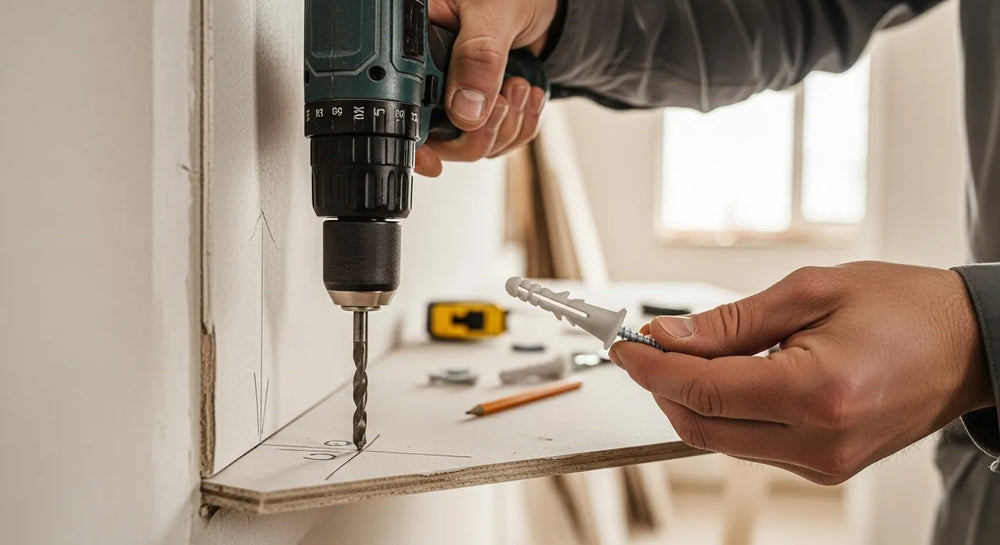
2. Drilling the Hole
- Drill Type: Use a rotary hammer drill for efficient drilling into concrete. For larger diameters or tougher concrete, a core drill may be required.
- Bit Selection: Employ carbide-tipped drill bits specifically designed for concrete (e.g., SDS or SDS-Max). Ensure the bit diameter matches the anchor manufacturer's specifications precisely. An undersized hole will prevent proper anchor expansion, while an oversized hole will reduce holding capacity.
- Depth Control: Use a depth stop on the drill or mark the drill bit to ensure the hole is drilled to the exact depth recommended by the anchor manufacturer. Too shallow, and the anchor won't achieve full embedment; too deep, and it wastes effort and can potentially hit rebar unnecessarily.
- Verticality: Drill holes perpendicular to the concrete surface unless specified otherwise by the design.
- Cleaning the Hole: This is perhaps the most critical, yet often overlooked, step for both mechanical and chemical anchors. Dust and debris left in the hole can significantly reduce an anchor's holding power, especially for chemical anchors. Use a stiff nylon brush and a blow-out pump or compressed air to thoroughly clean the hole. Repeat brushing and blowing until no dust remains.
3. Anchor Installation (Type-Specific)
Mechanical Anchors (General Steps)
- Insert Anchor: Place the anchor into the cleaned, drilled hole. For wedge anchors, the nut and washer are typically pre-assembled. For drop-in anchors, like the BN Products 3/8-inch inside thread Sanko drop-in concrete anchor, insert the anchor flush with the concrete surface.
-
Set Anchor:
- Wedge Anchors: Tighten the nut to the manufacturer's specified torque. This pulls the expansion clip against the concrete, setting the anchor.
- Sleeve Anchors: Tighten the nut or bolt to expand the sleeve.
- Drop-in Anchors: Use the specific setting tool to expand the anchor body by driving it down into the anchor's internal cone.
- Strike Anchors: Hammer the pin flush into the anchor body.
- Torque Check: For wedge and sleeve anchors, use a calibrated torque wrench to ensure the anchor is tightened to the manufacturer's recommended torque value. Overtightening can damage the concrete or the anchor; undertightening results in insufficient holding power.
Chemical Anchors
- Dispense Adhesive: Following manufacturer instructions, dispense the chemical resin into the cleaned hole. Ensure proper mixing of the two-part epoxy or resin. Fill the hole from the bottom up, avoiding air voids, typically filling about two-thirds of the hole volume.
- Insert Rod: Insert the threaded rod or rebar into the wet adhesive with a rotating motion to ensure full encapsulation and minimize air pockets. Push until it reaches the bottom of the hole.
- Curing: Allow the adhesive to cure for the manufacturer's specified time, which varies based on temperature and product. Do not apply any load to the anchor until it is fully cured.
- Inspection: After curing, ensure the rod is firmly set and there are no signs of adhesive failure.
4. Inspection and Testing
- Visual Inspection: After installation, visually inspect all anchors for proper embedment, tight connections, and any signs of damage to the concrete.
- Load Testing (as required): For critical applications, engineers may specify proof-loading a percentage of anchors. This involves applying a controlled load to verify the anchor's capacity. Specialized equipment is used for this process.
- Documentation: Maintain detailed records of anchor type, size, location, installation date, and any testing performed. This documentation is crucial for compliance and future maintenance.
Our extensive network of 800+ verified U.S. manufacturers provides procurement managers and design engineers with the assurance that they are sourcing components, including the necessary tools for installation, that uphold the highest standards of Industrial Excellence.
Tools and Equipment for Professional Anchoring
Executing precise and reliable concrete anchoring requires not just the right anchors but also the correct, high-quality tools. Investing in professional-grade equipment ensures efficiency, safety, and consistent results.
Drilling Equipment
- Rotary Hammer Drill: Essential for drilling into concrete. Choose one with sufficient power and an appropriate chuck system (e.g., SDS-Plus or SDS-Max) for your drill bits.
- Core Drill: For very large diameter holes or when precise, clean holes are needed, especially through rebar, a core drill with diamond bits is invaluable.
- Drill Bits: High-quality carbide-tipped drill bits (SDS-Plus/Max) matched to the anchor diameter. Ensure they are sharp and in good condition to prevent imprecise drilling and concrete damage.
Cleaning Equipment
- Nylon Brush: Stiff bristled brushes sized appropriately for the drilled hole to remove dust and debris from the hole walls.
- Blow-Out Pump/Compressed Air: Used to forcefully remove loose dust and particles from the drilled hole, critical for both mechanical and chemical anchor performance.
Installation Tools
- Torque Wrench: Absolutely essential for mechanical anchors. A calibrated torque wrench ensures that fasteners are tightened to the precise specifications provided by the anchor manufacturer, preventing undertightening (insufficient hold) or overtightening (damaging the concrete or anchor).
- Setting Tools: Specific tools are required for certain anchors, such as drop-in anchors (e.g., for the BN Products 3/8-inch inside thread Sanko drop-in concrete anchor) to properly expand their base. For specialized shear connectors, dedicated chucks, like the 1-headed concrete anchor shear connector chuck or a complete concrete anchor shear connector chuck set, are necessary to ensure correct and secure installation, minimizing deflection and maximizing load transfer.
- Dispensing Guns: For chemical anchors, specialized dispensing guns are needed to accurately mix and inject the two-part adhesive into the drilled hole. Different cartridge sizes and adhesive viscosities require specific gun types.
Measurement and Layout Tools
- Measuring Tape/Laser Distance Meter: For accurate placement of anchor points.
- Chalk Line/Markers: For marking drilling locations clearly.
- Rebar Scanner/Metal Detector: Crucial for identifying the location of embedded rebar to avoid hitting it during drilling, which can damage bits, weaken the rebar, and compromise concrete integrity.
Safety Equipment
- Safety Glasses/Goggles: To protect eyes from concrete dust and flying debris.
- Hearing Protection: Rotary hammer drills can be loud.
- Gloves: To protect hands from abrasions and chemical exposure.
- Dust Mask/Respirator: To prevent inhalation of concrete dust, especially crystalline silica, which is a health hazard.
Sourcing these tools and components from verified U.S. manufacturers through Maden.co not only ensures access to Industrial Excellence but also enhances your supply chain resilience. Our platform offers a transparent pathway to American-made products, supporting businesses in their drive for quality and operational efficiency.
Best Practices for Durability and Compliance
Beyond selecting the right anchor and following installation steps, adhering to best practices ensures the long-term durability and compliance of your anchoring system.
- Always Follow Manufacturer Specifications: Anchor manufacturers provide detailed instructions, load tables, and installation guidelines. Deviating from these can void warranties and compromise performance. These specifications are engineered for optimal safety and strength, reflecting rigorous testing and design.
- Prioritize Hole Cleaning: As mentioned, a clean hole is paramount. Even the highest quality anchor will underperform if the hole contains dust or debris. This step cannot be overstated for either mechanical or chemical anchors.
- Respect Edge Distance and Spacing: Anchors require sufficient concrete around them to develop their full capacity. Placing anchors too close to an edge or to each other can cause concrete breakout or reduce the individual anchor's strength. Consult manufacturer guidelines and engineering drawings for minimum distances.
- Use Calibrated Tools: Especially for torque wrenches and chemical dispensing guns. Proper torque ensures the anchor is set correctly without overstressing the concrete or the anchor itself. Accurate dispensing ensures the correct mix and volume for chemical anchors.
- Verify Concrete Strength: Confirm the actual compressive strength of the concrete pad, not just the design strength. If there's any doubt, testing core samples may be necessary. Anchor capacities are directly tied to concrete strength.
- Consider Post-Installation Inspection and Load Testing: For critical applications, an engineer may require a percentage of anchors to be proof-loaded to verify their actual capacity in situ. Regular visual inspections are also advisable for long-term installations to check for corrosion, loosening, or signs of stress.
- Account for Environmental Factors: Ensure corrosion protection (e.g., stainless steel, galvanization) for anchors exposed to moisture, chemicals, or outdoor elements. Specify anchors rated for seismic or dynamic loads where applicable.
- Proper Curing for Chemical Anchors: Ensure chemical anchors are allowed to cure fully under the specified environmental conditions (temperature, humidity) before any load is applied. Premature loading can lead to adhesive failure.
- Maintain Detailed Records: Keep comprehensive logs of anchor types, sizes, locations, installation dates, installer details, and any inspection or testing results. This documentation is invaluable for future maintenance, audits, and troubleshooting.
- Adherence to Building Codes: Always ensure your anchoring solutions and installation methods comply with local and national building codes, as well as industry standards (e.g., ACI, ICC-ES reports). These standards are in place to ensure public safety and structural reliability.
By adhering to these best practices, you elevate your anchoring projects from merely functional to genuinely robust and reliable, significantly contributing to the overall success and safety of your industrial operations. This meticulous approach is an embodiment of the Industrial Excellence we champion at Maden.co.
The Maden.co Advantage: Sourcing American-Made Anchoring Solutions
In an increasingly complex global supply chain, the ability to reliably source high-quality, specialized components is a competitive advantage. At Maden.co, we understand the pressures faced by procurement managers, MRO buyers, and design engineers. Our platform is meticulously designed to address these challenges head-on, focusing on the critical realm of American manufacturing.
Our mission at Maden.co is to democratize access to American manufacturing. We achieve this by connecting industrial buyers with an unparalleled network of over 2.5 million American-made products from our 800+ verified U.S. manufacturers. This isn't just a catalog; it's a strategic resource built on the core values of American Manufacturing Pride, Digital Innovation, Supply Chain Transparency, Industrial Excellence, and Customer Empowerment. You can learn more about our mission to champion American manufacturing here.
When it comes to anchoring concrete blocks to a concrete pad, the quality and reliability of each component are non-negotiable. Sourcing through Maden.co provides distinct benefits:
- Uncompromising Quality: Our verified U.S. manufacturers adhere to stringent quality control standards, ensuring that every anchor, chuck, and tool you procure meets or exceeds industry specifications. This commitment to quality translates directly into the durability and safety of your installations.
- Supply Chain Resilience: Relying on domestic manufacturing significantly reduces the risks associated with global supply chain disruptions, geopolitical instability, and extended lead times. With Maden.co, you gain a robust and predictable supply channel for critical components, enhancing your operational continuity.
- Reduced Procurement Friction: Our user-friendly digital marketplace simplifies the complex procurement process. Imagine being able to quickly locate a specific BN Products 3/8-inch inside thread Sanko drop-in concrete anchor or a specialized concrete anchor shear connector chuck set with transparent specifications, knowing it's American-made and readily available. This saves invaluable time and resources for your team.
- Lower Total Cost of Ownership (TCO): While the initial price point is always a consideration, the true cost of an anchor extends to its performance, longevity, and the avoidance of failures. High-quality American-made components procured through Maden.co offer superior performance, reducing maintenance, repair, and replacement costs over the lifespan of your projects. This strategic value far outweighs the false economy of cheaper, less reliable alternatives.
- Support for American Industry: Every purchase through Maden.co directly contributes to the strength and growth of the American manufacturing sector. This alignment with our vision—to become the definitive platform that proves American-made components are as accessible and convenient as any global alternative—helps drive the manufacturing revival, creating jobs and fostering innovation right here at home. Are you a U.S. manufacturer? Register as a vendor and join the American manufacturing revival.
Streamlining Procurement with Maden.co's Digital Innovation
Maden.co is more than just a marketplace; it's a strategic partner in optimizing your procurement strategy. Our commitment to Digital Innovation is evident in every aspect of our platform, designed to bring unparalleled convenience and efficiency to industrial buying.
For design engineers who require very specific material certifications, procurement managers tasked with reducing lead times for critical parts, or MRO buyers facing urgent equipment repairs, the ability to swiftly find and acquire verified, U.S.-made components is paramount. Our extensive catalog and advanced search functionalities ensure that the components you need—from standard fasteners to highly specialized anchors like the 1-headed concrete anchor shear connector chuck—are just a few clicks away. We aim to make sourcing American-made components not just a preference, but the most convenient and reliable option.
Instant Financing for Strategic Purchases
A key differentiator that sets Maden.co apart is our "Instant Financing" option. We understand that large-volume purchases, particularly for critical infrastructure projects or unforeseen equipment needs, can impact cash flow. Instant Financing is not merely a payment method; it's a strategic tool designed to empower businesses. It allows procurement managers and business owners to manage capital flow more effectively, enabling them to make larger-volume purchases of essential American-made products without immediate upfront capital strain. This capability ensures that your projects remain on schedule and within budget, bolstering your overall operational resilience. You can apply for Instant Financing at checkout to streamline your capital-intensive projects, providing the flexibility needed to maintain momentum on critical initiatives.
Our platform is built on the principles of Customer Empowerment and Supply Chain Transparency. We believe that informed buyers make better decisions, which is why we provide clear product specifications, verified manufacturer details, and a seamless purchasing experience. If you have specific sourcing questions about anchoring solutions, material specifications, or need assistance navigating our extensive catalog, our team is ready to help. Please don't hesitate to contact us for personalized support and expert advice.
Conclusion
Securing concrete blocks to a concrete pad is a foundational task within countless industrial and commercial applications, demanding meticulous attention to detail, robust engineering principles, and the highest quality components. The integrity of your structures, the safety of your personnel, and the longevity of your investments all depend on getting this process right. By understanding the various anchor types, the critical factors influencing selection, and adhering to professional best practices, you build not just structures, but confidence and reliability.
At Maden.co, we are more than just a marketplace; we are America’s premier B2B platform dedicated to strengthening the domestic supply chain and championing American manufacturing. We believe that sourcing high-quality, U.S.-made components is a strategic imperative for businesses seeking to enhance supply chain resilience, ensure compliance, reduce Total Cost of Ownership, and contribute to the nation’s industrial resurgence. Our commitment to Digital Innovation, Industrial Excellence, and Customer Empowerment ensures that you have unparalleled access to the products and financial tools you need to succeed.
We invite you to experience the Maden.co advantage. Explore our vast catalog of over 2.5 million American-made products from 800+ verified U.S. manufacturers. Whether you are searching for precision anchors, specialized chucks like the concrete anchor shear connector chuck set, or any other industrial component, our platform provides a seamless and transparent procurement experience. Empower your projects with the strength and reliability of American manufacturing, and leverage our Instant Financing option at checkout to manage your capital-intensive projects efficiently. America’s manufacturing revival is here, and it's built on the foundations you choose.
FAQ
Q1: What is the most critical factor when selecting an anchor for concrete blocks?
A1: The most critical factor is accurately assessing the load requirements (tension, shear, dynamic) and matching them to the anchor's capacity. Equally important is understanding the condition of the concrete pad (strength, age, cracked vs. uncracked), as these factors directly influence an anchor's ability to perform as intended.
Q2: Why is cleaning the drilled hole so important for anchor installation?
A2: Cleaning the drilled hole thoroughly is vital because dust and debris significantly reduce an anchor's holding power. For mechanical anchors, dust can prevent proper expansion. For chemical anchors, it can prevent the adhesive from forming a strong bond with the concrete, leading to premature failure. A clean hole ensures maximum adhesion and mechanical interlock.
Q3: Can I use mechanical anchors for applications with dynamic or seismic loads?
A3: While some specialized mechanical anchors are designed and rated for dynamic and seismic loads (often requiring specific testing and ICC-ES reports), many standard mechanical anchors are not. For these demanding applications, chemical anchors or undercut anchors specifically designed for cracked concrete and seismic activity are often preferred due to their superior performance and ability to maintain integrity under stress without relying solely on expansion. Always consult product specifications and engineering guidelines.
Q4: How does Maden.co's Instant Financing benefit my business when purchasing anchors?
A4: Maden.co's Instant Financing option acts as a strategic tool by allowing procurement managers and business owners to manage cash flow more effectively. For large-volume purchases or unexpected critical needs, it enables you to acquire essential American-made anchoring components without immediate capital strain. This flexibility helps maintain project timelines and budgets, contributing to overall operational resilience, and you can conveniently apply for it at checkout.


