
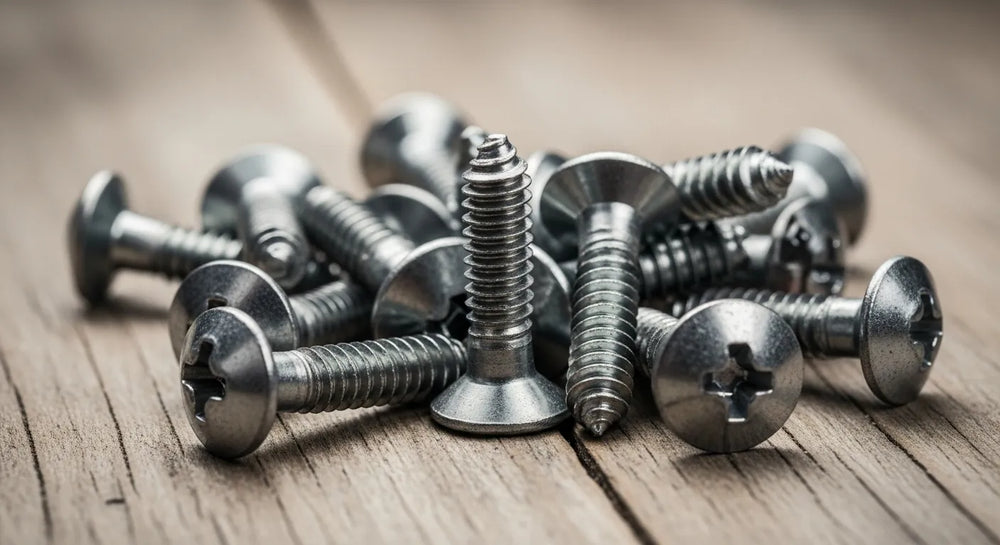
Securing What Matters: Can You Screw Into a Metal Door?
Table of Contents
- Understanding Metal Doors: Beyond the Surface
- The Right Fastener for the Job: A Critical Selection
- Self-Tapping Screws: The Workhorse for Metal
- Precision and Process: Screwing into Metal Doors Safely and Effectively
- Industrial Applications: Where Reliability Meets Innovation
- Procurement Challenges and the Maden.co Solution
- Financing Your Industrial Fastener Needs
- Conclusion: Securing Success with American-Made Excellence
- Frequently Asked Questions
For procurement managers, MRO buyers, and design engineers across diverse industries, the question of securely attaching components to metal doors is far more complex than a simple yes or no. It's a critical inquiry that touches upon structural integrity, material science, compliance, and ultimately, operational safety and efficiency. An unexpected equipment breakdown, a critical control panel needing secure mounting, or a new access system requiring robust installation—these scenarios demand precision in fastener selection and application. The integrity of your facility, the safety of your personnel, and the longevity of your assets often hinge on the smallest, yet most crucial, components. This guide will meticulously explore the nuances of fastening into metal doors, from understanding door compositions to selecting the optimal American-made fasteners. We'll delve into the practicalities of execution, examine industrial applications, and highlight how strategic sourcing through Maden.co can transform a common challenge into a streamlined, reliable solution for your operations. Our aim is to provide authoritative insights that empower you to make informed decisions, ensuring the stability and performance of your installations.
Understanding Metal Doors: Beyond the Surface
Before considering any fastening method, it's essential to recognize that "metal door" is a broad term encompassing a wide variety of constructions, each presenting unique challenges and requirements. Industrial metal doors are engineered for specific purposes, and their composition directly dictates the feasibility and method of screw attachment.
Types of Industrial Metal Doors
Industrial and commercial metal doors are typically constructed from steel, aluminum, or sometimes composite materials with metal skins. The key differentiators lie in their internal structure, material thickness (gauge), and specialized treatments:
- Hollow-Core Metal Doors: These are common in many commercial settings, featuring two thin metal sheets (typically 18-20 gauge steel) welded or bonded to a perimeter frame. The interior is largely hollow, sometimes filled with a honeycomb cardboard or polystyrene core for rigidity and insulation. Screwing directly into the thin skin without reinforcement or proper technique often leads to stripping or insufficient holding power.
- Solid-Core Metal Doors: Offering greater security, fire resistance, and sound dampening, solid-core doors feature a robust core material—such as steel, mineral fiber, or wood blocking—sandwiched between thicker metal sheets (14-16 gauge). Fastening into these doors requires consideration of the core material's density and the combined thickness.
- Fire-Rated Doors: These specialized doors are designed to resist fire for a specified duration. They often have internal reinforcements and materials that must not be compromised by improper drilling or fastening, as it can void their fire rating. Compliance with local fire codes and manufacturer specifications is paramount.
- Heavy-Duty Industrial Steel Doors: Found in factories, warehouses, and secure facilities, these doors are constructed from heavy-gauge steel (10-14 gauge) and may have internal steel stiffeners. They are designed for extreme durability and security, often supporting heavy hardware.
- Overhead Doors/Roll-Up Doors: These doors, typically made of interlocking metal panels, present different challenges due to their movement and the specific structure of their panels. Fastening often requires through-bolting or specific self-drilling screws that account for panel articulation.
Material Gauge and Coatings
The thickness of the metal, or "gauge," is a crucial factor. A lower gauge number indicates a thicker metal sheet, which generally offers better screw retention. Screwing into thin-gauge metal without proper consideration can cause dimpling, stripping, or poor holding strength.
Furthermore, many industrial metal doors feature protective coatings such as galvanization, paint, or specialized anti-corrosion treatments. When drilling or screwing, these coatings can be breached, exposing the underlying metal to potential corrosion. Proper sealing or using fasteners with compatible coatings is often necessary to maintain the door's integrity and aesthetic. Understanding these foundational aspects of metal door construction is the first step toward successful and durable fastening, laying the groundwork for selecting the most appropriate hardware and installation methods.
The Right Fastener for the Job: A Critical Selection
Once you understand the specific characteristics of your metal door, the next crucial step is selecting the correct fastener. This decision is not merely about finding "a screw"; it's about identifying the precise type, material, thread, and drive that ensures optimal performance, longevity, and compliance in an industrial setting. The wrong choice can lead to stripped threads, loose connections, corrosion, or even structural failure.
Types of Screws for Metal Doors
For fastening into metal doors, several categories of screws are typically considered, each with distinct advantages:
-
Self-Tapping Screws: These are the most common and often preferred choice for metal applications due to their ability to create their own mating threads in the material as they are driven. This eliminates the need for a separate tapping operation, significantly streamlining the installation process, especially in MRO and assembly line scenarios.
-
Sheet Metal Screws (Types A, AB, B): Designed for lighter gauge metals, these screws have sharp, pointed tips and coarse threads.
- Type A: Features a sharp, gimlet point, ideal for quickly piercing sheet metal. For reliable fastening, consider our Steel Zinc Plated Type A Pan Slot Drive Self-Tapping Sheet Metal Screw, offering robust performance for numerous applications.
- Type AB: Similar to Type A but with finer threads, providing a tighter fit and better resistance to vibration.
- Type B: Features a blunt, conical tip and finer threads for pre-drilled holes or heavier gauge metals.
- Hi-Lo Screws: These unique self-tapping screws feature a double-lead thread with one high thread and one low thread. The high thread provides strong engagement in thin materials, while the low thread helps to reduce stripping and improve driving torque. They are particularly effective in light gauge metals, plastics, and composites. For applications demanding superior thread engagement and reduced stripping risk, explore our Hi-Lo Double Lead Thread Self-Tapping Sheet Metal Screw.
- Self-Drilling Screws (Tek Screws): These are an advanced type of self-tapping screw that incorporate a drill bit tip, allowing them to drill their own pilot hole and tap their own threads in a single operation. They are categorized by their drill point number (e.g., #2, #3, #4, #5), which corresponds to the metal thickness they can penetrate. They are invaluable for reducing labor time and tool changes in high-volume assembly.
-
Sheet Metal Screws (Types A, AB, B): Designed for lighter gauge metals, these screws have sharp, pointed tips and coarse threads.
-
Machine Screws with Nuts/Rivet Nuts: For applications requiring superior strength, repeated assembly/disassembly, or where through-bolting is feasible, machine screws paired with nuts or rivet nuts (also known as blind rivet nuts or nutserts) are often preferred.
- Machine Screws: Require a pre-drilled and tapped hole, or can be used with a nut on the reverse side of the door. They offer excellent thread engagement and high pull-out strength.
- Rivet Nuts: Provide a strong, internal thread in thin sheet materials where only one side is accessible. They are installed by deforming them into a permanent threaded insert, ideal for attaching components to hollow-core metal doors or where future serviceability is required.
Key Characteristics for Fastener Selection
-
Material:
- Steel: Most common, offering good strength. Often zinc-plated for corrosion resistance.
- Stainless Steel (304, 316): Essential for outdoor applications, corrosive environments, or cleanroom settings due to its superior corrosion resistance.
- Coating: Zinc plating is standard for indoor applications. For external use or harsh conditions, consider galvanized, ceramic coated, or specialty polymer coatings to prevent rust and maintain structural integrity.
-
Head Type:
- Pan Head: A slightly rounded, low-profile head, common for general applications. For a traditional, reliable option, our Steel Zinc Plated Type A Pan Slot Drive Self-Tapping Sheet Metal Screw is an excellent choice.
- Truss Head: A wider, flatter head that distributes clamping force over a larger area, ideal for securing thin materials without crushing them. If you need a broad clamping surface, consider our Steel Zinc Plated Type A Truss Square Drive Self-Tapping Sheet Metal Screw.
- Hex Head: Provides a strong driving surface, often used for heavy-duty applications where high torque is needed.
- Flat Head: Designed to sit flush with the surface for aesthetic or functional reasons.
-
Drive Type:
- Phillips, Slotted: Common but prone to cam-out at higher torques.
- Square (Robertson), Torx (Star): Offer superior torque transmission, reduced cam-out, and faster installation, particularly advantageous in high-volume industrial assembly.
- Thread Pitch and Diameter: The screw's diameter and the spacing of its threads must be matched to the material thickness and desired holding power. Coarser threads are generally better for softer materials or thinner gauges, while finer threads offer more precise adjustments and stronger engagement in harder materials.
Careful consideration of these factors ensures that the selected fastener will perform reliably, maintaining the security and functionality of components attached to metal doors in demanding industrial environments.
Self-Tapping Screws: The Workhorse for Metal
In the realm of industrial fastening, self-tapping screws stand out as an indispensable solution for their efficiency and versatility, particularly when working with metal doors. Their ability to create their own threads as they are driven eliminates a separate pre-tapping step, significantly accelerating installation and reducing labor costs—a major consideration for any procurement manager or MRO buyer.
How Self-Tapping Screws Work
At their core, self-tapping screws are designed with specialized threads and points that cut or form a mating thread in the material without the need for a pre-tapped hole. This process relies on the screw's hardened material and specific thread geometry.
-
Thread Cutting vs. Thread Forming:
- Thread-cutting screws (like many Type A, B, and C sheet metal screws) have flutes or cutting edges at their tip, similar to a tap, which remove material to create the threads. This process produces chips, which need to be managed, but can be easier to drive into harder materials.
- Thread-forming screws (often seen in self-drilling screws for thicker metals) deform the material to create threads without removing chips. This results in a tighter, stronger connection and reduces the risk of loosening due to vibration, but requires more driving torque.
Types and Their Best Applications
The broad category of self-tapping screws includes several subtypes, each engineered for specific applications and material thicknesses:
-
Sheet Metal Screws: These are the most basic form of self-tappers.
- Type A: Characterized by a sharp, gimlet point and coarse threads, they are ideal for quickly piercing and fastening into thin sheet metal (up to 20 gauge). They are frequently used for non-structural applications such as attaching light fixtures, access panels, or signage to metal doors. For applications where a classic, reliable solution is needed, our Steel Zinc Plated Type A Pan Slot Drive Self-Tapping Sheet Metal Screw delivers consistent performance.
- Type B & AB: With blunt tips and finer threads, these are suited for slightly thicker metals or where a pilot hole is already present. They offer a stronger, more resistant connection, especially valuable in areas subject to vibration.
-
Hi-Lo Screws: These screws are distinguished by their dual-lead thread design—one high, sharp thread and one low, blunt thread. This unique profile provides several benefits:
- Improved Engagement: The high thread ensures strong initial engagement and reduced stripping in thin materials, plastics, and composites.
- Reduced Driving Torque: The low thread reduces the amount of force required to drive the screw, making installation faster and less fatiguing, while minimizing material stress.
- Greater Pull-Out Resistance: The dual thread design often results in superior pull-out strength compared to conventional sheet metal screws. They are excellent for attaching components to hollow metal door skins or where a more robust hold in softer or composite cores is needed. Discover the enhanced performance of our Hi-Lo Double Lead Thread Self-Tapping Sheet Metal Screw for demanding applications.
-
Self-Drilling Screws (Tek Screws): These represent the pinnacle of self-tapping technology, integrating a drill bit tip onto the screw body. They are capable of drilling their own pilot hole, tapping their own threads, and fastening in one swift motion.
- Reduced Installation Time: Eliminating the pre-drilling step significantly speeds up assembly lines and MRO repairs.
- Precision: The integrated drill tip ensures the pilot hole is perfectly aligned with the screw threads, reducing misalignments and stripped holes.
- Variety: Available with different drill point lengths (e.g., #2 for thin metals, #5 for heavy gauges up to 1/2 inch thick) and various head and drive types to suit specific needs. For heavy-duty applications requiring superior fastening and a broad clamping surface, our Steel Zinc Plated Type A Truss Square Drive Self-Tapping Sheet Metal Screw is a highly effective solution.
The selection of the appropriate self-tapping screw type hinges on the specific door material and thickness, the load requirements of the attached component, and the desired ease of installation. By understanding the capabilities of each, procurement managers can optimize their fastener inventory, ensuring the right solution is always on hand for critical industrial applications.
Precision and Process: Screwing into Metal Doors Safely and Effectively
Even with the correct fastener, the success of screwing into a metal door largely depends on meticulous preparation and precise execution. Improper technique can lead to stripped threads, damaged materials, compromised structural integrity, or even personal injury. For industrial applications, adhering to best practices ensures both durability and safety.
Step-by-Step Installation Guide
-
Assess and Plan:
- Identify Door Type and Gauge: Determine if the door is hollow-core, solid-core, fire-rated, or heavy-duty steel. Note the metal gauge to select the appropriate screw length and drill tip (if using self-drilling screws).
- Load Requirements: Understand the weight and forces the attached component will exert. This influences screw size, number, and placement.
- Location: Mark the precise location for each screw. Ensure no internal wiring, plumbing, or structural elements within the door will be damaged. For fire-rated doors, consult manufacturer guidelines to avoid compromising the rating.
- Material Compatibility: If attaching dissimilar metals, consider galvanic corrosion and use appropriate isolation methods or compatible fasteners.
-
Select the Right Tools:
- Drill/Driver: A powerful corded drill, cordless impact driver, or drill driver with variable speed is essential. For self-drilling screws, an impact driver is often preferred for its high torque.
-
Drill Bits: If pre-drilling, use high-speed steel (HSS) or cobalt drill bits appropriate for metal. The pilot hole size is critical:
- For thread-cutting screws: The pilot hole should be slightly smaller than the minor (inner) diameter of the screw threads.
- For thread-forming screws: The pilot hole should be closer to the major (outer) diameter, typically based on manufacturer recommendations, to allow material displacement.
- Drive Bits: Use the correct size and type (Phillips, square, Torx) for the screw head to prevent cam-out and damage.
- Safety Gear: Always wear safety glasses, gloves, and hearing protection.
-
Prepare the Surface:
- Clean: Ensure the surface is free of dirt, grease, and rust.
- Center Punch: For precise drilling, use a center punch to create a small indentation at each marked screw location. This prevents the drill bit from "walking" across the metal surface.
-
Drill Pilot Holes (if necessary):
- Start Slow: Begin drilling at a low speed to ensure the bit bites into the metal cleanly.
- Increase Speed: Once engaged, increase speed while applying steady, moderate pressure. Avoid excessive force, which can overheat the bit or material.
- Lubrication: For thicker metals, use cutting oil or lubricant to reduce friction and extend bit life.
- Clear Chips: Periodically withdraw the drill bit to clear metal chips.
-
Drive the Screw:
- Align: Position the screw perfectly perpendicular to the door surface.
- Start Slow: Begin driving at a low speed to ensure the screw engages properly in the pilot hole (or begins to drill its own hole if self-drilling).
- Increase Speed, Apply Steady Pressure: Once the threads catch, increase the speed and apply firm, consistent pressure.
- Avoid Over-Tightening: Stop driving as soon as the screw head is flush with the surface or the component is snug. Over-tightening can strip the threads, damage the screw head, deform the metal, or compromise the fastener's holding power. This is especially crucial for thin-gauge metals.
- For self-drilling screws: Let the screw do the work. Apply steady pressure until the drill tip has fully penetrated, then reduce pressure slightly as the threads engage.
-
Post-Installation Care:
- Clean: Remove any metal shavings or debris, as these can cause rust or damage.
- Seal (if required): For outdoor applications or in corrosive environments, apply a bead of sealant (e.g., silicone caulk, industrial-grade sealant) around the screw head to prevent moisture ingress and protect against corrosion.
- Inspect: Verify the component is securely attached and the fasteners are flush and tight.
By adhering to these systematic steps, industrial professionals can ensure secure, durable, and reliable fastening into metal doors, upholding the highest standards of industrial excellence.
Industrial Applications: Where Reliability Meets Innovation
The ability to securely fasten into metal doors is not just a theoretical exercise; it underpins countless critical operations across manufacturing, warehousing, logistics, and infrastructure. In these demanding environments, the reliable attachment of components to metal doors ensures functionality, safety, and compliance. Maden.co understands the precision and trust that procurement managers and design engineers place in every component, reinforcing our commitment to American Manufacturing Pride and Industrial Excellence.
Real-World Scenarios and Product Solutions
Consider these practical scenarios where robust fastening to metal doors is paramount:
-
Securing Control Panels and Electrical Enclosures: In a manufacturing plant, attaching heavy electrical control panels or junction boxes to the access doors of machinery or building infrastructure requires fasteners that can bear significant weight and resist vibration. A procurement manager must source high-strength, corrosion-resistant fasteners that comply with relevant NEMA or UL standards to ensure the safety and longevity of the electrical systems. The integrity of these attachments directly impacts operational continuity and worker safety.
- For such critical applications, specifying a robust self-drilling screw like our Steel Zinc Plated Type A Truss Square Drive Self-Tapping Sheet Metal Screw with its broad head and high torque square drive would be ideal for securing heavy enclosures to thick-gauge steel doors, ensuring distributed load and secure fastening.
-
Mounting Access Control Systems and Security Hardware: For a secure facility, installing card readers, biometric scanners, or robust locks onto metal entry doors demands fasteners that cannot be easily tampered with or compromised. Design engineers must specify components that not only ensure physical security but also maintain the door's integrity against forced entry.
- Here, a Hi-Lo Double Lead Thread Self-Tapping Sheet Metal Screw offers superior pull-out resistance and reduced stripping, making it a strong candidate for attaching security hardware to metal door skins or composite cores where a high-security, tamper-resistant installation is paramount. Explore the specifications of our Hi-Lo Double Lead Thread Self-Tapping Sheet Metal Screw to understand its robust design.
-
Attaching Safety Signage and Operational Instructions: In an MRO setting, quickly and securely mounting "Emergency Exit," "High Voltage," or "Maintenance Access Only" signs to industrial metal doors is vital for worker safety and regulatory compliance. These fasteners need to be secure against accidental dislodgement and resistant to environmental factors.
- For standard signage and lighter attachments, a straightforward yet effective option like our Steel Zinc Plated Type A Pan Slot Drive Self-Tapping Sheet Metal Screw provides quick and reliable fastening into thinner metal door panels.
-
Repair and Reinforcement of Equipment Enclosures: When an MRO buyer faces an unexpected equipment breakdown, requiring the reattachment or reinforcement of a metal panel on an industrial machine's access door, the ability to quickly source and install high-quality fasteners is a game-changer. Delays in finding the right part can translate into significant downtime and lost productivity.
- In such situations, having a readily available inventory of versatile, U.S.-made self-tapping screws is crucial. The broad range of sheet metal screws on Maden.co, available for immediate procurement, empowers MRO teams to execute repairs efficiently, minimizing disruption.
The Strategic Value of U.S.-Made Components
The scenarios above underscore a critical truth: the quality and reliability of fasteners are non-negotiable in industrial environments. Sourcing through Maden.co directly addresses these demands by offering:
- Guaranteed Quality and Compliance: Every product on our marketplace, from a simple sheet metal screw to complex industrial hardware, is sourced from verified U.S. manufacturers. This ensures adherence to stringent American quality standards and often compliance with industry specifications like DIN, NPT, and ISO, reducing risks for design engineers and procurement teams.
- Enhanced Supply Chain Resilience: Reliance on domestic manufacturers mitigates risks associated with global supply chain disruptions, fluctuating international tariffs, and geopolitical uncertainties. When you need a part, we ensure it's accessible.
- Reduced Total Cost of Ownership (TCO): While the initial price of a U.S.-made fastener might sometimes be perceived differently, the long-term value is undeniable. Superior durability, fewer failures, reduced replacement costs, and minimized operational downtime contribute to a significantly lower TCO. Our mission, emphasized across Maden.co, is to democratize access to American manufacturing, making these superior options as convenient as any global alternative.
At Maden.co, we champion American Manufacturing Pride and Supply Chain Transparency. We understand that selecting the right fastener is a strategic decision that impacts the longevity and performance of your industrial applications. By connecting buyers with over 2.5 million American-made products from our network of 800+ verified U.S. manufacturers, we aim to provide the solutions necessary for Industrial Excellence and Customer Empowerment. Our platform is built on the vision that America's manufacturing revival is here, and we invite qualified U.S. manufacturers to join us in this mission by becoming a vendor on our marketplace; you can register as a vendor here.
Procurement Challenges and the Maden.co Solution
In the complex landscape of industrial procurement, sourcing fasteners for applications like metal doors is rarely straightforward. Procurement managers, MRO buyers, and design engineers frequently encounter a spectrum of challenges that can impact project timelines, budgets, and overall operational efficiency. At Maden.co, we recognize these pain points and have built our platform around addressing them head-on, embodying our values of Digital Innovation and Customer Empowerment.
Common Procurement Pain Points
- Supply Chain Volatility and Lead Times: The global supply chain has proven fragile, with geopolitical events, natural disasters, and pandemics causing unpredictable delays and cost fluctuations. Long lead times for specialized fasteners can halt production or delay critical MRO repairs.
- Quality Control and Counterfeit Concerns: Sourcing internationally can introduce uncertainties regarding product quality, material consistency, and adherence to specifications. The risk of receiving substandard or counterfeit parts is a constant concern, leading to premature failures and safety hazards.
- Lack of Transparency: Many traditional sourcing channels lack transparency regarding manufacturing origins, material certifications, and supplier verification, making it difficult to ensure compliance and ethical sourcing.
- Limited Access to Specialized or Hard-to-Find Parts: Locating specific fasteners, especially those adhering to particular industry standards (e.g., DIN, NPT, ISO) or made from specialty alloys, can be time-consuming and frustrating. Large distributors often prioritize high-volume items, making niche parts difficult to find.
- Inefficient Procurement Processes: Manual searching, comparing multiple quotes, and dealing with disparate suppliers contribute to high procurement friction, wasting valuable time and resources.
- Compliance and Certification: Ensuring that fasteners meet specific industry standards, environmental regulations, or material certifications is critical, especially in regulated industries. Proving compliance often requires extensive documentation and auditing.
Maden.co: Your Strategic Procurement Partner
Maden.co was founded to transform the industrial procurement experience, democratizing access to American manufacturing and empowering buyers with a streamlined, reliable solution. Our approach directly addresses the challenges outlined above:
- Unparalleled Access to U.S.-Made Excellence: We connect industrial buyers with an expansive network of over 800+ verified U.S. manufacturers, offering access to more than 2.5 million American-made products. This vast catalog includes a comprehensive range of fasteners suitable for metal door applications, ensuring you can find precisely what you need, from standard sheet metal screws to highly specialized industrial hardware. Our "America's manufacturing revival is here" tagline isn't just a statement; it's our daily commitment.
- Enhanced Supply Chain Resilience: By exclusively featuring U.S. manufacturers, we significantly reduce supply chain risks. Buyers benefit from shorter lead times, more predictable delivery schedules, and reduced exposure to international shipping complexities and duties. This ensures that when a procurement manager needs a critical part for an urgent MRO task, it’s available and deliverable without unnecessary delays.
- Guaranteed Quality and Compliance: We emphasize Supply Chain Transparency. Every manufacturer on Maden.co undergoes a rigorous verification process, guaranteeing that you are sourcing genuine, high-quality, U.S.-made products. This provides peace of mind regarding material specifications, durability, and compliance with crucial industry standards. Our About Us page further details our commitment to these principles.
- Reduced Procurement Friction through Digital Innovation: Our intuitive, digitally-driven marketplace simplifies the entire sourcing process. Procurement managers can quickly search, compare, and purchase products with ease, drastically reducing the time and effort traditionally spent on finding components. This digital efficiency is a cornerstone of our value proposition.
-
Strategic Value for Your Business: Sourcing through Maden.co isn't just about buying parts; it's about making a strategic investment in your business's future. You gain:
- Improved Total Cost of Ownership (TCO): High-quality, reliable U.S.-made fasteners reduce maintenance, replacement, and downtime costs.
- Assured Compliance: Access to parts that meet critical industry standards ensures your projects and operations remain compliant.
- Enhanced Operational Efficiency: Reduced lead times and procurement friction mean projects stay on schedule and MRO needs are met promptly.
- Support for the American Economy: Every purchase contributes to strengthening the domestic manufacturing base.
Maden.co is more than just a marketplace; it's a strategic partner dedicated to empowering procurement professionals. We provide the tools, transparency, and access to American-made excellence needed to build more resilient, efficient, and compliant supply chains. If you have specific sourcing questions or need assistance, our team is ready to help; feel free to contact us anytime.
Financing Your Industrial Fastener Needs
Investing in high-quality, American-made fasteners and industrial components is a strategic decision that impacts the longevity and efficiency of your operations. However, large-volume purchases, particularly for capital-intensive projects or extensive MRO inventory restocking, can present cash flow challenges for businesses. Recognizing this, Maden.co offers a powerful solution: Instant Financing.
Instant Financing: A Strategic Tool for Businesses
Our Instant Financing option is designed not merely as a payment method, but as a strategic tool to empower procurement managers and business owners. It provides the flexibility needed to manage capital expenditures effectively and ensure that essential U.S.-made products are accessible when you need them, without straining immediate cash reserves.
- Cash Flow Management: For businesses operating on tight budgets or managing seasonal fluctuations, Instant Financing allows you to acquire critical components without upfront capital outlay. This frees up working capital for other immediate operational needs, ensuring liquidity and financial stability.
- Facilitating Larger-Volume Purchases: When facing a significant project or looking to optimize inventory through bulk purchasing, Instant Financing enables you to make those larger investments. This often leads to better unit pricing, reduced shipping costs over time, and a more robust inventory for future needs, ultimately contributing to a lower Total Cost of Ownership.
- Streamlined Procurement Process: By offering financing directly at the point of sale, we eliminate the need for lengthy external loan applications or complex credit negotiations. This simplifies and accelerates the procurement cycle, allowing you to focus on your core business.
- Ensuring Business Continuity: Having access to immediate financing means you can promptly secure necessary fasteners and parts for urgent MRO repairs or new equipment installations. Avoiding delays due to financing hurdles directly supports business continuity and minimizes costly downtime.
How to Leverage Instant Financing
Accessing this strategic benefit is straightforward and seamlessly integrated into your procurement journey with Maden.co. When you have selected the American-made fasteners, components, or other industrial supplies your business needs and proceed to checkout on our platform, you will find the option to apply for Instant Financing. The application process is designed to be efficient, providing quick decisions so you can finalize your purchases without unnecessary delays.
This feature reinforces our commitment to Customer Empowerment, ensuring that financial flexibility is a cornerstone of your sourcing experience with us. By leveraging Instant Financing, you can confidently invest in the superior quality and reliability of American manufacturing, knowing you have the financial agility to support your operational demands. You can apply for Instant Financing at checkout to streamline your capital-intensive projects and ensure a robust supply of the American-made components that drive your business forward.
Conclusion: Securing Success with American-Made Excellence
The question "Can you screw into a metal door?" clearly unpacks into a series of critical considerations for any industrial professional—from understanding door metallurgy to selecting the precise fastener and executing flawless installation. The integrity of these connections is paramount, dictating not only the performance of equipment and infrastructure but also the safety and efficiency of your entire operation. Choosing the right American-made fasteners from verified manufacturers is not merely a purchasing decision; it's a strategic investment in durability, reliability, and the resilience of your supply chain.
At Maden.co, we are dedicated to being your indispensable partner in this endeavor. Our platform champions America's manufacturing revival by providing unparalleled access to over 2.5 million U.S.-made products from a network of 800+ verified manufacturers. We believe in democratizing access to industrial excellence, ensuring that procurement managers, MRO buyers, and design engineers can confidently source components that meet the highest standards of quality and compliance. Whether you need a specialized Hi-Lo Double Lead Thread Self-Tapping Sheet Metal Screw for a unique application, a robust Steel Zinc Plated Type A Truss Square Drive Self-Tapping Sheet Metal Screw for heavy loads, or a standard Steel Zinc Plated Type A Pan Slot Drive Self-Tapping Sheet Metal Screw for general fastening, our marketplace provides the transparency and reliability you need.
Elevate your procurement strategy today. Explore the comprehensive catalog of American-made fasteners and industrial components available on Maden.co. Discover how our commitment to Digital Innovation, Supply Chain Transparency, and Customer Empowerment can streamline your operations, reduce TCO, and build a more resilient future for your business. And for those larger, more critical projects, remember you can apply for Instant Financing at checkout to manage cash flow effectively and ensure your capital-intensive initiatives proceed without interruption. The future of American manufacturing is here, and it's built on quality, reliability, and strategic partnerships.
Frequently Asked Questions
What types of screws are best for metal doors?
For most metal door applications, self-tapping screws are ideal as they create their own threads. This category includes sheet metal screws (Types A, AB, B), Hi-Lo screws for enhanced grip in thin materials, and self-drilling screws (Tek screws) that combine drilling and tapping into a single step. For heavier loads or when through-bolting is an option, machine screws with nuts or rivet nuts provide superior strength. The best choice depends on the door's material, thickness (gauge), and the load requirements of the attached component.
Do I need to pre-drill when screwing into a metal door?
It depends on the type of screw and the metal door's thickness. Self-drilling screws (Tek screws) are specifically designed with a drill bit tip to eliminate the need for pre-drilling. However, for other self-tapping screws or when working with thicker metals, pre-drilling a pilot hole is often necessary to prevent stripping, ensure proper alignment, and reduce the risk of damaging the door or the screw. Always consult fastener specifications for recommended pilot hole sizes.
How can I prevent screws from stripping in thin metal doors?
To prevent stripping, ensure you use the correct screw type and size for the metal gauge. For very thin metals, Hi-Lo screws offer superior thread engagement and reduced stripping. When driving screws, use an appropriate driver bit that fits snugly, start at a slow speed, and apply steady, consistent pressure. Stop immediately once the screw is snug or flush, avoiding over-tightening. Using a drill with a clutch or an impact driver with torque settings can also help prevent over-driving.
What are the benefits of using U.S.-made fasteners for industrial applications?
Sourcing U.S.-made fasteners for industrial applications offers several significant benefits. These include guaranteed adherence to stringent American quality standards and industry specifications, leading to superior durability and reliability. Domestic sourcing also enhances supply chain resilience by reducing lead times and exposure to global disruptions. Furthermore, it helps reduce the Total Cost of Ownership (TCO) by minimizing failures and downtime, while also supporting the American economy and jobs. Platforms like Maden.co simplify access to these high-quality, verified American-made products.


