
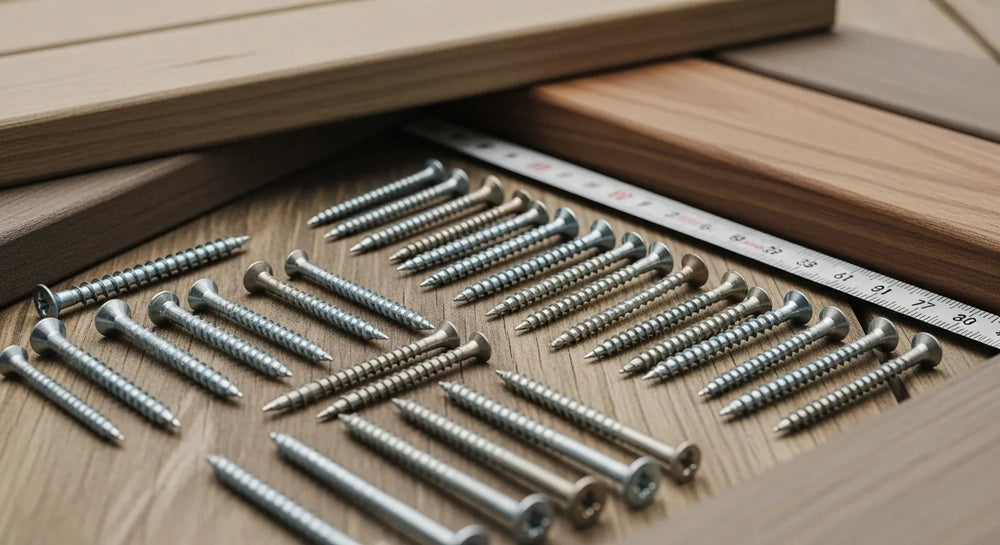
Strongest Wood Screws: An Industrial Procurement Guide
Table of Contents
- Introduction
- Understanding Wood Screw Strength: A Multifaceted Analysis
- Matching the Screw to the Application: An Industrial Procurement Checklist
- Detailed Look at Specific Wood Screw Strengths and Applications
- Conclusion: Securing Your Operations with American-Made Excellence
- FAQ
Introduction
In the intricate world of industrial manufacturing and maintenance, a single failed component can cascade into significant production delays, compromise product integrity, and incur substantial financial losses. Fastener selection, often overlooked in its apparent simplicity, carries immense weight in ensuring structural integrity and operational longevity. For procurement managers, MRO buyers, and design engineers, the question isn't just "Will it hold?" but "Will it endure under specific loads, environmental conditions, and over its intended lifecycle?" This deep dive moves beyond superficial considerations to rigorously examine the factors that define the strength of wood screws, offering a definitive guide to informed procurement. We will explore the critical interplay of material science, design specifications, and application requirements, empowering you to select fasteners that not only meet but exceed industrial demands. Our aim is to provide a comprehensive framework for identifying the strongest wood screws, ensuring that every connection you make contributes to superior product performance and supply chain resilience.
Understanding Wood Screw Strength: A Multifaceted Analysis
Defining the "strongest" wood screw is not as straightforward as simply picking the largest available. Its strength is a complex interplay of several factors, each contributing to its ability to resist different types of forces in specific applications. Industrial excellence demands a nuanced understanding of these elements.
The Foundation: Material Science and Alloy Composition
The intrinsic strength of a wood screw begins with its material. Different metals and alloys exhibit varying properties in terms of tensile strength, yield strength, shear strength, hardness, and corrosion resistance.
High-Carbon Steel: The Workhorse of Strength
For sheer raw strength, especially in applications demanding high tensile and shear resistance, hardened high-carbon steel screws are often the go-to choice. These screws undergo heat treatment processes that significantly increase their hardness and ultimate tensile strength.
- Tensile Strength: This refers to the maximum stress a material can withstand while being stretched or pulled before breaking. High-carbon steel screws excel here, making them suitable for applications where components are under significant pulling forces.
- Yield Strength: This is the stress a material can endure before it begins to deform permanently. A higher yield strength means the screw can bear heavier loads without losing its shape or integrity.
- Shear Strength: Crucial for wood applications, shear strength is the resistance of a material to forces that cause parallel internal surfaces to slide past one another. When a screw resists two pieces of wood trying to separate horizontally, it's primarily relying on its shear strength.
- Hardness: Hardened steel screws can penetrate dense hardwoods more effectively without stripping the drive or deforming the head, ensuring a robust installation.
However, a critical consideration for high-carbon steel is its susceptibility to corrosion. For outdoor applications or environments with high moisture or chemical exposure, unprotected steel will rust, compromising its strength and the integrity of the fastened joint. This necessitates protective coatings, which we will discuss shortly.
Stainless Steel: The Corrosion-Resistant Strongman
When strength must be paired with superior corrosion resistance, stainless steel alloys become indispensable. While generally not as hard or as high in tensile strength as heat-treated carbon steel, certain grades of stainless steel offer an excellent balance.
- 304 Stainless Steel: This is the most common grade, offering good strength and excellent resistance to corrosion in general atmospheric conditions. It’s suitable for many outdoor and marine environments.
- 316 Stainless Steel: Known as "marine grade" stainless steel, 316 contains molybdenum, which significantly enhances its resistance to chlorides and other aggressive corrosive agents. For applications near saltwater or in chemical processing, 316 offers superior longevity.
- Strength-to-Corrosion Ratio: The trade-off is often a slightly lower tensile strength compared to hardened carbon steel, but the enhanced durability against environmental degradation often makes it the stronger choice in the long run for critical applications.
Silicon Bronze: Aesthetics Meets Durability
While not typically chosen for maximum raw pull-out or shear strength compared to steel, silicon bronze offers a unique combination of strength, exceptional corrosion resistance, and aesthetic appeal.
- Corrosion Resistance: Silicon bronze is highly resistant to saltwater, chemicals, and weathering, making it an excellent choice for marine applications, boat building, and high-end outdoor furniture or architectural finishes where both performance and appearance matter.
- Ductility: It is a more ductile material than some hardened steels, meaning it can deform under stress before fracturing, which can be advantageous in certain dynamic load scenarios.
- Specific Applications: For projects requiring fasteners that will not stain wood and will develop a beautiful patina over time, an Oval Slot Drive Silicon Bronze Wood Screw offers a superior solution, blending functional integrity with a commitment to lasting quality.
Brass: For Softer Woods and Decorative Applications
Brass screws, like the Round Slot Drive Brass Wood Screw or the Flat Slot Drive Brass Wood Screw, are generally softer than steel or bronze. They are selected primarily for their aesthetic qualities, good corrosion resistance (though less than silicon bronze), and their ability to work well with softer woods without causing splitting. They are not typically chosen for their ultimate tensile or shear strength in heavy-duty structural applications but provide dependable fastening where moderate loads and appearance are key.
The Role of Coatings and Treatments
Beyond the base material, the finish applied to a screw can dramatically influence its performance, particularly in terms of corrosion resistance and lubricity during installation.
- Zinc Plating: Offers basic corrosion protection for indoor or dry outdoor use. It's an economical choice that prevents rust on steel screws.
- Hot-Dip Galvanization: Provides a much thicker, more durable zinc coating that offers superior corrosion resistance, making it suitable for outdoor and wet environments. However, the thick coating can sometimes impact thread fit and require slightly larger pilot holes.
- Ceramic Coatings: Advanced ceramic coatings provide excellent corrosion resistance, often outperforming galvanization, and also reduce friction during driving, which can prevent cam-out and make installation easier, especially in hardwoods.
- Polymer/Proprietary Coatings: Many manufacturers offer specialized polymer or multi-layer coatings designed for extreme weather, UV resistance, or specific chemical exposures. These often provide superior protection and can be highly effective for extending screw life in harsh environments.
The selection of a coating should always be driven by the environmental conditions the screw will face, ensuring that the chosen protection method contributes to the screw's overall functional strength over time.
Design Elements: Beyond the Material
The physical design of a wood screw is equally critical to its strength and performance. Even the strongest material can fail if the screw's geometry is inappropriate for the application.
Thread Design: The Grip on Strength
The threads are the primary mechanism by which a screw anchors itself into the wood, resisting pull-out forces.
- Coarse Threads: Wood screws generally feature coarse threads with a large pitch (distance between threads). This design maximizes thread engagement with the wood fibers, providing excellent pull-out resistance. The deeper, wider threads displace less wood, creating a stronger grip.
- Thread Angle: The angle of the thread flanks also affects holding power. Optimal angles are designed to minimize wood fiber damage while maximizing engagement.
-
Partial vs. Full Thread:
- Fully Threaded Screws: Provide maximum pull-out resistance along the entire engaged length. They are ideal when fastening thin materials to a thicker substrate, or when maximum withdrawal resistance is paramount.
- Partially Threaded Screws (or Structural Screws): These have an unthreaded shank portion beneath the head. This design allows the two pieces of wood being joined to be pulled tightly together, creating a strong clamping force. The unthreaded shank also increases the screw's shear strength, as a solid shank is stronger in shear than a threaded section. For structural applications where shear loads are significant, partially threaded screws are often preferred.
Shank Diameter and Core Diameter
- Shank Diameter: A larger shank diameter generally translates to higher shear strength. A thicker screw can withstand more lateral force before bending or breaking.
- Core Diameter: This is the diameter of the screw's body beneath the threads. A larger core diameter means more material and thus greater tensile and shear strength. However, a too-large core diameter can necessitate a larger pilot hole, which might reduce the overall integrity of the wood joint if not carefully matched to wood density.
Head Design and Drive Type
While not directly contributing to the screw's inherent strength in terms of shear or tensile resistance, the head and drive type are crucial for effective installation and the longevity of the joint.
-
Head Types:
- Flat Head (Countersunk): Designed to sit flush or below the surface, providing a clean finish and preventing snagging. This is common for many finish applications.
- Round Head: Sits proud of the surface, offering a decorative look and sometimes a slightly larger bearing surface for clamping.
- Oval Head: A decorative head that is also countersunk, combining the flush finish with a more aesthetic, slightly rounded top.
- Hex Head (Lag Screws): Large hexagonal heads found on lag screws, designed for wrenches or sockets, allowing for significant torque during installation for heavy-duty applications.
- Pan Head: A dome-shaped head with a flat underside, offering a large bearing surface for clamping pressure without countersinking.
-
Drive Types:
- Slotted Drive: Traditional but prone to cam-out, especially with power tools. Still common in classic designs like the Flat Slot Drive Brass Wood Screw.
- Phillips Drive: More resistant to cam-out than slotted, but still can strip under high torque.
- Square (Robertson) Drive: Excellent cam-out resistance, preferred for high-torque applications.
- Torx (Star) Drive: Offers superior cam-out resistance and torque transmission, making it ideal for structural screws and hardwoods.
A drive type that allows for proper torque without stripping is essential for fully engaging the threads and achieving the screw's maximum potential strength.
Point Design
The screw's point design facilitates penetration and can prevent splitting.
- Gimlet Point: A sharp, tapered point that helps the screw bite into the wood without needing a pilot hole in softer woods.
- Type 17 (Cutter) Point: Features a notch or flute at the tip that acts like a small drill bit, clearing wood fibers as the screw enters. This reduces splitting in hardwoods and dense materials, and lessens the need for a pilot hole.
The Dynamics of Load: Shear vs. Withdrawal Strength
When assessing the strength of a wood screw, it's vital to consider the primary forces it will be subjected to.
- Withdrawal (Pull-Out) Strength: This is the force required to pull a screw straight out of the wood, parallel to the screw's axis. It is primarily dependent on the wood's density, the screw's major diameter, the depth of penetration, and the thread design. For applications where a component is hanging or being pulled away from the substrate, high withdrawal resistance is critical.
- Shear Strength: This is the force required to break a screw by cutting it across its diameter, perpendicular to its axis. Shear forces occur when two joined pieces of wood try to slide past each other. This is highly dependent on the screw's material strength and its minor (core) diameter. For structural connections where components bear weight or resist lateral movement, high shear strength is paramount.
The strongest wood screw for a given application is one optimized for the predominant load type it will encounter. A screw designed for maximum withdrawal resistance might have a thin core but deep threads, while one designed for shear might have a larger, unthreaded shank.
Matching the Screw to the Application: An Industrial Procurement Checklist
Selecting the optimal wood screw for industrial use requires a systematic approach, considering all the factors discussed. Our commitment at Maden.co is to equip procurement professionals with the tools and knowledge to make these critical decisions with confidence. We emphasize that America's manufacturing revival is here, driven by precision and reliable sourcing.
Step 1: Analyze the Environment and Load Conditions
- Indoor vs. Outdoor: Dictates corrosion resistance needs.
- Moisture/Chemical Exposure: Further refines material and coating choices (e.g., 316 stainless steel for marine, specialized coatings for chemical plants).
- Temperature Extremes: Can affect material performance over time.
- Primary Load Type: Is it primarily shear (structural connections, heavy shelving), withdrawal (hanging elements, paneling), or both?
- Vibration/Dynamic Loads: May require features like locking threads or specific material ductility.
Step 2: Consider the Wood Substrate
-
Wood Species and Density:
- Softwoods (Pine, Fir): Generally require less aggressive threads and pilot holes. Screws can achieve good withdrawal resistance due to easier fiber displacement.
- Hardwoods (Oak, Maple, Cherry): Demand stronger, harder screws (e.g., hardened steel) to prevent bending or stripping during installation. Pilot holes are almost always necessary to prevent splitting and ensure proper thread engagement.
- Engineered Wood Products (Plywood, MDF, OSB): These materials have different fiber structures than solid wood and may require specific screw designs (e.g., screws with larger thread flanks or specialized points for better grip and reduced delamination).
- Moisture Content of Wood: High moisture content can lead to wood movement (swelling/shrinking), potentially loosening fasteners or causing splitting. Screws with good elasticity or designs that accommodate movement might be beneficial.
Step 3: Prioritize Material and Design Features
Based on the environmental, load, and substrate analysis, narrow down material and design choices:
- Maximum Strength, Minimal Corrosion Protection (Indoor/Dry): Hardened high-carbon steel, often with a zinc coating.
- Corrosion Resistance + Strength (Outdoor/Wet): 304 or 316 stainless steel; galvanized or ceramic-coated carbon steel.
- Specific Aesthetic + Corrosion Resistance (Marine/High-End): Silicon bronze.
- High Shear Strength (Structural): Partially threaded, larger diameter, hardened steel screws with appropriate coatings.
- High Withdrawal Resistance (Paneling/Attachments): Fully threaded, coarser thread, appropriate diameter for wood density.
- Ease of Installation in Hardwoods: Screws with Type 17 points and Torx/Square drives.
Practical Scenarios for Industrial Buyers
Consider a procurement manager responsible for sourcing components for a new line of outdoor industrial equipment. They require fasteners that can withstand harsh weather, significant vibration, and heavy loads. A standard zinc-plated wood screw would fail quickly. Instead, they would look for options like heat-treated, ceramic-coated carbon steel screws for structural integrity, or 316 stainless steel screws for critical outdoor paneling. Maden.co offers a robust selection, ensuring compliance with industry standards and longevity.
For a design engineer prototyping a custom heavy-duty workbench for a manufacturing floor, the integrity of every joint is paramount. They need fasteners that provide superior shear strength for the frame and high withdrawal resistance for the thick wooden top. Here, a partially threaded, large-diameter structural screw made of hardened steel would be ideal for the frame, possibly combined with a fully threaded version for the top.
An MRO buyer facing an unexpected equipment breakdown that requires immediate repair involving heavy wooden crates. The ability to quickly find and finance a verified, U.S.-made part is a game-changer. They need robust, reliable screws with verifiable specifications, not just any screw off the shelf. Our platform ensures that the fasteners they procure, whether it's a specialty item or a common dimension, meet stringent quality and performance criteria.
The Maden.co Advantage: Empowering Procurement with American Manufacturing
At Maden.co, our mission is to democratize access to American manufacturing, connecting industrial buyers with an unparalleled network of over 2.5 million American-made products from our 800+ verified U.S. manufacturers. We understand that finding the absolute strongest wood screw isn't just about technical specifications; it's about the entire procurement ecosystem.
Our vision is to become the definitive platform that proves American-made components are as accessible and convenient as any global alternative. We believe America's manufacturing revival is here, and it's built on a foundation of quality, transparency, and innovation.
Supply Chain Resilience and Transparency
In an era of unpredictable global supply chains, sourcing from verified U.S. manufacturers through Maden.co drastically enhances supply chain resilience. You gain transparency into the origin and quality of your components, minimizing risks associated with delayed shipments, inconsistent quality, or intellectual property concerns. Our platform embodies our core values of American Manufacturing Pride and Supply Chain Transparency, ensuring you receive industrial excellence with every order.
Streamlined Sourcing and Compliance
Finding the right screw, especially when navigating complex compliance requirements like DIN or NPT standards, can be a time-consuming ordeal. Our extensive catalog allows procurement managers to filter by specific dimensions, materials, finishes, and industry standards, reducing procurement friction and saving invaluable time. Whether you need a specific type of wood screw for a sensitive application or a bulk order for ongoing production, our platform simplifies the process.
Optimizing Total Cost of Ownership (TCO)
While the initial unit price of a screw might seem insignificant, a poor-quality or incorrectly selected fastener can lead to premature failure, rework, warranty claims, and ultimately, a much higher Total Cost of Ownership. By enabling access to high-quality, American-made products, Maden.co helps businesses improve TCO through enhanced product longevity, reduced maintenance, and fewer operational disruptions. Our focus is on strategic business value, demonstrating how quality sourcing saves time and reduces risk in the long run.
Instant Financing for Strategic Purchases
We recognize that large-volume purchases or capital-intensive projects require flexible financial solutions. A key differentiator for Maden.co is our "Instant Financing" option. This isn't just a payment method; it's a strategic tool designed to empower businesses. It allows procurement managers and business owners to manage cash flow effectively, make larger, more critical purchases without upfront capital strain, and seize opportunities when they arise. You can apply for Instant Financing at checkout to streamline your capital-intensive projects, ensuring your operations never miss a beat due to funding limitations.
We are confident in our value proposition and remain humble and service-oriented, always focusing on customer empowerment and success. Learn more about our mission and values that champion American manufacturing excellence by visiting our About Us page.
Detailed Look at Specific Wood Screw Strengths and Applications
Let's delve into specific types of wood screws and their inherent strengths, providing concrete examples for informed selection.
Construction and Structural Wood Screws
These are designed for heavy-duty applications where superior shear and withdrawal strength are critical. They often feature:
- Material: Heat-treated carbon steel, sometimes with proprietary coatings for corrosion resistance (e.g., ceramic or polymer).
- Thread: Coarse, aggressive threads with deep engagement. Often partially threaded to allow for strong clamping force and increased shear strength in the unthreaded shank.
- Head: Large washer head, hex head, or large flat head (often with a self-countersinking design).
- Drive: Torx (star) or Square drive for maximum torque transfer and cam-out prevention.
- Point: Type 17 cutter point or serrated tip for easy penetration into hardwoods without pre-drilling (though pilot holes are always recommended for critical structural joints).
Why they are strong: The combination of hardened steel, large diameter, partially threaded shank, and aggressive thread design provides exceptional resistance to both shear and pull-out forces, making them ideal for framing, decking, and connecting structural timbers.
Deck Screws
Designed to withstand outdoor elements and the dynamic loads of foot traffic.
- Material: Usually hardened carbon steel with advanced corrosion-resistant coatings (e.g., polymer, ceramic, galvanized) or stainless steel (304 or 316).
- Thread: Coarse threads for good grip in treated lumber. Some feature a secondary thread near the head to resist "wood jacking" (where the board lifts as the screw is driven).
- Head: Bugle head (for self-countersinking) or flat head, designed to sit flush.
- Drive: Torx or Square drive.
- Point: Often a Type 17 or self-drilling point.
Why they are strong: Their enhanced corrosion resistance protects against weathering and treated lumber chemicals. The material and thread design provide ample holding power in fluctuating temperatures and moisture, crucial for the longevity of outdoor structures.
Lag Screws (Lag Bolts)
Though technically bolts, lag screws are driven into wood like screws and are designed for extremely heavy-duty connections.
- Material: High-strength steel, often galvanized for outdoor use.
- Thread: Very coarse, deep threads with a tapered point.
- Head: External hex head, requiring a wrench or socket.
- Shank: Usually partially threaded, with a substantial unthreaded shank for maximum shear strength.
Why they are strong: Their large diameter, hardened steel construction, and deep threads provide immense shear and withdrawal strength, making them suitable for fastening heavy ledgers, large timbers, and attaching metal to wood in high-load scenarios.
Cabinet and Furniture Screws
While not designed for extreme structural loads, these require good holding power and a clean finish.
- Material: Often steel (zinc-plated or black phosphate), brass, or stainless steel.
- Thread: Fine to coarse threads, depending on wood type.
- Head: Flat head, pan head, or specialized trim heads.
- Drive: Phillips, Square, or Torx.
Why they are strong: They offer sufficient strength for their intended purpose, ensuring furniture and cabinetry remain stable without splitting delicate materials. For decorative yet functional purposes, consider options like a Round Slot Drive Brass Wood Screw for a classic aesthetic with reliable hold in appropriate wood types.
Conclusion: Securing Your Operations with American-Made Excellence
The quest for the "strongest" wood screw is fundamentally a pursuit of reliability, longevity, and ultimately, operational integrity. It demands a holistic understanding that transcends simple material descriptions, encompassing the nuances of engineering design, environmental resilience, and application-specific demands. For procurement managers, MRO buyers, and design engineers, making an informed decision about fasteners is a strategic imperative that directly impacts performance, safety, and Total Cost of Ownership.
By prioritizing American-made products from verified manufacturers, you not only procure superior fasteners but also invest in a resilient and transparent supply chain. Our platform, Maden.co, stands as a testament to American Manufacturing Pride, connecting you to an unparalleled network of over 2.5 million U.S.-made industrial components. We believe in providing solutions that address real-world challenges—from enhancing supply chain transparency to simplifying compliance and offering flexible financing options.
Don't let fastener selection be a weak link in your operations. Empower your projects with components engineered for excellence and backed by a commitment to quality. Explore our extensive catalog of American-made wood screws, from standard industrial solutions to specialized items like the robust Oval Slot Drive Silicon Bronze Wood Screw for marine or corrosive environments, or the aesthetically pleasing Flat Slot Drive Brass Wood Screw for precision joinery. Every product on our platform is sourced from U.S. manufacturers, ensuring you receive verifiable quality and reliable performance.
Take the next step in optimizing your procurement process. Visit Maden.co today to explore our vast selection and experience the difference that American manufacturing excellence brings. For U.S. manufacturers seeking to expand their reach, we invite you to register as a vendor and become a vital part of America's manufacturing revival. If you have specific sourcing questions or need assistance, our team is ready to help; simply contact us for expert support. Remember, you can apply for Instant Financing at checkout to streamline your capital-intensive projects and maintain seamless cash flow.
FAQ
Q1: What is the primary difference in strength between steel and stainless steel wood screws? A1: Hardened high-carbon steel screws generally offer superior tensile and shear strength compared to most stainless steel grades. However, stainless steel (especially 304 or 316) provides significantly better corrosion resistance. The "strongest" choice depends on whether the application primarily demands raw mechanical strength or resistance to environmental degradation over time. For outdoor or wet conditions, stainless steel often proves to be the stronger, more durable option in the long run due to its anti-corrosion properties.
Q2: Are larger diameter wood screws always stronger? A2: Generally, yes, a larger diameter wood screw will have greater shear strength due to more material in its core. It can also offer increased withdrawal resistance if the wood density and depth of penetration are adequate for its larger threads. However, excessively large screws can split the wood if not used with appropriate pilot holes, potentially weakening the joint overall. The optimal diameter must be balanced with the wood type and joint design.
Q3: How important is the pilot hole when installing wood screws for maximum strength? A3: Extremely important. A correctly sized pilot hole prevents the wood from splitting, especially in hardwoods, and ensures proper thread engagement without over-stressing the screw. Without a pilot hole, the screw may bend, break, or strip its threads, significantly compromising its holding power and shear strength. The pilot hole should be slightly smaller than the screw's core diameter for optimal thread bite.
Q4: Can specialty coatings truly enhance the strength of a wood screw? A4: While coatings primarily enhance corrosion resistance and lubricity (aiding installation), this indirectly contributes to the screw's effective strength and longevity. A screw protected by a robust coating will maintain its original material strength for a much longer period in corrosive environments than an uncoated screw. Therefore, a high-strength steel screw with an advanced ceramic or polymer coating can be considered "stronger" in real-world, long-term applications than an unprotected one that would quickly degrade.


