
Understanding Wood Screw Sizes
Table of Contents
- The Anatomy of a Wood Screw: Key Dimensions to Consider
- Decoding the Diameter: Understanding Gauge Numbers
- Measuring Length: From Point to Under-Head
- Thread Design and Pitch: Gripping Power and Withdrawal Resistance
- Head Styles and Drive Types: Beyond Just Looks
- Material and Finish: Durability and Environment
- The Critical Role of Precision in Procurement
- Simplifying Procurement with Maden.co
- Conclusion
- FAQ
Imagine a critical project delayed, not by a major component failure, but by a seemingly insignificant detail: the wrong fastener. A design engineer specifies a particular load-bearing capacity, a procurement manager sources what they believe is the correct part, and an MRO technician encounters stripped threads during installation. Such scenarios are all too common in the industrial landscape, underscoring a fundamental truth: the smallest components often hold the greatest leverage over project success. Among these, wood screws are ubiquitous, yet their precise specifications are frequently overlooked or misunderstood. Misinterpreting a screw's dimensions can lead to compromised structural integrity, costly reworks, project delays, and ultimately, an inflated Total Cost of Ownership (TCO).
This comprehensive guide is engineered to demystify the intricacies of wood screw sizing, offering a clear, authoritative framework for procurement managers, MRO buyers, and design engineers. We will delve into the critical dimensions that define a wood screw, from its gauge and length to its head style, drive type, and material composition. Our aim is to equip you with the knowledge to confidently select the exact fastener for your application, ensuring optimal performance, longevity, and compliance. Mastering wood screw specifications is not merely a technical exercise; it's a strategic imperative for project success, material integrity, and operational efficiency—a foundation we champion at Maden.co by providing unparalleled access to precise, U.S.-made components.
The Anatomy of a Wood Screw: Key Dimensions to Consider
Before diving into the specifics of how to read wood screw sizes, it's essential to understand the various elements that collectively define a screw. Unlike a nail, which simply holds through friction, a screw creates its own tightly fitting threads in the material, providing superior holding power and resistance to withdrawal. Each part plays a crucial role in its functionality and application.
What Defines a Wood Screw's Size?
A wood screw’s identity is encoded in several key characteristics, each denoted by specific measurements or descriptors:
- Diameter (Gauge Number): This is arguably the most critical dimension, dictating the screw's thickness and, consequently, its sheer strength and holding power. Wood screws, particularly those manufactured in the U.S., use a gauge numbering system.
- Length: Measured from a specific point on the head to the tip, the length determines how deep the screw penetrates the material, impacting the strength of the joint.
- Thread Type and Pitch: The threads are what grip the wood. Their design, including the number of threads per inch (pitch) and their profile, affects installation ease and withdrawal resistance.
- Head Style: The shape of the screw head influences how it sits on or in the material, its load-bearing surface, and its aesthetic finish.
- Drive Type: This refers to the indentation on the screw head designed to accept a specific driver bit, impacting torque transmission and preventing cam-out.
- Material and Finish: The alloy used (e.g., steel, brass, stainless steel) and any applied coatings (e.g., zinc, galvanized) determine the screw's strength, corrosion resistance, and suitability for various environments.
Understanding these components independently and how they interact is the first step toward precise fastener selection. It’s also where the value of a meticulously curated marketplace like Maden.co truly shines, allowing buyers to filter and find components with exact specifications, ensuring supply chain transparency and industrial excellence.
Decoding the Diameter: Understanding Gauge Numbers
The diameter of a wood screw is crucial for determining its strength and how effectively it will hold materials together. Unlike a precise fractional or decimal measurement, U.S.-made wood screws typically utilize a gauge numbering system.
The Gauge System Explained
The gauge system for wood screws ranges from #0 (the thinnest) up to #24 (very thick), though the most commonly encountered sizes for general applications fall between #6 and #12. This system is not linear; the increment in diameter between successive gauge numbers is not uniform. For instance, a #8 screw is thicker than a #6, but the exact difference in inches or millimeters varies.
For context:
- A #0 screw has a diameter of approximately 0.060 inches.
- A #6 screw is around 0.138 inches (or roughly 7/32").
- A #8 screw is about 0.164 inches (or roughly 1/8").
- A #10 screw is approximately 0.190 inches (or roughly 3/16").
- A #12 screw is about 0.216 inches.
This non-linear progression means that relying solely on intuition when selecting gauges can lead to errors. Procurement managers and design engineers must consult detailed specification charts to ensure the precise diameter is chosen for the intended application. For example, selecting a #6 screw when a #8 is specified might lead to inadequate shear strength in a structural joint, whereas an unnecessarily large #12 screw could split the wood, compromising the material.
Common Wood Screw Gauge Sizes and Their Applications
Different gauge numbers lend themselves to different applications based on the material's thickness, the required holding power, and the size of the components being joined.
- #4 to #6: These smaller gauges are suitable for delicate work, attaching thin trim, small hardware, or in situations where minimal visible footprint is desired. They offer moderate holding power in softer woods.
- #7 to #9: These are the workhorse sizes for general construction and woodworking. A #8 screw, for instance, is extremely versatile, suitable for attaching hinges, drawer slides, and light framing.
- #10 to #12: These larger gauges are for applications requiring significant holding power, such as attaching heavy fixtures, constructing robust furniture, or structural framing in demanding conditions.
- #14 and Up: Used for heavy-duty applications, securing large timbers, or in construction where extreme loads are anticipated.
The right gauge ensures that the screw provides adequate strength without damaging the material. An MRO buyer replacing a fastener on a piece of machinery where a #10 screw was originally specified must ensure the replacement matches not just the length but also the precise gauge to maintain the equipment's original integrity and performance.
Why Diameter Matters for Holding Power
The diameter of a wood screw directly correlates with its holding power and resistance to shear forces. A thicker screw has more material in its shank, making it stronger against bending or breaking. More importantly, a larger diameter allows for a larger thread root diameter, which creates more contact area with the wood fibers, thereby increasing withdrawal resistance.
When a design engineer specifies a particular fastener for a critical assembly, the gauge number is often tied to calculations of shear and tensile strength. Deviating from this specification can introduce weak points in the design, leading to premature failure or safety hazards. Similarly, for a procurement manager, understanding the impact of diameter on performance prevents under-specifying parts that could compromise product quality or over-specifying, leading to unnecessary material costs. At Maden.co, we simplify this process by offering detailed product specifications, enabling you to choose from millions of U.S.-made components with confidence, ensuring industrial excellence in every purchase.
Measuring Length: From Point to Under-Head
After diameter, the length of a wood screw is the next critical dimension. It dictates how deep the screw penetrates the material, which is a primary factor in the strength and stability of the joint.
How Length is Measured (Flat vs. Other Head Types)
The standard for measuring screw length can vary slightly based on the head style:
- Flat Head Screws: For flat head screws, which are designed to sit flush with or below the surface of the material, the length is measured from the top of the head to the tip of the screw. This is because the entire head contributes to the screw's effective engagement with the material surface. For example, if you require a flat slot drive brass wood screw for a flush finish, its length accounts for the total penetration from the surface.
- Round, Oval, Pan, and Hex Head Screws: For these head types, which sit above or proud of the material surface, the length is measured from the underside of the head (where the head meets the shank) to the tip of the screw. This measurement reflects the portion of the screw that actually penetrates and secures the joined materials. A classic example is a round slot drive brass wood screw often used in decorative or non-flush applications. Likewise, for an oval slot drive silicon bronze wood screw, the measurement begins beneath its distinct head.
It is vital to understand this distinction, as a misinterpretation can lead to purchasing screws that are either too long (protruding through the material or hitting obstructions) or too short (providing insufficient grip and holding power).
The Importance of Proper Length for Penetration and Grip
The golden rule for screw length in most woodworking and industrial applications is that the screw should penetrate the receiving material (the base material) by at least two-thirds to three-quarters of its total thickness. In some high-stress applications, full penetration into the second piece (but not through it) is ideal.
- Too Short: A screw that is too short will not engage enough wood fibers in the base material, significantly reducing its withdrawal resistance and shear strength. This can lead to joints failing under stress or components coming loose over time.
- Too Long: A screw that is too long risks penetrating through the material, which can be aesthetically unpleasing, create sharp hazards, or interfere with other components. It also adds unnecessary cost and potential for stripping if driven too far.
Practical Scenarios: Choosing the Right Length
Consider a design engineer specifying fasteners for a new product enclosure made of engineered wood panels. If they select screws that are too short, the enclosure's structural integrity could be compromised, leading to product warranty issues. Conversely, if they are too long, they might interfere with internal electronics or create an unsightly finish.
For an MRO buyer, replacing a broken hinge on a heavy industrial door, the correct screw length is paramount. A screw that fails to adequately penetrate the door frame will not support the hinge's load, leading to repeat failures and operational downtime. The ability to quickly find the exact length from a vast catalog of U.S.-manufactured products is a game-changer for these time-sensitive repairs. Our commitment to digital innovation and supply chain transparency ensures that you can find the right part, right when you need it.
Thread Design and Pitch: Gripping Power and Withdrawal Resistance
Beyond diameter and length, the design of a wood screw's threads is fundamental to its performance, impacting how easily it drives into the material and how securely it holds once installed.
Coarse vs. Fine Threads for Wood
Wood screws are generally designed with relatively coarse threads compared to machine screws, as wood is a softer, fibrous material. The coarseness allows the screw to cut aggressively into the wood fibers, creating a strong mechanical interlock.
- Coarse Threads: Most wood screws feature coarse threads. These threads provide excellent holding power in softwoods and particleboard, where they can effectively grip the less dense material. Coarse threads also drive faster and are less prone to stripping out the pilot hole compared to fine threads in wood. They are ideal for applications where quick installation and strong, reliable grip are paramount.
- Fine Threads: While less common for dedicated wood screws, fine threads are sometimes seen in specialty fasteners for hardwoods or in applications where a very precise, adjustable fit is required. However, in most wood applications, fine threads can strip the wood fibers more easily during installation, especially in softer materials, leading to reduced holding power.
The "pitch" of a screw refers to the distance between two adjacent threads. A coarser thread has a larger pitch (fewer threads per inch), while a finer thread has a smaller pitch (more threads per inch). For wood, a larger pitch is generally preferred as it allows for quicker driving and better engagement with the wood grain.
Self-Tapping and Pre-Drilling Considerations
Modern wood screws often feature design elements that enhance their functionality:
- Self-Tapping (Self-Drilling) Screws: Many contemporary wood screws are designed with sharp tips that can "tap" or cut their own threads into the wood, often reducing or eliminating the need for a pre-drilled pilot hole. Some even have a "type 17" or "auger" point that acts like a small drill bit, clearing a path for the threads and preventing splitting. This feature is a significant advantage for MRO buyers looking to accelerate repairs or for production lines aiming for efficiency.
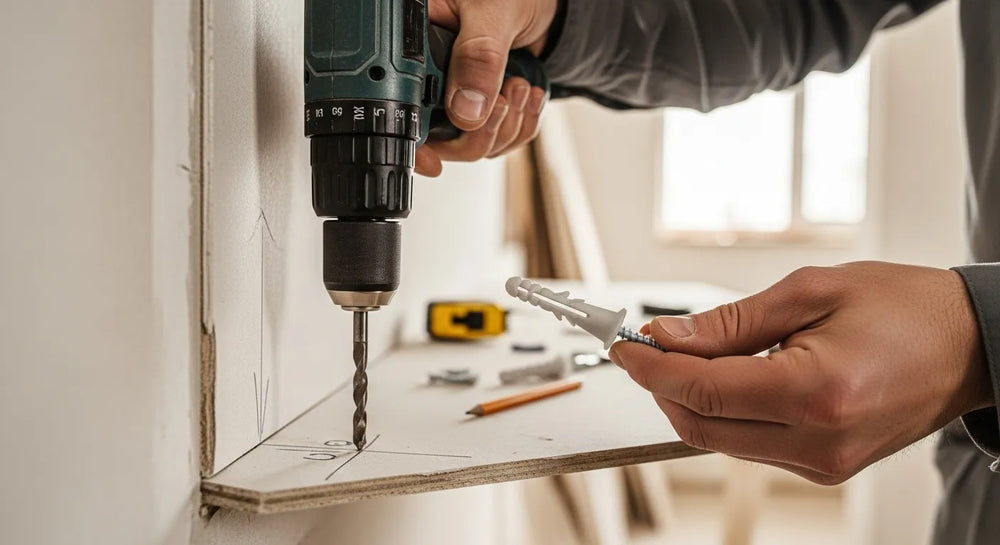
- Pilot Holes: Despite advancements in self-tapping technology, pre-drilling a pilot hole is often recommended, especially in hardwoods, near the edge of a board, or when using larger gauge screws. A pilot hole prevents the wood from splitting, reduces the torque required for driving, and ensures the screw goes in straight. The diameter of the pilot hole is critical: it should be slightly smaller than the root diameter (the diameter of the screw shank without the threads) of the screw. An undersized pilot hole can cause splitting, while an oversized one will reduce holding power.
- Countersink: For screws with flat or oval heads, a countersink bit is often used to create a conical recess for the screw head, allowing it to sit flush or below the surface. This is essential for a clean finish and to prevent snags.
Understanding these thread characteristics and installation best practices is vital for selecting the right screw for the job and ensuring a secure, lasting fastening. Our platform offers a wide array of fasteners with specific thread designs, allowing procurement professionals to source parts that match exact project requirements, upholding our commitment to industrial excellence.
Head Styles and Drive Types: Beyond Just Looks
The head of a screw is not merely for aesthetics; its shape and the type of drive it accommodates play crucial roles in how the screw functions, the load it can bear, and the tools required for installation.
Common Head Styles
The choice of head style depends on the application's aesthetic, load-bearing, and functional requirements:
- Flat Head (Countersunk): Designed to sit flush with or slightly below the surface of the material, offering a clean, unobstructed finish. Ideal for applications where a smooth surface is necessary, such as furniture, cabinetry, or trim. An example is a flat slot drive brass wood screw, often chosen for its traditional appearance and flush fit in fine woodworking.
- Round Head: Features a domed top that sits proud of the material surface. Commonly used for decorative purposes or where the material might be too thin to countersink. Provides a large bearing surface, distributing pressure effectively. Consider the classic appeal and utility of a round slot drive brass wood screw for visible fasteners in traditional joinery.
- Oval Head: A hybrid of flat and round heads, featuring a slightly rounded top with a conical underside that allows for partial countersinking. Offers a decorative, slightly raised profile. An oval slot drive silicon bronze wood screw is a superb example, combining aesthetics with corrosion resistance, perfect for marine or outdoor architectural applications.
- Pan Head: A slightly rounded, low-profile head with a flat bearing surface. Sits proud of the material. Often used in sheet metal or where a broader bearing surface is desired without needing to countersink.
- Hex Head: Designed for high-torque applications, driven by a wrench or socket. Provides maximum grip for the driving tool, reducing cam-out. Typically seen in larger, heavy-duty structural applications.
The selection of a head style by a design engineer impacts both the assembly process and the finished product's appearance and functionality. For an MRO buyer, having access to specific head styles is crucial for maintaining original equipment specifications during repairs.
Drive Types
The drive type determines the tool required and significantly influences the ease and reliability of installation, especially when applying high torque.
- Slotted Drive: The oldest and simplest drive type, featuring a single slot. Prone to cam-out (the driver slipping out of the slot) and less efficient for high-volume driving. Still used for traditional aesthetics.
- Phillips Drive: The familiar cross-shaped recess. Designed to "cam-out" at a certain torque to prevent overtightening, but often frustrating in practice due to stripping.
- Pozi-Drive: An improved version of Phillips, with an additional set of shallower slots, providing better grip and less cam-out. Requires a specific Pozi-drive bit.
- Square (Robertson) Drive: A square recess that offers superior torque transfer and virtually eliminates cam-out. Highly favored in woodworking and construction for its efficiency and reliability.
- Torx (Star) Drive: A six-point, star-shaped recess. Provides excellent torque transfer, resists cam-out, and is increasingly popular for high-performance applications where precise torque control is needed.
Choosing the right drive type impacts labor efficiency, tool wear, and the overall quality of installation. For a procurement manager, ensuring that the selected fasteners correspond to the available tooling in the workshop or on the production floor is key to operational efficiency. Our robust marketplace, designed with digital innovation at its core, allows for precise filtering by drive type, streamlining the selection process and reducing procurement friction.
Material and Finish: Durability and Environment
The material a wood screw is made from, and any applied finish or coating, profoundly affect its strength, corrosion resistance, and suitability for specific environments. This is a critical consideration for longevity and performance, especially in demanding industrial or outdoor applications.
Common Materials
- Steel: The most common material for wood screws. Often carbon steel, offering good strength and cost-effectiveness. However, raw steel is susceptible to rust.
- Brass: Softer than steel, brass screws are primarily used for decorative purposes or in applications where corrosion resistance is needed in non-structural contexts. They are beautiful but not for high-strength requirements. Both the round slot drive brass wood screw and the flat slot drive brass wood screw exemplify their aesthetic and corrosion-resistant qualities.
- Silicon Bronze: An alloy offering excellent corrosion resistance, especially in marine environments or when exposed to harsh chemicals. Stronger than brass, making it suitable for structural applications where rust is a concern. The oval slot drive silicon bronze wood screw is a prime example of a premium fastener built for durability in challenging conditions.
- Stainless Steel (e.g., 304, 316): Highly resistant to corrosion and rust, making it ideal for outdoor, marine, or damp environments. 316 stainless steel offers superior corrosion resistance in saltwater or chemical exposures compared to 304. Stainless steel screws are generally stronger than brass or silicon bronze.
Coatings and Finishes
Applied finishes provide an additional layer of protection and can enhance aesthetics:
- Zinc Plating: A common electroplated finish for steel screws. Offers moderate corrosion resistance for interior use and has a bright, silvery appearance.
- Galvanized (Hot-Dip Galvanized): A much thicker zinc coating applied by dipping the screw in molten zinc. Provides superior corrosion resistance, making it suitable for outdoor and wet environments. The rougher finish can be less aesthetic but provides robust protection.
- Black Oxide: A chemical conversion coating that provides a matte black finish and mild corrosion resistance. Often used for decorative purposes or to reduce glare.
- Ceramic Coatings: Advanced coatings that offer exceptional corrosion resistance, UV protection, and often have self-lubricating properties, making them easy to drive.
Compliance and Standards
For procurement managers and design engineers, specifying materials and finishes often involves adhering to industry standards and regulations. While wood screws may not have the same rigorous compliance as, say, aerospace components, material certifications and performance standards remain crucial. For instance, in outdoor construction, fasteners must be compatible with treated lumber to prevent accelerated corrosion (e.g., ACQ lumber requires hot-dip galvanized or stainless steel fasteners).
At Maden.co, we understand the importance of material integrity and compliance. Our platform connects you with verified U.S. manufacturers who adhere to stringent quality controls, ensuring that whether you need standard steel screws for general assembly or specialized silicon bronze fasteners for marine applications, you are sourcing products that meet exacting specifications. This commitment reflects our core values of American Manufacturing Pride and Industrial Excellence, empowering customers to make informed decisions that improve their Total Cost of Ownership (TCO) by choosing reliable, compliant components.
The Critical Role of Precision in Procurement
In the complex world of B2B procurement, fasteners often represent a small fraction of a project's overall cost, yet their proper selection and specification can have disproportionately large impacts on quality, safety, and profitability. For industrial buyers, understanding "how to read wood screw sizes" is not just about technical knowledge; it's about strategic risk mitigation and operational efficiency.
Avoiding Costly Mistakes: Rework, Delays, and Material Waste
The consequences of using an incorrectly sized wood screw extend far beyond the immediate point of failure:
- Rework: If a screw is too small or too short, it may pull out, requiring disassembly, material repair (e.g., plugging stripped holes), and reassembly with the correct fastener. This translates directly into labor costs and lost productivity.
- Project Delays: Sourcing the wrong fasteners can halt production lines or stall construction projects, leading to missed deadlines and contractual penalties. For a procurement manager under pressure to source a specific component for an unexpected equipment breakdown, the inability to quickly identify and procure the correct wood screw size can mean significant operational downtime.
- Material Waste: Stripped holes, split wood, or damaged components due to inappropriate fasteners lead to scrap, increasing material costs and contributing to waste.
- Safety Hazards: In structural applications, an undersized or improperly installed wood screw can lead to catastrophic failure, posing significant safety risks to personnel and equipment.
Ensuring Structural Integrity and Safety
For design engineers, every fastener specified is a calculated component of structural integrity. A #8 x 1-1/2" brass wood screw may be perfect for attaching a decorative trim, but entirely inadequate for securing a load-bearing shelf. The precise gauge, length, and material must be matched to the expected shear, tensile, and withdrawal forces. Adherence to these specifications is paramount for ensuring the long-term durability and safety of any manufactured product or assembled structure. When components must withstand specific stresses or meet critical industry standards, the exactness of each fastener becomes non-negotiable.
The Strategic Advantage of Sourcing U.S.-Made Fasteners
In an increasingly unpredictable global supply chain, the ability to source reliable, high-quality components from verified domestic manufacturers offers a significant strategic advantage. At Maden.co, our mission is to democratize access to American manufacturing, driving the manufacturing revival with our tagline: "America's manufacturing revival is here." We achieve this by connecting industrial buyers with over 2.5 million American-made products from our network of 800+ verified U.S. manufacturers.
Sourcing through Maden.co means:
- Enhanced Supply Chain Resilience: Reducing reliance on distant, vulnerable supply lines minimizes lead times and mitigates risks associated with geopolitical events, tariffs, and shipping delays.
- Guaranteed Quality and Compliance: Our commitment to Industrial Excellence means you’re accessing fasteners manufactured under stringent U.S. quality controls, often adhering to critical industry standards (e.g., specific material grades, finish requirements).
- Reduced Procurement Friction: Our digital platform, built with Digital Innovation, streamlines the sourcing process, making it as convenient to find a specialized U.S.-made oval slot drive silicon bronze wood screw as any global alternative.
- Supporting the Domestic Economy: Every purchase contributes to American jobs and strengthens the U.S. manufacturing base, aligning with our value of American Manufacturing Pride.
For a design engineer needing specific material certifications for a new prototype, or an MRO buyer facing an unexpected equipment breakdown requiring a hard-to-find, U.S.-made part, the ability to quickly find and procure these components from a trusted source is a game-changer for improving Total Cost of Ownership (TCO).
Simplifying Procurement with Maden.co
Navigating the complexities of industrial procurement, particularly for critical components like fasteners, demands a partner committed to precision, quality, and efficiency. At Maden.co, we are more than just a marketplace; we are a strategic ally in building a more reliable and efficient procurement process for businesses across America.
Our Commitment to American Manufacturing Pride and Industrial Excellence
Our entire business model is built on the unwavering principle of championing American manufacturing. We believe that American-made components are not only synonymous with quality and durability but should also be readily accessible to every industrial buyer. Our vision is to become the definitive platform that proves American-made components are as accessible and convenient as any global alternative. This dedication to American Manufacturing Pride fuels our rigorous verification process for our network of 800+ U.S. manufacturers, ensuring that every product, from the simplest screw to the most complex machinery part, meets the highest standards of Industrial Excellence. You can learn more about our mission to champion American manufacturing here.
Digital Innovation for Seamless Sourcing
We understand that time is a critical commodity for procurement managers and MRO buyers. Our platform embodies Digital Innovation, offering a user-friendly interface that simplifies the search for over 2.5 million U.S.-made products. With advanced filtering capabilities, you can quickly pinpoint fasteners by specific gauge, length, head type, drive type, material, and finish—eliminating guesswork and expediting the sourcing process. This reduces procurement friction, allowing you to focus on strategic initiatives rather than logistical headaches. For instance, finding a precise #10 x 2" flat slot drive brass wood screw is as straightforward as a few clicks, leading you directly to the specifications you need.
Instant Financing: A Strategic Tool for Capital Management
A key differentiator and a significant value-add for our customers is our Instant Financing option. We recognize that industrial purchases, especially for bulk orders or critical projects, can require substantial capital. Our Instant Financing is not just a payment method; it’s a strategic tool designed to empower procurement managers and business owners to manage cash flow effectively and make larger-volume purchases without immediate capital strain.
This feature allows you to:
- Optimize Cash Flow: Preserve working capital for other operational needs while securing necessary components.
- Seize Opportunities: Make timely, large-volume purchases to take advantage of favorable pricing or urgent project demands, enhancing supply chain resilience.
- Simplify Budgeting: Streamline the financing process directly within your procurement workflow.
You can apply for Instant Financing at checkout to streamline your capital-intensive projects. This integration ensures that the right parts, available from verified U.S. manufacturers, are accessible to you with flexible payment solutions. If you have specific sourcing questions or need assistance with complex procurement challenges, our expert team is ready to assist.
Conclusion
The seemingly simple wood screw, with its array of sizes and specifications, plays an indispensable role in countless industrial, manufacturing, and construction applications. Mastering "how to read wood screw sizes" is a fundamental skill for procurement managers, MRO buyers, and design engineers, directly impacting project quality, operational efficiency, and overall cost-effectiveness. From understanding the nuances of gauge numbers and length measurements to discerning the implications of various head styles, drive types, materials, and finishes, precision in fastener selection is paramount. Incorrect choices can lead to costly reworks, project delays, safety hazards, and compromised structural integrity.
At Maden.co, we are dedicated to simplifying this critical aspect of industrial procurement. By providing unparalleled access to over 2.5 million meticulously detailed, U.S.-made products from our network of 800+ verified manufacturers, we empower you to source with confidence, ensuring industrial excellence and supply chain transparency in every purchase. Our commitment to American Manufacturing Pride, coupled with digital innovation and strategic tools like Instant Financing, positions us as your trusted partner in navigating the complexities of industrial sourcing.
Don't let fastener ambiguity compromise your projects or inflate your Total Cost of Ownership. Take control of your procurement process and experience the difference that precision, quality, and convenience can make. Explore our extensive catalog of U.S.-manufactured wood screws and other industrial components today. When you're ready to make your selection, remember that you can apply for Instant Financing at checkout to streamline your capital-intensive projects. America's manufacturing revival is here, and we invite you to be a part of it.
FAQ
Q1: What is the most common wood screw size for general household or industrial use?
A1: For general purposes, a #8 gauge wood screw, typically ranging from 1 to 2 inches in length, is one of the most versatile and commonly used sizes. It offers a good balance of strength and maneuverability for a wide array of applications in both household projects and light industrial assemblies. However, specific applications will always dictate the precise requirements for gauge, length, and material.
Q2: How do I measure the length of a wood screw accurately?
A2: The method for measuring wood screw length depends on its head type. For flat head screws, which sit flush with the surface, you measure from the very top of the head to the tip of the screw. For all other head types (e.g., round, oval, pan, hex), which sit proud of the surface, you measure from the underside of the head (where it meets the shank) to the tip of the screw. This distinction is crucial for ensuring proper penetration and a secure joint.
Q3: Why is it important to use a pilot hole for wood screws, and how do I size it correctly?
A3: Using a pilot hole prevents the wood from splitting, especially in hardwoods or near the edge of a board, and reduces the torque required to drive the screw, minimizing the risk of stripping the screw head. To size it correctly, the pilot hole diameter should be slightly smaller than the root diameter (the solid shaft portion, excluding the threads) of the screw. This allows the threads to bite firmly into the wood without forcing it apart.
Q4: What are the benefits of choosing U.S.-made wood screws through Maden.co?
A4: Sourcing U.S.-made wood screws through Maden.co offers several key benefits: enhanced supply chain resilience by reducing reliance on global logistics, assurance of quality and adherence to stringent U.S. manufacturing standards, reduction of procurement friction through our digitally innovative platform, and support for the domestic economy. Our platform connects you with over 2.5 million verified American-made products, ensuring you get the right part with transparency and efficiency, contributing to improved Total Cost of Ownership for your projects.


