
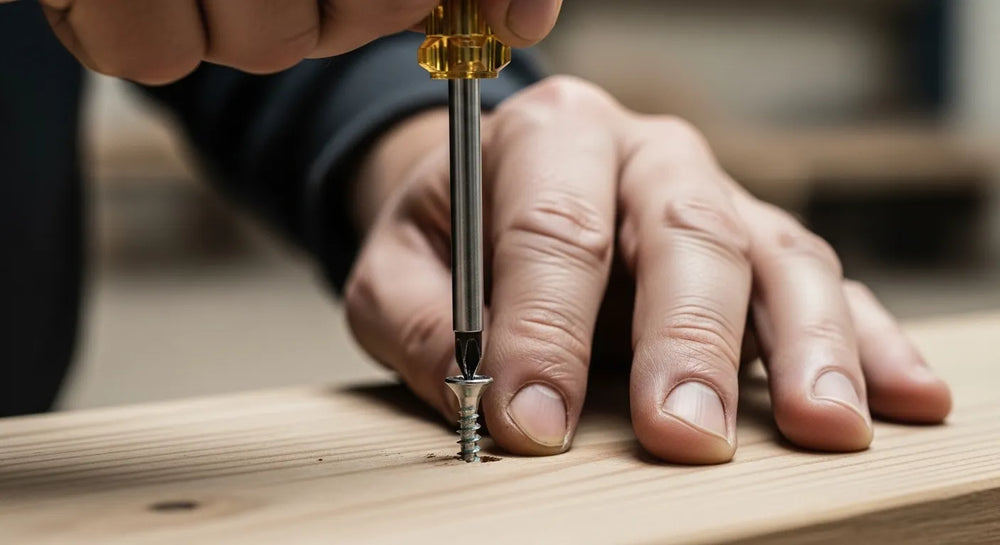
Understanding Wood Screws: How They Work
Table of Contents
- Introduction
- The Anatomy of a Wood Screw: Engineered for Performance
- The Science of Fastening: How Wood Screws Engage
- Types of Wood Screws: Tailoring the Fastener to the Task
- Critical Considerations for Selecting and Using Wood Screws
- The Strategic Advantage of U.S.-Made Wood Screws
- Enhancing Your Procurement Strategy with Maden.co
- Conclusion
- FAQ
Introduction
Imagine the countless structures, products, and pieces of equipment that rely on a seemingly simple component: the wood screw. From the sturdy framing of a home to the intricate assembly of fine furniture or the robust enclosure of industrial machinery, wood screws are the silent, unsung heroes providing crucial structural integrity. Often taken for granted, their design and application are a sophisticated blend of material science and mechanical engineering. For procurement managers, MRO buyers, and design engineers, understanding the intricate mechanics of how wood screws work is not merely academic; it’s fundamental to ensuring project longevity, structural soundness, and ultimately, operational excellence.
This article will delve into the precise engineering behind wood screws, exploring their anatomy, the principles that govern their holding power, the diverse types available, and the critical factors influencing their selection and installation. We will uncover how these fasteners achieve their remarkable grip, why material choice is paramount, and how proper application can prevent common failures. Ultimately, we aim to provide a comprehensive understanding that empowers professionals to make informed decisions, reinforcing our commitment at Maden.co to championing American manufacturing and providing access to high-quality, reliable components.
The Anatomy of a Wood Screw: Engineered for Performance
To truly grasp how wood screws work, it's essential to dissect their fundamental components. Each part is meticulously designed to contribute to the screw's ability to penetrate wood, create a strong mechanical bond, and resist withdrawal forces.
The Head: The Interface of Power and Aesthetics
The head of a wood screw serves multiple critical functions: providing a surface for the driving tool, distributing the clamping force, and in some applications, contributing to the aesthetic finish. Its design directly impacts installation efficiency and the final appearance.
-
Drive Types: The recess in the screw head determines the type of tool required for installation and significantly affects the ease of driving and resistance to cam-out (when the driver slips out of the screw head).
- Slotted Drives: Historically prevalent, such as the classic Round Slot Drive Brass Wood Screw or the Flat Slot Drive Brass Wood Screw, these require a flat-bladed screwdriver. While simple, they are more prone to cam-out and require careful alignment.
- Phillips Drives: Developed to reduce cam-out compared to slotted screws, Phillips heads are very common.
- Square (Robertson) Drives: Popular in woodworking for their excellent cam-out resistance and superior torque transfer.
- Torx (Star) Drives: Offer the best cam-out resistance and allow for higher torque without damaging the drive recess.
- PoziDriv Drives: An improved version of the Phillips drive, offering better grip and reduced cam-out.
-
Head Shapes: The shape of the head influences how the screw sits in or on the material.
- Flat Head (Countersunk): Designed to sit flush with or below the surface of the wood, providing a smooth finish. This requires countersinking a tapered hole.
- Round Head: Sits proud on the surface, offering a decorative look and often used when maximum clamping force is needed or when the material is too thin for countersinking.
- Oval Head: A hybrid, featuring a countersunk tapered portion with a rounded top, offering a decorative finish that sits slightly above the surface, as seen in the Oval Slot Drive Silicon Bronze Wood Screw.
- Pan Head: A slightly rounded, low-profile head that sits on the surface, providing a wider bearing area.
- Hex Head: Often seen on larger, heavier-duty screws, driven with a wrench or socket for high torque applications.
The Shank: The Backbone of Strength
The shank is the unthreaded portion of the screw, located directly beneath the head. While not always present (some screws are fully threaded), when it is, it plays a vital role. Its diameter contributes to the screw's shear strength, which is its ability to resist forces parallel to its axis. In many applications, particularly when fastening two pieces of wood, the unthreaded shank passes through the top piece without engaging, allowing the threads to pull the two pieces tightly together without creating a gap. This design minimizes the risk of splitting the top board and ensures the full clamping force is applied to the joint.
The Threads: The Gripping Mechanism
The threads are the most crucial part of a wood screw, responsible for its holding power. Unlike machine screws that engage with pre-tapped threads or nuts, wood screw threads are designed to cut their own path into wood fibers.
- Thread Profile: Wood screws typically feature a coarse, sharp thread designed for optimal penetration and grip in wood. The threads are deeper and more widely spaced than those on metal screws, allowing them to displace and compress wood fibers effectively.
- Pitch and Angle: The pitch (distance between threads) and the angle of the thread flanks are engineered to maximize the surface area contacting the wood fibers, thereby enhancing withdrawal resistance. As the screw is driven, the inclined plane of the threads creates a wedge action, compressing the wood fibers around the screw.
- Self-Tapping Features: Many modern wood screws incorporate features like sharp points, specialized cutting tips, or even small saw-like teeth on the threads to facilitate easier penetration, reduce driving torque, and minimize wood splitting, especially in hardwoods.
The Point: The Initiation of Connection
The point is the very tip of the screw and is responsible for initiating penetration into the wood.
- Gimlet Point: The most common type, a sharp, tapered point designed to pierce wood fibers.
- Blunt Point: Less common for wood screws, often requires a pilot hole for starting.
- Drill Point (Self-Drilling): Features a flute at the tip, similar to a drill bit, allowing the screw to drill its own pilot hole, often used in metal framing or composite materials, but increasingly finding use in specialized wood applications to reduce pre-drilling.
The Science of Fastening: How Wood Screws Engage
The true genius of a wood screw lies in its ability to create a strong, durable mechanical bond with wood. This process involves a fascinating interplay of material displacement, compression, and friction.
Creating a Mechanical Bond: Displacement and Compression
When a wood screw is driven into timber, it doesn't cut a perfectly sized hole like a drill bit. Instead, its sharp threads force their way through the wood fibers, displacing and compressing them. This compression is key to the screw's holding power. The wood fibers are essentially squeezed and packed tightly around the screw's threads, forming a dense, interlocking matrix. This creates a secure, internal thread within the wood itself, which the screw then engages.
- Friction and Withdrawal Resistance: The compressed wood fibers exert radial pressure on the screw threads. This pressure, combined with the friction generated along the thread surfaces, creates significant resistance to withdrawal. The deeper the thread engagement and the denser the wood, the greater this resistance. The angle and depth of the threads are optimized to maximize this friction and make it difficult for the screw to back out under load.
-
The Role of Pilot Holes: While modern screws often boast self-tapping capabilities, pre-drilling a pilot hole is a best practice, especially in hardwoods, near the edge of a board, or when using larger diameter screws.
- Prevents Splitting: A pilot hole relieves the stress caused by the screw's entry, dramatically reducing the risk of the wood splitting, which can compromise the integrity of the joint.
- Ensures Straight Insertion: It guides the screw, ensuring it drives straight and prevents it from wandering, which is particularly important for aesthetic finishes or precise alignments.
- Reduces Driving Torque: A pilot hole can significantly reduce the effort and torque required to drive the screw, minimizing strain on the driver bit and preventing stripping of the screw head.
- The optimal pilot hole diameter is crucial: too small, and it still risks splitting; too large, and it compromises the thread engagement and holding power. Generally, the pilot hole should be slightly smaller than the minor diameter (the diameter of the screw shaft excluding the threads) for the threaded portion, and the same size as the shank for the unthreaded portion.
Torque and Shear Forces: Understanding Load Bearing
Wood screws are subjected to various forces throughout their lifespan.
- Torque: During installation, torque is the rotational force applied to drive the screw. Proper torque is essential: too little, and the screw won't seat properly; too much, and it can strip the screw head (cam-out) or even strip the wood fibers, severely reducing holding power.
- Tensile Strength (Withdrawal): This refers to the force required to pull the screw straight out of the wood, parallel to its axis. This is where the thread engagement and the density of the wood are paramount.
- Shear Strength: This is the force required to break the screw by applying a load perpendicular to its axis. The shank diameter and the material composition of the screw determine its shear strength. In many applications, the screw is primarily under shear stress, holding two components together against sideways forces.
Types of Wood Screws: Tailoring the Fastener to the Task
The diversity of wood screws available reflects the wide array of applications they serve. Selecting the right screw involves considering head type, drive type, material, and specialized features.
By Head Type and Drive
As discussed, various head and drive combinations offer specific advantages. For example, in historical restoration or for an authentic aesthetic, a traditional Round Slot Drive Brass Wood Screw might be chosen for its period-correct appearance and corrosion resistance in certain environments. For applications requiring a flush finish, a Flat Slot Drive Brass Wood Screw provides that clean look. When decorative appeal is important, particularly in visible joinery, an Oval Slot Drive Silicon Bronze Wood Screw offers both an elegant profile and robust performance. Modern drives like Torx are favored in demanding construction for their efficiency and reduced cam-out.
By Material and Coating
The material of a wood screw is critical for its strength, durability, and resistance to environmental factors.
-
Steel (Plated/Coated):
- Zinc-plated: Common for interior use, offering basic corrosion resistance and a bright finish.
- Black Oxide: Provides a decorative black finish and very mild corrosion resistance.
- Galvanized: Hot-dip galvanized screws are coated with a thick layer of zinc, offering excellent corrosion resistance for outdoor applications, like decking.
- Ceramic/Polymer Coatings: Many modern screws feature advanced coatings that provide superior corrosion resistance, reduce driving friction, and enhance durability, often in specific colors for blending with materials.
- Brass: Valued for its aesthetic appeal, especially in decorative woodworking or for hardware installation where a gold-tone finish is desired. Brass is softer than steel and offers good corrosion resistance, but it's not suitable for high-stress structural applications.
- Bronze (Silicon Bronze): Offers excellent corrosion resistance, especially in marine environments or highly corrosive outdoor conditions, while providing greater strength than brass. This makes it ideal for boat building or outdoor structures requiring longevity and reliability, as exemplified by the Oval Slot Drive Silicon Bronze Wood Screw.
- Stainless Steel (304, 316): Provides superior corrosion resistance, making it essential for outdoor, marine, and wet environments where rust is unacceptable. 316 stainless steel offers even greater resistance to saltwater and chlorides than 304. While strong, stainless steel is generally softer than hardened carbon steel, so it requires careful driving to prevent stripping.
Specialty Wood Screws
Beyond the general-purpose categories, many specialized wood screws are designed for unique applications:
- Deck Screws: Treated with advanced corrosion-resistant coatings, often feature self-tapping points, and sometimes have specialized threads to prevent splitting in treated lumber.
- Cabinet Screws: Typically have a coarse thread, a wide washer head for good clamping, and a self-tapping point to avoid splitting thin cabinet materials.
- Structural Wood Screws: Engineered to replace lag screws or bolts in heavy-duty applications, these often have large diameters, aggressive threads, and advanced coatings for superior strength and corrosion resistance.
- Particle Board/MDF Screws: Designed with fine, sharp threads to grip effectively in the dense, uniform structure of engineered wood products, minimizing breakout.
Critical Considerations for Selecting and Using Wood Screws
Choosing the correct wood screw is a nuanced decision that significantly impacts the quality, safety, and longevity of a project. It requires careful consideration of the wood type, environmental conditions, load requirements, and aesthetic preferences.
Matching Screw to Wood Type
The type of wood being fastened is perhaps the most critical factor.
- Softwoods (Pine, Spruce, Fir): Softer and less dense, these woods are more prone to splitting and offer less inherent holding power. Finer threads or a larger diameter screw might be used to compensate. Pilot holes are still advisable, especially near edges.
- Hardwoods (Oak, Maple, Cherry): Denser and stronger, hardwoods offer excellent holding power but are highly susceptible to splitting if pilot holes are not properly drilled. Driving screws into hardwood typically requires more torque. Self-tapping screws with aggressive points are beneficial.
- Engineered Woods (Plywood, MDF, Particle Board): These materials have specific characteristics. Plywood holds screws well due to its layered construction. MDF and particle board are dense but can crumble if the screw is too aggressive or if pilot holes are not correct. Specialty screws with finer threads are often recommended.
- Treated Lumber: Contains chemicals that can corrode standard fasteners. Only use screws specifically rated for treated lumber (e.g., hot-dip galvanized, stainless steel, or screws with compatible advanced coatings).
Determining Pilot Hole Size
The importance of the correct pilot hole cannot be overstated. It's a precise balance:
- For the Threaded Portion: The pilot hole should be slightly smaller than the minor diameter (the screw's core diameter, not including the threads). This allows the threads to engage fully and compress the wood fibers effectively for maximum holding power.
- For the Unthreaded Shank: If the screw has an unthreaded shank, the pilot hole for the top piece of wood should match the shank diameter. This allows the shank to pass freely through the top piece, ensuring that the threads pull the two pieces tightly together without any wedging or gapping.
- Hardwood vs. Softwood: Hardwoods generally require pilot holes closer to the minor diameter due to their density and splitting propensity. Softwoods might allow for a slightly smaller pilot hole, but it's always safer to err on the side of preventing splits.
- Depth: The pilot hole should be drilled to the full depth of the threaded portion of the screw that will enter the wood.
Driving Techniques and Tools
Proper driving technique ensures a secure connection and prevents damage to the screw or the workpiece.
- Manual Driving: For smaller screws or delicate work, manual screwdrivers offer precision and control, reducing the risk of overtightening.
-
Power Driving: Drills and impact drivers are efficient for larger projects.
- Clutch Settings: Drills with clutch settings allow you to limit the torque, preventing stripping of screw heads or over-driving into the wood.
- Impact Drivers: Deliver short, powerful bursts of rotational force, making them highly effective for driving long or large-diameter screws, particularly when dealing with hardened wood or dense materials. However, their raw power requires careful use to avoid damage.
- Preventing Stripping and Overtightening: Always use the correct driver bit for the screw head. Apply firm, consistent pressure to prevent cam-out. Stop driving when the screw head is flush (for flat heads) or properly seated. Overtightening can strip the wood fibers, rendering the screw ineffective.
The Strategic Advantage of U.S.-Made Wood Screws
For industrial buyers, procurement managers, and design engineers, the decision to source fasteners extends beyond mere cost. It encompasses quality, reliability, supply chain integrity, and compliance. This is where the strategic value of U.S.-made wood screws and components truly shines.
Precision, Quality, and Compliance
American manufacturing is synonymous with exacting standards and a commitment to quality. At Maden.co, we emphasize Industrial Excellence, ensuring that the wood screws and other components you source from our platform meet stringent specifications. This means:
- Consistent Material Quality: U.S. manufacturers adhere to rigorous material specifications, ensuring the steel, brass, bronze, or stainless steel used in fasteners meets declared strengths and corrosion resistance. This is crucial for applications where structural integrity is paramount.
- Manufacturing Tolerances: Precision engineering ensures consistent thread profiles, head dimensions, and overall screw geometry. This consistency translates to reliable performance, reduced waste from faulty parts, and predictable installation.
- Compliance with Industry Standards: U.S.-made fasteners are typically manufactured to meet or exceed established industry standards (e.g., SAE, ASTM). This ensures interchangeability, reliability, and compliance for critical projects, from construction to intricate mechanical assemblies. For a procurement manager under pressure to source a specific DIN 931 compliant hex cap screw, or an MRO buyer needing specific material certifications for an urgent repair, the ability to quickly find verified, U.S.-made parts on Maden.co is a game-changer.
Supply Chain Resilience and Transparency
In an increasingly volatile global landscape, the resilience and transparency of your supply chain are paramount. Sourcing American-made fasteners through Maden.co directly addresses these concerns.
- Reduced Lead Times and Mitigated Risks: By connecting with U.S. manufacturers, procurement teams can significantly reduce lead times and buffer against geopolitical disruptions, international shipping delays, and fluctuating tariffs. This ensures greater predictability in project timelines and production schedules.
- Visibility and Ethical Sourcing: Our platform champions Supply Chain Transparency, offering clearer visibility into the origin and manufacturing processes of components. This allows businesses to adhere to ethical sourcing guidelines and national procurement policies, reinforcing American Manufacturing Pride.
- For a business owner needing consistent quality for critical components, or a design engineer prototyping a new product, ensuring a reliable supply of U.S.-made wood screws offers unparalleled reliability and peace of mind.
The Maden.co Difference: Empowering Procurement
At Maden.co, our mission is to democratize access to American manufacturing. We achieve this by connecting industrial buyers with over 2.5 million American-made products from our network of 800+ verified U.S. manufacturers. Our platform is designed to transform the procurement experience for wood screws and countless other industrial components. You can learn more about our mission to champion American manufacturing and our commitment to revitalizing domestic production here: About Us.
We believe that American-made components are not just alternatives; they are superior choices when backed by digital innovation and a streamlined procurement process. Our vision is to become the definitive platform that proves American-made components are as accessible and convenient as any global alternative, driving the manufacturing revival with our tagline: "America's manufacturing revival is here." We empower Customer Empowerment by providing the tools and resources for informed purchasing.
Are you a qualified U.S. manufacturer committed to delivering top-tier products? We invite you to expand your reach and connect with thousands of industrial buyers across the nation. Register as a vendor and join the American manufacturing revival on Maden.co.
Enhancing Your Procurement Strategy with Maden.co
We understand the pressures procurement managers and MRO buyers face daily. Our platform is more than just a marketplace; it's a strategic partner designed to streamline your operations and deliver tangible value.
Reducing Procurement Friction
Imagine quickly finding the exact wood screw or industrial component you need, complete with detailed specifications and material certifications, all from a verified U.S. manufacturer. Maden.co makes this a reality by offering:
- A Vast, Curated Catalog: Our extensive range of U.S.-made products means less time spent searching across multiple vendors. From standard wood screws to specialized fasteners, we provide a single, reliable source.
- Detailed Product Information: Each listing is comprehensive, enabling precise selection and ensuring compliance with project requirements.
- Seamless Ordering: Our intuitive digital platform ensures a smooth and efficient purchasing process, reducing administrative overhead and procurement friction. For specific sourcing questions or assistance in navigating our extensive catalog to find the perfect American-made fastener, our expert team is ready to help; you can contact us here.
Strategic Value and Instant Financing
We focus on the strategic business value our platform delivers, extending beyond the initial purchase price to improve your Total Cost of Ownership (TCO). This means:
- Improved Product Performance: Sourcing high-quality, U.S.-made components leads to fewer defects, reduced rework, and enhanced product longevity, all of which contribute to long-term savings.
- Operational Efficiency: Reduced lead times and a reliable supply chain minimize project delays and production downtime, directly impacting your bottom line.
- Instant Financing: A key differentiator for Maden.co is our Instant Financing option. This is not merely a payment method; it's a strategic tool for businesses. It allows procurement managers and business owners to manage cash flow effectively, make larger-volume purchases without immediate capital outlay, and capitalize on opportunities that might otherwise be constrained by budget cycles. You can apply for Instant Financing directly at checkout to streamline your capital-intensive projects or manage urgent, large-scale acquisitions. This seamless integration provides financial flexibility precisely when you need it most.
Conclusion
The humble wood screw, a marvel of engineering, plays an indispensable role in countless applications, from basic carpentry to advanced industrial assemblies. Understanding how wood screws work—their anatomy, the mechanics of thread engagement, and the critical factors in selection and installation—is vital for ensuring project success, durability, and safety. The choice of material, head type, and drive, coupled with proper technique, directly influences the strength and longevity of any fastened joint.
For industrial buyers, procurement managers, MRO buyers, and design engineers, the strategic benefits of sourcing high-quality, U.S.-made wood screws are clear: superior precision, consistent quality, robust compliance, and enhanced supply chain resilience. At Maden.co, we are dedicated to fostering this American manufacturing revival by providing unparalleled access to over 2.5 million verified U.S.-made industrial products. By embracing digital innovation, supply chain transparency, and a commitment to customer empowerment, we empower you to optimize your procurement strategy.
Explore Maden.co’s extensive catalog of American-made wood screws and other industrial components to elevate your projects and optimize your procurement strategy. Experience the benefits of Digital Innovation and Supply Chain Transparency with our platform, and leverage Instant Financing at checkout for seamless capital-intensive project execution. Begin your search for reliable, U.S.-made parts and build with confidence today at Maden.co.
FAQ
Q1: What makes a wood screw different from a machine screw or a sheet metal screw?
A1: The primary difference lies in their threads and intended application. Wood screws have coarser, sharper, and more widely spaced threads designed to cut into and compress wood fibers, creating their own internal "threads" for grip. Machine screws have finer, more precise threads meant to mate with pre-tapped holes or nuts, forming a metal-on-metal connection. Sheet metal screws, while also self-tapping, have finer threads than wood screws, designed to cut into thin metal or plastic without stripping.
Q2: Is it always necessary to drill a pilot hole for wood screws?
A2: While not always strictly necessary, drilling a pilot hole is highly recommended for optimal results, especially in hardwoods, larger diameter screws, or when fastening close to the edge of a board. Pilot holes prevent wood splitting, guide the screw for straighter insertion, and reduce the torque required to drive the screw, minimizing the risk of stripping the screw head or the wood fibers.
Q3: How do I choose the correct length and diameter for a wood screw?
A3: As a general rule for length, the screw should penetrate at least half to two-thirds of the thickness of the receiving piece of wood. For joining two pieces, the screw should be long enough to pass through the top piece and engage substantially into the bottom piece, but not so long that it pokes through. For diameter, choose the largest diameter screw that the wood can accommodate without splitting, as larger diameters offer greater shear strength and holding power. Always consider the wood's density when making your selection.
Q4: What is the benefit of using U.S.-made wood screws from Maden.co?
A4: Sourcing U.S.-made wood screws through Maden.co offers several strategic advantages: guaranteed adherence to high manufacturing and material quality standards, consistent product specifications, and compliance with industry regulations. This leads to greater reliability and fewer project setbacks. Additionally, it bolsters supply chain resilience by reducing dependence on international logistics, provides transparency into product origins, and supports American Manufacturing Pride, contributing to the nation's industrial strength. Our platform makes these quality components easily accessible, improving your Total Cost of Ownership.


