
Using Concrete Anchors in Brick: A Guide for Secure Fastening
Table of Contents
- Introduction
- Understanding Brick as a Substrate
- The "Can You?" Question: Nuances and Considerations
- Types of Anchors for Masonry (and their suitability for Brick)
- Selecting the Right Anchor for Your Brick Project
- Installation Best Practices for Anchoring in Brick
- Common Mistakes to Avoid
- The Maden.co Advantage: Sourcing American-Made Anchoring Solutions
- Ensuring Supply Chain Resilience with U.S.-Made Fasteners
- Conclusion
- Frequently Asked Questions (FAQ)
Introduction
Imagine a critical structural component needing to be securely fastened, or a heavy piece of equipment requiring stable mounting, all against the backdrop of an older industrial building constructed primarily of brick. The immediate question that arises for many procurement managers, MRO buyers, and design engineers is often, "Can concrete anchors truly be used in brick?" This is not a trivial question; the integrity of the fastening can impact everything from operational safety to compliance with structural regulations. The common misconception is that brick and concrete are interchangeable as substrates for anchoring. While both are masonry materials, their inherent properties—density, compressive strength, porosity, and internal structure—differ significantly, demanding a nuanced approach to selecting and installing anchors.
This comprehensive guide aims to demystify the process of using concrete anchors in brick, providing a robust framework for understanding material compatibility, anchor selection, installation best practices, and the critical role of high-quality, American-made fasteners. We will explore the various types of anchors, their suitability for different brick conditions and load types, and common pitfalls to avoid. Ultimately, this article will demonstrate that while anchoring in brick is entirely feasible, success hinges on informed decisions and a commitment to precision, factors that Maden.co is dedicated to supporting through our vast catalog of verified U.S. manufacturing products. Our mission at Maden.co is to democratize access to American manufacturing, ensuring that industrial buyers can find the right components to tackle even the most specific and challenging fastening requirements, driving America's manufacturing revival forward.
Understanding Brick as a Substrate
Before delving into anchor types and installation, it's crucial to understand the material you're working with. Brick, a time-honored construction material, presents unique challenges and opportunities compared to poured concrete.
Brick vs. Concrete: Key Differences
While both brick and concrete fall under the umbrella of masonry, their compositions and structural behaviors diverge significantly:
- Composition and Strength: Concrete is typically a homogenous mixture of cement, aggregates (sand, gravel), and water, designed for high compressive strength across its entire mass. Brick, on the other hand, is a manufactured block, often clay-based, fired at high temperatures. Its strength can vary widely based on its clay mix, firing temperature, and age. Critically, brick structures consist of individual units bound together by mortar joints, which are inherently weaker and more porous than the brick units themselves.
- Homogeneity: Poured concrete offers a relatively consistent, monolithic substrate. Brick walls, however, are heterogeneous, composed of solid brick units, hollow cores (in some types), and mortar joints that can vary in thickness, composition, and integrity. This non-uniformity greatly impacts where and how an anchor performs.
- Porosity and Brittleness: Bricks can be more porous than dense concrete, especially older or softer varieties. This porosity affects how chemical anchors bond and how mechanical anchors exert pressure. While durable, bricks can also be more brittle than concrete, making them susceptible to spalling or cracking, particularly when subjected to the localized expansion forces of some mechanical anchors.
Types of Brick and Their Implications for Anchoring
Not all bricks are created equal, and identifying the type of brick is a prerequisite for successful anchoring:
- Solid Brick: These are bricks without significant voids, offering the most robust substrate for anchoring. However, even solid bricks can vary in density and compressive strength. Anchoring directly into the brick unit itself is generally preferred over anchoring into the mortar joint.
- Hollow Brick (Perforated Brick): Commonly used for lighter construction or thermal efficiency, hollow bricks contain internal voids or perforations. These are significantly more challenging for standard mechanical anchors, which rely on expansion against a solid material. Special anchors designed to expand behind the hollow cavity or chemical anchors are often necessary here.
- Mortar Joints: The weakest link in a brick wall. Mortar, typically a mix of cement, lime, and sand, is generally softer and more permeable than the brick units. Anchoring directly into a mortar joint is almost always discouraged for significant loads due to the risk of pull-out or crumbling. The exception might be very light loads with specific mortar-compatible anchors, but it requires careful assessment.
- Brick Veneer: A non-structural facade attached to a structural wall (often wood or steel stud). Anchoring through brick veneer requires reaching the structural backing material, not just the veneer itself, as the veneer cannot support significant loads. This often necessitates longer anchors and careful consideration of the air gap.
- Historic or Degraded Brick: Older brickwork may be softer, more friable, or have deteriorated mortar. These conditions demand an extremely gentle approach, often favoring chemical anchoring or specialized, low-expansion mechanical anchors to prevent further damage.
Understanding these distinctions is the first critical step for any procurement manager or design engineer in specifying the right solution. Sourcing the correct fastener is paramount, and at Maden.co, we simplify this by providing access to over 2.5 million American-made products, ensuring you can find precisely what your project demands, whether it's for solid or more complex brick applications.
The "Can You?" Question: Nuances and Considerations
The straightforward answer to "can you use concrete anchors in brick?" is yes, absolutely, but with critical caveats. It's not about if, but how, and under what conditions. The success and safety of your fastening depend entirely on a meticulous understanding of the variables involved.
Key Factors for Success
When considering anchoring in brick, several factors must be carefully evaluated to ensure a secure and durable fastening:
- Load Type and Magnitude: This is arguably the most critical factor. Are you supporting a static load (e.g., a handrail) or a dynamic load (e.g., vibrating machinery)? Is the load primarily in shear (parallel to the wall surface) or tension (pulling away from the wall)? Heavy, dynamic, or tensile loads will require more robust and specialized anchoring solutions than light, static shear loads. A design engineer must calculate these forces meticulously.
- Brick Type and Condition: As discussed, solid, well-fired brick in good condition offers the best foundation. Hollow, soft, or severely degraded brick requires different strategies. The age of the brickwork and the quality of the original mortar are also vital considerations.
- Anchor Selection: Choosing the correct anchor type is paramount. Using an anchor designed for dense concrete in soft or hollow brick can lead to failure, cracking, or pull-out. This is where expertise in various anchor technologies becomes indispensable.
- Installation Technique: Even the perfect anchor can fail if improperly installed. Drilling straight, to the correct depth and diameter, and thoroughly cleaning the hole are non-negotiable steps. Over-tightening, insufficient embedment, or disturbing the brick during drilling are common culprits in anchor failure.
- Environmental Factors: Indoor or outdoor use? Exposure to moisture, chemicals, or extreme temperatures? These conditions influence material choice (e.g., galvanized or stainless steel for outdoor use) and the long-term performance of the anchor and any chemical bonding agents.
Why Concrete Anchors Can Work in Brick
The term "concrete anchor" often broadly refers to fasteners designed for masonry. Many of these utilize principles that, with proper selection, can be highly effective in brick:
- Expansion: Many mechanical anchors work by expanding within a pre-drilled hole, creating a friction or wedging effect against the substrate. While this is highly effective in solid concrete, specific designs can achieve satisfactory expansion within solid brick without causing spalling. Sleeve anchors, for instance, distribute their expansion over a wider area, making them more forgiving in brick than some wedge anchors.
- Chemical Bonding: Chemical anchors, such as epoxy or resin-based systems, rely on adhesion and mechanical interlock by filling the drilled hole and bonding to the internal structure of the brick. This method is exceptionally versatile, effective in solid and hollow brick alike, as the resin encapsulates the fastener and hardens, creating a bond stronger than the brick itself. It's particularly useful where the brick integrity is questionable or where high loads are expected.
- Threaded Engagement: Fasteners like masonry screws (e.g., Tapcons) create their own threads in the pre-drilled pilot hole. This method provides a strong, positive lock that is less reliant on outward expansion, making it a good choice for solid brick and even some mortar joints for lighter applications.
For a procurement manager under pressure to source a specific DIN 931 compliant hex cap screw, a design engineer needing specific material certifications for a new prototype, or an MRO buyer facing an unexpected equipment breakdown, the ability to quickly find and finance a verified, U.S.-made part is a game-changer. Our platform, Maden.co, offers unparalleled access to a vast network of American manufacturers, ensuring that whether your project involves robust concrete or delicate brick, you have the right tools and fasteners at your fingertips.
Types of Anchors for Masonry (and their suitability for Brick)
Choosing the right anchor is the most critical decision for any brick fastening project. Understanding the mechanics and ideal applications of each type will guide procurement managers and engineers toward optimal solutions.
Mechanical Anchors
Mechanical anchors achieve their holding power through physical interaction with the substrate, primarily friction, wedging, or positive interlock.
-
Wedge Anchors:
- Mechanism: Consist of a threaded stud, a nut, a washer, and an expansion clip. As the nut is tightened, the clip is pulled up the tapered end of the stud, wedging itself tightly against the sides of the drilled hole.
- Suitability for Brick: Primarily designed for dense, solid concrete. Their highly concentrated expansion force can easily crack or spall solid brick, especially softer varieties. Generally not recommended for brick unless the brick is extremely dense and strong, and even then, caution is advised.
-
Sleeve Anchors:
- Mechanism: A bolt passes through a sleeve, which has a tapered end. As the bolt is tightened, the tapered end draws a nut or wedge into the sleeve, causing the sleeve to expand and grip the sides of the hole.
- Suitability for Brick: A much better choice for solid brick than wedge anchors. The sleeve distributes the expansion forces over a larger surface area, reducing the risk of spalling. They are versatile for light to medium-duty applications in solid brick, stone, and block.
-
Drop-In Anchors:
- Mechanism: A female-threaded anchor inserted into a pre-drilled hole. An internal plug is then driven down with a setting tool, expanding the anchor within the hole.
- Suitability for Brick: Excellent for solid brick when properly installed. They sit flush with the surface, making them ideal for overhead applications or when a removable bolt is desired. For a reliable, U.S.-made solution, consider the BN Products 3/8-inch inside thread Sanko drop-in concrete anchor available on Maden.co, which provides robust internal threading for secure connections.
-
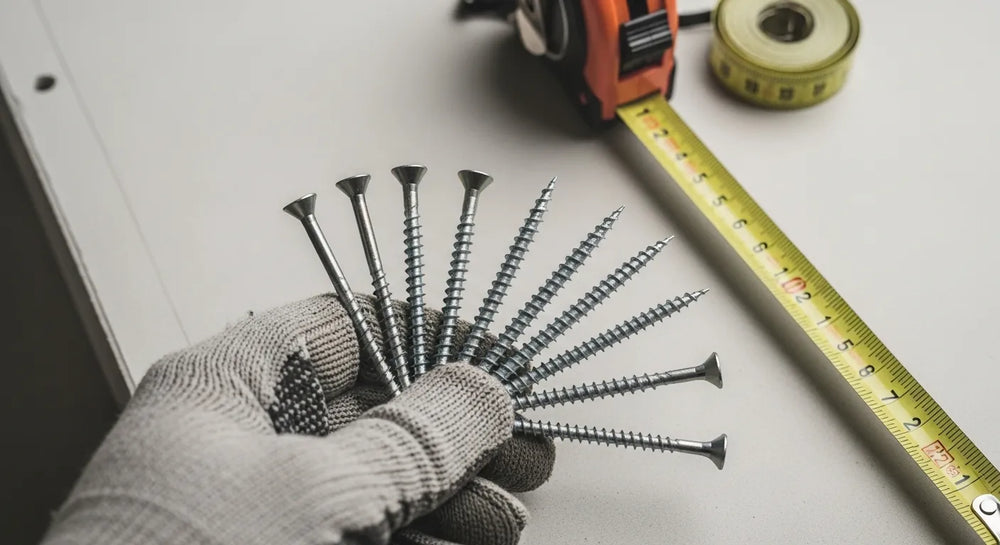
Tapcon Screws (Self-Tapping Masonry Screws):
- Mechanism: These screws feature a specialized thread design that allows them to cut their own threads into masonry when driven into a pre-drilled pilot hole.
- Suitability for Brick: One of the most popular and versatile choices for solid brick, especially for light to medium-duty applications. They are relatively easy to install, create minimal expansion stress, and provide a strong, positive lock. They can even be used with caution in certain types of mortar joints for very light loads if the mortar is sound.
-
Hammer Drive Anchors:
- Mechanism: A two-part anchor where a nail-like pin is hammered into a pre-drilled hole, expanding the anchor body against the sides of the hole.
- Suitability for Brick: Suitable for light-duty, permanent fastenings in solid brick. The hammering action needs to be controlled to avoid damaging the brick.
Chemical Anchors (Epoxy/Resin)
Chemical anchors provide exceptionally strong, permanent fastenings by bonding the anchor to the substrate.
- Mechanism: A two-part resin (epoxy, polyester, vinylester) is mixed and injected into a clean, pre-drilled hole. A threaded rod or rebar is then inserted into the wet resin. As the resin cures, it creates a high-strength bond to both the fastener and the internal surfaces of the hole, effectively creating a "chemical weld."
-
Advantages for Brick:
- High Strength: Often stronger than the base material, making them ideal for heavy loads, critical applications, and even seismic zones.
- Void Filling: Excellent for hollow brick or irregular substrates as the resin fills all voids, creating a solid anchor point.
- Low Stress: No expansion forces are exerted on the brick, preventing cracking and spalling, which is a major advantage for older or weaker brickwork.
- Versatility: Can be used with various threaded rods, rebar, or specialty fasteners.
- Considerations: Require specific cure times (influenced by temperature), proper hole cleaning is absolutely critical for optimal bond strength, and shelf life of the resin is a factor.
Toggle Bolts/Hollow Wall Anchors
- Mechanism: These anchors deploy "wings" or toggles behind a hollow cavity to create a secure grip.
- Suitability for Brick: Specifically designed for hollow substrates. While often associated with drywall, they can be a viable solution for fastening lighter objects to hollow brick walls where reaching a solid backing is impossible or impractical. They are not suitable for heavy loads.
At Maden.co, we are committed to providing the industrial excellence that your projects demand. Our platform allows you to filter and find U.S.-manufactured fasteners that meet specific industry standards and material requirements, ensuring that you select the perfect anchor, whether it's a robust chemical solution or a precise mechanical fastener, for your unique brick application.
Selecting the Right Anchor for Your Brick Project
The success of any anchoring project in brick lies in making an informed decision about anchor selection. This involves a holistic assessment of the application's demands, the characteristics of the brick, and the environment.
Load Requirements: Shear vs. Tension, Static vs. Dynamic
- Shear Load: Force applied parallel to the surface (e.g., a heavy shelf pulling down along the wall). Most anchors perform well in shear, but the anchor's diameter and the strength of the brick itself become crucial.
- Tension Load: Force applied perpendicular to the surface, pulling the anchor directly out of the wall (e.g., an overhead pipe hanger). Tension loads are more demanding and often require deeper embedment or chemical anchors for superior pull-out strength, especially in brick.
- Static Load: Constant weight or force.
- Dynamic/Vibratory Load: Fluctuating or vibrating forces (e.g., machinery). These require anchors that can withstand fatigue, with chemical anchors often being the preferred choice due to their full encapsulation and bond.
Always consult engineering specifications and manufacturer's load tables. Never assume an anchor's capacity without verification, especially when dealing with brick, which can have variable strength.
Brick Type and Condition: Solid vs. Hollow, Sound vs. Degraded
- Solid, Sound Brick: Offers the most flexibility. Tapcons, sleeve anchors, drop-ins, and chemical anchors are all viable options depending on load. Prioritize drilling into the center of a brick unit, avoiding mortar joints.
- Hollow Brick: This is where the choice narrows significantly. Chemical anchors with mesh sleeves (to contain the resin in the cavity) are often the best solution. Toggle bolts might work for very light loads. Mechanical anchors that rely on expansion against a solid backing are generally unsuitable.
- Soft, Old, or Degraded Brick/Mortar: Chemical anchors are almost always the safest and most reliable option here. Their non-expansive nature prevents further damage, and the resin can penetrate and strengthen the compromised material around the anchor. If mechanical anchors must be used, select low-expansion types like Tapcons and exercise extreme caution.
Environmental Factors: Indoor/Outdoor, Moisture, Temperature
- Indoor, Dry Environment: Standard galvanized or zinc-plated steel anchors are usually sufficient.
- Outdoor or Moist Environment: Stainless steel (304 or 316 for higher corrosion resistance) or hot-dip galvanized anchors are essential to prevent rust and ensure long-term integrity. Chemical anchors also offer excellent protection to the embedded fastener.
- Temperature Extremes: High or fluctuating temperatures can affect the performance of chemical anchors. Always check the manufacturer's specifications for temperature ranges.
Drill Bit and Installation Tools: Precision is Paramount
Proper anchor installation begins with accurate drilling. The right drill bit and chuck are indispensable. Using the wrong size drill bit, or one that is worn, can result in an improperly sized hole, compromising the anchor's holding power.
- Rotary Hammer Drill: Necessary for efficient drilling in masonry. For softer bricks, use the rotary-only setting if possible, or a light hammer action to prevent excessive chipping or cracking.
- Carbide-Tipped Masonry Bits: Essential for drilling into brick. Ensure the drill bit matches the anchor manufacturer's specified diameter exactly.
- Chuck Systems: A reliable chuck is critical for maintaining bit stability and power transfer. For demanding jobs, having a robust and precise chuck system is key. You can find high-quality, U.S.-made options on Maden.co, such as a 1-headed concrete anchor shear connector chuck for specific needs, or a comprehensive concrete anchor shear connector chuck set to cover a range of drilling requirements. These tools embody the industrial excellence and quality you expect for critical projects.
By carefully evaluating these factors, procurement managers can confidently specify anchors that meet both performance requirements and budget constraints, while design engineers can ensure the structural integrity of their designs. Our commitment at Maden.co is to supply these high-quality, verified American-made components, giving you the confidence that your supply chain is resilient and your projects are built to last. For a deeper understanding of our commitment to quality and U.S. manufacturing, please visit our About Us page.
Installation Best Practices for Anchoring in Brick
Even with the perfect anchor, improper installation is a recipe for failure. Adhering to best practices ensures maximum holding power and the longevity of the fastening.
Preparation: Cleaning and Marking
- Inspect the Substrate: Before drilling, thoroughly inspect the brick and mortar. Look for cracks, spalling, or signs of degradation. If the brick or mortar is compromised, consider relocating the anchor or using a chemical anchor that can help consolidate the material.
- Avoid Mortar Joints: Whenever possible, drill into the center of a solid brick unit, not into the mortar joint. Mortar is typically weaker and more prone to crumbling under anchor stress.
- Mark Accurately: Precisely mark the drilling location. Use a level and measuring tape to ensure correct alignment, especially for multiple anchor points.
- Clean the Surface: Remove any loose debris, dust, or efflorescence from the drilling area.
Drilling Technique: Precision and Care
- Correct Drill Bit: Use a new or sharp carbide-tipped masonry drill bit that precisely matches the diameter specified by the anchor manufacturer. An undersized hole will prevent proper anchor insertion or expansion; an oversized hole will compromise holding power.
- Correct Drill Mode: For solid brick, a rotary hammer drill is most effective. For softer or older bricks, consider using the rotary-only setting first, then gently applying hammer action if needed, to minimize chipping and cracking. For hollow brick, use rotary-only to avoid damaging internal webs.
- Drill to Correct Depth: Most anchors require a specific embedment depth for optimal performance. Use a depth stop on your drill or mark the bit with tape to ensure you don't over-drill or under-drill. Deeper embedment generally equates to greater holding power, but there are limits.
- Drill Straight: Maintain the drill perpendicular to the wall surface. Any angling of the hole will reduce the contact area for the anchor and compromise its strength.
- Clear the Hole: This is perhaps the most overlooked but critical step. Dust and debris left in the hole significantly reduce the friction for mechanical anchors and prevent proper adhesion for chemical anchors. Use a wire brush, compressed air, or a vacuum to thoroughly clean the hole. For chemical anchors, cleaning until no dust is visible is non-negotiable.
Anchor Insertion and Setting: Following Manufacturer Guidelines
-
Mechanical Anchors:
- Insert Fully: Ensure the anchor is inserted to the correct embedment depth.
- Tighten Correctly: Follow the manufacturer's torque specifications. Over-tightening can crack the brick or strip the threads; under-tightening will result in insufficient holding power.
- Specific Setting Tools: For drop-in anchors, use the manufacturer-specified setting tool to properly expand the anchor without damaging it.
-
Chemical Anchors:
- Mix Thoroughly: Ensure the resin components are properly mixed (either through static mixer nozzles or manual mixing for capsule types).
- Inject Correctly: Inject the resin from the back of the hole, slowly withdrawing the nozzle to ensure no air voids are trapped. For hollow brick, use a mesh sleeve to contain the resin.
- Insert Fastener: Insert the threaded rod or rebar with a twisting motion to ensure full encapsulation and good adhesion.
- Cure Time: Allow the specified cure time before applying any load. Cure times vary greatly with temperature and resin type.
Testing and Verification
- Visual Inspection: After installation, visually inspect the anchor and surrounding brick for any signs of cracking, spalling, or movement.
- Load Testing (for critical applications): For structural or safety-critical applications, proof-loading a sample of anchors can verify their actual holding capacity in the specific brickwork. This should be performed by qualified personnel.
Following these installation best practices significantly reduces the risk of anchor failure and ensures that your chosen American-made fasteners deliver their promised performance. Procurement managers who prioritize these details are not just buying parts; they are investing in the long-term integrity and safety of their operations. Our goal at Maden.co is to be your strategic partner in this endeavor, providing not only the products but also the confidence that comes with sourcing from verified U.S. manufacturers.
Common Mistakes to Avoid
Even experienced professionals can make critical errors when anchoring in brick. Awareness of these common pitfalls can prevent costly rework, project delays, and potential safety hazards.
-
Over-Drilling or Under-Drilling:
- Over-drilling: Drilling too deep can hit hidden utilities or compromise the structural integrity of a thin brick wall. It also makes it harder to properly clean the hole.
- Under-drilling: Not drilling deep enough prevents full embedment of the anchor, drastically reducing its holding capacity and often leading to failure, especially under tension loads. Always adhere strictly to manufacturer-specified embedment depths.
-
Incorrect Anchor Type for Brick:
- Using a high-expansion anchor (like a wedge anchor) in soft or hollow brick is a recipe for cracking, spalling, and pull-out.
- Using a light-duty anchor for heavy or dynamic loads will inevitably lead to failure.
- Failing to use chemical anchors where brick condition dictates (e.g., degraded, hollow, or historic brick) is a major oversight.
-
Ignoring Brick Condition or Mortar Joints:
- Anchoring into unsound, cracked, or crumbling brick provides no reliable hold.
- Drilling into mortar joints for anything beyond very light, non-critical loads is a common mistake. Mortar is inherently weaker and more susceptible to fatigue and moisture ingress than brick units.
-
Over-Tightening Mechanical Anchors:
- Applying excessive torque to mechanical anchors can cause the brick to crack, deform the anchor itself, or strip the threads. Always use a torque wrench and adhere to manufacturer specifications.
-
Not Cleaning the Hole Properly:
- Dust and debris left in a drilled hole act as a lubricant for mechanical anchors, reducing friction and holding power. For chemical anchors, dust prevents the resin from properly adhering to the brick, leading to a drastically weakened bond. A thorough cleaning process (brushing and blowing/vacuuming) is non-negotiable.
-
Underestimating Environmental Factors:
- Using standard carbon steel anchors outdoors or in corrosive environments will lead to rust and premature failure. Always specify stainless steel or appropriately coated anchors for such conditions.
- Ignoring temperature ranges for chemical anchors can lead to improper curing or long-term performance issues.
By diligently avoiding these common mistakes, procurement managers and MRO buyers can ensure the structural integrity and safety of their installations. Our commitment to industrial excellence at Maden.co means we only list products from verified U.S. manufacturers who adhere to stringent quality controls, reducing the risk of material deficiencies that could exacerbate these installation issues. When you source through our platform, you're not just getting a part; you're getting a commitment to quality that helps prevent these kinds of costly errors.
The Maden.co Advantage: Sourcing American-Made Anchoring Solutions
In today's complex industrial landscape, supply chain resilience, product quality, and ethical sourcing are not just buzzwords—they are critical pillars of operational success. At Maden.co, we understand these imperatives, which is why our mission is to democratize access to American manufacturing, making it easier than ever for industrial buyers to source the high-quality components they need, including specialized anchoring solutions for challenging substrates like brick.
Consider the real-world scenarios that procurement managers, design engineers, and MRO buyers face daily:
- For a procurement manager tasked with sourcing anchors for a new facility expansion on a tight deadline, the ability to quickly identify and procure U.S.-made fasteners that comply with specific DIN or ASTM standards is invaluable. This ensures not only quality but also minimizes lead times and avoids the uncertainties of global shipping.
- For a design engineer developing a new product that requires reliable structural fastening into existing brickwork, having access to anchors with detailed material certifications and performance data from trusted American manufacturers is crucial for design integrity and safety compliance.
- For an MRO buyer responding to an unexpected equipment breakdown that requires immediate re-anchoring into an aged brick wall, the speed and assurance of finding a robust, readily available U.S.-made solution can mean the difference between minimal downtime and significant operational losses.
Our platform addresses these challenges directly. We connect industrial buyers with over 2.5 million American-made products from our network of 800+ verified U.S. manufacturers. This extensive catalog includes a wide array of fasteners, drill bits, and specialized tools, ensuring that whether you need a specific type of anchor like the BN Products 3/8-inch inside thread Sanko drop-in concrete anchor or a comprehensive drilling solution like a concrete anchor shear connector chuck set, you can find it efficiently. We even offer individual components like the 1-headed concrete anchor shear connector chuck for specialized requirements.
Our entire business model is built on principles of American Manufacturing Pride, Digital Innovation, Supply Chain Transparency, Industrial Excellence, and Customer Empowerment. You can learn more about our mission to champion American manufacturing and our values on our About Us page. We envision becoming the definitive platform that proves American-made components are as accessible and convenient as any global alternative.
By partnering with Maden.co, businesses realize tangible benefits:
- Improved Total Cost of Ownership (TCO): Beyond the initial purchase price, sourcing through Maden.co reduces risks associated with quality control issues, extended lead times, and unpredictable shipping costs, leading to a lower overall TCO.
- Ensured Compliance: Access to products that meet critical industry standards (e.g., DIN, NPT, ASTM) directly from manufacturers, simplifying compliance for your projects.
- Enhanced Supply Chain Resilience: Less reliance on volatile international supply chains means greater stability and predictability for your procurement operations.
- Reduced Procurement Friction: Our user-friendly digital marketplace streamlines the entire sourcing process, from search to checkout.
- Partnership with Verified U.S. Manufacturers: We rigorously verify our manufacturers, ensuring you're working with trusted partners committed to quality and domestic production.
Furthermore, we understand that large-volume purchases or critical projects often require flexible financing. That's why we offer Instant Financing as a key differentiator. This isn't just a payment method; it's a strategic tool designed to empower businesses. It allows procurement managers and business owners to manage cash flow effectively, make larger-volume purchases without tying up immediate capital, and seize opportunities when they arise. You can apply for Instant Financing at checkout to streamline your capital-intensive projects and ensure your operations never slow down due to procurement limitations.
America's manufacturing revival is here, and Maden.co is at its forefront. We invite qualified U.S. manufacturers to join our growing network; you can register as a vendor and be part of this exciting movement. For industrial buyers, exploring our platform is the first step toward building a more reliable, efficient, and domestically sourced procurement process. Begin your journey at Maden.co.
Ensuring Supply Chain Resilience with U.S.-Made Fasteners
The past few years have underscored the critical importance of supply chain resilience. Geopolitical shifts, global crises, and unpredictable logistics have highlighted the vulnerabilities inherent in overly diversified, international supply chains. For industrial buyers, relying heavily on overseas manufacturing for critical components, especially fasteners and anchoring solutions, can translate into significant risks: extended lead times, inconsistent quality, lack of transparency, and diminished control over the manufacturing process.
Sourcing domestically, particularly through a platform dedicated to U.S.-made products like Maden.co, offers a robust antidote to these challenges. When you choose American-made fasteners for your brick anchoring projects, you're investing in:
- Shorter Lead Times: Reduced transit distances and streamlined logistics mean parts get to you faster, minimizing project delays and improving response times for MRO needs.
- Superior Quality Control: U.S. manufacturers often adhere to stricter quality standards and regulatory oversight, providing greater assurance of product integrity and performance. This is particularly vital for structural components where failure can have severe consequences.
- Enhanced Transparency: Direct access to verified U.S. manufacturers through Maden.co means clearer communication, easier access to certifications, and greater visibility into the manufacturing process. This fosters trust and facilitates problem-solving.
- Economic Stability and Job Creation: Supporting American manufacturing strengthens the domestic industrial base, creates jobs, and contributes to the economic vitality of local communities. This resonates with the core values of many businesses and the national interest.
- Reduced Geopolitical Risk: Less exposure to international trade disputes, tariffs, and shipping disruptions means a more stable and predictable supply chain for essential components.
Our vision at Maden.co is to become the definitive platform that proves American-made components are as accessible and convenient as any global alternative. We believe that by providing a seamless, digitally innovative marketplace, we can empower procurement managers, MRO buyers, and design engineers to effortlessly select high-quality, U.S.-manufactured products, thereby strengthening their operations and contributing to the broader manufacturing revival. Our tagline, "America's manufacturing revival is here," is not just a statement; it's a commitment to fostering a more secure, efficient, and domestically focused industrial future.
Whether you're specifying anchors for a new construction, an expansion, or routine maintenance in brick, prioritizing U.S.-made solutions through Maden.co ensures that your supply chain is robust, your projects are secure, and your business contributes to a stronger American industrial base. If you have specific sourcing questions or need assistance finding the perfect American-made fastener, our team is ready to help; please don't hesitate to contact us.
Conclusion
Anchoring in brick is a nuanced yet entirely achievable task for industrial applications, provided the right knowledge, materials, and techniques are employed. We've established that while brick differs from concrete in its composition and anchoring behavior, various specialized anchors—from precise drop-ins and versatile sleeve anchors to high-strength chemical bonding solutions—offer reliable fastening when selected and installed correctly. Understanding the brick type, assessing load requirements, and meticulously following installation best practices are paramount to ensuring a secure, long-lasting connection.
At Maden.co, we are committed to simplifying this complex process by providing unparalleled access to America's industrial strength. Our platform offers a comprehensive catalog of over 2.5 million U.S.-made products from 800+ verified manufacturers, ensuring that procurement managers, MRO buyers, and design engineers can confidently source the exact fasteners, chucks, and tools needed for even the most challenging brick anchoring projects. By championing American Manufacturing Pride, Digital Innovation, Supply Chain Transparency, and Customer Empowerment, we help businesses improve their Total Cost of Ownership, enhance supply chain resilience, and achieve compliance with critical industry standards.
Don't let procurement friction or supply chain uncertainties hinder your projects. We invite you to explore the extensive catalog of American-made anchoring solutions available on Maden.co today. Leverage our user-friendly platform to find the high-quality components you need, and streamline your capital-intensive projects by applying for our Instant Financing option conveniently at checkout. The future of American manufacturing is here, and with Maden.co as your strategic partner, you have the power to build it securely and efficiently.
Frequently Asked Questions (FAQ)
Q1: Is it always safe to use concrete anchors in brick?
A1: While many types of concrete anchors can be successfully used in brick, it is not always safe to use them without careful consideration. Success depends heavily on the type and condition of the brick, the specific anchor chosen, the load requirements, and precise installation. Highly expansive anchors, for instance, are generally not suitable for softer or hollow brick, which could crack or spall. Always assess the substrate and application meticulously.
Q2: What type of anchor is best for hollow brick walls?
A2: For hollow brick walls, chemical anchors (epoxy/resin) used with a mesh sleeve are generally the most effective and reliable solution. The resin fills the voids within the brick and forms a strong bond, providing excellent pull-out strength without exerting damaging expansion forces. Toggle bolts can also be used for very light loads where the anchor can deploy behind the cavity.
Q3: Can I anchor into the mortar joints of a brick wall?
A3: Anchoring into mortar joints is generally discouraged for significant loads. Mortar is typically softer, weaker, and more porous than the brick units themselves, making it less reliable for secure fastenings. For very light, non-critical loads, some masonry screws (like Tapcons) might be used with extreme caution, but it's always preferable to drill into the solid body of a brick unit.
Q4: How does Maden.co ensure the quality of its American-made anchors?
A4: Maden.co ensures quality by rigorously verifying all manufacturers in our network. We partner exclusively with U.S. manufacturers who adhere to strict quality control standards, often meeting or exceeding industry certifications (e.g., DIN, ASTM). This commitment to American Manufacturing Pride means industrial buyers have access to detailed product specifications and reliable performance data, enhancing trust and supply chain transparency for all their procurement needs.


