
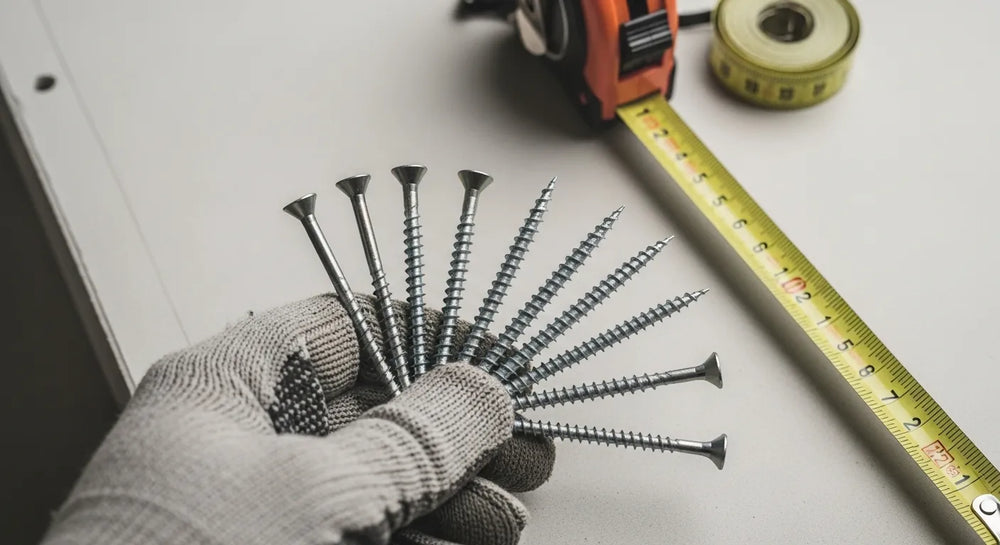
What Size Pre-Drill for #8 Wood Screws?
Table of Contents
- Introduction
- Understanding the Importance of Pre-Drilling Wood Screws
- Decoding Wood Screw Terminology and Sizing
- Factors Influencing Pre-Drill Bit Selection
- The Science of Pre-Drilling: Pilot Hole vs. Clearance Hole
- Determining the Correct Pre-Drill Bit Size for #8 Wood Screws
- Beyond the Bit: Best Practices for Pre-Drilling
- The Maden.co Advantage: Sourcing Quality American-Made Fasteners
- Conclusion
- FAQ
Introduction
Imagine the frustration: a critical component needs to be secured, the perfect #8 wood screw is in hand, but as it’s driven home, the wood splits, the screw head snaps, or the joint feels insecure. This isn't just an inconvenience; it can lead to project delays, material waste, and compromised structural integrity. For procurement managers, MRO buyers, and design engineers, these failures translate directly to increased costs and diminished reliability. The culprit often isn't the screw itself, but the absence or incorrect sizing of a pre-drilled pilot hole.
In industrial applications, precision is paramount. Every fastener plays a role in the overall strength and longevity of an assembly. This post aims to demystify the essential practice of pre-drilling, specifically focusing on the common #8 wood screw. We will delve into why pre-drilling is indispensable, the factors influencing drill bit selection, and provide practical guidelines for determining the correct pilot hole sizes for various wood types. Furthermore, we'll highlight how sourcing high-quality, American-made fasteners through a platform like Maden.co empowers businesses to achieve superior results, reduce procurement friction, and build more resilient supply chains. Our mission at Maden.co is to democratize access to American manufacturing, ensuring that you have access to the right components to complete your projects successfully and efficiently.
Understanding the Importance of Pre-Drilling Wood Screws
Pre-drilling is far more than an optional step; it is a fundamental practice that safeguards material integrity, optimizes fastener performance, and ensures the longevity of assemblies. Ignoring this crucial step, especially with hard materials or near edges, is a common pitfall that can lead to costly repercussions.
Why Pre-Drill? Preventing Material Damage and Enhancing Joint Strength
The primary purpose of pre-drilling is to create a path for the screw, reducing the stress on both the wood and the fastener as it’s driven. Wood, being a natural and anisotropic material, possesses varying densities and grain structures. When a screw is driven into wood without a pilot hole, the screw's threads displace a significant amount of material rapidly. This displacement creates outward pressure that can easily exceed the wood's tensile strength, leading to:
- Splitting and Cracking: This is most common in hardwoods, dense engineered wood products, or when fastening near the edge or end grain of a workpiece. A split piece of wood compromises the joint's strength and often necessitates starting over with new material.
- Screw Breakage or Stripping: If the resistance from the wood is too high, the torque applied can cause the screw head to strip (rendering it un-drivable or unremovable) or, worse, the screw shaft to shear off. This not only ruins the screw but can also leave a portion embedded in the wood, making repair or removal extremely difficult.
- Improper Seating: Without a pilot hole, screws may not seat flush or straight, leading to an aesthetically unpleasing finish and potentially weakening the joint due to uneven load distribution.
- Improved Grip and Holding Power: While it might seem counterintuitive, a properly sized pilot hole actually enhances the screw's holding power. By creating a channel for the screw's core (minor diameter) and allowing the threads to engage cleanly with the wood fibers, the screw can fully embed without forcing or stripping the surrounding material. This maximizes the shear and withdrawal resistance of the fastener.
- Ensuring Alignment and Accuracy: A pilot hole guides the screw precisely, preventing it from wandering or being driven at an angle. This is particularly critical in precision assemblies where component alignment is paramount.
Consequences of Improper Pre-Drilling
The ripple effects of improper pre-drilling extend beyond immediate material damage. For industrial buyers, design engineers, and MRO teams, these consequences can manifest as:
- Project Delays and Rework: A split board or a broken screw means halting work to replace materials or extract damaged fasteners, directly impacting project timelines and labor costs.
- Compromised Product Quality and Safety: In structural or load-bearing applications, a weakened joint due to splitting or insufficient screw engagement can lead to product failure, posing safety risks and jeopardizing the reputation of the final product.
- Increased Material and Fastener Waste: Replacing damaged wood and discarded screws adds to operational expenses and inventory management challenges.
- Reduced Operational Efficiency: Procurement managers often source high-volume fasteners. If a significant percentage is wasted due to installation errors, it directly impacts the Total Cost of Ownership (TCO) and inventory turnover. At Maden.co, we focus on helping our customers improve TCO by connecting them with high-quality, verified U.S. manufacturers who supply reliable parts, ensuring that every component contributes to efficiency, not waste.
Decoding Wood Screw Terminology and Sizing
To effectively select the right pre-drill bit, a clear understanding of wood screw terminology is essential. This knowledge empowers buyers and engineers to specify components accurately and ensures compatibility with project requirements.
Screw Gauge: Understanding the #8 Designation
The "8" in #8 wood screw refers to its gauge, which indicates the screw's nominal major diameter—the outside diameter of the threads. Unlike a direct measurement in inches or millimeters, screw gauges are part of a standardized numbering system primarily used for smaller diameter screws (typically #0 to #14).
For a #8 wood screw, the major diameter is approximately 0.164 inches (or about 4.166 mm). As the gauge number increases, so does the screw's diameter. This gauge is critical because it directly influences the size of the pilot hole needed for the screw's threads to engage properly.
Screw Length
Screw length is measured from the point where the head seats (e.g., the top of a flat head, or the underside of a round or oval head) to the tip of the screw. The required length depends on the thickness of the materials being joined and the desired depth of penetration into the base material. A general rule of thumb for strong joints is that at least two-thirds, ideally three-quarters, of the screw's length should penetrate the base material.
Thread Type and Design
Wood screws typically feature coarse threads designed to grip wood fibers effectively. Variations in thread design include:
- Full-Thread vs. Partial-Thread: Full-thread screws have threads running the entire length of the shank, providing maximum grip. Partial-thread screws have a smooth shank near the head, allowing the top piece of material to be drawn tightly against the base material, as the unthreaded shank acts as a clearance hole for the first piece.
- Sharp vs. Blunt Points: Sharper points facilitate easier starting, while blunter points may require a more precise pilot hole.
- Self-Tapping/Self-Drilling: Some advanced wood screws incorporate features like cutting tips or serrated threads designed to reduce the need for pre-drilling in certain softer materials. However, for hardwoods or critical applications, pre-drilling remains highly recommended even with these screws.
Head Types and Their Impact on Pre-Drilling
The screw head type determines how the fastener finishes on the surface and whether countersinking or counterboring is necessary. Maden.co offers a range of U.S.-made wood screws to suit various applications, each with distinct head types:
- Round Head: These heads sit proud of the surface and are often used for decorative purposes or when a flush finish isn't required. They typically don't require countersinking. For a robust and classic solution, consider a Round Slot Drive Brass Wood Screw for your project.
- Flat Head (Countersunk): Designed to sit flush with or slightly below the material surface, creating a smooth finish. This requires a countersunk hole, which is a conical recess matching the angle of the screw head. A prime example for achieving a clean, flush finish is the Flat Slot Drive Brass Wood Screw, ideal for applications where the screw head should not protrude.
- Oval Head: A hybrid of round and flat heads, featuring a decorative rounded top with a conical underside. They require a countersunk hole but leave a slightly domed, decorative finish. For aesthetic appeal coupled with secure fastening, our Oval Slot Drive Silicon Bronze Wood Screw offers excellent corrosion resistance and a distinguished appearance.
- Pan Head, Hex Head, Truss Head: These are other common head types, each with specific advantages for torque application or load distribution, and generally sit proud of the surface.
Understanding these details is critical for procurement managers and design engineers who specify components. Maden.co provides detailed specifications for all our products, ensuring transparency and aiding in precise selection. You can learn more about our commitment to transparency and our mission to champion American manufacturing by visiting our About Us page.
Factors Influencing Pre-Drill Bit Selection
Selecting the correct pre-drill bit size is not a one-size-fits-all endeavor. Several critical factors must be considered to achieve optimal results and prevent damage.
Wood Hardness: The Primary Determinant
The hardness of the wood is arguably the most significant factor.
- Softwoods: Woods like pine, cedar, fir, and spruce are relatively forgiving. They are less prone to splitting, and the screw threads can displace their fibers more easily. For softwoods, a pilot hole that matches the minor diameter (shank diameter) of the screw is typically sufficient, allowing the threads to engage fully without excessive resistance.
- Hardwoods: Woods such as oak, maple, cherry, walnut, and exotic species are dense and strong, making them highly susceptible to splitting if not pre-drilled correctly. For hardwoods, the pilot hole often needs to be slightly larger than the minor diameter to further reduce resistance and minimize the risk of splitting, especially near edges or ends.
Wood Type and Species-Specific Considerations
Beyond general hardness, specific wood species can have unique characteristics:
- Grain Structure: Some woods have very open or coarse grains, while others are fine-grained. Extremely fine-grained woods (e.g., certain tropical hardwoods) might require slightly larger pilot holes.
- Moisture Content: Wood with higher moisture content is generally softer and more pliable but can still split. As wood dries and shrinks, a tight screw might exert even more pressure, potentially causing cracks later.
- Engineered Wood Products: Plywood, MDF (Medium-Density Fiberboard), and particleboard have different densities and binder compositions. Plywood can be prone to delamination, while MDF and particleboard, though uniform, can swell or crumble if pilot holes are too small or oversized, respectively.
Grain Direction
Driving a screw into the end grain of a piece of wood (parallel to the fibers) is much more prone to splitting than driving into the face grain (perpendicular to the fibers). When working with end grain, it is always advisable to use a slightly larger pilot hole, even for softwoods, to mitigate splitting.
Screw Material
The material of the screw itself can influence pre-drilling, primarily in terms of the screw's strength and corrosion resistance.
- Brass and Bronze Screws: These are softer metals than steel and are more prone to shearing or stripping if excessive torque is applied, particularly in hardwoods. For instance, the Round Slot Drive Brass Wood Screw or Oval Slot Drive Silicon Bronze Wood Screw from Maden.co offer excellent corrosion resistance and aesthetic appeal but require careful pre-drilling to prevent damage during installation.
- Steel Screws (Zinc-plated, Stainless Steel): Generally stronger and more resistant to breakage, they can tolerate slightly more resistance, but proper pre-drilling is still crucial to protect the wood.
Screw Design
Screws with more aggressive or specialized threads might interact differently with wood. Some self-tapping screws are designed with a cutting tip, potentially reducing the need for a large pilot hole, but for maximum reliability, especially in hardwoods, pre-drilling remains the best practice.
Application and Load-Bearing Requirements
For critical load-bearing joints, structural assemblies, or components exposed to vibration, precise pre-drilling is non-negotiable. The goal is to maximize the screw's engagement with the wood for superior holding power without compromising the material's integrity. For specialized needs, procurement managers and design engineers should always refer to the specific compliance standards (e.g., DIN, NPT) relevant to their applications. Maden.co ensures that our network of 800+ verified U.S. manufacturers provides products that meet stringent industrial quality standards.
The Science of Pre-Drilling: Pilot Hole vs. Clearance Hole
To achieve truly professional results, it's vital to understand the distinction between a pilot hole and a clearance hole, and when to use each. This two-part approach ensures both secure fastening and flush seating.
Defining the Pilot Hole
The pilot hole is the smaller, narrower hole drilled into the receiving material (the base piece of wood) that accommodates the core (minor diameter) of the screw. Its purpose is to guide the screw and prevent the wood from splitting as the threads engage. The threads of the screw are designed to cut into the wood surrounding the pilot hole, creating a strong mechanical bond.
- Key Measurement: The pilot hole diameter should ideally match the minor diameter (the diameter of the screw's shaft between the threads) of the screw. This allows the threads to bite into the maximum amount of wood without forcing the screw to displace excessive material.
Defining the Clearance Hole
The clearance hole is a larger hole drilled into the first piece of material (the piece being attached) that allows the entire screw shank (including the threads) to pass through freely. The purpose of the clearance hole is twofold:
- Prevent Jacking: If the screw threads grip both pieces of wood, they will "jack" the top piece away from the bottom as the screw is driven, preventing a tight joint. A clearance hole ensures that only the threads entering the receiving material do the work of pulling the two pieces together.
- Allow for Tight Joint: By preventing the threads from engaging the top piece, the clearance hole ensures that the screw's head is what pulls the first piece tightly against the second, creating a strong, gap-free joint.
- Key Measurement: The clearance hole diameter should match or be slightly larger than the major diameter (the outside diameter of the threads) of the screw.
When to Use Both, When Just a Pilot Hole
- Most Common Scenario (Two Pieces of Wood): For nearly all applications where you are fastening one piece of wood to another, you will use both a clearance hole in the top piece and a pilot hole in the bottom piece. This is the best practice for strong, tight, and professional-looking joints.
- Fastening a Single Piece to a Substrate (e.g., edge banding): If you are fastening something directly to a larger, solid piece of wood where the screw's purpose is simply to hold it in place without pulling two distinct pieces together (e.g., attaching a cleat to a wall stud), you might only need a pilot hole in the substrate, and the screw head would secure the cleat. However, even in these cases, a slightly larger pilot hole in the cleat (acting as a clearance hole for the screw body) before it enters the stud's pilot hole can prevent splitting in the cleat.
Importance of Countersinking and Counterboring
Beyond pilot and clearance holes, achieving a clean, flush finish requires proper treatment of the screw head.
- Countersinking: For flat-head or oval-head screws (like the Flat Slot Drive Brass Wood Screw), a countersink bit creates a conical recess for the screw head to sit flush with or slightly below the surface. The angle of the countersink should match the angle of the screw head (typically 82 degrees for common wood screws).
- Counterboring: For screws with non-tapered heads (e.g., round head, hex head, or when you want to plug the hole), a counterbore creates a flat-bottomed cylindrical recess that allows the entire screw head to sit below the surface. This is often done to hide the screw head with a wood plug or filler.
A comprehensive understanding of these concepts is vital for design engineers specifying fasteners and for MRO buyers ensuring correct installation procedures. The precision offered by U.S.-made products found on Maden.co contributes significantly to the success of these detailed applications.
Determining the Correct Pre-Drill Bit Size for #8 Wood Screws
Now, let's get to the specifics for #8 wood screws. While general guidelines exist, it's crucial to understand the nuances based on wood hardness.
General Guidelines for #8 Wood Screws
First, recall that a #8 wood screw has a major diameter (thread diameter) of approximately 0.164 inches. The minor diameter (shank diameter) typically falls between 0.100 and 0.115 inches, depending on the manufacturer and thread profile. It's always best to measure your specific screw if possible.
Key Principle: The pilot hole size for the threads should be slightly smaller than the minor diameter of the screw to allow the threads to engage effectively. The clearance hole, on the other hand, should be equal to or slightly larger than the major diameter to allow the screw to pass freely.
Pilot Hole for Softwoods (Pine, Spruce, Cedar, Fir)
- Minor Diameter (Shank) of a #8 screw: Roughly 0.100" - 0.115"
-
Recommended Pilot Bit Size: Aim for a bit that is slightly smaller than the minor diameter.
-
Common Drill Bit Sizes:
- 5/64 inch (0.0781") - Good starting point, slightly undersized for maximum grip.
- 3/32 inch (0.0938") - Often a good balance, especially if the minor diameter is on the larger side.
- 7/64 inch (0.1094") - Closer to the minor diameter for less dense softwoods or near edges.
-
Common Drill Bit Sizes:
- Recommendation: Start with 3/32" or 7/64" for most softwoods. If you experience splitting, go slightly larger; if the screw feels loose, go slightly smaller.
Pilot Hole for Hardwoods (Oak, Maple, Cherry, Walnut)
- Minor Diameter (Shank) of a #8 screw: Roughly 0.100" - 0.115"
-
Recommended Pilot Bit Size: For hardwoods, the pilot hole needs to be closer to or even slightly larger than the minor diameter to prevent splitting.
-
Common Drill Bit Sizes:
- 7/64 inch (0.1094") - A good starting point for many hardwoods, especially for the screw's threads.
- 1/8 inch (0.125") - Often recommended for very dense hardwoods, particularly when working near edges or end grain. This allows less material displacement and prevents breaking softer screws (like brass or bronze).
-
Common Drill Bit Sizes:
- Recommendation: Start with 7/64" or 1/8" for hardwoods. Always test on scrap wood first.
Clearance Hole for the Shank (for the first piece of material)
- Major Diameter (Threads) of a #8 screw: Approximately 0.164"
-
Recommended Clearance Bit Size: The bit should be equal to or slightly larger than the major diameter.
-
Common Drill Bit Sizes:
- 5/32 inch (0.1563") - Slightly smaller than the major diameter, ensuring a tight fit around the shank. This is often acceptable if the top material is thin or soft.
- 11/64 inch (0.1719") - A good, safe choice for a true clearance hole, allowing the screw to pass freely.
- 3/16 inch (0.1875") - Provides ample clearance.
-
Common Drill Bit Sizes:
- Recommendation: 11/64" is a reliable choice for the clearance hole for a #8 wood screw.
Specific Drill Bit Size Charts/Recommendations (Decimal Equivalents)
To provide more precision, here's a quick reference:
| Screw Gauge | Screw Major Dia. (Approx.) | Screw Minor Dia. (Approx.) | Softwood Pilot Hole (Recommended) | Hardwood Pilot Hole (Recommended) | Clearance Hole (Recommended) |
|---|---|---|---|---|---|
| #8 | 0.164" (11/64") | 0.100" - 0.115" | 3/32" (0.0938") or 7/64" (0.1094") | 7/64" (0.1094") or 1/8" (0.125") | 11/64" (0.1719") |
Important Note on Testing: These are general guidelines. The absolute best practice is always to test on a scrap piece of the same wood you are using for your project. Drive a screw into the test piece with your chosen bit. If the wood splits, use a slightly larger pilot hole. If the screw feels loose or strips easily, use a slightly smaller pilot hole.
Practical Scenarios & Maden.co's Role:
The real-world application of these precise measurements is where expertise and quality components converge.
-
Scenario for a Procurement Manager: A procurement manager is under pressure to source a specific quantity of durable #8 wood screws for a new line of heavy-duty industrial shelving units. The base material is high-density laminated hardwood. Without proper pre-drilling guidelines and quality fasteners, the risk of material waste and assembly delays is high.
- Maden.co Solution: By understanding the necessity of a 7/64" or 1/8" pilot hole for hardwood and sourcing robust, U.S.-made #8 screws (such as the Flat Slot Drive Brass Wood Screw for a clean finish, or the Round Slot Drive Brass Wood Screw for structural integrity) through Maden.co, the manager ensures that the fasteners are strong enough to withstand installation and provide lasting support. Our platform connects buyers with verified U.S. manufacturers, guaranteeing product consistency and adherence to industrial standards, directly improving the project's Total Cost of Ownership.
-
Scenario for a Design Engineer: A design engineer is developing a custom prototype for a medical equipment enclosure, requiring #8 wood screws to attach internal wooden fixtures. The material is a sensitive, thin-walled composite with a decorative veneer. Precision is critical for both structural integrity and aesthetics.
- Maden.co Solution: The engineer specifies an Oval Slot Drive Silicon Bronze Wood Screw for its corrosion resistance and elegant finish. Knowing that silicon bronze screws are softer than steel, the engineer meticulously calculates a 1/8" pilot hole to prevent shearing and ensures proper countersinking. Sourcing these specialized, American-made components via Maden.co offers confidence in material quality and precise dimensions, crucial for prototypes and high-stakes applications. Our platform makes it convenient to find exactly the right components, ensuring compliance and performance.
-
Scenario for an MRO Buyer: An MRO buyer is tasked with quickly replacing several worn-out #8 brass wood screws securing critical control panels in an older facility. The original wood has aged and become brittle. The challenge is finding exact replacements that won't further damage the aged wood during installation, and doing so quickly to minimize downtime.
- Maden.co Solution: The MRO buyer understands that an oversized pilot hole might lead to stripping, while an undersized one risks further splitting the brittle wood. They choose a high-quality Round Slot Drive Brass Wood Screw from Maden.co, knowing that the detailed specifications help them identify the correct minor diameter for precise pilot hole calculation (e.g., 7/64" for delicate, aged wood). The ease of finding U.S.-made, verified products on Maden.co ensures quick procurement, reduces downtime, and offers peace of mind regarding the quality and consistency of replacement parts. Our commitment to Digital Innovation and Supply Chain Transparency means MRO teams can quickly locate and acquire the specific parts they need.
Beyond the Bit: Best Practices for Pre-Drilling
Selecting the correct drill bit is only part of the equation. Implementing best practices for the drilling process itself is equally important for achieving professional, lasting results.
Drill Press vs. Hand Drill: Stability and Accuracy
- Drill Press: For maximum precision, particularly when working with small components, delicate materials, or requiring consistent depth and angle, a drill press is invaluable. It ensures the drill bit enters the material perfectly perpendicular and prevents wandering. This is often the preferred method in manufacturing and design engineering environments where repeatability is key.
- Hand Drill: For most on-site MRO tasks or larger assemblies, a hand drill is perfectly adequate. The key is to maintain a steady hand and ensure the drill is held perpendicular to the surface. Using a drill guide accessory can greatly improve accuracy with a hand drill.
Depth Stop: Consistent Depth Control
Drilling too deep can compromise the integrity of the material below, while not drilling deep enough means the screw won't fully seat or will encounter excessive resistance. A depth stop (a collar that attaches to the drill bit) ensures that all pilot holes are drilled to a consistent, correct depth. This depth should typically be slightly longer than the threaded portion of the screw that will enter the receiving material.
Clearing Chips: Preventing Binding and Overheating
As you drill, wood chips (swarf) accumulate in the flutes of the drill bit. If these chips are not cleared, they can pack tightly, causing:
- Bit Binding: The drill bit can get stuck, making it difficult to extract.
- Overheating: Friction from packed chips generates heat, which can dull the bit prematurely and even scorch the wood.
- Inaccurate Depth: Packed chips can prevent the bit from reaching its intended depth.
Best Practice: Periodically withdraw the drill bit from the hole, especially when drilling deep holes or in hardwoods, to clear the chips. This is often called "pecking."
Lubrication (for Hardwoods)
For extremely dense hardwoods, applying a small amount of lubricant to the screw threads before driving can significantly reduce friction and prevent screw breakage or stripping. Wax (like beeswax or paraffin) or even a bar of soap are common and effective lubricants that don't negatively affect the wood or screw. Avoid oil-based lubricants as they can stain the wood.
Testing on Scrap Material
As emphasized earlier, this step cannot be overstated. Even with all the guidelines and calculations, variations in wood density, moisture content, and screw manufacturing can lead to unexpected results. Always take a small piece of the actual material you'll be using and test your chosen drill bit size and screw. This ensures confidence before committing to the final assembly.
By adhering to these best practices, procurement managers, MRO buyers, and design engineers can significantly reduce errors, improve efficiency, and ensure the integrity of their projects. When combined with the reliability of U.S.-made fasteners sourced from Maden.co, the result is industrial excellence.
The Maden.co Advantage: Sourcing Quality American-Made Fasteners
The ability to accurately pre-drill for #8 wood screws, or any fastener, hinges not only on proper technique but also on the quality and consistency of the fasteners themselves. This is where Maden.co fundamentally changes the game for industrial procurement.
At Maden.co, our mission is to democratize access to American manufacturing. We believe that securing the right components shouldn't be a complex, global scavenger hunt. Instead, it should be a streamlined process that champions domestic production and delivers unparalleled reliability. Our platform is a testament to this belief, connecting industrial buyers with an extensive network of over 800+ verified U.S. manufacturers. This means access to over 2.5 million American-made products, from the simplest #8 wood screw to highly specialized industrial components.
For procurement managers seeking to enhance supply chain resilience, Maden.co offers a direct pathway to domestic sourcing. This reduces lead times, mitigates geopolitical risks, and ensures greater control over product quality and compliance with critical industry standards like DIN and NPT. Our commitment to Supply Chain Transparency means you know exactly where your products come from, fostering trust and predictability in your operations.
Design engineers benefit from the digital innovation embedded in our platform, allowing them to easily search, compare, and specify components with detailed technical data. This ensures that the chosen U.S.-made fasteners meet precise design requirements, such as the exact major and minor diameters needed for meticulous pre-drilling calculations. When a project demands the aesthetic and corrosion resistance of a Flat Slot Drive Brass Wood Screw or the strength of a silicon bronze alternative, Maden.co provides the pathway to quality and certified American production.
MRO buyers, frequently facing urgent demands for replacement parts, find an invaluable partner in Maden.co. The ability to quickly locate and procure hard-to-find U.S.-made components directly reduces equipment downtime and maintains operational continuity. Our focus on Customer Empowerment means providing tools and resources that simplify procurement, making American-made components as accessible and convenient as any global alternative.
Beyond product selection, we understand the financial realities of industrial procurement. That's why we offer "Instant Financing" options. This isn't just a payment method; it's a strategic tool designed to help businesses manage cash flow effectively and make larger-volume purchases without immediate capital strain. You can apply for Instant Financing at checkout to streamline your capital-intensive projects, ensuring that vital projects are never delayed due to financing hurdles.
Our vision is clear: to become the definitive platform that proves America's manufacturing revival is here. We do this by ensuring that every transaction, every component, and every partnership reinforces the values of American Manufacturing Pride, Digital Innovation, Supply Chain Transparency, Industrial Excellence, and Customer Empowerment. For a comprehensive look at our commitment to these values, we invite you to explore our homepage.
Are you a U.S. manufacturer producing high-quality industrial components? We invite you to join our growing network. Register as a vendor and become a vital part of America's manufacturing revival, connecting with thousands of industrial buyers across the nation.
Conclusion
Mastering the art and science of pre-drilling for #8 wood screws is an indispensable skill for anyone involved in industrial assembly, maintenance, or design. It’s a foundational step that directly impacts the structural integrity, aesthetic quality, and longevity of any project. From preventing costly material splits and screw breakages to ensuring optimal holding power and a professional finish, the correct pilot hole size, combined with best drilling practices, is paramount.
We’ve explored the critical factors influencing bit selection, including wood hardness, grain direction, screw material, and the precise roles of both pilot and clearance holes. The nuances between softwoods and hardwoods demand different approaches, underscoring the importance of testing and precise measurement.
For businesses committed to quality, efficiency, and reliability, the choice of fasteners is as crucial as the technique used to install them. Maden.co stands as America's premier B2B marketplace, dedicated to providing unparalleled access to a vast catalog of high-quality, U.S.-manufactured components. By choosing Maden.co, you’re not just acquiring a part; you're investing in supply chain resilience, industrial excellence, and a partnership that empowers your procurement processes. Whether you need a standard Round Slot Drive Brass Wood Screw or a specialized Oval Slot Drive Silicon Bronze Wood Screw, our platform simplifies sourcing and ensures that every component contributes to your success.
Don't let improper fastening compromise your projects or inflate your costs. Elevate your procurement strategy today by exploring the extensive catalog of American-made products on Maden.co. Leverage our instant financing options at checkout to manage your capital-intensive projects efficiently, and join the movement driving America's manufacturing revival forward. If you have specific sourcing questions or need assistance, our team is ready to help; please don't hesitate to contact us.
FAQ
Q1: Why is pre-drilling absolutely necessary for #8 wood screws, especially in hardwoods?
A1: Pre-drilling prevents the wood from splitting or cracking due to the outward pressure exerted by the screw threads displacing material. In hardwoods, which are dense and less forgiving, this risk is significantly higher. It also ensures the screw can be driven straight, seats properly, and achieves maximum holding power without stripping the screw head or shaft. For quality U.S.-made fasteners, precise pre-drilling ensures optimal performance.
Q2: What's the difference between a pilot hole and a clearance hole, and when do I use each for a #8 wood screw?
A2: A pilot hole is drilled into the receiving material (the base wood) to accommodate the screw's minor diameter (the shank between the threads), allowing the threads to bite effectively. A clearance hole is drilled into the first piece of material (the one being attached) to allow the screw's major diameter (the threads) to pass through freely. You typically use both when fastening two pieces together: the clearance hole in the top piece prevents "jacking," while the pilot hole in the bottom piece prevents splitting and ensures a strong grip.
Q3: Can I use the same pre-drill bit size for a #8 wood screw in both pine and oak?
A3: No, it's generally not recommended. Pine (a softwood) requires a pilot hole that is closer to the screw's minor diameter, often around 3/32" or 7/64". Oak (a hardwood) is much denser and more prone to splitting, so it typically requires a slightly larger pilot hole, often 7/64" or 1/8", to reduce resistance and prevent damage. Always test on a scrap piece of the actual wood to confirm the best size.
Q4: How does Maden.co help with sourcing the right #8 wood screws and ensuring project success?
A4: Maden.co democratizes access to over 2.5 million American-made products from 800+ verified U.S. manufacturers, including a wide range of #8 wood screws like brass and silicon bronze options. We provide detailed product specifications, ensuring you can match the precise dimensions for accurate pre-drilling. Our platform enhances supply chain resilience, reduces procurement friction, and offers strategic tools like "Instant Financing" at checkout, allowing businesses to manage cash flow and acquire the high-quality, compliant components needed to ensure project success and drive America's manufacturing revival.


