
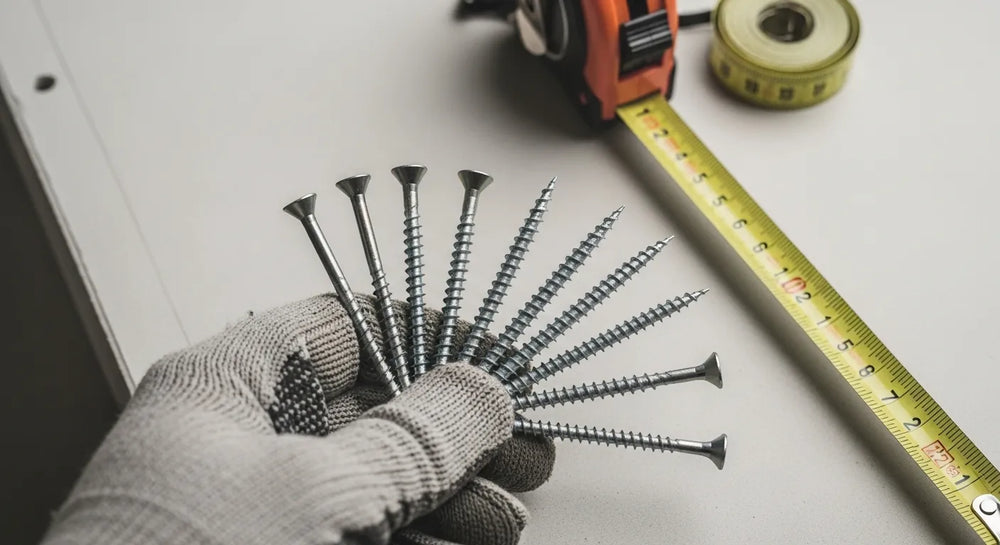
What Size Drywall Screws for 3/8 Drywall? An Expert Guide for Optimal Installation
Table of Contents
- Introduction
- Understanding Drywall and Its Applications
- The Anatomy of a Drywall Screw
- Determining the Right Length: "What Size Drywall Screws for 3/8 Drywall?"
- Thread Type Matters: Coarse vs. Fine
- Gauge (Diameter) of Drywall Screws
- Beyond the Basics: Advanced Considerations for 3/8-inch Drywall
- Best Practices for Installing 3/8-inch Drywall
- The Strategic Value of Sourcing U.S.-Made Drywall Screws
- Maden.co: Your Partner in Procurement Excellence
- Conclusion
- FAQ
Introduction
In the intricate world of construction and renovation, even the smallest components can dictate the success or failure of a project. For procurement managers, MRO buyers, and design engineers, selecting the correct fasteners isn't merely a detail; it's a critical decision that impacts structural integrity, project timelines, and overall cost. Consider a scenario where a large-scale commercial build faces delays because an unexpected batch of drywall screws consistently strips out, compromising the integrity of crucial wall assemblies. Such an incident underscores the paramount importance of precision in material selection. This post dives deep into a seemingly straightforward question – "what size drywall screws for 3/8 drywall?" – revealing the nuanced factors that determine optimal fastener choice and exploring how strategic sourcing of quality, American-made components can elevate project outcomes. Our aim is to equip you with the knowledge to make informed decisions, ensuring durability, compliance, and efficiency in your next drywall installation project.
Understanding Drywall and Its Applications
Drywall, also known as gypsum board, plasterboard, or Sheetrock, is a fundamental building material used to create interior walls and ceilings. Its composition, primarily gypsum plaster pressed between two sheets of thick paper, gives it fire-resistant properties, sound attenuation capabilities, and a smooth surface ready for finishing. Understanding the various types and thicknesses is crucial for proper installation.
What is Drywall? Composition and Types
At its core, drywall consists of a non-combustible gypsum core encased in paper facings. This simple structure offers surprising versatility. Different types of drywall are engineered for specific applications:
- Standard Drywall: The most common type, typically used for interior walls and ceilings in residential and commercial buildings. It comes in various thicknesses.
- Moisture-Resistant Drywall (Green Board): Features a water-resistant paper facing and often a treated core, making it suitable for high-humidity areas like bathrooms, kitchens, and utility rooms. However, it is not waterproof and should not be used in direct water exposure areas.
- Fire-Resistant Drywall (Type X): Contains special non-combustible fibers (like fiberglass) in its gypsum core, enhancing its fire rating. It is thicker and denser than standard drywall and required in specific fire-rated assemblies.
- Sound-Reducing Drywall: Designed with a denser core or laminated layers to reduce sound transmission between rooms, ideal for multi-family dwellings, offices, and home theaters.
- Impact-Resistant Drywall: Features a heavier paper facing and/or fiberglass mesh within the core to resist dents and abrasions, perfect for high-traffic areas.
Why 3/8-inch Drywall? Common Uses and Limitations
The thickness of drywall significantly influences its application and, consequently, the type and size of fasteners required. While 1/2-inch and 5/8-inch drywall are most common for new construction, 3/8-inch drywall holds a specific niche:
-
Common Uses:
- Curved Surfaces: Its thinner profile makes 3/8-inch drywall more flexible and easier to bend, making it a preferred choice for creating arches, curved walls, or decorative elements.
- Double Layering: Often used as the first layer in a two-layer system, particularly when aiming for enhanced soundproofing or fire resistance (often paired with 1/2-inch or 5/8-inch Type X). This layering also helps create a smoother, more durable surface.
- Ceiling Repair: Lighter than thicker panels, 3/8-inch drywall can be easier to lift and install overhead, especially for small ceiling patch jobs where weight is a concern.
- Existing Wall Overlays: When renovating, 3/8-inch drywall can be installed directly over existing plaster or older drywall to create a fresh, smooth surface without excessive build-up, provided the existing substrate is sound.
-
Limitations:
- Reduced Strength: Compared to 1/2-inch or 5/8-inch panels, 3/8-inch drywall offers less rigidity and impact resistance. It is more prone to sagging, especially on ceilings or if unsupported adequately.
- Weight Bearing: It has a lower capacity for supporting wall-mounted items without additional blocking, making proper stud location and robust fastening even more critical.
- Fire Rating: Standard 3/8-inch drywall typically has a lower fire rating than its thicker counterparts.
Given these characteristics, the choice of fastener for 3/8-inch drywall must carefully balance the need for secure attachment with the material's inherent flexibility and reduced structural depth. Over-driving screws or using inappropriate sizes can easily damage the board, compromising the finish and the integrity of the installation.
The Critical Role of Fasteners in Drywall Installation
Fasteners are the unsung heroes of any drywall installation. Their primary function is to securely anchor the drywall panels to the underlying framing (studs or joists), creating a stable and durable surface. However, their role extends beyond mere attachment:
- Structural Integrity: Correctly sized and spaced fasteners prevent movement, cracks, and sagging, ensuring the long-term stability of the wall or ceiling.
- Surface Finish: Properly driven fasteners create subtle dimples that can be easily concealed with joint compound, contributing to a smooth, flawless finish. Improper fasteners or installation can lead to visible screw pops, cracks, and aesthetic flaws.
- Code Compliance: Building codes often specify minimum fastener types, lengths, and spacing for different drywall thicknesses and applications, especially for fire-rated assemblies.
- Sound and Fire Performance: In specialized applications, the correct fastening pattern and screw type are integral to achieving the desired sound transmission class (STC) or fire-resistance rating (FRR).
For MRO buyers and procurement managers, understanding these nuances is key. Sourcing high-quality, reliable fasteners that meet precise specifications is not just about buying screws; it's about investing in the structural integrity, safety, and aesthetic quality of the entire project. This strategic approach to procurement is at the heart of what we champion at Maden.co, where we connect industrial buyers with a vast catalog of premium, American-made components.
The Anatomy of a Drywall Screw
To fully grasp the selection criteria for drywall screws, it's essential to understand their unique design features. Drywall screws are engineered specifically for their task, making them distinct from wood screws or general construction screws.
Key Features: Head, Thread, Point, Shank
Each part of a drywall screw is optimized for efficient and secure fastening:
- Head: Drywall screws typically feature a bugle head. This conical shape allows the screw to seat flush or slightly below the surface of the drywall paper without tearing it excessively. The bugle head creates a shallow depression, or "dimple," which is then easily filled with joint compound for a smooth finish.
- Thread: The threading pattern is critical. Drywall screws have sharp, coarse threads designed to grip effectively into the framing material and hold the drywall securely. The thread extends nearly the full length of the shank, maximizing holding power.
- Point: Most drywall screws have a sharp, self-tapping point that allows them to penetrate the drywall paper and framing material without requiring a pre-drilled pilot hole (in most cases). This design significantly speeds up installation. Some specialty screws might feature a self-drilling point, particularly for metal studs, which resemble a drill bit tip.
- Shank: The unthreaded portion of the screw, if present, is minimal in drywall screws, as the full-length threading is vital for maximizing grip. The diameter of the shank contributes to the screw's shear strength, resisting forces that try to cut the screw in half.
Types of Drywall Screws: Coarse vs. Fine Thread
The choice between coarse and fine thread drywall screws is one of the most critical decisions, primarily determined by the framing material.
- Coarse Thread Screws: These screws have wider, more aggressive threads spaced further apart. They are specifically designed for optimal grip in wood studs (softwood like pine or fir). The coarse threads bite firmly into the wood fibers, providing excellent pull-out resistance. For 3/8-inch drywall being fastened to wooden studs, coarse thread screws are the standard. You can find robust options like 6 x 1-1/4 coarse thread drywall screws that offer reliable performance in such applications.
- Fine Thread Screws: Featuring sharper, narrower threads spaced closer together, fine thread screws are engineered for fastening drywall to metal studs (typically light-gauge steel). The fine threads cut efficiently into the thinner metal, creating a strong mechanical bond without stripping out the pilot hole that the screw creates. Using coarse thread screws in metal studs often leads to stripping and poor holding power. For 3/8-inch drywall on metal framing, a screw like the 6 x 1 fine thread drywall screw would be an appropriate choice, ensuring secure attachment.
Why Specialized Drywall Screws Are Essential
While it might be tempting to use general-purpose screws, specialized drywall screws are essential for several reasons:
- Optimized Performance: Their bugle head prevents paper tearing, the sharp point allows for quick penetration, and the specific thread patterns are designed for maximum holding power in either wood or metal.
- Reduced Damage: Using other screw types can result in damaged drywall (cracked gypsum, torn paper) due to improper head design or thread aggressiveness.
- Proper Finish: Drywall screws create the ideal dimple for easy mudding and sanding, leading to a smooth, professional finish. Other screws often leave irregular depressions or protrude, requiring more extensive finishing work.
- Code Compliance: Many building codes implicitly or explicitly require the use of fasteners designed for drywall applications to ensure safety and structural integrity.
Sourcing these specialized screws from verified U.S. manufacturers, as facilitated by Maden.co, ensures you receive products engineered to precise specifications, guaranteeing consistent quality and performance for your critical projects. Our platform connects industrial buyers with over 2.5 million American-made products, upholding values of Industrial Excellence and Supply Chain Transparency.
Determining the Right Length: "What Size Drywall Screws for 3/8 Drywall?"
The most frequent question regarding drywall screws for 3/8-inch panels revolves around length. Choosing the correct length is paramount to achieving a secure hold without penetrating too deeply or failing to reach the framing adequately.
The 1-inch Rule: Minimum Penetration for 3/8-inch Drywall
A fundamental principle in drywall installation is the "1-inch rule." This guideline dictates that a drywall screw must penetrate at least 1 inch into the framing material (wood or metal stud) to ensure sufficient holding power.
Given that you are installing 3/8-inch drywall, let's break down the calculation:
- Drywall Thickness: 3/8 inch (0.375 inches)
- Required Penetration into Framing: 1 inch
Therefore, the minimum total length of the screw should be: 3/8 inch (drywall) + 1 inch (framing penetration) = 1-3/8 inches.
However, standard screw lengths are typically in increments like 1 inch, 1-1/4 inches, 1-5/8 inches, 2 inches, etc. Based on the 1-inch rule, a screw length of 1-1/4 inches (1.25 inches) would be considered the absolute minimum. While technically slightly short of 1-3/8 inches, the 1/4 inch tolerance in drywall thickness and installation allows for 1-1/4 inch screws to be widely accepted as the shortest viable option for 3/8-inch drywall into typical wood or light-gauge metal studs. Many professionals, however, prefer to go slightly longer for added security, opting for 1-5/8 inch screws where appropriate.
- For single-layer 3/8-inch drywall into wood studs: A 6 x 1-1/4 coarse thread drywall screw is a common and reliable choice. This length provides 7/8 inch of penetration into the stud after accounting for the 3/8 inch drywall, which is often sufficient due to manufacturing tolerances and the robust nature of coarse threads in wood.
- For single-layer 3/8-inch drywall into metal studs: A 6 x 1 fine thread drywall screw is a suitable option, providing 5/8 inch of penetration. While this is slightly less than the ideal 1 inch, the fine threads in light gauge metal studs often achieve adequate hold with this length. For heavier gauge metal studs or increased security, a 1-1/4 inch fine thread screw would be preferred if available.
Factors Influencing Length Selection
While the 1-inch rule provides a baseline, several factors might necessitate a longer screw for 3/8-inch drywall:
-
Stud Material and Condition:
- Softwood vs. Hardwood: In softer wood studs, a slightly longer screw (e.g., 1-5/8 inch) can provide more bite and increased pull-out resistance. In very hard woods, ensuring the screw doesn't strip or snap is more critical.
- Old or Damaged Studs: If the studs are compromised, wet, or have been previously fastened, a longer screw can engage healthier wood fibers deeper within the stud.
-
Multiple Layers of Drywall:
- If you are installing 3/8-inch drywall over an existing layer of drywall (e.g., 1/2-inch or 5/8-inch for soundproofing or fire rating), the screw must pass through both layers plus the required 1-inch into the framing.
- For example, 3/8-inch new drywall + 1/2-inch existing drywall = 7/8-inch total drywall. Add 1 inch for penetration, requiring a 1-7/8 inch screw. In this scenario, a 2-inch or even a 8 x 4 drywall screw would be necessary for specific, very thick multi-layer applications or for fastening into thicker substrates behind the drywall. An 8 x 4 screw, while unusually long for 3/8-inch drywall into a single layer, demonstrates the extreme end of length requirements for specialized, heavy-duty fastening scenarios, such as multiple layers of fire-rated drywall over a thick furring strip and into a structural beam.
- Existing Insulation or Voids: If there's loose insulation or a small gap between the drywall and the stud, a longer screw helps ensure it reaches the solid framing without compressing the insulation too much.
- Fixture Attachment: When hanging heavier items directly to the drywall (though always recommend finding a stud), a slightly longer screw that penetrates further into the stud can offer marginal additional security, though proper blocking is always the superior solution for heavy loads.
- Aesthetic Considerations: In some cases, for very thin trim or delicate finishing, minimizing stud penetration might be desired to avoid hitting wiring or plumbing directly behind the stud, though this is rare for drywall screws.
Practical Scenarios and Maden.co Solutions
For a procurement manager under pressure to source a specific type of drywall screw for a project with mixed wood and metal framing, or an MRO buyer needing to quickly restock for unexpected repairs, the ability to quickly find and finance verified, U.S.-made parts is a game-changer. Maden.co simplifies this by offering a vast, searchable catalog.
Imagine a project requiring:
- Standard 3/8" drywall on wood studs: You'd likely need 6 x 1-1/4 coarse thread drywall screws.
- Standard 3/8" drywall on metal studs: The 6 x 1 fine thread drywall screw would be a primary choice.
- A specialized fire-rated assembly requiring two layers of 3/8" Type X drywall over 2x4 wood studs: This would necessitate longer screws, potentially up to 2 inches, or even longer specialized fasteners like an 8 x 4 drywall screw for securing thicker assemblies or furring strips. While the 8x4 is exceptionally long for simple 3/8" drywall, it highlights the range of American-made options available for complex multi-layer or specific structural needs.
Our platform eliminates the guesswork, connecting you directly to the specifications and availability you need to keep your projects on schedule and within budget, upholding the core value of Supply Chain Transparency.
Thread Type Matters: Coarse vs. Fine
Beyond length, the thread type is a fundamental characteristic dictating screw performance and the choice between coarse and fine threads is paramount. Using the wrong thread type can lead to stripped fasteners, compromised holding power, and costly rework.
Coarse Thread Screws: Best for Wood Studs
Coarse thread drywall screws are easily recognizable by their wide, deep threads with significant spacing between them. This design is specifically engineered to interact with the cellular structure of wood:
- Aggressive Grip: The wide threads create a strong mechanical interlock with the wood fibers as the screw drives in, providing excellent pull-out resistance.
- Fast Driving: The aggressive pitch of the threads allows for quick engagement and driving, making installation efficient.
- Resistance to Stripping in Wood: While over-driving can still strip out wood, coarse threads are generally more forgiving in wood than fine threads, which tend to spin out without biting adequately.
For virtually any application involving 3/8-inch drywall fastened to standard wood framing (e.g., 2x4s, 2x6s, engineered wood I-joists), coarse thread screws are the correct choice. A prime example is the 6 x 1-1/4 coarse thread drywall screw, a staple for securely fastening 3/8-inch drywall into wood.
Fine Thread Screws: Best for Metal Studs
Fine thread drywall screws, in contrast, feature narrower, sharper threads that are spaced much closer together. This design is optimized for light-gauge steel framing:
- Precision Cutting: The fine threads are designed to cut a clean thread into the thin metal of the stud, creating a secure, self-tapping connection.
- Prevents Stripping in Metal: When used correctly, fine threads prevent the screw from stripping out the metal, which can easily happen with coarse threads that are too aggressive for thin metal.
- Smooth Engagement: The finer threads allow for a smoother, more controlled driving experience into metal, reducing the risk of over-driving and damaging the screw or the stud.
For all applications where 3/8-inch drywall is being installed onto metal studs or metal furring channels, fine thread screws are the imperative choice. An excellent example available for such applications is the 6 x 1 fine thread drywall screw, providing the necessary grip and stability in metal framing.
Dual-Purpose Screws and Their Application
While less common for standard drywall installation and often a compromise, some manufacturers offer "hi-low" thread screws that claim dual-purpose functionality. These screws feature a combination of high and low threads designed to offer some grip in both wood and light-gauge metal. However, they are typically not as optimized as dedicated coarse or fine thread screws for their respective materials. For critical structural integrity and long-term durability, relying on the appropriate specialized thread type is always recommended.
Why the Right Thread Prevents Stripping and Ensures Hold
The consequence of using the wrong thread type is significant:
- Coarse Threads in Metal: When coarse threads are driven into thin metal, they often fail to create sufficient engagement. The screw will either spin freely without biting (stripping the metal) or create a weak connection that pulls out easily.
- Fine Threads in Wood: Fine threads lack the aggressive bite needed to displace wood fibers effectively. They tend to just tear through the wood, resulting in poor pull-out resistance and a weak attachment that is prone to loosening over time.
In both scenarios, the result is a compromised installation, leading to potential callbacks, costly repairs, and safety concerns. This highlights why strict adherence to material-specific fasteners is a cornerstone of professional industrial excellence. At Maden.co, we understand that reliability starts with the right part for the right application. Our commitment to Digital Innovation means we make it easy for you to filter and find exactly the screw you need, down to the thread type and material compatibility, ensuring optimal project outcomes every time.
Gauge (Diameter) of Drywall Screws
While length and thread type often take center stage, the gauge, or diameter, of a drywall screw is another important specification that influences its strength and suitability for certain applications.
Common Gauges: #6, #7, #8
Drywall screws are typically measured by their gauge number, with higher numbers indicating a larger diameter. The most common gauges encountered for drywall installation are:
- #6 Gauge: This is the most prevalent and widely used gauge for standard drywall applications, including 3/8-inch drywall. It offers a good balance of strength, ease of driving, and minimal impact on the drywall surface. Its slender profile means it requires less torque to drive and is less likely to cause blowouts or excessive damage to the gypsum core.
- #7 Gauge: Less common than #6 or #8, #7 gauge screws offer a slight increase in shear strength over #6 without being as robust as #8. They might be chosen in scenarios where a little extra strength is desired without moving to a significantly larger fastener.
- #8 Gauge: A larger diameter screw, #8 gauge provides increased shear strength and resistance to bending. While generally overkill for single-layer 3/8-inch drywall, it becomes relevant in more demanding situations. For example, the 8 x 4 drywall screw, while exceptional in length, is also notable for its #8 gauge, indicating its design for extremely heavy-duty applications or multiple layers where maximum holding power and shear strength are paramount.
When to Use a Larger Gauge for 3/8-inch Drywall
While #6 gauge is usually sufficient for single-layer 3/8-inch drywall, there are specific instances where a larger gauge like #8 might be considered:
- Increased Shear Strength: In areas where the drywall might experience unusual shear forces, such as around door frames or in specific architectural details, a #8 gauge screw can offer greater resistance to these lateral forces.
- Specific Fixture Attachment (with Blocking): While not a substitute for proper blocking, if a specific lightweight fixture must be mounted directly to the drywall and partially supported by the stud, a #8 gauge screw would offer a slightly more robust connection.
- Multiple Layers or Thicker Substrates: As mentioned with screw length, if 3/8-inch drywall is part of a multi-layer assembly (e.g., two layers of drywall, or drywall over furring strips), the overall thickness and weight might warrant a #8 gauge screw to provide the necessary cumulative holding power. This is where an 8 x 4 drywall screw might find its niche, for example, in commercial soundproofing assemblies or specialized fire-rated systems.
- Repair or Renovation: When repairing areas where previous fasteners have failed or where the framing might be slightly compromised, a larger gauge screw can sometimes achieve a better bite and stronger hold.
Balancing Strength with Minimal Material Disruption
The choice of gauge involves a careful balance:
- Larger Gauge Benefits: More robust, higher shear strength, greater pull-out resistance (assuming proper penetration).
- Larger Gauge Drawbacks: Requires more torque to drive, higher risk of tearing the drywall paper or causing "blowouts" if not driven carefully, creates a larger dimple that might require more joint compound to conceal.
For most standard 3/8-inch drywall installations, the #6 gauge screw strikes the optimal balance between adequate strength and ease of installation with minimal disruption to the drywall surface. For MRO buyers, specifying the correct gauge is part of ensuring compliance and preventing unnecessary material waste or installation issues. At Maden.co, we streamline this process, offering detailed product specifications that empower you to make precise procurement decisions, furthering our commitment to Customer Empowerment.
Beyond the Basics: Advanced Considerations for 3/8-inch Drywall
While length, thread type, and gauge form the core of screw selection, several other factors can influence the choice of fasteners, especially for specialized 3/8-inch drywall applications.
Drywall Screw Coatings and Corrosion Resistance
The coating on a drywall screw isn't just for aesthetics; it plays a critical role in corrosion resistance and longevity:
- Black Phosphate Coating: This is the most common coating for interior drywall screws. Black phosphate provides a mild level of corrosion resistance, primarily designed to prevent rust spots from bleeding through the joint compound and paint, particularly in typical indoor, dry environments. It also helps the screw hold joint compound and paint better.
- Zinc Coating (Galvanized): Zinc-coated or galvanized screws offer superior corrosion resistance compared to black phosphate. These are recommended for use in moisture-prone areas (like bathrooms or basements, especially with moisture-resistant drywall) or in exterior applications where exposure to humidity or weather is possible. Using galvanized screws prevents rust formation that could stain the finish or compromise the fastener over time.
- Exterior Grade Coatings: For true exterior applications, or in extremely corrosive environments, specialty coatings offering even higher levels of corrosion resistance (e.g., ceramic or polymer coatings) would be necessary, often specified for exterior sheathing rather than interior drywall.
For 3/8-inch moisture-resistant drywall, zinc-coated screws are a wise choice to maximize the life of the installation.
Specialty Screws
The fastener market offers several specialty drywall screws designed for unique situations:
- High-Low Thread Screws: As briefly mentioned, these have alternating high and low threads, intended to provide some grip in both wood and light-gauge metal. While versatile, they are often a compromise.
- Self-Drilling Screws (Tek Screws): These screws feature a drill-bit-like point that can drill its own pilot hole through light-gauge metal without requiring a separate drilling step. They are typically fine-threaded and ideal for fastening drywall to heavier gauge metal studs or multiple layers of metal.
- Trim Head Screws: These screws have a much smaller head than the traditional bugle head, designed for minimal visibility. They are often used for attaching thin trim or specialty panels where a less noticeable fastener is desired. They typically require a pre-drilled pilot hole in the trim material to prevent splitting.
- Cement Board Screws: While not strictly drywall screws, these are relevant if 3/8-inch cement board (often used as a tile backer in wet areas) is being installed. They feature corrosion-resistant coatings, often self-tapping points, and specialized threads to grip the dense cement board effectively.
Acoustical Drywall and Soundproofing
When 3/8-inch drywall is used as part of a soundproofing assembly (e.g., in a staggered stud wall or over resilient channels), the fastening strategy changes:
- Resilient Channels: Drywall is often attached to resilient channels rather than directly to studs to decouple the drywall from the framing, reducing sound transmission. Shorter screws (e.g., 1-inch fine thread) are typically used for this, as they only need to penetrate the channel, not the stud behind it. Crucially, screws should not hit the stud through the resilient channel, as this defeats the soundproofing purpose.
- Green Glue or Other Dampening Compounds: When using viscoelastic compounds between layers of drywall, the fasteners must hold the layers together while the compound cures. Standard drywall screws are typically used, but the overall assembly's thickness will dictate screw length.
Fire-Rated Drywall Applications
For 3/8-inch Type X drywall in fire-rated assemblies, adherence to manufacturer specifications and local building codes is absolutely critical:
- Specific Screw Types and Lengths: Fire-rated assemblies often require specific screw lengths and types (e.g., Type S or W drywall screws) to maintain the integrity of the fire barrier. Longer screws may be required for specific two-layer applications, like an 8 x 4 drywall screw, if a very thick fire-rated assembly is specified.
- Precise Spacing: Fastener spacing is often tighter than standard installations to ensure the drywall remains securely attached during a fire event, preventing premature collapse.
- Insulation Requirements: The fastening of fire-rated drywall is often intertwined with specific insulation requirements within the wall cavity.
Adhesive-Assisted Installation
In certain high-performance or repair scenarios, drywall can be installed with construction adhesive in addition to screws. The adhesive provides an immediate bond and reduces the number of screws required, which can be particularly beneficial for 3/8-inch drywall, reducing the risk of screw pops and improving overall rigidity. When using adhesive, screws act as temporary clamps until the adhesive cures, after which they contribute to the long-term mechanical bond.
For procurement managers and design engineers, these advanced considerations underscore the need for a comprehensive understanding of materials and their interactions. At Maden.co, we pride ourselves on facilitating access to the diverse range of specialized U.S.-made components needed for such nuanced applications, upholding our value of American Manufacturing Pride by ensuring quality and specificity.
Best Practices for Installing 3/8-inch Drywall
Even with the perfect screw selected, proper installation techniques are essential to ensure the longevity and professional finish of 3/8-inch drywall. Its thinner profile requires a bit more care than thicker panels.
Screw Spacing and Patterns
Correct screw spacing is vital for preventing drywall movement, sagging, and unsightly "screw pops" later on.
- Edges: For wall panels, screws should be placed every 7 inches along the edges of the panel, approximately 3/8 to 1/2 inch from the edge to avoid crumbling.
- Field: In the field of the panel (i.e., along intermediate studs), screws are typically spaced every 12 inches.
- Ceilings: For ceilings, due to gravity and potential for sagging, spacing is often tighter: 5-7 inches along edges and every 7-12 inches in the field. Given the thinner nature of 3/8-inch drywall, it's often prudent to err on the side of tighter spacing for ceiling applications.
- Staggering: When fastening two layers of drywall, the screws in the second layer should be offset from the screws in the first layer, typically by several inches, to avoid hitting the same spot and ensure a continuous, strong connection.
Dimpling and Avoiding Blowouts
The goal is to drive the screw head just below the surface of the drywall paper, creating a slight "dimple" that can be easily covered with joint compound.
- Dimpling: Use a drywall screw gun or a drill with a clutch and a dimpler bit. This allows for precise control over the depth, ensuring the screw head is recessed without tearing the paper.
- Avoiding Blowouts: Over-driving a screw will tear the paper facing (a "blowout"), significantly reducing its holding power. The screw relies on the integrity of the paper to hold the gypsum core. If a blowout occurs, remove the screw, slightly offset the new screw, and ensure the damaged area is adequately supported and mudded. For 3/8-inch drywall, this risk is slightly higher due to the thinner material.
Using the Right Tools: Drill vs. Drywall Screw Gun
The right tool makes all the difference for efficient and accurate drywall installation:
- Drywall Screw Gun: This specialized tool is highly recommended for professional and high-volume drywall installation. It features an adjustable nose cone that automatically sets the perfect screw depth, preventing over-driving. It also has higher RPMs optimized for fast drywall fastening.
- Cordless Drill/Driver with Clutch: For smaller projects or DIYers, a standard cordless drill with an adjustable clutch can work. Set the clutch to a low-to-medium torque setting and practice on scrap drywall to find the ideal depth. A dimpler bit attachment can further aid in consistent depth control. Avoid impact drivers as they make precise depth control very difficult and often lead to blowouts.
Safety Considerations
Safety should always be a priority on any job site:
- Eye Protection: Always wear safety glasses to protect against flying dust and debris.
- Dust Masks: Drywall dust can be a respiratory irritant. Wear a dust mask, especially when cutting, sanding, or working in poorly ventilated areas.
- Gloves: Protect hands from cuts from drywall edges and blisters from repetitive work.
- Proper Lifting Techniques: Drywall panels, even 3/8-inch, can be heavy and awkward. Lift with your legs, not your back, and use a partner or a panel lift for large sheets, especially on ceilings.
- Stable Scaffolding/Ladders: Ensure all elevated work platforms are stable and rated for your weight and materials.
Adhering to these best practices, coupled with sourcing the correct, high-quality fasteners, ensures that your 3/8-inch drywall installation is not only aesthetically pleasing but also structurally sound and compliant with industry standards. At Maden.co, we understand the full scope of industrial needs and are dedicated to providing the resources and products that support such rigorous standards, truly driving America's manufacturing revival.
The Strategic Value of Sourcing U.S.-Made Drywall Screws
In an increasingly interconnected yet volatile global economy, the strategic procurement of industrial components has never been more critical. For procurement managers and business owners, the decision to source U.S.-made drywall screws, or any component for that matter, goes far beyond a simple transaction; it's an investment in resilience, quality, and national economic strength.
Quality and Compliance: Meeting DIN, NPT, ASTM Standards
American manufacturing is synonymous with stringent quality control and adherence to critical industry standards. When you procure U.S.-made drywall screws, you are procuring confidence:
- Consistent Quality: U.S. manufacturers operate under rigorous quality management systems, leading to fasteners with precise dimensions, consistent threading, and reliable coatings. This reduces the risk of defects, stripped screws, and costly rework on the job site.
- Compliance with Standards: American-made products are designed and manufactured to meet or exceed established standards such as ASTM International (e.g., ASTM C1002 for steel drywall screws), ensuring performance and safety benchmarks are met. This is particularly vital for projects requiring specific certifications or adherence to building codes, such as fire-rated assemblies.
- Material Certifications: For critical applications, U.S. manufacturers can often provide material certifications, offering full transparency on the composition and properties of the screws – a level of detail often difficult to obtain from overseas suppliers.
This commitment to Industrial Excellence is a cornerstone of our mission at Maden.co. We verify our network of 800+ U.S. manufacturers to ensure that every product, from the smallest screw to complex machinery parts, meets the highest quality and compliance standards.
Supply Chain Resilience: Reducing Lead Times, Mitigating Risks
The recent past has starkly illuminated the vulnerabilities of extended global supply chains. Sourcing domestically offers a powerful antidote:
- Shorter Lead Times: Proximity to manufacturers means significantly reduced shipping times and quicker access to components, enabling more agile project management and faster response to unexpected needs.
- Mitigated Geopolitical Risks: Less reliance on international shipping and geopolitically sensitive regions reduces exposure to tariffs, trade disputes, and logistical disruptions.
- Enhanced Reliability: Domestic supply chains are generally more predictable and less susceptible to the unforeseen delays that can plague international freight. This translates directly to improved project scheduling and reduced downtime for MRO operations.
- Responsive Support: Direct access to U.S. manufacturers allows for clearer communication, faster resolution of issues, and more responsive technical support.
Total Cost of Ownership (TCO): Beyond Unit Price
Focusing solely on the unit price of a screw can be a costly mistake. A true understanding of Total Cost of Ownership reveals the hidden value of domestic sourcing:
- Reduced Rework: High-quality, compliant fasteners lead to fewer installation errors, less material waste, and significantly reduced labor costs associated with fixing defects.
- Increased Longevity: Reliable, corrosion-resistant screws contribute to the long-term durability of the installation, minimizing future maintenance and repair expenses.
- Efficiency Gains: Faster, smoother installation with consistent fasteners translates into labor savings and quicker project completion, bringing revenue sooner.
- Lower Inventory Holding Costs: Shorter lead times allow for "just-in-time" inventory strategies, reducing the need for large safety stocks and the associated carrying costs.
- Reduced Expedited Shipping Fees: Predictable supply reduces the need for costly expedited shipping when project timelines tighten unexpectedly.
For a procurement manager, choosing a slightly higher unit-cost U.S.-made screw might yield substantial savings in TCO over the life of a project.
Supporting American Manufacturing: Our Mission to Democratize Access
At Maden.co, our mission is to democratize access to American manufacturing. We believe that choosing American-made components is a powerful statement and a strategic advantage for any business:
- Economic Impact: Every dollar spent on U.S.-made products supports domestic jobs, fosters innovation, and strengthens local communities, contributing to a robust national economy.
- Innovation and Advancement: A strong domestic manufacturing base drives innovation in materials science, engineering, and production techniques, keeping America at the forefront of industrial excellence.
- National Security: A resilient manufacturing sector is a cornerstone of national security, ensuring critical supplies are available when needed.
Our vision is to become the definitive platform that proves American-made components are as accessible and convenient as any global alternative. We connect industrial buyers with over 2.5 million American-made products from our network of 800+ verified U.S. manufacturers, truly driving the manufacturing revival with our tagline: "America's manufacturing revival is here." You can learn more about our mission to champion American manufacturing.
Customer Empowerment and Digital Innovation
Maden.co is built on the values of Customer Empowerment and Digital Innovation:
- Seamless Procurement: Our B2B marketplace is designed to reduce procurement friction, offering an intuitive platform to quickly find, compare, and purchase industrial supplies. For a design engineer needing specific material certifications for a new prototype, or an MRO buyer facing an unexpected equipment breakdown, the ability to quickly find a verified, U.S.-made part is a game-changer.
- Vast Catalog: With over 2.5 million products, our catalog ensures that even hard-to-find components are readily accessible, eliminating the need to scour multiple suppliers.
- Transparency: We provide comprehensive product details, specifications, and manufacturer information, fostering trust and informed decision-making.
By leveraging Maden.co, businesses gain a strategic partner in building a more reliable and efficient procurement process, enhancing supply chain resilience, and ensuring compliance with critical industry standards.
Maden.co: Your Partner in Procurement Excellence
Navigating the complexities of industrial procurement demands a partner who understands the intricacies of supply chains and the unwavering need for quality. Maden.co stands as that strategic partner, offering a meticulously curated marketplace designed to empower procurement managers, MRO buyers, and business owners alike.
Our platform provides seamless access to a vast network of over 800+ verified U.S. manufacturers, all committed to producing the high-quality components that form the backbone of American industry. Whether you're searching for specific drywall screws like the 6 x 1-1/4 coarse thread drywall screws, the specialized 6 x 1 fine thread drywall screw, or even an exceptionally long 8 x 4 drywall screw for unique applications, our intuitive platform connects you directly to the source.
The power of Maden.co's marketplace lies in its ability to condense a fragmented industry into a single, transparent, and efficient hub. We cut through the noise, offering detailed product specifications, enabling you to make informed decisions that improve your Total Cost of Ownership and bolster your supply chain resilience.
A key differentiator that further streamlines your capital-intensive projects is our Instant Financing option. We understand that large-volume purchases can impact cash flow. That's why we've integrated a flexible financing solution directly into the checkout process, allowing you to manage your capital effectively without compromising on project timelines or quality. You can apply for Instant Financing at checkout to streamline your capital-intensive projects, ensuring your operations remain agile and well-supported.
Are you a qualified U.S. manufacturer seeking new opportunities to connect with industrial buyers across the nation? Join our growing network and become a vital part of America's manufacturing revival.
If you have specific sourcing questions or require assistance navigating our extensive catalog, our expert team is always ready to help. Don't hesitate to contact our team for personalized support and guidance.
Conclusion
The seemingly simple question of "what size drywall screws for 3/8 drywall" unveils a complex interplay of material science, application specifics, and strategic procurement. We've explored how crucial factors like screw length, thread type, gauge, and specialized coatings contribute to the structural integrity, longevity, and overall success of any project. From the foundational 1-inch penetration rule to the nuances of coarse versus fine threads for different framing materials, every choice impacts both the immediate installation and the long-term performance of the assembly.
For businesses committed to excellence, the decision to procure high-quality, American-made fasteners through a transparent and efficient marketplace is a strategic advantage. It’s a commitment to robust supply chains, uncompromising quality standards, reduced Total Cost of Ownership, and the invaluable support of domestic manufacturing.
Empower your procurement process and build with confidence. We invite you to explore the extensive catalog of U.S.-made drywall screws and over 2.5 million other industrial products available on Maden.co. Leverage our innovative platform to find the precise components you need, enhance your project efficiency, and take advantage of Instant Financing at checkout to keep your capital-intensive projects moving forward seamlessly. America's manufacturing revival is here, and your next successful project starts with Maden.co.
FAQ
Q1: What is the absolute minimum length of drywall screw I can use for 3/8-inch drywall?
A1: Based on the "1-inch rule" for penetration into the framing, the minimum total screw length would theoretically be 1-3/8 inches. However, commonly available 1-1/4 inch screws are widely accepted for 3/8-inch drywall into typical wood or light-gauge metal studs, often providing sufficient grip for standard applications. For wood, 6 x 1-1/4 coarse thread drywall screws are a standard choice, and for metal, 6 x 1 fine thread drywall screws are often used.
Q2: Should I use coarse or fine thread screws for 3/8-inch drywall?
A2: The choice depends entirely on your framing material. Use coarse thread screws for wood studs, as their aggressive threads grip wood fibers effectively. Use fine thread screws for metal studs, as their sharper, closer threads cut cleanly into the thinner metal without stripping. Using the wrong type can severely compromise the holding power.
Q3: What is "Instant Financing" on Maden.co and how can it benefit my business?
A3: Instant Financing is a feature available at checkout on Maden.co that allows businesses to apply for immediate financing for their purchases. It acts as a strategic tool, enabling procurement managers and business owners to manage cash flow more effectively and make larger-volume purchases of essential U.S.-made industrial components without immediate upfront capital. This helps streamline capital-intensive projects and maintain supply chain agility.
Q4: Why is it important to buy U.S.-made drywall screws from Maden.co?
A4: Sourcing U.S.-made drywall screws from Maden.co offers several strategic benefits. It ensures adherence to stringent quality and compliance standards (like ASTM), enhances supply chain resilience by reducing lead times and risks, and often lowers your Total Cost of Ownership through reduced rework and increased efficiency. Furthermore, it supports American manufacturing, contributing to domestic job creation and economic strength. Maden.co connects you directly with verified U.S. manufacturers, embodying our mission to champion American industrial excellence.


