

MINCO Isolated Tip Sensor Probe - Tip-Sensitive RTD & Thermocouple
MINCO Isolated Tip Sensor Probe - Tip-Sensitive RTD & Thermocouple
SKU:MIN-e17184
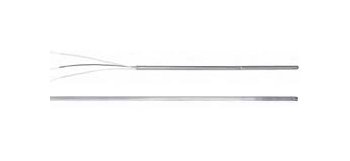
Accurately sense temperatures with MINCO's isolated tip sensor probe for 'hot' bearings. Ideal for up to 260°C (500°F) with fast response copper alloy tip.
Regular price
$79.99
Regular price
Sale price
$79.99
Unit price
per
Initiate Order

MINCO Isolated Tip Sensor Probe - Tip-Sensitive RTD & Thermocouple
$79.99
Quantity: 1
Claim Your Seller Account
MINCO Isolated Tip Sensor Probe - Tip-Sensitive RTD & Thermocouple
$79.99
Quantity: 1
Delivery via Maden
Expect your order to arrive on time.
Secure Payments
All orders are processed through a secure, PCI-compliant checkout.
The MINCO Tip-Sensitive Isolated Tip Sensor Probe is designed to accurately sense temperatures up to 260°C (500°F) and 155°C (311°F) for fiberglass probes, making it ideal for monitoring 'hot' bearings. With a copper alloy tip for rapid response and increased sensitivity, this sensor probe ensures precise temperature measurements in demanding environments. It features an electrically isolated sensing tip for enhanced safety and reliability, suitable for a range of industrial applications.
Ready to Grow Without Cash Flow Constraints?


Product Specifications
Specifications Elements
Dual | Single
Specifications Normally In Stock
Yes
Specifications Sensor Type
Resistance Temperature Detector (RTD) | Thermocouple
Specifications Shock
Withstands 100 Gâs min. sine wave shock of 8 milliseconds duration
Specifications Temperature Range
-50 to 260 ºC | -58 to 500 ºF
Specifications Units Per Package
1
Specifications Vibration
Withstands 10 to 2000 Hz at 20 Gâs min. per MIL-STD-202, Method 204, Test Condition D