


Unilok Reducing Union - 316 SS, 3/4 in x 1/4 in
Unilok Reducing Union - 316 SS, 3/4 in x 1/4 in
SKU:CYL-455c40
Precision-engineered Unilok Reducing Union for secure and leak-free connections in high-pressure environments. Made of 316 SS.
Regular price
$60.87
Regular price
Sale price
$60.87
Unit price
per
Initiate Order

Unilok Reducing Union - 316 SS, 3/4 in x 1/4 in
$60.87
Quantity: 1
Claim Your Seller Account
Unilok Reducing Union - 316 SS, 3/4 in x 1/4 in
$60.87
Quantity: 1
Delivery via Maden
Expect your order to arrive on time.
Secure Payments
All orders are processed through a secure, PCI-compliant checkout.
The Unilok Reducing Union is a premium 316 SS tube fitting designed for precision and durability. With a straight shape and TF x Tube Fitting end connections, it ensures secure and leak-free connections. This fitting excels in high-pressure environments, offering reliable performance for a wide range of applications. Meet your instrumentation tube fitting needs with confidence using the Unilok Reducing Union.
Ready to Grow Without Cash Flow Constraints?


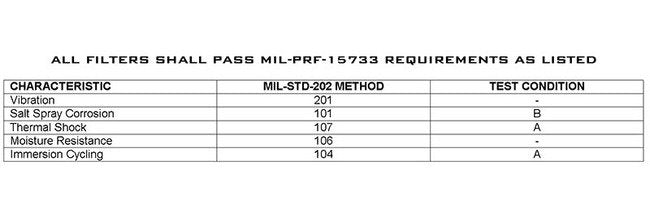
Product Specifications
Filter Circuit And Application Information Filter Circuit And Ap
Three different types of filter circuits are shown in this series; L, Pi and T; each with its own characteristics An analysis of each application by engineering personnel will indicate a preferred circuit from cost, performance and size considerations, as directed below: Features: L - Least expensive but most effective with high impedance noise sources.Pi - Often used in line filters when source and load impedance are not known but can increase unfiltered interference in control circuits or switch circuits.T - Reduces line noise level best in low impedance applications but most expensive.L filters provide significant insertion loss because of the impedance mismatch created when the capacitor end of the filter is mounted towards the high impedance noise source (load) and the inductor end is mounted towards the low impedance line.Pi filters usually provide maximum "dB per dollar" in a matched 50 ohm system, but many times are less effective under actual operating or test conditions. They are particularly suspect in installations involving switching transients, since they can in some instances increase the interference problem rather than correct it.The T circuit is used primarily with switching circuits. It reduces noise level on the system lines, causes no deterioration in the life of switching contacts, and in some instances actually prolongs switch contacts life.The successful operation of any high frequency filter depends on adequate bonding and good RF isolation between input and output. The filter must be bonded to same potential as one side of the RF noise source being filtered. The performance of the filter can be completely masked by ineffective bonding or poor RF isolation between input and output circuits. The RF filter uses the case as common ground for the internal capacitor and cannot provide its total performance if RF is permitted to bypass the filters by means of coupling between input and output circuits.If you have any questions about the circuit to be employed, please call our engineering department for application advice and information.
Specifications Body D
1.75 in
Specifications Body L
4.12 in
Specifications Ckt
T
Specifications Current Rating
10 A
Specifications Insertion Loss 015 Mhz
45
Specifications Terminal Dimensions A
0.68 in
Specifications Terminal Dimensions Thread
3/4-20
Specifications Terminal Dimensions Z
0.656 in
Specifications Voltage Ac
120 V
Specifications Voltage Dc
400 V