
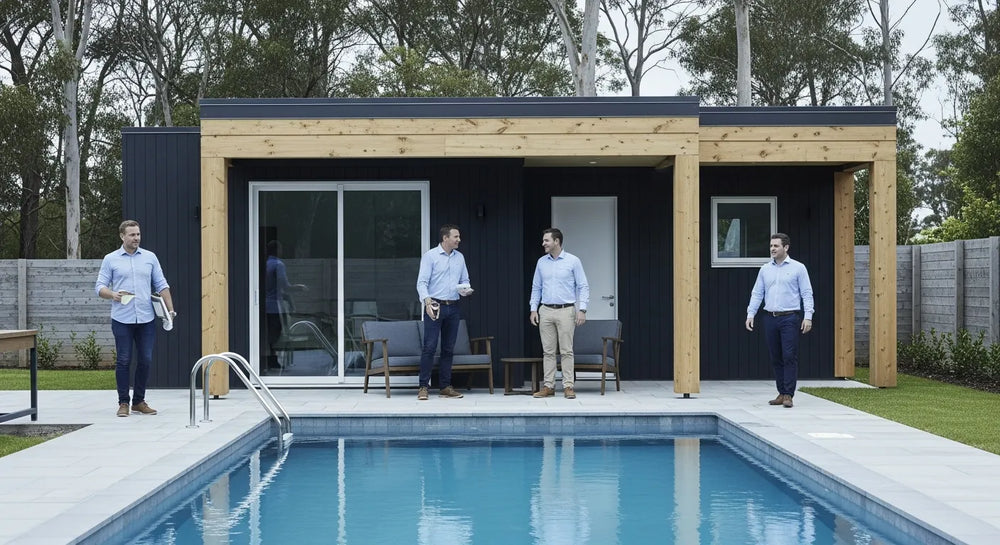
The Average Cost to Build a Pool House
Table of Contents
- Introduction
- Defining the Cost Spectrum
- Critical Cost Drivers: Breaking Down the Line Items
- The Liquidity Challenge in Industrial Procurement
- Sourcing American: The Strategic Advantage
- CapEx Strategies and Tax Considerations
- Design and Engineering: Maximizing Value
- Practical Procurement Scenarios
- Maintenance and Long-Term Total Cost of Ownership (TCO)
- Why Maden.co is Your Strategic Partner
- Conclusion
- Frequently Asked Questions
Introduction
Imagine a property manager at a high-end resort or a commercial developer overseeing a multi-family luxury complex. The project is at a standstill because the procurement of critical structural components—industrial-grade moisture-resistant framing, specialized electrical panels, or custom American-made cabinetry—is delayed by a four-week credit approval process from a legacy supplier. In the world of commercial construction and facility management, these delays do not just represent a nuisance; they represent lost revenue, mounting labor costs, and broken timelines. When evaluating the average cost to build a pool house, businesses often focus strictly on labor and materials, yet the hidden costs of procurement friction and capital liquidity frequently dictate the true final price tag.
The purpose of this guide is to provide a comprehensive breakdown of the financial and logistical requirements for constructing a professional-grade pool house. We will explore the variables that influence cost—from site preparation and utility integration to the selection of premium, U.S.-manufactured materials. Beyond the raw numbers, we will address how strategic procurement through Maden.co and modern financing solutions like Maden Pay can compress project timelines and optimize cash flow. At Maden.co, our mission is to democratize access to American manufacturing, ensuring that procurement managers and business owners have the tools they need to build resilient, domestic supply chains without the traditional hurdles of industrial purchasing. By the end of this article, you will understand how to balance the average cost to build a pool house with the need for speed, quality, and financial efficiency.
Defining the Cost Spectrum
The average cost to build a pool house is rarely a single, static figure. In a commercial or high-end residential B2B context, the costs can range significantly based on the intended use of the structure. A basic enclosure meant purely for storing pool chemicals and filtration equipment will have a vastly different price point than a fully conditioned "cabana" featuring a kitchen, guest suite, and locker room facilities.
On average, businesses should expect to invest between $150 and $600 per square foot. For a standard 300-square-foot structure, this equates to a range of $45,000 to $180,000+. However, for complex commercial installations that must adhere to strict ADA compliance, local building codes, and high-traffic durability standards, the upper end of that spectrum is more realistic.
The Low-End: Functional Utility
At the lower end of the cost spectrum, the focus is on utility. These structures often utilize prefabricated kits or simple wood-frame construction. While cost-effective, they may lack the longevity required for commercial environments. Even at this level, sourcing quality American-made components is essential to ensure that the structure can withstand the corrosive environment inherent to poolside locations.
The Mid-Range: Enhanced Comfort
A mid-range pool house typically includes basic plumbing and electrical work. This allows for a functional bathroom, a small changing area, and perhaps a basic wet bar. These structures often use mid-grade materials like fiber cement siding and standard shingles. The procurement of these materials requires a reliable partner who can ensure that "off-the-shelf" doesn't mean "low-quality."
The High-End: Luxury and Commercial Grade
High-end pool houses are essentially small secondary buildings. They feature full HVAC systems, high-end kitchens with industrial-grade appliances, custom masonry, and premium architectural finishes. For developers, these are "amenity centers" that drive property value. At this level, the cost of procurement is secondary to the cost of downtime. This is where Maden.co excels, connecting buyers with verified U.S. manufacturers who can deliver the specialized equipment needed for such high-stakes projects.
Critical Cost Drivers: Breaking Down the Line Items
To accurately estimate the average cost to build a pool house, one must look at the specific components that make up the whole. For an MRO buyer or a construction engineer, the following categories represent the bulk of the expenditure.
Site Preparation and Foundation
Before a single beam is raised, the site must be prepared. This is often an overlooked aspect of the total cost. Site preparation includes clearing land, leveling the grade, and ensuring proper drainage. In pool-adjacent construction, drainage is particularly critical to prevent soil erosion or water damage to the pool’s shell.
Foundation costs vary by geography. A simple concrete slab might suffice in warmer climates, but in the North, deep footings or piers may be required to get below the frost line. Expect site prep and foundation work to account for 10% to 15% of the total budget.
Structural Materials and Labor
The "bones" of the pool house represent a significant portion of the cost. Steel-frame construction is increasingly popular in commercial settings due to its resistance to mold, fire, and pests—all concerns in a high-moisture environment. Wood-frame construction remains the standard for residential-style cabanas but requires high-quality treated lumber and vapor barriers.
Labor is the most volatile variable. In many U.S. markets, skilled trades—electricians, plumbers, and masons—are in high demand. One way to mitigate labor costs and project duration is to source high-quality prefabricated or modular units from U.S. manufacturers. By visiting our browse all categories page, you can find a variety of structural components and materials that meet these industrial standards.
Utilities: The Infrastructure Layer
Running water, electricity, and gas to a pool house is a significant undertaking. This involves trenching from the main building or utility tie-ins, which can cost several thousand dollars depending on the distance and the hardness of the ground.
- Plumbing: Requires industrial-grade piping, backflow preventers, and drainage systems that can handle both greywater and potentially chemical runoff from locker rooms.
- Electrical: Pool houses need dedicated sub-panels to handle lighting, kitchen appliances, and often the pool’s own filtration pumps and heaters.
- HVAC: To prevent mold and ensure occupant comfort, climate control is essential. This includes high-efficiency mini-split systems or integrated ductwork.
The Liquidity Challenge in Industrial Procurement
In the traditional construction and MRO world, the "liquidity challenge" is a persistent barrier. Most U.S. manufacturers and industrial suppliers operate on net-30, net-60, or even net-90 payment cycles. However, getting access to these terms is often a bureaucratic nightmare. For a facility manager whose existing pool house roof just failed mid-season, waiting three weeks for a credit department to process a manual application is simply not an option.
This "time-to-terms" friction is exactly what we aim to eliminate at Maden.co. Traditional procurement relies on antiquated paper-based systems. We believe the U.S. Manufacturing Revival requires digital innovation. By utilizing Maden Pay, buyers can access embedded financing directly at the point of sale.
Instead of negotiating credit lines with twenty different vendors for lumber, plumbing fixtures, and lighting, a single approval through Maden Pay works across the entire marketplace. This allows businesses to check eligibility in under 60 seconds via a soft credit check, unlocking credit lines from $5,000 to $250,000+ for qualified businesses. This liquidity ensures that the average cost to build a pool house is managed through smart cash flow, not just cash on hand. Disclaimer: Approvals, limits, and terms depend on business eligibility.
Sourcing American: The Strategic Advantage
At Maden.co, we are committed to supply chain transparency. When calculating the average cost to build a pool house, many buyers are tempted by low-cost overseas imports. However, the true Total Cost of Ownership (TCO) often favors U.S.-manufactured goods.
Quality and Compliance
American-made products must adhere to stringent domestic standards (e.g., NPT for plumbing, UL for electrical). Sourcing through our platform ensures that the components you buy—from industrial pumps to outdoor lighting—are compliant with local codes, reducing the risk of failed inspections and costly rework.
Lead Times and Reliability
International shipping remains volatile. A delay in a shipment of specialty tiles or windows from overseas can stall a project for months, ballooning the cost of labor as contractors sit idle. Sourcing from verified U.S. manufacturers through Maden.co reduces these lead times. We are not just a catalog; we are a strategic partner in building a resilient, U.S.-based supply chain. We invite domestic producers to join our mission by completing our vendor registration to help drive this revival.
CapEx Strategies and Tax Considerations
For many businesses, a pool house is a capital expenditure (CapEx). Understanding the tax implications can significantly alter the net cost of the project. One powerful tool available to U.S. businesses is bonus depreciation.
100% Bonus Depreciation
Under current tax laws (though subject to annual changes and phase-outs), businesses may be able to utilize bonus depreciation to deduct a large portion—or even 100%—of the cost of qualifying equipment and structures in the first year they are placed in service. This can drastically reduce the tax burden for the fiscal year, effectively lowering the "real" average cost to build a pool house.
For example, if a hotel builds a $150,000 pool house cabana and can classify the majority of the interior equipment and structural components as qualifying property, the immediate tax savings can be substantial. Note: Tax laws are complex and change frequently. You should always consult your tax professional before making major CapEx decisions based on depreciation strategies.
Aligning Cash Cycles
Using Maden Pay allows you to align your payment terms with your business’s cash conversion cycle. If your pool house project is designed to increase seasonal revenue, opting for net-60 or net-90 terms can help you pay for the materials using the very revenue the new amenity generates. This strategic use of credit is a hallmark of industrial excellence.
Design and Engineering: Maximizing Value
A well-engineered pool house should be built for "Industrial Excellence." This means selecting materials that are not only aesthetically pleasing but also technically superior in a humid, chlorine-heavy environment.
Moisture Management
The primary enemy of any pool-adjacent structure is moisture. Standard drywall and wood will rot and mold within a few seasons. Design engineers should specify:
- Closed-cell spray foam insulation: To provide a superior vapor barrier.
- Cementitious backer boards: For all tiled areas.
- Stainless steel or powder-coated hardware: To resist corrosion from pool chemicals.
Accessibility and Safety
For commercial projects, ADA (Americans with Disabilities Act) compliance is mandatory. This includes specific door widths, ramp slopes, and restroom grab-bar placements. Failure to include these in the initial design will lead to expensive retrofitting. When you browse all categories on our site, you can filter for industrial-grade hardware and fixtures that meet these critical safety requirements.
Practical Procurement Scenarios
Let’s look at how procurement efficiency impacts the average cost to build a pool house through two practical scenarios.
Scenario A: The Traditional Paper Trail
A country club decides to build a new locker room and pool house. The procurement manager identifies five different suppliers for roofing, plumbing, flooring, and furniture. Each supplier requires a separate credit application. The roofing supplier takes two weeks to approve a $20,000 credit limit. Meanwhile, the plumbing supplier denies credit because the club’s recent financial statement hasn't been audited yet. The manager is forced to pay cash upfront for plumbing, depleting the project's contingency fund. The project is delayed by 25 days just in the "onboarding" phase.
Scenario B: The Maden.co Advantage
The same country club uses Maden.co. They check eligibility for Maden Pay and are approved for a $150,000 credit line in 60 seconds. They source their commercial-grade HVAC, American-made outdoor furniture, and structural steel all through the Maden.co marketplace. Because the credit line is unified, they checkout instantly with net-60 terms. The materials arrive on-site within 10 days, and the project stays ahead of schedule. The "time-to-terms" friction is eliminated, and the business preserves its cash for operational emergencies.
Maintenance and Long-Term Total Cost of Ownership (TCO)
The average cost to build a pool house is only the "initial" cost. A truly professional procurement strategy considers the TCO over 10 to 20 years.
Choosing Low-Maintenance Materials
While natural cedar siding looks beautiful, it requires staining every 2–3 years. In a B2B context, the labor cost of maintenance often outweighs the initial material savings. Choosing high-quality composite materials or American-made fiber cement can reduce long-term maintenance costs by 60%.
Energy Efficiency
Industrial-grade windows and insulated doors are essential. Since pool houses often have large glass exposures to view the pool area, heat gain can be significant. Investing in low-E glass and high-efficiency cooling units might increase the average cost to build a pool house by 5%, but it will pay for itself in reduced utility bills within the first few years of operation.
Why Maden.co is Your Strategic Partner
At Maden.co, we understand that we are not just selling products; we are providing the infrastructure for your business's growth. Our commitment to About Us values—American Manufacturing Pride, Digital Innovation, and Supply Chain Transparency—means every product on our platform is vetted for quality and origin.
We recognize the structural liquidity challenges facing the manufacturing sector. By embedding Maden Pay into our marketplace, we provide a solution that is as fast as the modern business world demands. We are building a future where sourcing "Made in USA" is the easiest, most financially sound choice a procurement manager can make.
If you are a manufacturer looking to reach a wider audience of professional buyers, we encourage you to join our platform. The vendor registration process is streamlined to get your products in front of the people who are rebuilding American infrastructure.
Conclusion
Understanding the average cost to build a pool house is about more than just tallying up a list of materials. It is about understanding the interplay between site requirements, utility infrastructure, material quality, and—perhaps most importantly—the efficiency of the procurement process. For American businesses, the ability to source high-quality, domestic products while maintaining liquid cash flow is a competitive necessity.
By leveraging the Maden.co marketplace, you gain access to millions of verified American-made products, all backed by a financing system designed for the speed of modern industry. Whether you are a design engineer drafting the next luxury amenity or a facility manager maintaining a complex of properties, our platform is built to support your success. We invite you to contact us for any specific sourcing needs or to learn more about how we can help streamline your next project.
The U.S. Manufacturing Revival Is Here. It is built one project at a time, using the best materials our country has to offer, supported by the smartest financing tools available. We look forward to being your partner in this journey.
Frequently Asked Questions
1. What is the biggest factor in the average cost to build a pool house?
The most significant cost driver is typically the inclusion of "wet" utilities—plumbing and sewer lines. Running these utilities from the main building to the pool house requires significant trenching, specialized labor, and high-grade materials. Structures without bathrooms or kitchens are substantially less expensive than those with full plumbing.
2. How can I reduce the "time-to-terms" for my construction project?
Traditional procurement often takes weeks to establish credit lines with multiple vendors. You can reduce this friction by using Maden Pay. With a single application, qualified businesses can check eligibility for a credit line that works across the entire Maden.co marketplace, allowing for instant purchasing with net-30, 60, or 90-day terms.
3. Are American-made pool house materials more expensive?
While the initial purchase price of American-made goods can sometimes be higher than low-quality imports, the Total Cost of Ownership (TCO) is often lower. U.S.-made products typically offer better compliance with local building codes, higher durability in harsh environments, and significantly shorter lead times, which prevents expensive project delays.
4. Can a pool house qualify for business tax deductions?
In many cases, yes. If the pool house is used for a business purpose (such as a guest amenity at a resort or a multi-family housing complex), it may qualify as a capital asset. Businesses may be able to utilize 100% bonus depreciation for certain components of the build. However, tax regulations are subject to change, so you must consult with a qualified tax professional to confirm eligibility.
Ready to start your project? Browse all categories on Maden.co today to find the American-made materials you need, and check eligibility for Maden Pay to secure the financing your business deserves. Disclaimer: Approvals, limits, and terms depend on business eligibility.


