
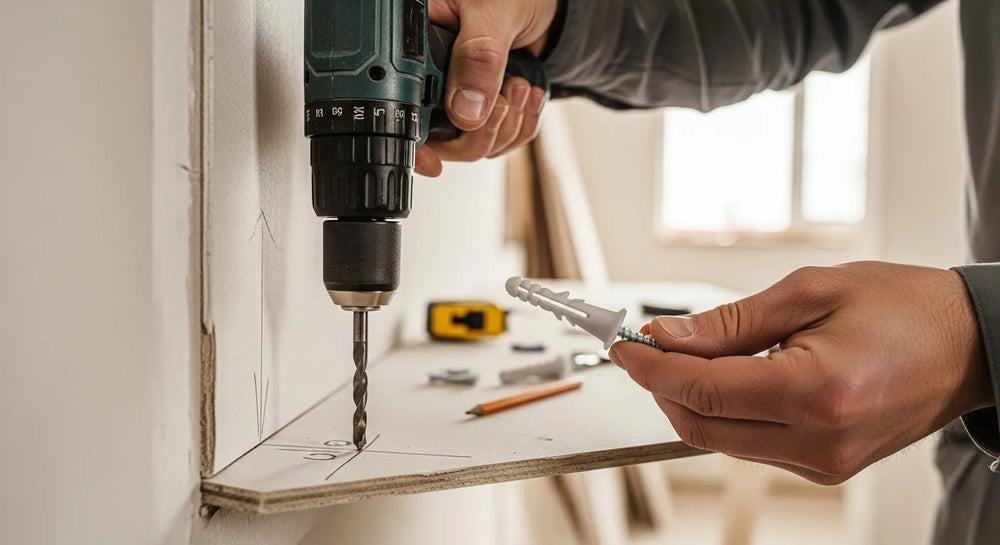
Fix Drywall Screw Pops Permanently: A Professional's Comprehensive Guide
Table of Contents
- Introduction
- Understanding Drywall Screw Pops: Why Do They Happen?
- The Impact of Drywall Screw Pops on Business and Operations
- Essential Tools and Materials for Professional Drywall Repair
- A Step-by-Step Guide to Repairing Drywall Screw Pops
- Preventing Future Drywall Screw Pops: Best Practices in Construction and Maintenance
- The Strategic Advantage of Sourcing American-Made Components
- Maden.co: Your Partner in Industrial Procurement
- Conclusion
- FAQ
The pristine finish of a newly installed or well-maintained drywall surface is a testament to quality craftsmanship and attention to detail. Yet, few issues are as frustratingly common, or as visually disruptive, as the dreaded drywall screw pop. These small, circular protrusions, often appearing weeks or months after installation, can quickly diminish the aesthetic appeal of an entire space, signaling underlying issues that demand more than just a quick cosmetic fix. For procurement managers, MRO buyers, and business owners responsible for maintaining facilities, ensuring long-term asset value, or delivering high-quality construction projects, recurrent screw pops translate directly into increased maintenance costs, diminished perceived quality, and potential project delays.
Imagine a newly renovated office space or a meticulously maintained industrial facility where, unexpectedly, dozens of these imperfections begin to emerge. This isn't just an aesthetic flaw; it's a symptom of structural or installation inadequacies that can lead to ongoing maintenance cycles and resource drain. The purpose of this comprehensive guide is to delve deep into the phenomenon of drywall screw pops, exploring their root causes, outlining the professional repair methodologies, and—critically—detailing preventive measures. We will equip you with the knowledge to not only address these issues effectively but also to implement procurement strategies that secure the high-quality, American-made materials essential for lasting solutions. The ultimate goal is to minimize future occurrences, enhance facility longevity, and uphold the highest standards of industrial excellence by partnering with trusted suppliers of U.S.-manufactured components.
Introduction
In the lifecycle of any commercial building or industrial facility, maintenance and repair are ongoing necessities. While some issues are structural and immediately evident, others, like drywall screw pops, are insidious—developing over time and subtly undermining the integrity and appearance of interior spaces. These seemingly minor imperfections, where the head of a drywall screw pushes through the joint compound and paint, can be a major headache, requiring unexpected labor, materials, and coordination. For business owners, property managers, and procurement professionals, understanding the "why" behind screw pops is just as important as knowing "how" to fix them, especially when managing budgets and supply chains for large-scale operations.
The frustration often lies in the recurrence; a poorly repaired screw pop can quickly reappear, creating a cyclical problem that drains resources and erodes confidence in the quality of work. This blog post aims to provide a definitive resource for professionals seeking not just a temporary patch, but a permanent resolution to drywall screw pops. We will dissect the common causes, guide you through a robust, professional repair process, and, most importantly, provide strategic insights into preventing their return through superior material selection and installation practices. By focusing on precision, quality, and the strategic sourcing of U.S.-made industrial supplies, we can collectively contribute to an environment of greater durability and reduced long-term maintenance burdens, championing the values of American Manufacturing Pride and Industrial Excellence.
Understanding Drywall Screw Pops: Why Do They Happen?
Before embarking on any repair, it's crucial to understand the underlying mechanisms that cause drywall screw pops. This isn't merely cosmetic damage; it's often a symptom of stresses within the building structure or deficiencies in the original installation. Identifying the root cause is the first step toward a lasting solution, preventing the costly cycle of repetitive repairs.
Structural Movement and Environmental Factors
Buildings are dynamic entities, constantly responding to various forces. Framing lumber, typically wood, is hygroscopic, meaning it absorbs and releases moisture based on ambient humidity. As wood dries out and shrinks, or swells with increased moisture, it can shift slightly. This movement, even if microscopic, can cause the drywall fastened to it to flex. If a screw is driven too deeply or is improperly secured, this movement can cause the screw head to break through the thin layer of joint compound covering it.
- Lumber Shrinkage: The most common culprit. Freshly installed framing lumber often contains a higher moisture content. Over time, as the building dries out, this lumber shrinks. If drywall is installed before the lumber has fully acclimatized and reached its equilibrium moisture content, the subsequent shrinkage can pull the framing away from the drywall, or put tension on the screws.
- Thermal Expansion and Contraction: While less significant than moisture, temperature fluctuations can also cause building materials to expand and contract, contributing to the stresses on drywall fasteners.
- Building Settlement: New constructions, in particular, can experience slight settlement as the foundation and framing adjust to the load. This subtle settling can also induce movement that stresses drywall and its fasteners.
Installation Deficiencies
Beyond structural movement, many screw pops are directly attributable to errors during the initial drywall installation. These are often preventable with proper training and adherence to best practices.
- Improper Screw Depth: This is arguably the most frequent cause. Drywall screws are designed to dimple the paper surface of the drywall slightly without breaking through the paper layer. This dimple provides a recess for the joint compound. If a screw is driven too deeply, it tears the paper, reducing its holding power. The screw head might then simply push through the compound, or worse, spin freely, losing its grip on the stud entirely. Conversely, if a screw is not driven deep enough, its head protrudes, making it impossible to conceal properly, leading to an immediate visual pop.
- Missing Studs or Incorrect Fastener Spacing: Drywall sheets must be securely fastened to studs, joists, or furring strips at regular intervals. If a screw misses the framing member entirely, or if the screws are spaced too far apart, the drywall sheet can flex between fasteners. This movement puts undue stress on the adjacent screws, increasing the likelihood of them popping.
- Insufficient Joint Compound Coverage: The layers of joint compound applied over screw heads and seams are crucial for a smooth finish. If too little compound is applied over a screw head, or if it's thinned excessively, the protective layer can be too weak to withstand minor movement or the inherent pressure from a slightly proud screw head.
- Using the Wrong Screws: While less common in professional settings, using screws not specifically designed for drywall can lead to issues. Drywall screws have a specific thread design and head shape that are optimized for securing gypsum board without tearing the paper or stripping the wood.
Understanding these factors is paramount. For procurement managers, this knowledge translates into the necessity of sourcing high-quality fasteners and materials that mitigate these risks. For MRO buyers, it underscores the importance of not just repair, but preventative maintenance and quality material acquisition to avoid future headaches.
The Impact of Drywall Screw Pops on Business and Operations
While drywall screw pops might seem like a minor cosmetic issue, their recurring presence can have significant tangible and intangible impacts on businesses, affecting budgets, operational efficiency, and even brand perception. For any facility manager or business owner, these are not just blemishes; they are indicators of potential deeper issues and drivers of unnecessary costs.
Increased Maintenance Costs and Operational Disruption
Each screw pop, no matter how small, necessitates a repair. This isn't a one-time fix but often involves multiple steps: identifying the issue, preparing the surface, applying compound, sanding, priming, and painting.
- Labor Costs: Skilled labor is expensive. Repeated repairs mean diverting maintenance staff or hiring external contractors, incurring significant labor hours that could be better spent on proactive maintenance or other critical projects.
- Material Costs: While individual repair materials might seem inexpensive, cumulatively, across a large facility or multiple properties, the cost of joint compound, tape, primer, paint, and new fasteners can add up considerably.
- Scheduling and Logistics: Repairs often require sectioning off areas, causing disruption to employees, customers, or operational workflows. This can impact productivity in an office environment or create safety hazards in an industrial setting. For an MRO buyer, coordinating these repairs means managing schedules, contractors, and material deliveries, adding administrative overhead.
Diminished Aesthetic Appeal and Brand Perception
First impressions matter, whether it's for a prospective client visiting an office, a customer entering a retail space, or employees working in a manufacturing plant. A surface marred by screw pops conveys a message of neglect or subpar quality.
- Client and Customer Confidence: In commercial spaces, visible defects can subtly undermine confidence in a business's professionalism and attention to detail.
- Employee Morale: A well-maintained and aesthetically pleasing workspace can positively impact employee morale and productivity. Conversely, a deteriorating environment can suggest a lack of investment in their working conditions.
- Property Value and Leasing: For property owners, recurring defects can detract from property value and make it harder to attract or retain tenants.
Compliance and Durability Concerns
While screw pops themselves aren't typically a compliance issue, their root causes can sometimes hint at broader problems. A persistent issue with fasteners suggests potential weaknesses in the overall drywall system. For design engineers or construction managers, ensuring the integrity of interior finishes is part of delivering a project that meets specifications and quality standards, contributing to long-term durability. The failure of fasteners in one area might indicate systematic issues in material handling, installation techniques, or even material quality across a project.
For a procurement manager under pressure to source a specific component for a critical project, or an MRO buyer facing an unexpected equipment breakdown, the ability to quickly find and finance verified, U.S.-made parts is a game-changer. Similarly, for building materials, sourcing quality fasteners from a trusted platform like Maden.co means mitigating these downstream costs and risks, investing in the long-term value of the facility, and fostering Industrial Excellence.
Essential Tools and Materials for Professional Drywall Repair
Effective drywall screw pop repair hinges on using the right tools and, critically, high-quality materials. Investing in professional-grade supplies ensures durability, a seamless finish, and reduces the likelihood of repeat issues, aligning with our values of American Manufacturing Pride and Supply Chain Transparency.
Choosing the Right Drywall Screws
The choice of drywall screw is paramount, both for repair and prevention. Using a screw designed for drywall with the correct length and thread type is essential for securing the gypsum board to the framing without causing damage or losing grip.
- Coarse-Thread Drywall Screws: Ideal for fastening drywall to wood studs. The coarser threads grip wood fibers effectively, providing strong holding power. For projects requiring robust fastening into wood framing, a reliable option like a 6 x 1-1/4 Coarse Thread Drywall Screw ensures deep engagement and secure attachment.
- Fine-Thread Drywall Screws: Specifically designed for fastening drywall to light-gauge metal studs. Their finer threads are better suited for biting into thin metal without stripping. When working with metal studs, consider using a 6 x 1 Fine Thread Drywall Screw for optimal grip and stability.
- Self-Tapping/Self-Drilling Screws: For heavier gauge metal studs or specialized applications, self-tapping screws can simplify installation by eliminating the need for pre-drilling.
- Length: Screws should penetrate at least 5/8 inch (16 mm) into wood studs or 3/8 inch (10 mm) into metal studs. Common lengths are 1-1/4 inch (for 1/2-inch drywall on wood) and 1 inch (for 1/2-inch drywall on metal). For thicker drywall, such as 5/8-inch, longer screws are required. For example, a versatile 8 x 4 Drywall Screw can be used in various applications where a longer, more substantial fastener is needed.
- Corrosion Resistance: In areas prone to moisture (bathrooms, basements), consider screws with corrosion-resistant coatings to prevent rust bleed-through.
Sourcing these critical fasteners from verified U.S. manufacturers on Maden.co not only ensures compliance with quality standards but also supports a resilient domestic supply chain.
Selecting the Best Joint Compound (Mud)
The joint compound, often referred to as "mud," is critical for concealing fasteners and seams, creating a smooth, paint-ready surface. Different types offer distinct advantages.
- All-Purpose Joint Compound: A versatile product suitable for embedding tape, filling, and finishing. It offers good adhesion and durability. However, it can take longer to dry than lightweight options.
- Lightweight All-Purpose Joint Compound: Easier to sand and feather out, making it excellent for finishing coats. It also shrinks less than standard compounds.
- Setting-Type Joint Compound (Hot Mud): Dries by chemical reaction, not evaporation, allowing for much faster drying times (e.g., 20, 45, 90 minutes). This is ideal for quick repairs or when multiple coats are needed in a short timeframe. It cures harder and is more resistant to shrinking and cracking. This is often the preferred choice for the initial fill of screw pops due to its strength and speed.
- Topping Compound: Designed specifically for the final finish coat, offering a smooth, easily sandable surface with minimal shrinkage.
For professional-grade repairs, having a setting-type compound for the initial fill and an all-purpose or lightweight compound for subsequent finishing coats provides the best balance of speed, strength, and finish quality.
Necessary Taping and Finishing Tools
Beyond screws and mud, several tools are essential for achieving a professional, undetectable repair.
- Drywall Screw Gun/Drill with Clutch: Crucial for setting screws to the correct depth without tearing the drywall paper. A drill with a depth-setting bit attachment is also acceptable.
- Utility Knife: For cutting away loose drywall paper, old tape, or any protruding debris around the pop.
- Drywall Taping Knives (6-inch, 10-inch, 12-inch): A set of knives allows for applying compound in layers, feathering edges, and achieving a smooth finish. The 6-inch knife is ideal for small fills, while wider knives are for feathering out the final coats.
- Mud Pan: For holding and mixing joint compound.
- Sanding Sponge/Pole Sander with Fine-Grit Sandpaper (150-220 grit): For smoothing dried compound. A sanding sponge is excellent for small, localized repairs.
- Tack Cloth or Damp Sponge: For removing sanding dust before priming and painting.
- Primer: A high-quality drywall primer is essential to seal the compound, prevent flashing (where repaired areas show through the paint), and ensure uniform paint adhesion.
- Safety Gear: Dust mask, safety glasses, and gloves are critical for personal protection during sanding and handling materials.
For procurement managers, ensuring these tools and materials are readily available and meet professional standards is a key aspect of maintaining an efficient MRO inventory. Our mission at Maden.co is to democratize access to American manufacturing, making it easier to source these high-quality components from our network of 800+ verified U.S. manufacturers, ensuring you have what you need when you need it.
A Step-by-Step Guide to Repairing Drywall Screw Pops
Repairing drywall screw pops requires precision and a systematic approach to ensure the fix is permanent and visually seamless. This professional guide outlines each step, emphasizing best practices for lasting results.
1. Preparation: Assessing the Damage and Securing the Area
The initial phase is crucial for understanding the extent of the problem and setting the stage for a durable repair.
- Identify the Problematic Screws: Gently press around the popped area. If the drywall flexes or you feel the screw head move, it's a clear indication of a loose fastener. Mark all affected areas.
- Clean and Clear the Area: Use a utility knife to carefully cut away any loose or peeling paint, joint compound, or torn drywall paper around the screw pop. The goal is to create a clean, stable surface to work on. Avoid enlarging the hole excessively; just remove the compromised material.
- Locate the Stud: Before attempting to re-secure or add new fasteners, use a stud finder to precisely locate the center of the underlying wood or metal stud. This ensures any new screws will bite into solid framing.
2. Recessing or Removing the Problematic Screw
This step directly addresses the screw that caused the pop. The approach depends on whether the screw is loose or merely proud.
- For Loose Screws: If the screw is spinning freely or has lost its grip, it must be removed. Use a drill to back it out completely. Then, immediately drive a new drywall screw about 1.5 to 2 inches (3-5 cm) above or below the original screw location, into the same stud. This ensures you're fastening into fresh wood or metal. For this, high-quality fasteners like the 6 x 1-1/4 Coarse Thread Drywall Screws are excellent for wood studs, while the 6 x 1 Fine Thread Drywall Screw is ideal for metal. Drive the new screw until its head creates a slight dimple just below the drywall paper, without tearing it.
- For Proud but Secure Screws: If the screw is firmly in the stud but just slightly protruding, use a drywall screw gun or a drill with a depth-setting bit to drive it just a hair deeper, creating that necessary dimple. Be extremely careful not to over-drive and tear the paper. If the screw head is compromised or stripped, it's often better to remove it and install a new screw nearby, as described above.
Crucial Step: Adding New Screws for Stability. Regardless of whether the original screw was removed or recessed, it's a best practice to add two new screws around the popped area. Place one new screw approximately 1.5 inches above the original location and another 1.5 inches below, ensuring both penetrate into the center of the stud. This distributes the stress and provides superior holding power, greatly reducing the chance of future pops. Use reliable fasteners such as the versatile 8 x 4 Drywall Screw for this purpose, ensuring robust attachment to the framing.
3. Applying Joint Compound and Tape
With the screws securely recessed, the repair moves to filling and strengthening the area.
- First Coat (Setting-Type Compound): Using a 6-inch taping knife, apply a small amount of setting-type joint compound (hot mud) directly into the screw dimples and over any small holes where old screws were removed. This fast-setting compound offers excellent rigidity and minimal shrinkage. Scrape off excess, leaving a smooth, shallow fill. Let this dry completely according to manufacturer instructions (e.g., 20-90 minutes).
- Embed Drywall Tape (Optional but Recommended for larger damages): For areas where significant paper was torn or a larger hole was created by removing a screw, embedding a small piece of fiberglass mesh or paper drywall tape over the repaired area (after the first mud coat has dried) can add strength and prevent future cracking. Apply a thin layer of all-purpose compound, embed the tape, and then immediately apply another thin layer of compound over the tape, feathering the edges.
- Second Coat (All-Purpose or Lightweight Compound): Once the first coat (and tape, if used) is completely dry, apply a slightly wider, thin layer of all-purpose or lightweight joint compound over the repair using a 10-inch taping knife. Feather the edges smoothly into the surrounding drywall to eliminate any ridges. This coat refines the surface and further conceals the screw heads. Allow this to dry thoroughly.
- Third (Finish) Coat (Lightweight or Topping Compound): For a truly professional finish, a third, very thin coat of lightweight or topping compound may be necessary. Use a 12-inch taping knife to apply this coat, extending it slightly wider than the previous coat and feathering the edges meticulously. The goal is to create a perfectly flat and smooth transition with the existing wall surface. Let this dry completely.
4. Sanding and Finishing for a Seamless Look
This is where the repair truly becomes invisible.
- First Sanding: Once the final coat of compound is dry, use a fine-grit sanding sponge (150-220 grit) or a pole sander to lightly sand the repaired area. The goal is to smooth out any imperfections, ridges, or tool marks, creating a perfectly flat surface. Avoid over-sanding, which can create depressions. Wear a dust mask for this step.
- Inspect and Re-Coat (if necessary): After the first sanding, carefully inspect the repair under good light. If any imperfections remain, apply another thin layer of topping compound, let it dry, and sand again. Repeat until the surface is flawlessly smooth and blends seamlessly with the surrounding wall.
- Clean the Area: Use a tack cloth or a lightly damp sponge to remove all sanding dust from the repaired area. This is critical for proper primer adhesion.
5. Priming and Painting
The final steps integrate the repair into the overall wall finish.
- Apply Primer: Apply a high-quality drywall primer specifically designed for new or repaired drywall. Primer seals the porous joint compound, ensures uniform paint absorption, and prevents "flashing" (where the repaired areas appear different in sheen or color than the rest of the wall after painting). Apply two thin coats of primer for best results, allowing adequate drying time between coats.
- Paint: Once the primer is dry, paint the repaired area with the matching wall paint, feathering it out to blend with the existing finish. Depending on the existing paint and wall condition, painting the entire wall might be necessary for a truly invisible repair.
By meticulously following these steps, procurement professionals can ensure their MRO teams or contractors deliver repairs that not only fix the immediate problem but also contribute to the long-term integrity and aesthetic quality of the facility. This meticulous approach embodies the core values of Industrial Excellence and Customer Empowerment, ensuring lasting value.
Preventing Future Drywall Screw Pops: Best Practices in Construction and Maintenance
The most effective strategy against drywall screw pops is prevention. By adhering to best practices in construction, material handling, and ongoing facility maintenance, businesses can significantly reduce the incidence of these frustrating issues, saving time, money, and preserving the aesthetic integrity of their spaces.
Proper Fastener Selection and Application
The quality and correct application of fasteners are foundational to preventing screw pops.
- Use High-Quality Drywall Screws: Always specify and procure screws designed specifically for drywall, such as those made from hardened steel with appropriate thread patterns for wood or metal studs. Inferior screws can strip, break, or corrode, leading to pops. Our platform, Maden.co, democratizes access to a vast catalog of over 2.5 million American-made products from 800+ verified U.S. manufacturers, ensuring you can source high-quality fasteners like 6 x 1-1/4 Coarse Thread Drywall Screws or 6 x 1 Fine Thread Drywall Screw that meet stringent quality standards.
- Correct Screw Depth: This cannot be overstressed. Use a drywall screw gun with an adjustable clutch or a drill with a depth-setting bit to ensure screws create a slight dimple without breaking the drywall paper face. The paper is what holds the screw securely. A torn paper face drastically reduces holding power.
- Optimal Screw Spacing: Follow industry standards for screw spacing (typically 7 inches for ceilings and 8-12 inches for walls when perpendicular to framing, or 12 inches for walls and ceilings when parallel to framing, for single-layer drywall). Adequate spacing ensures the drywall sheet is held firmly and evenly, distributing stress.
- Screws into Studs Only: Ensure all screws penetrate securely into the center of a framing member (wood stud, metal stud, or joist). Screws that miss the stud or are driven into the edge will not hold and are prime candidates for popping. Always use a stud finder.
Framing and Moisture Control
The integrity of the framing and management of moisture within the building envelope play a critical role.
- Acclimatize Framing Lumber: If using wood framing, allow lumber to acclimatize to the building's ambient temperature and humidity before drywall installation. This means letting it sit in the conditioned space for a period to allow it to reach its equilibrium moisture content, minimizing future shrinkage.
- Stable Framing: Ensure all framing members are plumb, level, and securely fastened. Loose or improperly installed framing will inevitably lead to drywall movement and screw pops.
- Moisture Management: Implement effective moisture barriers and HVAC systems to control humidity levels within the building. Excessive moisture can cause wood to swell, and subsequent drying can lead to shrinkage and pops. In areas with high humidity, consider using moisture-resistant drywall.
Professional Installation Techniques
Skilled labor and adherence to established techniques significantly reduce defects.
- Proper Drywall Hanging: Drywall sheets should be hung so that edges meet neatly over framing members. Avoid "floating" edges where there's no backing, as these areas are prone to movement and cracks.
- Minimize Board Movement: When installing, ensure drywall sheets are pressed firmly against the framing as screws are driven. This prevents gaps that can lead to movement.
- Adequate Joint Compound Application: Apply enough joint compound in successive, thin layers to completely conceal screw heads and create a smooth, feathered finish. Insufficient mud is a common cause of pops.
Strategic Sourcing and Supply Chain Resilience
For large-scale projects or ongoing facility maintenance, the strategic procurement of materials is a critical preventative measure.
- Partner with Verified Manufacturers: Sourcing from known, reputable manufacturers helps guarantee the quality and consistency of materials, from drywall sheets to the smallest fasteners. At Maden.co, our platform connects industrial buyers with over 800+ verified U.S. manufacturers, emphasizing Supply Chain Transparency and Industrial Excellence.
- Prioritize American-Made: By choosing American-made components, you're not only supporting domestic industry but often gaining advantages in quality control, consistent specifications (e.g., DIN, NPT standards), and reduced lead times. This builds supply chain resilience and ensures you're getting products that meet rigorous standards. Our vision at Maden.co is to become the definitive platform that proves American-made components are as accessible and convenient as any global alternative.
By integrating these best practices into your procurement and operational strategies, you move beyond reactive repairs to proactive prevention, contributing to more durable, lower-maintenance facilities. This systematic approach saves resources and upholds the highest standards of quality.
The Strategic Advantage of Sourcing American-Made Components
In a globalized economy, the temptation to source components from the cheapest international supplier can be strong. However, for industrial buyers, MRO professionals, design engineers, and business owners focused on long-term value, reliability, and project integrity, the strategic advantages of sourcing American-made components are compelling and numerous. At Maden.co, our mission is to democratize access to American manufacturing, enabling businesses to leverage these benefits and drive the manufacturing revival.
Quality Assurance and Material Consistency
One of the foremost advantages of U.S.-made products is the inherent quality assurance. American manufacturers often adhere to stringent quality control standards, regulatory compliance, and robust material specifications (e.g., ASTM, ANSI, ISO).
- Predictable Performance: When sourcing fasteners, structural components, or even raw materials from U.S. manufacturers, there's a higher degree of confidence in the material composition, dimensional accuracy, and performance characteristics. This consistency reduces variability in projects and ensures components perform as expected, mitigating risks like premature failure or incompatibility—issues that directly contribute to drywall screw pops and other construction defects.
- Traceability and Compliance: U.S. manufacturers typically offer greater traceability for their products, providing detailed material certifications and lot numbers. This is invaluable for industries with strict compliance requirements, allowing for thorough auditing and quality control.
Supply Chain Resilience and Transparency
The recent global disruptions have starkly highlighted the vulnerabilities of extended, complex supply chains. Sourcing domestically offers unparalleled resilience and transparency.
- Reduced Lead Times and Inventory: Shorter geographical distances translate to reduced transit times. This allows for more agile inventory management, reducing the need for large safety stocks and freeing up capital. For an MRO buyer, faster access to critical spare parts or construction materials means less downtime and quicker project completion.
- Minimized Geopolitical Risk: Domestic sourcing insulates businesses from international trade disputes, tariffs, port congestion, and geopolitical instability that can cripple global supply chains.
- Enhanced Communication and Collaboration: Direct communication with U.S. manufacturers facilitates clearer specifications, quicker problem resolution, and opportunities for custom solutions. This level of collaboration is difficult to achieve with distant international suppliers. Our platform ensures Supply Chain Transparency by directly connecting buyers with manufacturers.
Supporting Domestic Manufacturing and Economic Growth
Beyond the direct business benefits, choosing American-made products contributes to broader economic and societal good.
- Job Creation: Every purchase of a U.S.-made product supports American jobs across the entire supply chain, from raw material extraction to manufacturing, logistics, and sales.
- Innovation and Expertise: Investing in domestic manufacturing fosters innovation, skill development, and the growth of specialized expertise within the country. This creates a vibrant ecosystem that continuously improves product quality and manufacturing processes.
- National Security: A robust domestic manufacturing base is a cornerstone of national security, ensuring the capacity to produce essential goods and defense materials.
At Maden.co, we embody these values. Our entire business model is built on this principle; you can learn more about our mission to champion American manufacturing here: About Us. We believe that the American manufacturing revival is not just a slogan but a tangible reality, driven by platforms that connect industrial buyers directly with the heart of American production. By choosing U.S.-made, you're not just buying a product; you're investing in quality, reliability, and a stronger domestic economy.
Maden.co: Your Partner in Industrial Procurement
For procurement managers, MRO buyers, and business owners navigating the complex landscape of industrial sourcing, Maden.co stands as America's premier B2B marketplace for U.S.-manufactured products. Our platform is meticulously designed to simplify and streamline the procurement process, providing unparalleled access to the quality and reliability that only American manufacturing can deliver. We are more than just a marketplace; we are a strategic partner dedicated to strengthening your supply chain and empowering your projects.
Streamlining Procurement with Verified Manufacturers
At the core of Maden.co's value proposition is our unwavering commitment to connecting you with the best of American manufacturing. We understand the challenges of verifying supplier legitimacy, ensuring product quality, and navigating complex logistics. That's why we’ve built a network of over 800+ verified U.S. manufacturers.
- Democratizing Access: Our mission is to democratize access to American manufacturing. We break down the barriers that traditionally made it difficult for buyers to find, vet, and procure from smaller, highly specialized U.S. manufacturers. With Maden.co, you gain instant access to a vast and diverse pool of domestic suppliers, all rigorously vetted to ensure they meet our high standards of quality and production capability.
- Assurance of Quality: Every product listed on our platform, from critical fasteners like the 8 x 4 Drywall Screw to complex machinery components, comes from a verified U.S. source. This eliminates the uncertainty associated with international sourcing, ensuring that you receive products manufactured under strict American quality control standards. This commitment aligns with our core value of Industrial Excellence, guaranteeing materials that contribute to durable, long-lasting repairs and constructions.
Navigating Extensive Product Catalogs
Our marketplace boasts an expansive catalog of over 2.5 million American-made products, spanning a wide array of industrial categories. We understand that finding the exact specification for a particular project can be daunting, which is why our platform is built for efficiency and ease of use.
- Advanced Search Capabilities: Our intuitive search and filtering tools allow you to quickly pinpoint the specific products you need, whether you're searching by material, dimension, industry standard (like DIN or NPT), or manufacturer. This significantly reduces procurement friction, saving valuable time for busy professionals.
- Detailed Product Specifications: Each product listing provides comprehensive details, including technical specifications, material data, and certifications, empowering design engineers and MRO buyers to make informed decisions confidently.
Empowering Projects with Instant Financing
Recognizing that large-volume purchases and capital-intensive projects require flexible financial solutions, Maden.co offers a key differentiator: Instant Financing. This feature is not just a payment method; it's a strategic tool designed to empower your business operations and optimize cash flow.
- Manage Cash Flow Effectively: Instant Financing allows procurement managers and business owners to acquire necessary materials and components without tying up immediate working capital. This flexibility is crucial for managing project budgets, responding to urgent demands, and maintaining liquidity.
- Facilitate Larger-Volume Purchases: For major construction projects, facility upgrades, or stocking critical MRO inventories, Instant Financing enables larger procurement volumes, ensuring you have adequate supplies on hand without straining your immediate financial resources.
- Seamless Integration: You can apply for Instant Financing directly at checkout, making the process quick, convenient, and fully integrated into your procurement workflow. This streamlines the capital-intensive aspects of your projects, allowing you to focus on execution rather than overcoming financial hurdles.
Maden.co is here to transform how industrial buyers procure American-made goods. We are committed to fostering Supply Chain Transparency, upholding American Manufacturing Pride, and ensuring Customer Empowerment through Digital Innovation. By choosing us, you're not just making a purchase; you're becoming a part of America's manufacturing revival. For more general information about our platform and offerings, please visit our Maden.co homepage.
Are you a U.S. manufacturer? Join our mission to democratize access to American manufacturing and empower businesses across the nation. Register as a vendor and become a part of the American manufacturing revival.
Conclusion
Drywall screw pops, while seemingly minor, are often indicative of deeper issues related to structural movement, material quality, or installation shortcomings. For procurement managers, MRO buyers, and business owners, understanding and addressing these issues comprehensively is not just about aesthetics; it's about safeguarding assets, controlling maintenance costs, and upholding the professional integrity of facilities and projects. The path to permanent repair and effective prevention lies in a meticulous approach—from diagnosing the root cause to selecting superior American-made materials and adhering to professional installation and finishing techniques.
By prioritizing high-quality fasteners, ensuring proper screw depth, controlling moisture, and implementing robust installation practices, you can dramatically reduce the incidence of screw pops. More importantly, by strategically sourcing your industrial components from verified U.S. manufacturers, you gain access to the consistent quality, supply chain resilience, and expert support that are invaluable in today's demanding operational environments.
Maden.co stands as your indispensable partner in this endeavor. We are dedicated to democratizing access to over 2.5 million American-made products from our network of 800+ verified U.S. manufacturers, championing the values of American Manufacturing Pride, Digital Innovation, Supply Chain Transparency, Industrial Excellence, and Customer Empowerment. Whether you're an MRO buyer needing specific fasteners for a facility maintenance project or a business owner investing in a new build, our platform streamlines your procurement, reduces risk, and ensures you're equipped with the best that American manufacturing has to offer.
Don't let recurring drywall screw pops detract from your projects or drain your maintenance budget. Embrace a proactive approach to procurement and repair. Explore the vast catalog of American-made drywall screws, joint compounds, and tools available on Maden.co today. For specialized needs or bulk orders, you can apply for Instant Financing at checkout to streamline your capital-intensive projects and ensure your business always has the resources it needs to thrive. If you have specific sourcing questions, our team is ready to help; reach out to us through our Contact Us page. Build a more reliable, efficient, and aesthetically pleasing future for your facilities with Maden.co—where America's manufacturing revival is here.
FAQ
Q1: Why do drywall screw pops reappear even after being repaired?
A1: Screw pops often reappear because the original underlying cause was not addressed. This typically includes continued movement of the framing lumber due to moisture fluctuations, the screw not being properly recessed or re-secured into the stud, or insufficient joint compound application that creates a weak point. If the structural instability or the problematic fastener isn't fully corrected, the pressure will eventually cause the repair to fail again.
Q2: Is it better to remove a screw pop or just drive it deeper?
A2: It depends on the condition of the screw. If the screw is loose, spinning, or has torn the drywall paper, it's best to remove it completely and install two new screws nearby into the stud (one above, one below). If the screw is still firmly seated but just slightly proud, carefully driving it a hair deeper to create a proper dimple might suffice. The key is to ensure the screw head creates a dimple just below the paper surface without tearing it, and that the drywall sheet is firmly held against the framing.
Q3: What type of joint compound is best for repairing screw pops?
A3: For the initial fill of screw pops, a setting-type joint compound (often called "hot mud" with specific drying times like 20, 45, or 90 minutes) is often recommended. It cures harder, shrinks less, and dries faster, providing a strong base. For subsequent coats, an all-purpose or lightweight all-purpose joint compound is excellent for achieving a smooth, easily sandable finish. Using thin, successive coats with proper drying time between each is crucial for a durable and seamless repair.
Q4: How can sourcing American-made products prevent future screw pops?
A4: Sourcing American-made drywall screws and related materials through platforms like Maden.co provides a strategic advantage in preventing future screw pops due to higher quality control, consistent material specifications, and often better traceability. U.S. manufacturers typically adhere to stringent industry standards, resulting in screws with optimal thread designs, head shapes, and material strength for secure fastening. This reduces the risk of stripped screws, torn paper, or fastener failure caused by inconsistent or inferior materials, contributing to a more durable and stable drywall installation.


