
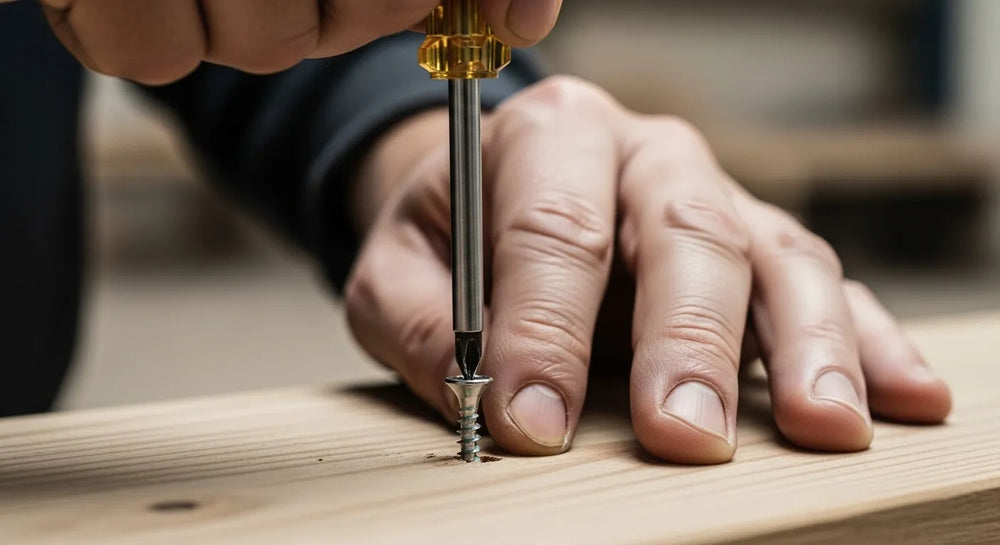
How Far Apart Drywall Screws: Essential Spacing for Stability
Table of Contents
- Introduction
- The Foundation: Understanding Drywall and Its Purpose
- Core Principles of Drywall Screw Spacing
- Specific Spacing Guidelines: Walls
- Specific Spacing Guidelines: Ceilings
- Beyond Spacing: Choosing the Right Drywall Screw
- Installation Best Practices and Common Pitfalls
- The Broader Impact: Quality, Compliance, and Longevity
- Procurement Excellence: Sourcing American-Made Drywall Screws
- Conclusion
- FAQ
Imagine a large-scale commercial construction project, meticulously planned and executed, only for its critical structural components to fail prematurely due to a seemingly minor detail. Or perhaps, a facility manager faces unexpected maintenance costs years down the line because initial installations lacked foundational integrity. The truth is, the stability and longevity of any structure, whether a sprawling industrial complex or a critical manufacturing facility, often hinge on the precision of its most basic elements. Among these, the proper installation of drywall, particularly the spacing of its screws, plays an often-underestimated yet profoundly critical role.
This seemingly straightforward technical detail—how far apart drywall screws should be placed—carries significant implications for project managers, MRO buyers, and design engineers. Incorrect spacing can lead to costly callbacks, compromised structural integrity, unsightly imperfections, and even regulatory non-compliance. In this comprehensive guide, we will delve into the science and best practices behind optimal drywall screw spacing, exploring the critical factors that dictate placement, the types of fasteners that ensure resilience, and the broader impact on project success and long-term asset value. We'll also examine how strategic sourcing of high-quality, American-made components through platforms like Maden.co can fundamentally elevate the reliability and efficiency of your procurement process, ensuring that every detail, down to the last drywall screw, contributes to a robust and enduring build.
Introduction
In the intricate world of construction and facility management, every component, no matter how small, contributes to the overall strength, safety, and aesthetic quality of a structure. Drywall, a ubiquitous material in modern building, serves as a primary surface for interior walls and ceilings. Its proper installation is paramount, not just for appearance, but for fire resistance, sound dampening, and overall structural performance. However, even with the highest quality drywall sheets, an oversight in the fastening process—specifically, misunderstanding how far apart drywall screws should be placed—can undermine the entire installation. This often leads to frustrating issues like "nail pops," cracks, sagging, or even full panel detachment over time.
For procurement managers tasked with ensuring material quality and cost-effectiveness, MRO buyers maintaining facilities, and design engineers specifying construction methods, grasping the nuances of drywall fastening is indispensable. It's about more than just buying screws; it's about understanding their strategic deployment to guarantee project longevity and minimize future liabilities. This article will provide an exhaustive exploration of drywall screw spacing, offering actionable insights derived from industry standards and best practices. We will dissect the recommendations for various applications, illuminate the different types of drywall screws available, and emphasize the unparalleled value of sourcing high-quality, American-made products. Our aim is to equip you with the knowledge to make informed decisions that translate into superior project outcomes and enhanced operational efficiency.
The Foundation: Understanding Drywall and Its Purpose
Before diving into the specifics of screw placement, it's crucial to appreciate the material we're working with: drywall. Also known as plasterboard, gypsum board, or wallboard, drywall is a panel made of gypsum plaster pressed between two sheets of thick paper. It's used to make interior walls and ceilings.
What is Drywall?
Drywall offers several advantages over traditional plaster-and-lath construction:
- Ease of Installation: It's quicker and less labor-intensive to install.
- Fire Resistance: Gypsum contains chemically combined water (approximately 21% by weight), which, when exposed to fire, converts to steam, effectively slowing down heat transfer.
- Sound Attenuation: While not a perfect sound barrier on its own, different types and layers of drywall can significantly improve sound insulation.
- Smooth Finish: Provides a uniform, paint-ready surface.
- Cost-Effectiveness: Generally more economical than traditional plaster.
These benefits make drywall the material of choice for a vast majority of modern construction and renovation projects. However, to fully leverage these advantages, its installation must be impeccable, beginning with the correct fastening methodology.
Why Proper Installation Matters
The longevity and performance of a drywall system are directly tied to the quality of its installation. When panels are improperly fastened, they become susceptible to a range of failures:
- Aesthetic Degradation: "Nail pops" (where the screw head becomes visible or protrudes through the finished surface) and cracks in the seams or field are common indicators of inadequate fastening. These require costly repairs and detract significantly from the building's appearance.
- Structural Weakness: Loose or poorly spaced screws can lead to panels sagging, especially on ceilings, or becoming unstable, which can compromise the structural integrity of the partition or enclosure.
- Compromised Fire Rating: For fire-rated assemblies, the specified fastening schedule is critical to maintaining the required fire resistance. Deviations can invalidate the rating, posing significant safety risks and regulatory compliance issues.
- Increased Maintenance Costs: Post-installation repairs due to poor fastening can quickly accumulate, impacting MRO budgets and diverting resources from other essential tasks.
Understanding how far apart drywall screws need to be placed is not just a technical detail; it's a fundamental aspect of ensuring the long-term quality, safety, and cost-efficiency of any project involving drywall.
Core Principles of Drywall Screw Spacing
The fundamental goal of correct drywall screw spacing is to securely attach the gypsum panels to the framing members (studs or joists) without damaging the board or creating future points of failure. This involves a delicate balance: enough fasteners to prevent movement and sagging, but not so many that the drywall becomes overly perforated or stressed.
Vertical vs. Horizontal Installation
Drywall panels can be installed either vertically or horizontally. The choice often depends on factors like room height, framing layout, and ease of handling.
- Vertical Installation: Typically used in rooms with standard 8-foot ceiling heights, where the 4x8-foot drywall sheets run floor-to-ceiling. This reduces the number of horizontal seams, which are often more difficult to finish seamlessly. Screws primarily attach to vertical studs.
- Horizontal Installation: Often preferred for longer walls or taller rooms, as it minimizes the number of vertical butt joints, which can be prone to cracking. It also allows for easier installation with fewer pieces of drywall. When installed horizontally, the panel edges span across multiple studs, and screws fasten along these edges and into intermediate studs.
The orientation of the drywall panel directly influences the pattern and spacing of the screws.
Ceiling vs. Wall Applications
Ceilings pose a greater challenge than walls due to gravity. Drywall installed on a ceiling is constantly fighting downward forces, making proper fastening even more critical to prevent sagging. This often necessitates a more robust fastening schedule compared to wall applications.
Factors Influencing Spacing Decisions
Several factors beyond basic orientation and application influence the optimal spacing:
- Framing Material: Wood studs and metal studs have different characteristics. Metal studs, being more flexible, sometimes require slightly closer spacing to ensure rigidity.
- Drywall Thickness: Standard drywall comes in 1/2-inch and 5/8-inch thicknesses. Thicker, heavier 5/8-inch fire-rated or sound-rated drywall generally requires slightly closer spacing for added support, especially on ceilings.
- Fire-Rated Assemblies: For fire-rated walls or ceilings, specific fastening schedules are mandated by building codes and the assembly's UL rating. These specifications often supersede general guidelines and must be followed precisely to achieve the required fire resistance.
- Humidity and Environmental Conditions: In areas with high humidity fluctuations, like bathrooms or basements, drywall might expand and contract more. While not directly dictating screw spacing, it underscores the need for robust fastening to accommodate these movements without failure.
- Weight of Finishes: If heavy finishes like thick texture or multiple layers of paint are planned, closer screw spacing can provide additional support, especially for ceilings.
For a procurement manager, understanding these variables ensures that not only the correct quantity of screws is ordered but also the right type and length to meet specific project demands.
Specific Spacing Guidelines: Walls
Correct screw spacing on walls is essential for creating a smooth, stable surface that will not buckle, crack, or show fastener pops over time.
Standard Spacing for Walls (16 inches and 24 inches on center)
The generally accepted standard for screw spacing on walls depends on whether the fasteners are placed along the edges of the drywall panel or in the field (the middle of the panel).
- Edge Fastening: Along the edges of the drywall panel that land on a framing member, screws should typically be spaced 6 to 8 inches apart. This includes the top and bottom edges, and any vertical edges where two panels meet on a common stud. Secure edge fastening is crucial for preventing buckling and ensuring tight seams.
- Field Fastening: For screws placed in the middle of the drywall panel, along intermediate studs, the spacing can be wider. A common recommendation is 12 to 16 inches apart. The goal here is to adequately secure the body of the panel to the framing, preventing bulging or sagging between the edges.
Most building codes require screws to penetrate at least 5/8 inch into wood framing or 3/8 inch into metal framing. Always verify local building codes, as they may have more stringent requirements. For industrial projects or high-traffic areas, exceeding minimums can be a wise investment in durability.
Edge Fastening: The Perimeter's Strength
The perimeter of a drywall panel is its most vulnerable point if not adequately secured. Screws along the edges perform several critical functions:
- They pull the panel tight to the framing, creating a solid base for taping and finishing.
- They prevent edge curling or lifting, which can lead to visible seams and cracks.
- They provide crucial shear strength, especially at butt joints, distributing stress across the framing.
For procurement professionals, specifying a 6 x 1-1/4 Coarse Thread Drywall Screws for optimal grip in wood framing for edge fastening ensures that the primary points of attachment are robust. Our platform offers a range of U.S.-made drywall screws designed for superior performance and reliability.
Intermediate Fastening: Securing the Field
While edges provide initial stability, intermediate fasteners prevent the central portion of the drywall from bowing or flexing. These screws distribute the load across the entire panel, contributing to a consistently flat surface.
- For standard 1/2-inch drywall on walls, a 16-inch on-center spacing along intermediate studs is generally sufficient.
- For 5/8-inch drywall or in areas subject to greater impact, reducing this to 12 inches on center can offer enhanced stability.
The choice of screw type is equally important. For lighter gauge metal studs, a fine thread screw provides better engagement. We offer 6 x 1 Fine Thread Drywall Screws that are ideal for securing drywall to metal studs, ensuring a tight and lasting hold without stripping.
Specific Spacing Guidelines: Ceilings
Ceiling drywall installation demands even greater attention to detail and a more rigorous fastening schedule due to the constant pull of gravity. Sagging ceilings are not only unsightly but can also indicate a compromised structure, requiring costly and disruptive repairs.
The Criticality of Ceiling Fastening
Gravity exerts continuous stress on ceiling drywall, making sufficient and properly spaced fasteners absolutely critical. Under-fastening can lead to:
- Pronounced Sagging: Over time, the drywall can visibly bow between framing members.
- Screw Pops: The constant downward pull can cause screw heads to "pop" through the joint compound and paint.
- Cracks: Stress concentrations can lead to cracks along seams or in the field of the panel.
- Delamination: In extreme cases, sections of the drywall can separate from the framing.
Ensuring every project adheres to stringent fastening guidelines, particularly for ceilings, is a cornerstone of our commitment to industrial excellence and customer empowerment at Maden.co.
Recommended Spacing for Ceilings
The general rule of thumb for ceiling drywall screw spacing is more conservative than for walls:
- Edge Fastening: Along all perimeter framing members (where panels meet walls or other panels), screws should be spaced approximately 6 inches apart.
- Field Fastening: Along intermediate ceiling joists, screws should be spaced 7 inches on center. This tighter spacing provides the necessary support to counteract gravity and maintain a flat, stable ceiling.
These tighter recommendations are a direct response to the added stress of overhead installation. For especially demanding applications, such as large unsupported spans or in areas prone to vibration, consulting a structural engineer's specifications might be necessary.
Double Fastening Technique (Optional but Recommended)
For enhanced security, especially on ceilings or in situations where potential movement is a concern, the "double fastening" or "double-nailing" technique can be employed. This involves placing pairs of screws approximately 2 to 2 1/2 inches apart at each fastening point.
- The first screw is driven to snug the drywall to the framing.
- The second screw, placed a short distance away, adds additional holding power and often counteracts any small bulge caused by the first screw.
While this method uses more fasteners, it significantly reduces the likelihood of screw pops and sagging, offering a more robust and resilient installation. When considering higher volumes of screws for such techniques, remember that Maden.co offers Instant Financing options at checkout, allowing procurement managers to manage cash flow effectively for larger-volume purchases of American-made components.
Beyond Spacing: Choosing the Right Drywall Screw
While how far apart drywall screws are spaced is crucial, the choice of the screw itself is equally vital. Not all drywall screws are created equal, and selecting the correct type, length, and material is essential for a successful and lasting installation.
Types of Drywall Screws
Drywall screws are specifically designed for gypsum board applications, featuring a sharp point for easy penetration and a bugle head that tapers into the drywall surface without tearing the paper facing excessively.
- Coarse Thread Screws: These are the most common type and are primarily used for attaching drywall to wood studs. Their aggressive, wide threads provide excellent grip in wood, preventing pull-out. For applications requiring robust fastening to wood, such as stud walls or ceiling joists, consider the reliability of a U.S.-made 6 x 1-1/4 Coarse Thread Drywall Screws available on our platform.
- Fine Thread Screws: Designed for fastening drywall to light-gauge metal studs (typically 20-25 gauge). Their finer, sharper threads tap into the metal without stripping the hole, creating a secure hold. For modern commercial builds often utilizing metal framing, our 6 x 1 Fine Thread Drywall Screws provide the precise engagement required for metal studs.
- Self-Drilling/Self-Tapping Screws: These screws have a drill-bit-like tip that allows them to drill their own pilot hole into heavier gauge metal studs (12-18 gauge) before the threads engage. They eliminate the need for pre-drilling, saving time in industrial applications.
- High-Low Thread Screws: Featuring alternating high and low threads, these screws offer improved grip in various materials, including some types of engineered wood and composite panels.
Length and Gauge Considerations
-
Length: The primary rule for screw length is that it must penetrate the framing member by at least 5/8 inch for wood and 3/8 inch for metal, after passing through the drywall.
- For standard 1/2-inch drywall, 1 1/4-inch screws are typically used for wood studs.
- For 5/8-inch drywall, 1 5/8-inch screws are generally required for wood.
- For attaching 1/2-inch drywall to metal studs, 1-inch fine thread screws are common. We carry reliable options like the 8 x 4 Drywall Screw, which can be suitable for specific applications requiring additional penetration or holding power.
- Gauge: Drywall screws are typically available in #6 or #8 gauge. #6 is standard for most residential and commercial applications. #8 gauge screws are thicker and offer greater shear strength, suitable for heavy-duty applications or where added pull-out resistance is desired.
Material and Coating (Corrosion Resistance)
Most drywall screws are made from hardened steel. For standard interior applications, black phosphate-coated screws are common, offering minimal corrosion resistance. However, for environments with elevated moisture (e.g., bathrooms, basements, or certain industrial settings), corrosion-resistant coatings are essential.
- Galvanized or Ceramic Coated: These offer superior protection against rust and are highly recommended for exterior sheathing or moisture-prone interior areas where specific building codes might require them.
Sourcing U.S.-made screws from a network like ours means you're not just getting a fastener; you're getting a product manufactured to rigorous standards, often with superior material consistency and coating quality compared to globally sourced alternatives.
Importance of U.S.-Made Quality
At Maden.co, we believe that American Manufacturing Pride translates directly into superior product quality and reliability. When you source drywall screws and other industrial components from our platform, you're investing in:
- Consistent Quality: U.S. manufacturers adhere to stringent quality control standards, ensuring consistency in thread patterns, head integrity, and coating application.
- Material Integrity: Domestically produced fasteners often utilize higher-grade steel alloys, leading to greater tensile strength and resistance to stripping or snapping during installation.
- Reliable Performance: This consistency translates to fewer material failures on the job site, reducing rework, project delays, and overall costs. For a procurement manager, this means confidence in the materials specified for critical projects.
Our mission is to democratize access to American manufacturing, connecting industrial buyers like you with over 2.5 million American-made products from our network of 800+ verified U.S. manufacturers. Our vision is to become the definitive platform that proves American-made components are as accessible and convenient as any global alternative, driving the manufacturing revival with our tagline: "America's manufacturing revival is here." You can learn more about our commitment to this mission on our About Us page.
Installation Best Practices and Common Pitfalls
Even with the correct screws and optimal spacing knowledge, improper installation techniques can compromise the entire drywall system. Precision and care during installation are just as important as the materials themselves.
Driving Depth and Avoiding Stripping
- Dimpling, Not Breaking: The goal is to drive the screw head slightly below the surface of the drywall paper, creating a shallow "dimple" that can be easily covered with joint compound. The paper facing should remain intact; breaking the paper around the screw head significantly reduces its holding power.
- Controlled Torque: Over-driving screws can strip the gypsum core, causing the screw to lose its grip and potentially creating a "blow-out" on the back of the panel. Under-driving leaves the screw head proud, making finishing difficult and often leading to screw pops. A drywall screw gun with an adjustable clutch or depth-sensitive nose attachment is invaluable for achieving consistent, correct driving depth.
Using the Right Tools (Drywall Screw Guns)
While a standard drill/driver can be used for occasional drywall work, a dedicated drywall screw gun is highly recommended for any professional or large-scale project.
- Depth-Sensitive Nose: These tools feature a nose cone that disengages the clutch once the screw head reaches the preset depth, preventing over-driving.
- High RPM: Drywall guns operate at higher RPMs (revolutions per minute) than standard drills, allowing for faster and smoother screw insertion.
- Ergonomics: Designed for extended use, reducing installer fatigue.
Investing in proper tooling, like sourcing high-quality power tools, is another area where a comprehensive industrial marketplace like Maden.co can streamline procurement for MRO buyers.
Addressing Corners and Openings
Special attention is required at inside and outside corners, as well as around door and window openings, where stress concentrations are common.
- Corners: Screws should be kept at least 3/8 inch from the edge of the drywall panel at corners to prevent blow-outs. For inside corners, consider using a floating corner technique (fastening only one side of the corner bead directly to the framing) to reduce stress.
- Openings: Avoid placing screws directly into the corners of door and window openings. This creates a stress point that can lead to diagonal cracks radiating from the corner. Instead, offset screws by several inches to distribute the stress more effectively.
Common Mistakes and How to Avoid Them
- Incorrect Screw Length: Using screws that are too short won't provide adequate penetration into the framing, leading to weak attachment. Too long, and they can penetrate too far, potentially hitting wiring or plumbing.
- Skipping Intermediate Studs: Failing to fasten the drywall to all intermediate studs significantly reduces the panel's stability and increases the likelihood of bowing or sagging.
- Uneven Spacing: While minor deviations might seem harmless, inconsistent spacing can create areas of concentrated stress and lead to localized failures.
- Damaging the Paper: Breaking the paper facing around the screw head (called "blowing out") means the screw no longer holds effectively. The bugle head is designed to compress the paper, not tear it.
- Not Using the Right Screw Type: Using coarse-thread screws in metal studs or fine-thread screws in wood will result in a weak, unreliable attachment. This reiterates the importance of selecting the correct fastener.
Our commitment to Industrial Excellence extends beyond just offering products; it includes providing the expert knowledge that helps our customers avoid these common pitfalls, ensuring that every purchase from Maden.co contributes to a project built to last.
The Broader Impact: Quality, Compliance, and Longevity
Understanding how far apart drywall screws should be placed is not merely a technicality; it's a strategic imperative that directly influences project quality, regulatory compliance, and the long-term asset value for any business. For procurement managers, MRO buyers, and design engineers, this translates into tangible business outcomes.
Preventing Drywall Pops and Cracks
The unsightly "nail pop" is a common and frustrating issue that often arises from improper fastening. It occurs when the screw head pushes through the joint compound and paint, becoming visible. Causes include:
- Under-driven screws: Not dimpled enough, leaving the head too proud.
- Over-driven screws: Stripping the gypsum core, causing the screw to lose its grip and allowing the board to flex, leading to movement that pushes the head forward.
- Framing movement: Lumber shrinkage or structural settling can cause framing members to shift, pulling away from screws.
- Insufficient fasteners: Allowing too much movement in the drywall panel itself.
Correct spacing and driving depth, combined with high-quality screws, are the best defense against these aesthetic and structural nuisances, saving substantial rework costs and preserving the project's visual integrity.
Meeting Building Codes and Standards
Building codes exist to ensure the safety and structural integrity of constructed environments. Most codes, such as those from the International Residential Code (IRC) and International Building Code (IBC), specify minimum fastening schedules for drywall. These requirements cover:
- Screw type and length.
- Maximum spacing for walls and ceilings.
- Specific requirements for fire-rated assemblies.
- Fastening around openings and at corners.
Failure to adhere to these codes can result in inspection failures, costly remediation, legal liabilities, and, most importantly, compromised safety. For design engineers, specifying compliant fastening schedules from the outset is non-negotiable. For procurement managers, ensuring that sourced fasteners meet these specifications is a critical responsibility.
Enhancing Structural Integrity
Drywall, while not a primary structural element in the same way a steel beam is, contributes significantly to the overall rigidity and shear resistance of a building's interior partitions and ceilings. When properly fastened, it acts as a diaphragm, distributing forces and preventing racking.
- In seismic zones, specific drywall fastening patterns are often mandated to enhance the building's ability to withstand lateral forces.
- Even in non-seismic areas, properly installed drywall helps a structure maintain its shape and integrity over its lifespan, reducing movement that could lead to cracking in other finishes.
The cumulative effect of precise screw spacing across an entire building project significantly enhances its structural resilience and longevity.
The Long-Term Value of Precision
For business owners and facility managers, the meticulous approach to drywall installation, particularly concerning screw spacing, translates directly into long-term financial and operational benefits:
- Reduced Maintenance Costs: Fewer screw pops, cracks, and sagging issues mean lower ongoing repair and maintenance expenses for the facility.
- Extended Asset Lifespan: A well-installed drywall system lasts longer, reducing the frequency and cost of major renovations.
- Preserved Aesthetic Value: A pristine interior finish contributes to a positive impression, whether for clients visiting an office, customers shopping in a retail space, or employees working in a manufacturing plant.
- Enhanced Safety: Compliant installations mitigate risks associated with fire and structural failure, protecting occupants and assets.
These benefits underscore why sourcing high-quality, American-made industrial components through platforms dedicated to supply chain transparency and industrial excellence, like Maden.co, is not just a purchasing decision but a strategic investment.
Procurement Excellence: Sourcing American-Made Drywall Screws
The complexity of modern supply chains, coupled with fluctuating global markets, often presents significant challenges for procurement managers and MRO buyers. Delays, inconsistent quality, and a lack of transparency can derail projects and inflate costs. This is where the strategic advantage of sourcing American-made components, particularly through Maden.co, becomes profoundly clear.
The Strategic Advantage of Domestic Sourcing
Choosing American-made drywall screws and other fasteners offers a multitude of benefits:
- Reduced Lead Times: Shorter shipping distances mean faster delivery, helping to keep projects on schedule and respond quickly to urgent MRO needs.
- Greater Supply Chain Resilience: Less reliance on international logistics mitigates risks from geopolitical events, natural disasters, or port congestion, ensuring a more stable supply.
- Transparent Sourcing: Knowing exactly where your products come from and supporting local industries fosters trust and accountability.
- Economic Impact: Investing in U.S. manufacturing strengthens the domestic economy, creates jobs, and supports local communities—a core value reflected in our mission.
Ensuring Quality and Reliability with Verified Manufacturers
At Maden.co, our platform connects you directly with over 800+ verified U.S. manufacturers. This verification process ensures that every product, from 6 x 1-1/4 Coarse Thread Drywall Screws to specialty fasteners like the 8 x 4 Drywall Screw, meets rigorous quality standards.
- Vetted Suppliers: We meticulously vet all our manufacturing partners, ensuring they adhere to American industry benchmarks for quality, materials, and production processes.
- Product Consistency: When you repeatedly order a 6 x 1 Fine Thread Drywall Screw from a verified U.S. manufacturer on Maden.co, you can expect consistent performance batch after batch. This eliminates the uncertainty often associated with global sourcing, where quality can vary widely.
- Direct Communication: Our platform facilitates direct engagement, offering clarity and accountability for product specifications and order fulfillment.
For a procurement manager under pressure to source critical components that not only meet budget but also exceed performance expectations, partnering with Maden.co is a game-changer. Our digital innovation simplifies the complex process of finding, comparing, and purchasing high-quality, U.S.-made industrial supplies. Are you a U.S. manufacturer? Register as a vendor and join the American manufacturing revival by clicking here.
Leveraging Maden.co for Industrial Sourcing
We are America's premier B2B marketplace for U.S.-manufactured products. Our platform is meticulously designed to meet the sophisticated needs of industrial buyers:
- Vast Catalog: Access over 2.5 million American-made products, ensuring you can find even the most specialized or hard-to-source items.
- Streamlined Procurement: Our intuitive interface reduces procurement friction, allowing you to quickly locate, compare, and order necessary components.
- Competitive Pricing: While we focus on strategic value over consumer-style pricing, our efficient marketplace often translates into competitive total cost of ownership (TCO) through reduced lead times, fewer quality issues, and enhanced supply chain resilience.
- Customer Empowerment: We put the power of choice and control back into your hands, enabling you to make informed sourcing decisions that align with your project goals and corporate values. If you have specific sourcing questions or need assistance navigating our extensive catalog, our expert team is ready to help; simply Contact Us.
Streamlining Purchases with Instant Financing
A key differentiator for businesses looking to manage cash flow and execute larger-volume purchases efficiently is our "Instant Financing" option. This isn't just a payment method; it's a strategic tool designed to empower procurement managers and business owners.
- Cash Flow Management: Instant Financing allows you to make necessary purchases without immediately tying up working capital, preserving liquidity for other operational needs.
- Facilitate Larger Projects: For capital-intensive projects requiring significant upfront investment in materials, this feature enables you to secure all necessary components, including high volumes of drywall screws, without financial strain.
- Ease of Access: The application process is seamlessly integrated into the checkout experience, providing quick approval and immediate purchasing power.
You can apply for Instant Financing at checkout to streamline your capital-intensive projects and ensure your American-made components are secured without delay.
Conclusion
The question of how far apart drywall screws should be placed might seem like a minor detail, but as we’ve explored, its implications are far-reaching, affecting everything from structural integrity and aesthetic quality to long-term maintenance costs and regulatory compliance. Precision in this seemingly small aspect of construction is a hallmark of industrial excellence, safeguarding investments and ensuring the enduring performance of a structure.
For procurement managers, MRO buyers, and design engineers, making informed decisions about fastening schedules and, crucially, the quality of the fasteners themselves, is a strategic imperative. Choosing American-made drywall screws provides not only superior quality and reliability but also enhances supply chain resilience and supports the domestic manufacturing sector—values that Maden.co champions every day. Our platform is dedicated to democratizing access to the unparalleled quality of U.S. manufacturing, offering a comprehensive solution for your industrial sourcing needs.
Don't let overlooked details compromise your projects. Elevate your procurement strategy by choosing verified, American-made components. We invite you to explore our vast catalog of over 2.5 million U.S.-manufactured products at Maden.co today. Discover the difference that quality, transparency, and strategic sourcing can make for your business. Whether you need 6 x 1-1/4 Coarse Thread Drywall Screws for a major construction, 8 x 4 Drywall Screws for a unique application, or 6 x 1 Fine Thread Drywall Screws for metal framing, our platform ensures you find exactly what you need, efficiently and reliably. Remember, you can apply for Instant Financing at checkout to streamline your capital-intensive projects, ensuring your access to the best American-made products is never constrained by cash flow. America's manufacturing revival is here, and we're building it together.
FAQ
Q1: What happens if drywall screws are spaced too far apart?
A1: If drywall screws are spaced too far apart, the panels will lack sufficient support. This can lead to issues such as noticeable sagging, particularly on ceilings, and increased susceptibility to cracking along seams or within the field of the panel. Fastener "pops" are also more likely as the drywall flexes and pulls away from the framing. In severe cases, it can compromise the structural integrity of the partition and may fail to meet local building codes, leading to costly repairs and potential safety hazards.
Q2: Is the screw spacing different for fire-rated drywall?
A2: Yes, fire-rated drywall assemblies often have very specific and often more stringent fastening schedules than standard drywall installations. These requirements are typically outlined in the assembly's UL (Underwriters Laboratories) or other recognized fire-resistance ratings. It is crucial to strictly adhere to these specifications, which may include closer screw spacing and specific screw types and lengths, to ensure the assembly achieves its intended fire-resistance rating. Failure to follow these guidelines can invalidate the fire rating and pose serious safety risks.
Q3: Can I use regular wood screws instead of drywall screws?
A3: It is not recommended to use regular wood screws for drywall installation. Drywall screws are specifically designed with a bugle head that tapers into the drywall paper without tearing it excessively, creating a smooth, easily finished surface. They also have sharper points for quick penetration and thread patterns optimized for holding power in either wood (coarse thread) or metal (fine thread) framing. Wood screws typically have flat or pan heads that can damage the paper facing, making finishing difficult, and their thread patterns are not ideal for securing drywall, which can lead to poorer holding power and increased risk of future problems like screw pops.
Q4: How does Maden.co ensure the quality of its U.S.-made drywall screws?
A4: At Maden.co, we are committed to Supply Chain Transparency and Industrial Excellence. We connect buyers directly with a network of over 800+ verified U.S. manufacturers. Our vetting process ensures that these manufacturers adhere to stringent American quality control standards, utilizing high-grade materials and precise manufacturing processes. This commitment means that every U.S.-made drywall screw sourced through our platform offers consistent quality, reliable performance, and durable construction, reducing project delays and long-term maintenance issues for our customers.


