
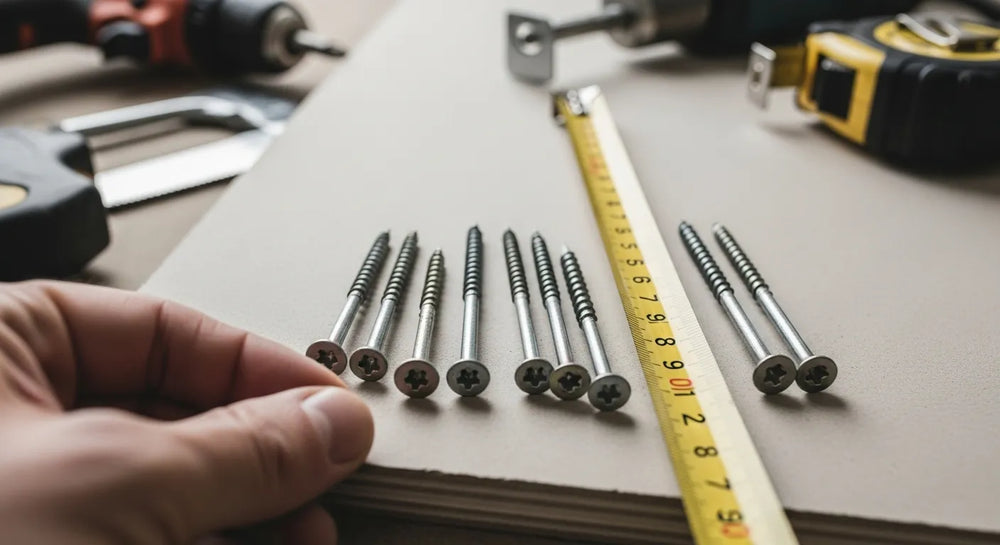
What Drill Bit for Drywall Screws: A Professional's Guide to Selection and Application
Table of Contents
- Decoding Drywall Fastening: Drill Bits vs. Driver Bits
- Understanding Drywall Screws: The Foundation of Fastening
- The Indispensable Driver Bit: Matching Tool to Task
- When a Pilot Hole Is Necessary (and What Drill Bit to Use)
- Best Practices for Driving Drywall Screws
- The Maden.co Advantage: Sourcing Quality, American-Made Fasteners
- Conclusion
- Frequently Asked Questions (FAQ)
The seemingly simple act of fastening drywall can, if not approached with the right tools and techniques, introduce a cascade of inefficiencies, rework, and hidden costs into any construction or renovation project. For procurement managers, MRO buyers, and design engineers, every component, no matter how small, contributes to the overall success and longevity of an installation. A fundamental misunderstanding, often encountered in the field, revolves around the "drill bit for drywall screws" – a phrase that, while common, frequently conflates two distinct processes: drilling a hole and driving a screw. This misconception can lead directly to stripped screw heads, damaged drywall surfaces, compromised structural integrity, and frustrating project delays.
This comprehensive guide aims to clarify the crucial distinction between drilling and driving, meticulously identify the correct driver bits required for efficient drywall installation, delve into the various types of drywall screws and their specific applications, and provide a detailed overview of best practices for achieving a high-quality, durable finish. Beyond the technical specifics, we will emphasize the critical importance of utilizing professional-grade tools and, more importantly, strategically sourcing high-quality, American-made components. Our objective is to demonstrate that mastering the selection and application of the appropriate driver bit for drywall screws is not merely a technical detail; it is a fundamental aspect of efficient project management, material integrity, and long-term cost savings, all of which are significantly enhanced by strategic sourcing of quality U.S.-made components.
Decoding Drywall Fastening: Drill Bits vs. Driver Bits
The Critical Distinction: Drilling a Hole vs. Driving a Screw
To truly understand "what drill bit for drywall screws," we must first address a common misnomer. In the context of fasteners, a "drill bit" is a tool designed to create a hole in a material, whether it be a pilot hole for a larger screw, a clearance hole, or a through-hole for a bolt. Conversely, a "driver bit" (or screwdriver bit) is specifically engineered to engage with the head of a screw and apply torque to drive it into a material. When professionals refer to the "drill bit for drywall screws," they are almost invariably referring to the driver bit used to install the screw, not a drill bit used to pre-drill a hole in the drywall itself.
This distinction is not merely semantic; it holds significant practical implications. Using an inappropriate driver bit, or misunderstanding when and if a pilot hole is even necessary, can lead to a host of problems: stripped screw heads, which render the screw unremovable or impossible to fully seat; damaged drywall paper, which compromises the surface for finishing and reduces the screw's holding power; and even structural issues if the screw fails to properly engage with the underlying stud. For procurement managers and MRO buyers, these seemingly minor failures translate directly into material waste, increased labor costs due to rework, and project delays—all factors that negatively impact the total cost of ownership (TCO) for a project. Our focus, therefore, will primarily be on selecting the correct driver bit, with a specific discussion later on the rare instances when a pilot hole, and thus a drill bit, might actually be required for drywall screw applications.
Understanding Drywall Screws: The Foundation of Fastening
Before selecting the right tool to drive them, a comprehensive understanding of drywall screws themselves is essential. These fasteners are specifically engineered for the unique properties of gypsum board and the materials used for framing. Their design is a testament to industrial excellence, reflecting years of refinement to optimize performance and ease of use.
Anatomy and Purpose of Drywall Screws
Drywall screws possess distinct features that differentiate them from general-purpose wood or metal screws:
- Bugle Head: This conical, trumpet-shaped head is perhaps the most recognizable feature. Its design allows the screw to self-countersink into the drywall without tearing the paper facing, distributing pressure evenly to prevent pull-through. This creates a neat dimple, ideal for easy mudding and finishing, ensuring a smooth, aesthetically pleasing surface.
- Sharp Point: Most drywall screws feature a sharp, piercing point, enabling them to self-start effortlessly into both gypsum board and the underlying wood or light-gauge metal studs. This eliminates the need for pre-drilling in most standard applications, significantly speeding up installation.
- Thread Design: The threads are specifically optimized for secure engagement with either wood or metal. They are designed to create a strong hold without stripping the material or allowing the screw to back out over time.
- Material and Coating: Drywall screws are typically manufactured from hardened carbon steel for strength and durability. They commonly feature a black phosphate coating, which provides a degree of corrosion resistance and helps the screws blend with the darker undertones of drywall paper. Zinc plating is another option, offering enhanced corrosion protection, particularly beneficial in humid environments. Some advanced options may even feature ceramic coatings for superior corrosion and shear resistance, extending the life of the fastening in demanding conditions.
The specialized design of drywall screws ensures they hold gypsum board securely, resisting pull-out and shear forces, without damaging the delicate paper facing. This precision engineering is why selecting the correct screw type and driving it properly is so critical for the structural integrity and finish quality of any drywall installation.
Types of Drywall Screws and Their Applications
The specific type of drywall screw chosen is dictated by the material of the framing studs:
- Coarse Thread (W-Type) Drywall Screws: These are characterized by larger, wider threads spaced further apart. They are the ideal choice for fastening drywall to wood studs. The aggressive threads bite firmly into the wood fibers, providing exceptional grip and resistance to pull-out. This design ensures that the screw creates a strong, lasting connection without stripping the wood. For standard construction and renovation projects, a reliable coarse thread option is paramount. For example, the 6 x 1-1/4 Coarse Thread Drywall Screws are a foundational component for general applications, widely trusted by professionals for their consistent performance. When heavier duty applications call for superior holding power, particularly for thicker drywall or more demanding structural requirements, options like the robust 8 x 4 Drywall Screw provide the enhanced strength and security needed to meet rigorous project specifications.
- Fine Thread (S-Type) Drywall Screws: In contrast, fine thread drywall screws feature smaller, tighter threads. These are specifically engineered for fastening drywall to light-gauge metal studs, typically up to 20-gauge steel. The finer threads cut cleaner, more precise threads into the metal, creating a secure hold without reaming out the pilot hole or stripping the metal itself. This ensures a tight, vibration-resistant connection crucial for metal framing. For precision work involving metal studs, a fine thread option such as the 6 x 1 Fine Thread Drywall Screw is an essential choice for ensuring optimal performance and compliance in commercial or industrial settings.
- Self-Drilling/Self-Tapping (G-Type) Drywall Screws: For fastening drywall to heavier gauge metal studs (typically 12-18 gauge), self-drilling or self-tapping screws are often employed. These screws feature a drill-like point that can cut its own hole through the metal before the threads engage. They require higher RPMs from the driving tool and are specifically designed to eliminate the need for pre-drilling in tougher metal applications.
- Hi-Low Thread Drywall Screws: These innovative screws incorporate a combination of coarse and fine threads on the same shaft. This design offers enhanced performance in a wider range of materials, including some plastics, wood, and light-gauge metals, providing superior grip and pull-out resistance.
- Drywall-to-Drywall Screws: These are shorter screws, often 1-inch or 1-1/4-inch, specifically used for attaching an additional layer of drywall over an existing one. They ensure proper adhesion between layers without penetrating the underlying studs, which might not be aligned.
Selecting the appropriate screw type for the job is the first critical step towards a successful drywall installation. Matching the screw to the stud material prevents common issues like screws failing to hold, stripping out of the stud, or compromising the structural integrity of the assembly. For procurement managers, having access to a reliable supply of these specialized fasteners, all manufactured to exacting standards, is crucial for maintaining project schedules and quality benchmarks.
The Indispensable Driver Bit: Matching Tool to Task
With a clear understanding of drywall screws, we can now focus on the essential tool for driving them: the driver bit. This seemingly small component is the crucial interface between your power tool and the fastener, and its correct selection and quality profoundly impact efficiency, screw integrity, and the final finish.
The Dominance of the Phillips #2 Driver Bit
For the vast majority of drywall screws manufactured and used today, the Phillips #2 driver bit is the undisputed standard. Its cross-shaped tip is designed to mate precisely with the corresponding recess in the screw head.
- Why Phillips #2? The Phillips head design, particularly the #2 size, became ubiquitous for drywall screws for several key reasons. Its design allows for what is known as "cam-out." While often seen as a disadvantage in other applications, cam-out—where the bit is designed to slip out of the screw head under excessive torque—serves a vital function in drywall installation. It acts as a rudimentary clutch, preventing the operator from over-tightening the screw, which could easily strip the screw head, damage the drywall paper, or even break the gypsum core. This built-in protective mechanism is critical for achieving the ideal screw depth: just below the paper surface, creating a slight dimple for finishing without breaking the paper.
- Identifying a Phillips #2: While all Phillips bits look similar, the #2 size is specific. Using a #1 or #3 Phillips bit on a #2 screw head will result in a loose fit, leading to premature stripping of both the bit and the screw head, significantly increasing frustration and reducing efficiency. A snug, positive engagement is key.
- Importance of Fit: A precisely fitting Phillips #2 bit ensures maximum torque transfer from the driver to the screw, minimizing the risk of slippage. This precise fit is paramount for maintaining consistent driving depth and preserving the integrity of both the fastener and the driver bit, ultimately extending their lifespan.
Other Driver Bit Types for Drywall Screws (Less Common)
While Phillips #2 reigns supreme for drywall, other bit types are sometimes encountered, particularly for specialty fasteners or regional preferences:
- Square/Robertson Bits: Highly popular in Canada and increasingly found in other regions, square drive bits offer superior torque transfer and significantly reduced cam-out compared to Phillips. This means less effort is required to drive the screw, and there's a lower risk of stripping. For drywall screws that feature a square drive head (typically #2 or #3 square), these bits offer a highly efficient and reliable driving experience.
- Torx/Star Bits: Torx (or star) bits provide the highest level of torque transfer and virtually eliminate cam-out. Their six-point star design offers excellent engagement and durability. While less common for standard drywall screws, Torx drive systems are often found in high-performance or specialty fasteners where maximum driving power and head integrity are critical. If you encounter drywall screws with a Torx head, selecting the correct size (e.g., T20, T25) is imperative for successful installation.
Key Characteristics of a Quality Driver Bit
For professional applications, the quality of your driver bit is as important as the power tool itself. A high-quality bit contributes significantly to efficiency, reduces frustration, and minimizes material waste.
-
Material:
- S2 Modified Steel: This is a widely adopted material for professional-grade driver bits. S2 modified steel offers an excellent balance of hardness (for wear resistance) and toughness (for resisting breakage under impact). This makes it highly durable for repetitive, high-torque applications.
- Tool Steel Alloys: Higher-end bits may utilize advanced tool steel alloys, often with proprietary heat treatments, to further enhance wear resistance, strength, and longevity.
- Chrome Vanadium (Cr-V): While good for general-purpose hand tools, Cr-V is often less impact-resistant than S2 steel and may be more prone to fracturing when used with impact drivers. For sustained, professional use, S2 or higher-grade alloys are generally preferred.
- Hardness: The bit's hardness, typically measured on the Rockwell scale (HRC), indicates its resistance to wear and deformation. Properly heat-treated bits will maintain their tip geometry longer, ensuring consistent engagement with screw heads.
- Impact Rating: This is a crucial specification for bits intended for use with impact drivers. Impact drivers deliver rotational force coupled with percussive blows, which can quickly shatter standard driver bits. Impact-rated bits are specifically engineered to withstand these forces, typically featuring a harder, more resilient core and often a torsion zone that flexes slightly to absorb peak torque, preventing premature breakage.
- Tip Design and Precision: A high-quality bit will have a precisely machined tip that perfectly matches the screw head. Any slop or imperfection in the tip's geometry will lead to poor engagement, cam-out, and premature wear. Some bits feature magnetized tips, which can be invaluable for holding screws in place, especially when working in awkward positions or overhead, significantly improving efficiency.
- Length: Standard 1-inch (25mm) driver bits are common and typically fit into magnetic bit holders. Longer bits (e.g., 2-inch, 6-inch) are available for reaching into recessed areas or for use in drywall screw guns without a separate holder.
- Hex Shank: Most driver bits designed for power tools feature a standard 1/4-inch hex shank. This universal design allows for quick changes in impact drivers, cordless drills, and magnetic bit holders, enhancing workflow speed.
Investing in high-quality, impact-rated driver bits made from durable materials like S2 modified steel is a wise decision for any professional. It reduces downtime, minimizes bit replacement costs, and ensures more consistent, higher-quality results in drywall installation.
When a Pilot Hole Is Necessary (and What Drill Bit to Use)
Despite the common misconception, a pilot hole is rarely required for standard drywall screw applications. Drywall screws are engineered for self-piercing into gypsum board and direct driving into typical wood or light-gauge metal studs. However, there are specific, nuanced scenarios where pre-drilling a pilot hole becomes not just beneficial, but essential to prevent material damage or fastener failure.
Debunking the Drywall Pilot Hole Myth
For the vast majority of drywall installations, especially into common framing materials like pine 2x4s or standard 25-gauge metal studs, pilot holes are entirely unnecessary. The sharp point and aggressive threads of a drywall screw are specifically designed to penetrate these materials without pre-drilling. Attempting to pre-drill every screw into drywall is a significant waste of time and an unnecessary step that can actually introduce inaccuracies if not done perfectly. The primary risks of driving without a pilot hole—splitting the wood or stripping the screw head—are usually mitigated by using the correct driver bit, applying proper pressure, and utilizing a variable-speed drill or impact driver.
Specific Scenarios Requiring a Pilot Hole
While infrequent, certain conditions necessitate the use of a pilot hole before driving a drywall screw:
- Hardwood Studs or Framing: If you are working with older homes that feature dense hardwood framing, or if you are attaching drywall to specialized hardwood structures, pre-drilling is highly recommended. Hardwoods are notoriously difficult to penetrate, and attempting to drive a drywall screw directly can easily cause the screw to bend, break, or strip its head before fully seating, or even split the wood.
- Close to Edges/Ends of Studs: When driving screws very close to the edge or end of a wood stud, there is an increased risk of splitting the wood. A pilot hole can relieve the pressure created by the screw's threads, preserving the integrity of the stud and ensuring a secure connection. This is particularly important for load-bearing or critical fastening points.
- Specialty Applications and Denser Materials: Beyond standard drywall, there are applications involving denser backer boards (e.g., cement board) or certain composite materials that may require pre-drilling. Always refer to the manufacturer's guidelines for such specialized materials, as their density and composition might necessitate a pilot hole to prevent damage to the material or the screw.
- Heavy-Duty or Structural Fastening: While drywall screws are primarily for attaching gypsum board, if they are being used in a secondary, more structural capacity (e.g., attaching a furring strip or a specific blocking), and precise placement and maximum holding power are critical, a pilot hole can ensure the screw follows an exact path and fully engages without unintended stresses.
Selecting the Right Drill Bit for Pilot Holes
When a pilot hole is required, selecting the correct drill bit and diameter is paramount:
-
Twist Drill Bits: These are the most common type of drill bits and are suitable for creating pilot holes in wood and metal studs.
- High-Speed Steel (HSS): Standard HSS bits are effective for drilling into wood and softer metals.
- Cobalt or Titanium-Coated: For harder woods, thicker metals, or increased durability, cobalt or titanium-coated HSS bits are a better choice, as they offer superior heat resistance and wear properties.
-
Bit Diameter: This is the most critical factor. The pilot hole should be slightly smaller than the major diameter (the outermost diameter of the screw threads) but larger than the minor diameter (the diameter of the screw's core or shank without the threads). This allows the screw's threads to cut into the material and achieve maximum grip without excessive friction that could strip the screw or split the wood.
- Rule of Thumb: A good starting point is often a pilot hole diameter that is approximately 75% to 90% of the screw's core diameter. However, the best practice is always to perform a test drive on a piece of scrap material similar to your application to determine the optimal pilot hole size that allows for secure, easy driving without splitting or stripping.
- Brad Point Bits: For very precise pilot holes in wood, particularly when minimizing tear-out is a concern, brad point bits can be used. These bits have a sharp center point that precisely locates the hole and spurs that score the wood fibers before the main cutting edges remove material, resulting in exceptionally clean holes. While less common for structural framing, they are excellent for finish carpentry where drywall screws might be used.
Properly sized pilot holes ensure that the drywall screw can be driven effectively, achieving its full holding power without damaging the material or the fastener. This attention to detail reflects a commitment to industrial excellence and contributes to a higher standard of construction.
Best Practices for Driving Drywall Screws
Even with the correct screws and driver bits, proper technique is the final piece of the puzzle for a professional-quality drywall installation. Mastering these practices ensures efficiency, consistency, and a finish that stands up to scrutiny.
Essential Tools and Equipment
Optimizing your toolkit can significantly streamline the drywall fastening process:
- Cordless Drill/Driver: A variable-speed cordless drill with an adjustable clutch is a foundational tool. The variable speed allows for precise control, starting slow to engage the screw and increasing speed to drive it. The clutch settings are crucial for preventing overdriving; setting the clutch to a lower torque value allows it to disengage once sufficient force is applied, protecting the drywall paper from tearing.
- Impact Driver: For high-volume work and increased efficiency, an impact driver is highly recommended. These tools deliver rotational force combined with short, rapid percussive blows, driving screws much faster and with less effort from the operator. Impact drivers are particularly effective for driving into tougher materials. However, it is paramount to use only impact-rated driver bits with these tools, as standard bits can shatter under the intense percussive forces.
- Drywall Screw Gun: For professionals performing extensive drywall installations, a dedicated drywall screw gun is the ultimate tool. These specialized tools feature an adjustable nose cone (or depth stop) that automatically sets the screw to the perfect depth—just below the surface of the drywall paper—without breaking the paper. Many models also incorporate auto-feed mechanisms, allowing for rapid, continuous driving without manually loading each screw, drastically increasing productivity.
- Magnetic Bit Holder: This simple accessory is invaluable. It holds the driver bit securely in the drill or impact driver and, crucially, magnetizes the tip of the bit, allowing it to hold a screw in place. This frees up a hand, improves stability, prevents dropped screws, and significantly speeds up the driving process, especially in awkward or overhead positions.
- Depth Stop Setter: For those using standard drills/drivers but seeking the precision of a drywall screw gun, a depth stop setter (also known as a screw setter) is an excellent attachment. This sleeve slides over the driver bit and features a collar that stops the screw at a consistent, pre-set depth, preventing overdriving and ensuring a uniform finish.
Technique for Optimal Results
With the right tools in hand, consistent technique is what separates amateur work from industrial excellence:
- Select the Correct Driver Bit: As discussed, a Phillips #2 driver bit is the standard for most drywall screws. Always ensure it's in good condition, free from wear or rounding, and fits snugly into the screw head.
- Choose the Right Screw: Verify that you are using coarse-thread screws for wood studs and fine-thread screws for metal studs. Using the wrong type will compromise holding power and could damage the framing material.
- Secure the Drywall: Before driving, ensure the drywall sheet is held firmly and squarely against the framing stud. This prevents the sheet from flexing, which can lead to misaligned screws or tearing of the paper.
-
Proper Pressure: Apply firm, consistent, and straight pressure directly in line with the screw and the stud.
- Too little pressure will cause the driver bit to "cam-out" and strip the screw head, particularly with Phillips bits.
- Too much pressure can break the drywall paper, especially as the screw approaches the surface, or cause the screw to strip out of the stud. The key is a balanced force that allows the screw to bite and draw into the material smoothly.
- Appropriate Speed: Start the drill at a slow speed to properly engage the screw in the drywall. Once the screw has bitten, gradually increase the speed to drive it efficiently. As the screw head approaches the surface, reduce the speed to maintain control and prevent overdriving.
-
Depth Control: This is perhaps the most critical aspect of drywall screw installation. The goal is for the screw head to be slightly below the surface of the drywall paper, creating a small, neat dimple. This dimple provides a recess for joint compound (mud), ensuring a smooth, flush finish without the screw head protruding or the paper tearing.
- Avoid Overdriving: Driving the screw too deep or breaking through the paper significantly reduces the screw's holding power and damages the drywall. This creates a weak point and requires repair.
- Avoid Underdriving: If the screw head is left proud of the surface, it will be visible after finishing, creating an unsightly bump that requires additional sanding and mudding.
- Utilize Depth Control Tools: For consistent results, a drywall screw gun or a depth stop setter attached to a standard drill is highly recommended. These tools take the guesswork out of depth control, ensuring every screw is set perfectly.
- Spacing: Adhere to local building codes and manufacturer guidelines for screw spacing. Typically, screws are spaced every 6-8 inches on ceilings and every 8-12 inches on walls, providing adequate support and preventing sagging or cracking.
By implementing these best practices, professionals can ensure that every drywall screw is installed correctly, contributing to a robust, long-lasting, and aesthetically pleasing finish. This meticulous approach not only enhances project quality but also optimizes procurement and MRO operations by reducing waste and rework.
The Maden.co Advantage: Sourcing Quality, American-Made Fasteners
In the demanding world of industrial procurement, MRO, and design engineering, the reliability and availability of components like drywall screws and driver bits are paramount. At Maden.co, we understand that seemingly small components play a significant role in project timelines, budget adherence, and overall structural integrity. Our mission is to democratize access to American manufacturing, ensuring that buyers can easily connect with the high-quality, U.S.-made products they need. We aim to become the definitive platform that proves American-made components are as accessible and convenient as any global alternative, driving the manufacturing revival.
Why Choose U.S.-Made Fasteners from Maden.co?
Sourcing through Maden.co offers a strategic advantage, aligning with our core values of American Manufacturing Pride, Digital Innovation, Supply Chain Transparency, Industrial Excellence, and Customer Empowerment.
- Uncompromised Quality and Precision: When you source from our network of 800+ verified U.S. manufacturers, you are assured of consistent adherence to stringent quality control and material specifications. This commitment to industrial excellence translates directly to fewer stripped screws, stronger installations, and significantly reduced material waste on your job site. U.S.-made fasteners undergo rigorous testing, ensuring they meet and often exceed performance expectations, reducing the need for costly rework and bolstering project integrity. This dedication to quality is evident in products like our robust 6 x 1-1/4 Coarse Thread Drywall Screws, which exemplify the durability and reliability our buyers expect.
- Enhanced Supply Chain Resilience: In an era of unpredictable global supply chains, partnering with domestic manufacturers significantly mitigates risks associated with international shipping delays, geopolitical instability, and fluctuating import tariffs. When you procure through Maden.co, you're investing in reliability and reducing lead times, ensuring your projects stay on track with a stable and transparent supply chain. This resilience is a critical factor for MRO buyers facing unexpected equipment breakdowns or procurement managers needing consistent, timely delivery of components.
- Compliance and Standards: U.S.-made products consistently meet or exceed critical industry standards and regulations. While for drywall screws this might be less about specific DIN or NPT compliance (which apply more to specialized mechanical fasteners), it is fundamentally about the underlying commitment to a higher standard of manufacturing and material consistency that permeates American production. This same dedication to meeting exacting specifications applies across our entire catalog of over 2.5 million products, offering peace of mind for design engineers and procurement professionals alike.
- Supporting American Manufacturing and Innovation: Every purchase through Maden.co contributes directly to the vitality of the American economy, supports U.S. jobs, and fosters continued innovation in domestic manufacturing. We firmly believe that America's manufacturing revival is here, and by choosing Maden.co, you become an indispensable part of this crucial movement. Our platform actively champions American Manufacturing Pride, connecting businesses with the ingenuity and craftsmanship of U.S. producers. You can learn more about our mission to champion American manufacturing and our vision to be the definitive platform for U.S.-made components on our About Us page.
- Digital Innovation for Procurement Efficiency: Our B2B marketplace is meticulously designed with the procurement manager, MRO buyer, and design engineer in mind. We leverage digital innovation to streamline the sourcing process, offering an intuitive platform to efficiently find exactly what you need, from everyday fasteners like high-performance drywall screws to highly specialized industrial components. Whether you're searching for specific 8 x 4 Drywall Screws for robust construction, or requiring the precise engagement of a 6 x 1 Fine Thread Drywall Screw for metal framing, our platform ensures a seamless and efficient discovery process. Our extensive catalog and powerful search capabilities reduce procurement friction, saving valuable time and resources.
Streamlining Your Capital-Intensive Projects with Instant Financing
One of the most significant challenges in procurement, particularly for large-volume purchases or capital-intensive projects, is effective cash flow management. Recognizing this critical need, Maden.co offers Instant Financing directly at checkout. This is more than just a payment option; it is a strategic financial tool designed to empower businesses and procurement professionals. This innovative feature allows you to:
- Maintain Healthy Cash Flow: By deferring immediate payment, businesses can preserve their working capital for other operational needs without delaying critical project timelines.
- Facilitate Larger-Volume Purchases: Instant Financing enables procurement managers and business owners to secure necessary quantities of materials and components when opportunities arise, even if immediate capital isn't fully liquid. This ensures that projects can move forward without being hindered by upfront payment requirements.
- Enhance Project Continuity: Avoid the common delays associated with waiting for internal budget approvals or navigating traditional, time-consuming financing methods. Instant Financing provides immediate access to the funds needed to acquire essential U.S.-made supplies.
- Reduce Procurement Friction: The financing option is seamlessly integrated into the checkout process, making it an effortless part of your existing procurement workflow, further enhancing the efficiency that our Digital Innovation provides.
This feature exemplifies our commitment to Customer Empowerment, ensuring that accessing vital U.S.-made industrial supplies is as convenient and financially flexible as possible, helping you improve your overall Total Cost of Ownership.
Partnering for the Future of American Manufacturing
Maden.co is more than just a marketplace; we are a strategic partner in building a more reliable, efficient, and resilient procurement process for your business. We connect you with verified U.S. manufacturers who are committed to industrial excellence, transparency, and product quality.
Are you a qualified U.S. manufacturer looking to expand your reach and connect with industrial buyers who value domestic quality? We invite you to Register as a vendor and join the American manufacturing revival, becoming part of a thriving network dedicated to advancing U.S. industry.
For any specific sourcing inquiries, questions about leveraging our platform's capabilities, or assistance with finding hard-to-find components, our expert team is ready to help. You can reach out directly via our Contact Us page to speak with a specialist who understands your unique procurement challenges.
Conclusion
The correct selection and application of driver bits for drywall screws, while seemingly minor, profoundly impact project quality, efficiency, and overall cost. Understanding the critical distinction between a drill bit and a driver bit, discerning the nuances between coarse and fine threads, recognizing the indispensable role of the Phillips #2 bit, and knowing when a pilot hole might actually be beneficial can prevent common frustrations like stripped screws and damaged drywall. These technical specifics are foundational to efficient and high-quality construction.
Beyond these operational details, the strategic advantage of sourcing high-quality, American-made fasteners cannot be overstated. At Maden.co, we are dedicated to providing procurement managers, MRO buyers, and design engineers with unparalleled access to a vast catalog of over 2.5 million U.S.-manufactured products. By choosing to procure through our platform, you are not only ensuring the highest standards of quality, reliability, and supply chain resilience for your projects, but you are also actively participating in America's manufacturing revival. We invite you to explore our comprehensive selection of industrial components, including the very drywall screws and related fasteners critical to your operations. When it's time to make your purchase, remember that you can apply for Instant Financing at checkout to streamline your capital-intensive projects, ensuring your access to essential American-made materials is both seamless and financially prudent. Equip your operations for success and champion American industry with Maden.co.
Frequently Asked Questions (FAQ)
Q1: Do I always need a pilot hole for drywall screws?
A1: Generally, no. Drywall screws are meticulously designed with sharp points and aggressive threads that allow them to self-pierce gypsum board and typically drive directly into standard wood or light-gauge metal studs without the need for a pre-drilled pilot hole. Pilot holes are usually only necessary in specific, less common scenarios, such as when fastening into very dense materials like hardwoods or when working extremely close to the edge of a stud to prevent the wood from splitting. For the vast majority of standard drywall applications, employing proper driving technique and using the correct driver bit are sufficient to achieve a secure and clean installation.
Q2: Can I use any screwdriver bit for drywall screws?
A2: While many screws feature a Phillips head, it is crucial to use the correct size driver bit for optimal performance and to prevent damage. For the overwhelming majority of drywall screws, a Phillips #2 driver bit is the standard and the only size that should be used. Using a bit that is too small or worn can lead to "cam-out" (where the bit slips out of the screw head) and subsequently strip the screw, rendering it impossible to drive further or remove without specialized tools. Always ensure a snug, positive fit between the driver bit and the screw head to maximize torque transfer, minimize slippage, and preserve the integrity of both the fastener and the bit.
Q3: What's the main difference between coarse thread and fine thread drywall screws?
A3: The primary distinction between coarse thread and fine thread drywall screws lies in their thread design and the specific material they are engineered to fasten into. Coarse thread drywall screws (often referred to as W-type) feature wider, more aggressive threads that are ideally suited for gripping into the fibrous structure of wood studs, providing superior holding power and resistance to pull-out. In contrast, fine thread drywall screws (S-type) have smaller, more closely spaced threads. These are specifically designed to cut clean, precise threads into light-gauge metal studs (typically up to 20-gauge steel), creating a secure and reliable connection without stripping out the softer metal material.
Q4: Why should I prioritize U.S.-made drywall screws and fasteners for my projects?
A4: Prioritizing U.S.-made drywall screws and fasteners, readily available through platforms like Maden.co, offers several significant strategic advantages for businesses. These include an unwavering assurance of quality and consistent adherence to stringent manufacturing standards, which translates directly into more reliable performance on the job site and a substantial reduction in costly rework. Sourcing domestically inherently enhances supply chain resilience, minimizing lead times and mitigating risks associated with global disruptions, making procurement more predictable. Furthermore, opting for U.S.-made products actively supports American industries, stimulates the domestic workforce, and contributes to the economic vitality of local communities, embodying our core values of American Manufacturing Pride and Industrial Excellence.


