
Getting Started
Table of Contents
- The Criticality of Proper Drywall Fastening in Industrial & Commercial Builds
- Understanding Drywall Screw Fundamentals: More Than Just Fasteners
- Standard Drywall Screw Spacing Guidelines: Walls vs. Ceilings
- Advanced Drywall Fastening Scenarios and Best Practices
- Tools and Techniques for Efficient Installation
- The Broader Impact: Supply Chain Resilience and Product Sourcing
- Ensuring Compliance and Reducing TCO with Verified Manufacturers
- Frequently Asked Questions
Optimal Drywall Screw Spacing for Lasting Commercial Builds
Imagine a newly completed commercial interior – pristine walls, smooth ceilings, a testament to meticulous planning and execution. Now, picture that same interior just a few years later, marred by unsightly nail pops, buckling seams, and stress cracks that detract from the building's professional appearance and structural integrity. Often, the culprit isn't the drywall itself, nor the framing, but a seemingly minor detail: inadequate drywall screw spacing. For procurement managers, MRO buyers, and design engineers, understanding the precise requirements for drywall fastening extends far beyond aesthetic considerations. It’s about ensuring the long-term durability, safety, and compliance of a structure, directly impacting maintenance costs, occupant comfort, and overall project success. This post will demystify the essential guidelines for determining how far apart drywall screws should be, exploring the technical nuances, industry standards, and strategic procurement practices necessary to achieve superior results in every commercial and industrial application. Our thesis is clear: mastering proper drywall screw placement is a foundational element of quality construction, and sourcing the right, high-quality, U.S.-made fasteners is paramount to achieving these critical objectives.
The Criticality of Proper Drywall Fastening in Industrial & Commercial Builds
In the realm of commercial and industrial construction, drywall isn't merely a decorative surface; it's an integral component of the building envelope, contributing to fire ratings, sound attenuation, and overall structural performance. The seemingly simple act of attaching a drywall panel to a stud carries significant weight. Improper screw spacing can compromise all these functions, leading to costly failures and undermining the investment in a facility.
Beyond Aesthetics: Structural Integrity and Longevity
The primary function of drywall screws is to securely fasten gypsum board panels to framing members, whether they are wood studs, metal studs, or ceiling joists. This creates a monolithic surface that can withstand daily wear and tear, minor impacts, and the natural movements of a building. When screws are spaced too far apart, the drywall loses its rigid connection to the framing. This allows for excessive movement, which manifests as visible issues like bulging, warping, and the dreaded "nail pops" (though screws are used, the term persists for fastener head failures). These aren't just cosmetic flaws; they indicate a structural weakness that can reduce the effective lifespan of the wall or ceiling system. For a design engineer specifying materials for a high-traffic industrial facility, or a procurement manager sourcing components for a new office complex, ensuring that every panel is anchored with precision is fundamental to the project's long-term viability and performance.
Mitigating Risk: Preventing Callbacks and Failures
Every project manager knows that callbacks are costly, eroding profits and damaging reputations. In the context of drywall, callbacks for fastening issues can involve extensive repairs, including patching, sanding, repainting, and potentially even replacing entire sections of drywall. These unforeseen expenses can significantly inflate the Total Cost of Ownership (TCO) for a building and strain relationships with clients. More critically, in spaces with stringent performance requirements, such as fire-rated walls or sound-insulated partitions, incorrect screw spacing can compromise safety certifications and regulatory compliance. Ensuring that fasteners are correctly spaced from the outset is a proactive risk mitigation strategy, protecting both the project's budget and its occupants.
Understanding Drywall Screw Fundamentals: More Than Just Fasteners
Before delving into specific spacing guidelines, it’s essential to appreciate the engineering behind the humble drywall screw. These fasteners are specifically designed for the unique properties of gypsum board and the framing materials they attach to.
Anatomy of a Drywall Screw: Design for Performance
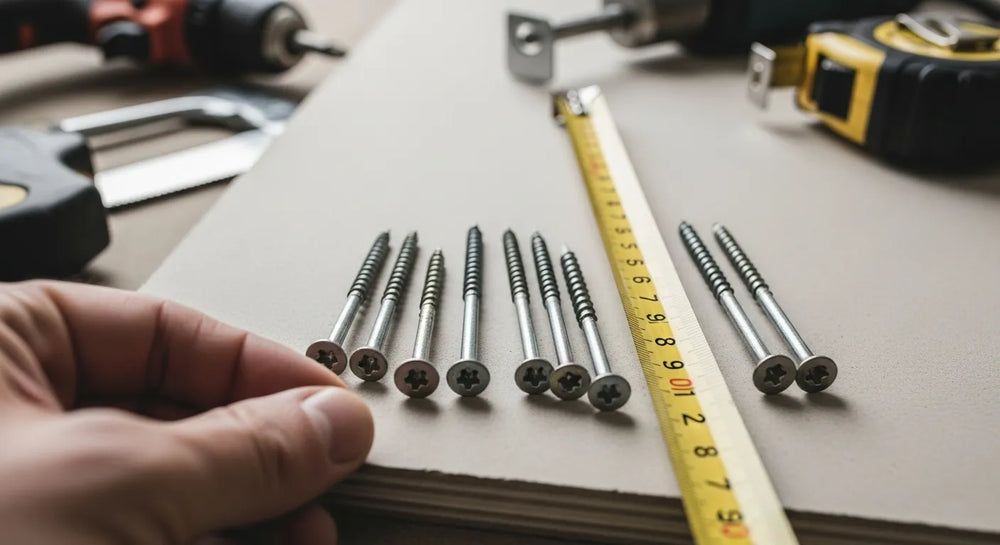
Drywall screws differ significantly from standard wood or metal screws. Key features include:
- Sharp, pointed tip: Allows for quick penetration without pre-drilling.
- Bugle head: Tapers to create a self-countersinking effect, ensuring the screw head sits flush with or slightly below the drywall surface without tearing the paper. This creates a smooth finish for taping and mudding.
- Shaft design: Optimized for gripping gypsum board. The coarse threads, in particular, are designed to aggressively bite into the soft gypsum core and wood framing.
- Phosphate coating: Typically black, this coating resists corrosion and helps the screw bite into the material.
The choice of screw type – specifically thread pattern – is dictated by the framing material. Understanding these differences is crucial for effective fastening and long-term stability.
Choosing the Right Screw: Length, Gauge, and Thread Type
The efficacy of drywall fastening begins with selecting the appropriate screw for the job. This involves considering the thickness of the drywall, the number of layers, and the type of framing material.
- Length: General rule of thumb is that the screw should penetrate the framing member by at least 5/8 inch (16 mm). For single-layer 1/2-inch drywall, a 1-1/4 inch screw is common. For 5/8-inch drywall, a 1-5/8 inch screw is preferred. Double-layer applications require longer screws, typically 2-1/4 to 2-1/2 inches, to penetrate both layers and secure firmly into the stud.
- Gauge: Most drywall screws are #6 or #8 gauge. #6 screws are standard for typical residential and light commercial applications. For heavier boards, double-layer installations, or areas requiring enhanced structural integrity, #8 gauge screws offer superior holding power.
-
Thread Type:
- Coarse-Thread Screws: These are the most common type and are specifically designed for fastening drywall to wood studs or joists. Their aggressive threads provide excellent grip in the fibrous wood grain, resisting pull-out. When seeking robust, reliable fasteners for wood framing applications, you can find high-quality options like these 6 x 1-1/4 Coarse Thread Drywall Screws on our marketplace, ensuring your projects meet the highest standards.
- Fine-Thread Screws: Also known as metal-stud screws, these are engineered for attachment to light-gauge metal studs (typically 20-25 gauge). Their finer, sharper threads tap into the metal without stripping the hole. For precision and secure fastening in metal stud constructions, consider robust options such as these 6 x 1 Fine Thread Drywall Screws, ideal for commercial-grade installations.
- Self-Tapping (Drill-Point) Screws: For heavy-gauge metal studs (12-20 gauge), self-tapping or drill-point screws are necessary. These have a drill bit-like tip that creates its own hole before the threads engage, preventing stripped holes and ensuring a strong connection.
- For specialized applications requiring a robust, all-around fastener, an 8 x 4 Drywall Screw offers extended length and increased gauge for superior holding power, particularly useful in multi-layer assemblies or where deeper penetration into framing is required.
Procurement managers understand that specifying the correct screw type isn't just about adherence to a bill of materials; it’s about preventing catastrophic failures, reducing material waste, and ensuring the long-term performance of the installed systems. At Maden.co, we emphasize connecting industrial buyers with precision-engineered, U.S.-made fasteners that meet these exacting specifications.
Standard Drywall Screw Spacing Guidelines: Walls vs. Ceilings
The general principle for drywall screw spacing is to ensure adequate support without oversaturating the drywall or framing with fasteners, which can weaken both. The rules differ significantly between walls and ceilings due to gravitational forces and the differing stresses on the gypsum board.
Walls: Vertical Applications for Stability
For standard 1/2-inch or 5/8-inch drywall on walls, the following spacing guidelines are widely accepted and often mandated by building codes:
- Edges: Screws should be spaced no more than 7 to 8 inches apart along the edges of the drywall panel where it meets a stud or other framing member. This consistent edge fastening is critical for preventing movement and creating a strong base for taping and finishing.
- Field (Intermediate Studs): In the field of the panel (along studs between the edges), screws can typically be spaced up to 12 inches apart. Since these fasteners are not supporting an edge, the primary goal is to prevent bowing or bulging in the center of the panel.
- Double Fastening (Optional but Recommended): Some codes or best practices recommend "double fastening" at joints. This involves using two screws side-by-side (about 2 inches apart) every 12 inches along the edges and every 24 inches in the field. This method adds significant strength and reduces the likelihood of fastener pops.
It is crucial that screws are installed at least 3/8 inch from the edge of the drywall sheet to prevent paper tears, which can compromise the screw's holding power.
Ceilings: Overhead Support and Sag Prevention
Drywall installed on ceilings experiences constant downward gravitational pull, making proper fastening even more critical to prevent sagging and ensure long-term stability. The spacing requirements for ceilings are generally tighter than for walls:
- Edges: Screws along the edges of ceiling drywall panels should be spaced no more than 5 to 7 inches apart. This tighter spacing is essential to resist gravity and prevent edge sag, which is particularly noticeable on ceilings.
- Field (Intermediate Joists): For joists in the field of the panel, screws should be spaced no more than 7 to 12 inches apart. Again, the tighter end of this range is preferred for heavier 5/8-inch drywall or in situations where aesthetic integrity is paramount.
- Perpendicular Application (Preferred): Drywall sheets should ideally be installed perpendicular to the ceiling joists. This orientation allows each sheet to span multiple joists, distributing the load more effectively and minimizing sag. When installed parallel, the long edges of the drywall run along a single joist, increasing the risk of bowing.
- Adhesives: For ceilings, the use of a construction adhesive in conjunction with screws is highly recommended, and often required by code, especially for 5/8-inch drywall. The adhesive provides an immediate bond and reduces reliance on screws for initial holding, significantly reducing the chances of sagging and fastener pops.
Navigating Building Codes and Industry Standards
While these guidelines provide a strong foundation, it is imperative to consult local building codes and specific project specifications. Building codes can vary significantly by region and often stipulate minimum requirements for screw type, length, and spacing, particularly for fire-rated assemblies, shear walls, or seismic zones. Procurement managers must ensure that the fasteners sourced not only meet project requirements but also comply with all relevant standards. This commitment to adherence underscores our core value of Industrial Excellence at Maden.co, where we provide access to products from verified U.S. manufacturers who understand and meet these rigorous standards.
Advanced Drywall Fastening Scenarios and Best Practices
Commercial and industrial projects frequently present fastening challenges that extend beyond basic single-layer wall applications. Understanding these advanced scenarios is crucial for engineers and MRO teams planning maintenance or new installations.
Double-Layer Drywall Systems: Enhanced Soundproofing and Fire Rating
Double-layer drywall systems are commonly used for increased sound attenuation, improved fire ratings, or enhanced wall durability. The fastening strategy for these systems differs:
- First Layer: The first layer of drywall is typically fastened with standard spacing (e.g., 7-8 inches on edges, 12 inches in the field for walls; 5-7 inches on edges, 7-12 inches in the field for ceilings). Screws should penetrate the framing.
- Second Layer: The second layer is then applied over the first, with joints offset from the first layer. Longer screws are required to penetrate both layers of drywall and still achieve the minimum 5/8-inch penetration into the framing. The spacing for the second layer is typically the same as for a single layer, but it is often recommended to use the screws on the second layer to also "catch" any studs missed by the first layer's fasteners, improving the overall integrity. Additionally, construction adhesive is almost always used between the layers to create a strong, continuous bond, further enhancing performance and reducing the number of screws needed for the second layer.
Corners, Edges, and Openings: Reinforcing Critical Areas
Areas around corners, windows, and door openings are subject to unique stress concentrations and require careful attention:
- Corners: Screws should be placed closer together (e.g., 6 inches apart) along the perimeter of interior and exterior corners to prevent cracking. It’s also crucial to avoid aligning drywall joints directly above door or window corners; instead, use an "L-cut" or "U-cut" around openings to distribute stress more effectively.
- Edges and Butts: Butt joints (where the factory-tapered edges of drywall sheets meet) are relatively easy to finish. Non-tapered cut edges, however, are harder to conceal. When cut edges meet, it’s advisable to back them with a small piece of wood or metal framing (blocking) to provide a solid fastening surface and prevent movement that could lead to cracking. Screws should be placed at 7-8 inch intervals along these backed edges.
Specialized Drywall Types: Considerations for Moisture-Resistant and Fire-Rated Boards
Different types of drywall have specific installation requirements:
- Moisture-Resistant (Green Board/Blue Board): These boards, used in bathrooms, kitchens, and other damp areas, are often denser and heavier. While spacing generally follows standard guidelines, ensure screws are corrosion-resistant (e.g., coated) and use longer screws if the board is thicker.
- Fire-Rated (Type X): Type X drywall is thicker and contains glass fibers for enhanced fire resistance. It is also heavier. When installing Type X, stricter adherence to local fire codes regarding screw length, spacing, and penetration is essential. Double-layer applications are common, with specific requirements for fastening each layer to achieve the desired fire rating. Procurement teams must verify that the specified fasteners meet these critical fire safety standards.
- Soundproof Drywall: These composite panels are significantly heavier than standard drywall. Tighter screw spacing (e.g., 6 inches on edges, 8-10 inches in field) and longer, heavier gauge screws are typically recommended, often in conjunction with specialized acoustical sealants and resilient channels.
The Role of Adhesives: A Supplemental Strategy
While the focus is on screws, it’s important to acknowledge the strategic role of construction adhesives, especially for ceilings and double-layer applications. Adhesives provide a continuous bond that complements fasteners, reducing the total number of screws required (which can prevent fastener pops) and significantly enhancing the rigidity and sound-dampening properties of the assembly. For procurement managers, this means considering a holistic approach to fastening solutions, where adhesives and fasteners are specified as a synergistic system.
Tools and Techniques for Efficient Installation
The best screw spacing guidelines are only as effective as their execution. Proper tools and techniques are paramount for achieving reliable fastening in commercial environments.
Driver Bits and Drywall Screw Guns: Optimizing Speed and Accuracy
Manual installation of drywall screws is impractical and inefficient for large commercial projects. Specialized tools are indispensable:
- Drywall Screw Guns: These are clutch-driven power tools designed to automatically drive screws to the perfect depth without breaking the paper face or stripping the screw head. They typically have an adjustable depth-setting nose cone.
- Collated Screw Guns: For maximum efficiency, collated screw guns feed screws automatically from a strip, eliminating the need to load individual screws. This significantly speeds up installation, reduces fatigue, and ensures consistent fastening, a critical factor for MRO buyers looking to optimize labor costs on large-scale maintenance or renovation projects.
- Driver Bits: Use self-centering magnetic bits specifically designed for drywall screws (usually Phillips #2). Worn bits should be replaced promptly to prevent cam-out and damage to screw heads.
Depth Settings: Avoiding Over-Penetration and Strip-Outs
The single most common installation error with drywall screws is improper depth setting.
- Too Deep: If a screw penetrates too far, it breaks the paper face of the drywall, which is primarily responsible for the screw's holding power. This leaves a weak connection, prone to failure. The screw head should ideally sit just below the surface of the paper, creating a "dimple" that can be easily filled with joint compound, without tearing the paper.
- Too Shallow: If a screw head protrudes above the surface, it will create a bump that shows through the finished surface, requiring additional finishing work or removal.
- Stripped Out: Driving a screw too quickly or with too much torque can cause it to strip out the gypsum core or the wood/metal framing, resulting in zero holding power.
Proper technique involves applying firm, consistent pressure on the screw gun, allowing the clutch to engage and stop the screw at the correct depth. Regular inspection of screw depths during installation is vital to ensure consistency and prevent defects.
The Broader Impact: Supply Chain Resilience and Product Sourcing
In the dynamic world of industrial procurement, the seemingly simple act of securing drywall screws connects directly to broader strategic objectives: supply chain resilience, quality assurance, and economic empowerment. The source of these fasteners plays a pivotal role.
Why U.S.-Made Drywall Screws Matter: Quality, Consistency, and Compliance
Sourcing U.S.-made drywall screws, like the high-quality options found on Maden.co, offers compelling advantages for commercial and industrial buyers:
- Uncompromising Quality and Consistency: American manufacturers adhere to stringent quality control standards, resulting in fasteners with consistent dimensions, reliable coatings, and superior material properties. This minimizes the risk of defective screws that strip easily, break, or fail prematurely, which can lead to costly rework and project delays. For a procurement manager under pressure to source a specific component for a critical build, the assurance of quality from a verified U.S. manufacturer is invaluable.
- Reliable Supply Chains: Domestic sourcing significantly reduces lead times and mitigates the risks associated with global supply chain disruptions— tariffs, geopolitical instability, shipping delays. This ensures that projects stay on schedule and within budget, a core tenet of building supply chain resilience.
- Compliance with Industry Standards: U.S.-made products are typically manufactured to meet or exceed established American industry standards (e.g., ASTM, ANSI), which often align with international standards like DIN or NPT for other component types. This ensures compatibility and compliance with project specifications and building codes without the need for extensive verification processes often required for imported goods. This commitment to domestic quality is a cornerstone of our values at Maden.co, where we are driven by American Manufacturing Pride and Industrial Excellence.
- Economic Impact: Choosing American-made fasteners supports domestic manufacturing jobs, strengthens local economies, and contributes to the overall manufacturing revival in the United States. This aligns with a growing desire among businesses to make procurement decisions that have a positive community and national impact.
Maden.co's Role in Streamlining Procurement for Industrial Fasteners
At Maden.co, our mission is to democratize access to American manufacturing, making it easier for procurement managers, MRO buyers, and design engineers to connect with reliable, U.S.-based suppliers. We achieve this by connecting industrial buyers with over 2.5 million American-made products from our network of 800+ verified U.S. manufacturers. Our vision is to become the definitive platform that proves American-made components are as accessible and convenient as any global alternative, driving the manufacturing revival with our tagline: "America's manufacturing revival is here." You can learn more about our commitment to this mission and our values here.
Our platform embodies Digital Innovation and Supply Chain Transparency, offering a robust, intuitive experience that simplifies the sourcing process. Instead of sifting through countless unverified suppliers, buyers can access a curated marketplace of high-quality, U.S.-made fasteners, including the exact drywall screws needed for their projects. We believe in Customer Empowerment, providing the tools and resources for informed, efficient purchasing. When you visit our platform, you are stepping into a marketplace built on trust and efficiency, showcasing why Maden.co is America's premier B2B marketplace for U.S.-manufactured products.
Overcoming Procurement Friction: A Strategic Partnership
Procurement friction—the time, effort, and resources spent navigating complex supply chains, vetting suppliers, and managing logistics—can significantly impact a project's profitability. Maden.co directly addresses this by offering:
- Centralized Access: A single platform to find a vast array of U.S.-made industrial products, from fasteners to specialized components.
- Verified Suppliers: Our rigorous vetting process for manufacturers ensures that every product listed meets our high standards for quality and origin. This transparency is key to building trust and reducing risk for buyers.
- Reduced Lead Times: Direct connections to U.S. manufacturers mean faster delivery and greater responsiveness to project demands, minimizing delays and keeping projects on track.
- Simplified Purchasing: Our user-friendly interface and streamlined checkout process reduce administrative burden, allowing procurement teams to focus on strategic sourcing rather than transactional tasks. For procurement managers facing tight deadlines and complex material lists, the ability to quickly find and finance a verified, U.S.-made part is a game-changer.
- Instant Financing: A key differentiator for Maden.co is our "Instant Financing" option. This isn't just a payment method; it's a strategic tool designed to help businesses manage cash flow effectively and make larger-volume purchases without upfront capital strain. Whether you're an MRO buyer needing to restock critical supplies or a business owner investing in a major upgrade, Instant Financing at checkout provides the flexibility needed to keep your operations running smoothly. You can apply for Instant Financing at checkout to streamline your capital-intensive projects and ensure your business has the resources it needs precisely when it needs them.
If you have specific sourcing questions or require assistance finding particular U.S.-made industrial fasteners for your commercial or industrial projects, our expert team is ready to help. Please don't hesitate to contact us for personalized support and guidance.
Ensuring Compliance and Reducing TCO with Verified Manufacturers
The choice of fastener supplier has profound implications for compliance, project quality, and ultimately, the Total Cost of Ownership (TCO) of any commercial or industrial build. Partnering with verified U.S. manufacturers through a platform like Maden.co is a strategic decision that yields significant long-term benefits.
The Value of Verified Suppliers: Avoiding Counterfeits and Subpar Materials
In a globalized market, the risk of encountering counterfeit or subpar industrial components is a persistent challenge for procurement professionals. Such materials, while seemingly cost-effective initially, can lead to:
- Catastrophic Failures: Fasteners made from inferior alloys or with inconsistent manufacturing processes can fail under stress, compromising the structural integrity of an assembly.
- Non-Compliance: Products that do not meet specified material compositions or performance standards can result in failed inspections, project delays, and legal liabilities, especially in industries with strict regulatory oversight.
- Increased Rework and Waste: Using low-quality fasteners often necessitates rework, consuming valuable labor hours and increasing material waste, directly inflating project costs.
Maden.co addresses these concerns head-on by rigorously verifying all U.S. manufacturers on our platform. This commitment to Supply Chain Transparency means that when you source through us, you are assured of receiving genuine, high-quality, American-made products that meet specified industry standards. This peace of mind is invaluable for any business owner or procurement manager responsible for critical infrastructure.
Long-Term Savings: Reduced Rework, Enhanced Durability
The initial purchase price of fasteners is just one component of the TCO. True savings are realized through:
- Minimized Rework: Using reliable, consistent fasteners from verified U.S. manufacturers reduces the likelihood of fastener failures, preventing costly tear-outs, repairs, and labor-intensive adjustments.
- Extended Service Life: High-quality fasteners contribute to the overall durability and longevity of the installed drywall system, delaying the need for premature maintenance or replacement. This translates into tangible long-term savings for building owners and MRO departments.
- Reputation Protection: Delivering projects that stand the test of time, free from premature defects, strengthens a company’s reputation and builds client trust, fostering future business opportunities.
These benefits underscore our core value of Industrial Excellence. We understand that every component, no matter how small, contributes to the overall success and longevity of a commercial or industrial facility.
Partnering for Success: The Maden.co Advantage
Maden.co is more than just a marketplace; we are a strategic partner in building a more reliable and efficient procurement process for U.S. businesses. Our platform is designed to connect demand with domestic supply, fostering a resilient manufacturing ecosystem. For qualified U.S. manufacturers, our platform offers unparalleled access to a vast network of industrial buyers eager to source American-made products. If you are a U.S. manufacturer looking to expand your reach and contribute to the American manufacturing revival, we invite you to register as a vendor and join our growing community. Together, we can drive industrial excellence and customer empowerment across the nation.
Conclusion
Proper drywall screw spacing is far more than a construction detail; it is a critical engineering specification that dictates the structural integrity, longevity, and aesthetic quality of any commercial or industrial interior. From preventing unsightly fastener pops to ensuring compliance with rigorous fire and sound ratings, meticulous attention to fastening guidelines is essential. The choice of fastener—its type, length, and most critically, its source—plays an equally vital role. By prioritizing U.S.-made, high-quality drywall screws from verified manufacturers, businesses can significantly enhance supply chain resilience, ensure compliance, mitigate risks, and reduce the total cost of ownership over the lifetime of a building.
At Maden.co, we are dedicated to facilitating this strategic advantage. We provide seamless access to millions of American-made industrial products, connecting discerning buyers with the precision-engineered components necessary for enduring quality. We invite procurement managers, MRO buyers, and design engineers to explore our extensive catalog today to source American-made fasteners, including a wide array of specialized drywall screws designed for superior performance. Leverage our platform to streamline your procurement process, build more resilient supply chains, and benefit from the convenience of Instant Financing at checkout for your critical projects. Join us in championing America's manufacturing revival, one quality fastener at a time.
Frequently Asked Questions
Q1: What is the primary difference in screw spacing for walls versus ceilings?
A1: The primary difference stems from the gravitational forces acting on the drywall. Ceilings require tighter screw spacing (typically 5-7 inches on edges, 7-12 inches in the field) to counteract constant downward pull and prevent sagging. Walls, benefiting from vertical support, generally allow for wider spacing (7-8 inches on edges, 12 inches in the field). Additionally, adhesives are almost always recommended or required for ceiling drywall to supplement screws.
Q2: Why is it important to use different thread types for wood and metal studs?
A2: Using the correct thread type ensures optimal grip and prevents stripping. Coarse-thread screws are designed with aggressive threads that bite securely into the fibrous structure of wood studs, resisting pull-out. Fine-thread screws, conversely, have sharper, self-tapping threads that are engineered to tap into light-gauge metal studs without stripping the metal, providing a firm, secure connection crucial for metal-framed constructions. Using the wrong type can lead to weak connections and fastening failures.
Q3: How does Maden.co help ensure the quality of U.S.-made drywall screws?
A3: At Maden.co, we uphold stringent standards for American Manufacturing Pride and Industrial Excellence. We rigorously vet all U.S. manufacturers on our platform, ensuring they adhere to high-quality control standards and produce products that meet or exceed relevant industry specifications. This commitment to Supply Chain Transparency means that buyers can be confident they are sourcing genuine, reliable, and high-performance U.S.-made drywall screws, mitigating the risks associated with subpar or counterfeit products.
Q4: Can I use Instant Financing for large orders of drywall screws on Maden.co?
A4: Yes, Instant Financing is a key feature designed to assist businesses with managing cash flow and facilitating larger-volume purchases. This strategic tool is available at checkout and allows procurement managers and business owners to acquire the necessary materials, including extensive orders of drywall screws, without immediate capital strain. It streamlines the procurement process for capital-intensive projects, ensuring your operations remain efficient and well-stocked.


