
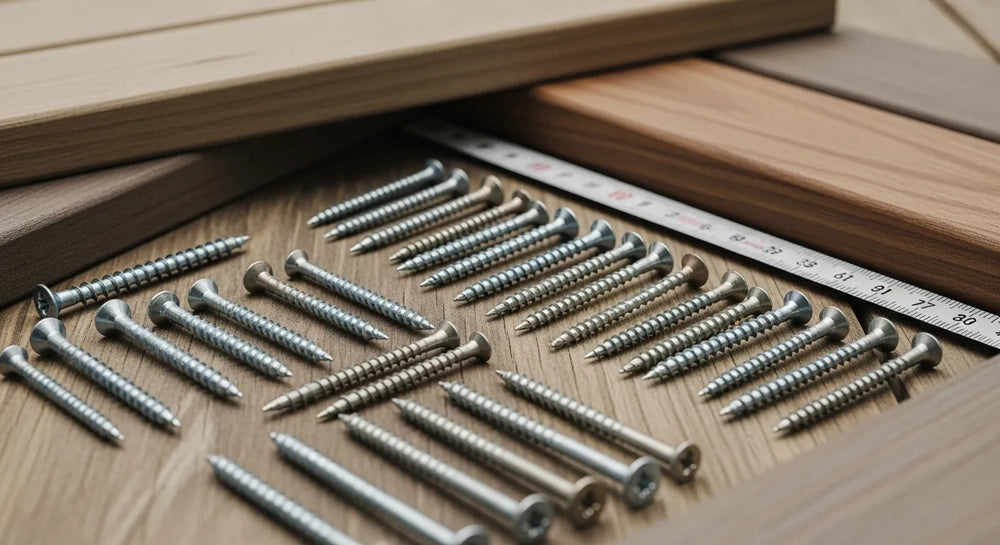
Screwing Into Drywall: What Procurement and Engineering Leaders Must Know
Table of Contents
- Introduction
- Understanding Drywall: Beyond the Surface
- The Simple Answer: Can You Just Screw Into Drywall?
- When a Simple Drywall Screw Falls Short: The "Why Not"
- The Right Tools for the Job: Beyond Basic Screws
- Best Practices for Secure Drywall Fastening
- The Maden.co Advantage: Sourcing High-Quality, U.S.-Made Fasteners and Components
- Driving America's Manufacturing Revival
- Conclusion
- Frequently Asked Questions (FAQ)
In the world of industrial maintenance, repair, and operations (MRO), design engineering, and procurement, the integrity of a fastening point can mean the difference between seamless operation and catastrophic failure. Yet, a fundamental question often arises, even in professional contexts, sometimes driven by expediency or a misunderstanding of material science: "Can I just screw into drywall?" While seemingly simple, the answer holds complex implications that demand a thorough understanding, especially when moving beyond a homeowner’s perspective to the rigorous demands of an industrial environment.
Our purpose today is to cut through common misconceptions and provide a definitive, authoritative guide on fastening into drywall. We will explore the material's inherent limitations, detail the various types of fasteners and anchors available, outline best practices for secure installation, and connect these critical insights to the broader landscape of procurement and supply chain resilience. The core message is clear: for any application, industrial or otherwise, selecting the precise, high-quality component is paramount. At Maden.co, our mission is to democratize access to American manufacturing, ensuring that every procurement manager, MRO buyer, and design engineer has access to the U.S.-made components that guarantee structural integrity and operational excellence.
Introduction
Imagine a critical piece of MRO equipment, perhaps a heavy-duty monitor, a control panel, or even part of a safety barrier, needing to be mounted in an industrial setting where interior walls are often constructed with drywall. The immediate, intuitive thought might be to reach for a common screw. However, the deceptive simplicity of a screw in drywall stands in stark contrast to the complex engineering and load calculations required for robust industrial fastening. The consequences of misjudgment – from minor inconveniences to significant safety hazards and costly operational downtime – underscore the vital importance of understanding precisely what drywall is, how it performs, and when a simple screw simply isn't enough.
This post will delve into the nuances of drywall fastening, moving beyond common DIY assumptions to address the rigorous requirements of industrial reliability. For a procurement manager under pressure to source a specific DIN 931 compliant hex cap screw, a design engineer needing specific material certifications for a new prototype, or an MRO buyer facing an unexpected equipment breakdown, the ability to quickly find and finance a verified, U.S.-made part is a game-changer. Our objective is to arm you with the knowledge to make informed decisions about wall-mounted installations, ensuring project integrity and optimizing your Total Cost of Ownership (TCO). Our thesis is that understanding the limitations and proper techniques for fastening into drywall is crucial for project integrity and cost-effectiveness, emphasizing the need for high-quality, spec-compliant components for all applications, a need expertly met by the verified American manufacturing network available through Maden.co.
Understanding Drywall: Beyond the Surface
To properly assess fastening methods, we must first understand the material itself. Drywall, also known as plasterboard, wallboard, or gypsum board, is a panel made of gypsum plaster pressed between two sheets of thick paper. Its primary purpose is to create interior walls and ceilings efficiently and affordably.
Composition and Characteristics
- Gypsum Core: This mineral, calcium sulfate dihydrate, forms the fire-resistant, non-combustible core of the panel. While excellent for fire protection and sound insulation, its inherent structure is brittle and crumbles under concentrated pressure.
- Paper Facing: The sturdy paper layers on the front and back provide rigidity and a smooth surface for finishing. However, these paper layers are easily torn or punctured, especially when subjected to shear forces or direct screw penetration without proper support.
- Inherent Limitations: Drywall is designed to be a surface, not a structural element. It possesses very low shear strength (resistance to forces parallel to the surface) and poor pull-out resistance (resistance to forces perpendicular to the surface). These weaknesses are critical considerations when attaching anything substantial.
The Difference Between Drywall as a Surface and Drywall as a Structural Element
For architects and builders, drywall is primarily an aesthetic and functional barrier. It defines spaces, provides insulation, and offers a smooth canvas for paint or other finishes. It is not intended to bear significant loads independently. Its structural contribution is minimal, relying entirely on the underlying framing (wood studs or metal channels) for support. Any attempt to treat drywall as a load-bearing material without proper reinforcement is an invitation to failure, a lesson that can be particularly costly in industrial environments where equipment weight and operational stresses are far greater than typical residential loads.
The Simple Answer: Can You Just Screw Into Drywall?
The straightforward answer to "can I just screw into drywall?" is: yes, you can, but you almost certainly shouldn't for anything beyond the most trivial applications, especially in a professional or industrial context.
What It's Suitable For: Very Light Loads
A bare screw driven directly into drywall relies solely on the friction and minimal purchase it achieves in the gypsum and paper layers. This provides extremely limited holding power. You might get away with it for:
- Small picture frames: A lightweight, small framed picture might hold temporarily, but even this is risky.
- Lightweight decorations: A holiday decoration or a small piece of artwork that exerts negligible force.
- Temporary placeholders: Something that needs to be held briefly and will soon be moved or secured properly.
In these minimal scenarios, the load is static, minimal, and carries little to no safety implication if it fails.
What It's NOT Suitable For: Anything with Substantial Weight, Dynamic Loads, or Safety-Critical Applications
For anything else, particularly in an industrial or commercial setting, a simple screw directly into drywall is unequivocally insufficient and dangerous. This includes:
- Shelving units: Even empty shelves can be heavy, let alone when loaded with parts, tools, or inventory.
- Heavy mirrors or artwork: These can cause serious injury if they fall.
- Wall-mounted TVs or monitors: The weight alone is too much, plus the leverage created by their depth from the wall.
- Cabinets or storage units: Filled with items, these become extremely heavy.
- Handrails or safety barriers: Fasteners in these applications are subject to dynamic forces and are safety-critical.
- Equipment panels, control boxes, or electrical enclosures: These require absolute reliability.
- Machinery components or jigs: Precision and stability are non-negotiable.
Relying on a drywall screw for these items is a shortcut that often leads to damage, injury, and increased TCO due to repeated repairs or even structural failure.
When a Simple Drywall Screw Falls Short: The "Why Not"
Understanding the "why not" is crucial for procurement managers, MRO buyers, and design engineers. It highlights the fundamental differences between adequate fastening and truly secure, reliable installation.
Drywall's Structural Weakness: A Deeper Look
-
Explaining Pull-Out Strength vs. Shear Strength in Drywall:
- Pull-Out Strength: This refers to the force required to pull a fastener straight out of the wall. When a screw is inserted into drywall, its threads primarily grip the brittle gypsum core. This grip is weak. Any force pulling perpendicular to the wall, even a moderate one, can easily cause the screw to tear out a cone-shaped chunk of drywall, leaving an irreparable hole.
- Shear Strength: This refers to the force required to slide a fastener downwards through the wall. Drywall's paper facing offers minimal resistance to horizontal forces. A screw can easily rip through the paper and gypsum if a downward force is applied, such as the weight of a heavy object.
-
Consequences of Failure:
- Damage: Beyond the immediate damage to the drywall, falling objects can damage floors, equipment, or other valuable assets.
- Safety Hazards: A falling shelf, monitor, or tool can cause severe injuries to personnel. In industrial settings, this can lead to worker's compensation claims, regulatory fines, and a damaged safety record.
- Project Delays: Repairing damaged walls and re-installing equipment takes time, leading to missed deadlines and reduced productivity.
- Increased TCO: The initial "cost savings" of using an inadequate fastener are quickly eclipsed by the expenses of repairs, replacements, and potential liability. This directly undermines the principles of efficient procurement focused on long-term value.
The Critical Role of Fastener Selection in Industrial Settings
In MRO and design engineering, the stakes are significantly higher. "Just screwing it in" is never an option. Every fastener choice is a calculated decision based on application, load, environment, and regulatory requirements.
- Compliance: Critical industry standards such as DIN (Deutsches Institut für Normung), NPT (National Pipe Taper), ASTM (American Society for Testing and Materials), and many others dictate material composition, dimensional tolerances, thread types, and performance characteristics for fasteners. Ignoring these standards can lead to non-compliance penalties, equipment malfunction, and safety breaches. At Maden.co, we understand the paramount importance of compliance, offering a vast catalog of U.S.-made products from verified manufacturers that adhere to these exacting specifications, ensuring reliability and peace of mind for our industrial buyers.
- Material Science: The choice of fastener material (e.g., carbon steel, stainless steel, alloy steel), its grade (e.g., Grade 8, A307), and any coatings (e.g., zinc plating, hot-dip galvanizing) are crucial. These factors determine resistance to corrosion, shear strength, tensile strength, and suitability for specific environmental conditions (e.g., high humidity, chemical exposure, vibration). The right thread type (coarse, fine, machine, self-tapping) is equally vital for achieving optimal grip and preventing stripping in the base material.
- Avoiding Costly Failures: In industrial applications, fastener failure can lead to equipment downtime, production line stoppages, product defects, or even catastrophic structural collapse. The seemingly small cost of a fastener pales in comparison to the immense financial and reputational damage of such failures. This is why sourcing high-quality, reliable, U.S.-made components is not just a preference, but a strategic imperative.
The Right Tools for the Job: Beyond Basic Screws
When fastening into drywall, especially for industrial and MRO applications, precision and planning are essential. This means understanding the specific types of fasteners and, more often than not, the necessity of anchors.
Types of Drywall Screws and Their Limited Use Cases
While drywall screws are engineered for attaching drywall panels to studs, they are not designed to hold objects to the drywall itself. They feature sharp points, coarse threads that grip the gypsum, and bugle heads that recess flush with the paper surface without tearing it.
- Coarse Thread Drywall Screws: These are the most common type, designed for attaching drywall to wood studs. Their aggressive threads provide good grip in the softer wood fibers. For standard drywall installation in industrial or commercial builds, high-quality coarse thread screws are essential. For a reliable, U.S.-made option, you might consider something like these 6 x 1-1/4 Coarse Thread Drywall Screws. They are perfect for their intended purpose: securing drywall to structural elements.
- Fine Thread Drywall Screws: These screws have finer threads, which are better suited for attaching drywall to metal studs. The finer threads create a more secure hold in the thinner gauge steel without stripping the metal. When securing drywall to metal framing, precision matters. An example of a high-quality U.S.-made fastener for this application is the 6 x 1 Fine Thread Drywall Screw.
- General Purpose Drywall Screws: Some screws are designed for broad application. For instance, an 8 x 4 Drywall Screw can be a versatile option for various drywall thicknesses and framing materials, providing robust attachment of the drywall itself.
The Common Pitfalls of Using the Wrong Type: Attempting to use a fine-thread screw in wood studs can result in a weaker hold, while coarse-thread screws in metal studs can strip the metal, leading to loose panels. Crucially, attempting to use any of these screws without an anchor for hanging objects onto the drywall will result in a weak, unreliable, and potentially dangerous fastening point.
Anchors: The Backbone of Reliable Drywall Fastening
When the load exceeds the minimal capacity of a bare screw, or when structural integrity is paramount, anchors become indispensable. Anchors are designed to create a larger bearing surface behind the drywall, distributing the load over a wider area and providing a more secure attachment point.
-
Expansion Anchors:
- Plastic Conical Anchors: These inexpensive anchors are inserted into a pre-drilled hole. As a screw is driven into them, they expand, pressing against the inside of the drywall. They are suitable for light to medium-duty applications (e.g., small shelving, lightweight fixtures). Their main limitation is their reliance on the integrity of the drywall itself directly around the anchor.
- Self-Drilling Anchors (Screw-In Anchors): Made of plastic or metal, these anchors have a sharp, threaded tip that allows them to be screwed directly into the drywall without a pilot hole. A screw is then driven into the anchor. They offer ease of installation and are good for medium-duty applications. Metal versions typically offer superior strength and durability compared to plastic.
- Molly Bolts (Toggle Bolts): These metal anchors feature a screw that expands a sleeve behind the drywall as it's tightened. They come in various lengths and diameters, capable of supporting medium to heavy loads. Molly bolts are excellent for items like towel bars, curtain rods, or medium-weight wall decor. Their widespread expansion provides superior holding power compared to simple expansion anchors.
- Toggle Anchors (Winged Toggles / Butterfly Anchors): These are considered the strongest type of drywall anchor. They consist of a metal or plastic wing assembly attached to a screw. Once inserted through a hole, the wings "toggle" open behind the drywall, spreading the load over a very large area. Toggle anchors are ideal for heavy-duty applications such as mounting televisions, large cabinets, and other critical installations where maximum pull-out strength is required. In industrial MRO, where heavier equipment or fixtures might be mounted on drywall, these are often the go-to solution when a stud isn't available.
- Specialty Anchors: Beyond these common types, specialized anchors exist for unique applications. These might include anchors designed for acoustic panels that require specific vibration dampening, or fire-rated anchors used in specific building code scenarios. Always consult product specifications and building codes for such unique requirements.
Best Practices for Secure Drywall Fastening
Implementing best practices is non-negotiable for ensuring the safety, durability, and compliance of any installation involving drywall. This is particularly true for professionals in procurement, MRO, and engineering roles.
Assessing Load Requirements
The first and most critical step is an accurate assessment of the load. This goes beyond just the static weight of the object.
-
Static vs. Dynamic Loads:
- Static Load: The constant, unchanging weight of an object (e.g., a stationary shelf and its contents).
- Dynamic Load: Forces that change over time, including impact, vibration, or movement (e.g., a handrail being pulled, a cabinet door opening and closing, equipment that vibrates during operation). Dynamic loads require significantly stronger fastening solutions and a larger safety factor.
- Calculating Weight and Forces: Always consult manufacturer specifications for equipment weight. For dynamic loads, estimate the maximum force that could be applied. When in doubt, overestimate and select anchors with a generous safety margin.
- Safety Factors for MRO and Industrial Applications: For any industrial application, a substantial safety factor (often 3:1 or 4:1, meaning the fastener is rated for 3-4 times the expected load) is essential. This accounts for unforeseen stresses, material degradation over time, and potential errors in load estimation.
Proper Installation Techniques
Even the best anchors will fail if improperly installed.
- Pre-drilling: For most anchors (especially molly bolts and toggle anchors), a pilot hole of the correct diameter is essential. Using the wrong size hole can lead to anchors that don't expand properly or that simply fall through. Always consult the anchor manufacturer's instructions.
- Avoiding Overtightening: Overtightening a screw or anchor can strip its threads, damage the drywall, or cause the anchor to fail prematurely. Tighten until snug, then give a final quarter-turn if specified by the manufacturer. For delicate tasks, using a torque-limiting driver can prevent damage.
- Using the Correct Tools: Beyond standard drills and screwdrivers, some anchors require specific setting tools (e.g., a molly bolt setting tool) to ensure proper expansion and engagement behind the drywall. Using the right tool simplifies installation and guarantees performance.
When to Find a Stud or Blocking
The gold standard for hanging anything heavy or safety-critical on a drywall surface is to fasten directly into a structural element: a wood stud, metal stud, or solid blocking (horizontal wood pieces installed between studs).
- The Gold Standard for Heavy Loads: Fastening into a stud or blocking provides unparalleled strength and stability, as the load is transferred directly to the building's framework, not the brittle drywall. For industrial equipment, this should always be the primary goal.
-
Methods for Locating Studs:
- Stud Finders: Electronic stud finders are highly effective at locating the edges and centers of wood or metal studs behind drywall.
- Tapping: A low-tech but effective method involves tapping lightly on the wall and listening for a solid sound, indicating a stud.
- Outlet/Switch Boxes: Electrical boxes are almost always attached to a stud. You can often locate a stud by measuring 3/4 inch to either side of an electrical box.
- Consideration for Future Loads During Design/Construction: For new construction or renovations in industrial facilities, proactive planning is key. If heavy equipment or fixtures are anticipated on specific walls, incorporate additional blocking or plywood sheathing behind the drywall during the framing stage. This foresight saves significant time, effort, and cost down the line and dramatically improves facility versatility and safety.
The Maden.co Advantage: Sourcing High-Quality, U.S.-Made Fasteners and Components
Navigating the complexities of fastener selection and procurement demands a partner committed to quality, transparency, and strategic value. That partner is Maden.co. While the immediate context of drywall screws might seem singular, it illustrates a broader principle: the critical importance of sourcing the right, high-quality, spec-compliant component for every application.
Elevating Procurement with Verified American Manufacturing
At Maden.co, our mission is to democratize access to American manufacturing. We connect industrial buyers with an expansive network boasting over 2.5 million American-made products sourced from our carefully curated network of 800+ verified U.S. manufacturers. This isn't just about patriotism; it's about strategic business advantage. By choosing Maden.co, you are investing in:
- Unparalleled Quality Control: Products from verified U.S. manufacturers adhere to stringent quality standards, reducing the risk of defects and ensuring performance consistency.
- Robust Product Availability: Our vast catalog means you're more likely to find even hard-to-source components, from specialized fasteners to intricate machinery parts.
- Supporting the Local Economy: Every purchase directly contributes to the American manufacturing revival, fostering job creation and economic growth.
- You can learn more about our mission to champion American manufacturing here and understand the full scope of our commitment to industrial excellence.
Ensuring Supply Chain Resilience and Transparency
The past few years have underscored the fragility of global supply chains. Sourcing through Maden.co provides a tangible solution:
- Reduced Lead Times and Lower Shipping Costs: By eliminating reliance on overseas shipping, we significantly cut down delivery times and reduce logistical expenses, translating to tangible savings for your business.
- Consistent Quality from U.S. Sources: Our focus on U.S.-made products mitigates risks associated with varying international manufacturing standards, ensuring that components consistently meet your specifications.
- Compliance with Critical Industry Standards (DIN, NPT) Built into Our Offerings: We prioritize components that meet the rigorous demands of industrial specifications, ensuring that the products you receive are fully compliant and fit for purpose, thereby reducing operational risk and ensuring optimal performance.
- Addressing Concerns of Counterfeit Parts and Inconsistent Quality: When you source from Maden.co, you bypass the opaque layers of complex international supply chains where counterfeit or sub-standard parts can proliferate. Our verified network provides unparalleled transparency and authenticity.
Digital Innovation for Industrial Excellence
Our vision is to become the definitive platform that proves American-made components are as accessible and convenient as any global alternative. We achieve this through:
- Intuitive Digital Marketplace: Our platform is designed for procurement managers, MRO buyers, and design engineers to quickly and easily locate the exact components they need, streamlining the entire procurement process.
- Seamless Sourcing: We leverage digital innovation to make sourcing U.S.-made products efficient and friction-free, offering advanced search capabilities and detailed product specifications. You can explore our extensive catalog of U.S.-made industrial components and experience the difference digital innovation makes.
Customer Empowerment and Strategic Value
At Maden.co, we believe in empowering our customers with tools and resources that enhance their operational efficiency and bottom line.
- Improving Total Cost of Ownership (TCO): By reducing risks associated with unreliable parts, minimizing lead times, and simplifying the procurement process, we help businesses achieve a lower TCO over the long run. The initial cost of a component is only one piece of the puzzle; long-term reliability, availability, and ease of sourcing contribute far more to true value.
- Access to Hard-to-Find U.S.-Made Components: Our extensive network means that even highly specialized or custom-made parts are within reach, preventing project delays and enabling innovative designs.
- Expert Support: If you have specific sourcing questions, require assistance with complex orders, or need clarification on product specifications, our team is ready to help with unparalleled expertise and commitment to service.
Strategic Financing for Industrial Purchases
A key differentiator that sets Maden.co apart is our "Instant Financing" option. We understand that large-volume purchases or capital-intensive projects require flexible financial solutions.
- Empowering Cash Flow Management: Instant Financing is not merely a payment method; it's a strategic tool designed to help procurement managers and business owners manage cash flow effectively. It allows you to acquire the necessary components without immediately tying up significant capital.
- Facilitating Larger-Volume Purchases: This feature enables businesses to make larger, more strategic purchases of inventory, raw materials, or critical components, optimizing stock levels and taking advantage of bulk pricing without straining immediate budgets.
- Streamlining Capital-Intensive Projects: For projects requiring substantial upfront investment in materials, Instant Financing can be a game-changer, allowing you to proceed with confidence and maintain project timelines. You can apply for Instant Financing at checkout to streamline your capital-intensive projects, ensuring that financial constraints don't impede your operational needs or strategic growth.
Driving America's Manufacturing Revival
Our tagline, "America's manufacturing revival is here," is more than just words; it's a call to action and a statement of purpose. Every decision to procure American-made products through Maden.co strengthens the domestic industrial base. It supports innovation, creates jobs, and builds a more resilient and self-reliant economy. The collective impact of choosing U.S.-made components reverberates across communities and industries, reinforcing the strength and ingenuity of American manufacturing.
We are actively seeking to expand this vital network. Are you a U.S. manufacturer producing high-quality industrial components? We invite you to join our growing ecosystem. Register as a vendor and join the American manufacturing revival, helping us to provide even more diverse and reliable options to industrial buyers nationwide. Together, we are building the future of American industry.
Conclusion
The question "can I just screw into drywall?" serves as a critical entry point into the broader discussion of fastening principles, material limitations, and the strategic importance of correct component selection. For procurement managers, MRO buyers, and design engineers, the answer in any professional context is almost always a resounding "no" if reliability, safety, and long-term performance are priorities. We have explored the inherent weaknesses of drywall, detailed the indispensable role of appropriate anchors and robust fastening techniques, and highlighted the critical necessity of adhering to industry standards.
True industrial excellence is built on a foundation of precision and quality, from the smallest fastener to the most complex machinery. Ensuring the structural integrity of every attachment point not only safeguards assets and personnel but also significantly contributes to a more efficient, cost-effective, and resilient operational framework.
We urge you to elevate your procurement strategy. Partner with Maden.co to access an unparalleled selection of high-quality, U.S.-made components that meet your exact specifications and exceed your expectations for performance and reliability. Dive into our extensive catalog of fasteners, components, and industrial supplies, confident that you are sourcing from verified American manufacturers. Don't let cash flow limit your operational potential; remember that you can apply for Instant Financing at checkout to streamline your capital-intensive projects, ensuring that you always have access to the U.S.-made excellence your business deserves.
Frequently Asked Questions (FAQ)
1. How much weight can a screw in drywall hold?
A bare screw driven directly into drywall has extremely limited holding power, typically supporting only a few pounds, if any, reliably. Its strength relies solely on the brittle gypsum core and paper facing, which can easily tear or crumble. For anything beyond very lightweight decorations, an appropriate drywall anchor or fastening into a wall stud is absolutely necessary to ensure safety and stability.
2. What is the strongest way to hang something on drywall?
The strongest and most reliable method to hang something on drywall is to fasten directly into a structural element behind the drywall, such as a wood stud, metal stud, or pre-installed blocking. When a stud is not available, heavy-duty toggle anchors (often called winged toggles or butterfly anchors) provide the strongest alternative. These anchors expand behind the drywall, distributing the load over a much larger surface area, offering significantly greater pull-out and shear strength than other drywall anchoring methods.
3. Are self-drilling drywall anchors better than plastic ones?
Generally, self-drilling metal drywall anchors offer superior strength and durability compared to plastic expansion anchors. Self-drilling anchors are easier to install as they don't require a pre-drilled pilot hole. While plastic anchors are suitable for very light loads, metal versions can support heavier items and are more resistant to stripping. However, the strongest option for heavy loads remains a toggle-style anchor or, ideally, fastening into a wall stud.
4. Can I use a regular wood screw for drywall?
While a regular wood screw can be driven into drywall, it is not recommended, especially for long-term or load-bearing applications. Wood screws are designed with a different thread pattern and sharper point optimized for gripping wood fibers. Drywall screws, conversely, have a coarser, more aggressive thread for better purchase in gypsum and a bugle head that sits flush without tearing the paper. Using a wood screw in drywall will offer even less holding power than a dedicated drywall screw without an anchor and is prone to stripping out the brittle gypsum core.


