
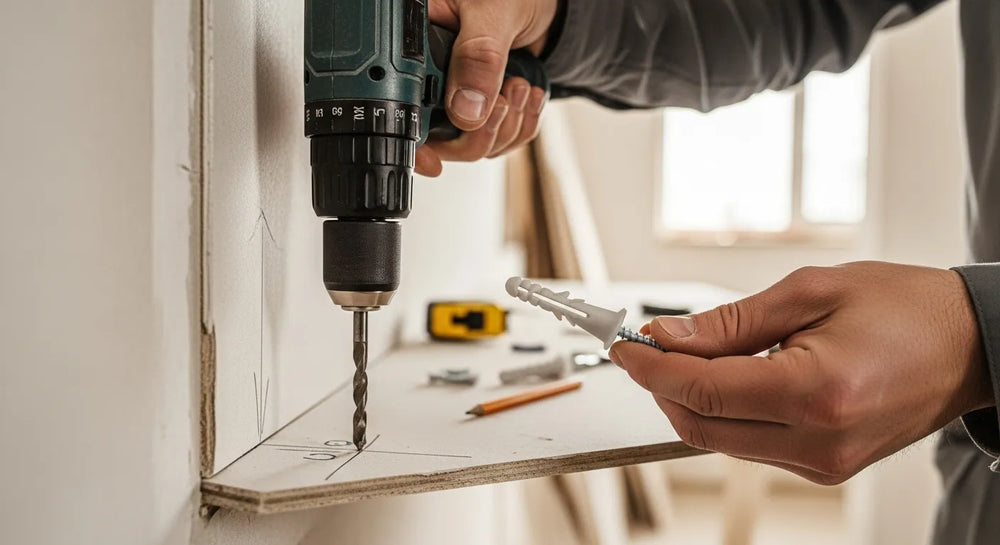
How to Anchor Railing Post to Concrete Safely
Table of Contents
- Why Secure Railing Post Anchoring Matters
- Understanding Concrete: A Foundation for Anchoring
- Key Factors for Successful Railing Post Anchoring
- Types of Concrete Anchors for Railing Posts
- Step-by-Step Guide: How to Anchor a Railing Post to Concrete
- Ensuring Compliance and Safety Standards
- Optimizing Your Procurement Process with Maden.co
- Conclusion
- FAQ
Railing posts serve as critical structural elements, providing safety, stability, and aesthetic appeal to countless commercial, industrial, and public spaces. Yet, the integrity of any railing system hinges entirely on the strength and reliability of its connection to the underlying structure. A loosely anchored post isn't just an eyesore; it's a significant safety hazard, a potential liability, and a testament to compromised structural integrity. Procurement managers, MRO buyers, and design engineers understand that specifying and sourcing the right anchoring solutions for concrete is paramount to project success and occupant safety. This comprehensive guide will delve into the intricacies of securely anchoring railing posts to concrete, exploring the critical factors, various anchor types, installation best practices, and the strategic advantages of sourcing high-quality, American-made components. Our aim is to provide you with the authoritative knowledge needed to ensure durable, compliant, and exceptionally safe railing installations.
Why Secure Railing Post Anchoring Matters
The seemingly simple task of anchoring a railing post to concrete carries immense weight in both functional performance and legal responsibility. From the bustling walkways of a factory to the elevated platforms in a warehouse or the public spaces of a commercial building, the consequences of a failing railing can be catastrophic.
Safety Implications and Compliance
The primary concern with any railing system is its ability to prevent falls and provide stable support. Poorly anchored posts can wobble, loosen over time, or even detach entirely under stress, leading to severe injuries or fatalities. This underscores the critical need for meticulous planning and execution in every anchoring project. Building codes, such as those from the International Building Code (IBC) and local municipal regulations, mandate specific load capacities for railings, often requiring them to withstand significant horizontal and vertical forces. Compliance with these standards isn't optional; it's a legal requirement that protects both the end-users and the responsible parties. Procurement professionals must ensure that all components, especially anchors, meet or exceed these stringent requirements, providing documentation and certifications as needed. Failure to comply can result in hefty fines, project delays, legal action, and irreparable damage to an organization's reputation.
Durability and Longevity
Beyond immediate safety, the proper anchoring of railing posts contributes directly to the overall durability and longevity of the installation. A robust connection minimizes movement, reducing wear and tear on the post, base plate, and even the concrete substrate. Conversely, inadequate anchoring can lead to premature fatigue, corrosion, and structural degradation, necessitating costly repairs or complete replacement long before their expected service life. Investing in high-quality, U.S.-made anchors and employing best-practice installation techniques ensures that the railing system remains stable and functional for decades, resisting the daily stresses of use, environmental exposure, and incidental impacts. This foresight translates into significant long-term savings by minimizing maintenance cycles and extending the asset's lifespan.
Structural Integrity and Aesthetics
Railing posts are often integral to the overall structural integrity of stairwells, mezzanines, and platforms. Their stability can affect the safety of adjacent structures or systems. A railing that feels flimsy or unstable also detracts from the professional appearance of a facility. In industrial environments, this can undermine confidence in safety protocols, while in commercial settings, it can negatively impact visitor perception. Securely anchored posts contribute to a professional, well-maintained aesthetic, signaling attention to detail and a commitment to quality. The choice of anchoring method and the quality of the components directly influence both the functional reliability and the visual appeal of the final installation.
Understanding Concrete: A Foundation for Anchoring
Before selecting an anchor, it's crucial to understand the material you're anchoring into: concrete. Concrete isn't a monolithic substance; its characteristics vary widely based on age, mix design, and curing conditions. A proper understanding of these factors is foundational to successful anchoring.
Types of Concrete and Their Impact on Anchoring
- New Concrete (Green Concrete): This refers to concrete that has not yet reached its full compressive strength, typically within the first 28 days of pouring. Anchoring into green concrete is generally discouraged because its low strength can lead to anchor pull-out or blow-out. If anchoring is absolutely necessary, specific anchors designed for lower-strength concrete or epoxy anchors with longer curing times might be considered, but it's always best to wait for the concrete to cure properly.
- Fully Cured Concrete: This is the ideal substrate, typically achieved after 28 days. Its high compressive strength provides the best pull-out resistance for most anchor types. The density and hardness of fully cured concrete will influence drilling speed and bit wear.
- Lightweight Concrete: Contains lightweight aggregates and has a lower density and compressive strength than normal-weight concrete. Anchoring into lightweight concrete requires anchors specifically rated for this material, often relying on larger embedment depths or chemical adhesion.
- Cracked vs. Uncracked Concrete: This is a critical distinction, especially for anchors used in structural applications. Concrete is susceptible to cracking under tensile loads. Anchors qualified for cracked concrete are designed to maintain their load-bearing capacity even when a crack propagates through the anchor zone. For critical safety applications, especially where tensile forces or seismic activity might induce cracking, specifying anchors rated for cracked concrete is essential. Most railing post applications may not require cracked concrete qualification, but it's important for engineers to assess.
Curing Process and Its Importance
Concrete gains strength through a chemical reaction called hydration. The curing process, which involves maintaining adequate moisture and temperature, is vital for achieving the concrete's designed strength. Insufficient curing can lead to weaker, more porous concrete, significantly compromising anchor performance. Procurement managers should be aware that project schedules should account for proper concrete curing times before any anchoring work commences. Rushing this stage can lead to costly rework and safety failures.
Avoiding Rebar and Utilities
A critical step before drilling into any concrete slab is to identify the location of embedded rebar, post-tensioning cables, and utility lines (electrical conduits, water pipes, gas lines). Striking rebar can damage drill bits, compromise the structural integrity of the slab, and lead to difficult anchor installation. Hitting post-tensioning cables can be extremely dangerous, potentially causing serious injury or structural failure. Damaging utility lines can result in service interruptions, costly repairs, and safety hazards. Utilizing ground-penetrating radar (GPR) or rebar locators is a best practice for mapping out these hidden elements before any drilling begins. This proactive approach saves time, prevents damage, and ensures worker safety.
Key Factors for Successful Railing Post Anchoring
The selection of the appropriate anchoring method and components is a multi-faceted decision influenced by several critical factors. A holistic approach considering all these elements is essential for a robust and long-lasting installation.
Post Material and Base Plate Design
The material of the railing post (steel, aluminum, wood, composite) and the design of its base plate significantly impact anchor selection.
- Steel Posts: Often come with robust steel base plates, typically thicker with larger bolt holes, allowing for larger, high-strength anchors. The rigidity of steel bases also helps distribute loads effectively.
- Aluminum Posts: Usually have aluminum base plates that might be thinner or have different hole patterns. Compatibility between the anchor material (e.g., stainless steel anchors to prevent galvanic corrosion with aluminum) and the base plate is crucial.
- Wood Posts: Are usually anchored using specialized post bases that encapsulate the bottom of the wood post and provide a steel plate for anchoring to concrete. The design of these bases will dictate the anchor type.
The base plate’s dimensions, thickness, and hole diameter and spacing determine the type and size of anchor that can be used. A smaller base plate might require anchors that can be placed closer to the edge of the concrete without causing spalling, or an epoxy system that distributes load more evenly.
Load Requirements and Environmental Considerations
Understanding the forces the railing system will encounter is paramount.
- Static Loads: The weight of the railing itself and any sustained pressure.
- Dynamic Loads: Forces from human impact, sudden pushes, or equipment bumps.
- Wind Loads: Significant for exterior railings, especially in elevated or exposed areas. Local building codes specify wind load requirements.
- Seismic Loads: For installations in earthquake-prone regions, anchors must be specifically designed and qualified for seismic performance.
The environment plays a crucial role in anchor longevity.
- Corrosion: In outdoor, coastal, or chemically aggressive environments, stainless steel anchors (304 or 316 grade) or galvanized anchors are essential to prevent rust and maintain structural integrity.
- Temperature Extremes: Extreme heat or cold can affect the performance of some chemical anchors, requiring specific formulations.
- Moisture Exposure: Areas prone to constant moisture (e.g., washdown areas) demand corrosion-resistant materials.
Procurement managers must ensure that the anchors sourced are rated for the anticipated loads and environmental conditions. Over-specifying can be costly, but under-specifying can be disastrous.
Tools and Equipment
Proper installation requires the right tools.
- Hammer Drill: Essential for drilling into concrete, especially with SDS+ or SDS-Max bits for efficiency.
- Impact Wrench/Torque Wrench: For properly tightening mechanical anchors to their specified torque, which is critical for their expansion and load-bearing capacity.
- Dust Extraction System: To remove concrete dust from drilled holes, crucial for both worker safety (silica dust) and anchor performance (dust can prevent proper bond for adhesive anchors).
- Measuring Tools: For accurate layout and anchor placement.
- Personal Protective Equipment (PPE): Safety glasses, hearing protection, gloves, and respirators are mandatory.
Using the correct tools ensures that anchors are installed according to manufacturer specifications, maximizing their performance and preventing installation errors. For reliable performance in demanding industrial applications, consider using a 1-Headed Concrete Anchor Shear Connector Chuck for precision drilling. For projects requiring a range of sizes, a Concrete Anchor Shear Connector Chuck Set ensures you always have the right tool for the job. These are the types of high-quality tools that contribute to precise and secure anchor installation.
Types of Concrete Anchors for Railing Posts
The market offers a wide array of concrete anchors, each with its unique mechanism, advantages, and ideal applications. Selecting the correct anchor is a critical decision.
Mechanical Anchors
Mechanical anchors work by exerting expansive forces within the drilled hole or by creating an interlock with the concrete.
-
Wedge Anchors:
- Mechanism: A threaded stud with an expansion clip at one end. As the nut is tightened, the clip expands against the sides of the drilled hole, creating a friction lock.
- Pros: High shear and tensile strength, easy to install, immediate load bearing, available in various materials (zinc-plated, galvanized, stainless steel). Good for heavy-duty applications.
- Cons: Not ideal for cracked concrete unless specifically designed. Requires precise hole diameter and depth. Can cause concrete spalling if installed too close to an edge.
- Applications: Heavy machinery, structural steel, and, crucially, high-load railing post bases.
-
Sleeve Anchors:
- Mechanism: Similar to wedge anchors but with a sleeve that expands when the nut is tightened, compressing the sleeve against the hole wall.
- Pros: Versatile for a range of base plate thicknesses, can be used in hollow block or brick as well as concrete (with reduced loads). Available in multiple head styles (hex nut, acorn nut, flat head).
- Cons: Generally lower load capacity than wedge anchors, especially in tension. Less effective in soft or porous concrete.
- Applications: Medium-duty railing posts, handrails, fixtures where less extreme loads are anticipated.
-
Drop-in Anchors:
- Mechanism: A cylindrical, internally threaded anchor that is "dropped" into a pre-drilled hole. A setting tool is used to drive a plug or wedge inside, expanding the anchor against the concrete.
- Pros: Flush finish with the concrete surface, allows for easy removal and re-installation of the bolted component, good for overhead applications. Excellent for situations where the bolt needs to be removable.
- Cons: Requires a specific setting tool. Load capacity depends heavily on proper installation and concrete strength.
- Applications: Removable railing sections, machinery that needs to be unbolted for maintenance, general purpose fastening. For a reliable, high-quality solution, consider the BN Products 3/8 Inch Inside Thread Sanko Drop-In Concrete Anchor available through Maden.co. This is an example of a precise, American-made component that ensures a secure fit.
-
Through Bolts (Heavy-Duty Anchors):
- Mechanism: A large diameter, high-strength bolt that passes through the material being fastened and then through the concrete slab, often secured with a nut and washer on the underside of the slab.
- Pros: Extremely high load capacities, very secure, suitable for critical structural applications.
- Cons: Requires access to both sides of the concrete slab. More invasive installation.
- Applications: Guardrails, crash barriers, heavy structural supports where maximum security is needed. Not always practical for all railing post installations due to access requirements.
Adhesive Anchors (Chemical Anchors)
Adhesive anchors use a chemical resin to bond the anchor rod or rebar to the concrete, creating a strong, watertight connection.
-
Epoxy/Resin Anchors:
- Mechanism: A chemical resin (typically epoxy, polyester, or vinylester) is injected into a clean, drilled hole, and an anchor rod or rebar is inserted. The resin cures and bonds the rod to the concrete.
- Pros: Exceptionally high load capacities, superior performance in cracked concrete (if rated), watertight seal, less prone to concrete spalling, good for close-edge installations, suitable for seismic applications.
- Cons: Requires specific curing time before load application (can be hours to days), temperature sensitive during installation and curing, requires very clean holes (often involving brushing and blowing).
- Applications: Critical structural railings, areas requiring seismic resistance, high-vibration environments, installations where aesthetics benefit from a hidden fastening.
-
Chemical Mortar (Capsule Anchors):
- Mechanism: A pre-portioned glass capsule containing resin and hardener is inserted into a drilled hole. A rotary hammer drill then drives a threaded rod through the capsule, breaking it and mixing the components, which then cure.
- Pros: Easy to use, pre-measured components ensure correct mix, good for consistent installations.
- Cons: Less flexible for varying embedment depths, requires specific rod and capsule pairing, curing time is needed.
- Applications: Similar to epoxy anchors but often preferred for projects with many identical anchor points due to ease of consistent application.
The choice between mechanical and adhesive anchors often comes down to load requirements, concrete conditions (cracked vs. uncracked), environmental factors, and installation time constraints. Often, the highest loads and most demanding conditions will point toward adhesive anchoring.
Step-by-Step Guide: How to Anchor a Railing Post to Concrete
Executing a precise and secure anchoring process is crucial for the safety and longevity of your railing system. This step-by-step guide outlines the best practices for installing railing posts to concrete.
1. Preparation
Thorough preparation is the bedrock of a successful installation.
- Site Assessment & Safety Gear: Begin by thoroughly assessing the installation area. Identify any potential hazards, obstructions, or irregularities in the concrete surface. Ensure all personnel are equipped with appropriate Personal Protective Equipment (PPE), including safety glasses, hearing protection, gloves, and respiratory masks, especially when drilling concrete.
- Marking and Layout: Accurately measure and mark the precise locations for each railing post base. Use a chalk line or laser level to ensure perfect alignment. Mark the exact drilling points for each anchor through the base plate of the railing post. Precision here is key to a plumb and aesthetically pleasing installation.
- Checking for Obstructions: Before any drilling commences, use a rebar locator or ground-penetrating radar (GPR) to scan the concrete for rebar, post-tensioning cables, and electrical conduits or pipes. Mark any identified obstructions clearly on the concrete surface. Adjust anchor locations if necessary to avoid striking these critical elements. This step is non-negotiable for safety and structural integrity.
2. Drilling the Holes
This stage is critical as the quality of the drilled hole directly impacts anchor performance.
- Selecting the Right Drill Bit: Choose a carbide-tipped masonry drill bit specifically designed for concrete, matching the diameter specified by the anchor manufacturer. For hammer drills, SDS+ or SDS-Max bits are highly recommended for their efficiency and secure fit.
- Drilling Depth and Diameter: Set the drill depth stop on your hammer drill to match the embedment depth required by the anchor manufacturer. Drill the holes perpendicular to the concrete surface, maintaining a consistent depth and diameter. Over-drilling slightly (e.g., 1/2 inch deeper than the anchor's embedment) can sometimes allow for dust collection, but always follow manufacturer guidelines.
- Dust Removal: After drilling each hole, it is absolutely critical to thoroughly clean out all concrete dust and debris. For mechanical anchors, this ensures the expansion mechanism can grip the concrete effectively. For adhesive anchors, a clean hole is paramount for the chemical bond to form. Use a stiff nylon brush (sized to the hole) to scrub the inside of the hole, followed by a blast of compressed air to remove loose particles. Repeat this brush-blow sequence several times until no dust remains. A dirty hole is a primary cause of anchor failure. For efficient and robust drilling, especially when using high-quality American-made anchors, a Concrete Anchor Shear Connector Chuck Set can significantly enhance your operational efficiency and precision.
3. Anchor Installation
The method of installation will depend on the type of anchor selected.
For Mechanical Anchors (Wedge, Sleeve, Drop-in):
- Insert Anchor: Carefully insert the chosen mechanical anchor into the cleaned, drilled hole. For wedge and sleeve anchors, they should fit snugly. For drop-in anchors, they are literally dropped in.
- Set Anchor (if applicable): For drop-in anchors, use the specific setting tool and a hammer to drive the internal wedge or plug, expanding the anchor firmly into the concrete. For wedge and sleeve anchors, this expansion occurs as the nut is tightened.
- Position Base Plate: Place the railing post base plate over the installed anchors.
- Fasten and Torque: Install washers and nuts onto the anchor studs. Using a torque wrench, tighten the nuts to the manufacturer's specified torque settings. This is a critical step for mechanical anchors, as proper torque ensures the anchor expands correctly and achieves its rated load capacity. Over-tightening can damage the concrete or the anchor; under-tightening can lead to slippage and failure.
For Adhesive Anchors (Epoxy/Resin):
- Prepare Resin: Dispense the chemical adhesive according to manufacturer instructions, ensuring the two components are thoroughly mixed (often achieved automatically with a static mixing nozzle).
- Inject Resin: Inject the mixed resin into the clean, dry drilled hole, starting from the bottom, filling the hole to the specified level (typically about two-thirds full to allow for displacement by the rod). Avoid air pockets.
- Insert Anchor Rod: Slowly insert the threaded anchor rod or rebar into the resin-filled hole, rotating it slightly to ensure full wetting and eliminate air bubbles. The rod should be centered and pushed to the specified embedment depth.
- Cure Time: Allow the adhesive to cure fully according to the manufacturer's specified cure time, which varies based on temperature and product. Do not apply any load to the anchor during this period.
- Position Base Plate and Fasten: Once fully cured, position the railing post base plate over the installed rods. Install washers and nuts, tightening them to the specified torque.
4. Post Installation and Final Checks
- Position Post: Secure the railing post onto its base plate, ensuring it is plumb and aligned correctly.
- Secure Post to Base: Fasten the post to the base plate using bolts, welds, or other specified connectors.
- Final Torque Check: Double-check all anchor nuts with a torque wrench to ensure they meet specifications. This is especially important after the railing system has been partially assembled and some initial loads might be applied.
- Inspect for Stability: Physically inspect each post for any wobbling or movement. A stable post is a safe post.
- Clean Up: Remove all debris and tools from the work area.
By meticulously following these steps and always adhering to manufacturer specifications for both the anchors and the railing system, you can ensure a professional, secure, and compliant railing post installation.
Ensuring Compliance and Safety Standards
Beyond the physical installation, adhering to established compliance and safety standards is paramount for any industrial or commercial railing project. This ensures not only the safety of users but also legal protection for your organization.
Local Building Codes and Industry Standards
Every jurisdiction has specific building codes (e.g., IBC, IRC) that dictate the design, construction, and installation of railings, including load requirements, height, spacing, and accessibility. These codes often reference specific anchor performance standards, such as those from the American Concrete Institute (ACI) or ICC-ES (International Code Council Evaluation Service) reports for anchors. Procurement managers must ensure that the anchors and components selected for a project carry the necessary certifications and comply with all relevant local, state, and federal regulations. This includes verifying that manufacturers can provide documentation proving compliance with these standards. Our commitment at Maden.co extends to upholding these high standards by connecting buyers with verified U.S. manufacturers who produce components engineered for industrial excellence.
OSHA Regulations
For workplace environments, the Occupational Safety and Health Administration (OSHA) sets stringent requirements for guardrails and safety railings, particularly in areas with fall hazards. These regulations specify design criteria, strength requirements, and proper installation to protect workers. When anchoring railing posts in an industrial setting, compliance with OSHA standards is non-negotiable. This often means using anchors and installation methods that can withstand specific force applications, documented by engineering calculations.
Manufacturer Specifications
Always refer to the anchor manufacturer's technical data sheet for critical information, including:
- Recommended Drill Bit Diameter and Depth: Crucial for proper anchor expansion and bond.
- Minimum Edge Distance and Spacing: Prevents concrete spalling and ensures anchors don't interfere with each other's performance.
- Required Torque Values: Essential for mechanical anchors to achieve their rated load.
- Cure Times: For adhesive anchors, vital before applying any load.
- Load Capacities: Shear, tension, and combined load ratings for various concrete strengths.
- Environmental Limitations: Temperature ranges, exposure to chemicals, or moisture.
Ignoring manufacturer specifications voids warranties and severely compromises anchor performance and safety. As a procurement expert, verifying that installation teams have access to and follow these specifications is a critical part of project management.
The Importance of Verified U.S.-Made Components
Sourcing through a platform like Maden.co provides a strategic advantage in ensuring compliance. Our network of over 800+ verified U.S. manufacturers produces millions of components that meet stringent American quality standards. This greatly simplifies the compliance process, as these manufacturers are typically well-versed in U.S. building codes and industry regulations. When you choose American-made products, you gain greater traceability, often come with clearer material certifications, and provide confidence in meeting crucial project requirements.
Optimizing Your Procurement Process with Maden.co
In the complex landscape of industrial procurement, efficiency, reliability, and access to high-quality components are paramount. Procurement managers, MRO buyers, and design engineers face constant pressure to source the right parts, on time, and within budget, all while ensuring compliance and enhancing supply chain resilience. This is where Maden.co steps in as a strategic partner, democratizing access to American manufacturing.
Addressing Procurement Challenges
Traditional procurement often involves navigating fragmented supply chains, dealing with inconsistent quality from global sources, managing extended lead times, and struggling to find specialized components. For a procurement manager under pressure to source a specific DIN 931 compliant hex cap screw, a design engineer needing specific material certifications for a new prototype, or an MRO buyer facing an unexpected equipment breakdown, the ability to quickly find and finance a verified, U.S.-made part is a game-changer. These challenges can directly impact project timelines, increase operational costs, and compromise the integrity of critical installations like railing systems.
Maden.co's Value Proposition: American Manufacturing Revival
At Maden.co, our mission is to empower industrial buyers by connecting them directly with the vast capabilities of American manufacturing. We serve as America's premier B2B marketplace for U.S.-manufactured products, offering an extensive catalog of over 2.5 million American-made products from our network of 800+ verified U.S. manufacturers. Our vision is clear: to become the definitive platform that proves American-made components are as accessible and convenient as any global alternative, driving the manufacturing revival with our tagline: "America's manufacturing revival is here."
When you partner with us, you benefit from:
- Supply Chain Resilience: Reduce your reliance on volatile international supply chains. Sourcing domestically means shorter lead times, fewer logistical hurdles, and greater control over your inventory.
- Transparency and Traceability: With verified U.S. manufacturers, you gain unparalleled transparency into material origins, manufacturing processes, and quality control. This is invaluable for compliance and peace of mind.
- Industrial Excellence: Our platform is built on core values of American Manufacturing Pride and Industrial Excellence. We feature manufacturers who uphold the highest standards of quality, precision, and durability.
- Customer Empowerment: We empower you with choice and convenience, making it easier to find hard-to-find components and specialty items.
- Improved Total Cost of Ownership (TCO): While the upfront cost might sometimes differ from international alternatives, the long-term savings from reduced lead times, fewer quality issues, enhanced durability, and streamlined logistics often result in a significantly lower TCO.
- Reduced Procurement Friction: Our intuitive platform simplifies the sourcing process, allowing you to quickly search, compare, and purchase the exact components you need, accelerating your project timelines.
By choosing Maden.co, you are not just making a purchase; you are investing in a more reliable, efficient, and transparent procurement process that strengthens American industry. You can learn more about our commitment to this mission on our About Us page. We invite qualified U.S. manufacturers to explore partnership opportunities and help us build a more robust domestic supply chain. Are you a U.S. manufacturer? Register as a vendor and join the American manufacturing revival.
Strategic Financing for Your Projects
Recognizing the capital demands of industrial projects, Maden.co offers "Instant Financing" as a key differentiator and a strategic tool for businesses. This isn't just a payment option; it's a mechanism designed to help procurement managers and business owners manage cash flow effectively and make larger-volume purchases without immediate strain on working capital. For substantial orders of anchors, posts, or other critical components, Instant Financing allows you to proceed with essential purchases, ensuring project continuity and avoiding delays due to budgetary cycles. You can apply for Instant Financing at checkout to streamline your capital-intensive projects, providing flexibility and support for your operational needs.
Conclusion
The secure anchoring of railing posts to concrete is a fundamental requirement for safety, compliance, and long-term structural integrity in any industrial or commercial setting. From understanding the nuances of concrete itself to selecting the appropriate anchor type and executing meticulous installation, every step is critical. By prioritizing high-quality, verified U.S.-made components, procurement professionals can ensure that their railing systems not only meet but exceed demanding safety standards, providing peace of mind and contributing to a safer, more efficient operational environment.
Maden.co stands as your trusted partner in this endeavor, offering unparalleled access to America's finest manufacturers. Our extensive catalog of over 2.5 million American-made products, coupled with our commitment to Digital Innovation and Supply Chain Transparency, empowers you to source with confidence. We eliminate procurement friction, enhance resilience, and champion American Manufacturing Pride, making it easier than ever to acquire the precise, high-performance components your projects demand.
Don't compromise on safety or quality. Explore the vast selection of anchors, tools, and industrial components on Maden.co today. Leverage our platform to find the American-made parts that will secure your railing posts reliably and durably. Remember, you can apply for Instant Financing at checkout to manage your project finances efficiently and keep your operations moving forward. For specific sourcing questions or to discuss your unique project needs, our expert team is ready to help; please don't hesitate to Contact Us. America's manufacturing revival is here, and we invite you to be a part of it.
FAQ
Q1: How do I choose the right type of anchor for my railing post?
A1: Choosing the right anchor depends on several factors: the load requirements (tension, shear, dynamic), the condition of the concrete (new, cured, cracked, uncracked), environmental conditions (corrosion, temperature), the railing post material and base plate design, and whether the anchor needs to be removable. Generally, for heavy-duty, permanent installations, wedge anchors or adhesive (epoxy) anchors are preferred. For lighter loads or removable applications, sleeve or drop-in anchors might be suitable. Always consult the anchor manufacturer's technical data and local building codes.
Q2: What is the most critical step in anchoring a railing post to concrete?
A2: While all steps are important, the most critical step is ensuring the drilled hole is perfectly clean of all dust and debris before anchor insertion. For mechanical anchors, dust can prevent proper expansion and grip. For adhesive anchors, dust severely compromises the chemical bond, leading to drastically reduced load capacity and potential failure. Using a stiff brush and compressed air repeatedly is essential for maximum anchor performance.
Q3: How do I avoid hitting rebar or utilities when drilling into concrete?
A3: To prevent hitting rebar, post-tensioning cables, or utility lines, it is crucial to use scanning equipment such as a rebar locator or ground-penetrating radar (GPR) before drilling. These tools can detect embedded metallic or non-metallic objects within the concrete. Always mark the locations of these obstructions clearly on the concrete surface and adjust your drilling points accordingly to ensure safety and prevent structural damage or service interruptions.
Q4: Why should I consider American-made anchors from Maden.co for my projects?
A4: Sourcing American-made anchors through Maden.co offers several strategic advantages. It contributes to greater supply chain resilience by reducing reliance on volatile international logistics. You benefit from higher transparency and traceability, often with readily available certifications for compliance with U.S. building codes and industry standards. American-made products typically adhere to stringent quality control, ensuring industrial excellence and reliability. Ultimately, this leads to reduced procurement friction, lower Total Cost of Ownership in the long run, and supports the American manufacturing economy, all while providing access to our Instant Financing options for managing project capital.


