
How to Remove a Broken Drywall Anchor
Table of Contents
- Introduction
- Understanding the Challenge: Why Drywall Anchors Fail
- Pre-Removal Assessment: Identify Your Anchor Type
- Gathering Your Toolkit: The Right Tools for a Clean Removal
- Step-by-Step Removal Methods
- Post-Removal: Professional Wall Repair
- Choosing the Right Replacement: A Procurement Perspective
- Streamlining Procurement for MRO and Beyond
- Conclusion
Introduction
It’s a scenario familiar to every maintenance professional, facilities manager, and dedicated DIYer: a simple task, like removing a shelf or a fixture, grinds to a halt because of a single, stubborn component. The screw comes out, but the plastic or metal drywall anchor left behind is broken, stripped, or spinning uselessly in the wall. What should have been a five-minute job now threatens to become a major drywall repair project. This small piece of hardware, designed for support, has become a significant point of friction.
This situation perfectly illustrates a core principle in both maintenance and industrial procurement: the quality of the smallest component can have an outsized impact on a project's timeline and cost. A failed anchor isn't just an inconvenience; it's a symptom of a potential breakdown in material selection or installation practice. In this comprehensive guide, we will move beyond simple removal tips. We will provide a detailed, professional-level walkthrough on how to remove any type of broken drywall anchor cleanly and efficiently. We will cover identifying the anchor type, selecting the correct tools and methods for removal, and, most importantly, properly repairing the wall and choosing a superior replacement.
For MRO buyers and procurement managers, this process is a microcosm of the larger supply chain challenges we aim to solve. The goal is not just to fix the immediate problem but to implement a strategy that prevents its recurrence, ensuring operational efficiency and long-term reliability by sourcing quality, American-made components from the start.
Understanding the Challenge: Why Drywall Anchors Fail
Before diving into the removal process, it’s crucial to understand why drywall anchors break in the first place. This knowledge helps in diagnosing the current problem and preventing future failures. Failure typically stems from one of three primary causes: incorrect installation, material fatigue, or overloading.
Incorrect Installation
This is the most common culprit. A properly installed anchor creates a secure grip against the back of the drywall. However, common installation errors can compromise this integrity from day one.
- Drilling the Wrong Size Pilot Hole: A hole that is too large will prevent the anchor from expanding and gripping the drywall effectively, causing it to spin. A hole that is too small can damage the anchor during insertion, causing it to bend, crack, or break.
- Over-Torquing the Screw: Driving the screw with too much force can strip the inside of a plastic anchor, destroying its threads. In the case of a metal molly bolt, it can break the anchor body or cause the flange to pull through the face of the drywall.
- Under-Driving the Screw: Not inserting the screw far enough fails to expand the anchor's wings or body behind the drywall, resulting in a weak hold that can easily be pulled out.
Material Fatigue and Quality
Not all anchors are created equal. In the world of industrial supply, we see firsthand how material choice impacts performance and longevity. Low-quality plastic anchors can become brittle over time, especially when exposed to fluctuations in temperature and humidity. They may snap when a load is applied or crumble during an attempt to remove the screw. Sourcing components from verified manufacturers is essential to guarantee material specifications and avoid premature failure. At Maden.co, our mission is to provide direct access to a network of over 800 verified U.S. manufacturers, ensuring that the components you procure meet the highest standards of quality and durability.
Overloading the Anchor
Every drywall anchor has a specific load rating, which indicates the maximum weight it can safely support. Exceeding this limit is a direct path to failure. The anchor can pull out of the wall, taking a chunk of drywall with it, or the anchor body itself can shear or break under the strain. For any MRO or construction application, consulting the manufacturer's technical data sheet to confirm load capacity is a non-negotiable step.
Pre-Removal Assessment: Identify Your Anchor Type
The strategy for removing a broken anchor depends entirely on its type. Taking a moment to identify the anchor you are dealing with will save you significant time and prevent unnecessary damage to the wall.
Ribbed Plastic Expansion Anchors
These are the most common anchors for light-duty applications. They are inserted into a pilot hole and expand as a screw is driven into them. A broken one often means the plastic has stripped internally or the flange at the head has snapped. For future projects requiring a reliable, standard-duty solution, a quality, U.S.-made Ribbed Plastic Anchor ensures a secure fit and durable performance.
Self-Drilling / Threaded Anchors
Often called "zip-it" or "E-Z" anchors, these have coarse threads on the outside and can be screwed directly into drywall without a pilot hole. They are typically made of nylon or a softer zinc alloy. When they fail, it's usually because the head has been stripped by the screwdriver, or the body has snapped due to over-torquing. A high-quality replacement like the Medium Duty Nylon Wall Anchor #6 Self-Drilling Drywall Zip-It® provides a much more reliable installation.
Molly Bolts (Metal Sleeve-Type Anchors)
Molly bolts are metal anchors that provide significant holding power. When the screw is tightened, the metal sleeve behind the drywall expands and compresses, creating a very strong, non-removable clamp. A "broken" molly bolt usually means the screw has been removed, but the expanded sleeve remains firmly locked in the wall.
Toggle Bolts
These consist of a spring-loaded "wing" mechanism and a long machine screw. The wings are folded, pushed through a hole in the drywall, and then spring open. Tightening the screw pulls the wings tight against the back of the wall. If the screw is removed, the wings will simply fall down into the wall cavity. The "broken" part is usually a screw that has snapped off inside the toggle.
Gathering Your Toolkit: The Right Tools for a Clean Removal
Having the right tools on hand transforms this task from a frustrating ordeal into a methodical process. Your goal is a clean extraction with minimal collateral damage to the surrounding drywall.
Essential Tools:
- Needle-nose or standard pliers
- A sharp utility knife with a fresh blade
- Phillips head and flathead screwdrivers (various sizes)
- Cordless drill and a set of drill bits
- Hammer
- Nail set or small punch
- Putty knife
- Safety glasses
Wall Repair Supplies:
- Spackling paste or drywall joint compound
- A small drywall patch kit (for larger holes)
- Fine-grit sandpaper (120-220 grit)
- Primer and matching wall paint
This preparation reflects a professional approach. Just as a procurement manager ensures all necessary components are sourced before a production run, a maintenance professional should ensure all tools are ready before starting a repair. It's about minimizing friction and maximizing efficiency.
Step-by-Step Removal Methods
Here are five proven methods for removing broken drywall anchors. Choose the method that best suits the anchor type and the specific failure scenario you're facing.
Method 1: The Push-Through Method (Least Damaging)
This is the cleanest and fastest method, ideal for hollow-bodied anchors like plastic expansion anchors or molly bolts where the screw is already out. The goal is to simply push the anchor body into the wall cavity, where it will fall harmlessly out of the way.
- Clear the Anchor: Ensure the screw has been completely removed from the anchor.
- Recess the Anchor: Use a flathead screwdriver or a nail set. Place the tip on the rim of the anchor and gently tap it with a hammer. The goal is to push the anchor's flange just below the surface of the drywall paper. This prevents tearing when you patch the area later.
- Push it Through: Once recessed, place your screwdriver or punch in the center of the anchor and give it a firm push or a solid tap with the hammer. The anchor should pop through the back of the drywall and fall into the void.
This method leaves a small, clean hole that is exceptionally easy to patch.
Method 2: The Screw and Pull Method (For Stubborn Plastic Anchors)
This method is effective when a plastic anchor is still mostly intact but won't come out easily, or if it spins when you try to insert a screw.
- Partially Insert a Screw: Choose a screw that is slightly larger than the one originally used. Drive it into the anchor just two or three turns—enough to get a solid bite but not enough to expand the anchor again.
- Grip and Pull: Firmly grasp the head of the screw with a pair of pliers.
- Apply Steady Pressure: Pull straight out. You may need to wiggle the pliers gently from side to side to break the anchor free from the drywall. Be firm but controlled to avoid pulling a large chunk of drywall paper with the anchor.
This is a scenario where anchor quality becomes evident. A well-made fastener like the Medium Duty Nylon Wall Anchor #8 for Drywall is manufactured with robust nylon that resists stripping, making both installation and potential removal far more predictable.
Method 3: The Un-Screw Method (For Self-Drilling Anchors)
If you're dealing with a threaded, self-drilling anchor, removal should be straightforward, provided the head isn't completely stripped.
- Engage the Head: Insert the appropriate Phillips head screwdriver into the anchor's head. Apply firm inward pressure to ensure the screwdriver bit is fully seated.
- Reverse and Extract: Slowly turn the screwdriver counter-clockwise to back the anchor out of the wall, just as you would with a regular screw.
- If the Head is Stripped: If the screwdriver can't get a grip, you may need to create a new slot. Carefully use a small metal-cutting tool or the corner of a sharp chisel to cut a new groove across the head, deep enough for a flathead screwdriver to fit into.
Method 4: The Drill-Out Method (For "Last Resort" Situations)
When an anchor is hopelessly stuck, stripped, or broken flush with the wall, drilling it out may be the only option. This method is more destructive and will require a slightly larger patch job.
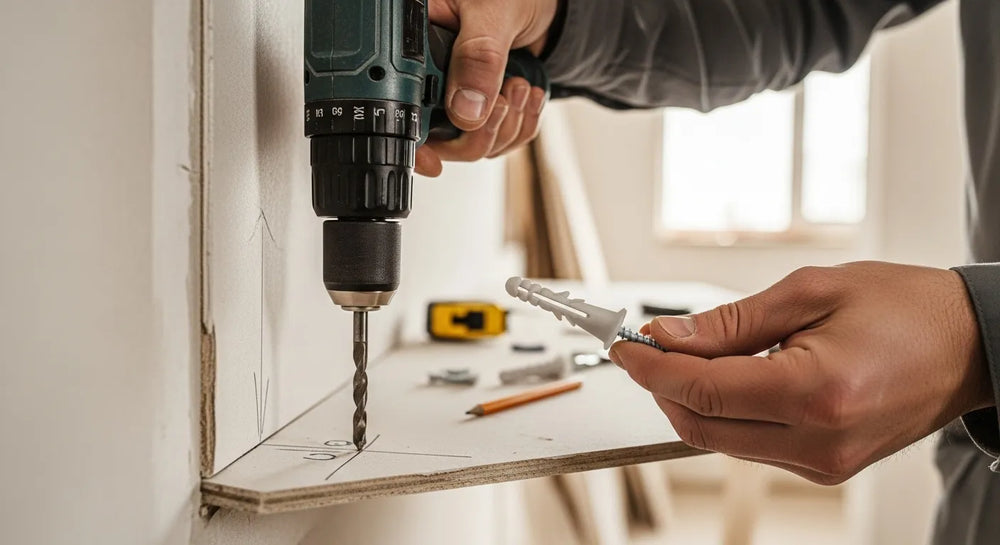
- Select a Drill Bit: Choose a drill bit that is the same diameter as the inside of the anchor, or slightly smaller than the anchor's outer head. You want to destroy the anchor from the inside out without unnecessarily enlarging the hole in the drywall.
- Drill Slowly: Center the drill bit in the anchor's opening. Using a slow speed, begin drilling into the anchor. The plastic or soft metal will begin to break apart and shred.
- Clear the Debris: As you drill, the anchor will be obliterated. Once it's gone, you can clean up the remaining debris from the hole and prepare for patching.
Method 5: The Cut and Conceal Method
This is a variation of the push-through method and works well when the anchor's flange is the only thing preventing it from being pushed into the wall.
- Carefully Cut the Flange: Using a very sharp utility knife, meticulously slice away the plastic or thin metal flange of the anchor so it is perfectly flush with the wall surface. Hold the blade at a low angle and make several shallow passes to avoid slipping and gashing the drywall.
- Recess and Push: With the flange gone, the rest of the anchor body can be tapped below the surface and pushed into the wall cavity, as described in Method 1. The advantage here is that you're left with a very small indentation to patch over.
Post-Removal: Professional Wall Repair
Removing the anchor is only half the battle. A professional finish requires a seamless repair.
- Clean the Area: Remove any loose paper or debris from the edges of the hole. If necessary, use your utility knife to create a clean, slightly beveled edge around the hole, which helps the spackle adhere better.
- Apply Spackling: Using a flexible putty knife, apply a small amount of spackling compound, pressing it firmly into the hole. Apply enough to slightly overfill the hole, as spackle shrinks as it dries. For larger holes, you may need to apply it in two layers.
- Sand Smooth: Once the spackle is completely dry (check the manufacturer's instructions), lightly sand the area with fine-grit sandpaper until it is perfectly smooth and level with the surrounding wall.
- Prime and Paint: Apply a coat of primer over the patch to seal the spackle and ensure the final paint coat has a uniform finish. Once the primer is dry, apply your matching wall paint.
This meticulous repair process is a hallmark of industrial excellence, a value we champion. It’s about not just completing a task, but doing so to a standard that ensures durability and a quality finish.
Choosing the Right Replacement: A Procurement Perspective
The frustration of removing a broken anchor should serve as a valuable lesson in procurement strategy. The Total Cost of Ownership (TCO) of a component goes far beyond its initial price. The cost of failure—including labor for removal, materials for repair, and project delays—far outweighs any initial savings from sourcing a cheaper, lower-quality part.
For a procurement manager under pressure to source fasteners for a large construction project, a design engineer needing specific material certifications for a new product, or an MRO buyer facing an unexpected equipment breakdown, the ability to quickly find and finance a verified, U.S.-made part is a game-changer. Our platform connects you with over 2.5 million American-made products.
- For light-duty interior fixtures, a high-quality Ribbed Plastic Anchor provides reliability.
- For faster installation in drywall, the U.S.-made Medium Duty Nylon Wall Anchor #6 Self-Drilling Drywall Zip-It® offers superior grip and material integrity.
- When a stronger hold is needed, the robust Medium Duty Nylon Wall Anchor #8 for Drywall demonstrates the durability that comes from quality American manufacturing.
Our entire business model is built on this principle; you can learn more about our mission to champion American manufacturing here. We are proving every day that American-made components are as accessible and convenient as any global alternative.
Streamlining Procurement for MRO and Beyond
The challenge of a single broken anchor scales up to significant operational drag when applied across an entire facility or company. Managing inventory for countless small components, verifying supplier quality, and ensuring compliance can consume enormous resources. We built Maden.co to solve this. We provide supply chain transparency and empower our customers by consolidating access to a vast network of American manufacturers.
Furthermore, we understand that cash flow is critical for business operations. That's why we offer a strategic tool to help manage capital expenditures. For large-volume orders or capital-intensive projects, you can apply for Instant Financing at checkout to streamline your procurement process. This allows you to acquire the necessary MRO supplies and project components without disrupting your operational budget.
And if you are part of the engine driving our nation's industrial strength, we want you on our platform. Are you a U.S. manufacturer? Register as a vendor and join the American manufacturing revival. If you have specific sourcing questions or need assistance with a large order, our team is ready to help.
Conclusion
A broken drywall anchor is more than a minor annoyance; it’s a lesson in the critical importance of component quality and proper technique. By correctly identifying the anchor, choosing the right removal method, and executing a professional repair, you can resolve the issue cleanly and efficiently.
More importantly, this experience should inform a more strategic approach to sourcing. By prioritizing high-quality, verified, U.S.-made components, you reduce the likelihood of failure, minimize rework, and lower the total cost of ownership over the long term. This is the foundation of a resilient and efficient supply chain.
We invite you to explore the vast catalog on Maden.co. Discover the difference that American-made quality makes in your projects and operations. Streamline your next bulk purchase with the convenience of instant financing at checkout and partner with us to build a more reliable, efficient, and powerful American industrial base.
Frequently Asked Questions
1. What is the easiest way to remove a common plastic drywall anchor? For most standard ribbed plastic anchors where the screw has been removed, the "Push-Through Method" is by far the easiest and cleanest. Simply use a screwdriver and hammer to gently tap the anchor until it falls into the wall cavity. This leaves a very small, easy-to-patch hole.
2. Can I reuse the same hole after removing an anchor? It is generally not recommended. The removal process often compromises the integrity of the surrounding drywall, making it unable to provide a secure grip for a new anchor. The best practice is to patch the old hole properly and then drill a new hole for the replacement anchor at least one inch away from the original spot.
3. What if the anchor just spins in the wall when I try to remove the screw? This happens when the anchor has lost its grip on the drywall. To remove it, try to apply outward pressure on the screw head as you turn it counter-clockwise. You can do this by sliding a putty knife or the claws of a hammer under the screw head to pry it outward while you use a screwdriver. This added tension can help the screw threads catch and back out.
4. Why should I choose U.S.-made anchors over cheaper alternatives? Choosing U.S.-made anchors from a verified supplier provides several key advantages that contribute to a lower Total Cost of Ownership (TCO). These anchors are typically made with higher-grade materials and to stricter manufacturing tolerances, resulting in greater strength, durability, and installation consistency. This reduces the risk of failure, prevents costly rework and repairs, and ensures the safety and reliability of your installations, which is critical in both commercial and industrial environments.


