
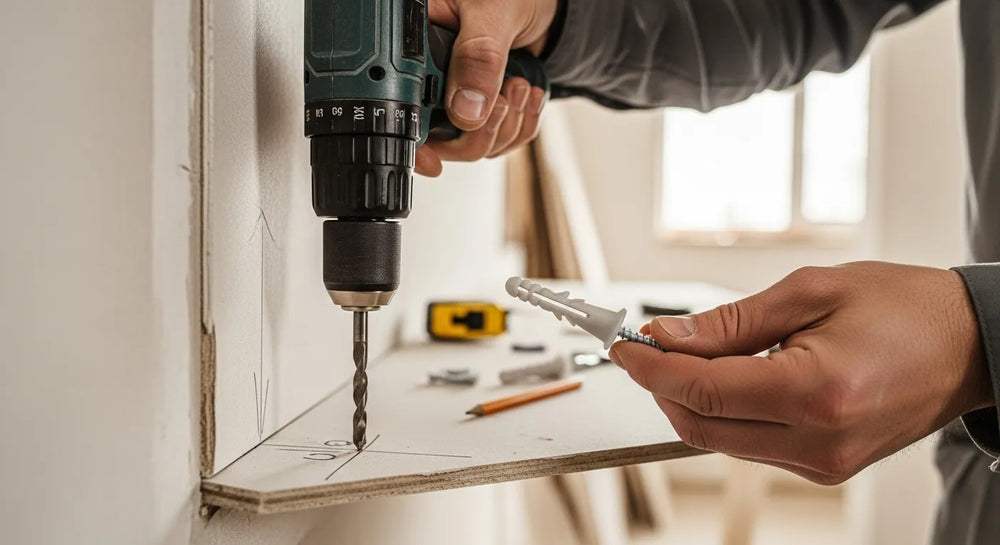
Installing Concrete Anchors on Wall: A Professional's Guide
Table of Contents
- Introduction
- The Critical Importance of Proper Concrete Anchoring
- Understanding Concrete Anchors: Types and Applications
- Essential Tools and Materials for Installation
- Pre-Installation Checklist: Planning for Success
- Step-by-Step Guide: How to Install Concrete Anchors on Wall
- Common Pitfalls and Troubleshooting
- Maximizing Procurement Efficiency with Maden.co
- Conclusion
- FAQ
Imagine a critical infrastructure project halted because a crucial fastening failed, jeopardizing safety and incurring immense cost overruns. Or a manufacturing line experiencing unexpected downtime because a piece of heavy machinery, thought to be securely anchored, shifted out of alignment. These scenarios, unfortunately, are not uncommon in industrial settings where the integrity of structural fastenings is paramount. The seemingly simple act of installing concrete anchors on a wall is, in fact, a precise engineering task demanding meticulous attention to detail, the right tools, and, most importantly, high-quality components.
This blog post serves as a definitive guide for procurement managers, MRO buyers, and design engineers, demystifying the process of installing concrete anchors on walls with precision and reliability. We will delve into the critical importance of proper installation, explore the diverse types of anchors available, detail the essential tools and techniques, and navigate common pitfalls. Our aim is to equip you with the knowledge to ensure structural integrity and operational efficiency, leveraging the strength and accessibility of American manufacturing. By the end, you'll understand not only the technical aspects of anchor installation but also how to strategically source the robust, U.S.-made components that form the bedrock of secure industrial applications, confident in the knowledge that Maden.co is your partner in achieving this excellence.
Introduction
In the demanding world of industrial operations, where safety, durability, and compliance are non-negotiable, the secure fastening of structures and equipment to concrete walls is a fundamental requirement. From securing heavy machinery and racking systems in warehouses to anchoring critical electrical conduits and piping in facilities, the proper installation of concrete anchors is an unsung hero of operational integrity. A poorly installed anchor is not merely an inconvenience; it represents a significant risk, threatening worker safety, costly equipment damage, and potential regulatory non-compliance. It's a risk no professional can afford to take.
This guide will systematically break down the complexities of concrete anchor installation. We will start by emphasizing why getting it right from the beginning is crucial for long-term operational success and safety. Subsequently, we will explore the various types of concrete anchors, discuss the essential tools and preparatory steps, and provide a detailed, step-by-step methodology for installation that adheres to best practices. Furthermore, we will address common challenges and offer practical solutions. Throughout this comprehensive discussion, we will highlight how sourcing through Maden.co, America's premier B2B marketplace, provides unparalleled access to the verified, U.S.-made products necessary for these critical applications, reinforcing our core values of American Manufacturing Pride and Industrial Excellence. For a procurement manager under pressure to source a specific anchor or a design engineer needing specific material certifications, the ability to quickly find a verified, U.S.-made part is a game-changer for supply chain resilience.
The Critical Importance of Proper Concrete Anchoring
The seemingly mundane task of securing an item to a concrete wall carries profound implications for safety, structural integrity, and long-term operational costs. In industrial environments, where equipment can weigh tons and structural loads are significant, a single point of failure can cascade into catastrophic consequences.
Ensuring Safety and Preventing Accidents
The primary concern in any industrial setting is the safety of personnel. Equipment that is not properly anchored can become a projectile during an impact, tip over during operation, or even collapse, leading to severe injuries or fatalities. Overhead installations, such as lighting fixtures, ventilation systems, or suspended piping, pose an even greater risk if their concrete anchors fail. Compliance with OSHA regulations and other safety standards often mandates specific anchoring requirements to mitigate these hazards. Proper installation, using the correct anchor for the specific load and concrete type, is the bedrock of a safe working environment.
Maintaining Structural Integrity and Equipment Performance
Beyond immediate safety, correct anchoring is vital for maintaining the structural integrity of both the mounted item and the wall itself. Vibration from machinery, dynamic loads, or even environmental factors like wind can exert constant stress on anchors. If anchors are improperly installed or undersized, they can weaken over time, leading to loosening, pull-out, or concrete spalling. This not only compromises the stability of the mounted item but can also damage the concrete substrate, necessitating costly repairs. For machinery, precise alignment is often critical for optimal performance. Poor anchoring can cause misalignment, leading to increased wear and tear, reduced efficiency, and premature equipment failure, impacting your total cost of ownership (TCO) negatively.
Compliance and Liability
Adherence to building codes, engineering standards (e.g., DIN, NPT), and manufacturer specifications is non-negotiable. Many projects require stamped engineering drawings that detail anchor types, sizes, and installation methods. Deviations can lead to project delays, rework, fines, and even legal liability in the event of an accident. Procurement managers and MRO buyers must ensure that the anchors sourced meet all relevant specifications, a task made simpler when partnering with verified U.S. manufacturers through platforms like Maden.co, where supply chain transparency is a core value. Our platform connects industrial buyers with an extensive network of over 800+ verified U.S. manufacturers, making it easier to find components that meet stringent compliance requirements.
Long-Term Cost Savings
While the upfront cost of high-quality anchors and professional installation might seem higher than cutting corners, the long-term savings are substantial. Avoiding accidents, equipment damage, structural repairs, and regulatory penalties far outweighs any initial perceived savings. Proper anchoring ensures longevity of installations, reduces maintenance frequency, and contributes to uninterrupted operations, directly enhancing your bottom line and improving the overall efficiency of your procurement process.
Understanding Concrete Anchors: Types and Applications
Selecting the right concrete anchor is the first and most critical step in ensuring a secure and lasting installation. The vast array of anchor types is designed to meet specific load requirements, concrete conditions, and application environments. Understanding these differences is paramount.
Mechanical Anchors
Mechanical anchors achieve their holding power through friction, expansion, or a combination of both, creating a physical interlock with the concrete.
Wedge Anchors
These are among the most common and versatile anchors. They consist of a threaded stud, an expansion clip, a nut, and a washer. As the nut is tightened, the expansion clip expands against the side of the drilled hole, creating a strong mechanical interlock. Wedge anchors are suitable for heavy-duty applications in solid concrete and are available in various materials like zinc-plated carbon steel, hot-dipped galvanized steel, and stainless steel for corrosive environments.
Sleeve Anchors
Similar in principle to wedge anchors but designed for lighter to medium loads, sleeve anchors are ideal for hollow concrete block, brick, and solid concrete. They feature a bolt or screw enclosed in a metal sleeve. As the bolt is tightened, the tapered end draws into the sleeve, expanding it against the sides of the hole.
Drop-In Anchors
These internally threaded anchors are flush-mounted and provide a secure attachment point for machine screws or bolts. A setting tool is used to drive a plug into the anchor, causing its base to expand against the concrete. They are excellent for overhead applications or when a flush surface is desired, and you need to remove the mounted item without removing the anchor itself. For a robust example of this type of component, consider the BN Products 3/8 Inch Inside Thread Sanko Drop-In Concrete Anchor available through Maden.co. This is a prime example of the quality, U.S.-made fasteners you can find on our platform.
Strike Anchors (Hammer-Drive Anchors)
Designed for light to medium-duty applications, strike anchors are installed by hammering a pin into the anchor body, which causes the anchor to expand. They are quick to install but less suitable for applications requiring precise torque values or where future adjustments might be needed.
Concrete Screws (Tapcon® Type)
These self-tapping, hardened steel screws create their own threads in a pre-drilled pilot hole. They are versatile, easy to install, and provide strong holding power for light to medium loads without requiring expansion, making them suitable for close-to-edge applications where other expansion anchors might cause spalling.
Chemical Anchors (Adhesive Anchors)
Chemical anchors utilize a resin or epoxy to create an extremely strong bond between a threaded rod or rebar and the concrete. They are ideal for very heavy loads, dynamic loads, and applications in cracked or weak concrete. The process involves drilling a hole, thoroughly cleaning it, injecting the adhesive, and then inserting the rod. The adhesive cures, creating a monolithic bond.
Maden.co and Anchor Solutions
When sourcing any of these critical components, from simple concrete screws to specialized drop-in anchors, Maden.co simplifies the procurement process. Our platform is dedicated to democratizing access to American manufacturing, ensuring that industrial buyers can easily find and purchase high-quality, U.S.-made products. We offer access to over 2.5 million products, including a vast array of fasteners and anchors, all from our network of verified U.S. manufacturers. Whether you need an industrial shear connector for specialized anchoring tasks or a complete chuck set for efficient installation, you can find precise, American-made solutions. For instance, to facilitate the installation of these critical anchors, professional-grade tools like the 1-Headed Concrete Anchor Shear Connector Chuck or a comprehensive Concrete Anchor Shear Connector Chuck Set are available on our marketplace, designed to ensure efficient and reliable attachment. We believe America's manufacturing revival is here, and our platform is built to prove that American-made components are as accessible and convenient as any global alternative.
Essential Tools and Materials for Installation
Successful concrete anchor installation hinges on having the right tools and materials at hand. Investing in quality equipment not only ensures a more efficient and reliable installation but also contributes significantly to safety.
Necessary Tools:
- Rotary Hammer Drill: Essential for drilling clean, precise holes in concrete. A standard hammer drill might suffice for light-duty applications, but a rotary hammer drill is indispensable for larger diameters and harder concrete.
- Carbide-Tipped Masonry Drill Bits: Always use bits specifically designed for concrete and ensure they match the anchor diameter precisely. Using worn or incorrect bits can lead to oversized or irregular holes, compromising anchor holding power.
-
Hole Cleaning Tools:
- Wire Brush (Nylon or Steel): To scrub the inside of the drilled hole, removing debris.
- Air Blower (Hand Pump or Compressed Air): To blow out dust and fine particles from the hole. A clean hole is paramount, especially for chemical anchors.
- Torque Wrench: Crucial for tightening mechanical anchors to the manufacturer's specified torque settings, ensuring optimal expansion and preventing over-tightening which can damage the concrete or anchor.
- Setting Tool (for Drop-In Anchors): A specialized tool used to properly expand drop-in anchors.
- Caulking Gun (for Chemical Anchors): A heavy-duty model designed for two-part epoxies or resins.
- Measuring Tape, Marker, and Level: For accurate placement and alignment.
- Safety Glasses, Hearing Protection, and Gloves: Non-negotiable PPE for concrete drilling and installation.
- Shop Vacuum: For dust collection, improving visibility and air quality.
Necessary Materials:
- Chosen Concrete Anchors: Ensure they match the specific application, load requirements, and environmental conditions.
- Nuts and Washers: Typically come with mechanical anchors, but confirm their quality and material compatibility.
- Chemical Adhesive (for Chemical Anchors): Ensure it's suitable for the application and environmental conditions (e.g., temperature range, wet/dry holes).
- Threaded Rods or Rebar (for Chemical Anchors): Cut to the appropriate length.
- Masking Tape: Can be used on drill bits to mark desired drilling depth.
Ensuring you have all these components, readily available and of high quality, is a hallmark of industrial excellence. At Maden.co, we simplify sourcing these essential tools and materials from verified U.S. manufacturers, supporting our commitment to customer empowerment by providing solutions that reduce procurement friction.
Pre-Installation Checklist: Planning for Success
Before the drill even touches the concrete, thorough planning is essential. A well-executed pre-installation phase prevents costly errors, ensures safety, and guarantees the longevity of your anchor installation.
1. Load Calculations and Anchor Selection
- Determine the Load: Accurately calculate the static, dynamic, and seismic loads the anchor will bear. This is the most critical factor in anchor selection. Consider not just the weight of the mounted object but also any forces it will experience (e.g., vibration, pull-out, shear forces).
- Consult Manufacturer's Data: Always refer to the anchor manufacturer's load tables and design specifications. These provide critical data on allowable loads in various concrete strengths and conditions.
- Factor in Safety: Apply appropriate safety factors as per engineering standards and local building codes. Never rely solely on the ultimate tensile or shear strength of an anchor; always use the allowable working load.
- Consider Concrete Type and Condition: Is the concrete solid, cracked, hollow, or light-weight? Is it new or aged? These factors significantly influence anchor performance. Mechanical anchors generally perform best in solid, uncracked concrete, while chemical anchors are often preferred for cracked concrete or very heavy loads.
- Environmental Conditions: Will the anchor be exposed to moisture, chemicals, extreme temperatures, or corrosive elements? Select anchors made from appropriate materials (e.g., stainless steel for corrosive environments).
2. Wall Assessment and Layout
- Inspect the Concrete: Visually inspect the concrete wall for cracks, spalling, or deterioration. If the concrete is compromised, a different anchoring strategy or structural repair may be necessary.
- Identify Internal Obstructions: Use ground-penetrating radar (GPR) or other non-destructive testing (NDT) methods to identify rebar, conduits, or plumbing lines within the wall before drilling. Hitting rebar can damage drill bits and compromise structural integrity; hitting electrical or plumbing lines can be disastrous.
- Mark Drilling Locations: Precisely mark the locations for each anchor using a marker and a level. Double-check measurements against your drawings. Consider edge distance and spacing requirements as per manufacturer specifications to prevent concrete breakout.
3. Safety Protocols
- Personal Protective Equipment (PPE): Always wear safety glasses, hearing protection, gloves, and appropriate dust masks or respirators, especially when drilling concrete.
- Ventilation: Ensure adequate ventilation in the work area, particularly when using chemical anchors or generating significant concrete dust.
- Clear the Work Area: Remove any obstructions or potential tripping hazards. Cordon off the area if necessary to protect others.
- Power Tool Safety: Inspect all power tools for damage before use. Ensure cords are in good condition and GFCI protected.
By meticulously completing this checklist, you lay the groundwork for a secure, compliant, and efficient installation, minimizing risks and maximizing the performance of your chosen U.S.-made anchors from Maden.co.
Step-by-Step Guide: How to Install Concrete Anchors on Wall
While specific steps vary slightly depending on the anchor type, the core principles of precision, cleanliness, and adherence to manufacturer guidelines remain constant. This guide outlines the general process for installing mechanical and chemical anchors.
1. Drilling the Pilot Hole
- Select the Correct Drill Bit: Use a new or minimally worn carbide-tipped masonry drill bit that matches the exact diameter specified by the anchor manufacturer. Using an incorrect size will compromise holding power.
- Set Drilling Depth: Mark the desired drilling depth on the drill bit with masking tape, or use a depth stop if your drill has one. The hole depth is critical; it usually needs to be slightly deeper than the anchor's embedment length to allow for dust and proper setting.
-
Drill the Hole:
- Position the rotary hammer drill perpendicular to the wall at your marked location.
- Apply firm, consistent pressure. Let the drill do the work; avoid forcing it.
- Maintain a steady hand to ensure a straight hole. Tilting the drill can create an egg-shaped hole, reducing anchor performance.
- For deep holes, withdraw the bit periodically to clear debris and allow the bit to cool, preventing overheating.
2. Cleaning the Hole
This is arguably the most critical step, especially for chemical anchors. Concrete dust acts as a bond breaker, severely reducing anchor holding power.
- Brush: Use a stiff wire brush (or specialized nylon brush for chemical anchors) to thoroughly scrub the inside of the hole, dislodging any loose particles.
- Blow: Use a hand pump or compressed air to blow out all remaining dust.
- Repeat: For critical applications, especially with chemical anchors, repeat the brush-blow cycle multiple times until no dust is visible. For chemical anchors, some manufacturers also recommend a final rinse with water and allowing the hole to dry completely.
3. Anchor Insertion and Setting
For Mechanical Anchors (e.g., Wedge Anchors):
- Insert Anchor: Gently tap the anchor into the clean, dry hole with a hammer until the nut and washer are flush with the surface of the concrete or the fixture being mounted.
- Tighten: Use a torque wrench to tighten the nut to the manufacturer's specified torque setting. This expands the anchor within the hole, creating the mechanical interlock. Do not overtighten, as this can damage the anchor or the concrete.
- Check: Ensure the fixture is secure and there is no play.
For Drop-In Anchors:
- Insert Anchor: Tap the drop-in anchor into the pre-drilled hole until it is flush with the concrete surface.
- Set Anchor: Insert the manufacturer-specified setting tool into the anchor and strike it firmly with a hammer. This drives the internal plug, expanding the anchor.
- Verify: Ensure the anchor is properly expanded and seated by trying to turn it slightly or by observing the expansion mark if visible.
For Chemical Anchors:
- Prepare Adhesive: If using a two-part epoxy or resin cartridge, attach the mixing nozzle and dispense a small amount onto a waste surface until the color is consistent, indicating proper mixing.
- Inject Adhesive: Start from the back of the hole and slowly withdraw the nozzle while continuously injecting the adhesive. Fill the hole approximately two-thirds full to ensure full embedment of the rod. Avoid air pockets.
- Insert Threaded Rod/Rebar: Immediately after injection, slowly insert the threaded rod or rebar into the adhesive with a twisting motion to ensure full wetting of the rod and to prevent air entrapment.
- Position: Position the rod to the desired embedment depth and hold it in place until the adhesive begins to gel.
- Cure: Allow the adhesive to cure fully according to the manufacturer's instructions (temperature dependent). Do not apply load until the specified cure time has elapsed.
4. Testing and Inspection
- Visual Inspection: After installation, visually inspect all anchors for proper seating, correct torque, and any signs of concrete damage.
- Proof Loading (for Critical Applications): For highly critical applications, engineering specifications may require proof loading tests to verify anchor performance. This involves applying a controlled load to a small percentage of anchors and measuring displacement.
- Documentation: Maintain detailed records of anchor types, sizes, installation dates, and any testing performed.
By following these detailed steps, supported by high-quality, U.S.-made components available on Maden.co, you can ensure that your concrete anchor installations are robust, reliable, and compliant, contributing to the overall success and safety of your operations.
Common Pitfalls and Troubleshooting
Even with careful planning and execution, challenges can arise during concrete anchor installation. Understanding common pitfalls and knowing how to troubleshoot them can save significant time and resources.
1. Oversized or Undersized Holes
- Pitfall: Using a drill bit that is too large or too small for the anchor diameter. An oversized hole reduces the anchor's ability to expand and grip, leading to pull-out. An undersized hole prevents full embedment or proper expansion, causing the anchor to bind or fail to achieve its rated strength.
- Troubleshooting: Always use a new or sharp carbide-tipped drill bit that precisely matches the manufacturer's specification. If a hole is too large, the only safe solution is often to move to a new location or use a larger diameter anchor if appropriate and engineered to do so. Never try to "fill" an oversized hole with grout or other materials to compensate, as this will compromise the anchor's integrity.
2. Insufficient Hole Cleaning
- Pitfall: Failing to thoroughly remove concrete dust and debris from the drilled hole. This is a common cause of anchor failure, especially for chemical anchors where dust prevents proper bonding, and for mechanical anchors where it obstructs expansion.
- Troubleshooting: Adopt a rigorous brush-blow-brush-blow cleaning regimen, particularly for chemical anchors. Use a stiff wire brush and a powerful air blower. For very dusty environments, a shop vacuum can aid in initial dust removal.
3. Incorrect Embedment Depth
- Pitfall: Drilling the hole too shallow or too deep. Too shallow an embedment reduces the anchor's effective load-bearing capacity. Too deep can make it difficult to set the anchor properly or reach the required expansion zone.
- Troubleshooting: Mark your drill bit or use a depth stop to ensure consistent and correct hole depth. Always account for any potential dust accumulation at the bottom of the hole.
4. Over-tightening or Under-tightening Mechanical Anchors
-
Pitfall:
- Over-tightening: Can strip threads, damage the anchor, or induce excessive stress in the surrounding concrete, leading to spalling or premature failure.
- Under-tightening: Prevents the anchor from achieving full expansion and holding power, leading to loosening over time.
- Troubleshooting: Always use a calibrated torque wrench for mechanical anchors and tighten to the manufacturer's specified torque value. Do not guess or rely on "feel."
5. Concrete Cracking or Spalling
- Pitfall: Cracks appearing during or after drilling, often due to drilling too close to an edge, existing concrete flaws, or using an expansion anchor in weak or already cracked concrete.
-
Troubleshooting:
- Maintain specified edge distances and spacing between anchors.
- Inspect concrete for existing cracks before drilling.
- Consider using concrete screws or chemical anchors in areas prone to cracking, as they exert less expansive force than traditional mechanical anchors.
- If cracking occurs, consult an engineer; the anchor may need to be relocated or a different type selected.
6. Adhesive Curing Issues (for Chemical Anchors)
- Pitfall: Inadequate mixing of two-part adhesives, improper temperature conditions, or insufficient cure time. This results in a weak bond that fails to achieve its rated strength.
-
Troubleshooting:
- Ensure the adhesive is properly mixed by dispensing a sufficient amount until uniform color is achieved.
- Verify the ambient and concrete temperatures are within the manufacturer's specified range for proper curing.
- Strictly adhere to the manufacturer's recommended cure times before applying any load. Cold temperatures significantly increase cure times.
By being aware of these common issues and proactively addressing them with professional knowledge and quality materials, you can significantly enhance the reliability and safety of your concrete anchor installations. Our vision at Maden.co is to be the definitive platform that proves American-made components are as accessible and convenient as any global alternative, directly contributing to reducing such procurement friction and ensuring you have the right components to avoid these pitfalls.
Maximizing Procurement Efficiency with Maden.co
In the world of industrial procurement, efficiency isn't just about speed; it's about making smart, strategic choices that bolster your operations, ensure compliance, and reinforce your supply chain. Maden.co stands at the forefront of this evolution, offering a robust platform designed specifically to empower procurement managers, MRO buyers, and design engineers.
Unparalleled Access to U.S.-Made Quality
At Maden.co, our mission is to democratize access to American manufacturing. We understand that sourcing reliable, high-quality components is critical for your projects. That’s why we connect industrial buyers with over 2.5 million American-made products from our extensive network of 800+ verified U.S. manufacturers. This means you gain direct access to the industrial excellence that drives the American manufacturing revival. When you're searching for specific concrete anchors, the related chucks, or any other industrial component, you can be confident that you're finding products that meet stringent quality standards, often with certifications that ensure compliance with critical industry requirements. Our commitment to American Manufacturing Pride means you're investing in the strength and innovation of domestic industries. If you’re a U.S. manufacturer looking to expand your reach and contribute to this revival, we invite you to register as a vendor and join our growing marketplace.
Enhanced Supply Chain Resilience and Transparency
The past few years have underscored the vulnerabilities inherent in extended global supply chains. By choosing U.S.-made products through Maden.co, you inherently build a more resilient supply chain. Shorter lead times, reduced shipping complexities, and direct communication with manufacturers mean fewer delays and greater control over your inventory. Our platform is built on values of Supply Chain Transparency, providing you with clear visibility into the origins and specifications of your components, allowing you to make informed decisions that enhance your operational stability. From the foundational elements for your next project like the 1-Headed Concrete Anchor Shear Connector Chuck to comprehensive tooling like the Concrete Anchor Shear Connector Chuck Set, we simplify sourcing.
Strategic Financial Flexibility with Instant Financing
Recognizing that large-volume purchases or capital-intensive projects require flexible financial solutions, Maden.co offers "Instant Financing" directly at checkout. This isn't just a payment option; it's a strategic tool designed to help businesses manage cash flow effectively and facilitate essential purchases without tying up immediate capital. Whether you're stocking up on critical MRO supplies or securing components for a major build-out, instant financing allows you to proceed with confidence. This feature empowers our customers, aligning with our value of Customer Empowerment, by providing the means to acquire necessary U.S.-made products when you need them most.
By leveraging Maden.co, you're not just buying parts; you're investing in a more efficient, resilient, and strategically advantageous procurement process. We are committed to being your strategic partner, proving that American-made components are not just an option but the optimal choice for industrial excellence. Learn more about our mission and how we're driving change in industrial procurement by visiting our About Us page. If you have any specific questions about our platform or products, our team is ready to help; feel free to contact us at any time.
Conclusion
The secure and precise installation of concrete anchors on walls is far more than a simple DIY task; it is a critical engineering discipline that underpins the safety, structural integrity, and operational efficiency of countless industrial and commercial applications. From the meticulous selection of the correct anchor type to the precision of drilling, thorough hole cleaning, and careful setting, each step demands a professional approach and unwavering attention to detail. Ignoring these best practices risks not only immediate failure but also long-term liabilities, compromised safety, and significant financial repercussions.
By understanding the diverse types of concrete anchors, adhering to a comprehensive pre-installation checklist, and following the detailed step-by-step installation guide, procurement managers, MRO buyers, and design engineers can ensure that their projects are built on a foundation of unyielding strength. The commitment to sourcing high-quality, U.S.-made components is paramount in achieving these standards.
At Maden.co, we are dedicated to being your trusted partner in this endeavor. Our marketplace offers unparalleled access to over 2.5 million verified American-made products, including the robust anchors and installation tools necessary for critical applications like those detailed in this guide. We stand by our core values of American Manufacturing Pride, Digital Innovation, Supply Chain Transparency, Industrial Excellence, and Customer Empowerment, ensuring that your procurement process is as efficient and reliable as the components you purchase. We are driving America's manufacturing revival, one quality product at a time.
Equip your projects with the strength and reliability of American manufacturing. Explore the vast catalog of U.S.-made products on Maden.co today. Whether you need a specialized BN Products 3/8 Inch Inside Thread Sanko Drop-In Concrete Anchor, a professional Concrete Anchor Shear Connector Chuck Set, or any other critical component, our platform streamlines your sourcing. For capital-intensive projects or large-volume orders, remember that you can apply for Instant Financing at checkout to manage your cash flow effectively. Build with confidence, build with American-made quality, and build with Maden.co.
FAQ
Q1: What is the most common reason for concrete anchor failure?
A1: The most common reasons for concrete anchor failure typically stem from improper installation, such as insufficient hole cleaning (which prevents proper adhesion or expansion), using an incorrect drill bit size, or failing to adhere to the manufacturer's specified torque settings. Anchor selection that doesn't match the load requirements or concrete type is also a major contributing factor.
Q2: Can I install concrete anchors in cracked concrete?
A2: It depends on the anchor type and the nature of the cracks. Many mechanical expansion anchors are not suitable for cracked concrete as the cracks can reduce the concrete's ability to resist expansion forces, leading to pull-out. Chemical anchors (adhesive anchors) are generally preferred for cracked concrete applications because they create a bond that distributes stress more effectively within the concrete, making them more resilient in such conditions. Always consult an engineer and the anchor manufacturer's specifications when dealing with cracked concrete.
Q3: How do I know what size drill bit to use for a concrete anchor?
A3: The size of the drill bit is critical and must precisely match the diameter specified by the anchor manufacturer. This information is typically provided in the anchor's packaging or technical data sheet. Using an oversized bit will result in a loose anchor, while an undersized bit will prevent full embedment or proper expansion. For mechanical anchors, the bit size usually corresponds to the anchor's diameter; for chemical anchors, the hole might be slightly larger to accommodate the adhesive and threaded rod.
Q4: What is the difference between a hammer drill and a rotary hammer drill for concrete?
A4: Both hammer drills and rotary hammer drills use a hammering action in addition to rotation to drill into concrete, but they operate differently and are suited for different tasks. A standard hammer drill uses a clutch mechanism to create rapid, short impacts, similar to tapping on the back of a drill bit. It's suitable for smaller diameter holes (typically up to 1/2 inch) and lighter-duty applications. A rotary hammer drill, on the other hand, uses an electro-pneumatic piston mechanism to deliver much more powerful, longer impacts. This makes them significantly more efficient for drilling larger diameter holes, deeper holes, and working with harder concrete. For professional and heavy-duty concrete anchor installations, a rotary hammer drill is the preferred and often necessary tool.


