
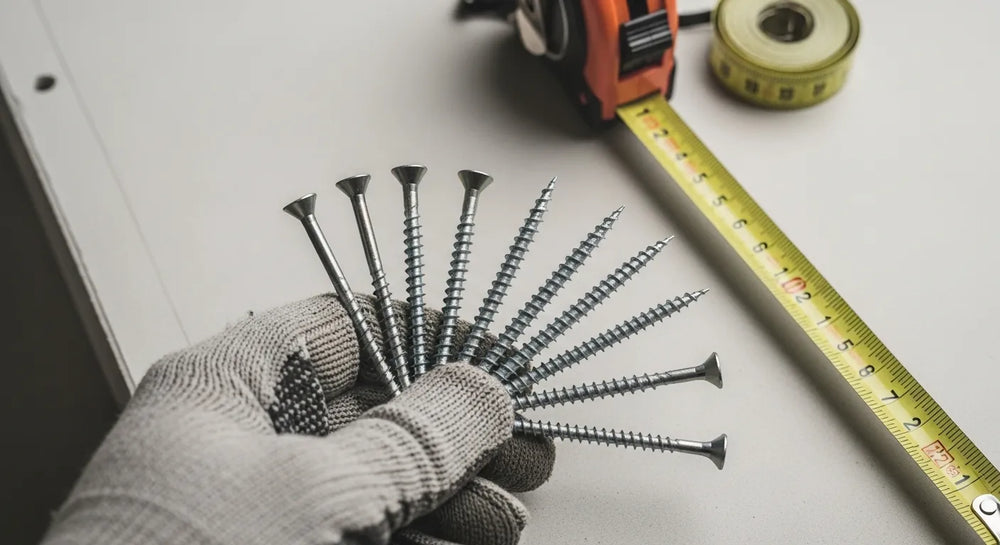
Optimize Wood Screw Installation with Lubrication
Table of Contents
- Introduction
- The Science Behind Friction: Why Lubrication Matters
- Benefits of Lubricating Wood Screws
- Choosing the Right Lubricant for Your Application
- Step-by-Step Guide to Lubricating Wood Screws
- Common Mistakes to Avoid
- Beyond Lubrication: The Broader Impact on Procurement and Project Success
- Maden.co: Your Partner in American Manufacturing Revival
- Conclusion
- FAQ
Introduction
Imagine the frustration: a critical project underway, deadlines looming, and suddenly, a wood screw snaps, strips, or, worse, splits your carefully prepared material. This isn't just a minor inconvenience; it's a productivity drain, a material waste, and a potential compromise to the integrity of your entire assembly. For procurement managers, MRO buyers, and design engineers, such seemingly small failures can cascade into significant delays and increased costs. The truth is, many of these common fastening headaches can be easily mitigated with a simple, often overlooked step: proper lubrication.
This blog post will delve into the comprehensive reasons why lubricating wood screws is not merely a handy trick, but a fundamental best practice for ensuring efficiency, durability, and project success. We will explore the mechanics of friction, detail the various types of lubricants suitable for different applications, and provide a practical guide to their effective use. Furthermore, we will connect this micro-level detail to the macro-level impact on your supply chain and procurement strategies, highlighting how the right materials and practices contribute to improved Total Cost of Ownership (TCO) and enhanced operational resilience. Our aim is to equip you with the knowledge to transform a simple fastening task into a precise, problem-free process, reinforcing our commitment at Maden.co to providing solutions that drive industrial excellence and support America's manufacturing revival.
The Science Behind Friction: Why Lubrication Matters
At its core, fastening a wood screw is an exercise in overcoming resistance. As a screw rotates and advances into wood, multiple forces come into play, primarily friction. Understanding these forces is crucial to appreciating the value of lubrication.
Understanding Wood Screw Mechanics
When you drive a screw into wood, the threads essentially cut a path through the material. This action generates significant friction between the screw's surface and the wood fibers. This friction occurs in several key areas:
- Thread Contact: The primary source of resistance comes from the threads as they displace wood and form a gripping connection. Without lubrication, this metal-on-wood contact creates substantial drag.
- Shank Contact: As the screw's unthreaded shank follows the threads into the pre-drilled or self-drilled hole, it also experiences friction, particularly if the hole is slightly undersized or irregular.
- Head Contact: When the screw head seats against the surface of the wood, friction arises between the underside of the head and the workpiece. This friction is essential for proper seating and clamping force but can be excessive during the initial seating phase, especially with countersunk heads.
Excessive friction translates directly into increased torque requirements. This means your drill or driver must work harder, consuming more battery power and experiencing greater wear and tear. More importantly, high friction significantly increases the risk of damage to both the screw and the wood.
Preventing Damage: Stripping, Cracking, and Breakage
Unlubricated screws are common culprits for a range of fastening failures that can derail projects and compromise quality.
Screw Damage: Stripping and Snapping
When the torque required to drive a screw exceeds its material strength or the grip of your driver, problems arise:
- Stripped Heads: The most common issue. When the driver bit slips out of the screw head recess (Phillips, Square, Torx, Slot), it "cams out," stripping the head and making further driving or removal impossible. This is often a direct result of the high force needed to overcome friction.
- Snapped Screws: Particularly with smaller gauge or brittle screws, the torsional stress from excessive friction can cause the screw shank or head to snap entirely. This leaves part of the screw embedded in the wood, creating a major headache for removal and rework. Even high-quality fasteners, like a robust round slot drive brass wood screw, can be susceptible to snapping if subjected to extreme, unlubricated force in dense hardwoods.
Wood Damage: Splitting and Cracking
The wood itself is vulnerable to the stresses of an unlubricated screw:
- Splitting: As a screw forces its way into wood, it displaces material. If the wood is dense, thin, or brittle, or if the screw is driven too close to an edge or end grain, the internal pressure can cause the wood to split along its grain. This is particularly prevalent with hardwoods where the fibers are less yielding.
- Cracking: Similar to splitting, cracking can occur due to localized stress, especially around the screw entry point or within the wood structure. This compromises the aesthetic and structural integrity of the joint.
- Subsurface Damage: Even if visible splitting doesn't occur, excessive force can crush wood fibers internally, weakening the holding power of the screw and potentially leading to premature joint failure.
By reducing the friction, lubrication lowers the required driving torque, minimizes stress on both the fastener and the wood, and drastically reduces the likelihood of these damaging outcomes. This attention to detail in material handling and component assembly is a hallmark of the industrial excellence we advocate for at Maden.co.
Benefits of Lubricating Wood Screws
The simple act of lubricating wood screws offers a cascade of tangible benefits, impacting not just the immediate task but also the longevity, efficiency, and overall success of your projects. These advantages are particularly significant in industrial, manufacturing, and MRO environments where precision, durability, and cost-effectiveness are paramount.
Enhanced Driving Efficiency
One of the most immediate and noticeable benefits of lubrication is the significant reduction in the effort required to drive screws. This translates into:
- Faster Installation: With less resistance, screws drive in more quickly and smoothly, allowing for accelerated assembly times. In high-volume production or large-scale construction, this efficiency gain can accumulate rapidly.
- Reduced User Fatigue: For manual applications or continuous work, less physical strain means operators can maintain productivity for longer periods without exhaustion.
- Extended Tool Life: Drills and drivers, particularly cordless models, benefit from lower torque demands. Motors run cooler, batteries last longer per charge, and chucks and gears experience less wear, extending the lifespan of valuable equipment. This contributes directly to a lower Total Cost of Ownership for your tools.
- Improved Accuracy and Control: When a screw drives smoothly, it's easier to maintain a straight trajectory and control the depth of penetration, leading to more precise and aesthetically pleasing results. This precision is vital in design engineering and custom fabrication where tolerances are tight.
Increased Screw Longevity
Lubrication not only aids in the initial installation but can also contribute to the long-term performance of the fastener itself.
- Reduced Stress During Installation: By minimizing the force required, lubrication prevents undue stress on the screw's material. This helps maintain its structural integrity, reducing the chance of microscopic fractures or deformations that could lead to premature failure down the line.
- Protection Against Corrosion (with specific lubricants): Certain wax-based lubricants can offer a degree of barrier protection against moisture and environmental factors, especially if the screw is exposed. While not a substitute for proper material selection (e.g., opting for stainless steel or silicon bronze in corrosive environments), it adds an extra layer of defense during the critical installation phase and beyond. For demanding outdoor applications or marine environments, an oval slot drive silicon bronze wood screw provides superior corrosion resistance, and lubrication further ensures its pristine installation.
Improved Structural Integrity of Wood
Protecting the wood is just as important as protecting the screw. Lubrication plays a critical role here:
- Minimized Splitting and Cracking: This is perhaps the most significant benefit for the workpiece. By easing the screw's entry, lubrication drastically reduces the outward pressure on wood fibers, thereby preventing unsightly and structurally weakening splits and cracks. This is particularly crucial when working with expensive hardwoods, veneers, or historical restorations.
- Enhanced Joint Strength: A screw driven into undamaged wood creates a stronger, more reliable joint. When wood fibers are not crushed or split, the screw's threads have a firmer purchase, maximizing the screw's holding power and ensuring the joint can withstand intended loads over time.
- Better Aesthetic Finish: Without splits or raised fibers around the screw head, the finished product looks cleaner and more professional. This is especially important for visible fasteners, like those used in cabinetry or furniture. For applications requiring a flush finish, selecting a flat slot drive brass wood screw ensures a clean, level surface, further enhanced by smooth, lubricated installation.
Time and Cost Savings in Projects
When viewed through a procurement and project management lens, these individual benefits coalesce into substantial time and cost savings:
- Reduced Rework and Scrap: Fewer stripped screws, snapped fasteners, or damaged workpieces mean less time spent on repairs, less material waste, and fewer instances of having to restart a task. This directly impacts labor costs and material budgets.
- Predictable Project Timelines: By minimizing common fastening issues, projects can proceed more smoothly and predictably, reducing the risk of costly delays and ensuring adherence to schedules.
- Optimized Resource Allocation: When fastening processes are efficient, skilled labor can be deployed more effectively on complex tasks rather than troubleshooting basic assembly problems.
- Lower Procurement Costs (Indirectly): While lubrication is a small expense, the cumulative savings from reduced fastener waste, less material scrap, and extended tool life can lead to overall lower operational expenses, contributing to a better Total Cost of Ownership for your projects. This strategic approach to sourcing and process optimization aligns perfectly with our mission at Maden.co, where we democratize access to high-quality U.S.-made products to improve your bottom line.
Choosing the Right Lubricant for Your Application
Selecting the appropriate lubricant for wood screws is crucial for maximizing benefits while avoiding potential drawbacks. Not all lubricants are created equal, and their suitability depends on the type of wood, the screw material, and the specific application requirements.
Wax-Based Lubricants (e.g., Paraffin Wax, Beeswax)
Waxes are arguably the most popular and effective lubricants for wood screws due to their unique properties.
- Paraffin Wax: Easily accessible and inexpensive, paraffin wax (like a common household candle, but unscented and uncolored) is an excellent choice. It creates a smooth, thin coating on the screw threads, significantly reducing friction without leaving a greasy residue. It's safe for most wood types and finishes.
- Beeswax: A natural alternative, beeswax offers similar lubrication properties to paraffin. It's slightly softer and can be a good choice for delicate projects or when a natural product is preferred. Its natural adhesion can also offer a minor degree of moisture resistance.
- Application: Both paraffin and beeswax are best applied by simply running the screw threads across the wax block or dipping the screw tip into melted wax. The key is a thin, even coating.
Soap (Bar Soap, Dish Soap)
Common household soaps can also serve as effective, readily available lubricants in a pinch, though with some caveats.
- Bar Soap: A dry bar of soap (plain, unscented, and uncolored is best to avoid staining) can be used similarly to wax. Simply run the screw threads across the soap. It provides decent friction reduction, but the residue can sometimes attract moisture over time if not completely embedded in the wood, potentially leading to rust on unprotected steel screws. It's generally not recommended for projects exposed to moisture or for long-term outdoor applications unless the screw material inherently resists corrosion.
- Dish Soap (Liquid): A tiny dab of liquid dish soap on the screw tip can work for very light-duty applications. However, liquid soaps can introduce moisture into the wood, potentially swelling fibers, and may leave a residue that interferes with finishes. Use with extreme caution and sparingly, especially on fine woodworking. It is generally not recommended for professional or durable applications.
Specialized Screw Lubricants
While less common for everyday wood screws, there are commercial lubricants formulated specifically for fasteners.
- Proprietary Coatings: Some high-performance screws come pre-coated with specialized lubricants or corrosion-resistant finishes. These are often optimized for particular applications and can offer superior performance and longevity. When sourcing, always check product specifications for such features.
- Dry Film Lubricants: These typically contain materials like PTFE (Teflon) or graphite in a carrier that evaporates, leaving a dry, slippery film. They offer excellent, long-lasting lubrication and do not attract dust or dirt. They are an excellent choice for applications where cleanliness is paramount or where screws might need to be removed and re-inserted.
Considerations for Different Wood Types
The density and hardness of the wood significantly influence the need for and type of lubrication.
- Hardwoods (Oak, Maple, Walnut): These dense woods offer immense resistance. Lubrication is almost always recommended to prevent splitting and reduce driving effort. Wax-based lubricants are ideal.
- Softwoods (Pine, Spruce, Cedar): While softer, these woods can still split, especially near edges or with large screws. Lubrication is beneficial, particularly for longer screws.
- Engineered Wood Products (Plywood, MDF, Particleboard): These materials can vary greatly in density. MDF, for example, is very dense and can benefit from lubrication, while particleboard might be more forgiving. Always test on scrap material.
- Exotic Woods: Some exotic woods are extremely dense, oily, or brittle. Lubrication, combined with pre-drilling, is critical. Be mindful of potential reactions between the lubricant and the wood's natural oils or tannins.
Material Compatibility (Brass, Bronze, Steel)
The material of the screw also plays a role in lubricant choice and overall performance.
- Brass Screws: Brass is a relatively soft metal, making brass screws prone to stripping or snapping if too much torque is applied without lubrication. Waxes are excellent for brass, ensuring smooth entry and preserving the screw's integrity. For projects requiring the classic aesthetic and inherent corrosion resistance of brass, an expertly crafted round slot drive brass wood screw benefits greatly from lubrication during installation.
- Silicon Bronze Screws: Silicon bronze offers superior corrosion resistance and strength, often favored for marine or outdoor applications. While more robust, lubrication still aids in driving, particularly into hardwoods, and helps prevent undue stress on the fastener. For demanding conditions, consider a oval slot drive silicon bronze wood screw to ensure long-term durability, and always lubricate for optimal installation.
- Steel Screws: Common and strong, steel screws still benefit from lubrication to prevent snapping and reduce driving effort. For outdoor use, galvanized or stainless steel screws are preferred for corrosion resistance. A wax lubricant can also add a minor layer of protection against moisture for bare steel during installation.
At Maden.co, we understand that selecting the right fastener from our network of over 2.5 million U.S.-made products is just one part of the equation. Understanding how to properly install and maintain these components ensures they deliver the industrial excellence you expect.
Step-by-Step Guide to Lubricating Wood Screws
Implementing proper lubrication for wood screws is a straightforward process that yields significant rewards. Following these steps will ensure optimal results and minimize common fastening frustrations.
Preparation: Pre-drilling, Screw Inspection
Before you even think about lubrication, proper preparation is key. This lays the groundwork for a successful and durable fastening.
- Select the Right Screw and Driver Bit: Ensure your screw is appropriate for the application in terms of length, gauge, and material. Use a driver bit that precisely fits the screw head to minimize cam-out.
-
Pre-drill Pilot Holes: This is arguably the most critical preparatory step, especially for hardwoods, larger screws, or when working close to edges.
- Drill Bit Size: The pilot hole should be slightly smaller than the unthreaded shank of the screw, but larger than the screw's core diameter. This allows the threads to engage fully without splitting the wood. A good rule of thumb is to hold the screw and the drill bit up to the light: the drill bit should obscure the screw's shank but not its threads.
- Depth: Drill the pilot hole to at least the length of the screw's threaded portion, or slightly deeper if driving into thick material. Use a depth stop or a piece of tape on your drill bit to ensure consistent depth.
- Countersink (Optional but Recommended): For screws that need to sit flush or below the surface (like with a flat slot drive brass wood screw), use a countersink bit to create a tapered recess for the screw head. This prevents the screw head from splitting the surface wood as it seats.
- Inspect Screws: Briefly check each screw for any manufacturing defects, bent shanks, or damaged threads that could hinder smooth driving. While rare with the high-quality, verified U.S.-made fasteners you find on Maden.co, it's always good practice.
Application Techniques: Dipping, Coating
Once your pilot holes are ready, it's time to lubricate. The goal is a thin, even coating over the screw's threads.
- Choose Your Lubricant: As discussed, paraffin wax or beeswax are generally the best choices for most wood screw applications.
-
Method 1: Dipping (Most Common and Effective):
- Take your chosen wax block (a plain candle or dedicated wax stick works well).
- Press the screw tip firmly into the wax and rotate it slightly, or simply run the threads of the screw across the wax.
- Ensure the threads, and ideally the upper part of the shank, are coated with a visible, but not excessive, layer of wax.
- For speed in high-volume assembly, you can keep a block of wax handy and quickly "charge" each screw before driving.
-
Method 2: Coating (for precision or large screws):
- For very large screws or when extreme precision is needed, you can use a small brush to apply a very thin layer of melted wax to the threads. Allow it to cool and solidify before driving.
- Alternatively, for liquid dry film lubricants, follow the manufacturer's instructions for application, typically involving spraying or dipping and allowing to dry.
Best Practices for Different Screw Sizes and Lengths
The principles remain the same, but the emphasis shifts slightly based on the fastener dimensions.
- Small Screws: For smaller gauge or shorter screws, a light coating of wax is sufficient. Pre-drilling is still highly recommended for preventing splits, even with softwoods.
- Longer, Larger Gauge Screws: These screws encounter significantly more resistance. Lubrication is essential. A more thorough coating of wax, extending along most of the threaded portion, is advisable. For very long screws, consider driving them in stages, possibly re-lubricating if resistance becomes excessive.
- Driving into Hardwoods: Always pre-drill and always lubricate. Hardwoods present the greatest challenge for screw installation due to their density.
- Driving into End Grain: Fastening into end grain is notoriously difficult due to the way wood fibers are oriented, making splitting very easy and holding power weaker. Lubrication is absolutely critical here, along with carefully sized pilot holes and potentially specialized screws designed for better end-grain performance.
By consistently applying these lubrication techniques, you're not just making the job easier; you're building quality and reliability into every fastening, reflecting the standard of industrial excellence Maden.co champions.
Common Mistakes to Avoid
While wood screw lubrication is a simple concept, certain missteps can negate its benefits or even introduce new problems. Being aware of these common pitfalls will help ensure your projects run smoothly and efficiently.
Over-Lubrication
More is not always better, especially with lubricants.
- Reduced Holding Power: An excessive amount of lubricant, particularly liquid-based ones, can create too much slip between the screw threads and the wood fibers. This can compromise the friction necessary for the screw to properly grip the wood, leading to reduced holding power and potentially allowing the screw to back out over time.
- Mess and Residue: Too much wax or soap can create a messy residue around the screw head, attracting dust, dirt, or interfering with subsequent finishing steps like painting or staining. This is particularly problematic in precision assembly or high-cleanliness environments.
- Aesthetic Issues: Visible lubricant can detract from the finished appearance, especially if it seeps out after the screw is driven.
Solution: Aim for a thin, even coating that just covers the screw threads. You should be able to see a dull film, not a thick glob. If you're using wax, simply running the screw across a block a couple of times is usually sufficient.
Using Incompatible Lubricants (Grease, Oil)
While effective for metal-on-metal applications, many common lubricants are unsuitable for wood screws.
-
Grease and Oil: Petroleum-based greases and oils should be strictly avoided.
- Staining: They will inevitably seep into the surrounding wood, creating unsightly, permanent stains that are impossible to remove and will repel finishes.
- Attracting Dust: Greasy residue attracts and holds dust and grime, making the joint dirty and potentially hindering future repairs.
- Corrosion: Some oils can actually promote corrosion on certain screw materials over long periods, or react negatively with wood tannins.
- Weakened Adhesion: If you plan to glue components, oil can severely compromise glue adhesion in the vicinity of the screw.
- Water-Based Products: Beyond specific dish soaps used very sparingly (and still with caution), introducing excess water to wood via lubrication can cause swelling, warping, or even promote mold growth in enclosed environments.
Solution: Stick to proven, wood-friendly lubricants like paraffin wax, beeswax, or specialized dry film screw lubricants. If in doubt, test a small amount on a scrap piece of the same wood before committing to your main project.
Skipping Pre-Drilling
While lubrication can significantly ease screw driving, it is not a substitute for proper pre-drilling, especially in critical applications or with challenging materials.
- Increased Risk of Splitting: Even a well-lubricated screw can split wood if a pilot hole is not adequately sized or present, especially in dense hardwoods or near edges. The lubricant reduces friction, but the physical displacement of wood fibers still occurs, and without a channel, the wood will eventually give way.
- Reduced Holding Power: A pilot hole not only guides the screw but also ensures that the threads cut into fresh, undamaged wood, maximizing the screw's grip. Skipping pre-drilling can crush wood fibers, weakening the overall holding power regardless of lubrication.
- Crooked Screws: Without a pilot hole to guide it, a screw can wander off course, leading to crooked fasteners and misaligned components.
Solution: Always pre-drill pilot holes to the correct size and depth for your screw and wood type. Consider pre-drilling and countersinking as fundamental steps that complement lubrication, ensuring both ease of installation and structural integrity. For applications demanding precision and specific compliance, such as those requiring DIN 931 compliant hex cap screws or other precisely engineered fasteners, pre-drilling is non-negotiable.
Avoiding these common mistakes ensures that your efforts in lubricating wood screws yield maximum benefits, contributing to superior project outcomes and embodying the dedication to industrial excellence that defines Maden.co.
Beyond Lubrication: The Broader Impact on Procurement and Project Success
While the act of lubricating a wood screw might seem like a small detail, it is emblematic of a broader philosophy of precision, quality, and foresight that underpins successful industrial projects. This micro-level attention to detail connects directly to macro-level procurement strategies, supply chain resilience, and ultimately, your company’s bottom line.
The Role of Quality Fasteners
The effectiveness of any lubrication technique is amplified by the quality of the fastener itself. A poorly manufactured screw, with inconsistent threading, brittle material, or an imperfect head, will negate many of the benefits of lubrication.
- Consistency and Reliability: High-quality fasteners, manufactured to exacting standards, ensure consistent performance. Their precise dimensions and robust materials reduce the inherent risks of stripping, snapping, or poor seating. This reliability is foundational for any assembly process, preventing costly rework and material waste.
- Material Integrity: The material of the screw matters immensely. For instance, selecting the correct brass or silicon bronze for specific environmental exposures ensures long-term durability and resistance to corrosion, complementing the initial ease of installation provided by lubrication. Our network at Maden.co exclusively features products from verified U.S. manufacturers, ensuring that every fastener, from a round slot drive brass wood screw to more complex industrial components, meets stringent quality standards.
- Manufacturing Pride: At Maden.co, we believe in American Manufacturing Pride. Sourcing U.S.-made fasteners isn't just about patriotism; it's about investing in products engineered and produced under strict quality control, often with superior materials and craftsmanship. This commitment translates directly into greater confidence in your supply chain and the performance of your end product.
Ensuring Compliance and Performance
In many industrial sectors, fasteners are not just simple components; they are critical elements that must meet specific regulatory and performance standards.
- Industry Standards (e.g., DIN, NPT): For design engineers and MRO buyers, compliance with standards like DIN (Deutsches Institut für Normung) or NPT (National Pipe Taper) is non-negotiable. These standards dictate everything from material composition and dimensional tolerances to thread profiles and mechanical properties. Sourcing from manufacturers who adhere to these specifications is vital for product safety, reliability, and interoperability.
- Material Certifications: For high-stakes applications, material certifications (e.g., mill certificates) provide crucial assurance of a fastener's composition and strength. These documents are essential for auditing, quality control, and demonstrating compliance.
- Performance Under Stress: A properly installed, high-quality fastener, lubricated for optimal seating, will perform as engineered under the intended loads and environmental conditions. This extends the lifespan of machinery, structures, and products, reducing maintenance costs and improving safety. This dedication to industrial excellence is a core value we uphold.
Supply Chain Resilience and TCO
The impact of sourcing high-quality, U.S.-made fasteners, combined with best practices like lubrication, extends significantly into supply chain management and Total Cost of Ownership.
- Reduced Lead Times and Predictability: Sourcing from U.S. manufacturers through Maden.co significantly reduces lead times and mitigates the risks associated with global supply chain disruptions. This predictability is invaluable for maintaining production schedules and responding quickly to MRO needs.
- Lower Total Cost of Ownership (TCO): While the initial unit cost might sometimes appear higher for premium U.S.-made components, the true cost analysis reveals a different picture. Reduced failures, less rework, faster assembly times, extended product lifespan, and minimized shipping costs all contribute to a significantly lower TCO. When a procurement manager sources a quality part that reduces installation time and prevents costly failures, they are making a strategic investment, not just a purchase.
- Enhanced Supply Chain Transparency: We prioritize Supply Chain Transparency, connecting you directly with the manufacturers. This allows for better visibility into product origins, manufacturing processes, and quality assurance, building a more trustworthy and reliable procurement process.
Digital Innovation in Sourcing
At Maden.co, our mission is to democratize access to American manufacturing, making it as accessible and convenient as any global alternative. We achieve this through digital innovation.
- Vast, Verified Catalog: Our platform connects industrial buyers with over 2.5 million American-made products from our network of 800+ verified U.S. manufacturers. This extensive catalog allows design engineers to quickly find specific material certifications for new prototypes, and MRO buyers to source critical parts for unexpected equipment breakdowns, such as a particular DIN 931 compliant hex cap screw.
- Reduced Procurement Friction: Our user-friendly interface simplifies the search, comparison, and purchasing process, dramatically reducing procurement friction. This saves valuable time for procurement managers and business owners, allowing them to focus on strategic initiatives rather than manual sourcing. We empower our customers by providing an efficient, reliable marketplace.
- Instant Financing for Strategic Purchases: A key differentiator is our Instant Financing option, available directly at checkout. This is more than just a payment method; it's a strategic tool designed to help businesses manage cash flow effectively and make larger-volume purchases without tying up capital. For a procurement manager overseeing capital-intensive projects, the ability to apply for Instant Financing at checkout can be a game-changer, enabling immediate acquisition of essential components and maintaining project momentum. Learn more about our mission and values by visiting our About Us page.
Maden.co: Your Partner in American Manufacturing Revival
At Maden.co, we are not just a marketplace; we are a strategic partner committed to powering your operations with the very best of American manufacturing. Our vision is to become the definitive platform that proves American-made components are as accessible and convenient as any global alternative.
By connecting you with over 2.5 million verified U.S.-made products, we ensure you have reliable access to the fasteners, parts, and components your business needs to thrive. We uphold core values of Digital Innovation, Supply Chain Transparency, Industrial Excellence, and Customer Empowerment. We believe that by focusing on quality, efficiency, and strategic sourcing, we can collectively drive the American manufacturing revival.
Are you a U.S. manufacturer? Join our growing network and become part of this powerful movement. Register as a vendor and expand your reach across the nation; you can register as a vendor here.
Conclusion
The simple, often overlooked act of lubricating a wood screw is a powerful testament to the impact of attention to detail in industrial and commercial projects. It’s a small investment that yields significant returns in terms of efficiency, material integrity, fastener longevity, and overall project success. From preventing frustrating stripped heads and split wood to extending tool life and ensuring reliable structural integrity, proper lubrication is an indispensable best practice for anyone working with wood fasteners.
Beyond the immediate benefits, this granular focus on quality and process excellence reflects a broader commitment to robust procurement strategies. By leveraging high-quality, U.S.-made fasteners and employing fundamental best practices, businesses can achieve substantial improvements in their Total Cost of Ownership, enhance supply chain resilience, and ultimately, deliver superior products and services.
We invite you to experience the difference that quality American manufacturing and innovative sourcing can make. Explore the vast catalog of verified U.S.-made fasteners and industrial components available on Maden.co. Discover the ease of finding precisely what you need, coupled with the strategic advantage of options like Instant Financing, available directly at checkout, to streamline your capital-intensive projects. If you have specific sourcing questions or need assistance, our team is ready to help; feel free to contact us. America's manufacturing revival is here, and we are proud to be your partner in building its future, one precise, expertly installed component at a time.
FAQ
Q1: What is the best lubricant to use for wood screws?
A1: The best lubricants for wood screws are typically wax-based products like paraffin wax or beeswax. These create a thin, smooth coating that significantly reduces friction without leaving a greasy residue or staining the wood. They are widely accessible, inexpensive, and effective for most wood types and screw materials.
Q2: Can I use oil or grease to lubricate wood screws?
A2: No, it is strongly advised to avoid using oil or grease (like petroleum jelly or machine oil) for lubricating wood screws. These substances can seep into the wood, causing unsightly and permanent stains that are impossible to remove and will interfere with finishes like paint or stain. They can also attract dust and dirt, leading to messy joints, and in some cases, may compromise glue adhesion or even promote corrosion.
Q3: Do I still need to pre-drill pilot holes if I lubricate my wood screws?
A3: Yes, pre-drilling pilot holes is still a critical step and should not be skipped, even when lubricating screws. Lubrication reduces friction, making it easier to drive the screw, but the pilot hole provides a clear path for the screw threads, preventing the wood from splitting, especially in dense hardwoods or when working near edges. Pre-drilling also ensures the screw drives straight and maximizes its holding power by allowing the threads to engage cleanly with the wood fibers.
Q4: Does lubricating wood screws affect their long-term holding power?
A4: When done correctly with appropriate lubricants like wax, lubricating wood screws does not negatively affect their long-term holding power. In fact, by easing the screw's entry and preventing damage to the wood fibers (like splitting or crushing), lubrication can contribute to a stronger, more reliable joint. An excessive amount of liquid lubricant might reduce initial grip, but a thin coat of wax allows the threads to fully engage with intact wood, ensuring optimal holding strength.


