
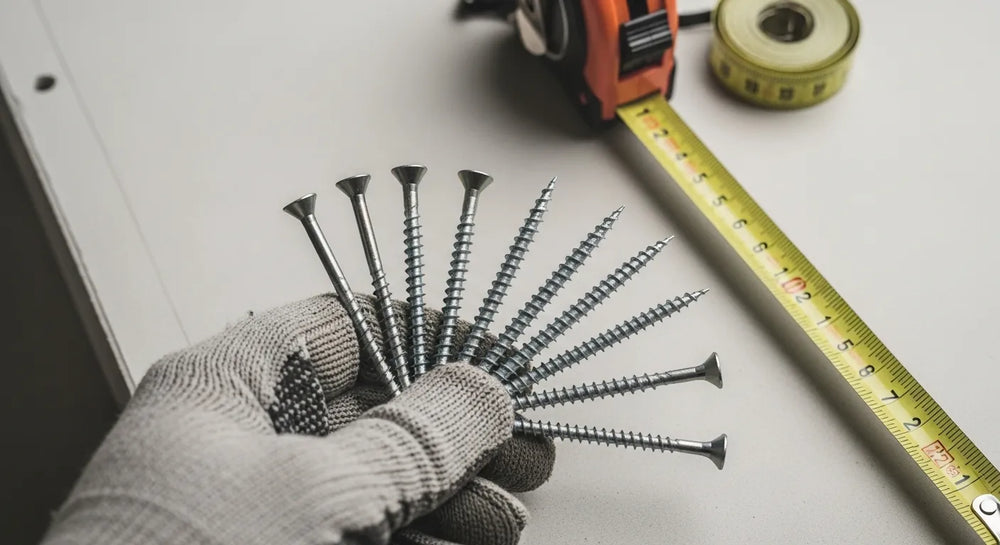
Securely Attaching Wood to Brick: Techniques & Hardware for Durable Fixings
Table of Contents
- Introduction
- Understanding the "Can You Screw Wood into Brick?" Challenge
- The Science of Secure Fastening to Masonry
- Choosing the Right Fasteners and Anchors for Wood-to-Brick
- Step-by-Step Guide: Attaching Wood to Brick
- Maden.co's Role in Your Fastening Projects
- Critical Considerations for Industrial and Commercial Applications
- Conclusion
- Frequently Asked Questions (FAQ)
Imagine a critical structural project or a large-scale industrial installation where the integrity of a wooden framework depends on its secure connection to a brick wall. The thought of a loose fixture or a compromised support structure due to improper fastening can send shivers down any procurement manager's spine. The common question, "can you screw wood into brick?" often arises, carrying with it a nuanced understanding of materials, mechanics, and long-term durability. It's not as simple as drilling a pilot hole and driving in a standard screw; brick and mortar demand a specialized approach. Successfully integrating wood with masonry requires precise techniques, the right hardware, and an appreciation for the inherent properties of each material.
This detailed guide will demystify the process of securely attaching wood to brick, moving beyond basic DIY methods to provide an authoritative resource for procurement professionals, design engineers, and MRO buyers. We'll delve into the science behind effective masonry fastening, explore the various types of anchors and fasteners available, and outline best practices for achieving a robust, long-lasting connection. Our aim is to equip you with the knowledge to specify the correct components and methods, ensuring project integrity and reducing costly rework. Furthermore, we'll illustrate how partnering with a reliable marketplace like Maden.co can streamline your procurement process, offering unparalleled access to American-made industrial supplies that meet the highest standards of quality and performance. At Maden.co, our mission is to democratize access to American manufacturing, ensuring that the components critical to such precise applications are readily available, driving the manufacturing revival with our tagline: "America's manufacturing revival is here."
Introduction
In industrial and commercial settings, the need to securely affix wooden elements to brick masonry is a frequent requirement. Whether it’s for mounting heavy machinery, installing robust shelving systems, creating durable framing, or securing architectural features, the challenge remains consistent: how to ensure a connection that withstands significant loads, environmental stresses, and the test of time. Simply attempting to screw a piece of wood directly into a brick wall without proper preparation and appropriate hardware is a recipe for failure, leading to unstable installations, damaged materials, and potential safety hazards. The brittle, porous nature of brick, coupled with the varied composition of mortar, necessitates a fastening strategy that respects these material properties.
This article will guide you through the essential considerations and methodologies required to achieve a resilient wood-to-brick connection. We will explore the fundamental differences between various fastening systems, from direct masonry screws to expansion anchors and chemical fixings, highlighting their respective strengths and ideal applications. Special attention will be paid to material selection for fasteners—including corrosion resistance and load-bearing capacities—a critical aspect for long-term project success. Our discussion will also touch upon the crucial role of proper drilling techniques and safety protocols. By the end, you will possess a comprehensive understanding of how to reliably attach wood to brick, enabling you to make informed decisions that enhance project safety, durability, and compliance. We believe that informed procurement leads to industrial excellence, and our platform, Maden.co, is designed to be your strategic partner in achieving this.
Understanding the "Can You Screw Wood into Brick?" Challenge
The initial instinct for many might be to treat brick like wood, assuming a screw can simply bore its way in. However, this assumption overlooks fundamental differences in material composition and structural integrity. Brick, typically made from fired clay, is highly compressive but relatively brittle, especially when subjected to localized stress from a screw thread. Mortar, a mixture of sand, binder (like cement or lime), and water, varies significantly in strength and porosity depending on its age and mix. Neither material provides the continuous, fibrous grain structure that allows a wood screw to effectively grip and hold.
Why Direct Screwing Fails
Attempting to drive a standard wood screw or even a coarse-threaded metal screw directly into brick or mortar usually results in one of several undesirable outcomes:
- Cracking and Spalling: The screw's threads exert outward pressure, causing the brittle brick to crack, chip (spall), or crumble around the penetration point.
- Poor Holding Power: Without an appropriate anchor, the screw will have minimal purchase in the granular structure of the mortar or the hard, smooth surface of the brick, leading to a weak, unstable connection that can easily pull out under load.
- Damaged Fastener: Forcing a screw into an unsuitable material can strip the screw head, bend the shaft, or dull the threads, rendering it useless.
- Compromised Aesthetics: Damaged brickwork is unsightly and can be difficult and costly to repair, especially in heritage or architectural applications.
For these reasons, the answer to "can you screw wood into brick directly?" is unequivocally no, at least not with reliable long-term results. The solution lies in a two-stage process: first, creating a secure attachment point within the brick or mortar, and second, using an appropriate fastener to attach the wood to that secure point. This invariably involves drilling a pilot hole and deploying a specialized anchor or masonry screw designed to interact effectively with the masonry substrate.
Common Applications Requiring Wood-to-Brick Fastening
Despite the challenges, attaching wood to brick is a common necessity across various industrial and commercial projects:
- Framing and Stud Walls: Creating interior partitions or extending existing structures within a brick building.
- Heavy-Duty Shelving and Racking: Installing storage solutions in warehouses, workshops, or retail environments where substantial loads are expected.
- Machinery Mounts and Supports: Securing equipment bases or vibration-dampening platforms directly to structural brick walls.
- Exterior Features: Attaching wooden cladding, pergolas, decking ledgers, or fence posts to brick facades.
- Door and Window Frames: Installing new or replacing old wooden frames in masonry openings.
- Utility Mounts: Fastening conduit, pipe hangers, or electrical boxes to brick surfaces.
For a procurement manager under pressure to source the correct fastening system, a design engineer needing specific material certifications for a new prototype, or an MRO buyer facing an unexpected equipment breakdown, the ability to quickly find and finance a verified, U.S.-made part is a game-changer. Our platform provides precisely this, connecting industrial buyers with over 2.5 million American-made products from our network of 800+ verified U.S. manufacturers.
The Science of Secure Fastening to Masonry
Achieving a durable wood-to-brick connection hinges on understanding how different fastening systems interact with masonry. The primary goal is to create a strong mechanical or chemical bond that can resist pull-out (tensile load) and shear forces.
Drilling Techniques for Masonry
Before any anchor or specialized screw can be installed, a precise and clean hole must be drilled. This is where the right tools and techniques are paramount:
- Hammer Drill: Essential for drilling into brick, concrete, and stone. A hammer drill combines rotary motion with a hammering action, pulverizing the hard material as it drills. Standard drills will struggle and can overheat.
- Masonry Bits: These bits are designed with a carbide tip that can withstand the abrasive nature of masonry. They come in various sizes, precisely matched to the diameter of the anchor or screw being used. It's crucial to select a bit that creates a snug fit for the chosen anchor, ensuring maximum holding power.
- Hole Depth: The depth of the hole must accurately match the length of the anchor to ensure full engagement and optimal performance. Many hammer drills have a depth stop for this purpose.
- Cleaning the Hole: After drilling, the hole must be thoroughly cleaned of dust and debris. This can be done with a brush and/or compressed air. Residual dust can significantly reduce the effectiveness of expansion anchors and prevent proper adhesion for chemical anchors.
Anchoring Principles: Expansion, Friction, and Chemical
The magic of attaching wood to brick lies in the anchors, which translate the force of the screw into a secure hold within the masonry.
1. Expansion Anchors
These anchors work by expanding within the drilled hole, creating a mechanical interlock with the surrounding masonry. As a screw or bolt is tightened into the anchor, it forces a part of the anchor to expand, pressing firmly against the walls of the pilot hole.
- Sleeve Anchors: Versatile for medium to heavy loads. They consist of a threaded bolt, a nut, a washer, and a metal sleeve. As the nut is tightened, the tapered end of the bolt pulls the sleeve upwards, forcing it to expand against the sides of the hole. Ideal for through-fastening applications where the material being attached is drilled through simultaneously with the masonry.
- Wedge Anchors: Designed for heavy-duty applications, especially in solid concrete or brick. They feature a threaded rod with a wedge clip at the bottom. As the nut is tightened, the wedge is pulled up, expanding the clip against the hole. Best for through-fastening and applications requiring maximum strength.
- Drop-In Anchors: Internally threaded anchors designed for flush mounting. They are set into a pre-drilled hole using a setting tool, which expands the anchor's base. Ideal for overhead applications or when a threaded receptacle is needed in the masonry surface.
- Lag Shields (Lag Screw Anchors): Made of a soft, ductile metal (often zinc alloy), these anchors are inserted into a pre-drilled hole. A lag screw is then driven into the shield, causing it to expand and grip the masonry. They are good for medium loads and allow for the attached material to be removed and reattached without damaging the anchor.
- Plastic Anchors (Wall Plugs): Suitable for light to moderate loads, especially in softer brick or mortar. These are inserted into a pilot hole, and as a screw is driven into them, they expand to create a friction fit. They are common for domestic applications but generally not robust enough for industrial or commercial heavy-duty fastening.
2. Friction Anchors (Masonry Screws)
Often referred to as "self-tapping masonry screws" or "concrete screws," these fasteners create their own thread in the pre-drilled pilot hole. They are typically made from hardened steel and feature a specific thread design.
- How They Work: Unlike expansion anchors, these screws don't rely on a separate sleeve. Their hardened, aggressive threads cut into the masonry as they are driven in, creating a strong, direct friction fit.
- Advantages: Relatively fast to install, no separate anchor component needed.
- Limitations: Best for light to medium loads. Performance can vary greatly with masonry type; softer or older brick may not provide sufficient grip. They are generally not recommended for critical structural applications where high pull-out resistance is required.
3. Chemical Anchors (Adhesive Anchors)
For the strongest and most reliable connections, especially in high-load or critical applications, chemical anchors are the preferred choice. These systems involve injecting a chemical resin into a clean, dry, pre-drilled hole, into which a threaded rod or rebar is then inserted.
- How They Work: The resin fills all irregularities in the hole, curing to form an incredibly strong bond between the rod and the masonry. This creates a monolithic connection that distributes stress evenly, preventing localized cracking in the brick.
- Advantages: Exceptional pull-out and shear strength, suitable for very heavy loads, vibration-resistant, ideal for compromised or irregular masonry, and can seal the hole against moisture.
- Limitations: Requires precise application, curing time, and often more expensive than mechanical anchors.
Understanding these different principles is crucial for design engineers and procurement managers when specifying fastening solutions. The choice depends on the load requirements, environmental conditions, type of masonry, and desired permanence of the connection. For critical projects, consulting with structural engineers and utilizing products that adhere to recognized industry standards (e.g., DIN, ASTM) is paramount.
Choosing the Right Fasteners and Anchors for Wood-to-Brick
The selection of appropriate fasteners and anchors is not a one-size-fits-all decision. It demands a careful assessment of several factors, including the weight and type of the wooden component, the characteristics of the brick and mortar, environmental conditions, and regulatory compliance.
Direct-to-Masonry Screws vs. Anchors
While "screwing wood into brick" technically refers to using a screw, the mechanism of attachment is critical.
- Masonry Screws: As discussed, these (e.g., Tapcon-style screws) are a direct fastening method where the screw threads into the masonry. They are excellent for quickly securing lighter wooden elements like furring strips, trim, or lightweight shelving directly to brick. They offer good pull-out resistance for their class but are generally not specified for heavy structural loads.
- Anchors (with accompanying screws/bolts): This multi-component system (anchor + fastener) is typically chosen for medium to heavy loads. The anchor provides the robust grip in the masonry, and a separate screw or bolt then secures the wood to the anchor. This approach offers superior versatility and strength compared to direct masonry screws. For example, a heavy wooden beam might be secured with sleeve anchors and hex bolts, while a decorative wooden panel might use plastic anchors and wood screws.
Specific Fastener Materials for Durability
Beyond the type of anchor, the material of the fastener (the screw, bolt, or threaded rod that actually holds the wood) is vital, especially in industrial and exterior applications where corrosion and environmental factors play a significant role.
- Steel (Zinc-Plated/Galvanized): Common for general interior use. Zinc plating offers basic corrosion resistance. Hot-dip galvanization provides a thicker, more durable coating for moderate exterior exposure.
- Stainless Steel: Essential for exterior applications, marine environments, or areas with high humidity and corrosive chemicals. Stainless steel (e.g., 304 or 316 grade) offers excellent corrosion resistance and maintains structural integrity over time.
- Brass and Silicon Bronze: While not typically used as the primary anchor into brick for heavy loads, these materials are excellent choices for the wood screws that attach the wooden component to the masonry anchor, especially in fine woodworking, marine applications, or historical restorations where aesthetics and superior corrosion resistance are critical. For instance, after setting a sturdy lag shield into brick, you might use a high-quality Round Slot Drive Brass Wood Screw to attach a decorative wooden panel. Similarly, if the project calls for a flush finish with high resistance to oxidation, a Flat Slot Drive Brass Wood Screw could be the ideal choice. For even greater corrosion resistance, particularly in harsh outdoor or marine settings, our Oval Slot Drive Silicon Bronze Wood Screw provides an exceptional blend of strength and longevity.
These specialized wood screws, available through our platform, exemplify the precision and quality expected in demanding industrial projects. They demonstrate our commitment to offering a diverse catalog that caters to specific needs, ensuring procurement managers have access to the exact components required for both performance and compliance.
The Role of Washers
Don't overlook the importance of washers. When fastening wood to masonry, washers distribute the load from the screw head or nut over a larger surface area of the wooden component. This prevents the screw head from pulling through or compressing the wood, enhancing the longevity and stability of the connection.
Step-by-Step Guide: Attaching Wood to Brick
Executing the fastening process correctly is as important as selecting the right hardware. This systematic approach ensures a secure and lasting connection.
1. Planning and Preparation
- Assess the Load: Determine the weight of the wooden component and any additional load it will bear. This directly influences the type and number of fasteners required.
- Identify Masonry Type: Is it solid brick, hollow brick, or block? Is the mortar old and crumbly, or new and strong? This impacts anchor choice.
- Check for Utilities: Before drilling, always verify that no electrical conduits, water pipes, or gas lines are hidden within the wall using a stud finder or professional scanning tools.
-
Gather Tools and Materials:
- Hammer drill
- Appropriate masonry drill bits (matching anchor diameter)
- Chosen anchors (sleeve, wedge, lag shield, chemical, or masonry screws)
- Screws/bolts (if using anchors) – e.g., high-quality U.S.-made Flat Slot Drive Brass Wood Screw
- Level, tape measure, pencil
- Wire brush or compressed air for hole cleaning
- Safety glasses, hearing protection, dust mask
- Wood shims (if needed for leveling)
2. Marking the Pilot Holes
- Position the wooden component precisely where it needs to be attached.
- Use a level to ensure perfect alignment.
- Mark the exact locations for drilling through the wood and onto the brick using a pencil. Ensure marks are centered if drilling into the middle of a brick, or in the mortar joint if preferred (though drilling into solid brick generally provides a stronger hold).
- For critical applications, measure and mark anchor points precisely to distribute load effectively.
3. Drilling the Pilot Holes
- Using the hammer drill with the correct masonry bit, drill holes at the marked locations.
- Ensure the drill is held perpendicular to the surface to create straight holes.
- Drill to the precise depth required for your chosen anchor. Many hammer drills have a depth stop.
- Crucial Step: Clean each drilled hole thoroughly using a wire brush and/or compressed air to remove all dust and debris. This is vital for the proper functioning of all anchor types.
4. Installing the Anchors
- For Expansion Anchors (Sleeve, Wedge, Lag Shield, Plastic): Insert the anchor fully into the cleaned pilot hole. For sleeve and wedge anchors, ensure the head or nut is flush with the surface (or through-fastened as designed). For lag shields, tap them gently until flush.
- For Masonry Screws: Skip this step as the screw itself is the anchor.
- For Chemical Anchors: Follow manufacturer instructions precisely. Inject the resin into the clean hole (often from the bottom up to prevent air pockets), then insert the threaded rod or rebar, twisting it to ensure full coverage. Allow adequate curing time before applying any load.
5. Attaching the Wooden Component
- Align the wooden piece with the installed anchors or pilot holes for masonry screws.
- For Anchors: Drive the appropriate wood screw or bolt through the pre-drilled holes in the wood and into the installed anchors. Tighten firmly but avoid over-tightening, which can strip threads or damage the wood/anchor. For a project requiring a robust and visually appealing connection, consider our Oval Slot Drive Silicon Bronze Wood Screw, specifically designed for superior performance and aesthetics.
- For Masonry Screws: Drive the masonry screws directly through the wood and into the pilot holes in the brick. Again, tighten securely without over-tightening.
6. Checking Security and Finishing
- Once all fasteners are in place, gently test the stability of the attached wooden component. It should feel solid with no discernible movement.
- If necessary, adjust tension or add additional fasteners for extremely heavy loads, always adhering to engineering specifications.
- For exterior applications, ensure any exposed fasteners are weather-resistant and consider sealing around the attachment points to prevent moisture ingress.
This methodical approach, combined with the use of high-quality, reliable U.S.-made fasteners sourced from Maden.co, guarantees a robust and enduring connection.
Maden.co's Role in Your Fastening Projects
In the complex world of industrial procurement, sourcing reliable components like specialized fasteners and anchors can be a significant challenge. Delays due to out-of-stock items, quality inconsistencies from unverified suppliers, or difficulties in finding specific materials can cascade into project overruns and operational inefficiencies. This is precisely where Maden.co transforms the landscape for procurement managers, MRO buyers, and design engineers.
Democratizing Access to American Manufacturing
At Maden.co, our mission is to democratize access to American manufacturing. We understand that finding the right U.S.-made industrial supplies, whether it's a specific type of anchor or a specialized wood screw, can be time-consuming. That's why we've built a comprehensive B2B marketplace that connects you directly with over 2.5 million American-made products from our network of 800+ verified U.S. manufacturers. Our platform simplifies the search, allowing you to quickly locate and procure the high-quality components you need to ensure the success and durability of your projects, including those requiring secure wood-to-brick fastening.
Strategic Value Beyond the Transaction
Sourcing through Maden.co offers more than just access to products; it's a strategic partnership designed to enhance your entire procurement process:
- Improved Total Cost of Ownership (TCO): By providing direct access to verified U.S. manufacturers, we help you reduce lead times, minimize shipping costs, and mitigate the risks associated with global supply chain disruptions. This translates into tangible long-term savings.
- Ensured Compliance: Many industrial projects require adherence to specific standards like DIN, ASTM, or NPT. Our platform emphasizes products from U.S. manufacturers who often meet or exceed these critical industry standards, giving you peace of mind regarding quality and regulatory compliance.
- Enhanced Supply Chain Resilience: Relying on domestic suppliers inherently strengthens your supply chain, making it more robust and less vulnerable to international geopolitical or logistical challenges. This focus on American Manufacturing Pride is a core value, reinforcing the belief that "America's manufacturing revival is here."
- Reduced Procurement Friction: Our intuitive digital platform, reflecting our commitment to Digital Innovation, simplifies the search, comparison, and purchase process, saving your team valuable time and resources.
- Partnering with Verified U.S. Manufacturers: Every manufacturer on our platform is verified, ensuring you receive products of the highest Industrial Excellence. This commitment to Supply Chain Transparency allows you to trust the origin and quality of every purchase. You can learn more about our mission and values on our About Us page.
Instant Financing for Capital-Intensive Projects
A key differentiator that further streamlines your procurement is our "Instant Financing" option. We understand that large-volume purchases or unforeseen project needs can strain cash flow. This feature is not just a payment method; it's a strategic tool designed to empower businesses. It allows procurement managers and business owners to manage cash flow effectively and make larger-volume purchases without immediate upfront capital. You can apply for Instant Financing at checkout to streamline your capital-intensive projects, ensuring that vital operations and investments are never delayed due to financial constraints.
For U.S. manufacturers looking to expand their reach and become a part of this revival, we invite you to join our network. Register as a vendor and join the American manufacturing revival to connect with industrial buyers nationwide. If you have specific sourcing questions or need assistance navigating our extensive catalog, our expert team is ready to help; simply contact us.
Critical Considerations for Industrial and Commercial Applications
While the fundamental principles of fastening wood to brick remain consistent, industrial and commercial projects introduce additional layers of complexity and criticality. These applications demand a rigorous approach to material selection, engineering, and long-term performance.
Load Bearing and Structural Integrity
For large-scale installations, the exact load a fastening system can bear—both static and dynamic—is paramount. This often requires:
- Engineering Calculations: Professional engineers must calculate tensile (pull-out) and shear (sideways) forces to determine the appropriate anchor type, size, and spacing.
- Safety Factors: Applying appropriate safety factors to ensure that the chosen fastening system can comfortably withstand loads far exceeding daily operational stress.
- Anchor Testing: In some critical applications, on-site pull-out testing of anchors may be required to verify holding strength in the actual masonry substrate.
Environmental Factors
The operational environment significantly impacts fastener longevity:
- Moisture and Humidity: High humidity, direct rain exposure, or condensation can accelerate corrosion of unprotected steel fasteners, leading to premature failure. This reinforces the need for stainless steel, brass, or silicon bronze fasteners, especially for the wood components that interface with the anchor.
- Temperature Fluctuations: Extreme temperature changes can cause expansion and contraction of materials, potentially loosening fasteners over time or creating stress concentrations.
- Chemical Exposure: Industrial environments might expose fasteners to corrosive chemicals, necessitating specialized materials or coatings.
Compliance and Certifications
Industrial projects are typically governed by stringent codes and standards:
- Building Codes: Adherence to local and national building codes is non-negotiable for structural integrity and safety.
- Product Certifications: Utilizing fasteners and anchors that carry recognized certifications (e.g., ICC-ES reports for anchors) provides assurance of performance and compliance. Maden.co prioritizes partnering with manufacturers who provide certified products, reflecting our commitment to Customer Empowerment through reliable information and access.
- Material Specifications: Ensuring that fasteners meet specific material grades (e.g., ASTM standards for steel, brass, or silicon bronze) is crucial for predictable performance.
Long-Term Durability and Maintenance
A well-executed fastening job should not be a "set it and forget it" solution, especially in dynamic industrial environments:
- Inspection Regimes: Regular inspections should be part of the maintenance schedule to check for signs of loosening, corrosion, or fatigue, allowing for proactive intervention.
- Material Compatibility: Ensuring that different metals in contact do not cause galvanic corrosion, particularly in wet environments. For instance, using brass or silicon bronze screws with brass or bronze anchors, or isolating dissimilar metals with non-conductive washers.
By meticulously considering these factors, procurement managers and design engineers can move beyond simply attaching wood to brick to creating truly robust, compliant, and durable connections that stand the test of time in the most demanding industrial settings. The strategic sourcing of U.S.-made components through Maden.co directly supports these higher standards of industrial excellence.
Conclusion
The question "can you screw wood into brick?" reveals a fundamental challenge in construction and industrial installation: bridging the gap between disparate materials. As we've explored, the answer is a resounding "yes," but only when approached with the correct knowledge, specialized tools, and high-quality hardware. Direct fastening is ill-advised; instead, a secure, lasting connection hinges on understanding masonry properties, employing precise drilling techniques, and critically, selecting the right anchors and fasteners that are engineered for the task. From expansion anchors for heavy loads to masonry screws for lighter applications, and the strategic use of corrosion-resistant materials like brass and silicon bronze for interface screws, each component plays a vital role in ensuring structural integrity and long-term durability.
For American businesses, the ability to source these critical, U.S.-made components efficiently and reliably is not just a convenience—it's a competitive advantage. At Maden.co, we are committed to empowering procurement managers, MRO buyers, and design engineers by democratizing access to the vast catalog of American manufacturing. Our platform provides a transparent, efficient pathway to over 2.5 million U.S.-made products from our network of 800+ verified manufacturers. This ensures you can always find the exact components you need, from high-strength anchors to specialized wood screws like our Round Slot Drive Brass Wood Screw or the robust Flat Slot Drive Brass Wood Screw for a flush finish, and the exceptionally durable Oval Slot Drive Silicon Bronze Wood Screw for demanding conditions.
We stand by our core values of American Manufacturing Pride, Digital Innovation, Supply Chain Transparency, Industrial Excellence, and Customer Empowerment. By partnering with Maden.co, you're not just procuring parts; you're building supply chain resilience, improving Total Cost of Ownership, and contributing to the resurgence of domestic manufacturing.
Don't let procurement challenges impede your next critical project. Explore the extensive catalog of U.S.-made industrial supplies on Maden.co today. Find the precision anchors, robust fasteners, and specialized screws your projects demand. Remember, for larger orders or to optimize your cash flow, you can apply for Instant Financing at checkout to streamline your capital-intensive projects. Join us in championing the American manufacturing revival – because America's manufacturing revival is here.
Frequently Asked Questions (FAQ)
Q1: Can I use a regular drill bit to drill into brick for anchors?
No, you should not use a regular drill bit for drilling into brick or masonry. Regular drill bits are designed for softer materials like wood or metal and will quickly dull, overheat, and fail when encountering hard masonry. You must use a hammer drill in combination with a carbide-tipped masonry drill bit, which is specifically designed to withstand the abrasive nature of brick and effectively pulverize the material as it drills.
Q2: What type of fastener is best for attaching heavy wood items, like shelving units, to a brick wall?
For heavy wooden items, expansion anchors (such as sleeve anchors, wedge anchors, or lag shields with lag screws) or chemical anchors are generally recommended. The specific choice depends on the exact load, the type and condition of the brick, and whether the installation is permanent. Chemical anchors offer the highest pull-out strength and are ideal for critical, heavy-duty applications. For the final connection of the wood to the anchor, specialized wood screws made from durable materials like brass or silicon bronze can be used, ensuring longevity and aesthetics.
Q3: How do I ensure the fasteners I use for exterior wood-to-brick projects won't rust?
For exterior wood-to-brick projects, corrosion resistance is critical. You should select fasteners made from materials known for their durability in outdoor environments. Stainless steel (e.g., 304 or 316 grade) is an excellent choice for general outdoor exposure and even marine environments due to its superior resistance to rust. Zinc-plated steel offers basic protection, but for better longevity, hot-dip galvanized steel is a more robust option. For the actual wood screws that secure the wooden component to the masonry anchor, brass or silicon bronze provide exceptional long-term corrosion resistance and can offer an attractive finish.
Q4: Is it important to clean the drilled hole before inserting an anchor?
Yes, cleaning the drilled hole is a critically important step. After drilling into masonry, the hole will be filled with fine dust and debris. If this dust is not removed, it can significantly reduce the effectiveness of both mechanical and chemical anchors. For expansion anchors, dust prevents the anchor from making full contact with the hole walls, weakening its grip. For chemical anchors, dust acts as a barrier, preventing the resin from properly adhering to the masonry. Always use a wire brush and/or compressed air to thoroughly clear out the hole before installing any anchor.


